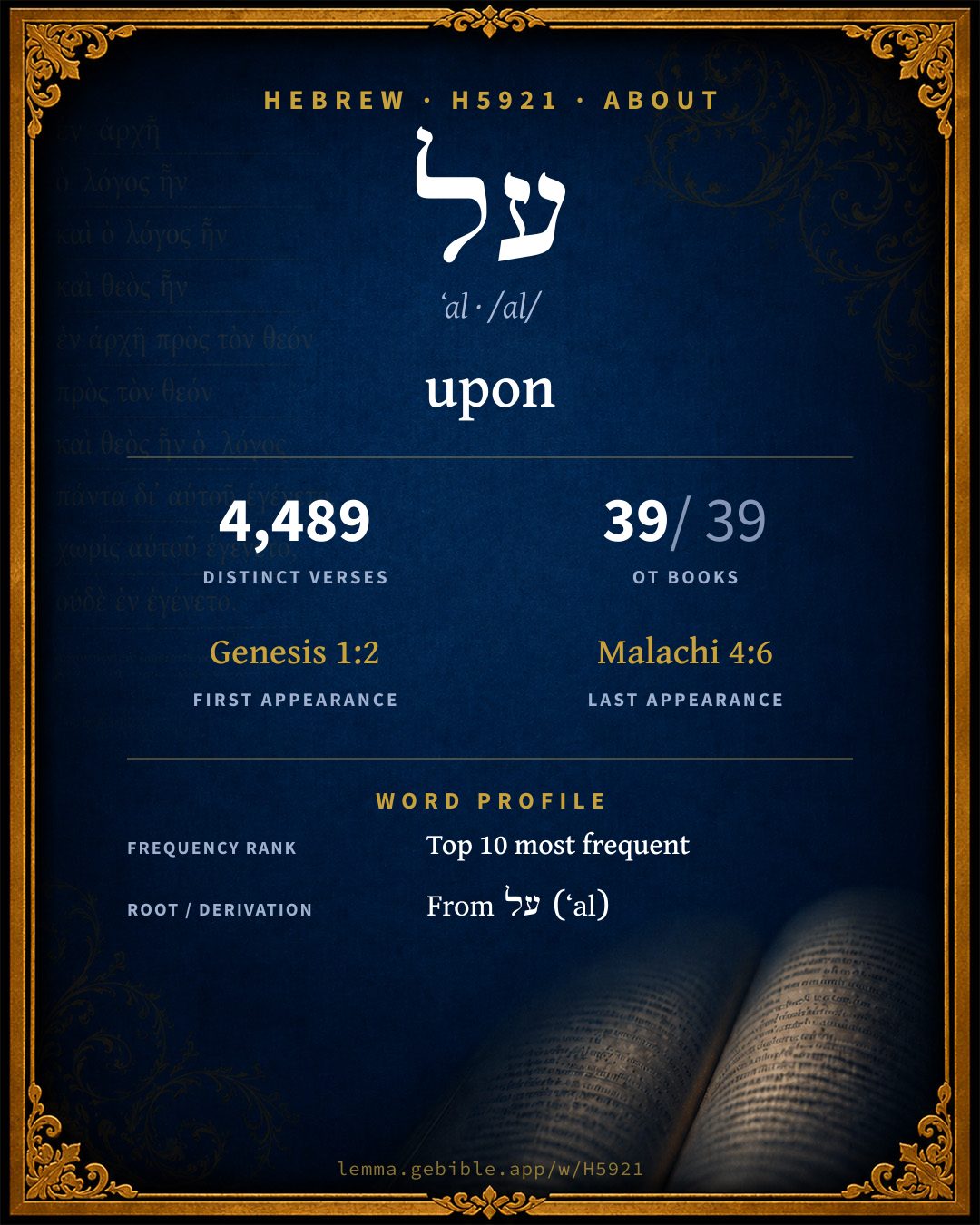
עַל
upon
also: according to, on account of, on behalf of, concerning fuller range ↓
Full lexicon entry — Brown-Driver-Briggs (BDB)
From Brown-Driver-Briggs (BDB)
Where this word appears
Grammar key — what these labels mean
Part of speech
- Preposition
- A relational word (e.g. “in,” “to,” “from”) governing a noun.
Noun type
- Common
- A common noun — a general class of person, place, or thing (“king,” “city,” “water”), not a specific name.
State
- Absolute
- The independent form of a noun, not bound to a following word.
Gender
- Masculine
- Grammatically masculine.
Number
- Singular
- One.
Every verse where H5921 appears in the Book of Amos — 49 distinct verses. Click any verse to open its interlinear word-by-word view. Verse text shown in the World English Bible for context — . Each verse’s Hebrew form is shown with its reference; the English is not keyword-highlighted, since the data carries no word-level English alignment. Use “Compare translations” on any verse to read it across multiple English versions. This concordance covers the Hebrew Bible; Septuagint (Greek Old Testament) occurrences are not indexed here.
Amos
- Amos 1:1 עַל prep The words of Amos, who was among the herdsmen of Tekoa, which he saw concerning Israel in the days of Uzziah king of Judah, and in the days of Jeroboam the son of Joash king of Israel, two years before the earthquake.
- Amos 1:3 עַל וְ/עַל עַל prep conj + prep prep Thus says Yahweh: "For three transgressions of Damascus, yes, for four, I will not turn away its punishment; Because they have threshed Gilead with threshing instruments of iron;
- Amos 1:6 עַל וְ/עַל עַל prep conj + prep prep Thus says Yahweh: "For three transgressions of Gaza, yes, for four, I will not turn away its punishment; Because they carried away captive the whole community, To deliver them up to Edom;
- Amos 1:8 עַל prep I will cut off the inhabitant from Ashdod, And him who holds the scepter from Ashkelon; And I will turn my hand against Ekron; And the remnant of the Philistines will perish," says the Lord Yahweh.
- Amos 1:9 עַל וְ/עַל עַֽל prep conj + prep prep Thus says Yahweh: "For three transgressions of Tyre, yes, for four, I will not turn away its punishment; Because they delivered up the whole community to Edom, And didn't remember the brotherly covenant;
- Amos 1:11 עַל וְ/עַל עַל prep conj + prep prep Thus says Yahweh: "For three transgressions of Edom, yes, for four, I will not turn away its punishment; Because he pursued his brother with the sword, And cast off all pity, And his anger raged continually, And he kept his wrath forever;
- Amos 1:13 עַל וְ/עַל עַל prep conj + prep prep Thus says Yahweh: "For three transgressions of the children of Ammon, yes, for four, I will not turn away its punishment; Because they have ripped open the pregnant women of Gilead, That they may enlarge their border.
- Amos 2:1 עַל וְ/עַל עַל prep conj + prep prep Thus says Yahweh: "For three transgressions of Moab, yes, for four, I will not turn away its punishment; Because he burned the bones of the king of Edom into lime;
- Amos 2:4 עַל וְ/עַל עַֽל prep conj + prep prep Thus says Yahweh: "For three transgressions of Judah, yes, for four, I will not turn away its punishment; Because they have rejected Yahweh's law, And have not kept his statutes, And their lies have led them astray, After which their fathers walked;
- Amos 2:6 עַל וְ/עַל עַל prep conj + prep prep Thus says Yahweh: "For three transgressions of Israel, yes, for four, I will not turn away its punishment; Because they have sold the righteous for silver, And the needy for a pair of shoes;
- Amos 2:7 עַל prep They trample on the dust of the earth on the head of the poor, And deny justice to the oppressed; And a man and his father use the same maiden, to profane my holy name;
- Amos 2:8 וְ/עַל conj + prep And they lay themselves down beside every altar on clothes taken in pledge; And in the house of their God they drink the wine of those who have been fined.
- Amos 2:12 וְ/עַל conj + prep "But you gave the Nazirites wine to drink, And commanded the prophets, saying, 'Don't prophesy!'
- Amos 3:1 עֲלֵי/כֶ֖ם עַ֚ל prep + sfx pers 2mp prep Hear this word that Yahweh has spoken against you, children of Israel, against the whole family which I brought up out of the land of Egypt, saying:
- Amos 3:2 עַל עֲלֵי/כֶ֔ם prep prep + sfx pers 2mp "You only have I chosen of all the families of the earth. Therefore I will punish you for all of your sins."
- Amos 3:5 עַל prep Can a bird fall in a trap on the earth, Where no snare is set for him? Does a snare spring up from the ground, When there is nothing to catch?
- Amos 3:9 עַל וְ/עַֽל עַל prep conj + prep prep Proclaim in the palaces at Ashdod, And in the palaces in the land of Egypt, And say, "Assemble yourselves on the mountains of Samaria, And see what unrest is in her, And what oppression is among them."
- Amos 3:14 עָלָ֑י/ו עַל prep + sfx pers 3ms prep "For in the day that I visit the transgressions of Israel on him, I will also visit the altars of Bethel; And the horns of the altar will be cut off, And fall to the ground.
- Amos 3:15 עַל prep I will strike the winter house with the summer house; And the houses of ivory will perish, And the great houses will have an end," says Yahweh.
- Amos 4:2 עֲלֵי/כֶ֑ם prep + sfx pers 2mp The Lord Yahweh has sworn by his holiness that behold, "The days shall come on you that they will take you away with hooks, And the last of you with fish hooks.
- Amos 4:7 עַל וְ/עַל עָלֶ֖י/הָ prep conj + prep prep + sfx pers 3fs "I also have withheld the rain from you, When there were yet three months to the harvest; And I caused it to rain on one city, And caused it not to rain on another city. One place was rained on, And the piece where it didn't rain withered.
- Amos 4:13 עַל prep For, behold, he who forms the mountains, And creates the wind, And declares to man what is his thought; Who makes the morning darkness, And treads on the high places of the Earth: Yahweh, the God of hosts, is his name."
- Amos 5:1 עֲלֵי/כֶ֛ם prep + sfx pers 2mp Listen to this word which I take up for a lamentation over you, O house of Israel.
- Amos 5:2 עַל prep "The virgin of Israel has fallen; She shall rise no more. She is cast down on her land; There is no one to raise her up."
- Amos 5:8 עַל prep Seek him who made the Pleiades and Orion, And turns the shadow of death into the morning, And makes the day dark with night; Who calls for the waters of the sea, And pours them out on the surface of the earth, Yahweh is his name,
- Amos 5:9 עַל עַל prep prep Who brings sudden destruction on the strong, So that destruction comes on the fortress.
- Amos 5:11 עַל prep Forasmuch therefore as you trample on the poor, And take taxes from him of wheat: You have built houses of hewn stone, But you will not dwell in them. You have planted pleasant vineyards, But you shall not drink their wine.
- Amos 5:19 עַל prep As if a man fled from a lion, And a bear met him; Or he went into the house and leaned his hand on the wall, And a snake bit him.
- Amos 5:23 מֵ/עָלַ֖/י prep + prep + sfx pers 1cs Take away from me the noise of your songs! I will not listen to the music of your harps.
- Amos 6:4 עַל עַל prep prep Who lie on beds of ivory, And stretch themselves on their couches, And eat the lambs out of the flock, And the calves out of the midst of the stall;
- Amos 6:5 עַל prep Who strum on the strings of a harp; Who invent for themselves instruments of music, like David;
- Amos 6:6 עַל prep Who drink wine in bowls, And anoint themselves with the best oils; But they are not grieved for the affliction of Joseph.
- Amos 6:14 עֲלֵי/כֶ֜ם prep + sfx pers 2mp For, behold, I will raise up against you a nation, house of Israel," Says Yahweh, the God of hosts; "And they will afflict you from the entrance of Hamath to the brook of the Arabah."
- Amos 7:3 עַל prep Yahweh relented concerning this. "It shall not be," says Yahweh.
- Amos 7:6 עַל prep Yahweh relented concerning this. "This also shall not be," says the Lord Yahweh.
- Amos 7:7 עַל prep Thus he showed me and, behold, the Lord stood beside a wall made by a plumb line, with a plumb line in his hand.
- Amos 7:9 עַל prep The high places of Isaac will be desolate, the sanctuaries of Israel will be laid waste; and I will rise against the house of Jeroboam with the sword."
- Amos 7:10 עָלֶ֜י/ךָ prep + sfx pers 2ms Then Amaziah the priest of Beth El sent to Jeroboam king of Israel, saying, "Amos has conspired against you in the midst of the house of Israel. The land is not able to bear all his words.
- Amos 7:11 מֵ/עַ֥ל prep + prep For Amos says, 'Jeroboam will die by the sword, and Israel shall surely be led away captive out of his land.'"
- Amos 7:16 עַל עַל prep prep Now therefore listen to the word of Yahweh: 'You say, Don't prophesy against Israel, and don't preach against the house of Isaac.'
- Amos 7:17 עַל מֵ/עַ֥ל prep prep + prep Therefore thus says Yahweh: 'Your wife shall be a prostitute in the city, and your sons and your daughters shall fall by the sword, and your land shall be divided by line; and you yourself shall die in a land that is unclean, and Israel shall surely be led away captive out of his land.'"
- Amos 8:8 הַ֤/עַל ptcl inter + prep Won't the land tremble for this, And everyone mourn who dwells in it? Yes, it will rise up wholly like the River; And it will be stirred up and sink again, like the River of Egypt.
- Amos 8:10 עַל וְ/עַל prep conj + prep I will turn your feasts into mourning, And all your songs into lamentation; And I will make you wear sackcloth on all your bodies, And baldness on every head. I will make it like the mourning for an only son, And the end of it like a bitter day.
- Amos 9:1 עַֽל prep I saw the Lord standing beside the altar, and he said, "Strike the tops of the pillars, that the thresholds may shake; and break them in pieces on the head of all of them; and I will kill the last of them with the sword: there shall not one of them flee away, and there shall not one of them escape.
- Amos 9:4 עֲלֵי/הֶ֛ם prep + sfx pers 3mp Though they go into captivity before their enemies, there I will command the sword, and it will kill them. I will set my eyes on them for evil, and not for good.
- Amos 9:6 עַל עַל prep prep It is he who builds his chambers in the heavens, and has founded his vault on the earth; he who calls for the waters of the sea, and pours them out on the surface of the earth; Yahweh is his name.
- Amos 9:8 מֵ/עַ֖ל prep + prep Behold, the eyes of the Lord Yahweh are on the sinful kingdom, and I will destroy it from off the surface of the earth; except that I will not utterly destroy the house of Jacob," says Yahweh.
- Amos 9:12 עֲלֵי/הֶ֑ם prep + sfx pers 3mp that they may possess the remnant of Edom, and all the nations who are called by my name," says Yahweh who does this.
- Amos 9:15 עַל מֵ/עַ֤ל prep prep + prep I will plant them on their land, And they will no more be plucked up out of their land which I have given them," says Yahweh your God.
About this entry
At a glance — auto-summarized from this page’s data, not written by a person. Every figure links to its source below. This summary describes the numbers; it doesn’t interpret them.
“upon” is the headline sense of the Hebrew word על (ʻal). Its earliest occurrence is Genesis 1:2. The Hebrew Bible uses it across 4,489 verses — among the most common. Beyond “upon” it also covers “according to”, “on account of”, and “on behalf of” — see its full sense range. Related forms include על and על. The sections below give every sense, occurrence, and version rendering.
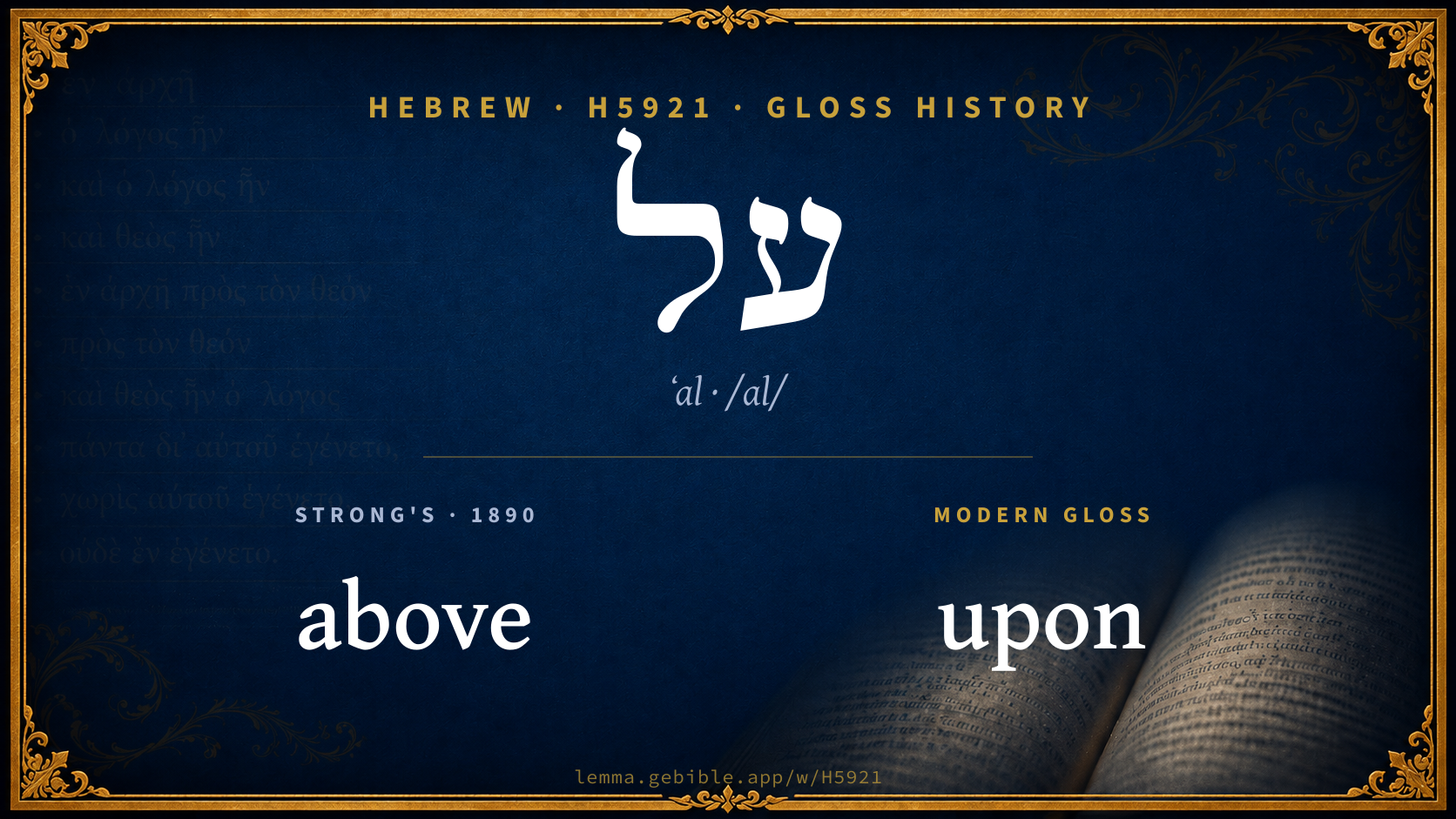
Gloss history
Strong's 1890 vs modern scholarship
About this word
Strong's H5921 catalogs a Hebrew word from the Hebrew Old Testament.
These counts are not copied from any lexicon or concordance. They are computed here, from the morphology-tagged Hebrew Old Testament. What Lemma adds →
- 4,489
- distinct verses
- The word appears in 4,489 distinct verses.
- 39 / 39
- OT books
- The word appears in 39 of 39 Old Testament books.
- #3
- by frequency
- Top 10 most frequent Hebrew words (rank 3 of 8,640 Hebrew words by occurrence).
View all 4,489 occurrences in the concordance →
By section of the Old Testament
By traditional corpus
Conventional, traditional groupings — biblical authorship is debated, so this is a traditional corpus grouping, not an authorship claim. Each share is this word’s portion of its verses in that division of the Hebrew canon. Each figure is a share of the word’s 4,489 distinct verses.
- Prophets (Nevi'im) 2,088 verses · 47%
- Writings (Ketuvim) 1,244 verses · 28%
- Torah (Pentateuch) 1,157 verses · 26%
How translations render this word
Counts come from each version’s own published word-to-Strong’s tagging or interlinear alignment — an approximate guide to how each version renders this word, not a word-level alignment the data otherwise carries. Because each total is that version’s own tagged count, the per-version totals vary from one another and need not match the appearance or distinct-verse counts above. These counts may also differ from a printed concordance because Lemma counts each distinctly tagged rendering and does not collapse phrase taggings into a single head-word total. This is a fixed set of word-tagged versions (KJV, ASV, BSB, ULT) and does not change with the reading translation you choose elsewhere. Each version’s license is shown beside its name below (and on Sources).
- King James Version: Beside 3×, Against 2×, From 2×
- American Standard Version: Of 4×, From 3×, In 2×
- Berean Standard Bible: On 848×, Over 300×, Against 234×
- unfoldingWord Literal Text: On 1,212×, Over 484×, Upon 292×
King James Version Public Domain
Renders H5921 across 48 tagged occurrences — most commonly:
Plus 33 renderings that appear only once — usually multi-word phrases or single function words the recovered tagging swept in, not distinct renderings.
American Standard Version Public Domain
Renders H5921 across 49 tagged occurrences — most commonly:
Plus 34 renderings that appear only once — usually multi-word phrases or single function words the recovered tagging swept in, not distinct renderings.
Berean Standard Bible Public Domain
Renders H5921 across 4,861 tagged occurrences — most commonly:
Plus other, less common renderings. Plus 302 renderings that appear only once — usually multi-word phrases or single function words the recovered tagging swept in, not distinct renderings. Not rendered by a distinct English word in 882 further occurrences.
unfoldingWord Literal Text CC BY-SA 4.0
Renders H5921 across 5,627 tagged occurrences — most commonly:
Plus other, less common renderings. Plus 241 renderings that appear only once — usually multi-word phrases or single function words the recovered tagging swept in, not distinct renderings.
41 senses and sub-senses in the full BDB
What do BDB’s symbols mean?
BDB uses these scholarly abbreviations:
| Symbol | Meaning |
|---|---|
| 𝔊 | the Septuagint (the ancient Greek translation, LXX) |
| 𝔙 | the Vulgate (the Latin translation) |
| 𝔖 | the Syriac version (the Peshitta) |
| 𝔗 | the Targum (the Aramaic translation) |
| ψ | the Psalms |
| √ | root (the underlying root or stem) |
| ‖ | parallel passage (a synonymous or contrasted parallel) |
| † | the dagger: every passage where the word occurs is cited |
The 41 senses and sub-senses the full Brown-Driver-Briggs lexicon distinguishes for this word, in lexicon order (not ranked by frequency), with BDB’s own verbatim wording and sub-sense lettering. Shown in Hebrew script with BDB’s own scholarly abbreviations. The condensed entry is in the Lexicon Entry tab. See also the Forms in the corpus table below.
- I. subst. height (poet.) †Ho 7:16 יָשׁוּבוּ לֹא עָ֗ל they return (but) not upwards (i.e. not God-wards), 11:7 וְאֶל־עַל יִקְרָאֻהוּ they (the prophets) call it (the people) upwards, (but) none striveth to rise; as adv. accus., 2 S 23:1 the man הֻ֣קַּם עָ֔ל (that) is raised up on high. With מִן, מֵעָ֑ל, †(ה)שׁמים מֵעָ֑ל (the) heavens above Gn 27:39; 49:25 ψ 50:4 (opp. מִתַּחַת Ex 20:4. In prose מִמַּעַל). e.g. Hosea 7:16
- II. As prep. upon, and hence on the ground of, according to, on account of, on behalf of, concerning, beside, in addition to, together with, beyond, above, over, by, on to, towards, to, against (SI4.6; Moab. Aramaic id.; Ph. על, and עלת; Palm. Nab. על; Sab. עלי, Arabic عَلَى );—abbrev. from עֲלֵי (cf. אֱלֵי, עֲדֵי), which is preserved in poetry, Gn 49:17(×2), 22(×2) Nu 24:6(×2) Dt 32:2(×2) Is 18:4; Je 8:18; Mi 5:6; La 4:5; 1 K 20:41; Qr, Jb 7:1 Qr + 10 times ψ, 3 times Pr, 15 times Jb; with sf. עָלַי; עָלֶיךָ, עָלַיִךְ (†ψ 116:7 the Aramaizing form עָלָ֑יְכִי); עָלָיו, + 1 S 2:10 עָלָו, עָלֶיהָ; 1 pl. עָלֵינוּ; 2 mpl. עֲלֵיכֶם, + Ex 12:13 עֲלֵכֶם, 2 fpl. עֲלֵיכֶן †Ez 23:49; 3 mpl. עֲלֵיהֶם, 13 times in Pent. עֲלֵהֶם Gn 45:15, etc. (Köii. 305), poet. עָלֵ֫ימוֹ Dt 22:23 + 11 times ψ, Jb (perhaps sometimes sg., Ges§ 103 i, N.); 3 fpl. עֲלֵיהֶן, †Ex 29:13 עֲלֵהֶן Ex 29:22; Lv 3:4, 10, 16 (on the form of עֲלֵי, עָלַי, etc., v. Köii. 390 ff., and cf. sub עַד). e.g. Genesis 49:17
- 1. Upon, of the substratum upon which an object in any way rests, or on which an action is performed; as על־הארץ upon the earth Gn 1:11, 26; 7:6, etc., ψ 110:6 על ארץ רבה over a wide country; על האדמה upon the ground Ex 20:12 + often, Am 7:12 עַל אֲדָמָה טְמֵאָה, Is 14:2 על אדמת י׳, ψ 137:4 עַל אַדְמַת נֵכָר (אֲדָמָה being properly ground, soil, is construed regularly with על, באדמה being very rare), more definitely על פני האדמה Gn 6:1; Nu 12:3 + often; על מקום Lv 14:28; Je 45:5 (uncommon: usually בְּ); Dt 17:20; Is 9:6 עַל מַמְלַכְתּוֹ upon his realm, 2 Ch 1:1; עַל בָּֽתִּים very strangely Ho 11:11 (read וַהֲשִׁבֹתִים with 𝔊; v. 7 c α β); constantly after such vbs. as נוח, ישׁב, רכב, etc., Gn 8:4; Ex 11:5; כתב על to write (idiom.) on a book or other surface, Jos 10:13, etc.; יצא על go forth over Gn 41:45; Zc 5:3 ψ 81:6; with נִשְׁעַן, נִסְמַךְ, בָּטַח (fig.), to lean or trust upon: Gn 3:14 to go עַל גְּחֹנְךָ upon thy belly, 32:32 to limp עַל יְרֵכוֹ upon his thigh, 1 S 14:13; Ez 37:10; Ju 15:8 to smite שׁוֹק עַל יָרֵךְ leg upon thigh, i.e. so that the scattered limbs fall one upon another, Am 3:15. And with ref. not to a horizontal surface but to a side, Lv 1:5 + זָרַק עַל to pour against the altar, 1 K 6:5, 18 to build against the temple, Jos 10:27, etc. Fig. Ex 23:13 let it not be heard עַל פִּיךָ upon thy mouth (in out idiom, upon thy lips, as Pr 22:18), ψ 15:3 לֹא רָגַל עַל לְשֹׁנוֹ he slandereth not (i.e. prepares not slander) upon his tongue, 2 S 23:2 וּמִלָּתוֹ עַל לְשׁוֹנִי, Pr 16:23, 27; 31:26; Ec 5:1; cf. נָשָׂא עַל שְׂפָתַיִם or עַל פֶּה ψ 16:4; 50:16; Ez 36:3b. Specially e.g. Genesis 1:11
- a. —(a) of clothing, etc., which any one wears, Gn 37:23 the tunic אשׁר עליו which was upon him, Jos 9:5; 1 K 11:30; Ru 3:15 +; Gn 24:30; 38:30; 2 S 13:18, of a sword 20:8 Ct 3:8; so הָיָה עַל Lv 16:4; Dt 22:5; Ez 44:18; 1 Ch 15:27; 18:7 (‖ 2 S 8:7 אֶל: see p. 41 a); cf. לֹא יַעֲלֶה עָלֶיךָ Lv 19:19; Ez 44:17, and with הֶעֱלָה, below, 7 b. (b) With verbs of covering or protecting, even though the cover or veil be not over or above the thing covered, but around or before it (‘upon’ referred to a side): v. גָּנַן, כָּסָה, סָכַךְ, עַטָה; Ne 2:8 יד אלהי הטובה עלי, cf. v 18 Ezr 7:6, 9; 8:18, 22, 31; Ex 27:21 the veil that is over (i.e. before) the testimony, 1 S 25:16 חוֹמָה הָיוּ עַלֵינוּ they were a wall about us; סָגַר עַל to shut in (or down) upon Ex 14:3; Jb 12:14; Ez 13:5; Jb 13:27; 26:9; 36:30 he spreadeth his light עַלָיו about him. e.g. Genesis 37:23
- b. Of what rests heavily upon a person, or is a burden to him, Is 1:14 הָיוּ עַלַי לָטֹרַח they are a cumbrance upon me, Jb 7:20 I am a burden עָלַי upon myself, 2 S 15:33 (cf. with אֶל 19:36); כָּבַד עַל to be heavy upon Ex 5:9 al. (v. כָּבַד); of sin, calamity, etc. Is 53:5; Ez 33:10 ψ 88:8; Jb 21:9; 2 Ch 15:5; 28:13; Ec 6:1; 8:6 (cf. 5 a β); Lv 7:20 וְטֻמְאָתוֹ עָלָיו 22:3: idiomatically, Gn 48:7 מֵתָה עָלַי רָחֵל Rachel died upon me (i.e. to my sorrow), 33:13 וְהַבָּקָר עָלוֹת עָלַי are giving suck upon me (i.e. as a care to me), Nu 11:13 יִבְכּוּ עָלַי they weep upon me (vexing me), Ju 14:16, 17; 19:2 (v. Be), 1 S 21:16 to play the mad man upon me, Je 12:11. e.g. Isaiah 1:14
- c. Of a duty, payment, care, etc., imposed upon a person, or devolving on him, as שָׂם עַל to lay upon Ex 5:8; 21:22, 30 (שָׁת), 22:24, cf. Gn 47:26; 2 Ch 35:25; with other verbs, Jb 38:10; Dt 24:5; 26:6; 2 K 15:20; 18:14; 23:33; Ne 10:33(×2) Est 1:8; 9:21, 27, 31; with צִוָּה enjoin upon Gn 2:16 + often, כתב prescribe to 2 K 22:13 ψ 40:8, נטשׁ cast upon 1 S 17:20 (v 22 על יד), נתן על יד (fig.) Gn 42:37; 2 K 12:12; 22:5, cf. 1 K 14:27, עזב ψ 10:14, גלל 37:5, השׁליך 55:23, פקד Jb 34:13 al.; Gn 30:28 נָקְבָה שְׂכָֽרְךָ עָלַי fix thy wages upon me (name thy wages to me), 34:12 הַרְבּוּ עָלַי מְאֹד מֹהַר וּמַתָּן multiply upon me, etc., 2 S 19:39 (pregn.) whatsoever thou choosest (and layest) upon me; without a verb, Ju 19:20 רַק כָּל־מַחְסֹרְךָ עָלָ֑י only let all thy wants be upon me, Ezr 10:4 ψ 56:13 עָלַי נְדָרֶיךָ thy vows are upon me (i.e. I owe them: cf. Nu 30:7, 9, 15), Pr 7:14 זִבְחֵי שְׁלָמִים עָלָ֑י peace-offerings were upon me (= were due from me); perhaps ψ 62:1; 77:1 (to the charge of); with an inf. 2 S 18:11 וְעָלַי לָתֵת and it would have been incumbent on me to give, etc., 1 K 4:7; Ezr 10:12 (accents [Baer], RVm), Ne 13:13, cf. Zc 12:2 (Ew RVm); Nu 7:9 (P) the service of … was upon them, Ez 45:17, so especially late 1 Ch 9:27, 33; 23:31; 2 Ch 2:3 לעולם זאת על ישׂראל, 8:15; 24:9; Ezr 7:11; Ne 11:23; Is 9:5 and the government is upon his shoulder (cf. 22:22), 2 Ch 25:3; ψ 7:11 מָֽגִנִּי עַל־א׳ my shield rests upon God (he has undertaken my defence), 62:8 על־אלהים יִשְׁעִי וּכְבֹדִי. e.g. Exodus 5:8
- d. על is used idiom. to give pathos to the expression of an emotion, by emphasizing the person who is its subject, and who, as it were, feels it acting upon him: ψ 42:6 why art thou cast down, O my soul, וַתֶּהֱמִי עָלַי and disquieted upon me? v 7 my soul upon me is cast down, v 12 43:5; La 3:20; ψ 131:2 כְּגָמֻל עֲלֵי אִמּוֹ כַּגָּמוּל עָלַי נַפְשִׁי is my soul upon me; 142:4 בְּהִתְעַטֵּף עָלַי רוּחִי when my spirit faints upon me, 143:4; Jon 2:8; Je 8:18 עָלַי לִבִּי דַוָּֽי׃ my heart upon me is sick, Jb 14:22(×2) (cf. Di), Hos 11:8 נהפך עלי לבי my heart is turned (altered) upon me, 1 S 17:32; 25:36; Ne 5:7 וַיִּמָּלֵךְ לִבִּי עָלַי and my heart took counsel upon me: cf. ψ 42:5 I will pour out my soul upon me, Jb 30:16; 10:1 אעזבה עלי שׂיחי I will let loose my complaint upon me. (Thes apud me, mecum. The rend. ‘within me’ alters entirely the point of view of the Heb. expression, and is incorrect.) Denoting with some emph. the subj. of an experience, Jb 30:2 עלימו אבד כָּ֑לַח, Dn 2:1 his sleep נִהְיְתָה עָלָיו was done with upon him (cf. Aramaic 6:19 נַדַּת עֲלוֹהִי), 10:8 וְהוֹדִי נְהְפַּךְ עָלַי (cf. 5:9; 7:28): also, rather differently, Lv 18:18b; Je 49:20 אִם לֹא יַשִּׁים עֲלֵיהֶם נְוֵהֶם, Mi 7:13 ψ 90:17b; ψ 7:9 according to my perfectness upon me, Ez 18:20; 22:3; 2 Ch 36:8. e.g. Psalms 42:6
- e. חָיָה עַל to live upon (as upon a foundation or support; cf. Is 3:1, and ζῆν ἐπί τινος), Dt 8:3 עַל־הַלֶּחֶם, Is 38:16 (cf. Hi), Gn 27:40 על חרבך תחיה upon (= by) thy sword thou shalt live (cf. Kazwiniii. 17 ap. Tuch), Ez 33:19, cf. v 26. e.g. Isaiah 3:1
- f. Of the ground, or basis, on which a thing is done, as Gn 24:9 על הדבר הזה, Lv 7:12 if he offers it עַל תּוֹדָה on the ground of a thanksgiving, Nu 6:21 עַל נִזְרוֹ, v b Ez 16:15; 28:17; Dn 8:25 עַל שִׂכְלוֹ, 9:18 על צדקותינו (with عَلَى this use is extended so as to denote explicitly on condition of). Hence (a) the basis being conceived as regulative, על comes to denote the norm or standard (cf. Germ. ‘auf die Art’; WAG ii. § 59 i): the transition may be seen in a passage like Ex 24:8 the covenant which י׳ made with you on the basis of (על), or in agreement with, all these words (cf. על פי 34:27), Nu 35:24 על המשׁפטים האלה, Dt 17:11; Je 30:18 the palace shall sit (i.e. be inhabited: v. ישׁב) עַל מִשְׁפָּטוֹ in accordance with its manner, ψ 94:20 who frames mischief עֲלֵי־חֹק in accordance with a law, על פי … according to the mouth (i.e. command, Gn 45:21 + often, evidence Dt 17:6; 19:15, sentence 21:5) of …; עַל שֵׁם … according to the name of … (mostly with call, be called) Gn 48:6; Ex 28:21; 2 S 18:18 +, cf. 1 Ch 23:14; Ex 6:26; 12:51 עַל צִבְאֹתָם according to their hosts (usually לְ), Nu 1:18 על משׁפחתם (usually לְ), v 52 2:2, 34; 7:3 (‖ ל), Dt 18:8 (prob.); עַל יְדֵי according to the hands (direction) of Je 5:31; 33:13 al. (v. p. 391 b); ψ 110:4 עַל דִּבְרָתִי מ׳ after the manner of M.; Pr 25:11 (prob.) a word spoken עַל אָפְנָיו in accordance with its circumstances = appositely; of the tune according to which a song is to be sung (RV. set to) ψ 6:1 (1 Ch 15:21), 8:1; 9:1; 12:1; 45:1; 46:1 (1 Ch 15:20) עַל־עֲלָמוֹת (perhaps, however, in the manner of maidens = for ‘sopranos’), 53:1; 56:1; 60:1; 69:1; 81:1; 84:1; 88:1 (cf. in Syriac ܥܰܠ ܩܳܠܴܐ ܕ). (b) The basis being conceived as involving the ground, על denotes the cause or reason, on account of, because of, Gn 20:3 lo thou shalt die עַל הָאִשָּׁה on account of the woman, 21:12; 26:7, 9; 27:41; 42:21; Lv 4:3, 28; 5:18; 19:17; 26:18, 24, 28; Dt 9:18; 24:16 fathers shall not be put to death על־בנים on account of children, 31:18; Jos 9:20; Je 1:16; 5:9; Ez 18:26 עליהם (‖ 33:18 בָּהֶם), Pr 28:21 ψ 39:12; 50:8 + often; ψ 44:23 עָלֶיךָ הֹרַגְנוּ on thy account are we slain all the day, 69:8; Je 15:15; in the phrases עַל דְּבַר …, עַל אוֹדוֹת, עַל זֹאת and עַל זֶה on this account, עַל מָה on what account? עַל־כֵּן = therefore (v. דָּבָר, אוֹדָה, etc.); before an inf., as Ex 17:7 וְעַל נַסּוֹתָם אֶת־י׳ and on account of their trying י׳, Am 1:3 עַל דּוּשָׁם on account of their threshing = because they threshed, v 6, 9, 11, 13, etc., Je 2:35 עַל אָמְרֵךֶ because of thy saying, 9:12; 16:18 +; and as a conj. both with and without אֲשֶׁר or כִּי (v. infr. III). And so often of the ground or cause of fear, grief, delight, or other emotions, e.g. Ex 18:9; 32:14 (נִחַם repent: so often), 1 S 4:13; 30:6; 2 S 1:26; 3:8; 1 K 21:4; 2 K 6:11; Je 10:19 Am 6:6. (c) Somewhat more strongly, on behalf of, for the sake of, Gn 19:17 escape על נפשׁך for thy life; Ju 9:17; 2 K 10:3 נִלְחַם עַל (usually ל); 1 K 2:18 I will speak on thy behalf to the king, v 19 (2 K 4:13 לְ); Est 4:16; 4:8; 7:7; 8:11; 9:16; Dn 12:1 עמד על stand up (in late Heb.) on behalf of; התפלל על intercede for (usually בעד) Jb 42:8; Ne 1:6; 2 Ch 30:18; 29:21 Ezr 8:35; and very often with כִּפֶּר (q.v.) make atonement for. (Not very common with other verbs.) (d) Sometimes it acquires almost a final force, for; Ex 12:4; 29:36; 30:16; Dt 27:13 these shall stand עַל־הַקְּלָלָה (‖ v 12 לְבָרֵךְ), ψ 89:48 עַל־מַה־שָּׁוְא בָּרָאתָ כָל־בְּנֵי־אָדָם unto what vanity hast thou created, etc.! Pr 29:5b; 2 Ch 23:18; Ec 3:17. (e) Of a condition, or attendant circumstances (rare; so عَلَى, WAG ii. § 59 e): ψ 50:5 עֲלֵי זָ֑נַח ׃ upon, with sacrifice, 92:4 עֲלֵי עָשׂוֹר וגו׳ with a ten-stringed instr., with a harp, with sounding music on a lyre; עַל רִיב upon occasion of a lawsuit Ex 23:2; Ez 44:24, עַל יוֹם טוֹב 1 S 25:8 (cf. عَلَى حِينِ at a time of … Qor 28:14), Ne 12:22 (? read עַד BeRy), Is 18:4 כְּחֹם צַח עֲלֵי אוֹר at time of sunshine, 64:11 עַל אֵלֶּה, Je 8:18 עֲלֵי יָגוֹן at time of sorrow, 16:7 (but Gie עַל אָבֵל to): with abstr. substs. to form a periphr. for adverbs, Lv 5:22 and swear עַל שֶׁקֶר upon falseness = falsely, Je 6:14 = 8:11 to heal a wound עַל נְקַלָּה lightly, easily, ψ 31:24 עַל יֶתֶר = abundantly, Is 60:7 עַל רָצוֹן = acceptably (cf. عَلَى لَذَّةٍ = with delight). (f) It hence acquires the force of in spite of, notwithstanding (so عَلَى, WAG ii. § 59 h), Jb 10:7 עַל דַּעְתְּךָ in spite of thy knowing, 34:6 על משׁפטי notwithstanding my right I am to be a liar (Di De Da RV: otherwise Hi RVm). cf. below, III c b. (g) Upon, concerning, with vbs. of speaking, as דִּבֶּר Ju 9:3; 1 K 5:13, אָמַר Je 16:3; 27:19 (‖ אל) 33:4, hearing Gn 41:15 שָׁמַעְתִּי עָלֶיךָ I have heard concerning thee, saying, etc., 1 K 10:6; Is 37:9 (‖ 2 K 19:9 אל), disputing Gn 26:21, telling 1 S 27:11; Jo 1:3, commanding 2 S 14:8; 1 K 11:10, being vexed 21:4; 2 K 6:11, crying 8:5, confessing ψ 32:5 Ne 1:6; of the object of a prophecy or vision 1 K 22:8; Is 1:1; 2:1; and often with similar verbs. (h) In a somewhat weaker sense, in the matter of, as regards, Gn 41:32 וְעַל הִשָּׁנוֹת הַחֲלוֹם, Ex 22:8; Ru 4:7; Lv 5:22, 26; Dn 9:14b; Ne 9:33; חָטָא עַל Lv 4:14 (‖ בָּהּ v 23, cogn. acc. v 28), 5:5; Nu 6:11; Ne 13:26; … עַל־דְּבַר in the matter of, Nu 25:18; 31:16. e.g. Genesis 24:9
- 2. It expresses excess (synon. מִן q.v.); Gn 48:22 I give thee שְׁכֶם אַחַד עַל אַחֶיךָ one shoulder (ridge) above thy brethren, Ex 16:5 מִשְׁנֶה על double above or beyond, Nu 3:46 Dt 25:3 stripes עַל־אֵלֶּה beyond these, Jos 3:15 Jordan מָלֵא עַל was full over all its banks (cf. 4:18 Is 8:7b הלך על, עלה), ψ 138:2 Ec 1:16 Dn 1:20 עֶשֶׂר יָדוֹת עַל ten times above (cf. in Aramaic 3:19, and عَلَى Qor 37:153), Ezr 1:6 †לְבַד עַל = beside (v. בַּד); ψ 16:2 (si vera l.) טוֹבָתִי בַל עָלֶיךָ my welfare is not beyond thee, i.e. does not lie outside thee.—Of time, Lv 15:25 if she has an issue עַל נִדָּתָהּ beyond her time of impurity (cf. Is 32:10, 4 b). e.g. Genesis 48:22
- 3. It denotes elevation or pre-eminence, as עליון על high (fig.) above, Dt 26:19 al., 28:43 יעלה עליך will go up above thee, cf. Pr 31:29; ψ 57:6, 12 be thou exalted above the heavens, 89:8; 95:3; 96:4, etc., Ne 9:5; with words (q.v.) such as גבר, גדל, חזק, נשׂא (Ni. Pi. Hithp.), עזז, and especially those denoting rule or superintendence, as מלך, הפקיד; so with שָׁת, היה, נתן, Gn 41:33, 40, 43, שׂם 1 S 18:5; with פָּקִיד, שַׂר, מֶלֶךְ, etc., Gn 41:34; Ex 1:11; 18:21, etc.; abs. 2 S 8:16 Joab was על־הצבא over the host, 20:23b, 24 1 K 4:4–6; 5:30; Nu 10:14 ff. 1 Ch 9:23, 26ff.; 27:25ff.; 2 Ch 30:17; 31:12; אֲשֶׁר עַל בֵּיתוֹ of Joseph’s steward Gn 43:16, 19; 44:1, 4; and in the official titles אּשֶׁר עַל־הַבַּיִת = the Governor of the Palace Is 22:15 al. (v. בַּיִת 6); אֲשֶׁר עַל־הַמַּס the overseer of the forced labour 1 K 12:18; אשׁר על־העיר the governor of the city 2 K 10:5, אשׁר על המלתחה v 22. e.g. Deuteronomy 26:19
- 4. It expresses addition (cf. ἐπὶ in Gk., e.g. ἐπὶ τούτοις); viz.
- a. introducing the complement of a verb, as with יָסַף to add upon or to, ψ 61:7 + often (v. יָסַף), שָׁת to put to Gn 30:40, נִלְוָה to be joined to Nu 18:2, 4; Is 14:1 (also c. אֶל), נָפַל to fall to, i.e. desert to, Je 21:9 +, עבר to pass over to Ex 30:13, 14; Is 45:14 (cf. 60:5); also Hb 2:16 תִּסֹּב כּוֹס עַל La 4:21, Est 4:7; נֶחְשַׁב to be reckoned to Lv 25:31; 2 S 4:2, היה על Nu 36:12; ψ 69:28 תְּנָה עָוֹן עַל עֲוֹנָם, Is 56:8 עוֹד אֲקַבֵּץ עָלָיו I will yet gather (others) unto him. e.g. Psalms 61:7
- b. Used absol., as Gn 28:9 he took Maḥalath עַל נָשָׁיו in addition to his (other) wives, 31:50 (cf. אל Lv 18:18), Nu 31:8 עַל חַלְלֵיהֶם in addition to their slain (‖ Jos 13:22 אֶל), Dt 23:14; Ez 16:37, 43; 25:10; Is 32:10 יָמִים עַל שָׁנָה days upon, in addition to, a year, 2 Ch 21:15 יָמִים עַל יָמִים, Ez 7:26 הֹוָה עַל הֹוָה תָבוֹא (‖ אל), Je 4:20 (if נִקְרָא = be proclaimed), Jb 16:14 יִפְרְצֵנִי פֶרֶץ עַלאפְּנֵי־פָ֑רֶץ (cf. LagM iii. 112; also Il. 14:130 ἕλκος ἐφʼ ἕλκει, Odyss. 7:120f., Qor 31:13). So often in laws of P (cf. c), Lv 7:12 he shall offer עַל־זֶבַח הַתּוֹדָה in addition to the sacrifice of thanksgiving, etc., v 13b Nu 6:20; 15:9; 28:10, 15, 24 (cf. מִלְּבַד v 31 29:6), 35:6; Ez 16:43 (Hi Sm RV: cf. 44:7 אל). e.g. Genesis 28:9
- c. Hence by an easy transition it denotes together with, with, Ex 35:22 men together with (עַל) women, Jb 38:32 וְעַיִשׁ עַל־בָּנֶיהָ תַנְחֵם and the Bear with her children, wilt thou lead them? 1 K 15:20; Je 3:18 the house of Isr. with the house of Judah, Mi 5:2 (Ca Ke Kue; but al. as 7 c a), Gn 32:12 lest he come and smite me, אֵם עַל בָּנִים the mother with the children (cf. Ho 10:14 Dt 22:6); and as a techn. term in the regulations for sacrifice, especially with אכל, Ex 12:8 עַל־מְרֹרִים יֹאכְלֻהוּ together with bitter herbs they shall eat it, v 9 his head with (על) his legs, etc., Nu 9:11; Dt 16:3 לֹא־תֹאכָל עָלָיו חָמֵץ (cf. Ex 23:18; 34:25), v 3; in the phrase אכל על הדם to eat with the blood 1 S 14:32, 33 (v 34 אל), Lv 19:26; Ez 33:25 (cf. in Gk. e.g. ἐπὶ τῷ σίτῳ πίνειν ὕδωρ); see also Lv 2:2, 16; 3:4 (so v 10, 15 4:9; 7:4), 4:11; 7:13a, 30; 10:15; 14:31; 23:18, 20; Nu 6:17; 19:5; 1 Ch 7:4. e.g. Exodus 35:22
- 5. It expresses the idea of being suspended, or extended, over anything, without however being in contact with it, above, over: Gn 1:20 let fowl fly over the earth, 19:23 השׁמשׁ יצא על had come forth upon the earth (cf. זרח על Ex 22:2 +; בא על go down [set] upon Dt 24:15 Mi 3:6; Jb 25:3), Nu 10:34; 14:14 and thy cloud stood עליהם over them, Dt 28:23 the heavens על־ראשׁך above thy head, Is 4:5; 60:1, 2; Zp 2:11; Zc 9:14 ψ 7:8 over it return thou on high, Jb 29:3 בְּהִלּוֹ נֵרוֹ עֲלֵי רֹאשִׁי (cf. דעך על be extinguished over, 18:6), Ct 2:4 his banner over me: fig. of protection Dt 32:38 ψ 68:35: with vbs. of motion (expressed or implied), נשׁקף על to incline over 1 S 13:18 +, נטה ידו על Ex 14:16; Is 23:11 + (cf. ψ 21:12), הניף על to swing over Is 11:15; 19:16; השׁמיע על to proclaim over Je 4:16; Am 3:9, cf. Nu 10:10; 2 Ch 13:12, נקרא שׁם על a name to be called over 2 S 12:28 + (v. קרא). e.g. Genesis 1:20
- 6. From the sense of inclining or impending over, על comes to denote contiguity or proximity, Engl. by (or sometimes on):—
- a. in designating localities, especially those beside water, Gn 14:6 עַל־הַמִּדְבָּר by the wilderness, 16:7 עַל עֵין הַמַּיִם by the spring of water, 24:13, 30; 29:2 three flocks lying עָלֶיהָ by it (the well), 41:1 Nu 3:26; 13:29 על־הים by the sea, 22:5; 24:6 gardens עֲלֵי נָהָר Dt 3:12; 33:8; Ju 5:19; 7:1; 1 S 1:9 על מזוזת היכל י׳ (Ez 46:2), 4:1; 2 K 2:7 and they stood על־הירדן by the Jordan, 25:4 Is 19:7; 38:20 ψ 1:3 planted by water-courses, Je 17:2, 8; Jb 30:4; 31:9 על פתח by the entrance, Pr 14:19, + often.; על הדרך by the way Gn 38:21; 1 S 24:4; Ez 48:24ff. על גבולו adjoining his border; עבר על to pass by a place 1 K 9:18; Je 18:16 +, fig. עבר על פשׁע to pass by transgression, i.e. to overlook it, Mi 7:18 al.: על יְמִין … on the right of … ψ 110:5 +, עַל יַד …, עַל יֶרֶךְ …, עַל כֶּתֶף … on the side of … (see these words): less freq. (except as c) with ref. to persons, Nu 2:5 וְהַחֹנִים עָלָיו and those encamping next him, v 12, 20, 27 6:9 וכי ימות מת עליו, 2 K 11:11 by the king round about (cf. Nu 3:26 supr.), עבר על פ׳ Gn 18:5; 2 K 4:9 +. e.g. Genesis 14:6
- b. 2 S 9:7, 10 to eat bread עַל שֻׁלְחַן פּ׳ at any one’s table, Ex 16:3 when we sat עַל־סִיר הַבָּשָׂר, 1 S 20:24 Kt to sit עַל־חַלֶּהֶם at meat; 25:13; 30:24 to remain עַל־הַכֵּלִים; Pr 23:30 to tarry long על־היין at (or over) the wine, Jb 39:9 עַל־אֲבוּסֶֽךָ ׃ at thy crib: cf. הַיּוֹשֵׁב עַל הַמִּשְׁפָּט Is 28:6. e.g. 2 Samuel 9:7
- c. Idiomatically, with עָמַד and נִצַּב to stand by (lit. over,—orig. no doubt with ref. to one supposed to be seated), Gn 18:2 three men נִצָּבִים עָלָיו standing by him, v 8 and he עֹמֵד עליו standing by him under the tree, 24:30 by the camels, 28:13; 1 S 4:20; 2 S 1:9; 20:11, 12; Am 7:7; especially of persons standing about a superior, as servants or courtiers, Gn 45:1; Ju 3:19; 1 S 22:6, 7, 17, of persons surrounding a judge Ex 18:13, 14, of י׳’s heavenly ministers, 1 K 22:19 (cf. Is 6:2 ממעל לו), Zc 4:14, and with התיצב 6:5 Jb 1:6; 2:1; also of one standing by (proposes leaning over) an altar or sacrifice Nu 23:3, 6; 1 K 13:1 (cf. 7 b); Am 9:1; of an Ashérah by an altar Ju 6:25, 28 (cf. אֵצֶל Dt 16:21) ortree Je 17:2; cf. 2 S 12:17 (קום) Ex 2:15; 2 S 2:13 (ישׁב). e.g. Genesis 18:2
- 7. In connexion with verbs of motion (actual or fig.):—
- a. of motion from a higher place downwards, down upon: thus (a) המטיר על to rain upon Gn 2:5; 19:24, ירד על 15:11, יצק על to pour upon Gn 28:18, נפל על צוארי פ׳ Gn 33:4, נפל על פניו to fall on his (own) face 17:3, 17, שׂם על to put upon, 21:14; 22:6, 9; 24:47 (v 22 Sam Di), נתן על כף to place on the hand of … 40:11, 21, השׁליך על 2 S 20:12, etc.; cf. Jb 29:22 וְעָלֵימוֹ תִּטֹּף מִלָּתִי, Mi 3:5; Na 3:12. (b) In diff. fig. connexions, as of sleep falling upon one, Gn 2:21; 15:12; of fear 9:2; 1 S 11:7 (v. פַּחַד, חֲרָדָה, אֵימָה); of good or bad fortune, especially the latter, coming upon one, as with בוא and הביא, Gn 27:12; Dt 28:2 (in good sense), v 15, Je 5:12; 19:3 (רעה, as often); of retribution, reproach, the Divine wrath, etc., with diff. verbs (הביא, נתן, ירד, חול, היה, etc.), as Gn 20:9; Nu 12:11 חטאה; Gn 42:36 עָלַי הָיוּ כֻלָּנָה upon me are they all; Nu 18:5 + (היה קֶצֶף על); Dt 19:10 דם (cf. אל 2 S 21:2 𝔊 We Dr), Ju 9:24; 1 K 2:32; 2 S 16:8; Ho 12:15; 2 S 3:29; 15:14; 1 S 11:2 חרפה; Je 14:16; 26:15 דם נקי (‖ אל), Jon 1:14; Ez 7:3, 4, 8; 23:49; 36:29; ψ 7:17; 94:2, 23; 109:5 וישׂימו עלי רעה תחת טובה (lay upon me: but Hu וישיבו, Pr 17:13), 140:11; שָׁפַךְ חֵמָה על Ez 7:8 + often; without a verb, Gn 16:5 חֲמָסִי עָלֶיךָ my wrong be upon thee, Je 51:35 (‖ אל); Gn 27:13 עלי קללתך; 38:29 (accents, RVm); 2 S 1:16 דמיך על ראשׁך; 14:9 עָלַי הֶעָוֹן; Is 24:17; Je 48:43; 50:27; Ez 13:3; הוֹי עַל …; ψ 55:16 Kt.; of a blessing, Ex 32:29 ψ 3:9, a curse Dt 30:7, mercies (prob. conceived spec. as descending from heaven) ψ 33:22; 86:13; 90:17; 103:17 (with גבר be mighty over or upon, v 11 117:2), 116:12; 145:9; Ezr 3:11, שׁלום ψ 125:5; 128:6; 1 Ch 22:9. (c.) Introducing the object upon which an action, or emotion, especially if accompanied by a gesture, is conceived as being directed (but with some of these words, especially when they refer to an event, rather than a person, as Ex 18:9, על is to be explained from 1 f b). Thus with verbs denoting the manifestation of joy or giref, as שׂושׂ to rejoice over, גיל, שׂמח, התענג, התפאר, שׂחק, אבל, ספד, שׁמם, בכה Ju 11:37 +, נשׂא (משׁל) קינה to take up a lament, or proverb, over (see these words); prob. also in הִנָּבֵא על prophecy over Ez 11:4; 13:17 +; with חוּס, חָמַל, רִחַם to shew compassion on (cf. 1 K 3:26 [Gn 43:30 אל], Ct 5:4 [Je 31:20 ל]); with שׁמר, שׁקד, הֵעִיר (Jb 8:6) to guard or watch over; with יעץ to counsel upon Is 14:26 +, חשׁב to devise (usually in bad sense, Je 29:11 in good), דִּבֶּר (רעה Je 11:17 +, טובה 18:20; 32:42), הֵקִים דָּבָר Je 29:10. Of more distinctly phys. acts, with בכה to weep on Gn 45:14, 15 +, שׁרק to hiss, ספק or תקע כף to clap the hand, הִכָּה כף Ez 22:13 (‖ אל); Is 5:30 to growl over, 31:4 Ez 36:2; Jb 30:5; הִתְוַדָּה to confess over (the goat), Lv 16:21; Ex 30:10a (prob.); Dt 21:6; Jb 6:27; 40:30. e.g. Genesis 2:5
- b. From a lower place upwards, up upon, up to, as עלה על to go up upon: Ex 20:26; 1 S 2:28; 1 K 12:33b; 2 K 16:12b; 2 Ch 1:6 (an altar, i.e. to a ledge beside it; cf. 2 K 23:9, and ירד Lv 9:22; 1 K 1:53); Ju 9:51; Is 14:14; 40:9, etc.; to come up upon (in diff. connexions) Ex 10:12; Lv 16:9 (fig.), 19:19; 1 S 1:11; 6:7; 1 K 10:16, 17; fig. עלה על לב Is 65:17 + (v. לב, לבב, 3 d); in Hiph. 1 K 20:23 וַיַּעֲלֵהוּ עַל הַמֶּרְכָּבָה, Am 8:10 (cf. 1 a a), 2 S 1:24; Ez 37:6 ψ 137:6 (fig.), 2 Ch 3:5, 14 (= ornamented with); Dt 28:61 (cf. Ex 15:26b); 2 Ch 20:34 the history of Jehu which הֹעֲלָה עַל was brought up upon (i.e. inserted in) the book of, etc. (cf. 32:32; and כתב על supr. 1); cf. נטה יד על־השׁמים up to heaven Ex 9:22; 10:21; 17:16. e.g. Exodus 20:23
- c. Expressing direction towards (not common, except in sense against: v. infr.)—(a) with verbs of motion, properly of a person (or thing) moving to another so as either to stand above, or rest upon, it (cf. PuseyMin. Pr. 333), Ex 34:12 הארץ אשׁר אתה בא עליה (simil., of a land, or place, 18:23 Nu 11:12; 1 K 2:26 עֲנָתֹת לֵךָ עַל־שָׂדֶיךָ, Ez 32:9; Je 3:18b; 16:13; 22:26, and after שׁוּב or הֵשִׁיב 16:15; 22:27; 23:3; 24:6 [but אֶל 27:22; 30:3 al.], Ez 29:14; Gn 40:13 וֶהֱשִׁיבְךָ עַל־כַּנֶּ֑ךָ, 41:13, 30:33 כִּי תָבֹא עַל שְׂכָרִי to view my hire; Lv 21:11; Nu 6:6 בא על נפשׁ מֵת to come in upon a corpse; בא על אשׁה Gn 19:31; Dt 25:5 (usually אל); Jos 3:16 מַיִם יֹרְדִים עַל יָם, Ez 47:8; 1 K 18:12 יִשָּֽׂאֲךָ עַל־אֲשֶׁר לֹא־אֵדָ֑ע, ψ 19:7; 2 K 16:12; 2 Ch 20:24; Is 53:1 upon whom (coming from above) was י׳’s arm revealed? 62:10 הרימו נֵס על העמים over towards (but 49:22 אל): but often it is dub. if this force is perceptible; and in gen. על in such cases seems to be used merely as a syn.—perhaps as a slightly more graphic syn.—of אֶל (cf. p. 41); in the later language, also, it may be due partly to the infl. of Aramaic, which does not use אֶל; thus (α) with a personal obj., with assemble or be assembled, Ex 32:1; 2 S 17:11; 1 K 8:5; 11:24; 2 K 22:20 (2 Ch 34:28 and usually אל), 2 Ch 13:7, עלה Gn 38:12; Jos 2:8; 1 S 14:10 (v 9, 12 אל), עבר 1 S 14:4 (v 1 אל), בא 2 S 15:4 (v. Dr) 1 Ch 12:23f., יצא 2 K 24:12, הוליך 25:20, נגע Ju 20:34, 41 (cf. Is 6:7; Je 1:9), נס Is 10:3, הלך 22:15 (אל … על), נשׂא 30:6, שׁלח 2 K 18:27 (אל … על … על: ‖ Is 36:12אל … אל … על), Je 26:15; 29:31; 1 Ch 13:2; 2 Ch 28:16; 30:1; 32:9, 31; 36:15; Ne 6:3, נגשׁ Ez 9:6, שׁב, השׁיב Ne 4:6; Ml 3:24 (v. c), sq. על י׳ 2 Ch 15:4; 30:9, התיצּב 2 Ch 11:13; letters going על פ׳ Ne 2:7; 6:17a (v b אל). (β) of places, Gn 24:49; 2 S 2:19 + על ימין to the right; with הלך 1 S 2:11; 1 K 20:43 על־ביתו (21:4 אל), 2 S 15:20 ואני הולך על אשׁר אני הולך, Je 1:7; Ez 1:20 (v 12 אל), הוליך 1 K 1:38 (v 33 אל), נהר Mi 4:1 (‖ Is 2:2 אל), Je 31:12 (אל … על), נגשׁ Ez 44:13 (‖ אל), עלה 1 S 24:23; 2 S 19:1 1 K 6:8 (‖ אל), Ez 41:7, בא Je 14:3; 51:51, (על הר) הביא Is 66:20 (56:7 אל), ירד Je 36:12, הִטָּה Pr 21:1, הסיר 2 S 6:10 (‖ 1 Ch 13:13 אל), נתן Is 29:12 (v 11 אל) Mi 1:14; 3:5; Gn 42:37, השׁיב, שׁב, Nu 33:7; Je 11:10 (fig., עַל עֲוֹנוֹת), ψ 35:13 Jb 34:15 (Gn 3:19 אל), Pr 26:11. Ec 1:6; 1 K 17:21, 22 (cf. 1 S 30:12 אל) השׁתחוה Lv 26:1 (prob.), Is 60:14; pregn. Is 24:22 אֻסְּפוּ עַל בּוֹר be collected (and delivered) into a dungeon: cf. חוּשׁ עַל Jb 31:5 (fig.), also to requite עַל־חֵיק Is 65:6; 7 Kt. (Je 32:18 ψ 79:12 אל). After נראה appear, ψ 90:16 (אל … על). And as far as, unto (nearly = עַל) Gn 49:13 וְיַרְכָתוֹ עַל צִידוֹן Jos 2:7; 18:13; 19:12; Je 31:39; Ez 47:18; 48:21, 28 ψ 48:11; 1 Ch 5:16. (b) With אמר say to, 2 K 22:8; Je 18:11 (אל … על), 22:6; 23:2, 35 (על … אל), 36:29; 44:20 (אל … על), דבר 1 S 1:13 (Gn 24:45 אל), 1 K 9:5; Ho 12:11; Je 6:10; 10:1; 11:2 (אל … על), speak to 25:2 (על … אל), 26:2, cf. Est 1:17, היה דבר י׳ Je 25:1; 1 Ch 22:8 cf. 11:10, ענה 2 S 19:43, קרא Is 34:14; 2 Ch 32:18, שִׁוַּע ψ 18:42, הֵרַע 1 K 17:20, שֹׁרֵר, שָׁר sing Pr 25:20; Jb 33:27, החליק Pr 29:5 (ψ 36:3 אל), התפלל 1 S 1:10, כתב 2 Ch 30:1; Ezr 4:7; Est 8:8, שׁמע 2 K 20:13 (= Is 39:2), 22:13; Je 23:16; 26:5; 35:18; Hg 1:12; v. also הקשׁיב, האזין, הבין, התבונן, השׂכיל. (c) Expressing (or implying) the direction of the mind, 2 S 14:1 לב המלך על אבשׁלם; Mal 3:24; Ezr 6:22; Ct 7:11 וְעָלַי תְּשׁוּקָתוֹ (Gn 3:16; 4:7 אל); שָׂם לִבּוֹ על Jb 1:8 (2:3 אל), 1 S 25:25 (אל … על); Je 22:17 thy eyes and thy heart are only (set) upon (על) …, 1 Ch 12:17; 1 K 1:20; 2 Ch 20:12 כִּי עָלֶיךָ עֵינֵינוּ (elsewhere אל), 1 K 2:15 עָלַי שָׂמוּ פניהם, ψ 146:5 שִׂבְרוֹ על י׳; Is 10:25 וְאַפִּי עַל־תַּבְלִיתָם be (directed) towards their destruction, Je 32:31 (Gf Ew: cf. RV); cf. שׁעה על look to (trustfully) Is 17:7; 31:1. (The uses a, b, c are all exceptional: אל would be regularly employed.) (d) With the force of over and towards (cf. 5 and 7 a b, end): ψ 65:5 נוֹרָא עֲלִילָה עַל; to shine, etc. on, ψ 31:17 הָאִירָה פָנֶיךָ עַל (Nu 6:25 אל); רָאָה עַל Ex 5:21; הוֹפִיעַ עַל Jb 10:3; וְשַׂמְתִּי עֵינִי עַל Am 9:4 + (cf. Jb 14:3; 24:3; 34:21); הִשְׁקִיף עַל look out over ψ 14:3 +. e.g. Exodus 34:12
- d. In a hostile sense, upon, against: so very often, after every kind of verb expressing or implying attack, as בא Gn 34:25, 27, נֶאֱסַף v 30, קצף to be angry 40:2, לון to murmur Ex 15:24, עמד stand up Lv 19:16 +, קָם rise up Dt 19:11; Am 7:9, נלחם Dt 20:10, חנה 1 S 11:1 ψ 27:3, עלה 2 K 17:3, חרה אף Zc 10:3 (usually בְּ), שׁפך סללה Is 37:33, צוּר besiege Dt 20:12, חשׁב to devise Gn 50:20; Je 11:19, דִּבֶּר Dt 13:6 +, etc.: add Jb 16:4(×2), 9, 10, 13; 19:12; 21:27; 30:12, etc.; היה על 2 S 11:23; Nu 31:3: הִנְנִי עָלַיִךְ (v. אֶל 4); note also Ju 9:31; 20:5: without a verb Is 9:20; Ju 16:12 פלשׁתים עליך the Philistines are upon thee, 20:9 עָלָיהָ בְּגוֹרָל Against it by lot! e.g. Genesis 34:25
- 8. By writers of the silver age, על is sometimes used with the force of a dative, 1 Ch 13:2 אִם עֲלֵיבֶם טוֹב (in classical Heb. בְּעֵינֵיבֶם) if it seems good to you, אִם עַל הַמֶּלֶךְ טוֹב †Ne 2:5, 7 Est 1:19; 3:9; 5:4, 8; 7:3; 8:5; 9:13 (cf. in Aramaic Ezr 5:17; 7:18); שָׁפַר עַל ψ 16:6 (cf. in Aramaic Dn 4:24); עָרַב עַל ψ 104:34 (elsewhere לְ); רַע עַל Ec 2:17 (v. De; cf. בְּאֵשׁ עַל Dn 6:15): comp. Jb 22:2 סָכַן על be profitable to, 33:23; also גָּמַל עַל (in both good and bad sense: v. גמל), Ne 5:19 עשׂה על, 9:30 משׁך על prolong (mercy) to; הִטָּה חֶסֶד עַל Ezr 7:28; 9:9 (Gn 39:21 אל): 1 S 20:8 read prob. עם for על. cf. Mish. חביב על, dear to; סני על hateful to; Syriac ܕܚܺܝܡ ܥܰܠ, ܡܩܰܒܰܠ ܥܰܠ, pleasant, acceptable to.—Comp. in gen. the uses of عَلَى,, WAG ii. § 59. e.g. 1 Chronicles 13:2
- 9. With other particles:—עַל אַהֲרֵי Ez 41:15; עַל בֵּין Ez 19:11 (cf. אל 31:10, 14); עַל לִפְנֵי Ez 40:15; עַל מֵעַל Ez 41:17 (text dub.), v 20; עַל עֵבֶר Ex 25:37 (cf. אל Ez 1:9, 12); עַל־כָּ֫כָה Est 9:26 (v. p. 462).—On עַל־יַד, עַל־יְדֵי, עַל פִּי, עַל־פְּנֵי, v. יָד, פֶּה, פָּנִים. e.g. Ezekiel 41:15
- 1. Upon, of the substratum upon which an object in any way rests, or on which an action is performed; as על־הארץ upon the earth Gn 1:11, 26; 7:6, etc., ψ 110:6 על ארץ רבה over a wide country; על האדמה upon the ground Ex 20:12 + often, Am 7:12 עַל אֲדָמָה טְמֵאָה, Is 14:2 על אדמת י׳, ψ 137:4 עַל אַדְמַת נֵכָר (אֲדָמָה being properly ground, soil, is construed regularly with על, באדמה being very rare), more definitely על פני האדמה Gn 6:1; Nu 12:3 + often; על מקום Lv 14:28; Je 45:5 (uncommon: usually בְּ); Dt 17:20; Is 9:6 עַל מַמְלַכְתּוֹ upon his realm, 2 Ch 1:1; עַל בָּֽתִּים very strangely Ho 11:11 (read וַהֲשִׁבֹתִים with 𝔊; v. 7 c α β); constantly after such vbs. as נוח, ישׁב, רכב, etc., Gn 8:4; Ex 11:5; כתב על to write (idiom.) on a book or other surface, Jos 10:13, etc.; יצא על go forth over Gn 41:45; Zc 5:3 ψ 81:6; with נִשְׁעַן, נִסְמַךְ, בָּטַח (fig.), to lean or trust upon: Gn 3:14 to go עַל גְּחֹנְךָ upon thy belly, 32:32 to limp עַל יְרֵכוֹ upon his thigh, 1 S 14:13; Ez 37:10; Ju 15:8 to smite שׁוֹק עַל יָרֵךְ leg upon thigh, i.e. so that the scattered limbs fall one upon another, Am 3:15. And with ref. not to a horizontal surface but to a side, Lv 1:5 + זָרַק עַל to pour against the altar, 1 K 6:5, 18 to build against the temple, Jos 10:27, etc. Fig. Ex 23:13 let it not be heard עַל פִּיךָ upon thy mouth (in out idiom, upon thy lips, as Pr 22:18), ψ 15:3 לֹא רָגַל עַל לְשֹׁנוֹ he slandereth not (i.e. prepares not slander) upon his tongue, 2 S 23:2 וּמִלָּתוֹ עַל לְשׁוֹנִי, Pr 16:23, 27; 31:26; Ec 5:1; cf. נָשָׂא עַל שְׂפָתַיִם or עַל פֶּה ψ 16:4; 50:16; Ez 36:3b. Specially e.g. Genesis 1:11
- III. As conj.:
- a. עַל אֲשֶׁר because that … (cf. above, II 1 f b), Ex 32:35 and י׳ plagued the people על אשׁר עשׂו because they had made, etc., Nu 20:24; Dt 29:24 (in answer to על מה: so 1 K 9:9; Je 16:11; 22:9), 32:51(×2) 1 S 24:6; 2 S 3:30; 6:8; 8:10; 12:6 ψ 119:49 +. e.g. Exodus 32:35
- b. עַל כִּ׳ similar in meaning, but less frequent: †Dt 31:17; Ju 3:12; Je 4:28; Mal 2:14 ψ 139:14. e.g. Deuteronomy 31:17
- c. עַל alone: (a) because, †Gn 31:20 (E) עַל בְּלִי הִגִּיד, ψ 119:136 עַל לֹא. (b) notwithstanding that (above, 1 f f), although, †Is 53:9 עַל לֹא חָמָס עָשָׂה although he did no violence, Jb 16:17 עַל לֹא חָמָס בְּכַפָּ֑י. e.g. Genesis 31:20
- IV. Compounds:—
- 1. with כְּ (rare and late),
- a. as concerning, as upon †ψ 119:14 כְּעַל כָּל־הוֹן, 2 Ch 32:19. e.g. Psalms 119:14
- b. (pleon. for כְּ), † Is 59:18 כְּעַל גְּמֻלוֹת כְּעַל יְשַׁלֵּם the like of their deeds is the like of (that which) he will repay (כְּעַל repeated on the anal. of כְּ Nu 15:15; Ho 4:9: v. כְּ) = according to their deeds is (that which) he will repay, Is 63:7 according to. e.g. Isaiah 59:18
- 2. מֵעַל304 from upon, from over, from by—used with much delicacy of application in many different connexions, corresponding mostly with the different senses of על. Thus
- a. from upon idiomatically, when removal, motion, etc., from a surface is involved, as מעל האדמה, מעל פני האדמה from upon (the face of) the ground, usually with expel, destroy, perish, etc. Gn 4:14; 6:7; 7:4; Ex 32:12; Dt 6:15; 28:21:63 + often especially Je and compiler of K; to be lifted up מעל הארץ Gn 7:17 Ez 1:19, 21 +, to return or be dried (of water) מעל הארץ Gn 8:3, 7, 11, 13; to roll a stone מֵעַל פִּי הַבְּאֵר 29:3; of the cloud departing מעל האהל Nu 9:17; 12:10, cf. Ne 9:19; to rise up מֵעַל הַכִּסֵּא Ju 3:20; 1 K 2:4, מֵעַל מִשְׁכָּבוֹ 2 S 11:2; to alight (נָפַל) מֵעַל הַגָּמָל Gn 24:64 (cf. Jos 15:18 צנח, 1 S 25:23 ירד), ירד מֵעַל הַמֶּרְכָּבָה Ju 4:15; 2 K 5:21; (נפל); to take מֵעַל רֹאשׁ Gn 40:19 2 S 12:30, מֵעַל הַמִּזְבֵּחַ Lv 16:12; Nu 17:11; Is 6:6; to see מֵעַל הַגָּג 2 S 11:2; to shoot מֵעַל הַחוֹמָה v 20, 24; to speak מֵעַל הַכַּפֹּרֶת Ex 25:22; Nu 7:89; to cast down מֵעַל יָדַיִם Dt 9:17; Lv 8:28 (כַּפַּיִם); to break, remove, etc., a yoke (צוארך) מעל שׁכמך Gn 27:40; Is 10:27; Je 28:10, 11; to wipe tears מֵעַל כָּל־פָּנִים Is 25:8; to take a bandage מעל עיניו 1 K 20:41 (cf. על v 38); often of putting off a garment or ornament, as Gn 38:14, 19 וַתָּסַר צְעִיפָהּ מֵעָלֶיהָ, Ex 33:5 הוֹרֵד עֶדְיְךָ מֵעָלֶיךָ, a sandal Ex 3:5; Jos 5:15, a ring מֵעַל יָדוֹ Gn 41:42; to seek (דרשׁ), or hear, words מֵעַל הַסֵּפֶר Is 34:16; Je 36:11 (cf. כתב על ספר above); pregn. with בָּלָה to wear away (and fall) from off, Dt 8:4; 29:4, cf. of the bones or skin in disease Jb 30:17 עֲצָמַי נִקַּר מֵעָלָ֑י are pierced (and drop) from off me, v 30 עוֹרִי שָׁחַר מעלי is black (and falls) from off me; fig. 1 S 1:11 הָסִירִי יֵינֵךְ מֵעָלַיִךְ remove thy wine from off thee; Nu 14:9 סָר צִלָּם מֵעֲלֵיהֶם; Ju 16:19, 20 י׳ סר מעליו (with allusion to the hair, as the seat of Samson’s strength), 1 S 16:23 (cf. על in v 16). e.g. Genesis 4:14
- b. Of relief from a burden or trouble: as of a plague, stroke, rod, etc., removed from (resting) on one, Ex 10:17 וְיָסֵר מֵעָלַי אֶת־הַמָּוֶת הַזֶּה, Nu 21:7; 25:8 וַתֵּעָצַר הַמַּגֵּפָה מֵעַל ישׂר׳ (2 S 24:21, 25), ψ 39:11 הָסֵר מֵעָלַי נִגְעֶ֑ךָ, Jb 9:34; 13:21 Jo 2:20; of reproach Jos 5:9; Is 25:8 ψ 119:22, iniquity Ez 18:31; Zc 3:4, bloodguiltiness, 1 K 2:31, wrath Ju 8:3; Nu 25:11; Pr 24:18, murmurings Nu 17:21, 25; הֵקֵל מֵעַל to lighten from upon one Ex 18:22 +; Am 5:23 הָסֵר מֵעָלַי הֲמוֹן שִׁירֶיךָ; pregn. Jon 1:11, 12 that the sea יִשְׁתֹּק מֵעָלֵינוּ may be calm from off us; מֵעָלָיו שְׁעֵה look away from him Jb 14:6; to remove, etc., מֵעַל פָּנַי (v. פָּנִים); 1 S 6:20 to whom shall he go up מֵעָלֵינוּ from upon us (relieving us of his presence); so often of an army retiring from a country or raising a siege, 2 S 10:14 ויָּשָׁב יוֹאָב מֵעַל בְּנֵי עַמּוֹן, 20:21 וְאֵלְכָה מֵעַל הָעִיר, v 22 2 K 3:27; 18:14, especially with עָלָה, נַעֲלָה, 1 K 15:19; Je 21:2; 37:5, 11 +; 2 S 19:10 David fled מעל אבשׁלום from Absalom (whom his presence had encumbered), Ne 13:28 וָאַבְרִיחֵהוּ מֵעָלַי, cf. Gn 13:11; 25:6 Nu 20:21 וַיֵּט ישׂר׳ מֵעָלָיו, 2 Ch 20:10; Ex 10:28 לֵךְ מֵעָלַי (contemptuously; be no more obnoxious to me), similarly 2 S 13:17 שׁלחו־נא את־זאת מעלי (Amnon of Tamar). e.g. Exodus 10:17
- c. From beside (cf. על 6 c), in different nuances: Gn 17:22 God went up מעל אברהם from beside A., 35:13; 18:3 אל נא תעבר מעל עבדך (cf. על v 5), 42:24 Nu 16:26, 27; 1 K 1:53 to come down מֵעַל הַמִּזְבֵּחַ (cf. על 13:1; 6 c and 7 b); from attendance on Gn 45:1 (cf. על ib.), Ju 3:19 וַיֵּצְאוּ מֵעָלָיו כָּל־הָעֹמְדִים עָלָיו 1 S 17:15 (v. Dr), 2 S 13:9, cf. 1 S 13:8, 11 2 K 25:5 (Je 36:21 read עַל, מ being dittogr.), cf. 2 Ch 35:15; from attachment to, רָחַק מֵעַל י׳ Je 2:5; Ez 11:15; 44:10, cf. 8:6, סָר מֵעַל י׳ Je 32:40; Ez 6:9, תָּעָה מֵעַל י׳ Ez 44:10, 15, cf. 14:5; Dt 13:11; also סָר מֵעַל חַטֹּאות 2 K 10:31; 15:18 (usually מֵחטאות), cf. Ez 14:6; 23:18; from companionship with, Jb 19:13 אַחַי מֵעָלַי הִרְחִיק; from accompanying protectingly 1 S 28:15 וֵאלֹהִים סָר מֵעָלַי, v 16 (cf. על ψ 110:5; and v. Dr); from adhesion to 2 K 17:21 קָרַע ישׂראל מֵעַל בֵּית דָּוִד, Is 7:17; 56:3 יַבְדִּילַנִי י׳ מֵעַל עַמּוֹ, Hos 9:1 זָנִיתָ מֵעַל אֱלֹהֶיךָ. e.g. Genesis 17:22
- d. In late Heb., = עַל above: 2 K 25:28 נָתַן כִּסְאוֹ מֵעַל כִּסֵּא וגו׳ (‖ Je 52:32 more class. מִמַּעַל לְ), Est 3:1 ψ 108:5 גדול מעל שׁמים (‖ 57:11 עַד), 148:4 Ec 5:7 גָּבֹהַּ מֵעַל גָּבֹהַּ שֹׁמֵר, Ne 3:28; 8:5; 2 Ch 34:4 לְמַעְלָה מֵעֲלֵיחֶם on high above them; Ez 41:17, 20; Pr 14:14 read w. Capp. וּמִמַּעֲלָלָיו.—v. p. 1126 on Hg 2:15, 18; Zc 11:13. e.g. 2 Kings 25:28
- e. מֵעַל לְ (chiefly late, and pleon. for עַל, or else = the more class. syn. מִמַּעַל לְ): (a) Gn 1:7 מֵעַל לָרָקִיעַ (Ez 1:26 מִמַּעַל לְ׳), Ez 1:25 (text dub.; v. Comm.), 1 S 17:39; Jon 4:6; Mal 1:5 upon, over the border (territory) of Israel (so Köhl Ke: but Hi Ew We beyond), 2 Ch 13:4 upon mount Zemaraim, 24:20. (b) beside 2 Ch 26:19 מֵעַל לְמִזְבַּח הַקְּטֹרֶת; Ne 12:31(×2), 37, 38(×2), 39 dub.: BeRy (in all) off the side of (מִן 6) = at a little distance from; Ke in v 31, 38a upon, in v 37, 38b, 39 by the side of (an … vorüber). e.g. Genesis 1:7
- 1. with כְּ (rare and late),
Senses from the full Brown-Driver-Briggs lexicon (Brown, Driver, Briggs; Oxford 1906 — public domain), digitized via Sefaria, supplemented by the OpenScriptures HebrewLexicon (CC BY 4.0). Full attribution on Sources.
Word origin
(cf. Köii. 261 f.)
— Brown-Driver-Briggs (Oxford 1906, public domain), digitized via Sefaria, supplemented by the OpenScriptures HebrewLexicon (CC BY 4.0). See Sources.
Derived from על (ʻal) (H5920) — above.
Jastrow Dictionary
A second Hebrew/Aramaic lexicon for comparison, covering Aramaic and post-biblical (Talmudic, Targumic, Midrashic) usage that the biblical-Hebrew BDB does not. Matched by lemma rather than by Strong’s number, so a lemma may carry more than one Jastrow headword (shown separately below), and the entries cover usage well beyond the Bible.
עֹל
- , v. עוֹל
עַל
- height; (prepos.) upon, above; about &c.—With suff. (pl.) עָלַי, עָלֶיךָ &c. Ab. I, 2 על שלשה וכ׳ the world stands on three things. Sabb. II, 6 על שלש וכ׳ for three sins &c. Snh. 20ᵃ, a. fr. אמרו עָלָיו על וכ׳ they relate about &c. Nidd. 23ᵇ מי שלבו דוה עליו whose heart within him &c., v. דָּוָה; a. v. fr.—על יד, על ידי, v. יָד; על מנת, v. מְנָת, &c.—Ab. Zar. 30ᵃ, a. e. עָלי ועל צוארי, v. צַוָּאר.
עַל ²
- Targ. Gen. I, 2; a. v. fr.—With suffix (pl.) עֲלַי, עֲלָךְ, עֲלוֹהִי &c. Ib. XXVII, 12; a. v. fr.—Ab. II, 6 על דאטפת, v. טוּף.—ייתי עֲלַי, v. אֲתָא; a. v. fr.
עָל
- verb, v. עוּל, עֲלַל.
*עָל
- (cmp. עִילָא II) plan. Pesik. Vattom., p. 133ᵃ (ref. to Is. V, 19) [read:] ונדע על דמאן היא קיימא על דידן וכ׳ and let us know, whose plan will stand (be executed), our plan or his plan. Ib. הא קמת על דידהון על דידי לא קמת (not היא) now their plan stands, shall mine not stand?; Yalk. Lam. 1033; 1034. e.g. Isaiah 5:19
עֵל
- , v. עֵיל
A Dictionary of the Targumim, the Talmud Babli and Yerushalmi, and the Midrashic Literature (Marcus Jastrow; London, Luzac, 1903) — Public Domain. Digitized via Sefaria. Digitized via Sefaria. Full attribution on Sources.
Forms in the corpus
The 307 distinct written forms H5921 takes in the Hebrew Bible, most frequent first — each parse links to that state’s occurrences in the concordance. Hebrew forms include their vowel points and cantillation, so a single lemma takes many written forms.
| Form | Parsing | Example | Uses |
|---|---|---|---|
| עַל | Preposition | Amos 1:1 | 3,041 |
| וְ/עַל | Preposition | Amos 1:3 | 341 |
| עַֽל | Preposition | Amos 1:9 | 121 |
| עַ֖ל | Preposition | Daniel 9:1 | 113 |
| עַ֚ל | Preposition | Amos 3:1 | 68 |
| עָלָ֖י/ו | Preposition | Daniel 11:21 | 68 |
| מֵ/עַ֣ל | Preposition | Deuteronomy 4:26 | 67 |
| עָלָי/ו֙ | Preposition | Daniel 11:5 | 56 |
| עָלָ֔י/ו | Preposition | Deuteronomy 12:32 | 47 |
| עֲלֵי/הֶ֖ם | Preposition | Deuteronomy 27:5 | 45 |
| עָלָֽי/ו | Preposition | Daniel 2:1 | 43 |
| עַ֣ל | Preposition | Daniel 10:4 | 42 |
| עָלָ֑י/ו | Preposition | Amos 3:14 | 39 |
| וְ/עַ֖ל | Preposition | Exodus 12:23 | 37 |
| מֵ/עַ֥ל | Preposition | Amos 7:11 | 37 |
| עָלֶֽי/הָ | Preposition | Daniel 1:1 | 32 |
| וְ/עַל֙ | Preposition | Daniel 11:36 | 31 |
| עֲלֵי/הֶ֔ם | Preposition | Daniel 10:7 | 31 |
| עָלֶ֔י/הָ | Preposition | Deuteronomy 4:26 | 31 |
| עָלֶ֖י/הָ | Preposition | Amos 4:7 | 31 |
| מֵ/עַ֖ל | Preposition | Amos 9:8 | 30 |
| עֲלֵי/הֶֽם | Preposition | Ecclesiastes 5:8 | 30 |
| עָלַ֣/י | Preposition | 1 Chronicles 28:19 | 30 |
| עָלָ֛י/ו | Preposition | Exodus 19:18 | 30 |
| עָלָ֣י/ו | Preposition | Deuteronomy 24:15 | 26 |
| עֲלֵי/הֶ֑ם | Preposition | Amos 9:12 | 25 |
| עֲלֵי | Preposition | Deuteronomy 32:2 | 23 |
| עֲלֵי/הֶם֙ | Preposition | Deuteronomy 7:25 | 23 |
| עַ֥ל | Preposition | Deuteronomy 31:18 | 23 |
| עָלֶ֖י/ךָ | Preposition | Deuteronomy 7:22 | 22 |
| עָלָ֜י/ו | Preposition | Daniel 11:40 | 22 |
| עֲלֵי/הֶ֛ם | Preposition | Amos 9:4 | 21 |
| עֲלֵי/כֶ֖ם | Preposition | Amos 3:1 | 21 |
| עָלֶ֑י/הָ | Preposition | Daniel 9:18 | 21 |
| וְ/עַ֣ל | Preposition | Ezekiel 48:2 | 20 |
| וְ/עַ֥ל | Preposition | Ecclesiastes 3:17 | 20 |
| וְ/עַֽל | Preposition | Amos 3:9 | 20 |
| עָלַ֖/י | Preposition | Ezekiel 3:14 | 20 |
| עָלֶ֨י/הָ֙ | Preposition | Deuteronomy 29:27 | 19 |
| עָלָֽ/י | Preposition | 1 Samuel 23:21 | 19 |
| עַ֛ל | Preposition | Ecclesiastes 1:13 | 18 |
| עַ֤ל | Preposition | Daniel 1:20 | 18 |
| עָלֶ֨י/ךָ֙ | Preposition | Deuteronomy 15:9 | 18 |
| עָלָ֗י/ו | Preposition | Exodus 20:24 | 18 |
| מֵ/עַל֙ | Preposition | Deuteronomy 11:17 | 17 |
| עָלֶ֔י/ךָ | Preposition | Deuteronomy 28:7 | 17 |
| עָלַ֖יִ/ךְ | Preposition | Ezekiel 5:8 | 17 |
| עָלַ֨יִ/ךְ֙ | Preposition | Ezekiel 16:6 | 17 |
| וְ/עַ֨ל | Preposition | Daniel 9:27 | 16 |
| עַל֩ | Preposition | Deuteronomy 32:51 | 16 |
| עָלֵ֑י/נוּ | Preposition | Daniel 9:13 | 16 |
| עֲלֵי/כֶ֔ם | Preposition | Amos 3:2 | 15 |
| עָלֵ֔י/נוּ | Preposition | Exodus 2:14 | 15 |
| עָלֵ֖י/נוּ | Preposition | Daniel 9:12 | 15 |
| עָלֵֽי/נוּ | Preposition | Exodus 16:7 | 15 |
| עָלַ/י֙ | Preposition | Daniel 10:8 | 15 |
| עָלָ֥י/ו | Preposition | Deuteronomy 16:3 | 15 |
| עָלֶ֑י/ךָ | Preposition | Deuteronomy 28:10 | 13 |
| עָלַ֛/י | Preposition | Ezekiel 3:22 | 13 |
| מֵ/עַ֤ל | Preposition | Amos 9:15 | 12 |
The 60 most common forms are shown; 247 rarer forms follow in the full concordance.
Same root — word family
Other BDB entries built from the same root as H5921, grouped by Strong’s listed origin. These share a root / origin per the lexicon — not necessarily a shared meaning. Each links to that word’s own entry.
Derives from
Derived from this word
Compare all same-root words → They share a root, not necessarily a meaning.
Septuagint verse parallels
Most of the 4,489 Hebrew verses this word occurs in also exist in the Greek Old Testament (Septuagint), so the same passages can be read in Greek by switching the Old Testament edition to the Septuagint.
Read these verses in the Septuagint
- Genesis 1:2
- Exodus 1:8
- Leviticus 1:4
- Numbers 1:18
- Deuteronomy 1:11
- Joshua 2:6
- Judges 1:14
- Ruth 1:19
- 1 Samuel 1:9
- 2 Samuel 1:2
- 1 Kings 1:13
- 2 Kings 1:9
This is a verse-level parallel only — the same verses exist in both the Hebrew and Greek Old Testaments. No word-level Hebrew↔Greek correspondence is claimed: the data carries no such alignment, so no Greek word is shown as this Hebrew word’s translation. Coverage is not total — the Septuagint omits the deuterocanon and renumbers the Psalms, so some Hebrew verses have no direct Greek parallel.