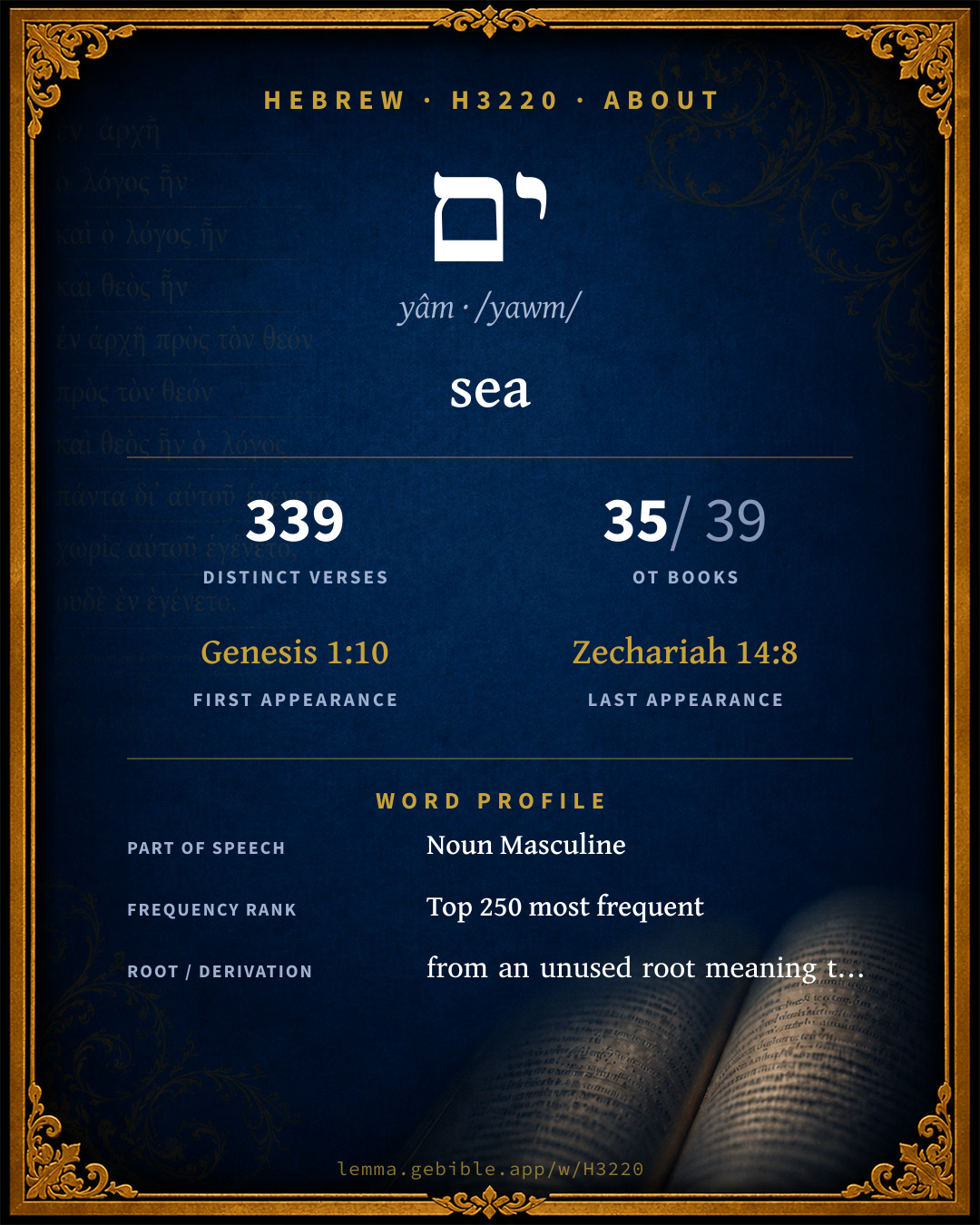
יָם
sea
‘sea’ is one of 9 main senses fuller range ↓
Full lexicon entry — Brown-Driver-Briggs (BDB)
From Brown-Driver-Briggs (BDB)
Where this word appears
See every Absolute-state word in the Hebrew Bible →
Grammar key — what these labels mean
Part of speech
- Noun
- A naming word — a person, place, thing, or idea.
Noun type
- Common
- A common noun — a general class of person, place, or thing (“king,” “city,” “water”), not a specific name.
State
- Absolute
- The independent form of a noun, not bound to a following word.
- Construct
- A noun bound to a following noun in a possessive / “of” relationship (the construct chain).
Gender
- Masculine
- Grammatically masculine.
Number
- Singular
- One.
- Plural
- More than one (in Hebrew, generally three or more).
Every verse where H3220 appears in the Book of Joshua — 41 distinct verses. Click any verse to open its interlinear word-by-word view. Verse text shown in the World English Bible for context — . Each verse’s Hebrew form is shown with its reference; the English is not keyword-highlighted, since the data carries no word-level English alignment. Use “Compare translations” on any verse to read it across multiple English versions. This concordance covers the Hebrew Bible; Septuagint (Greek Old Testament) occurrences are not indexed here.
Joshua
- Joshua 1:4 הַ/יָּ֥ם ptcl def.art + n c ms From the wilderness, and this Lebanon, even to the great river, the river Euphrates, all the land of the Hittites, and to the great sea toward the going down of the sun, shall be your border.
- Joshua 2:10 יַם n c ms cs For we have heard how Yahweh dried up the water of the Red Sea before you, when you came out of Egypt; and what you did to the two kings of the Amorites, who were beyond the Jordan, to Sihon and to Og, whom you utterly destroyed.
- Joshua 3:16 יָ֧ם יָם n c ms cs n c ms cs that the waters which came down from above stood, and rose up in one heap, a great way off, at Adam, the city that is beside Zarethan; and those that went down toward the sea of the Arabah, even the Salt Sea, were wholly cut off: and the people passed over right against Jericho.
- Joshua 4:23 לְ/יַם prep + n c ms cs For Yahweh your God dried up the waters of the Jordan from before you, until you were passed over, as Yahweh your God did to the Red Sea, which he dried up from before us, until we were passed over;
- Joshua 5:1 יָ֗מָּ/ה הַ/יָּ֔ם n c ms + sfx dem ptcl def.art + n c ms It happened, when all the kings of the Amorites, who were beyond the Jordan westward, and all the kings of the Canaanites, who were by the sea, heard how that Yahweh had dried up the waters of the Jordan from before the children of Israel, until we were passed over, that their heart melted, neither was there spirit in them any more, because of the children of Israel.
- Joshua 8:9 מִ/יָּ֣ם prep + n c ms Joshua sent them forth; and they went to set up the ambush, and stayed between Bethel and Ai, on the west side of Ai: but Joshua lodged that night among the people.
- Joshua 8:12 מִ/יָּ֥ם prep + n c ms He took about five thousand men, and set them in ambush between Bethel and Ai, on the west side of the city.
- Joshua 8:13 מִ/יָּ֣ם prep + n c ms So they set the people, even all the host who was on the north of the city, and their liers-in-wait who were on the west of the city; and Joshua went that night into the midst of the valley.
- Joshua 9:1 הַ/יָּ֣ם ptcl def.art + n c ms It happened, when all the kings who were beyond the Jordan, in the hill-country, and in the lowland, and on all the shore of the great sea in front of Lebanon, the Hittite, and the Amorite, the Canaanite, the Perizzite, the Hivite, and the Jebusite, heard of it;
- Joshua 11:2 מִ/יָּֽם prep + n c ms and to the kings who were on the north, in the hill-country, and in the Arabah south of Chinneroth, and in the lowland, and in the heights of Dor on the west,
- Joshua 11:3 וּ/מִ/יָּ֔ם conj + prep + n c ms to the Canaanite on the east and on the west, and the Amorite, and the Hittite, and the Perizzite, and the Jebusite in the hill-country, and the Hivite under Hermon in the land of Mizpah.
- Joshua 11:4 הַ/יָּ֖ם ptcl def.art + n c ms They went out, they and all their hosts with them, much people, even as the sand that is on the sea-shore in multitude, with horses and chariots very many.
- Joshua 12:3 יָ֨ם יָ֣ם יָם n c ms cs n c ms cs n c ms cs and the Arabah to the sea of Chinneroth, eastward, and to the sea of the Arabah, even the Salt Sea, eastward, the way to Beth-jeshimoth; and on the south, under the slopes of Pisgah:
- Joshua 12:7 יָ֔מָּ/ה n c ms + sfx dem These are the kings of the land whom Joshua and the children of Israel struck beyond the Jordan westward, from Baal Gad in the valley of Lebanon even to Mount Halak, that goes up to Seir; and Joshua gave it to the tribes of Israel for a possession according to their divisions;
- Joshua 13:27 יָם n c ms cs and in the valley, Beth Haram, and Beth Nimrah, and Succoth, and Zaphon, the rest of the kingdom of Sihon king of Heshbon, the Jordan and the border [of it], to the uttermost part of the sea of Chinnereth beyond the Jordan eastward.
- Joshua 15:2 יָ֣ם n c ms cs Their south border was from the uttermost part of the Salt Sea, from the bay that looks southward;
- Joshua 15:4 יָ֑מָּ/ה n c ms + sfx dem and it passed along to Azmon, and went out at the brook of Egypt; and the goings out of the border were at the sea: this shall be your south border.
- Joshua 15:5 יָ֣ם הַ/יָּ֔ם n c ms cs ptcl def.art + n c ms The east border was the Salt Sea, even to the end of the Jordan. The border of the north quarter was from the bay of the sea at the end of the Jordan;
- Joshua 15:8 יָ֔מָּ/ה n c ms + sfx dem and the border went up by the valley of the son of Hinnom to the side of the Jebusite southward (the same is Jerusalem); and the border went up to the top of the mountain that lies before the valley of Hinnom westward, which is at the uttermost part of the valley of Rephaim northward;
- Joshua 15:10 יָ֨מָּ/ה֙ n c ms + sfx dem and the border turned about from Baalah westward to Mount Seir, and passed along to the side of Mount Jearim on the north (the same is Chesalon), and went down to Beth-shemesh, and passed along by Timnah;
- Joshua 15:11 יָֽמָּ/ה n c ms + sfx dem and the border went out to the side of Ekron northward; and the border extended to Shikkeron, and passed along to Mount Baalah, and went out at Jabneel; and the goings out of the border were at the sea.
- Joshua 15:12 יָ֔ם הַ/יָּ֥מָּ/ה n c ms ptcl def.art + n c ms + sfx dem The west border was to the great sea, and the border [of it]. This is the border of the children of Judah round about according to their families.
- Joshua 15:46 וָ/יָ֑מָּ/ה conj + n c ms + sfx dem from Ekron even to the sea, all that were by the side of Ashdod, with their villages.
- Joshua 15:47 וְ/הַ/יָּ֥ם conj + ptcl def.art + n c ms Ashdod, its towns and its villages; Gaza, its towns and its villages; to the brook of Egypt, and the great sea, and the border [of it].
- Joshua 16:3 יָ֜מָּ/ה יָֽמָּ/ה n c ms + sfx dem n c ms + sfx dem and it went down westward to the border of the Japhletites, to the border of Beth Horon the lower, even to Gezer; and the goings out of it were at the sea.
- Joshua 16:6 הַ/יָּ֗מָּ/ה ptcl def.art + n c ms + sfx dem and the border went out westward at Michmethath on the north; and the border turned about eastward to Taanath Shiloh, and passed along it on the east of Janoah;
- Joshua 16:8 יָ֨מָּ/ה֙ הַ/יָּ֑מָּ/ה n c ms + sfx dem ptcl def.art + n c ms + sfx dem From Tappuah the border went along westward to the brook of Kanah; and the goings out of it were at the sea. This is the inheritance of the tribe of the children of Ephraim according to their families;
- Joshua 17:9 הַ/יָּֽמָּ/ה ptcl def.art + n c ms + sfx dem The border went down to the brook of Kanah, southward of the brook: these cities belonged to Ephraim among the cities of Manasseh: and the border of Manasseh was on the north side of the brook, and the goings out of it were at the sea:
- Joshua 17:10 הַ/יָּ֖ם ptcl def.art + n c ms southward it was Ephraim's, and northward it was Manasseh's, and the sea was his border; and they reached to Asher on the north, and to Issachar on the east.
- Joshua 18:12 יָ֔מָּ/ה n c ms + sfx dem Their border on the north quarter was from the Jordan; and the border went up to the side of Jericho on the north, and went up through the hill-country westward; and the goings out of it were at the wilderness of Beth Aven.
- Joshua 18:14 יָ֜ם יָֽם n c ms n c ms The border extended [there], and turned about on the west quarter southward, from the mountain that lies before Beth Horon southward; and the goings out of it were at Kiriath Baal (the same is Kiriath Jearim), a city of the children of Judah: this was the west quarter.
- Joshua 18:15 יָ֔מָּ/ה n c ms + sfx dem The south quarter was from the uttermost part of Kiriath Jearim; and the border went out westward, and went out to the spring of the waters of Nephtoah;
- Joshua 18:19 יָם n c ms cs and the border passed along to the side of Beth Hoglah northward; and the goings out of the border were at the north bay of the Salt Sea, at the south end of the Jordan: this was the south border.
- Joshua 19:11 לַ/יָּ֛מָּ/ה prep det + n c ms + sfx dem and their border went up westward, even to Maralah, and reached to Dabbesheth; and it reached to the brook that is before Jokneam;
- Joshua 19:26 הַ/יָּ֔מָּ/ה ptcl def.art + n c ms + sfx dem and Allammelech, and Amad, and Mishal; and it reached to Carmel westward, and to Shihorlibnath;
- Joshua 19:29 הַ/יָּ֖מָּ/ה ptcl def.art + n c ms + sfx dem and the border turned to Ramah, and to the fortified city of Tyre; and the border turned to Hosah; and the goings out of it were at the sea by the region of Achzib;
- Joshua 19:34 יָ֨מָּ/ה֙ מִ/יָּ֔ם n c ms + sfx dem prep + n c ms and the border turned westward to Aznoth Tabor, and went out from there to Hukkok; and it reached to Zebulun on the south, and reached to Asher on the west, and to Judah at the Jordan toward the sunrise.
- Joshua 22:7 יָ֑מָּ/ה n c ms + sfx dem Now to the one half-tribe of Manasseh Moses had given [inheritance] in Bashan; but to the other half gave Joshua among their brothers beyond the Jordan westward; moreover when Joshua sent them away to their tents, he blessed them,
- Joshua 23:4 וְ/הַ/יָּ֥ם conj + ptcl def.art + n c ms Behold, I have allotted to you these nations that remain, to be an inheritance for your tribes, from the Jordan, with all the nations that I have cut off, even to the great sea toward the going down of the sun.
- Joshua 24:6 הַ/יָּ֑מָּ/ה יַם ptcl def.art + n c ms + sfx dem n c ms cs I brought your fathers out of Egypt: and you came to the sea; and the Egyptians pursued after your fathers with chariots and with horsemen to the Red Sea.
- Joshua 24:7 הַ/יָּם֙ ptcl def.art + n c ms When they cried out to Yahweh, he put darkness between you and the Egyptians, and brought the sea on them, and covered them; and your eyes saw what I did in Egypt: and you lived in the wilderness many days.
About this entry
At a glance — auto-summarized from this page’s data, not written by a person. Every figure links to its source below. This summary describes the numbers; it doesn’t interpret them.
At its core, ים (yâm) means “sea.” Not a single-sense word: explore its full sense range. It appears 339 verses across 35 books of the Hebrew Bible, among its common vocabulary. Scripture first uses it in Genesis 1:10. It clusters with ים under a shared root. Dig into 339-verse concordance and the renderings breakdown below.
Gloss history
Strong's 1890 vs modern scholarship
About this word
Strong's H3220 catalogs a Hebrew word from the Hebrew Old Testament.
These counts are not copied from any lexicon or concordance. They are computed here, from the morphology-tagged Hebrew Old Testament. What Lemma adds →
- 339
- distinct verses
- The word appears in 339 distinct verses.
- 35 / 39
- OT books
- The word appears in 35 of 39 Old Testament books.
- #127
- by frequency
- Top 250 most frequent Hebrew words (rank 127 of 8,640 Hebrew words by occurrence).
View all 339 occurrences in the concordance →
By section of the Old Testament
By traditional corpus
Conventional, traditional groupings — biblical authorship is debated, so this is a traditional corpus grouping, not an authorship claim. Each share is this word’s portion of its verses in that division of the Hebrew canon. Each figure is a share of the word’s 339 distinct verses.
- Prophets (Nevi'im) 195 verses · 58%
- Torah (Pentateuch) 72 verses · 21%
- Writings (Ketuvim) 72 verses · 21%
How translations render this word
Counts come from each version’s own published word-to-Strong’s tagging or interlinear alignment — an approximate guide to how each version renders this word, not a word-level alignment the data otherwise carries. Because each total is that version’s own tagged count, the per-version totals vary from one another and need not match the appearance or distinct-verse counts above. These counts may also differ from a printed concordance because Lemma counts each distinctly tagged rendering and does not collapse phrase taggings into a single head-word total. This is a fixed set of word-tagged versions (KJV, ASV, BSB, ULT) and does not change with the reading translation you choose elsewhere. Each version’s license is shown beside its name below (and on Sources).
- King James Version: Sea 248×, West 36×, Seas 21×
- American Standard Version: Sea 218×, West 34×, Westward 24×
- Berean Standard Bible: Sea 244×, West 50×, Seas 19×
- unfoldingWord Literal Text: Sea 215×, Sea of 42×, West 38×
King James Version Public Domain
Renders H3220 across 396 tagged occurrences — most commonly:
Plus other, less common renderings. Plus 31 renderings that appear only once — usually multi-word phrases or single function words the recovered tagging swept in, not distinct renderings.
American Standard Version Public Domain
Renders H3220 across 393 tagged occurrences — most commonly:
Plus other, less common renderings. Plus 50 renderings that appear only once — usually multi-word phrases or single function words the recovered tagging swept in, not distinct renderings.
Berean Standard Bible Public Domain
Renders H3220 across 378 tagged occurrences — most commonly:
Plus other, less common renderings. Plus 26 renderings that appear only once — usually multi-word phrases or single function words the recovered tagging swept in, not distinct renderings. Not rendered by a distinct English word in 17 further occurrences.
unfoldingWord Literal Text CC BY-SA 4.0
Renders H3220 across 398 tagged occurrences — most commonly:
Plus other, less common renderings. Plus 22 renderings that appear only once — usually multi-word phrases or single function words the recovered tagging swept in, not distinct renderings.
13 senses and sub-senses in the full BDB
What do BDB’s symbols mean?
BDB uses these scholarly abbreviations:
| Symbol | Meaning |
|---|---|
| 𝔊 | the Septuagint (the ancient Greek translation, LXX) |
| 𝔙 | the Vulgate (the Latin translation) |
| 𝔖 | the Syriac version (the Peshitta) |
| 𝔗 | the Targum (the Aramaic translation) |
| ψ | the Psalms |
| √ | root (the underlying root or stem) |
| ‖ | parallel passage (a synonymous or contrasted parallel) |
| † | the dagger: every passage where the word occurs is cited |
The 13 senses and sub-senses the full Brown-Driver-Briggs lexicon distinguishes for this word, in lexicon order (not ranked by frequency), with BDB’s own verbatim wording and sub-sense lettering. Shown in Hebrew script with BDB’s own scholarly abbreviations. The condensed entry is in the Lexicon Entry tab. See also the Forms in the corpus table below.
- 1. Mediterranean S. Nu 13:29 (E), 34:5 (P), Dt 1:7 Jos 5:1 1 K 5:23(×2) Jon 1:4(×2) + often; the Mediterr. is called also הַיָּם הַגָּדוֹל Nu 34:6, 7 Jos 15:12, 47 Ez 47:10, 15, 19, 20; 48:28 +, cf. הַיּ׳ גּ׳ וּרְחַב יָדַיִם ψ 104:25; הַיָּם הַגּ׳ מְבוֹא הַשָּׁ֑מֶשׁ Jos 1:4; 23:4 (v. its Assyrian name tiamtu rabîtu šâ šulmi šamši etc., SchrNamen der Meere. 171ff.); הַיּ׳ הַגּ׳ אֶל־מוּל הַלְּבָנוֹן Jos 9:1; הַיּ׳ הָאַחֲרוֹן the hinder sea Dt 11:24; 34:2 Zc 14:8 Jo 2:20 (in the last two opp. הַיּ׳ הַקַּדְמֹנִי, v. infr.); of Mediterr. in particular part יָם פְּלִשְׁתִּים Ex 23:31 (JE); יָם יָפוֹ 2 Ch 2:15 = יָם יָפוֹא Ezr 3:7; of Mediterr. in pl. Dn 11:45 [cf. 8 d] Hi Ke Meinh Bev Dr (world-encircling seas Behrm). e.g. Numbers 13:29
- 2. יַם־סוּף ‘Red Sea’ (v. סוּף Ex 13:18 (cf. 10:19), 15:4; Nu 14:25; Dt 1:40; Jos 2:10 Ju 11:16 + often; also הַיָּם Ex 14:2(×2), 9 (?) Is 51:10(×2); 63:11 +; prob. also יָם־מִצְרַיִם 11:15; ‘Red Sea’ named or referred to c. 66 times; יַם־סוּף clearly of Ælanitic Gulf 1 K 9:26 (cf. 2 Ch 8:17). e.g. Exodus 13:18
- 3. Dead Sea, יָם מֶלַח sea of salt Gn 14:3 Nu 34:3, 12 Dt 3:17 Jos 3:16; 12:3; 15:2, 5; 18:19; יָם הָעֲרָבָה Dt 3:17; 4:49 Jos 3:16; 12:3 2 K 14:25; הַיּ׳ הַקַּדְמֹנִי Ez 47:18 Zc 14:8 Jo 2:20 (v. supr.) simply יָם Is 16:8 Je 48:32;—in יָם יַעְזֵר Je 48:32 יָם is text. error, del. c. Gf Gr Che Gie e.g. Genesis 14:3
- 4. Sea of Galilee יָם כִּנֶּרֶת Nu 34:11 Jos 13:27; יָם כִּנְּרוֹת 12:3; simply יָם Dt 33:23. e.g. Numbers 34:11
- 5. more gen. sea, opp. earth and (or) sky Gn 1:26, 28; 9:2 (P), Ex 20:11 (E), Hg 2:6 + often Jb ψ Is 2 etc.; Am 6:12 read בַּבָּקָר יָם for בקרים (v. בָּקָר); sea as under earth ψ 24:2 (cf. Gn 1:10; 6:11 Ex 20:5 = Dt 5:3); fig. of flood of invaders, עָלָה עַל־בָּבֶל הַיָּם Je 51:42. e.g. Genesis 1:26
- 6. of a mighty river, the Nile Na 3:8(×2) Is 19:5 (‖ נָהָר); cf. הַתַּנִּין אֲשֶׁר בַּיָּם 27:1 and כַּתַּנִּים בַּיַּמִּים Ez 32:2 (sim. of Pharaoh); of Euphrates Is 21:1 Je 51:36 (according to Che Gf al.; Is 21:1 perhaps better of Persian Gulf, v. Di). e.g. Nahum 3:8
- 7. the great basin in temple-court, called the sea: וַיַּעַשׂ אֶת־הַיָּם מוּצָק 1 K 7:23 = 2 Ch 4:2; יָם הַנְּחשֶׁת 2 K 25:13 1 Ch 18:8 Je 52:17; הַיָּם alone 1 K 7:24, 25 + 10 times K Ch + Je 52:20. e.g. 1 Kings 7:23
- 8. combinations are:
- a. 10 שְׂפַת הַיָּם Jos 11:4 1 K 5:9, and in sim. Gn 22:17 Ju 7:12 1 S 13:5; חוֹף הַיּ׳ Jos 9:1 Ez 25:16; חוֹף יַמִּים Gn 49:13 Ju 5:17; cf. חֶבֶל הַיָּם Zp 2:5 region by the sea; so v 6 but dub., v i. חֶבֶל 3 e.g. Joshua 11:4
- b. sand of the sea (shore) חוֹל הַיָּם (in sim.) Gn 32:13; 41:49 Ho 2:1 Is 10:22 + often (v. חוֹל); חוֹל גְּבוּל לַיָּם Je 5:22. e.g. Genesis 32:13
- c. לְשׁוֹן הַיָּם tongue (arm or gulf) of sea Jos 15:5; 18:19 Is 11:15. e.g. Joshua 15:5
- d. מִיָּם עַד־יָם Am 8:12 Zc 9:10 ψ 72:8, cf. Mi 7:12 Zc 14:8(×2) Jo 2:20(×2) Dn 11:45. e.g. Amos 8:12
- 9. = 3 (orig. 3, from position of Mediterr. with ref. to Palestine, and this sense still often perceptible): with other three points of compass Gn 13:14; 28:14 (J), Nu 2:18; 35:5 (P), Dt 3:27 1 K 7:25 1 Ch 9:24 2 Ch 4:4 Ez 42:19 + 6 times, Ez, Zc 14:4 Dn 8:4 ψ 107:3 (מִמִּזְרָח וּמִמַּעֲרָב מִצָּפוֹן וּמִיָּם; but read perhaps וּמִיָּמִן from the south, Hu Pe Bi Che); opp. east Jos 11:2; 16:6 + 16 times Ez 48; west alone Gn 12:8 (J); רוּחַ יָם Ex 10:19 (J) west wind; מִיָּם לְ westward Jos 8:9, 12, 13 +; יָ֫מָּה westward, often of tabernacle Ex 26:22, 27 Nu 3:23 + (all P), and of land Jos 5:1; 15:8, 10 etc., + often Ez; דֶּרֶךְ הַיָּם = westward Ez 41:12; גְּבוּל יָם western border Nu 34:6(×2) Jos 15:12; פְּאַת־יָם west side Ex 27:12; 38:12 Nu 35:5 Jos 18:14; פְּאַת דרך הים Ez 41:12 (v. further פאה). e.g. Genesis 13:14
Senses from the full Brown-Driver-Briggs lexicon (Brown, Driver, Briggs; Oxford 1906 — public domain), digitized via Sefaria, supplemented by the OpenScriptures HebrewLexicon (CC BY 4.0). Full attribution on Sources.
Word origin
n.m. Ex 14:27 sea (Ph. ים; Arabic يَمٌّ; Palm. בימא on the sea, VogNo. 79; on Assyrian iâmu,, sea, v. DlHWB307 M-ACD 52 HptBAS i.171 n.)—abs. יָם 1 S 13:5 +; יָ֫מָּה Gn 28:14 +; cstr. יָם Gn 14:3 + 23 times, also יָ֫מָּה סוּף Ex 10:19, but always יַם־סוּף Ex 13:18 + 22 times; sf. יַמָּהּ Je 51:36; pl. יַמִּים Ju 5:17 + 29 times;—sea: especially
— Brown-Driver-Briggs (Oxford 1906, public domain), digitized via Sefaria, supplemented by the OpenScriptures HebrewLexicon (CC BY 4.0). See Sources.
Origin: from an unused root meaning to roar
Jastrow Dictionary
A second Hebrew/Aramaic lexicon for comparison, covering Aramaic and post-biblical (Talmudic, Targumic, Midrashic) usage that the biblical-Hebrew BDB does not. Matched by lemma rather than by Strong’s number, so a lemma may carry more than one Jastrow headword (shown separately below), and the entries cover usage well beyond the Bible.
יָם
- (b. h.) sea, lake, reservoir. Ber. 54ᵇ יורדי הים seafarers (on landing). B. Bath. 74ᵇ יַמָּהּ של טבריא the Lake of Tiberias; ים הגדול the Mediterranean Ocean. Gitt. 8ᵃ ים אוקיינוס; (Tosef. Ter. II, 14; a. e. only אוק׳).—Bekh. 13ᵇ, a. fr. ים המלח the Dead Sea; a. fr.—Pl. יַמִּים, B. Bath. l. c.; a. fr.—Esp. a) the cosmetic paint bottle. Cant. R. to I, 3, v. זַכְרוּת.—b) יַם נפה the receiver of flour at sifting or in the mill. Kel. XV, 3; (Tosef. Kel. B. Mets. V, 5 only נפה). Zab. IV, 2 (only הים).—c) the receptacle in the wine or oil press, tank. B. Bath. IV, 5.—d) the water reservoir in the Solomonic Temple. Zeb. 62ᵇ; Yoma 58ᵇ; a. e.—Fem. form: יַמָּה. Y. Shek. V, 48ᵈ לְיַמָּתִי (I offer a sacrifice) for my yammah, סברין מימר שופעת כים they thought she meant that she had a hemorrhage (flowing like a sea), אמר לון בימה סכנת said he to us, she was in danger on sea; Men. 64ᵇ, v. זִיבָה).
A Dictionary of the Targumim, the Talmud Babli and Yerushalmi, and the Midrashic Literature (Marcus Jastrow; London, Luzac, 1903) — Public Domain. Digitized via Sefaria. Digitized via Sefaria. Full attribution on Sources.
Forms in the corpus
The 118 distinct written forms H3220 takes in the Hebrew Bible, most frequent first — each parse links to that state’s occurrences in the concordance. Hebrew forms include their vowel points and cantillation, so a single lemma takes many written forms.
The 60 most common forms are shown; 58 rarer forms follow in the full concordance.
Same root — word family
Other BDB entries built from the same root as H3220, grouped by Strong’s listed origin. These share a root / origin per the lexicon — not necessarily a shared meaning. Each links to that word’s own entry.
Derived from this word
Compare all same-root words → They share a root, not necessarily a meaning.
Septuagint verse parallels
This word appears in 314 verses that also exist in the Greek Old Testament (Septuagint), out of the 339 Hebrew verses it occurs in. You can read those verses in Greek by switching the Old Testament edition to the Septuagint.
Read these verses in the Septuagint
- Genesis 1:10
- Exodus 10:19
- Leviticus 11:9
- Numbers 2:18
- Deuteronomy 1:7
- Joshua 1:4
- Judges 5:17
- 1 Samuel 13:5
- 2 Samuel 17:11
- 1 Kings 5:9
- 2 Kings 14:25
- 1 Chronicles 9:24
This is a verse-level parallel only — the same verses exist in both the Hebrew and Greek Old Testaments. No word-level Hebrew↔Greek correspondence is claimed: the data carries no such alignment, so no Greek word is shown as this Hebrew word’s translation. Coverage is not total — the Septuagint omits the deuterocanon and renumbers the Psalms, so some Hebrew verses have no direct Greek parallel.