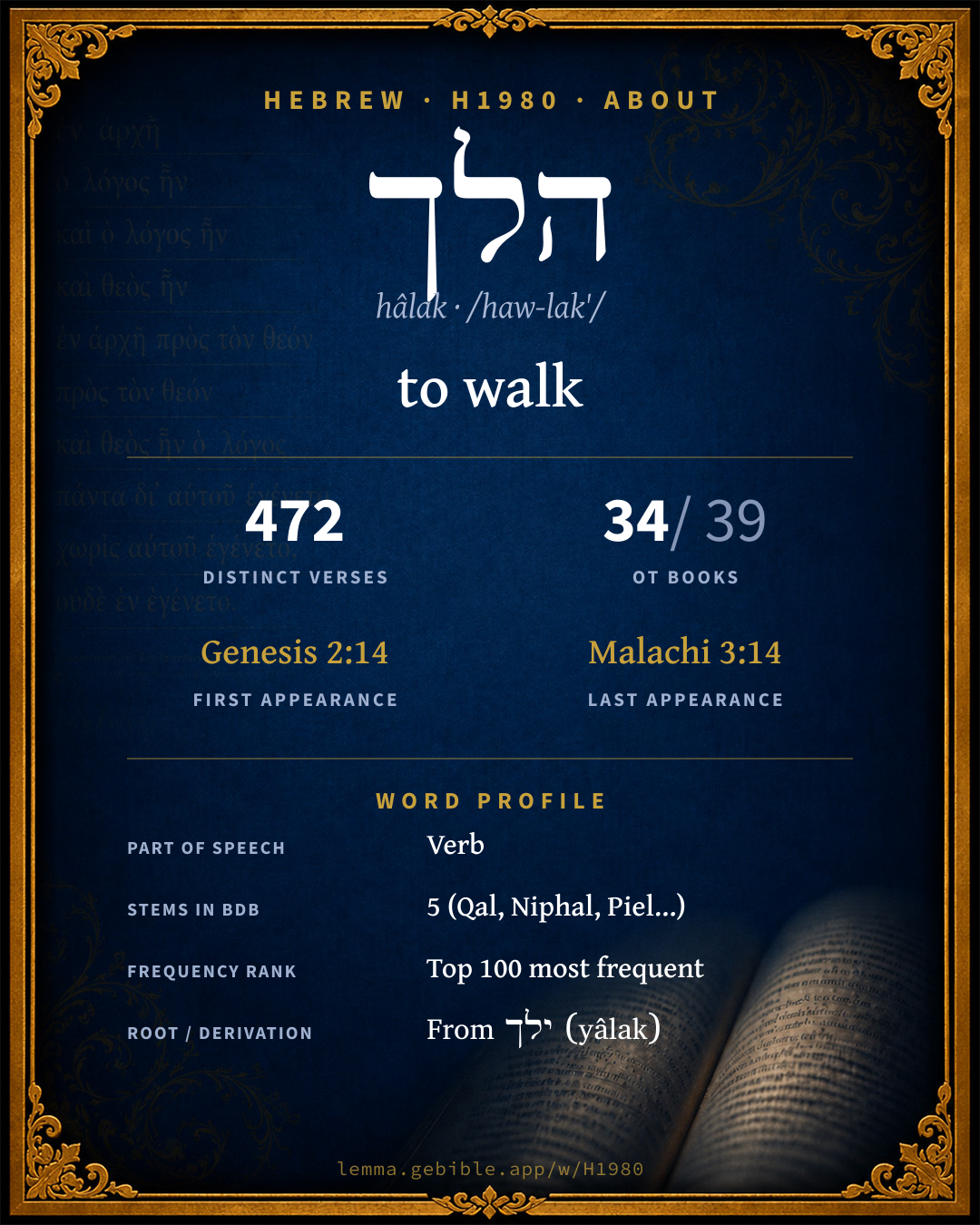
הָלַךְ
to walk
‘to walk’ is one of 2 main senses fuller range ↓
Full lexicon entry — Brown-Driver-Briggs (BDB)
From Brown-Driver-Briggs (BDB)
Where this word appears
See every Qal verb in the Hebrew Bible →
Grammar key — what these labels mean
Part of speech
- Verb
- An action or state-of-being word.
Stem
- Qal
- The basic, simple active stem — the plain form of the verb (“he wrote”). Here: ‘lit.’
- Hithpael
- The reflexive or reciprocal stem (the subject acts on itself). Here: ‘lit.’
- Piel
- An intensive or resultative active stem. Here: ‘walk in or with a throng sq.’
- Niphal
- Usually the simple passive or reflexive of the Qal (“he was written”).
Form
- Participle Active
- A verbal adjective expressing ongoing or characteristic action (“writing / one who writes”).
- Perfect
- A completed action or state — Hebrew marks aspect (completeness) more than strict tense (“he wrote”).
- Infinitive Absolute
- An unbound verbal noun, often intensifying or standing in for a finite verb.
- Sequential Perfect
- A perfect with prefixed waw continuing a preceding imperfect or command (waw-consecutive perfect).
- Infinitive Construct
- A bound verbal noun, frequently with prepositions (“to write / in writing”).
- Imperfect
- An incomplete, ongoing, or future action (“he will / would write”).
- Sequential Imperfect
- An imperfect with prefixed waw — the standard past-narrative form (waw-consecutive imperfect).
- Imperative
- A direct command (“write!”).
- Cohortative
- A first-person volitional form expressing wish or resolve (“let me / let us write”).
- Participle Passive
- A verbal adjective expressing action received (“written”).
- Jussive
- A third- or second-person volitional form expressing wish or command (“let him write”).
State
- Absolute
- The independent form of a noun, not bound to a following word.
- Construct
- A noun bound to a following noun in a possessive / “of” relationship (the construct chain).
Person
- 3rd Person
- The one spoken about (“he / she / it / they”).
- 2nd Person
- The one addressed (“you”).
- 1st Person
- The speaker (“I / we”).
Gender
- Masculine
- Grammatically masculine.
- Common
- Either gender — not distinguished for this form.
- Feminine
- Grammatically feminine.
Number
- Singular
- One.
- Plural
- More than one (in Hebrew, generally three or more).
1 verse where H1980 appears in the Hithpael stem in the Book of Leviticus. Filtered view — show all forms. Click any verse to open its interlinear word-by-word view. Verse text shown in the World English Bible for context — . Each verse’s Hebrew form is shown with its reference; the English is not keyword-highlighted, since the data carries no word-level English alignment. Use “Compare translations” on any verse to read it across multiple English versions. This concordance covers the Hebrew Bible; Septuagint (Greek Old Testament) occurrences are not indexed here.
Leviticus
About this entry
At a glance — auto-summarized from this page’s data, not written by a person. Every figure links to its source below. This summary describes the numbers; it doesn’t interpret them.
At its core, הלך (hâlak) means “to walk.” The King James Version’s older “walketh” has given way to “went” in modern versions, as the renderings breakdown shows. Spanning 472 verses in 34 books, it ranks among the common words of the Hebrew Bible. Scripture first uses it in Genesis 2:14. Across 5 stems, its meaning turns on the binyan (Qal, Niphal). Dig into 472-verse concordance and the renderings breakdown below.
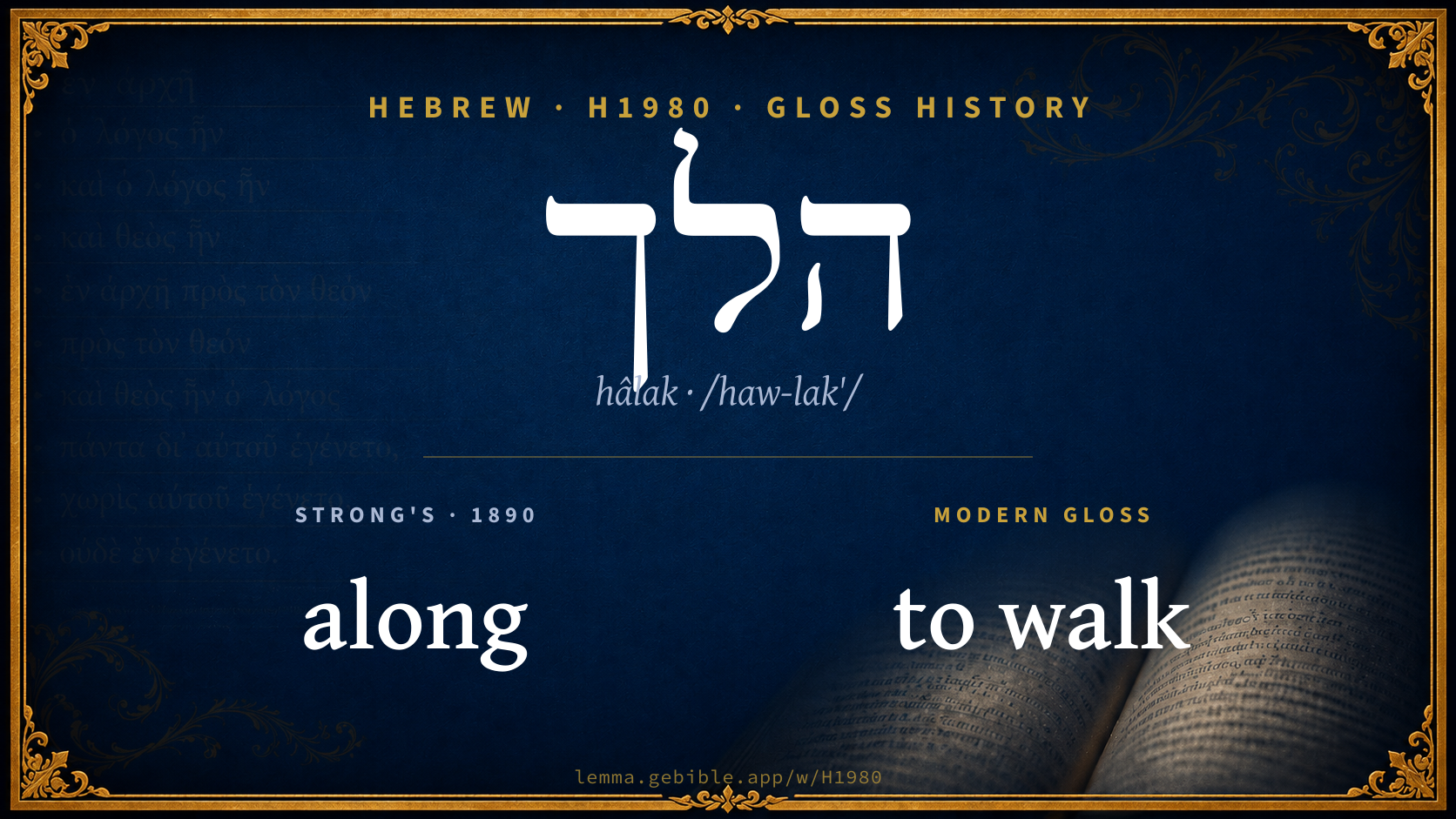
Gloss history
Strong's 1890 vs modern scholarship
About this word
Strong's H1980 catalogs a Hebrew word from the Hebrew Old Testament.
These counts are not copied from any lexicon or concordance. They are computed here, from the morphology-tagged Hebrew Old Testament. What Lemma adds →
- 472
- distinct verses
- The word appears in 472 distinct verses.
- 34 / 39
- OT books
- The word appears in 34 of 39 Old Testament books.
- #96
- by frequency
- Top 100 most frequent Hebrew words (rank 96 of 8,640 Hebrew words by occurrence).
View all 472 occurrences in the concordance →
By section of the Old Testament
By traditional corpus
Conventional, traditional groupings — biblical authorship is debated, so this is a traditional corpus grouping, not an authorship claim. Each share is this word’s portion of its verses in that division of the Hebrew canon. Each figure is a share of the word’s 472 distinct verses.
- Prophets (Nevi'im) 255 verses · 54%
- Writings (Ketuvim) 135 verses · 29%
- Torah (Pentateuch) 82 verses · 17%
How translations render this word
Counts come from each version’s own published word-to-Strong’s tagging or interlinear alignment — an approximate guide to how each version renders this word, not a word-level alignment the data otherwise carries. Because each total is that version’s own tagged count, the per-version totals vary from one another and need not match the appearance or distinct-verse counts above. These counts may also differ from a printed concordance because Lemma counts each distinctly tagged rendering and does not collapse phrase taggings into a single head-word total. This is a fixed set of word-tagged versions (KJV, ASV, BSB, ULT) and does not change with the reading translation you choose elsewhere. Each version’s license is shown beside its name below (and on Sources).
- King James Version: Went 54×, Go 33×, Walk 28×
- American Standard Version: Went 50×, Go 27×, Walk 26×
- Berean Standard Bible: Go 197×, Went 130×, Come 73×
- unfoldingWord Literal Text: Went 32×, Go 31×, Going 28×
King James Version Public Domain
Renders H1980 across 497 tagged occurrences — most commonly:
Plus other, less common renderings. Plus 168 renderings that appear only once — usually multi-word phrases or single function words the recovered tagging swept in, not distinct renderings. Not rendered by a distinct English word in 3 further occurrences.
American Standard Version Public Domain
Renders H1980 across 499 tagged occurrences — most commonly:
Plus other, less common renderings. Plus 186 renderings that appear only once — usually multi-word phrases or single function words the recovered tagging swept in, not distinct renderings.
Berean Standard Bible Public Domain
Renders H1980 across 1,457 tagged occurrences — most commonly:
Plus other, less common renderings. Plus 374 renderings that appear only once — usually multi-word phrases or single function words the recovered tagging swept in, not distinct renderings. Not rendered by a distinct English word in 86 further occurrences.
unfoldingWord Literal Text CC BY-SA 4.0
Renders H1980 across 532 tagged occurrences — most commonly:
Plus other, less common renderings. Plus 140 renderings that appear only once — usually multi-word phrases or single function words the recovered tagging swept in, not distinct renderings.
58 senses and sub-senses in the full BDB
Hebrew verbs can shift meaning by stem (binyan): Qal is the basic action, Niphal is often passive or reflexive, Piel often intensifies or makes it factitive, and Hiphil is typically causative. The senses below are grouped under the stem BDB assigns to each. This entry also uses Hithpael (reflexive or reciprocal).
What do BDB’s symbols mean?
BDB uses these scholarly abbreviations:
| Symbol | Meaning |
|---|---|
| 𝔊 | the Septuagint (the ancient Greek translation, LXX) |
| 𝔙 | the Vulgate (the Latin translation) |
| 𝔖 | the Syriac version (the Peshitta) |
| 𝔗 | the Targum (the Aramaic translation) |
| ψ | the Psalms |
| √ | root (the underlying root or stem) |
| ‖ | parallel passage (a synonymous or contrasted parallel) |
| † | the dagger: every passage where the word occurs is cited |
The 58 senses and sub-senses the full Brown-Driver-Briggs lexicon distinguishes for this word, in lexicon order (not ranked by frequency), with BDB’s own verbatim wording and sub-sense lettering. Shown in Hebrew script with BDB’s own scholarly abbreviations. The condensed entry is in the Lexicon Entry tab. See also the Forms in the corpus table below.
Qal
- Pf. 3 ms. ה׳ Gn 26:26 +; הָלָ֑ךְ 2 S 8:6 +; 3 pl. הָֽלְכוּ Gn 14:24 +; (הֶ)הָֽלְכוּא Jos 10:24 (Ges§ 23, 3; 138, 3 b Köi 414 f.), etc.; Impf. rarely a. 3 ms. יַהֲלֹךְ Je 9:3 + 4 times Jb ψ; וַיַּהֲלֹךְ Jb 14:20; 3 fs. תִּהֲלַךְ ψ 73:9; וַתִּהֲלַךְ Ex 9:23 (Ew§ 138 b Ges§ 69, R. 8 Köi 415); 1 s. אֶהֱלֹךְ Jb 16:22; 23:8 (cf. MI 14.15); יַהֲלֹ֑כוּ Jb 41:11; usually b. (629 times) as if from ילך (ולך; vid. Hiph. Ges§69, 2 R. 8 Köi 414 ff.; PrätZAW 1882, 310 ff.; cf. also יָלַד etc.) 3 ms. יֵלֵךְ Ex 10:24 +; יֵלֵ֑ךְ Ec 5:15 +; וְיֵלַ֑ךְ Jb 27:21; יֵלֶךְ־ Ex 34:9 +; וַיֵּ֫לֶךְ Gn 12:4(×2) + 210 times, וַיֵּלַ֑ךְ Gn 24:61 + 6 times; 3 fs. תֵּלֵךְ Gn 24:39 תֵּלֵ֑ךְ ψ 97:3; וַתֵּ֫לֶךְ Gn 7:18 +; 2 ms. תֵּלֵךְ etc. Gn 3:14 +; 2 fs. תֵּלְכִי etc. Ju 4:8(×2) +; 1 s. אֵלֵךְ Ex 3:11 +; וָאֵלֵךְ Ju 19:18 +; וָאֵלַ֑ךְ Jb 19:10; אֵלְכָה Gn 45:28 +, אֵילְכָה Mi 1:8; 3 mpl. יֵלְכוּ Ex 5:7 +; יֵלֵכ֑וּן ψ 89:31 + 2 times; וַיֵּלְכוּ Gn 9:23 (וילכו also SI 4) +; 3 fpl. תֵּלַכְנָה Ju 11:40 +; 2 mpl. תֵּלְכוּ Gn 42:38 +; תֵּלְכוּן Dt 6:14; תֵּלֵכ֑וּן Ex 3:21 Is 52:12; 2 fpl. תֵּלַכְנָה Ru 1:11; 1 pl. נֵלֵךְ Ex 8:23 +; וַנֵּ֫לֶךְ Dt 1:19, etc.; Imv. rarely a. הֲלוֹךְ Pr 13:20 (Kt; Qr הֹלֵךְ, cf. De Now); mpl. הִלְכוּ Je 51:50; usually b. (241 times) ms. לֵךְ Gn 26:16 + (לִך also MI 14), לֶךְ־ Gn 27:9 +; לְכָה Gn 19:32 +; לְךָ Nu 23:13 Ju 19:13 2 Ch 25:17; לֵ֑כָה 1 S 23:27; fs. לְכִי Ju 9:10 לֵ֑כִי Ex 2:8; mpl. לְכוּ Gn 37:20 +; fpl. לֵ֫כְנָה Ru 1:8, לֵ֫כְןָ Ru 1:12, etc.; Inf. abs. הָלוֹךְ Gn 8:3 +; הָלֹךְ Gn 31:30 +; cstr. rarely a. הֲלֹךְ Ex 3:19 + 4 times; הֲלָךְ־ Ec 6:9; usually b. (129 times) לֶ֫כֶת Mi 6:8 +; לָ֑כֶת Pr 15:21 + 2 times; sf. לֶכְתִּי 1 K 2:8; לֶכְתָּם 2 S 17:21 + 7 times (6 Ez); לֶכְתָּן Ez 1:9, 12, 17, etc.; Pt. הֹלֵךְ Gn 18:16 +; הוֹלֵךְ Gn 15:2 +; f. הֹלְכָה Je 3:6; הֹלֶכֶת Gn 32:21 + 2 times + הֹלֶכֶת֯י 2 K 4:23; pl. הֹלְכִים Ex 33:15 +, etc.; cstr. הֹלְכֵי Ju 5:6 + 3 times; fpl. הֹלְכֹת etc. Ex 2:5 + 3 times;—found in all documents of Hex, especially JE (240 times; D 65 times, P 30 times + H 14 times);— e.g. Genesis 26:26
- I. lit.
- 1. of persons,
- a. go, proceed, move, walk Gn 22:6, 8 Ex 17:5 Am 3:3 Zp 1:17 + often; of cherubim Ez 10:16 = living creatures 1:9, 12, 19, 20, 21, 24; opp. to sitting (ישׁב) Dt 6:7; 11:19 (both c. בַּדֶּרֶךְ); ‖ running (רוץ) Pr 4:12 Is 40:31, cf. also 2 Ch 30:6; distinguished from riding, driving Gn 24:65 (J; sq. בַּשָּׂדֶה לִקְרָאתֵנוּ), Ju 5:10 (עַל־הַדֶּרֶךְ), Is 41:3 (בְּרַגְלָיו), cf. Ec 5:1 (sq. אֶל), 10:7 (sq. עַל־הָאָרֶץ); on usage with prep. v. infr.; but also ‖ וַיִּרְכַּב 1 K 13:13; 18:45 cf. 2 K 9:16; וַיֵּלֶךְ רֹכֵב הַסּוּס v 18 (sq. לִקְרָאתוֹ); נְהַג וָלֵךְ … וַתֵּלֶךְ וַתָּבֹא 4:24 drive and go forward … and she went, and came. e.g. Genesis 22:6
- b. depart, go away: Gn 18:33 (J), and י׳ departed, Gn 34:17 (P) then we will take our daughter and depart; cf. 1 S 14:3; 15:27 Ex 3:19 (J), 12:28 (P) 2 K 5:25 +; go, go out (to a specific duty etc.): of Samuel 1 S 7:16, Barak Ju 4:8(×2); go out, forth (opp. שׁוּב) Ru 1:21 +; = go into exile (without modifier) 1 Ch 5:41 cf. Je 22:10 (הֹלֵךְ of one going into exile; opp. death); v. further אֲשֶׁר הָֽלְכוּ שָׁם Ez 37:21. e.g. Genesis 18:33
- c. less often where Eng. idiom requires or prefers come, (approach, arrive), vb. in Heb. being referred to starting point; mostly c. prep. (on usage c. prep. in gen. v. infr.):—לְכָה אֵלַי 1 S 17:44; so in prayer to י׳, וּלְכָה לִישֻׁעָ֫תָה לָ֫נוּ ψ 80:3; also in Yahweh’s exhortations to Isr. Is 55:1 (לַמַּיִם), v 3 (אֵלַי); come to, arrive at a land (ָה loc.) Gn 29:1; come unto (אֶל) a people Ru 2:11; but cf. especially (without prep.) Imv. followed by another Imv., etc., v. infr. 5 f, & partic. cases like Nu 22:6, 11, 17; 23:7(×2) Is 55:1(×2) etc., where actual summons to approach the speaker. e.g. 1 Samuel 17:44
- d. with modifiers: (1) α. of space traversed: אֵת כָּל־הַמִּדְבָּר Dt 1:19 (cf. I. אֵת 2), כָּל־הַבִּתְרוֹן 2 S 2:29; especially c. acc. דֶּרֶךְ way, Gn 35:3 (E) Nu 20:17 (JE) Dt 1:31 2 S 4:7, 1 K 13:12(×2); Je 52:7 cf. וְלֹא תָשׁוּב בַּדֶּרֶךְ אֲשֶׁר הָלָ֑כְתָּ 1 K 13:9; הֹלֵךְ דֶּרֶךְ = traveller Is 35:8; sq. אֳרָחוֹת Ju 5:6 (song), ptcp. cstr. הֹלְכֵי נְתִיבוֹת v 6 goers of paths (wayfarers); c. acc. דֶּרֶךְ = journey Pr 7:19; β. c. acc. of time Dt 2:14 2 S 2:32, cf. Jos 5:6; 14:10; also, with combination of ideas of space & time דֶּרֶךְ שְׁלֹשֶׁת יָמִים Ex 3:18 (+ בַּמִּדְבָּר v. infr.) cf. 5:3; 8:23; 15:22 (all JE) Nu 33:8 (P) 1 K 19:4. (2) c. prep.: α. sq. בְּ of space (territory, country, etc.) in which בַּמִּדְבָּר Ju 11:16, 18; cf. וַיֵּלֶךְ בַּבַּיִת אַחַת הֵנָּה וְאַחַת הֵנָּה 2 K 4:35 and he walked in the house once hither, once thither; especially + acc. of time or distance (cf. supr.) Jos 5:6; 14:10 (both D) 1 K 19:4; בָּֽעֲרָבָה 2 S 2:29; cf. בַּיַּבָּשָׁה Ex 14:29 = 15:19 (P?); בְּתוֹךְ הָעֵמֶק Jos 8:13 (JE); sq. בְּ of way, path בְּדֶרֶךְ 1 K 18:6(×2) בַּדּ׳ Nu 21:22 (JE) Jos 24:17 (E) Dt 1:33; 2:27; Ju 18:6; 1 S 28:22; לֹא תָשׁוּב לָלֶכֶת בַּדֶּרֶךְ אֲשֶׁר הָלַכְתָּ בָּהּ 1 K 13:17 (הָלַךְ of both going & coming); so often fig., cf. infr. II. 3; walk in the streets בִּרְחֹבֹת La 4:18, walk by the way בַּדּ׳ (opp. יָשַׁב sit) Dt 6:7; 11:19; β. sq. עַל, go or walk on (by) עַל־יַד הַיְאֹר Ex 2:5; עַל־הַדֶּרֶךְ 1 S 9:6 (i.e. set out, start, upon cf. Dr); cstr. sq. על Ju 5:10. (3) go to, unto: α. sq. acc., in general בְּכָל־אֲשֶׁר תֵּלֵךְ Gn 28:15 (J) whithersoever thou goest Jos 1:7, 9 (D), cf. 2 S 7:9; 8:6, 14 = 1 Ch 17:8; 18:6, 13; more definitely, to a land with or without ארץ Ju 1:26; 21:21; Je 37:12; so fig. Ho 7:11 resort to (acc.) Asshur (‖ קרא); to a city 1 S 11:14, 15; 23:5 1 K 2:8; 11:24; 12:1; 14:2, 4 2 K 9:1; 1 Ch 11:4; 2 Ch 8:3; Ezr 8:31; to a house בַּיִת 2 S 13:7, 8, house of י׳ ψ 122:1; a field, Gn 27:5 (J; + Inf. of purpose); valley of salt 2 Ch 25:11. β. sq. ָה loc., אַ֫רְצָה Gn 11:31; 12:5, פַּדֶּ֜נָה אֲרָם 28:2, 5, 7 (all P) cf. 29:1 (E) Nu 32:39 (JE) 2 S 14:23; of city Gn 18:22; 28:10 (both J) Ju 9:1; 1 S 15:34; 16:13; 19:22; 2 S 15:9; 1 K 3:4; 18:45; 2 Ch 10:1; of river Euphrates Je 13:4, 6, 7; of a wood 1 S 23:16; a mountain Jos 2:16 (JE); cf. also אָ֫נָה הָֽלְכוּ whither have they gone Gn 16:8; 32:18; Jos 2:6 (all JE) cf. Ne 2:16; Ct 6:1; Ju 19:17, אָ֫נֶה וָאָ֫נָה 1 K 2:42 (but also אָן ה׳ 1 S 10:14); שָׁ֫מָּה Je 40:4 but also שָׁם 1 S 9:6; Je 45:5; הֵ֫נָּה 2 K 4:35. γ. c. prep.: (a) most often sq. אֶל־ unto, e.g, unto the place, הַמָּקוֹם, Gn 22:3 (E) 30:25 (J), ect.; of land Gn 22:2 (E) 24:4, 10 (J) 36:6 (P) Jos 22:9 (D), etc.; of city Gn 22:19 (E) 1 S 9:10 Jon 3:3, etc.; of house Gn 24:38 (J) Ec 7:2(×2); house of God Ec 4:17; of people Ex 19:10 (E) etc.; in other designations of place, Jos 8:9 (JE), Ezr 10:6 Ru 2:9, etc.; also sq. אֶל = against, of military expedition: Ju 1:10 against Canaanites; a city Ju 9:1 1 K 22:15 = 2 Ch 18:5, 14; also sq. אֶל of individual persons Gn 26:1, 26 (both J), 41:55 (E) 2 K 6:22, 23; 22:14 = 2 Ch 34:22 Je 41:14 +; once with implic. coire cum femina Am 2:7 (cf. בּוֹא 1 e, p. 98); vid. especially לַהֲלֹךְ אֶל־אֵל בַּמִּשְׁפָּט Jb 34:23 of judicial inquiry by God; come unto the speaker Nu 22:16, 37 (both JE), unto the one addressed Is 60:14. (b) rarely sq. עַל־ unto (Je K Ez) c. בַּיִת 1 K 20:43, שָׂדֶה 1 K 2:26 (+ acc. loc.), cf. עַל־כָּל אֲשֶׁר Je 1:7, עַל־אֲשֶׁר יִהְיֶה שָׁם Ez 1:12 (of the רוּחַ; cf. אֶל־אֲשֶׁר יִהְיֶה שָׁ֫מָּה v 20); also וַאֲנִי הוֹלֵךְ עַל אֲשֶׁר־אֲנִי הוֹלֵךְ 2 S 15:20 = I am going I know not where cf. Lag Psalt. Hieron. 1874, 156 f. DrSm v. further Je 3:6 (sq. both עַל & אֶל; on confusion of אֶל and עַל vid. these words); sq. עַל against city 1 K 22:6, king 2 Ch 22:5. (c) sq. עַד as far as, unto, place עַד־כֹּה Gn 22:5 (E), cf. 1 K 12:30 (וַיֵּלְכוּ הָעָם לִפְנֵי הָאֶחָד עַד דָּ֑ן), 2 K 6:2; 10:25; 7:15 cf. 2 Ch 26:8; persons 1 S 9:9. (d) sq. לְ, to a land 1 K 10:13 etc.; a city 2 Ch 8:17; a mountain 1 Ch 4:42; a bamah 2 Ch 1:3; cf. לִמְבוֹא גְדֹר 1 Ch 4:39 & v. infr.; also before n.pr. of pers. Gn 24:56 (J); further לַמִּלְחָמָה Ez 7:14; לְסִבְלֹתֵיכֶם Ex 5:4 (J) go to your burdens cf. Is 60:3, וְהַתּוֹדָה הַשֵּׁנִית הַהוֹלֶכֶת לְמוֹאל Ne 12:38 the second thanksgiving choir, that went the opposite way; frequently לְדַרְכּוֹ etc., go (to, on) one’s way Gn 19:2 (J) 32:2 (E) Nu 24:25 Jos 2:16 (both JE) Ju 18:26 1 S 1:18; 26:25 +; לְמַסָּעָיו Gn 13:3 (J); cf. הַהוֹלֵךְ לְמֶרְחֲבֵי־אֶרֶץ Hb 1:6 that marcheth through the breadth of the land (of invader); note especially in sense of depart to, go away to, almost = return to; וְהָלַכְתָּ לְאֹהָלֶיךָ Dt 16:7 and thou shalt go (back) to thy tents, so Ju 19:6; 20:8 1 K 8:66; 12:16 = 2 Ch 10:16; לְבֵיתוֹ 1 S 10:26 cf. 14:8; 23:18 1 K 14:12 1 Ch 16:43; לִמְקוֹמוֹ 1 S 2:20 (cf. VB Dr) 14:46; v. also go away or off to 1 Ch 4:42 2 Ch 8:17. (e) sq. בְּ into בַּשָּׂדֶה Nu 22:23 (of Balaam’s ass); especially in ה׳ בַּשְּׁבִי go into captivity Am 9:4 Na 3:10 Dt 28:41 Je 20:6; 22:22; 30:16 La 1:18 (= ה׳ שְּׁבִי v 5) cf. Ez 30:17, 18 Is 46:2; 48:11 ה׳ בַּגּוֹלָה Je 48:11 Ez 25:3; v. also ה׳ בַּכְּלִמָּה Is 45:16; ה׳ בַּמִּלְחָמָה 1 S 17:13; ה׳ בַּקְּרָ֑ב 2 S 17:11 (but v. Dr). (4) go from, depart from, sq. מִן, e.g. 1 K 2:41, etc., מִשָּׁם Gn 42:26 (E) 1 K 19:19; cf. אָנָה אֵלֵךְ מֵרוּחֶ֑ךָ ψ 139:7; note especially וּמַלְאַךְ י׳ הָלַךְ מֵעֵינָיו Ju 6:21 cf. 1 S 14:17 (מֵעִמָּנוּ), Ho 9:6 (מִשֹּׁד, from destruction); also sq. מֵאֵת of divorced woman Je 3:1 (מֵאִתּוֹ), cf. also Gn 26:31 (J), Jos 22:9 (? P) מֵאֵצֶל 1 K 20:36. (5) c. prep. denoting other relations:—α. אֵת of accompaniment, ה׳ אִתִּי (on warlike expedition) Gn 14:24 cf. 2 S 15:11 Jos 10:24 Ju 1:3 (sq. בְּ into), 7:4(×2), v. also 1 S 23:23 2 S 16:17 +. β. עִם Ju 4:8(×2), 9(×2); 7:4; 11:8 1 S 30:22(×2) 2 S 19:26 Nu 22:13, 14 (JE) +. γ. בְּ with (cf. בְּ III. 1, p. 89), especially Ex 10:9, cf. Ho 5:6 בְּצֹאנָם וּבִבְקָרָם יֵלְכוּ לְבַקֵּשׁ אֶת־י׳, of vain sacrifices; 2 Ch 30:6 the runners went with (בְּ) letters. δ. בְּקֶרֶב in the midst of, Ex 34:9 (JE). ε. לִפְנֵי in front of, before, before Cyrus Is 45:2, (cf. of fire & pestilence, infr. 3); of י׳ going before Isr. Ex 13:21 Nu 14:14, cf. also Ex 23:23; 32:34 & (in meaning) 33:14 (פָּנַי יֵלֵ֑כוּ), v 15, Is 52:12, with which comp. וה׳ לְפָנֶיךָ צִדֱק֑ךָ 58:8; of other gods Ex 32:1, 23 (all JE); לְנֶגְדֶּ֑ךָ Gn 33:12 (J). ה׳ לִפְנֵי also (less often) = go (and present oneself) before a deity or shrine 1 K 12:30 1 Ch 21:30 (cf. בוא לפני Ex 28:30, קִדֵּם פְּנֵי y 95ò2). ζ.c. אַחַר go after, follow, persons Gn 37:17 (J) 2 K 7:15; אַחֲרֵי Gn 24:5, 8, 39, 61 (all J), Jos 3:3 (D) Nu 16:25 (JE) +; cf. also II. 3 d (going after false gods etc.); מֵאַחֲרֵיהֶם Ex 14:19 (J). η. לְ with sense of dativ. ethic.: וַיֵּלֶךְ לוֹ אֶל־אַרְצוֹ Ex 18:27 (E) and he gat him (betook himself) to his country; אֵ֫לֶךְ לִי אֶל Ct 4:6 I will get me unto; וְנֵלְכָה־לָנוּ 1 S 26:11 and let us be gone, cf. v 12, Ct 2:11 (of rain cf. infr. 3); Imv. in same construction: לֶךְ־לְךָ אֶל Gn 22:2 (E) get thee unto, לְכוּ לָכֶם לְאָהֳלֵיכֶם Jos 22:4 (D) also לֶךְ־לְךָ מִן Gn 12:1 (J), & לְכִי־לָךְ Ct 2:10, 13 get thee away, come away. θ. adverbial phrases of manner c. prep.: (a) בְּ, ה׳ בְּשָׁלוֹם go in peace Gn 26:31 (J) 1 S 29:7 2 S 3:21, 22, 23; 15:9; ה׳ בְּכֹחַ הָאֲכִילָה הַהִיא 1 K 19:8, ה׳ בְּחֵמָה 2 K 5:12 cf. also 1 S 17:39 Is 52:12; וְה׳ בְּסַעֲרוֹת תֵּימָן Zc 9:14 of י׳, and he shall go in (or with) storms of the south; בְּ pretii, הַהֹלְכִים בְּנַפְשׁוֹתָם 2 S 23:17 who went at risk of their life (otherwise in ‖ I Ch 11:19); cf. (b) אֶל, ה׳ אֶל־נַפְשׁוֹ 1 K 19:3 he went for his life. (c) לְ, ה׳ לְרַגְלָהּ 1 S 25:42 go according to her foot, i.e. follow, attend her; לֵךְ לְשָׁלוֹם go to, for (in) peace Ex 4:18 (E) Ju 18;6 1 S 1:17; 20:13, 42 2 K 5:19; וְהֹלְכִים לְתֻמָּם 2 S 15:11. κ. with adj. or noun, agreeing with subj. of vb., in acc. (Ges§ 118.5), sometimes where Lat. & Eng. use an attributive or appositive: walk barefoot 2 S 15:30; walk naked and barefoot Is 20:3 (c. acc. of duration); וַתֵּלַכְנָה נְטֻו֯וֹת גָּרוֹן וגו׳ Is 3:16; cf. 1 K 8:66; also לֹא תֵלֵךְ רָכִיל בְּעַמֶּ֑ךָ Lv 19:16 (H) thou shalt not walk as a slanderer among thy people, Je 9:3, הוֹלֵךְ רָכִיל Pr 11:13; 20:19; and even הֹלְכֵי רָכִיל Je 6:28 (yet רכיל poss. abstr., ה׳ ר׳ walk in slander); with adv. accus., construed more generally (Ges§ 118, 5. c, Ew§ 279 c): ye shall not walk loftily (רוֹמָה) Mi 2:3; they shall come bending (שְׁחוֹחַ) Is 60:14; and Agag came delicately (מַעֲדַנֹּת) 1 S 15:32; cf. also Lv 26:23 (II. 3b) Ex 3:21 2 S 17:18. e.g. Deuteronomy 1:19
- 2. Also of animals, in similar meanings and combinations: הָלַךְ Na 2:12 walk about, prowl (lions, fig. of rulers of Assyria); Pr 30:29 (vid. v 30, 31, of three beasts & a king); walk, go, move בִּמְסִלָּה אַחַת ה׳ 1 S 6:12 (of cows bringing ark), horses in Zec.’s vision Zc 6:7 וַיְבַקְשׁוּ לָלֶכֶת לְהִתְהַלֵּךְ בָּאָרֶץ; of beasts & birds Je 9:9, cf. 50:3 both man & beast, they are fled, they are gone; of flocks and herds (מִקְנֶה) יֵלֵךְ עִמָּנוּ Ex 10:26 they shall go with us; ה׳ מֵהַר אֶל־גִּבְעָה Je 50:6 they have gone from mt. to hill (Isr. under fig. of wandering sheep); in 1 S 14:26 read prob. הָלַךְ for הֵלֶךְ q.v.; especially in laws of clean & unclean Lv 11:20, 21 every swarming winged thing that goeth on (הַהֹלֵךְ עַל) all fours, cf. v 27, 42; also v 27 everything that goeth on its paws, & v 42 everything that goeth on (its) belly, (all P), so of serpent Gn 3:14 on thy belly (עַל־גְּחֹנְךָ) shalt thou go (J), cf. also Je 46:22 קוֹלָהּ כַּנָּחָשׁ יֵלֵךְ; (where appar. rel. cl., her voice like the serpent that moves, i.e. like the rustling sound of a gliding serpent, cf. VB); locusts Jo 2:7 (אִישׁ בִּדְרָכָיו), v 8 (גֶּבֶר בִּמְסִלָּתוֹ). e.g. Nahum 2:12
- 3. in like manner of inanimate things, as: the ark (הַתֵּבָה) Gn 7:18 (P; sq. עַל־פְּנֵי הַמָּ֑יִם); ships 1 K 22:49 (sq. ָה loc.) = 2 Ch 20:36 (sq. acc. of limit), cf. 2 Ch 9:21 (sq. acc.) 20:37 (אֶל); of אֳנִי־שַׁיִט Is 33:21 ‘galley with oars’ (sq. בְּ of place in which); wheels (in Ezekiel’s vision) Ez 1:17(×2), 19, 21; 10:11(×4); moon Jb 31:26; wind ψ 78:39 Ec 1:6(×2); of streams (הַנְחָלִים) = flow אֶל־הַיָּם Ec 1:7; cf. אֶל־מְקוֹם שֶׁהַנְחָלִים הֹלְכִים שָׁם הֵם שָׁבִים לָלֶכֶת v 7 unto the place whither the streams flow, thither they flow again; also אֲפִיקִים, sq. מַיִם as accus. of that with wh., Jo 4:18 ‖ of hills flowing חָלָב, with milk; cf. further fig. כָּל־בִּרְכַּיִם תֵּלַכְנָה מַיִם Ez 7:17; 21:13 all knees shall flow down in water, i.e. be as weak as water; נְהָרוֹת Ez 31:4 (sq. סָבִיב); וְהָלַךְ עַל־כָּל־גְּדוֹתָיו Is 8:7 i.e. overflow (‖ עָלָה עַל־כָּל־אֲפִיקָיו) cf. Jos 4:18 (JE); so of water (as (SI4) Is 8:6, 1 K 18:35 (וַיֵּלְכוּ הַמַּיִם סָבִיב לַמִּזְבֵּ֑חַ), ψ 105:41 (הָֽלְכוּ בַּצִּיּוֹת נָהָר, they flowed through dry regions as a river); (on Inf. abs. used of waters of flood, Gn 8:3, 5, cf., infr. 4 c (4), (5)); of the sea הַיָּם הוֹלֵךְ וְסֹעֵר Jon 1:11, 13 was going on and being stormy = was growing more and more stormy (cf. infr. 4 d); of wine (יַיִן) Ct 7:10 that goeth down, for my beloved, smoothly (simile); also of lightning go, dart (בָּרָק) Jb 38:35, so אֵשׁ Ex 9:23 (E) וַתִּהֲלַךְ אֵשׁ אָ֑רְצָה and fire darted to earth (on form, here & ψ 73:9 infr., as intens., of rapid motion, cf. Thes Ew§ 138 b Köi. 415); אֵשׁ לְפָנָיו תֵּלֵךְ ψ 97:3; of torches, in fig. of violent breathing of crocodile מִפִּיו לַפִּידִים יַהֲלֹ֑כוּ Jb 41:11; of sword אַחֲרַיִךְ תֵּ֫לֶךְ חָ֑רֶב Je 48:2, of arrow בָּרָק Jb 20:25 drawn from a wound; of pestilence דֶּבֶר (personified) ψ 91:6 (בָּאֹפֶל), Hb 3:5 (לְפָנָיו); of fame שָׁמְעוֹ הוֹלֵךְ בְּכָל־הַמְּדִינוֹת Est 9:4; of the tongue (bad sense) וּלְשׁוֹנָם תִּהֲלַךְ בָּאָרֶץ ψ 73:9 (cf. Ex 9:23 supr.; ‖ שַׁתּוּ בַשָּׁמַיִם פִּיהֶם); of sound of trumpet Ex 19:19 (Pt. cf. infra 4 d); of letters אִגְּרוֹת Ne 6:17 (sq. עַל, unto); of dew (טַל, ‖ עֲנַן־בֹּקֶר sim. of Isr.’s חֶסֶד Ho 6:4 cf. 13:3 like dew that passeth away; so of עָנָן Jb 7:9 כָּלָה עָנָן וַיֵּלַ֑ךְ; of rain הַגֶּשֶׁם הָלַף הָלַךְ לוֹ Ct 2:11 the rain is over, it hath taken itself away; of ark of י׳ (אֲרוֹן י׳) 1 S 6:8 depart (cf. also 5 d); of shadow on dial go forward 2 K 20:9 (opp. שׁוּב; ‖ נָטָה v 20 & יָרַד Is 38:8); grow, of wicked under fig. of trees, יֵלְכוּ גַּם־עָשׂוּ פֶּ֑רִי Je 12:2; cf. יֵלְכוּ יוֹנְקוֹתָיו Ho 14:7 his branches shall spread, said of Isr. under fig. of tree; of name (= fame) 2 Ch 26:8 (sq. עַד־לְבֹא מִצְרַיִם); also of a thing that does not actually move; וְהָלַךְ הַגְּבוּל אֶל Jos 17:7 and the boundary went unto etc., cf. 16:8 (sq. מִן & ָה loc.);—in 2 K 13:21 and it (the dead body) went i.e. was let down into the grave, read וַיֵּלְכוּ for וַיֵּלֶךְ 𝔊L Th Klo, and they went away. e.g. Genesis 7:18
- 4. The Inf. abs. is often used
- a. as in other vbs., quite independently (Ges§ 113, 1): הֲגָנֹב … וְהָלֹךְ אַחֲרֵי אֱלֹהִים אֲחֵרִים Je 7:9 (series of 6 Inf. abs.) (are there) stealing, murdering, and adultery and false swearing and incense-burning to the Baal, and going after other gods …? as obj., וְלֹא־אָבוּ בִדְרָכָיו הָלוֹךְ Is 42:24 and they desired not walking in his ways; as appos. of obj., Je 23:14 I have seen … an abominable thing, committing adultery and walking in lies (נָאוֹף וְהָלוֹךְ בַּשֶּׁקֶר); cf. וַיַּעַשׂ כֵּן הָלוֹךְ עָרוֹם וְיָחֵף Is 20:2 and he did so, a walking naked and barefoot, where also two adverb. accus. modifying the Inf. abs. (Ges§ 113, 2). e.g. Jeremiah 7:9
- b. to intensify meaning of finite form of הָלַךְ (Ges§ 113, 3): (1) before finite vb. הָלוֹךְ אֵלֵךְ עִמָּךְ Ju 4:9 I will surely go with thee, cf. Je 37:9; הָלֹךְ הָלַכְתָּ Gn 31:30 concessive, thou art indeed gone, הָלוֹךְ הָֽלְכוּ הָעֵצִים Ju 9:8 introductory, the trees went forth on a time to anoint them a king. (2) after finite vb. וַיֵּלֶךְ הָלוֹךְ 2 S 3:24 and he is actually gone! (a grave imprudence to permit it!), נֵלְכָה הָלוֹךְ לְחַלּוֹת אֶת־פְּנֵי י׳ Zc 8:21 let us by all means go to seek the favour of י׳. e.g. Judges 4:9
- c. most noteworthy is the joining of the Inf. abs. (1) with a following Inf. abs. denoting a simultaneous action or process, and so emphasizing duration or continuance; α. both Infs. preceding the finite vb., הָלוֹךְ וְטָפֹף תֵּלַכְנָה Is 3:16 a going and a tripping they go, i.e. they keep tripping as they go; so הָלוֹךְ וּבָכוֹ יֵלֵ֑כוּ Je 50:4 continually weeping they shall go; β. one Inf. before, & one after the fin. vb. הָלוֹךְ יֵלֵךְ וּבָכֹה ψ 126:6 continually may one go weeping; γ. elsewhere both after fin. vb. Jos 6:9 the rearguard was going (הֹלֵךְ) after the ark, continually blowing on the trumpets (הָלוֹךְ וְתָקוֹעַ בַּשּׁוֹפָרוֹת), cf. v 13 (where הָו֯לֹךְ cf. infr.; both JE), וַיֵּלֶךְ … הָלוֹךְ וּבָכוֹ 2 S 3:16, of cows הָֽלְכוּ הָלוֹךְ וְגָעוֹ 1 S 6:12 they went continually lowing, וַיֵּלֶךְ הָלוֹךְ וְאָכֹל Ju 14:9 and he went on, eating as he went; הֹלְכִים הָלוֹךְ וְדַבֵּר 2 K 2:11 they were going on, talking as they went; in הֹלֵךְ הָלֹךְ וּבֹכֶה Je 41:6, the pt. בֹּכֶה is peculiar, read perhaps בָּכֹה, and for הֹלֵךְ read הֹלְכִים 𝔊 Hi cf. Gf. (2) with a foll. vb.fin.c. ו consec. (rare): הֹלְכִים הָלוֹךְ וְתָֽקְעוּ Jos 6:13 (JE) they were going along continually blowing on the trumpets; וַתֵּלֶךְ הָלוֹךְ וְזָעָ֑קָה 2 S 13:19 and she went, crying out as she went; הֹלֵךְ … הָלוֹךְ וַיְקַלֵּל 2 S 16:13 he went along … cursing as he went; so 1 S 19:23 and he went on, prophesying as he went, until he came, etc. (3) in cases where vb. fin. is foll. by Inf. abs. + adj. denoting progress, advance: וַיֵּלֶךְ הָלוֹךְ וְקָרֵב 2 S 18:25 and he came continually nearer (nearer & nearer); elsewhere with idea of actual motion lost from vb. fin.: וַיֵּלֶךְ הָלוֹךְ וָרָ֑ב 1 S 14:19 and the tumult kept growing greater and greater; so וַיֵּלֶךְ דָּוִד הָלוֹךְ וְגָדוֹל 2 S 5:10 = 1 Ch 11:9; cf. Ju 4:24 and the hand of the sons of Israel kept growing more and more severe (וַתֵּלֶךְ … הָלוֹךְ וְקָשָׁה) upon Jabin; note especially וַיִּגְדַּל הָאִישׁ וַיֵּלֶךְ הָלוֹךְ וְגָדֵל עַד־כִּי־גָדַל מְאֹד Gn 26:13 (J) and the man grew great and kept on growing greater and greater until etc. (גָּדֵל partic. adj.). (4) twice, where vb. fin. is not הלך, but another vb. denoting motion: וַיָּשֻׁבוּ הַמַּיִם … הָלוֹךְ וָשׁוֹב Gn 8:3 (J) and the waters retired continually more and more; וַיִּסַּע אַבְרָם הָלוֹךְ וְנָסוֹעַ הַנֶּ֫גְבָּה Gn 12:9 (J) and Abram journeyed on continually further toward the south country. (5) quite by itself is Gn 8:5 (P) וְהַמַּיִם הָיוּ הָלוֹךְ וְחָסוֹר and the waters, they continually diminished (were a going and a diminishing; the Infs. abs. being predicate). (6) 13 times the Inf. abs. = Imv. & is followed by Pf. consec. (chiefly in Je): הָלוֹךְ וְדִבַּרְתָּ֫ 2 S 24:12 go and speak, so Je 35:2; ה׳ וְאָמַרְתָּ֫ go and say, Is 38:5 Je 28:13; 34:2; 35:13; 39:16; ה׳ וְקָרָאתָ Je 2:2; 3:12; also ה׳ וְרָחַצְתָּ֫ 2 K 5:10 go and wash, ה׳ וְקָנִיתָ Je 13:1; 19:1 go and buy, ה׳ וְעָמַדְתָּ֫ 17:19 go and stand. e.g. Isaiah 3:16
- d. akin to the use of Inf. abs. are some instances of Pt. הֹלֵךְ + adj. (or pt.): וַיֵּלֶךְ הַפְּלִשְׁתִּי הֹלֵךְ וְקָרֵב 1 S 17:41 and the Philistine came continually nearer (cf. 2 S 18:25 supr.); in other cases as predicate, with same idea of growing, increasing: וְדָוִד הֹלֵךְ וְחָזֵק וּבֵית שָׁאוּל הֹלְכִים וְדַלִּים 2 S 3:1 and David was growing stronger and stronger, while the house of Saul were growing weaker and weaker, cf. 2 Ch 17:12 Est 9:4 (of individuals), 2 S 15:12 (of people); + 2 adj. וְהַנַּעַר שְׁמוּאֵל הֹלֵךְ וְגָדֵל וָטוֹב 1 S 2:26; cf. (with different order) of wind, Ec 1:6 goeth (הוֹלֵךְ) toward the south, and turneth about (סוֹבֵב) unto the north, the wind turneth about and about continually (סוֹבֵב סֹבֵב הוֹלֵךְ הָרוּחַ); of sea הַיָּם הוֹלֵךְ וְסֹעֵר Jon 1:11, 13 the sea was growing more and more stormy; also וַיְהִי קוֹל הַשֹּׁפָר הוֹלֵךְ וְחָזֵק מְאֹד Ex 19:19 and the sound of the trumpet kept growing louder and louder; & in metaph. אֹרַח צַדִּיקִים כְּאוֹר נֹ֑גַהּ הוֹלֵךְ וָאוֹר עַד־נְכוֹן הַיּוֹם Pr 4:18 the path of just men is like a shining light, growing lighter and lighter until the full day. e.g. 1 Samuel 17:41
- 5. In combination with other verbal forms:
- a. sq. Inf. of purpose (c. לְ) Gn 25:22; 31:19; 37:25 (all JE) Nu 14:38 (P) 24:1 (JE), Ju 8:1; 9:8, 9, 11, 13 + often; especially ה׳ לִקְרַאת go to meet Jos 9:11 (JE), 2 S 19:16 1 K 18:16(×2) +; sometimes with hostile sense 1 S 23:28 1 K 20:27 2 K 23:29; also ה׳ לָשׁוּב go to return, Ex 4:21 (RV go back), cf. also שׁוּב לָלֶכֶת return again Ec 1:7; 5:14; ה׳ לָבוֹא go to come (enter, etc.) Je 41:17 cf. 2 Ch 26:8. e.g. Genesis 25:22
- b. sq. finite vb. go and do so and so: Gn 22:13; 27:14 Ex 2:8; 4:27, 29 (all JE), Dt 13:7, 14; 17:3; 24:2 Is 2:3 = Mi 4:2 Je 11:12 + often; וַיֵּלֶךְ וַיָּשָׁב Ex 4:18 (E), יֵלֵךְ וְיָשֹׁב Dt 20:5, 6, 7, 8, וַיֵּלְכוּ וַיָּשׁוּבוּ Ju 21:23 cf. Ho 2:9; 5:15; ה׳ וַיָּבוֹא went & came Nu 13:26 (P), Ru 2:3 1 S 22:5 2 S 11:22 2 K 4:25; notably וַיֵּלֶךְ וַיִּשְׁלַח 2 K 3:7 and he went and sent. e.g. Genesis 22:13
- c. following other verbs: וַיָּקֻמוּ וַיֵּלְכוּ Gn 22:19 (E) cf. 24:10 (J) 43:8 (J) Nu 16:25 (JE) Ju 4:9; נִסְעָה וְנֵלֵ֑כָה Gn 33:12 (J). e.g. Genesis 22:19
- d. especially as result of action expr. in preced. vb., such as vb. of sending, etc.: וַיְשַׁלַּח אֶת־אֶחָיו וַיֵּלֵ֑כוּ Gn 45:24 (E) cf. Jos 1:16 (D) 1 S 6:8 Jb 38:35; also יִשָּׂאֵהוּ קָדִים וְיֵלֵ֑ךְ 27:21 an east wind shall carry him off, and he shall depart; וַיְגָֽרֲשֵׁהוּ וַיֵּלַ֑ךְ ψ 34:1 (title). (Cf. depart also of inanimate things 3 supr.) e.g. Genesis 45:24
- e. in longer series: וַיֵּלֶךְ וַיֵּבְרַח וַיִּמָּלֵט 1 S 19:12; וַיִּסַּע וַיֵּלֶךְ וַיָּשָׁב … וַיֵּשֶׁב 2 K 19:36 = Is 37:37; cf. Nu 24:25 (JE); וַיָּקָם וַיֵּלֶךְ וַיָּבֹא Ju 19:10; also וַיָּקָם וַיָּבֹא וַיֵּלֶךְ 2 K 10:12. e.g. 1 Samuel 19:12
- f. often in Imv. foll. by 2nd Imv. or equiv., (1) לֵךְ קַח־לִי Gn 27:13 (J) go, bring me (them), cf. Ho 1:2; לְכוּ רְעוּ Gn 29:7 (J) go, feed (them), cf. 37:14 42:19 Ex 4:19 + (in all c. 57 times; only JED in Hex); but also (2) weakened to mere introductory word (as also supr. passim: especially 2 K 3:7 etc.), go to, or come, do (let us do) so & so; לְכָה נִכְרְתָה בְרִית Gn 31:44 come, let us make a compact, cf. לְכָה נַשְׁקֶה 19:32 (where subj. fem.); לְכוּ וְנֵלְכָה 1 S 9:9 come, and let us go, so v 10, 11:4 Is 2:3 = Mi 4:2, cf. Zc 6:7 +; even לֵךְ בֹא וְאֶשְׁלְחָה 2 K 5:5 go to, come, and let me send, cf. Is 22:15; 26:20 Ex 3:4, 11; further Ju 19:11, 13 1 S 9:5 1 K 1:12 ψ 34:5 + (in all c. 49 times; only JE in Hex). (3) apparently intermediate, and shewing transition from (1) to (2) are: לֶךְ־רֵד Ex 19:24; 32:7 cf. Ju 18:2; לְכוּ סֻרוּ רְדוּ 1 S 15:6; לֵךְ עֲלֵה מִזֶּה Ex 33:1; לְכוּ וְהִתְהַלְּכוּ בָּאָרֶץ Jos 18:8 & לְכוּ בֹּאוּ אַרְצָה Gn 47:17 cf. 1 S 22:5 1 K 1:13 2 K 7:9; v. further לֵכְנָה שֹׁבְנָה Ru 1:8 & שֹׁבְנָה לֵכְןָ v 12; also 2 S 3:16 1 K 19:15, 20 + (in all c. 36 times) e.g. Genesis 27:13
- 1. of persons,
- II. Fig.; the most common uses follow; in most the origin in a literal meaning is evident:
- 1. pass away, die; in phrases denoting or implying death (cf. Arabic هَلَكَ perish); וְהִנֵּה אָנֹכִי הוֹלֵךְ הַיּוֹם בְּדֶרֶךְ כָּל־הָאָרֶץ Jos 23:14 (D) lo, I am going to-day the way of all the earth cf. 1 K 2:2; perhaps also Gn 15:2 (JE) I pass away childless, but possibly sub 2 infr.; also 2 S 12:23 I am going (אֲנִי הֹלֵךְ) to him 2 S 12:23; so of mankind דּוֹר הֹלֵךְ וְדוֹר בָּא Ec 1:4; more explicitly, הַכֹּל הוֹלֵךְ אֶל־מָקוֹם אֶחָ֑ד הַכֹּל הָיָה מִן הֶעָפָר וְהַכֹּל שָׁב אֶל־הֶעָפָר Ec 3:20 cf. 6:6; also בִּשְׁאוֹל אֲשֶׁר אַתָּה הֹלֵךְ שָׁ֑מָּה 9:10, & הֹלֵךְ הָאָדָם אֶל־בֵּית עוֹלָמוֹ 12:5; cf. בְּטֶרֶם אֵלֵךְ וְאֵינֶנִּי ψ 39:14 before I depart and be not; so acc. to some 2 Ch 21:20 but cf. infr. 3 a (2); once with weaker sense sq. inf., הִנֵּה אָנֹכִי הוֹלֵךְ לָמוּת Gn 25:32 (J). e.g. Joshua 23:14
- 2. live (‘walk’), in general (cf. Pi. Hithp.) (usually poet., with modifying words): כִּי־אֵלֵךְ בְּגֵיא צַלְמָוֶת ψ 23:4 though I walk in a valley of deep darkness; cf. 138:7 & אֵ֫לֶךְ חֹשֶׁךְ Jb 29:3; קֹדֵר אֵלֵךְ ψ 42:10; ה׳ חֲשֵׁכִים Is 50:10, v. also Ez 3:14; perhaps also Gn 15:2 cf. 1 supr.; יֵלְכוּ מֵחַיִל אֶל־חָ֑יִל ψ 84:8 they go from strength to strength; הוֹלֵךְ בַּתֹּם יֵלֶךְ בֶּטַח, Pr 10:9; especially e.g. Psalms 23:4
- 3. of moral and religious life; יְיַשֶּׁר־לָ֑כֶת Pr 15:21 he maketh straight to walk (walketh straight, upright); partic. e.g. Proverbs 15:21
- a. walk in (בְּ) ways (counsels, statutes, etc.), (1) in good sense: (α) ה׳ בְּדֶרֶךְ תָּמִים ψ 101:6, cf. Is 30:21 Je 6:16 1 K 8:36 = 2 Ch 6:27; (β) in (בְּ) ways of י׳, especially D: Dt 8:6 (‖ לְיִרְאָה אֹתוֹ) cf. 10:12, 11:22 (‖ לְאַהֲבָה אֶת־י׳ etc.), 28:9 (‖ שָׁמַר מִצְוֹת י׳); v. also 13:15 +; 1 K 11:33 (sq. לַעֲשׂוֹת), v 38 (sq. וְעָשִׂיתָ) 2 K 21:22 ψ 119:3; 128:1; בְּאֹרְחֹתָיו Is 2:3 = Mi 4:2; further (sq. דֶּרֶךְ) Ju 2:17; (γ) †in commandments of י׳ 2 Ch 17:4; (δ) in his law(s) (תּוֹרָה) Ex 16:4, 14 (J) 2 K 10:31 Je 9:12; 44:23 (+ בְּחֻקֹּת & בְּעֵדְוֹת), 2 Ch 6:16 Dn 9:10, cf. Ne 10:30 (of אֱלֹהִים); (ε †in his ordinances, statutes (חֻקּוֹת) Lv 26:3 1 K 6:12 Je 44:10, 23 (v. supr.), Ez 5:6, 7; 11:20; 18:9, 17; 20:13, 16, 19, 21, cf. בְּחֻקּוֹת חַיִּים 33:15; also בְּחֻקֵּי 1 K 8:61 Ez 11:12; 36:27; (ζ) †in his judgments (מִשְׁפָּטִים) ψ 89:31 Ez 37:24; (η) † in ordinances of David 1 K 3:3, cf. also infr.; (θ) in way(s) of good man 1 S 8:3, 5 2 Ch 21:12, of David 2 Ch 11:17; 34:2, of David & Sol. 17:3 (2) in bad sense, (α) in (evil) ways c. בְּ 2 K 21:21 Ez 16:47; 23:31 2 Ch 22:3; cf. also (prob.) 2 Ch 21:20 וַיֵּלֶךְ בְּלֹא חֶמְדָּה and he lived undesirably (cf. 𝔊 𝔙 Kmp Öt); > others he departed (died) unregretted, so AV RV; (β) sq. acc. 2 K 21:21 Je 18:15 (ה׳ נְתִיבוֹת); (γ) c. adverb. acc. הוֹלֵךְ עִקְּשׁוּת פֶּה Pr 6:12 one walking in perversity (falseness) of mouth (cf. צְדָקוֹת Is 33:15); (δ) in (בְּ) ordinances, statutes (חֻקּוֹת) of bad men Lv 18:3; 20:23 (both H) 2 K 17:8, 19 Ez 20:18 (בְּחוּקֵּי). e.g. Psalms 101:6
- b. walk with (אֶת, עִם) i.e. associate, be familiar with: בְּשָׁלוֹם וּבְמִישׁוֹר ה׳ אִתִּי Mal 2:6 in peace and uprightness he walked with me (י׳); הַצְנֵעַ לֶכֶת עִם־אֱלֹהֶיךָ Mi 6:8; but also of people at variance with י׳ וַהֲלַכְתֶּם עִמִּי קֶ֑רִי Lv 26:23 cf. v 27, 40; & of י׳ at variance with people וְהָלַכְתִּי … עִמָּכֶם בְּקֶ֑רִי v 24 cf. v 28 (all H); with men, אֶת־חֲכָמִים Pr 13:20; עִם אַנְשֵׁי רֶשַׁע Jb 34:8; cf. walk with (עִם) vanity Jb 31:5. e.g. Malachi 2:6
- c. walk before י׳ (לִפְנֵי י׳; c. בֶּאֱמֶת, בְּכָל־לִבָּם etc.) 1 K 2:4; 3:6; 8:23, 25; 9:4 2 Ch 6:16; 7:17 cf. ה׳ קְדֹרַנִּית מִפְּנֵי י׳ Mal 3:14; walk before the living (i.e. walk aright before them) Ec 6:8. e.g. 1 Kings 2:4
- d. walk, go, after (אַחֲרֵי) (1) י׳ Dt 13:5 1 K 14:8 Je 2:2 Ho 11:10 +; (2) other gods, Ju 2:12 especially D: Dt 4:3; 6:14; 8:19; 13:3; 28:14 Je 2:23; 7:6; 8:2; 11:10; 16:11; 25:6 +; cf. go & serve other gods Jos 23:16 Dt 13:7, 14; 17:3; 29:17 (cf. 28:14 supr.); (3) things which do not profit Je 2:8; (4) vanity Ho 5:11 (reading שָׁוְא cf. VB); v. also Am 2:4. e.g. Deuteronomy 13:5
- e. walk in (1) one’s integrity, etc., בְּתֻמִּי ψ 26:11 cf. 84:12 Pr 10:9, v. also ה׳ תָּמִים ψ 15:2, הֹלְכֵי תֹם Pr 2:7; (2) bad sense, in (בְּ) sin 1 K 15:3, 26, 34; 16:2, 26 2 K 13:6, 11 + (especially of wicked kings); (evil) counsel 2 Ch 22:5 cf. ψ 1:1. e.g. Psalms 26:11
- f. (1) לֵב as subj., (α) = thoughts, לֹא לִבִּי הָלַךְ 2 K 5:26 did not my thoughts go forth; (β) evil inclination, Jb 31:7; אֶל־לֵב שִׁקּוּצֵיהֶם … לִבָּם הֹלֵךְ Ez 11:21; sq. אַחֲרֵי גִלּוּלֵיהֶם 20:16, אַחֲרֵי בִצְעָם 33:31; (2) נֶפֶשׁ = desire, טוֹב מַרְאֵה עֵינַיִם מֵהֲלָךְ־נֶפֶשׁ Ec 6:9 better is sight of the eyes than outgoing of desire. e.g. 2 Kings 5:26
- 4. other fig. uses: depart from מִפְּנֵי Ho 11:2 (from prophets as God’s messengers; opp. קָרָא); go into, הָֽלְכוּ בַכְּלִמָּה Is 45:16 they have gone into confusion (judgment on idol-makers); etc. e.g. Hosea 11:2
Niphal
- Pf. 1 s. כְּצֵל כִּנְטוֹתוֹ נֶהֱלָ֑כְתִּי ψ 109:23 like a shadow when it stretches out I am gone (cf. היה Niph.) e.g. Psalms 109:23
Piel
- (chiefly poet. & late) Pf. הִלַּכְתִּי Jb 30:28 ψ 131:1; הִלָּ֑כְתִּי ψ 38:7; 3 pl. הִלְּכוּ Jb 24:10 La 5:18; Impf. יְהַלֵּךְ Ez 18:9 + 2 times; וַיְהַלֵּךְ 1 K 21:27; 1 s. אֲהַלֵּךְ ψ 86:11 + 2 times; 3 mpl. יְהַלֵּ֑כוּ Hb 3:11 + 2 times; יְהַלֵּכ֑וּן ψ 89:16 + 2 times; 1 pl. נְהַלֵּךְ ψ 55:15 Is 59:9; Imv. הַלֵּךְ Ec 11:9; Pt. מְהַלֵּךְ Pr 6:11 ψ 104:3; מְהַלְּכִים Ec 4:15;— e.g. Job 30:28
- 1. walk in or with a throng sq. בְּ loc.: בְּבֵית א׳ נְהַלֵּךְ בְּרָ֑גֶשׁ ψ 55:15; walk, tread on coals עַל־הַגֶּחָלִים Pr 6:28; of idols ψ 115:7 they do not walk, have not the power of walking (cf. יִצְעָ֑דוּ Je 10:5); of one tramping, formidable, sim. of poverty וּבָא־כִמְהַלֵּךְ רֵאשֶׁ֑ךָ Pr 6:11,—a highwayman according to Ges Ew Hi Now, cf. 𝔊; ‖ מַחְסֹרְךָ כְּאִישׁ מָגֵן (cf. also Hithp. 24:34); of י׳, walking (in majesty), marching, עַל־כַּנְפֵי רוּחַ ψ 104:3 on the wings of the wind; of righteousness, personified, צֶדֶק לְפָנָיו יְהַלֵּךְ ψ 85:14; of wisdom בְּאֹרַח צְדָקָה אֲהַלֵּךְ Pr 8:20 in the path of righteousness do I walk (stedfastly, unswervingly); of animals, go about, prowl, עַל הַר־צִיּוֹן שֶׁה֯שָּׁמֵם שׁוּעָלִים הִלְּכוּ ב֑וֹ (Qr שֶׁשָּׁמֵם) La 5:18, of ships, in (stately) movement ψ 104:26; of springs 104:10 between mountains they go (run, flow); of arrows Hb 3:11 at the light of thine arrows that go (fly, shoot; cf. Hithp. ψ 77:18). e.g. Psalms 55:15
- 2. also of walking about = living הַמְֿהַלְּכִים תַּחַת הַשָּׁ֑מֶשׁ Ec 4:15; עָרוֹם הִלְּכוּ בְּלִי לְבוּשׁ Jb 24:10 naked they keep going about (freq.), without clothing; so of going about as mourner קֹדֵר הִלַּכְתִּי Jb 30:28 ψ 38:7 (cf. Qal ψ 42:10); בַּאֲפֵלוֹת נְהַלֵּךְ Is 59:9 in darkness we walk (of distress); on the other hand בְּאוֹר פָּנֶיךָ יְהַלֵּכ֑וּן ψ 89:16 (of blessedness & prosperity). e.g. Ecclesiastes 4:15
- 3. depart, go entirely away (מִן) מִמְּקוֹם קָדוֹשׁ יְהַלֵּ֑כוּ Ec 8:10 from the holy place they must depart (on text cf. VB; ‖ וְיִשְׁתַּכְּחוּ בָעִיר). e.g. Ecclesiastes 8:10
- 4. fig. of mode of life, action, etc.: of particular path of one’s life בְּאֹרַח־זוּ אֲהַלֵּךְ ψ 142:4; specif. in good sense וַיְהַלֵּךְ אַ֑ט 1 K 21:27 and he (Ahab) walked softly (as a penitent); oftener c. בְּ of path in which: בִּדְרָכַי יְהַלֵּ֑כוּ ψ 81:14 that in my ways they would walk! cf. 86:11 (בַּאֲמִתֶּ֑ךָ), Ez 18:9 (בְּחֻקּוֹתַי); in bad or doubtful sense וְהַלֵּךְ בְּדַרְכֵי לִבְּךָ וּבְמַרְאֵי עֵינֶי֑ךָ Ec 11:9; cf. also לֹא הִלַּכְתִּי בִּגְדֹלֹת ψ 131:1 I do not walk (move, tread) among great things (‖ וּבְנִפְלָאוֹת מִמֶּנִּי; fig. of humility, cf. also v a). e.g. Psalms 142:4
Hithpael
- Pf. הִתְהַלֶּךְ־ Gn 6:9 1 S 30:31; וְהִתְהַלֵּךְ consec. Ex 21:19 1 S 2:35; 2 ms. הִתְהַלָּ֑כְתָּ Ez 28:14 Jb 38:16; 1 s. הִתְהַלַּכְתִּי Gn 24:40 + 5 times, etc.; Impf. יִתְהַלֵּךְ Pr 23:31; יִתְהַלָּ֑ךְ Jb 18:8; 22:14; 1 s. אֶתְהַלֵּךְ ψ 43:2 + 2 times; וְאֶתְהַלְּכָה ψ 119:45; 3 mpl. יִתְהַלְּכוּ 1 S 2:30 + 2 times; וַיִּתְהַלְּכוּ Ju 21:24 + 3 times; יִתְהַלָּ֑כוּ 1 S 23:13 + 3 times; יִתְהַלָּכ֑וּן ψ 12:9; 3 fpl. וַתִּתְהַלַּכְנָה Zc 6:7, etc.; Imv. הִתְהַלֵּךְ Gn 13:17; 17:1; הִתְהַלְּכוּ Jos 18:8 Zc 6:7; Inf. (לְ)הִתְהַלֵּךְ ψ 56:14 + 4 times; sf. הִתְהַלֶּכְךָ Pr 6:22; Pt. מִתְהַלֵּךְ Gn 3:8 + 7 times; fs. מִתְהַלָּכֶת Ez 1:13; mpl. מִתְהַלְּכִים 1 S 25:27;—walk, walk about, move to and fro: e.g. Genesis 6:9
- 1. lit.
- a. traverse, in this direction and that, Gn 13:17 (J; בָּאָרֶץ) Jos 18:4 (JE), v 8 (id.; לְכוּ וְהִתְה׳ בָּאָרֶץ); cf. Jb 1:7 = 2:2 (both ‖ שׁוּט) Zc 1:10, 11; similarly also 1 Ch 21:4; of fiery appearance in Ezek.’s vision מִתְה׳ בֵּין הַחַיּוֹת Ez 1:13; of horses in Zec.’s vision Zc 6:7 (לָלֶכֶת לְהִתְ׳ בָּאָרֶץ), v 7 (לְכוּ הִתְהַלְּכוּ בָּא׳), v 7; go in different directions וַיִּתְה׳ מִשָּׁם בְּנֵי יִשְׂרָאֵל … אִישׁ לְשִׁבְטוֹ Ju 21:24 (‖ וַיֵּצְאוּ מִשָּׁם etc.); so of lightning flashes as arrows of י׳ ψ 77:18 went hither & thither; of water running off different ways 58:8 (sim. of vanishing of wicked). e.g. Genesis 13:17
- b. walk, walk about הִתְהַלֵּךְ בַּחוּץ עַל־מִשְׁעַנְתּוֹ Ex 21:19 (JE) i.e. leaning upon his staff; Pr 6:22 (distinguished from שָׁכַב, הֵקִיץ); 2 S 11:2 (עַל־גַּג בֵּית הַמֶּלֶךְ); וּבְחֵקֶר תְּהוֹם הִתְהַלָּ֑כְתָּ Jb 38:16 and in the farthest ground of the deep hast thou walked? בְּתוֹךְ אַבְנֵי־אֵשׁ הִתְהַלָּ֑כְתָּ Ez 28:14; so also of י׳, walking on earth, in anthropomorphic conception קוֹל י׳ אֱלֹהִים מִתְהַלֵּךְ בַּגָּן Gn 3:8 (J) the sound of י׳ Elohim walking about in the garden; of God וְחוּג שָׁמַיִם יִתְהַלָּ֑ךְ Jb 22:14 and the vault of heaven he walketh; walk about in front of (לִפְנֵי) Est 2:11; attend, follow, of retainers הַמִּתְהַלְּכִים בְּרַגְלֵי אֲדֹנִי 1 S 25:27; wander, of Israel מִגּוֹי אֶל־גּוֹי ψ 105:13 = 1 Ch 16:20; rove about, of David and his band אֲשֶׁר־הִתְהַלֶּךְ־שָׁם 1 S 30:31; וַיִּתְהַלְּכוּ בַּאֲשֶׁר יִתְהַלָּ֑כוּ 23:13 (on this phr. cf. Lag Psalt. Hieron. 1874, 156 f. DrSm); walk about, prowl, of Jehoiachin under fig. of lion, וַיִּתְה׳ בְּתוֹךְ־אֲרָיוֹת Ez 19:6; cf. also וּבָא־מִתְהַלֵּךְ רֵישֶׁ֑ךָ Pr 24:34 and thy poverty cometh marching (cf. Pi. 6:11); glide, flow of wine יִתְה׳ בְּמֵישָׁרִים Pr 23:31 glideth down smoothly (VB; cf. Qal 3 Ct 7:10); note especially the foll., where emphasis lies not on verb, but on an auxiliary word; these cases form the natural transition to the figurative use:—ψ 12:9 on every side wicked men are walking; בְּצֶלֶם יִתְהַלֶּךְ־אִישׁ 39:7 in appearance (semblance, lit. image cf. Che crit. n.) walketh a man; also לָמָּה קֹדֵר אֶתְהַלֵּךְ 43:2 (cf. Qal 42:10, Pi. 38:7 Jb 30:28). e.g. Exodus 21:19
- 2. fig. walk about = live; the king before (לִפְנֵי) his people 1 S 12:2, so of Samuel v 2; of priest 2:35 (לִפְנֵי מְשִׁיחִי); of friendly intercourse with (אֶת) men 1 S 25:15; cf. כְּרֵעַ כְּאָה־לִי הִתְהַלָּ֑כְתִּי ψ 35:14; of man’s relation to God: especially sq. לִפְנֵי, ה׳ לְפָנַי וֶהְיֵה תָמִים Gn 17:1 (P) walk before me (live constantly in my presence) and (so) be perfect, cf. 24:40 (J), 48:15 (E); ה׳ לְפָנֶיךָ בֶּאֱמֶת וּבְלֵבָב שָׁלֵם 2 K 20:3 = Is 38:3; as token of divine favour יִתְהַלְּכוּ לְפָנַי עַד־עוֹלָם 1 S 2:30 (v. especially Dr, on sense here & elsewhere); ψ 116:9 אֶתְהַלֵּךְ לִפְנֵי י׳ בְּאַרְצוֹת הַחַיִּים, 56:14 (בְּאוֹר הַחַיִּים); יִתְה׳ בִּשְׁמוֹ Zc 10:12 they shall walk in his name; c. אֶת, of Enoch and Noah ה׳ אֶת־הָאֱלֹהִים Gn 5:22, 24; 6:9 (denoting intimacy, fellowship: all P); further ה׳ בַּאֲמִתֶּ֑ךָ ψ 26:3 I have walked in thy faithfulness; מִתְה׳ בְּתֻמּוֹ צַדִּיק Pr 20:7 he that walketh justly in his (own) integrity; אֶתְה׳ בְּתָם־לְבָבִי בְּקֶרֶב בֵּיתִי ψ 101:2; cf. also ψ 119:45 and let me walk in a large place (untrammelled, undismayed); of the wicked מִתְהַלֵּךְ בַּאֲשָׁמָיו ψ 68:22 one going on in his guilty deeds; בַּחֲשֵׁכָה יִתְה׳ ψ 82:5 they walk in darkness (‖ לֹא יָֽדְעוּ וְלֹא יָבִינוּ); of their exposure עַל־שְׂבָכָה יִתְה׳ Jb 18:8 he walketh on net-work, (snare, cf. שׂבכה; ‖ שֻׁלַּח בְּרֶשֶׁת בְּרַגְלָיו); especially of י׳ as accompanying Israel מִתְה׳ בְּקֶרֶב מַחֲנֶךָ Dt 23:15 walk in the midst, etc., בְּתוֹכְכֶם Lv 26:12; 2 S 7:7 wherever (בְּכֹל אֲשֶׁר) I have walked with (among בְּ) all (the sons of) Isr. = 1 Ch 17:6; as inhabiting a tent, on the march, וָאֶהְיֶה מִתְהַלֵּךְ בְּאֹהֶל וּבְמִשְׁכָּ֑ן 2 S 7:6 and I was walking in a tent and in a tabernacle. e.g. 1 Samuel 12:2
Hiphil
- Pf. 3 ms. הוֹלִיךְ (as if from ילך, i.e. a verb פ״ו, cf. reff. sub Qal Impf. supr.) 2 K 24:15; sf. הוֹלִיכְךָ Dt 8:2, וְהוֹלִיכוֹ consec. Pr 16:29, etc.; Impf. יוֹלִיךְ Ec 10:20, יוֹלִךְ Je 32:5; juss. יוֹלֵךְ Dt 28:36; שֶׁיֹּלֵךְ Ec 5:14; וַיּוֹ֫לֶךְ Ex 14:21 וַיֹּ֫לֶךְ 2 K 6:19 + 2 times; וַיֹּלַ֖ךְ La 3:2; sf. וַיּוֹלִכֵנִי Ez 40:24; 43:1; 47:6 1 s. אוֹלִיךְ 2 S 13:13 Ez 32:14, cohort. וְאוֹלִיכָה 2 K 6:19, וָאוֹלֵךְ Am 2:10 + 3 times, etc.; Imv. הוֹלֵךְ Nu 17:11; fs. הֵילִיכִי Ex 2:9 (Böii 461, § 1103; but read prob. הוֹלִיכִי Ol§ 256, b Ges§ 69x); mpl. הֹלִיכוּ 2 K 17:27; Inf. sf. לְהֹלִיכוֹ 2 Ch 36:6; Pt. מוֹלִיךְ Je 2:6 + 4 times; sf. מוֹלִיכְךָ Dt 8:15, מוֹלִכֵךְ Je 2:17; מוֹלִיכָם Is 63:13; fpl. מוֹלִכוֹת Zc 5:10;— e.g. 2 Kings 24:15
- 1. lead, bring: sq. acc. usually of person;
- a. c. בְּ of space or region through which, Dt 8:15 (Isr. in wilderness) Je 2:6 ψ 136:16, so also Is 48:21; בַּדָּ֑רֶךְ Je 2:17; cf. Jos 24:3 (E), Is 63:13 ψ 106:9; also fig. Is 42:16 and I will lead (the) blind in a way (בְּדֶרֶךְ) they know not; e.g. Deuteronomy 8:15
- b. c. acc. pers., בְּ of space + acc. of time וָאוֹלֵךְ אֶתְכֶם אַרְבָּעִים שָׁנָה בַּמִּדְבָּר Dt 29:4; so Am 2:10 (sq. Inf. of purpose c. לְ). e.g. Deuteronomy 29:4
- c. sq. acc. pers. + acc. of way, road, Dt 8:2, cf. דֶּרֶךְ הַדָּרוֹם Ez 40:24 (acc. of direction). e.g. Deuteronomy 8:2
- d. sq. acc. pers. + acc. of place or condition to which אֶת־נְשֵׁי הַמֶּלֶךְ … הוֹלִיךְ גּוֹלָה 2 K 24:15 the women of the king, etc., he led into exile (מִירוּשָׁלַםִ בָּבֶ֑לָה); so also, of exile וְהוֹלַכְתִּיהָ הַמִּדְבָּר Ho 2:16; בָּבֶל Je 32:5; cf. of Yahweh’s chastisement, La 3:2 me hath he driven and brought, into darkness and not into light; sq. acc. pers. + אֶל: אֶל־גּוֹי etc. Dt 28:36 (of exile); אֶל־נַחֲלֵי־מַיִם Je 31:9; אֶל־הַשַּׁעַר Ez 43:1; אֶל־הָעֵדָה Nu 17:11 (P; implic. obj. being censer); אֶל of pers. 2 K 6:19 Je 52:26, עַל in ‖ 2 K 25:20; עַל also 1 K 1:38 וַיֹּלִכוּ אֹתוֹ עַל־גִּיחוֹן (see sub עַל 7 c β). e.g. 2 Kings 24:15
- e. sq. acc. pers. + ה—ָ loc.: שֹׁמְרֹ֫נָה 2 K 6:19; בָּבֶ֫לָה 2 Ch 33:11; 36:6 (cf. 2 K 24:15 supr.); cf. שָׁ֫מָּה 2 K 17:27. e.g. 2 Kings 6:19
- 2. lead away sq. acc. pers. + appos.; מוֹלִיךְ יוֹעֲצִים שׁוֹלָ֑ל Jb 12:17 he (י׳) leadeth away counsellors despoiled cf. v 19; of Yahweh’s judgment on the wicked ψ 125:5 י׳ will lead them away with (אֶת) the workers of iniquity. e.g. Job 12:17
- 3. carry, bring: c. obj. helpless, or inanimate:
- a. + acc. loc., Josiah to Jerusalem (יְרוּשָׁלִַם) 2 Ch 35:24 (וַיְבִיאֻהוּ in ‖ 2 K 23:30); cf. Zc 5:10 whither are these carrying the ephah? אָ֫נָה אוֹלִיךְ אֶת־חֶרְפָּתִי 2 S 13:13. e.g. 2 Chronicles 35:24
- b. carry, take, take away, הֵילִיכִי אֶת־הַיֶּלָד Ex 2:9 (E; on form cf. supr.); also carry away בְּיָדוֹ, in his hand, Ec 5:14; of the spread of a careless speech Ec 10:20 fowl of the heavens shall carry the voice (‖ בַּעַל ה֯כְּנָפַיִם יַגֵּיד דָּבָר). e.g. Exodus 2:9
- 4. fig., of influence on character: c. acc. pers. + בְּ into: Pr 16:29 and he will lead him into a way that is not good (i.e. sinful). e.g. Proverbs 16:29
- 5.
- a. cause to walk, go, men (i.e. עַמִּי יִשְׂרָאֵל) on (עַל) the mountains of Israel Ez 36:12 (‖ וִירֵשׁוּךָ, וְהָיִיתָ לָהֶם לְנַחֲלָה); cf. וָאוֹלֵךְ אֶתְכֶם קוֹמֲמִיּוּת Lv 26:13 and I caused you to walk upright (fig.; opp. to being bowed down by a yoke); Is 63:12 that caused his glorious arm to go at (לְ) the right hand of Moses. e.g. Ezekiel 36:12
- b. cause to flow, run Ez 32:14 and rivers like oil will I cause to flow. e.g. Ezekiel 32:14
- c. cause to depart, retire, go back, י׳, the sea, Ex 14:21 (בְּ instr., בְּרוּחַ קָדִים). e.g. Exodus 14:21
Senses from the full Brown-Driver-Briggs lexicon (Brown, Driver, Briggs; Oxford 1906 — public domain), digitized via Sefaria, supplemented by the OpenScriptures HebrewLexicon (CC BY 4.0). Full attribution on Sources.
Word origin
vb. go, come, walk (MI ואהלך, לך; SI וילכו; NH הִלֵּךְ (rare), Aramaic הֲלַךְ, הַךְ (also Biblical Aramaic), oftener הַלֵּיךְ Pa., ܗܰܠܶܟ, Palm. Ithp. אתילכא Vog No. 15, 1. 4; Assyrian alâku DlW; also Arabic هَلَكَ perish)—
— Brown-Driver-Briggs (Oxford 1906, public domain), digitized via Sefaria, supplemented by the OpenScriptures HebrewLexicon (CC BY 4.0). See Sources.
Derived from ילך (yâlak) (H3212) — to walk.
Jastrow Dictionary
A second Hebrew/Aramaic lexicon for comparison, covering Aramaic and post-biblical (Talmudic, Targumic, Midrashic) usage that the biblical-Hebrew BDB does not. Matched by lemma rather than by Strong’s number, so a lemma may carry more than one Jastrow headword (shown separately below), and the entries cover usage well beyond the Bible.
הֵילֵךְ
- = אֵילֵךְ. Y. Yeb. X, end, 11ᶜ.—Zab. III, 2 ה׳ … ה׳ this way …, the other way; a. fr.
הֵלֵךְ
- , v. הֵילֵךְ
הָלַךְ
- (b. h.) to go, go away; to walk. Yeb. 84ᵃ כשהָלַכְתִּי וכ׳ when I left home to study with &c. Macc. 10ᵇ, a. e. בדרך שאדם רוצה לֵילֵךְ בה מוֹלִיכִין אותו whatever way one desires to go, one is led; a. v. fr.—הוֹלְכֵי מדברות travellers through the desert. Taan. 27ᵇ; a. e.—Y. Kidd. I, 61ᵈ כהולכים בתורת ד׳ (not בה׳) as though they did walk in the law &c.—Imper. לֵךְ, לְכָה, v. כָּלָה Pi., a. כַּלֵּךְ.
- 1. same, same, to walk, tread upon. Ḥull. IX, 2 (122ᵃ) או שהי׳ בהן (Mish. ed. שהלך) or trod upon them for tanning purposes. Erub. 100ᵇ שיְהַלֵּךְ ע"ג וכ׳ to tread upon plants. Gen. R. s. 39 מְהַלֵּךְ בארם וכ׳ travelling through Aram &c.—Keth. 60ᵃ; Ker. 22ᵃ מְהַלְּכֵי שתים walking on two legs (human beings); a. fr.
- 2. to cause opening of the bowels. Y. Kil. I, 27ᵃ top מְהַלֶּכֶת את בני מיעים; cmp. הִילּוּךְ. [Y. Keth. XII, 35ᵇ top מהלך לפניהן אל הארץ, v. חָלַד.]
- 1. to lead; to carry. Macc. 10ᵇ, v. supra. Gitt. 4ᵃ המוֹלִיךְ וכ׳ he who carries abroad a letter of divorce, contrad. to המביא he who brings a letter from abroad. Ab. Zar. III, 9 יוֹלִיךְ הנאה וכ׳ let him cast the profit (one loaf’s value) into the Sea. Gitt. VI, 1 הוֹלֵךְ גט וכ׳ carry this letter of divorce (as a messenger). Ib. 63ᵃ sq. (distinction between הילך, here is the letter of divorce, i.e. take possession of it in behalf of my wife, and הולך carry it, i.e. be my messenger). Ib. 64ᵃ, a. e. הולך כזכי דמי ‘carry’ (the letter of divorce) is equal to ‘take possession’ (in behalf of her who authorized thee); a. fr.
- to go away, withdraw. Cant. R. to V, 1; Gen. R. s. 19 (ref. to Gen. III, 8) מְהַלֵּךְ … אלא מִתְהַלֵּךְ וכ׳ it does not say m’hallekh (walking) but mith-hallekh, He hastened and went upward. Ib. מתהלך לו (ed. מת הלך, corr. acc., v. Matt. K.) is he (Adam) going away (from God)?, v. אתמהא. e.g. Genesis 3:8
הֲלַךְ
- , to walk. Targ. Ps. CXXVI, 6 (Ms. Pa.). Targ. Y. II, Gen. XXII, 8 הֲלִיכוּ (some ed. הַלִ׳). Contr. יְהָךְ, מְהָךְ, v. הך.
- same. Targ. O. Gen. V, 22. Targ. I Sam. XXX, 31; a. fr.
- same. Targ. Ps. CI, 2. Ib. CXVI, 9.
הֲלָךְ
- (Ezra IV, 13) name of atax, prob. sustenance of marching troops. B. Bath. 8ᵃ; Ned. 62ᵇ expl. as אַרְנוֹנָא. Gen. R. s. 64, a. e., v. אַנְגַּרְיָא. e.g. Ezra 4:13
הֵלֶךְ
- traveller. Succ. 52ᵇ (ref. to II Sam. XII, 4) מתחלה קראו ה׳ וכ׳ at first he calls him (the tempting sin) a traveller &c. e.g. 2 Samuel 12:4
A Dictionary of the Targumim, the Talmud Babli and Yerushalmi, and the Midrashic Literature (Marcus Jastrow; London, Luzac, 1903) — Public Domain. Digitized via Sefaria. Digitized via Sefaria. Full attribution on Sources.
Forms in the corpus
The 278 distinct written forms H1980 takes in the Hebrew Bible, most frequent first — each parse links to that stem’s occurrences in the concordance. Hebrew forms include their vowel points and cantillation, so a single lemma takes many written forms.
The 60 most common forms are shown; 218 rarer forms follow in the full concordance.
Same root — word family
Other BDB entries built from the same root as H1980, grouped by Strong’s listed origin. These share a root / origin per the lexicon — not necessarily a shared meaning. Each links to that word’s own entry.
Derives from
Derived from this word
- הליך hâlîyk H1978 step
- הלך hălak H1981 to walk
- הלך hêlek H1982 traveller
- ילך yâlak H3212 to walk
- מהלך mahlêk H4108 walk
- מהלך mahălâk H4109 walk
- תהלכה tahălukâh H8418 procession
Proper names from this root
People and places named from this root — a name, not an additional meaning of the word.
Compare all same-root words → Showing 4 of 9 — not the complete family. 1 of the same-root words is a proper name (a person or place). They share a root, not necessarily a meaning.
Septuagint verse parallels
This word appears in 451 verses that also exist in the Greek Old Testament (Septuagint), out of the 472 Hebrew verses it occurs in. You can read those verses in Greek by switching the Old Testament edition to the Septuagint.
Read these verses in the Septuagint
- Genesis 2:14
- Exodus 2:5
- Leviticus 11:20
- Numbers 14:14
- Deuteronomy 1:30
- Joshua 2:5
- Judges 1:3
- Ruth 1:21
- 1 Samuel 2:20
- 2 Samuel 2:29
- 1 Kings 2:2
- 2 Kings 1:3
This is a verse-level parallel only — the same verses exist in both the Hebrew and Greek Old Testaments. No word-level Hebrew↔Greek correspondence is claimed: the data carries no such alignment, so no Greek word is shown as this Hebrew word’s translation. Coverage is not total — the Septuagint omits the deuterocanon and renumbers the Psalms, so some Hebrew verses have no direct Greek parallel.