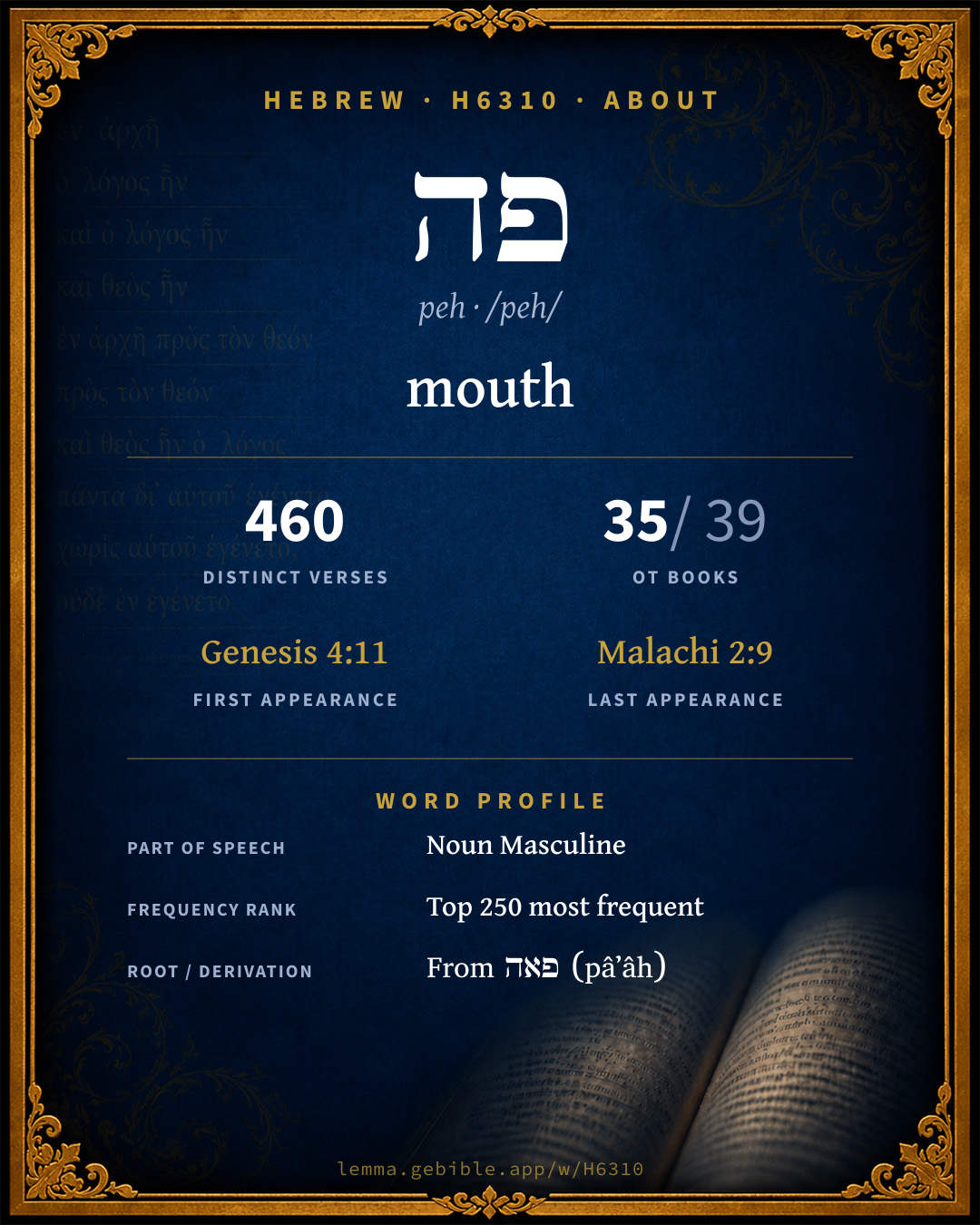
פֶּה
mouth
‘mouth’ is one of 2 main senses fuller range ↓
Full lexicon entry — Brown-Driver-Briggs (BDB)
From Brown-Driver-Briggs (BDB)
Where this word appears
Grammar key — what these labels mean
Part of speech
- Noun
- A naming word — a person, place, thing, or idea.
Noun type
- Common
- A common noun — a general class of person, place, or thing (“king,” “city,” “water”), not a specific name.
State
- Construct
- A noun bound to a following noun in a possessive / “of” relationship (the construct chain).
- Absolute
- The independent form of a noun, not bound to a following word.
Gender
- Masculine
- Grammatically masculine.
Number
- Singular
- One.
- Plural
- More than one (in Hebrew, generally three or more).
Every verse where H6310 appears in the Book of Malachi — 3 distinct verses. Click any verse to open its interlinear word-by-word view. Verse text shown in the World English Bible for context — . Each verse’s Hebrew form is shown with its reference; the English is not keyword-highlighted, since the data carries no word-level English alignment. Use “Compare translations” on any verse to read it across multiple English versions. This concordance covers the Hebrew Bible; Septuagint (Greek Old Testament) occurrences are not indexed here.
Malachi
- Malachi 2:6 בְּ/פִ֔י/הוּ prep + n c ms cs + sfx pers 3ms The law of truth was in his mouth, and unrighteousness was not found in his lips. He walked with me in peace and uprightness, and turned many away from iniquity.
- Malachi 2:7 מִ/פִּ֑י/הוּ prep + n c ms cs + sfx pers 3ms For the priest's lips should keep knowledge, and they should seek the law at his mouth; for he is the messenger of Yahweh of Hosts.
- Malachi 2:9 כְּ/פִ֗י prep + n c ms cs "Therefore I have also made you contemptible and base before all the people, according to the way you have not kept my ways, but have had respect for persons in the law.
About this entry
At a glance — auto-summarized from this page’s data, not written by a person. Every figure links to its source below. This summary describes the numbers; it doesn’t interpret them.
At its core, פה (peh) means “mouth.” Scripture first uses it in Genesis 4:11. Spanning 460 verses in 35 books, it ranks among the common words of the Hebrew Bible. Carrying more than one sense, it rewards its full sense range. From the same root come פאה, פיה and פם. Each statement above links to its evidence; the full detail follows below.
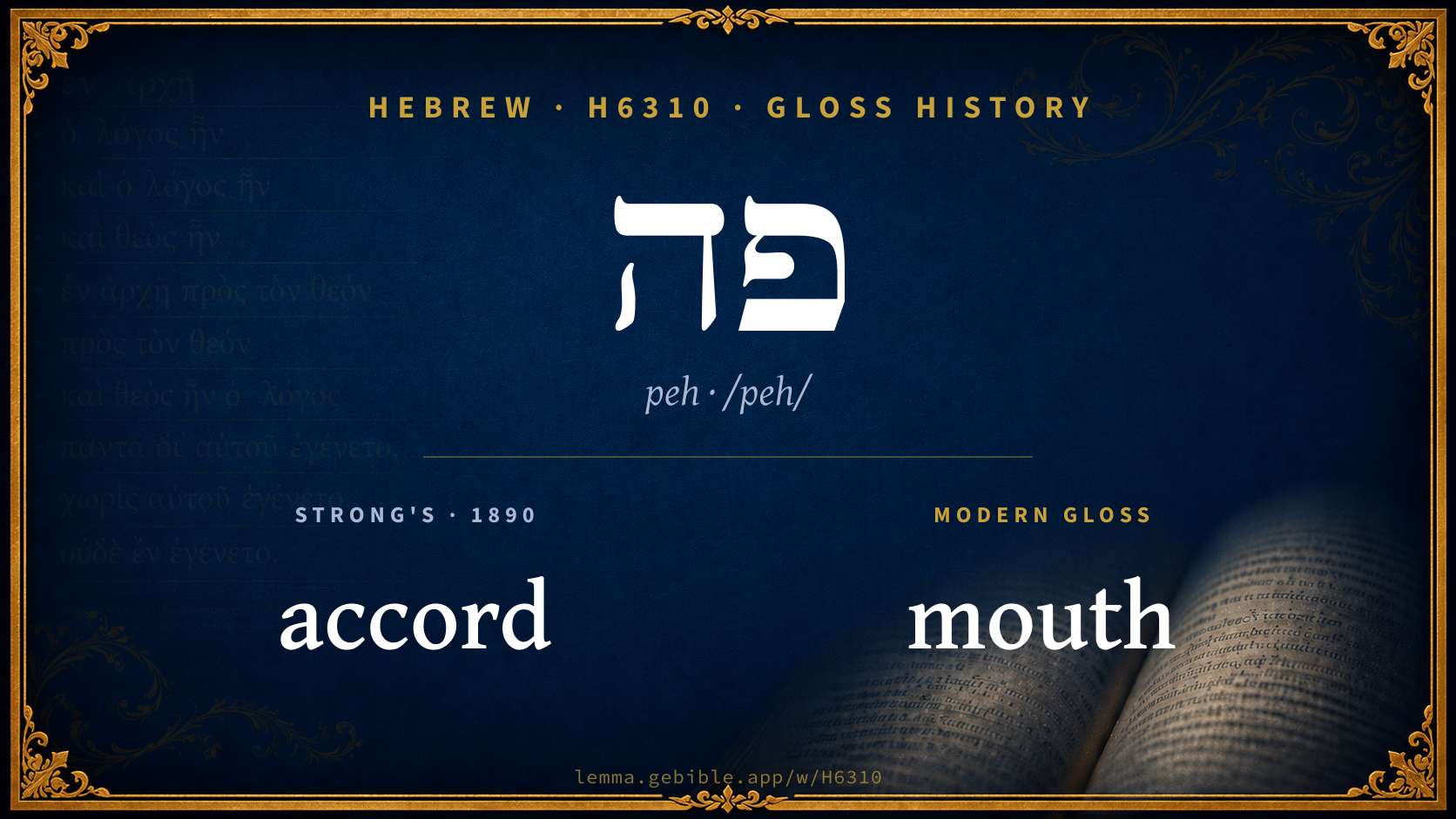
Gloss history
Strong's 1890 vs modern scholarship
About this word
Strong's H6310 catalogs a Hebrew word from the Hebrew Old Testament.
These counts are not copied from any lexicon or concordance. They are computed here, from the morphology-tagged Hebrew Old Testament. What Lemma adds →
- 460
- distinct verses
- The word appears in 460 distinct verses.
- 35 / 39
- OT books
- The word appears in 35 of 39 Old Testament books.
- #102
- by frequency
- Top 250 most frequent Hebrew words (rank 102 of 8,640 Hebrew words by occurrence).
View all 460 occurrences in the concordance →
By section of the Old Testament
By traditional corpus
Conventional, traditional groupings — biblical authorship is debated, so this is a traditional corpus grouping, not an authorship claim. Each share is this word’s portion of its verses in that division of the Hebrew canon. Each figure is a share of the word’s 460 distinct verses.
- Writings (Ketuvim) 188 verses · 41%
- Prophets (Nevi'im) 165 verses · 36%
- Torah (Pentateuch) 107 verses · 23%
How translations render this word
Counts come from each version’s own published word-to-Strong’s tagging or interlinear alignment — an approximate guide to how each version renders this word, not a word-level alignment the data otherwise carries. Because each total is that version’s own tagged count, the per-version totals vary from one another and need not match the appearance or distinct-verse counts above. These counts may also differ from a printed concordance because Lemma counts each distinctly tagged rendering and does not collapse phrase taggings into a single head-word total. This is a fixed set of word-tagged versions (KJV, ASV, BSB, ULT) and does not change with the reading translation you choose elsewhere. Each version’s license is shown beside its name below (and on Sources).
- King James Version: Mouth 293×, Edge 31×, According 19×
- American Standard Version: Mouth 258×, Edge 26×, According 19×
- Berean Standard Bible: Mouth 199×, Mouths 40×, Command 32×
- unfoldingWord Literal Text: Mouth 256×, Mouth of 152×, Mouths 14×
King James Version Public Domain
Renders H6310 across 496 tagged occurrences — most commonly:
Plus other, less common renderings. Plus 74 renderings that appear only once — usually multi-word phrases or single function words the recovered tagging swept in, not distinct renderings. Not rendered by a distinct English word in 2 further occurrences.
American Standard Version Public Domain
Renders H6310 across 494 tagged occurrences — most commonly:
Plus other, less common renderings. Plus 94 renderings that appear only once — usually multi-word phrases or single function words the recovered tagging swept in, not distinct renderings.
Berean Standard Bible Public Domain
Renders H6310 across 423 tagged occurrences — most commonly:
Plus other, less common renderings. Plus 58 renderings that appear only once — usually multi-word phrases or single function words the recovered tagging swept in, not distinct renderings. Not rendered by a distinct English word in 56 further occurrences.
unfoldingWord Literal Text CC BY-SA 4.0
Renders H6310 across 493 tagged occurrences — most commonly:
Plus other, less common renderings. Plus 30 renderings that appear only once — usually multi-word phrases or single function words the recovered tagging swept in, not distinct renderings.
17 senses and sub-senses in the full BDB
What do BDB’s symbols mean?
BDB uses these scholarly abbreviations:
| Symbol | Meaning |
|---|---|
| 𝔊 | the Septuagint (the ancient Greek translation, LXX) |
| 𝔙 | the Vulgate (the Latin translation) |
| 𝔖 | the Syriac version (the Peshitta) |
| 𝔗 | the Targum (the Aramaic translation) |
| ψ | the Psalms |
| √ | root (the underlying root or stem) |
| ‖ | parallel passage (a synonymous or contrasted parallel) |
| † | the dagger: every passage where the word occurs is cited |
The 17 senses and sub-senses the full Brown-Driver-Briggs lexicon distinguishes for this word, in lexicon order (not ranked by frequency), with BDB’s own verbatim wording and sub-sense lettering. Shown in Hebrew script with BDB’s own scholarly abbreviations. The condensed entry is in the Lexicon Entry tab. See also the Forms in the corpus table below.
- 1.
- a. mouth, of man, organ of eating and drinking Gn 25:28 Ju 7:6 1 S 14:26, 27 Ne 9:20 Pr 19:24 = 26:15 +; fig. as finding things sweet Jb 20:12 ψ 119:103; fig. of earth Gn 4:11, swallowing Korah, etc. Nu 16:30, 32; 26:10 Dt 11:6; fig. also of She’ôl, וּפָֽעֲרָה פִיהָ Is 5:14, cf. ψ 69:16. e.g. Genesis 25:28
- b. external organ, וַיָּשֶׂם פִּיו עַל־פִּיו 2 K 4:34 Pr 30:20; of kissing 1 K 19:18 Ct 1:2; וַתִּשַּׁק יָדִי לְפִי Jb 31:27; cf. phr. שִׂים יָד עַל־פֶּה (of keeping silence) Ju 18:19 Mi 7:16 Jb 21:5, cf. 29:9; 40:4 Pr 30:32; of mocking triumph פָּעַר עָלַי בְּפ׳ Jb 16:10; הִרְחִיב פ׳ עַל ψ 35:21 Is 57:4, also רָחַב פִּי עַל 1 S 2:1. e.g. 2 Kings 4:34
- c. of י׳ in theoph., sending out fire 2 S 22:9 = ψ 18:9. e.g. 2 Samuel 22:9
- 2.
- a. much oftener, as organ of speech, of man: פ׳ speaks Gn 45:12 2 S 1:16 Is 9:16 Jb 9:20; 15:5, 6 ψ 37:30 +; speak בְּמוֹ־פִי Jb 19:16; open פ׳, אֶל־י׳ Ju 11:35, 36, abs. Jb 3:1; 33:2 +; shut פ׳ (be silent) Is 52:15, cf. חָשַׂךְ פ׳ Jb 7:11, and (of iniquity, personif.) קָפַץ פ׳ Jb 5:16 ψ 107:42; guard פ׳, Pr 13:3 (נָצַר), 21:23 (שָׁמַר), cf. שָׁמַר פִּתְחֵי פ׳ Mi 7:5, also ψ 39:2 (v. שׁמר); words, etc., are in (ב) mouth 2 S 17:5; 18:25 Dt 30:14 1 K 17:24; שִׂים דְּבָרִים בְּפ׳ 2 S 14:3, 19 Ex 4:15, also (God subj.) Nu 22:38; 23:12, 16 +; of utterance יָצָא מִפּ׳ Ju 11:36 Nu 30:3; 32:24 Jos 6:10 +; depart from mouth (cease to be mentioned) מוּשׁ מִפּ׳ Jos 1:8 Is 59:21, cf. נִכְרַת מִפּ׳ Je 7:28, לֹא יִשָּׁמַע עַל־פִּיךָ Ex 23:13; אִמְרֵי פ׳ Dt 32:1 words of my mouth, so Jb 8:2 ψ 19:15; 54:4; דִּבְרֵי פ׳ ψ 36:4 Ec 10:12, 13a; of agency, בְּפּ׳ by the mouth of 2 Ch 36:21, 22 = מִפּ׳ Ezr 1:1; דִּבֶּר פִּיו עִם־פִּיו Je 32:4 speak mouth to mouth (cf. 34:3 Nu 12:8); פ׳ = speech Is 29:13 ψ 49:14 Ec 10:13b; כְּבַד פ׳ Ex 4:10 heavy of speech (not eloquent); אֶהְיֶה עִם־פ׳ v 12, 15, i.e. aid thee in speaking; יִהְיֶה־לְּךָ לְפ׳ v 16 he shall be mouth for thee; מִפִּיו יִקְרָא אֵלַי Je 36:18, i.e. dictate; כָּתַב מִפּ׳ v. כָּתַב 1 b (3); bad qualities ascribed to it, עִקְּשׁוּת פ׳ Pr 4:24; 6:12; פִּי תַהְפֻּכוֹת 8:13; פֶּה חָלָק 26:28; אַל־תַּגְדֵּל פ׳ Ob 12, cf. Mi 6:12 Ez 35:13. e.g. Genesis 45:12
- b. as laughing Jb 8:21 ψ 126:2; panting 119:131. e.g. Job 8:21
- c. of God; his mouth speaks Is 1:20; 40:5 Je 9:11 +; he speaks בְּפ׳ 1 K 8:15, 34; wd. proceeds מִפּ׳ Dt 8:3 Is 45:23 +; פֶּה אֶל־פֶּה אֲדַבֵּר בּוֹ Nu 12:8; he creates בְּרוּחַ פִּיו ψ 33:6; he executes judgment בְּשֵׁבֶט פִּיו Is 11:4; especially = command: עָבַר אֶת־פִּי י׳ 1 S 15:24 Nu 14:41; 22:18; 24:13 Pr 8:29; פ׳ (אֶת־) מָרָה 1 S 12:14, 15 Nu 20:24 1 K 13:21 +; cf. 6 d. e.g. Isaiah 1:20
- d. of idols, ψ 115:5; 136:16, 17. e.g. Psalms 115:5
- e. of musical instr. = sound Am 6:5 (cf. 6 d). e.g. Amos 6:5
- 3. of animals: bird Gn 8:11 (carrying), Is 10:14 (chirping); ass Nu 22:28 (speaking); bear, lion 1 S 17:35 (seizing), Am 3:12 (id.), hippop. Jb 40:23 (drinking), crocod. 41:11, 13 (breathing flame); also of human foes, under fig. of ravenous beasts ψ 22:22 Ez 21:27; 34:10; פָּצָה פ׳ עַל ψ 22:14 La 2:16; 3:46; hence of edge of sword, חֶרֶב פִּיּוֹת Pr 5:4 a sword with edges (in sim.), = ח׳ פִּיפִיּוֹת ψ 149:6; cf. Ju 3:16; v. also 6 c (2), infr.; בַּעַל פִּיפִיּוֹת Is 41:15, of מוֹרַג. e.g. Genesis 8:11
- 4. mouth = opening, orifice; of well Gn 29:2, 3(×2), 8, 10; cave Jos 10:18, 22, 27; ravine, abyss Je 48:28 (si vera l., cf. Gie); also of She’ôl ψ 141:7; of a sack Gn 42:27; 43:12, 21; 44:1, 2, 8; ephah Zc 5:8; high-priest’s robe Ex 28:32 + 5 times, cf. prob. ψ 133:2; tunic Jb 30:18; of a round opening also 1 K 7:31(×3) (on text and meaning v. Benz Kit); of mouth of Nile Is 19:7 (others brink); gate of city Pr 8:3 (but read perhaps לִפְנֵי, v. Toy). e.g. Genesis 29:2
- 5.
- a. extremity, end פֶּה לָפֶה from end to end, of a temple 2 K 10:21; city 21:16, מִפֶּה אֶל־פֶּה of land Ezr 9:11. e.g. 2 Kings 10:21
- b. = portion, פִּי שְׁנַיִם †Dt 21:17 2 K 2:9 Zc 13:8. e.g. Deuteronomy 21:17
- 6. with preps.:—
- a. אֶל פִּי, v. infr. d(2).
- b. כְּפִי: (a) according to the command of, 1 Ch 12:23; (b) according to the mouth of, i.e. in proportion to (cf. Assyrian ki-i pi-i, DlHWB325), †Ex 16:21 they gathered it אִישׁ כְּפִי אָכְלוֹ each in proportion to his eating (v 16, 18 לְפִי), Lv 25:52 כְּפִי שָׁנָיו according to the number of his years (cf. v 16 לְפִי); Nu 6:21; 7:5 אִישׁ כְּפִי עֲבֹדָתוֹ (so 2 Ch 31:2), 7:7, 8; 35:8 (all P); Jb 33:6 הֵן־אֲנִי כְפִיךָ לָאֵל I am in the proportion of thee as regards God, i.e. I stand towards God even as thou dost. As conj., כְּפִי אֲשֶׁר, †Ml 2:9 כְּפִי אֲשֶׁר אֵינְכֶם שֹׁמְרִים אֶת־דְּרָכַי acc. as ye do not keep, etc.; and without אשׁר Zc 2:4 כְּפִי אִישׁ־לֹא נָשָׂא רֹאשׁוֹ in such proportion that none did lift up his head (but We Now אֲשֶׁר for אִישׁ, that it, Judah, did not, etc.). e.g. 1 Chronicles 12:23
- c. לְפִי, nearly i.q. כְּפִי (v. לְ 5 i b), but more common (cf. Aramaic לְפוּם, ܠܦܽܘܬ ): (1) †Gn 47:12 לְפִי הַטָּ֑ף, Ex 12:4 ye shall compute אִישׁ לְפִי אָכְלוֹ each according to his eating (according to the quantity which his family will consume), 16:16, 18 Lv 25:16 לְפִי רֹב הַשָּׁנִים, v 16, 51; 27:16 לְפִי זַרְעוֹ, Nu 26:54 Jos 18:4 1 K 17:1 לְפִי דְבָרִי כִּי אִם־, Ho 10:12 קִצְרוּ לְפִי חֶסֶד (‖ לִצְדָקָה), Pr 12:8; 27:21: sq. inf. Nu 9:17 לְפִי הֵעָלוֹת הֶעָנָן = acc. as the cloud was lifted up, Je 29:10. (2) in the phr. לְפִי חֶרֶב according to the mouth, or measure, of the sword, i.e. as the sword devours, without quarter, Gn 34:26 Ex 17:13 Nu 21:24 + often e.g. Genesis 47:12
- d. עַל פִּי: (1) according to (עַל) 1 f a) the mouth of, i.e. (α) the command of, Gn 41:40; 45:21 Ex 17:1; 38:21 Nu 3:16, 39 + (especially P), 2 K 23:35; (β) the evidence or sentence of, Dt 17:6 עַל־פִּי עֵד אֶחָד, 19:15; 21:5 (on עַל־פִּי הַנָּ֑כֶל Am 6:5, v. 2 e supr.). (2) according to the measure of, in accordance with, †Gn 43:7 we told him על פי הדברים האלה according to these words (i.e. the questions Joseph asked), Ex 34:27 in accordance with these words, Lv 27:8 על־פי אשׁר תַּשִּׂיג יַד הנֹּדֵר according to what the hand of the vower can reach to, v 18 (cf. לְפִי 25:16, 51), Dt 17:10, 11 2 S 13:32 (but v. שׂוּמָה), Pr 22:6 חֲנֹךְ לַנַּעַר על פי דרכו. In the same sense אֶל פִּ׳, †Jos 15:13; 17:4; 21:3. e.g. Genesis 41:40
Senses from the full Brown-Driver-Briggs lexicon (Brown, Driver, Briggs; Oxford 1906 — public domain), digitized via Sefaria, supplemented by the OpenScriptures HebrewLexicon (CC BY 4.0). Full attribution on Sources.
Word origin
n.m. Jos 9:2 mouth (prob. bilit. [פו, פי] Sta§ 183; NH = BH; Ph. לפי according to; Assyrian pû, mouth; Arabic فُوهٌ, فَاهٌ, فِيهٌ; Ethiopic አፍ; Syriac ܠܦܽܘܬ according to; but also Arabic فَمّ, فُمّ, فِمّ, Biblical Aramaic פֻּם, 𝔗 פּוּמָא; Syriac ܦܽܘܡܳܐ; Mand. פומא NöM § 87);—abs. פ׳ Ex 4:10 +, cstr. פִּי Is 1:20 +; sf. 1 s. פִּי Gn 45:12 +, 2 ms. פִּיךָ 41:40 +, 3 ms. פִּיו 25:28 +, פִּיהוּ Ex 4:15 +, 3 mpl. פִּיהֶם Ju 7:6 +, פִּימוֹ ψ 17:10 + 2 times, etc.; pl. פִּיּוֹת Pr 5:4, פֵיוֹת (שְׁנֵי) Ju 3:16, פִּיפִיּוֹת Is 41:15 ψ 149:6; פִּים 1 S 13:21 (corrupt, v. Dr al.);—
— Brown-Driver-Briggs (Oxford 1906, public domain), digitized via Sefaria, supplemented by the OpenScriptures HebrewLexicon (CC BY 4.0). See Sources.
Derived from פאה (pâʼâh) (H6284) — to shatter.
Jastrow Dictionary
A second Hebrew/Aramaic lexicon for comparison, covering Aramaic and post-biblical (Talmudic, Targumic, Midrashic) usage that the biblical-Hebrew BDB does not. Matched by lemma rather than by Strong’s number, so a lemma may carry more than one Jastrow headword (shown separately below), and the entries cover usage well beyond the Bible.
פֶּה
- c. (b. h.) [opening,] orifice, mouth; speech. Ḥull. 142ᵃ, v. לָחַךְ. Pes. 113ᵇ המדבר אחד בפה ואחד בלב he who speaks one way with his mouth, and another way in his heart. Ex. R. s. 1 (play on בפרך, Ex. I, 13) בפה רך with soft (persuasive) speech; Sot. 11ᵇ. Tanḥ. Kor. 9 עד שהביאתו לפִי הארץ וכ׳ until it (the fire) brought him to the opening of the earth, among those that were swallowed up; Yalk. Num. 752. Sabb. 140ᵇ, sq. בהמה שפִּיהָ יפה a beast whose mouth is clean (that does not drop saliva when eating; oth. opin.: that is fastidious about its food), opp. שפיה רעה; a. v. fr.—Keth. I, 6, a. e. לא מִפּיהָ וכ׳, v. חָיָה. Shebu. IV, 1 מִפִּי עצמו (an oath) out of his own mouth (‘I swear that I know no testimony in thy case’), מפי אחרים administered by others.—בְּעַל פה or על פה by word of mouth. Gitt. 72ᵇ top אי אמר ר׳ יוסי בעל פה whether R. Yose had the same opinion in the case of a verbal condition. Ib. 60ᵇ תורה רוב בכתב ומיעוט על פה of the interpretations of the Law, the larger portion rests on the written text, the smaller on oral tradition. Ib. דברים שבכתב … על פה דברים שבעל פה וכ׳ written things (Biblical passages) must not be recited from memory, verbally transmitted words must not be recited from writing.—תורה שבעל פה (abbrev. שבע"פ) oral law. Yoma 28ᵇ, a. fr., v. כְּתָב.—לְפִי a) according to, in proportion to. B. Bath. 11ᵇ לפי בני אדם in proportion to the number of inhabitants of a house; לפי פתחים in proportion to the number of entrances (of a building); a. fr.—b) because. Snh. VII, 4 לפי שבאת לפיכך וכ׳ … because a human being has gone to ruin through it, therefore &c.; a. fr., v. לְפִיכָךְ.—Trnsf. any orifice. Ab. V, 6 פי הארץ the opening of the earth (that swallowed Korah); פי הבאר the opening for the well (Num. XXI, 16).—Nidd. 16ᵇ רוק בתוך הפה spittle in the mouth, euphem. for blood in the orifice of the matrix. Snh. 100ᵃ (play on ת̇ר̇ופ̇ה̇, Ez. XLVII, 12) להת̇יר̇ פ̇ה̇ של מטה to open the lower orifice (the womb of the childless), opp. פה של מעלה the mouth; ib. להתיר פה עקרות; Men. 98ᵃ; a. fr.—Pl. a) פִּיּוֹת. Deut. R. s. 2 (ref. to Zech. XIII, 8) הפ׳ שאומרים שתי וכ׳ those mouths that say, there are two powers (good and evil). Cant. R. to IV, 4 (play on תלפיות, ib.) ספר שאמרוהו פ׳ הרבה the book (תִּלִּים, Psalms) which many mouths have indited (the book of many authors). Ib. ת̇ל̇ שמתפללין בו כל פ׳ the mound (Temple ruins) towards which all mouths are directed in prayer; Ber. 30ᵃ. Ib. 5ᵃ (expl. פיפיות, Ps. CXLIX, 6) חרב של שתי פ׳ a two-edged sword; a. fr.—Ab. d’R. N. ch. XXVIII שתי פ׳ two faces, v. פִּינָּה.—b) פִּיפִיּוֹת. Num. R. s. 18 באותה … פ׳ הרבה at that moment many mouths of the earth were opened (Yalk. ib. 752 פיות).—c) (Chald. pl.) פּוּמִין open vessels; topmost layer in open vessels. Tosef. Ter. V, 11 אם יש [שם] מאה פ׳ וכ׳ if a hundred open vessels are there (in one of which an upper layer of T’rumah has been put) &c.; הפ׳ אסורין the upper layers are forbidden; Y. ib. IV, 43ᵃ bot. e.g. Exodus 1:13
פָּה
- pah, name of a worm in figs. Sabb. 90ᵃ פה דתאני וכ׳ the pah in figs … is dangerous. Ib. קטליה פ"ה לדין (not קטלה) the pah has killed that man.
פה
- , Y. Snh. I, 18ᶜ bot., v. פּוּחַ ch.
A Dictionary of the Targumim, the Talmud Babli and Yerushalmi, and the Midrashic Literature (Marcus Jastrow; London, Luzac, 1903) — Public Domain. Digitized via Sefaria. Digitized via Sefaria. Full attribution on Sources.
Forms in the corpus
The 226 distinct written forms H6310 takes in the Hebrew Bible, most frequent first — each parse links to that state’s occurrences in the concordance. Hebrew forms include their vowel points and cantillation, so a single lemma takes many written forms.
The 60 most common forms are shown; 166 rarer forms follow in the full concordance.
Same root — word family
Other BDB entries built from the same root as H6310, grouped by Strong’s listed origin. These share a root / origin per the lexicon — not necessarily a shared meaning. Each links to that word’s own entry.
Derives from
Derived from this word
Proper names from this root
People and places named from this root — a name, not an additional meaning of the word.
- מפיבשת Mᵉphîybôsheth H4648 Mephibosheth
- פואה Pûwʼâh H6312 Puah
- פי החירת Pîy ha-Chîyrôth H6367 Pi-hahiroth
- פיכל Pîykôl H6369 Phichol
- פינחס Pîynᵉchâç H6372 Phinehas
Compare all same-root words → Showing 4 of 9 — not the complete family. 5 of the same-root words are proper names (people or places). They share a root, not necessarily a meaning.
Septuagint verse parallels
This word appears in 425 verses that also exist in the Greek Old Testament (Septuagint), out of the 460 Hebrew verses it occurs in. You can read those verses in Greek by switching the Old Testament edition to the Septuagint.
Read these verses in the Septuagint
- Genesis 4:11
- Exodus 4:10
- Leviticus 24:12
- Numbers 3:16
- Deuteronomy 1:26
- Joshua 1:8
- Judges 1:8
- 1 Samuel 1:12
- 2 Samuel 1:16
- 1 Kings 7:31
- 2 Kings 2:9
- 1 Chronicles 12:23
This is a verse-level parallel only — the same verses exist in both the Hebrew and Greek Old Testaments. No word-level Hebrew↔Greek correspondence is claimed: the data carries no such alignment, so no Greek word is shown as this Hebrew word’s translation. Coverage is not total — the Septuagint omits the deuterocanon and renumbers the Psalms, so some Hebrew verses have no direct Greek parallel.