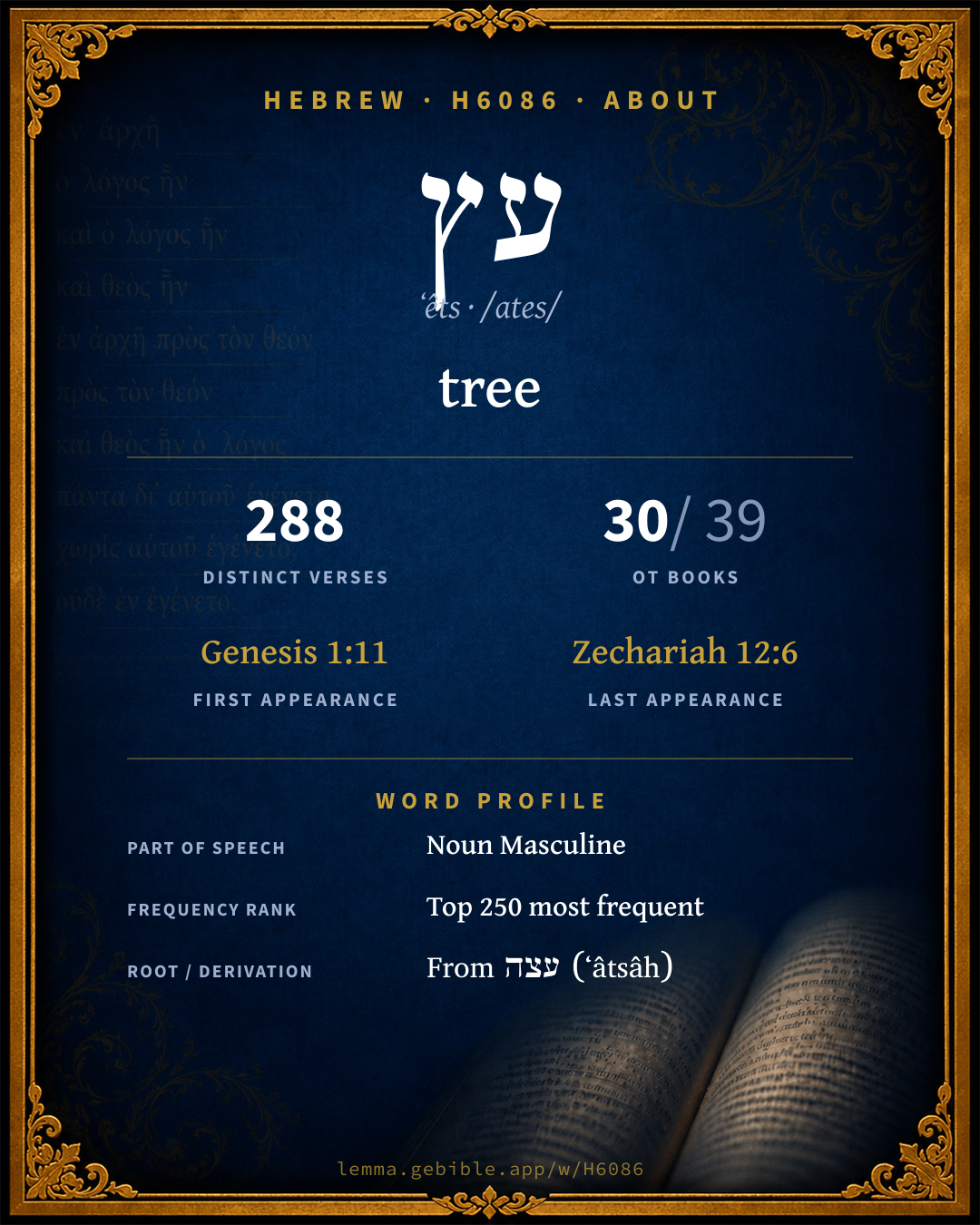
עֵץ
tree
also: wood, timber, stock, plank fuller range ↓
Full lexicon entry — Brown-Driver-Briggs (BDB)
From Brown-Driver-Briggs (BDB)
Where this word appears
See every Absolute-state word in the Hebrew Bible →
Grammar key — what these labels mean
Part of speech
- Noun
- A naming word — a person, place, thing, or idea.
Noun type
- Common
- A common noun — a general class of person, place, or thing (“king,” “city,” “water”), not a specific name.
State
- Absolute
- The independent form of a noun, not bound to a following word.
- Construct
- A noun bound to a following noun in a possessive / “of” relationship (the construct chain).
Gender
- Masculine
- Grammatically masculine.
Number
- Singular
- One.
- Plural
- More than one (in Hebrew, generally three or more).
11 verses where H6086 appears in the Absolute state in the Book of Isaiah. Filtered view — show all forms. Click any verse to open its interlinear word-by-word view. Verse text shown in the World English Bible for context — . Each verse’s Hebrew form is shown with its reference; the English is not keyword-highlighted, since the data carries no word-level English alignment. Use “Compare translations” on any verse to read it across multiple English versions. This concordance covers the Hebrew Bible; Septuagint (Greek Old Testament) occurrences are not indexed here.
Isaiah
- Isaiah 10:15 עֵֽץ n c ms Shall the axe boast itself against him who hews therewith? Shall the saw magnify itself against him who wields it? as if a rod should wield those who lift it up, [or] as if a staff should lift up [him who is] not wood.
- Isaiah 30:33 וְ/עֵצִים֙ conj + n c mp For a Topheth is prepared of old; yes, for the king it is made ready; he has made it deep and large; the pile of it is fire and much wood; the breath of Yahweh, like a stream of sulfur, does kindle it.
- Isaiah 37:19 עֵ֥ץ n c ms and have cast their gods into the fire: for they were no gods, but the work of men's hands, wood and stone; therefore they have destroyed them.
- Isaiah 40:20 עֵ֥ץ n c ms He who is too impoverished for [such] an offering chooses a tree that will not rot; he seeks to him a skillful workman to set up an engraved image, that shall not be moved.
- Isaiah 44:13 עֵצִים֮ n c mp The carpenter stretches out a line; he marks it out with a pencil; he shapes it with planes, and he marks it out with the compasses, and shapes it after the figure of a man, according to the beauty of a man, to dwell in a house.
- Isaiah 44:19 עֵ֖ץ n c ms None calls to mind, neither is there knowledge nor understanding to say, I have burned part of it in the fire; yes, also I have baked bread on the coals of it; I have roasted flesh and eaten it: and shall I make the residue of it an abomination? shall I fall down to the stock of a tree?
- Isaiah 44:23 עֵ֣ץ n c ms Sing, you heavens, for Yahweh has done it; shout, you lower parts of the earth; break forth into singing, you mountains, O forest, and every tree therein: for Yahweh has redeemed Jacob, and will glorify himself in Israel.
- Isaiah 56:3 עֵ֥ץ n c ms Neither let the foreigner, who has joined himself to Yahweh, speak, saying, Yahweh will surely separate me from his people; neither let the eunuch say, Behold, I am a dry tree.
- Isaiah 57:5 עֵ֣ץ n c ms you who inflame yourselves among the oaks, under every green tree; who kill the children in the valleys, under the clefts of the rocks?
- Isaiah 60:17 הָֽ/עֵצִים֙ ptcl def.art + n c mp For brass I will bring gold, and for iron I will bring silver, and for wood brass, and for stones iron. I will also make your officers peace, and righteousness your ruler.
- Isaiah 65:22 הָ/עֵץ֙ ptcl def.art + n c ms They shall not build, and another inhabit; they shall not plant, and another eat: for as the days of a tree shall be the days of my people, and my chosen shall long enjoy the work of their hands.
About this entry
At a glance — auto-summarized from this page’s data, not written by a person. Every figure links to its source below. This summary describes the numbers; it doesn’t interpret them.
עץ — transliterated ʻêts — is a Hebrew noun carrying the sense “tree.” Its earliest occurrence is Genesis 1:11. Spanning 288 verses in 30 books, it ranks among the common words of the Hebrew Bible. Alongside “tree” the lexicon also lists “wood”, “timber”, and “stock” — part of its full sense range. Sharing its root, it stands alongside עצה, עצה and אע. See the sense tree, 288-verse concordance, and the renderings breakdown below.
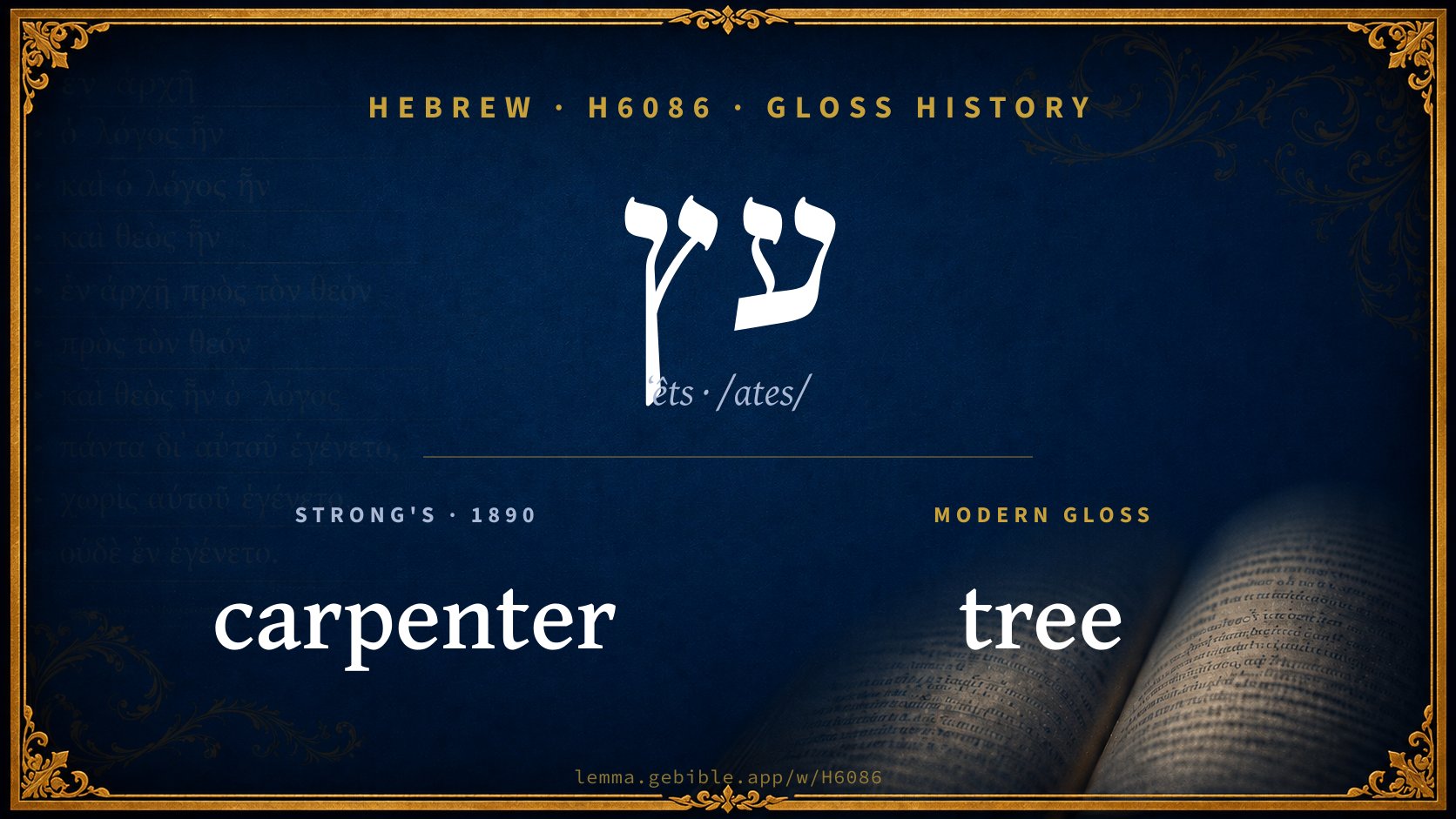
Gloss history
Strong's 1890 vs modern scholarship
About this word
Strong's H6086 catalogs a Hebrew word from the Hebrew Old Testament.
These counts are not copied from any lexicon or concordance. They are computed here, from the morphology-tagged Hebrew Old Testament. What Lemma adds →
- 288
- distinct verses
- The word appears in 288 distinct verses.
- 30 / 39
- OT books
- The word appears in 30 of 39 Old Testament books.
- #148
- by frequency
- Top 250 most frequent Hebrew words (rank 148 of 8,640 Hebrew words by occurrence).
View all 288 occurrences in the concordance →
By section of the Old Testament
By traditional corpus
Conventional, traditional groupings — biblical authorship is debated, so this is a traditional corpus grouping, not an authorship claim. Each share is this word’s portion of its verses in that division of the Hebrew canon. Each figure is a share of the word’s 288 distinct verses.
- Prophets (Nevi'im) 129 verses · 45%
- Torah (Pentateuch) 97 verses · 34%
- Writings (Ketuvim) 62 verses · 22%
How translations render this word
Counts come from each version’s own published word-to-Strong’s tagging or interlinear alignment — an approximate guide to how each version renders this word, not a word-level alignment the data otherwise carries. Because each total is that version’s own tagged count, the per-version totals vary from one another and need not match the appearance or distinct-verse counts above. These counts may also differ from a printed concordance because Lemma counts each distinctly tagged rendering and does not collapse phrase taggings into a single head-word total. This is a fixed set of word-tagged versions (KJV, ASV, BSB, ULT) and does not change with the reading translation you choose elsewhere. Each version’s license is shown beside its name below (and on Sources).
BDB lists this Strong’s number as 2 distinct words (homographs). Each count above pools all of them and is not split by sense — see the Senses section below. A low-frequency rendering may belong to a different one of those words, not the primary meaning.
- King James Version†: Wood 98×, Tree 63×, Trees 45×
- American Standard Version†: Wood 89×, Tree 49×, Trees 26×
- Berean Standard Bible†: Wood 102×, Trees 59×, Tree 52×
- unfoldingWord Literal Text†: Wood 80×, Tree 59×, Trees 47×
King James Version Public Domain
Renders H6086 across 326† tagged occurrences — most commonly:
Plus other, less common renderings. Plus 35 renderings that appear only once — usually multi-word phrases or single function words the recovered tagging swept in, not distinct renderings. Not rendered by a distinct English word in 2 further occurrences.
American Standard Version Public Domain
Renders H6086 across 317† tagged occurrences — most commonly:
Plus other, less common renderings. Plus 60 renderings that appear only once — usually multi-word phrases or single function words the recovered tagging swept in, not distinct renderings. Not rendered by a distinct English word in 8 further occurrences.
Berean Standard Bible Public Domain
Renders H6086 across 307† tagged occurrences — most commonly:
Plus other, less common renderings. Plus 29 renderings that appear only once — usually multi-word phrases or single function words the recovered tagging swept in, not distinct renderings. Not rendered by a distinct English word in 22 further occurrences.
unfoldingWord Literal Text CC BY-SA 4.0
Renders H6086 across 342† tagged occurrences — most commonly:
Plus other, less common renderings. Plus 28 renderings that appear only once — usually multi-word phrases or single function words the recovered tagging swept in, not distinct renderings.
9 senses and sub-senses in the full BDB
What do BDB’s symbols mean?
BDB uses these scholarly abbreviations:
| Symbol | Meaning |
|---|---|
| 𝔊 | the Septuagint (the ancient Greek translation, LXX) |
| 𝔙 | the Vulgate (the Latin translation) |
| 𝔖 | the Syriac version (the Peshitta) |
| 𝔗 | the Targum (the Aramaic translation) |
| ψ | the Psalms |
| √ | root (the underlying root or stem) |
| ‖ | parallel passage (a synonymous or contrasted parallel) |
| † | the dagger: every passage where the word occurs is cited |
The 9 senses and sub-senses the full Brown-Driver-Briggs lexicon distinguishes for this word, in lexicon order (not ranked by frequency), with BDB’s own verbatim wording and sub-sense lettering. Shown in Hebrew script with BDB’s own scholarly abbreviations. The condensed entry is in the Lexicon Entry tab. See also the Forms in the corpus table below.
- a. a standing tree Gn 18:4, 8 (J) +, Ex 15:25 (J; of shrub?), Je 17:18 = ψ 1:3 (sim.); to be felled Dt 19:5; 2 K 6:6; הָעֵצִים (appar. incl. vine and bramble) in allegory Ju 9:8 + 6 times Ju 9; עֵץ הַחַיִּים †Gn 2:9; 3:22, 24 (J), cf. ע׳ חַיִּים, fig. of source of (life and) happiness †Pr 3:18; 11:30; 13:12; 15:4; ע׳ הַדַּעַת טוֹב וָרָע Gn 2:9, 16 (J); עֲצֵי (ה)יַעַר Is 7:2 (sim.), 44:14; Ez 15:2 +; עֲצֵי הַשָּׂדֶה Is 55:12; Ez 17:24 (fig.), +; עֲצֵי לְבָנוֹן 2 Ch 2:7; עֲצֵי־מַיִם †Ez 31:14; עֲצֵי י׳ †ψ 104:16; עֲצֵי עֵדֶן †Ez 31:9, 16, 18(×2); עֲצֵי לְבוֹנָה Ct 4:14; of vine עֵץ הַגֶּפֶן †Ez 15:2, 6; תַּחַת כָּל־עֵץ רַעֲנָ֑ן place of illicit worship †Dt 12:2; Je 2:20; 3:6, 13; 1 K 14:23; 2 K 16:4; 17:10; Ez 6:13; Is 57:5; 2 Ch 28:4, cf. עַל־עֵץ רַעֲנָן Je 17:2; כָּל־עֵץ עָבֹת Ez 20:28. e.g. Genesis 18:4
- b. coll. trees, עֵץ־הַגָּן Gn 2:16; 3:1, 2, 8 (all J); usually later, ע׳ 1:12, 29(×2) (P), +; עֵץ פְּרִי fruit-bearing trees Gn 1:11 (P), ψ 148:9, cf. Ec 2:5, פְּרִי עֵץ Ex 10:15 (J), Ez 36:30 Lv 23:40 (H), cf. Jo 2:22; עֵץ־מַאֲכָל Dt 20:20; Lv 19:23 (H), Ez 47:12; Ne 9:25; עֵץ הַזַּיִת Hg 2:19 olive trees, עֵץ שֶׁמֶן Ne 8:15, עֵץ־שָׁ֑מֶן Is 41:19; סֲבָךְ־עֵץ ψ 74:5 thicket of trees; עֵץ הַשָּׂדֶה Ex 9:25 (J), +; עֵץ הַיַּעַר †Ez 15:6, cf. Is 10:19; 44:23; כִּימֵי הָעֵץ Is 65:22 (sim. of great age). e.g. Genesis 2:16
- c. pl. of trees felled for building, 1 K 5:20, 32 (+ אֲבָנִים); עֲצֵי אֲרָזִים 2 S 5:11 = 1 Ch 14:1 + 7 times; עֲצֵי בְרוֹשׁים 1 K 5:22, 24; 9:11; (אַלְגּ׳) עֲצֵי אַלְמֻגִּים, v. אַלְגּ׳ p. 38 supr. e.g. 1 Kings 5:20
- a. wood, as material; for building, 2 K 12:13 (+ אַבְנֵי מַחְצֵב), 22:6 = 2 Ch 34:11 (both + id.), Ne 2:8 +; עֲצֵי שָׁ֑מֶן 1 K 6:23, 31, 33 cf. v 32; עֲצֵי־גֹּפֶר Gn 6:14 (Noah’s ark), עֲצֵי שִׁטּים Ex 25:5, 10 + 20 times Ex (of tabern. and its furniture; all P) Dt 10:3; מִגְדַּל־עֵץ Ne 8:4; מוֹטֹת עֵץ Je 28:13 (in fig.; opp. מ׳ בַּרְזֶל); כְּלִי־עֵץ article of wood Lv 11:32; 15:12 Nu 31:20, cf. 35:18 (all P). Hence e.g. 2 Kings 12:13
- b. עֵצִים = articles of wood Ex 7:19 (P; ‖ אֲבָנִים), 1 Ch 29:2; so עֲצֵי בְרוֹשִׁים 2 S 6:5 (but v. בְּרוֹשׁ ad fin.); specif. הָעֵץ = helve of axe Dt 19:5; עֵץ חֲנִית(וֹ) 1 S 17:7 Qr (Kt חֵץ) = 1 Ch 20:5; 2 S 21:19; 23:7; עֲצֵי הָעֲגָלָה 1 S 6:14 (i.e. wood of which cart was made), עֲצֵי הָאֲשֵׁרָה Ju 6:26; especially timbers of a house Zc 5:4; Hb 2:11; Lv 14:45, of a city 1 K 15:22 = 2 Ch 16:5; Ez 26:12; עֵץ of pole on which bodies of slain (criminals and others) were exposed (perhaps orig. tree) Gn 40:19 (E), Jos 8:29(×2); 10:26(×2), 27 (all JE), Dt 21:22, 23; late (in Pers.) used for executing criminals (? by hanging = gallows), תָּלָה עַל־עֵץ Est 2:23 + 8 times Est. e.g. Exodus 7:19
- c. of idols, עֵץ וָאֶבֶן Dt 4:28; 28:36, 64; 29:16; 2 K 19:18 = Is 37:19; Ez 20:32, cf. Je 2:27; 3:9; Hb 2:19; so עֵץ alone Ho 4:12; Is 40:20, cf. 44:19; 45:20; אֲשֵׁרָה כָּל־עֵץ Dt 16:21. e.g. Deuteronomy 4:28
- d. (fire-)wood Jos 9:23, 27 (J), v 21 (P), Dt 19:5; Is 30:33 +, read עֵצִים also Ez 24:5 (for MT עצמים Bö Ew Sm Co Berthol Toy; especially for sacrifices 1 K 18:23(×2) +, Gn 22:7, 9(×2) Lv 1:7 + 6 times Lv (all P), 2 S 24:22 ‖ 1 Ch 21:23, +; עֲצֵי עוֹלָה Gn 22:3, 6 (P). e.g. Joshua 9:23
- e. עֵץ (הָ)אֶרֶז cedar-wood, used in purifications Lv 14:4, 6, 49, 51, 52; Nu 19:6 (all P). e.g. Leviticus 14:4
- f. פִּשְׁתֵּי הָעֵץ Jos 2:6 woody-flax, i.e. flax on the stalk.—Je 10:8 Gie proposes הֶבֶל מֹעֲצֹתָו for MT הֲבָלִים עֵץ הוּא.—מֹאֶסֶת כָּל־עֵץ Ez 21:15 is dub., Sm proposes מָאַסְתָּ כָל־עֵץ, Co מֹאֲסֵי כָל־עֹוֹ, Berthol וּמְאַסֵּף כָּל־עַז; SiegfKau Toy leave untranslated. e.g. Joshua 2:6
Senses from the full Brown-Driver-Briggs lexicon (Brown, Driver, Briggs; Oxford 1906 — public domain), digitized via Sefaria, supplemented by the OpenScriptures HebrewLexicon (CC BY 4.0). Full attribution on Sources.
Word origin
n.m. Gn 2: 9 tree, trees, wood;—ע׳ abs. Gn 3:3 +, cstr. 3:24 +, עֵץ־ 2:16 +; sf. עֵצְיךָ Dt 28:42, etc.; pl. עֵצִים Ju 9:8 +, cstr. עֲצֵי Is 7:2 +, sf. עֵצֶיךָ Dt 29:10, עֵצֵינוּ La 5:4, etc.;—
— Brown-Driver-Briggs (Oxford 1906, public domain), digitized via Sefaria, supplemented by the OpenScriptures HebrewLexicon (CC BY 4.0). See Sources.
Derived from עצה (ʻâtsâh) (H6095) — to shut.
Jastrow Dictionary
A second Hebrew/Aramaic lexicon for comparison, covering Aramaic and post-biblical (Talmudic, Targumic, Midrashic) usage that the biblical-Hebrew BDB does not. Matched by lemma rather than by Strong’s number, so a lemma may carry more than one Jastrow headword (shown separately below), and the entries cover usage well beyond the Bible.
עֵץ
- 2. tree, pole; wood. Esth. R. to V, 12 לאחר שעשה העץ after having made the gallows. Tam. II, 3, a. fr. עץ שמן pine-wood. Gen. R. s. 15 אילן שעֵצוֹ נאכל וכ׳ a tree whose wood is as fit to eat as its fruit. Sifra Emor, Par. 12, ch. XVI, v. עָנָף; a. v. fr.—Pes. 30ᵇ עץ פרור wooden pot-ladle.—Pl. עֵצִים; constr. עֲצֵי. Tam. l. c. כל הע׳ כשרין וכ׳ all kinds of wood are fit for the altar pile. Ib. 5 עצי תאנה wood of a fig-tree. R. Hash. II, 3 עצי שמן, v. supra; a. v. fr.
A Dictionary of the Targumim, the Talmud Babli and Yerushalmi, and the Midrashic Literature (Marcus Jastrow; London, Luzac, 1903) — Public Domain. Digitized via Sefaria. Digitized via Sefaria. Full attribution on Sources.
Forms in the corpus
The 110 distinct written forms H6086 takes in the Hebrew Bible, most frequent first — each parse links to that state’s occurrences in the concordance. Hebrew forms include their vowel points and cantillation, so a single lemma takes many written forms.
The 60 most common forms are shown; 50 rarer forms follow in the full concordance.
Same root — word family
Other BDB entries built from the same root as H6086, grouped by Strong’s listed origin. These share a root / origin per the lexicon — not necessarily a shared meaning. Each links to that word’s own entry.
Derives from
Shares the same root
Derived from this word
Proper names from this root
People and places named from this root — a name, not an additional meaning of the word.
Compare all same-root words → Showing 4 of 6 — not the complete family. 1 of the same-root words is a proper name (a person or place). They share a root, not necessarily a meaning.
Septuagint verse parallels
This word appears in 268 verses that also exist in the Greek Old Testament (Septuagint), out of the 288 Hebrew verses it occurs in. You can read those verses in Greek by switching the Old Testament edition to the Septuagint.
Read these verses in the Septuagint
- Genesis 1:11
- Exodus 7:19
- Leviticus 1:7
- Numbers 13:20
- Deuteronomy 4:28
- Joshua 2:6
- Judges 6:26
- 1 Samuel 6:14
- 2 Samuel 5:11
- 1 Kings 5:10
- 2 Kings 3:19
- 1 Chronicles 14:1
This is a verse-level parallel only — the same verses exist in both the Hebrew and Greek Old Testaments. No word-level Hebrew↔Greek correspondence is claimed: the data carries no such alignment, so no Greek word is shown as this Hebrew word’s translation. Coverage is not total — the Septuagint omits the deuterocanon and renumbers the Psalms, so some Hebrew verses have no direct Greek parallel.