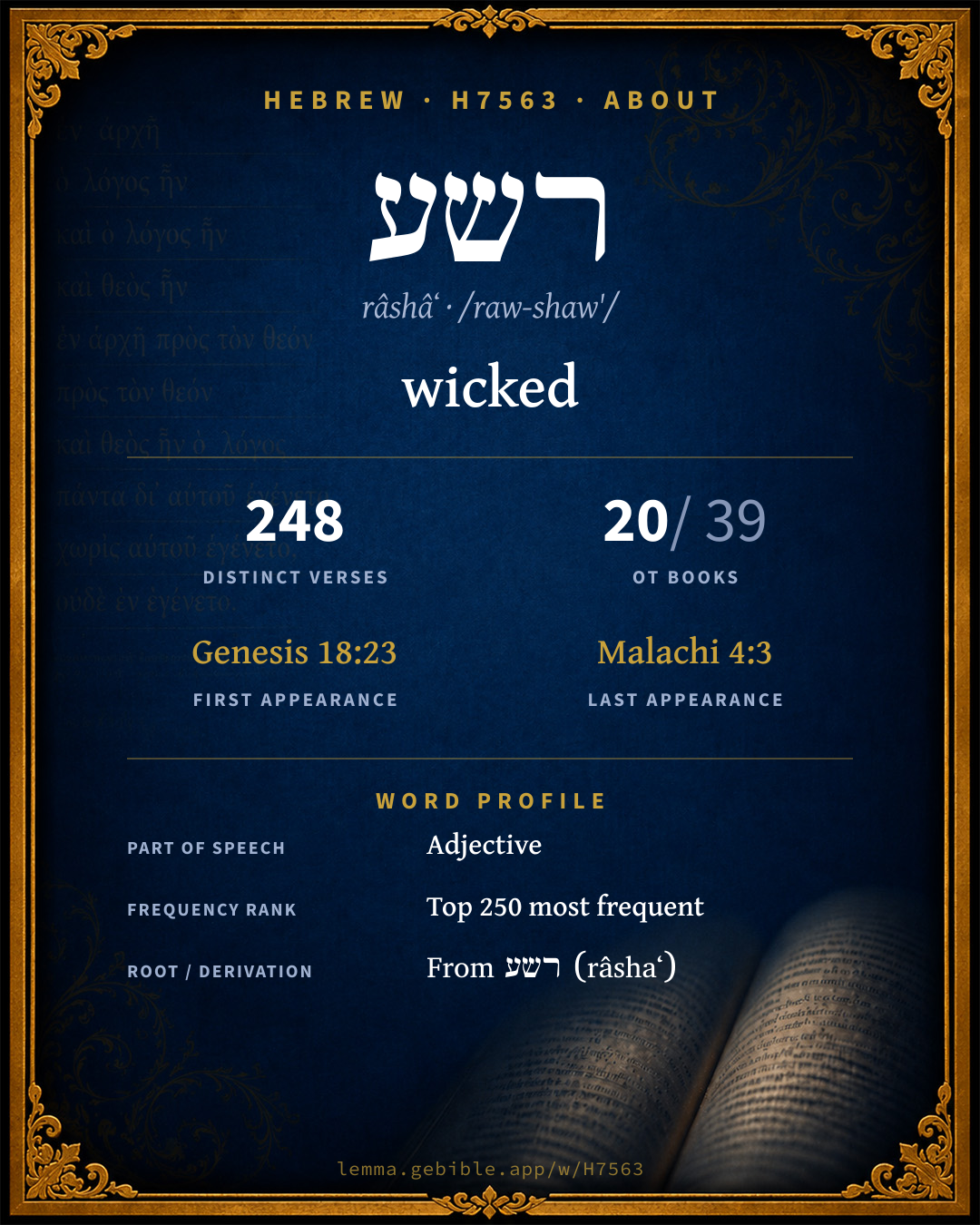
רָשָׁע
wicked
‘wicked’ is one of 4 main senses fuller range ↓
Full lexicon entry — Brown-Driver-Briggs (BDB)
From Brown-Driver-Briggs (BDB)
Where this word appears
Grammar key — what these labels mean
Part of speech
- Adjective
- A word that describes or qualifies a noun.
State
- Absolute
- The independent form of a noun, not bound to a following word.
- Construct
- A noun bound to a following noun in a possessive / “of” relationship (the construct chain).
Gender
- Masculine
- Grammatically masculine.
- Feminine
- Grammatically feminine.
Number
- Plural
- More than one (in Hebrew, generally three or more).
- Singular
- One.
Every verse where H7563 appears in the Book of 2 Samuel — 1 distinct verse. Click any verse to open its interlinear word-by-word view. Verse text shown in the World English Bible for context — . Each verse’s Hebrew form is shown with its reference; the English is not keyword-highlighted, since the data carries no word-level English alignment. Use “Compare translations” on any verse to read it across multiple English versions. This concordance covers the Hebrew Bible; Septuagint (Greek Old Testament) occurrences are not indexed here.
2 Samuel
About this entry
At a glance — auto-summarized from this page’s data, not written by a person. Every figure links to its source below. This summary describes the numbers; it doesn’t interpret them.
“wicked” is the headline sense of the Hebrew adjective רשע (râshâʻ). Carrying more than one sense, it rewards its full sense range. The Hebrew Bible uses it across 248 verses — common. More than a quarter of its appearances fall in Psalms. First canonically at Genesis 18:23, it enters the text early. See the sense tree, 248-verse concordance, and the renderings breakdown below.
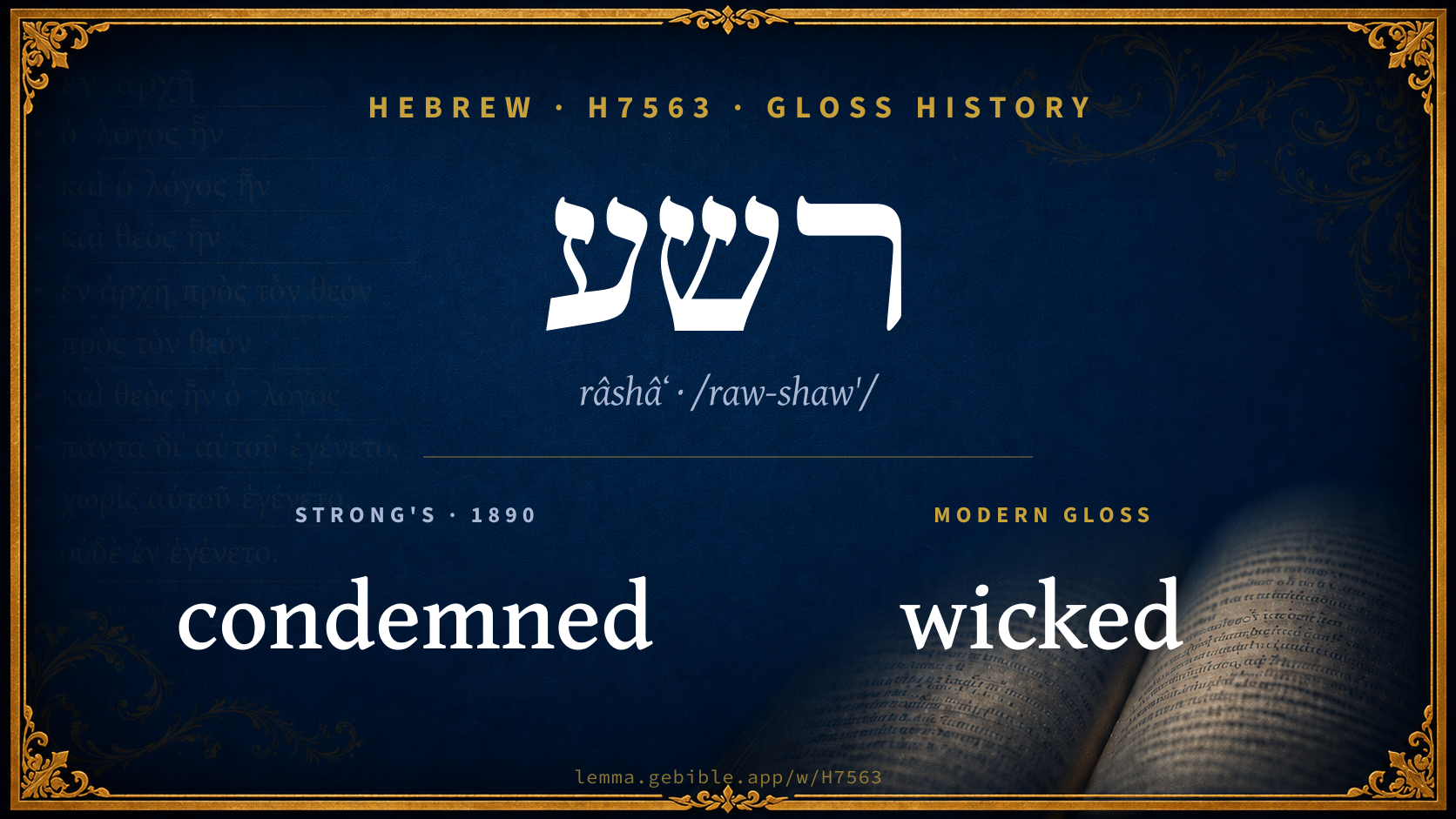
Gloss history
Strong's 1890 vs modern scholarship
About this word
Strong's H7563 catalogs a Hebrew word from the Hebrew Old Testament.
These counts are not copied from any lexicon or concordance. They are computed here, from the morphology-tagged Hebrew Old Testament. What Lemma adds →
- 248
- distinct verses
- The word appears in 248 distinct verses.
- 20 / 39
- OT books
- The word appears in 20 of 39 Old Testament books.
- #187
- by frequency
- Top 250 most frequent Hebrew words (rank 187 of 8,640 Hebrew words by occurrence).
View all 248 occurrences in the concordance →
By section of the Old Testament
By traditional corpus
Conventional, traditional groupings — biblical authorship is debated, so this is a traditional corpus grouping, not an authorship claim. Each share is this word’s portion of its verses in that division of the Hebrew canon. Each figure is a share of the word’s 248 distinct verses.
- Writings (Ketuvim) 192 verses · 77%
- Prophets (Nevi'im) 46 verses · 19%
- Torah (Pentateuch) 10 verses · 4%
How translations render this word
Counts come from each version’s own published word-to-Strong’s tagging or interlinear alignment — an approximate guide to how each version renders this word, not a word-level alignment the data otherwise carries. Because each total is that version’s own tagged count, the per-version totals vary from one another and need not match the appearance or distinct-verse counts above. These counts may also differ from a printed concordance because Lemma counts each distinctly tagged rendering and does not collapse phrase taggings into a single head-word total. This is a fixed set of word-tagged versions (KJV, ASV, BSB, ULT) and does not change with the reading translation you choose elsewhere. Each version’s license is shown beside its name below (and on Sources).
- King James Version: Wicked 219×, Ungodly 5×, Let the wicked 4×
- American Standard Version: Wicked 206×, Let the wicked 4×, Are wicked 3×
- Berean Standard Bible: Wicked 211×, Wicked man 20×, Guilty 5×
- unfoldingWord Literal Text: Wicked 213×, One 19×, Wicked ones 14×
King James Version Public Domain
Renders H7563 across 263 tagged occurrences — most commonly:
Plus 25 renderings that appear only once — usually multi-word phrases or single function words the recovered tagging swept in, not distinct renderings.
American Standard Version Public Domain
Renders H7563 across 261 tagged occurrences — most commonly:
Plus 42 renderings that appear only once — usually multi-word phrases or single function words the recovered tagging swept in, not distinct renderings.
Berean Standard Bible Public Domain
Renders H7563 across 263 tagged occurrences — most commonly:
Plus 21 renderings that appear only once — usually multi-word phrases or single function words the recovered tagging swept in, not distinct renderings.
unfoldingWord Literal Text CC BY-SA 4.0
Renders H7563 across 288 tagged occurrences — most commonly:
Plus 17 renderings that appear only once — usually multi-word phrases or single function words the recovered tagging swept in, not distinct renderings.
Senses in the full BDB
What do BDB’s symbols mean?
BDB uses these scholarly abbreviations:
| Symbol | Meaning |
|---|---|
| 𝔊 | the Septuagint (the ancient Greek translation, LXX) |
| 𝔙 | the Vulgate (the Latin translation) |
| 𝔖 | the Syriac version (the Peshitta) |
| 𝔗 | the Targum (the Aramaic translation) |
| ψ | the Psalms |
| √ | root (the underlying root or stem) |
| ‖ | parallel passage (a synonymous or contrasted parallel) |
| † | the dagger: every passage where the word occurs is cited |
The 3 senses and sub-senses the full Brown-Driver-Briggs lexicon distinguishes for this word, in lexicon order (not ranked by frequency), with BDB’s own verbatim wording and sub-sense lettering. Shown in Hebrew script with BDB’s own scholarly abbreviations. The condensed entry is in the Lexicon Entry tab. See also the Forms in the corpus table below.
- 1. usually as subst., one guilty of crime, deserving punishment; sometimes also wicked; opp. צַדִּיק; רָשָׁע Ex 2:13; 23:1 (E), Dt 25:2; Pr 17:23; 18:5; 25:5; Jb 9:22, 24; coll. Gn 18:23, 25(×2) (J) Mi 6:10; Pr 3:33; 28:4, רשׁעים 1 S 24:14; Je 5:26; Pr 19:28; 20:26; 29:12, אנשׁים רשׁעים 2 S 4:11 (murderers), רָשָׁע לָמוּת Nu 35:31 (P) guilty of death, מוֹשֵׁל ר׳ Pr 28:15, cf. 29:2, הִצְדִּיק ר׳ Ex 23:7 (E) Is 5:23; Pr 17:15; הִרְשִׁעַ ר׳ Dt 25:1 1 K 8:32 = השׁיב לְרָשָׁע 2 Ch 6:23; אמר לר׳ צַדִּיק Pr 24:24. e.g. Exodus 2:13
- 2. guilty of hostility to God or his people, wicked enemies: רשׁע sg. ψ 17:13 + 6 times ψψ, Is 26:10; coll. ψ 9:6, 17; 10:2 + 6 times ψψ, Is 11:4 Hb 3:13; רשׁעים ψ 3:8; 7:10; 9:18 + 5 times ψψ, Is 48:22; 57:20, 21 Je 25:31 Ez 21:34 Mal 3:21 (+ (poss.) other cases; often hard to decide); specif. of Pharaoh Ex 9:27 (J), Babylon Is 13:11; 14:5, Chaldeans Hb 1:4, 13; ‖ שׂנְאֵי יהוה 2 Ch 19:2. e.g. Psalms 17:13
- 3. guilty of sin, against either God or man, wicked: האנשׁים הרשׁעים Nu 16:26 (J, rebellious Korahites), Mal 3:18 (not serving י׳), opp. צַדִּיק; sg. indiv. Ez 3:18(×2); 21:30; 33:8(×2) ψ 11:5; 32:10 Pr 9:7 +; coll. Is 3:11 Jb 34:18; 36:6, 17; pl. רשׁעים Is 53:9 Je 23:19 = 30:23, Zp 1:3 ψ 26:5; Pr 10:3; Ec 8:10 +; ‖ חסידים 1 S 2:9 (poem), ψ 12:9; 50:16; 97:10; 145:20; ‖ עֹזְבֵי תוֹרָתֶ֑ךָ 119:53, cf. v 61, +; †אדם ר׳ Pr 11:7; Jb 20:29; 27:13; אִישׁ ר׳ Pr 21:29; מלאך ר׳ 13:17; זֶרַע רשׁעים ψ 37:28; †עֲצַת רשׁעים 1:1; Jb 10:3; 21:16; 22:18; †דֶּרֶךְ רשׁעים Je 12:1 ψ 1:6; 146:9; Pr 4:19; 12:26; דֶּרֶךְ רשׁע 15:9; מִדַּרְכּוֹ הָֽרְשָׁעָה Ez 3:18, 19 (but v. Co, supr.); †רִשְׁעֵי (ה)ארץ ψ 75:9; 101:8; 119:119 Ez 7:21 (𝔊 Co עריצי).—רָשָׁע is rare before exile; chiefly Ez ψψ WisdLit. e.g. Numbers 16:26
Senses from the full Brown-Driver-Briggs lexicon (Brown, Driver, Briggs; Oxford 1906 — public domain), digitized via Sefaria, supplemented by the OpenScriptures HebrewLexicon (CC BY 4.0). Full attribution on Sources.
Word origin
adj. wicked, criminal;—abs. ר׳ Gn 18:23 +; pl. רְשָׁעִים Is 13:11 +; cstr. רִשְׁעֵי ψ 75:9 + 3 times; fs. רְשָׁעָה Ez 3:18 (del. Co), v 19 (רָשָׁע Co);—
— Brown-Driver-Briggs (Oxford 1906, public domain), digitized via Sefaria, supplemented by the OpenScriptures HebrewLexicon (CC BY 4.0). See Sources.
Derived from רשע (râshaʻ) (H7561) — to be wicked.
Jastrow Dictionary
A second Hebrew/Aramaic lexicon for comparison, covering Aramaic and post-biblical (Talmudic, Targumic, Midrashic) usage that the biblical-Hebrew BDB does not. Matched by lemma rather than by Strong’s number, so a lemma may carry more than one Jastrow headword (shown separately below), and the entries cover usage well beyond the Bible.
רָשַׁע
- [to be powerful,] to do violence, be wicked. Yalk. Koh. 976 (ref. to Koh. VII, 17) אלא אם רָשַׁעְתָּ אל תִּרְשַׁע הרבה (omitted in Sabb. 31ᵇ) but it means, if thou hast once done wrong, do not therefore do more wrong. e.g. Ecclesiastes 7:17
- 1. to declare in the wrong, to condemn. Snh. 10ᵃ אלא מעתה והצדיקו שנים והִרְשִׁיעוּ שנים וכ׳ if this be so (that you can derive from ושפטום, Deut. XXV, 1, that there must be two judges and one in addition to make a majority vote possible) then ‘and they shall justify’ (ib.) indicates two, ‘and they shall condemn’ (ib.) means two, hence you would require seven judges for a court! e.g. Deuteronomy 25:1
- 2. to charge with wrong-doing, accuse. Ib. עדים שהרשיעו את הצדיק וכ׳ if (false) witnesses accused an innocent person, and other witnesses came and justified him. B. Kam. 64ᵇ (ref. to Ex. XXII, 8) ולא המַרְשִׁיעַ עצמו “he whom the judges shall condemn shall pay double”, but not he who accuses himself. Ib. (ref. to Ex. XXII, 3) פרט למרשיע וכ׳ to the exemption of him who &c.; a. fr.— to do wrong. Tanḥ. D’barim 3; Yalk. Deut. 805 (play on רשעתים, Jud. III, 8) הם הרשיעו עלינו שתי רשעיות they (the Aramæans) did us two wrongs. e.g. Exodus 22:8
רְשַׁע I
- Targ. Deut. XVIII, 23 (some ed. דיַרְ׳ Af.).—Sabb. 31ᵇ (ref. to Koh. VII, 17) הרבה הוא דלא לִירְשַׁע הא מעט לירשע man should not sin much, but little he may?; Yalk. Koh. 976. e.g. Ecclesiastes 7:17
- same. Targ. Deut. I, 43. Targ. Y. Ex. XVIII, 11. Targ. Ps. LXXVIII, 57; a. fr.
- to talk wickedly. Targ. Is. XXVIII, 22 (h. text תתלוצצו).
רְשַׁע II
- m., v. רִשְׁעָא
רָשָׁע
- preced. wds.) wicked man, wrongful claimant. Snh. 27ᵃ (ref. to Ex. XXIII, 1) אל תשת ר׳ עד allow not a wicked man to be witness. Ib. 9ᵇ ר׳ הוא והתורה אמרה וכ׳ he is a (self-confessed) wicked man, and the Law says, allow not &c. Ib. אין אדם משים עצמו ר׳ none can incriminate himself (his testimony against himself has no legal effect). Ib. 27ᵃ ר׳ דחמס בעינן (to be disqualified in court) he must be a wicked man connected with violence (but you cannot disqualify a sinner against ceremonial laws). Gen. R. s. 20 נחש זה ר׳ בעל תשובות that serpent is a wicked creature rich in arguments. Bekh. 8ᵃ ולאותו ר׳ לא וכ׳ and to that wicked creature (the serpent) I find no parallel in nature (as to duration of pregnancy). Ab. V, 19 בלעם הר׳ Balaam the wicked; a. v. fr.—Pl. רְשָׁעִים. Ib. 1 להפרע מן הר׳ וכ׳ in order to punish the wicked who ruin the world &c. Ib. I, 8 וכשיהיו … יהיו בעיניך כר׳ when disputants stand before thee (the judge), look upon both parties as wrongful claimants, opp. זכאין. Ib. IV, 15 אין … משלות הר׳ וכ׳ it is beyond our power to understand why the wicked are prosperous or why the righteous suffer. Snh. 110ᵇ קטני בני רִשְׁעֵי ישראל young children of wicked Israelites; Tosef. ib. XIII, 1 רשעי ארץ (corr. acc.). Ib. 2 (ref. to Ps. IX, 18) אלו ר׳ ישראל this refers to Israelitish sinners. Hor. 10ᵇ (ref. to Koh. VIII, 14) כמעשה חר׳ של עוה"ב like that which happens to the wicked in the world to come. Snh. 93ᵃ רִשְׁעֵיהֶם של ישראל the wicked (idolaters) of the Israelitish people; a. v. fr.—Fem. רְשָׁעָה. Ber. 61ᵇ מלכות הר׳ Ms. M. (v. Rabb. D. S. a. l. note) the wicked (Roman) government. Ex. R. s. 35 אדום הר׳ (sub. מלכות); a. fr. e.g. Exodus 23:1
רֶשַׁע
- preced.) wickedness, guilt. Snh. 47ᵃ נהרג מתוך רִשְׁעוֹ one who is put to death for his wickedness; מת מתוך רשעו who dies (a natural death) for his wickedness; a. e.
רִשְׁעָא
- Targ. O. Deut. XVIII, 22. Targ. Ps. XVIII, 22. Ib. XXXVI, 4. Ib. 5 (some ed. רשיעא, corr. acc.). Targ. Prov. VIII, 7 (some ed. רשיעא, corr. acc.); a. fr.
A Dictionary of the Targumim, the Talmud Babli and Yerushalmi, and the Midrashic Literature (Marcus Jastrow; London, Luzac, 1903) — Public Domain. Digitized via Sefaria. Digitized via Sefaria. Full attribution on Sources.
Forms in the corpus
The 80 distinct written forms H7563 takes in the Hebrew Bible, most frequent first — each parse links to that state’s occurrences in the concordance. Hebrew forms include their vowel points and cantillation, so a single lemma takes many written forms.
The 60 most common forms are shown; 20 rarer forms follow in the full concordance.
Same root — word family
Other BDB entries built from the same root as H7563, grouped by Strong’s listed origin. These share a root / origin per the lexicon — not necessarily a shared meaning. Each links to that word’s own entry.
Derives from
Shares the same root
Compare all same-root words → They share a root, not necessarily a meaning.
Septuagint verse parallels
This word appears in 222 verses that also exist in the Greek Old Testament (Septuagint), out of the 248 Hebrew verses it occurs in. You can read those verses in Greek by switching the Old Testament edition to the Septuagint.
Read these verses in the Septuagint
- Genesis 18:23
- Exodus 2:13
- Numbers 16:26
- Deuteronomy 25:1
- 1 Samuel 2:9
- 2 Samuel 4:11
- 1 Kings 8:32
- 2 Chronicles 6:23
- Job 3:17
- Psalms 1:1
- Proverbs 2:22
- Ecclesiastes 3:17
This is a verse-level parallel only — the same verses exist in both the Hebrew and Greek Old Testaments. No word-level Hebrew↔Greek correspondence is claimed: the data carries no such alignment, so no Greek word is shown as this Hebrew word’s translation. Coverage is not total — the Septuagint omits the deuterocanon and renumbers the Psalms, so some Hebrew verses have no direct Greek parallel.