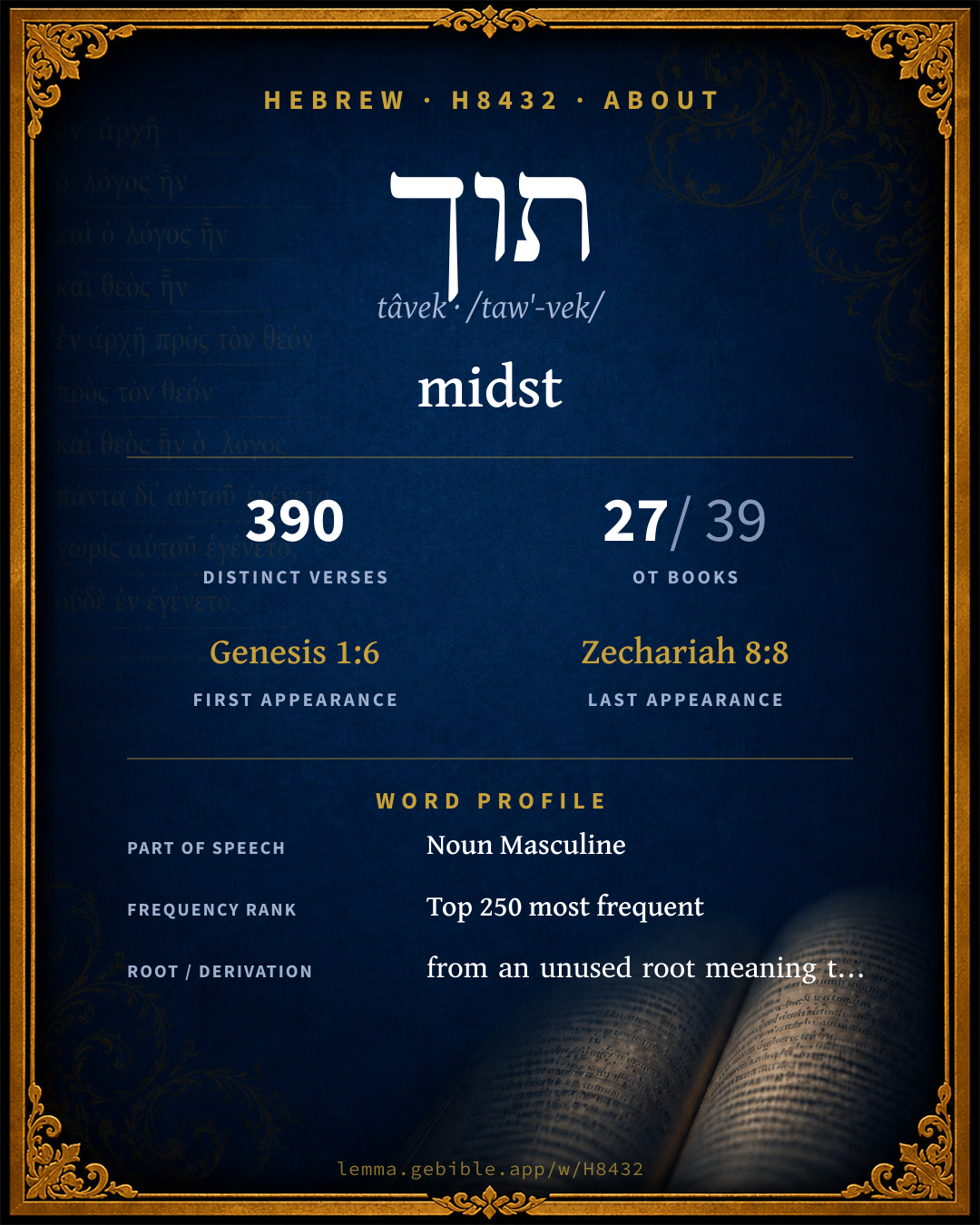
תָּ֫וֶךְ
midst
‘midst’ is one of 5 main senses fuller range ↓
Full lexicon entry — Brown-Driver-Briggs (BDB)
From Brown-Driver-Briggs (BDB)
Where this word appears
Grammar key — what these labels mean
Part of speech
- Noun
- A naming word — a person, place, thing, or idea.
Noun type
- Common
- A common noun — a general class of person, place, or thing (“king,” “city,” “water”), not a specific name.
State
- Construct
- A noun bound to a following noun in a possessive / “of” relationship (the construct chain).
- Absolute
- The independent form of a noun, not bound to a following word.
Gender
- Masculine
- Grammatically masculine.
Number
- Singular
- One.
Every verse where H8432 appears in the Book of 1 Chronicles — 4 distinct verses. Click any verse to open its interlinear word-by-word view. Verse text shown in the World English Bible for context — . Each verse’s Hebrew form is shown with its reference; the English is not keyword-highlighted, since the data carries no word-level English alignment. Use “Compare translations” on any verse to read it across multiple English versions. This concordance covers the Hebrew Bible; Septuagint (Greek Old Testament) occurrences are not indexed here.
1 Chronicles
- 1 Chronicles 11:14 בְ/תוֹךְ prep + n c ms cs They stood in the midst of the plot, and defended it, and killed the Philistines; and Yahweh saved them by a great victory.
- 1 Chronicles 11:22 בְּ/ת֥וֹךְ prep + n c ms cs Benaiah the son of Jehoiada, the son of a valiant man of Kabzeel, who had done mighty deeds, he killed the two [sons of] Ariel of Moab: he went down also and killed a lion in the midst of a pit in time of snow.
- 1 Chronicles 16:1 בְּ/ת֣וֹךְ prep + n c ms cs They brought in the ark of God, and set it in the midst of the tent that David had pitched for it: and they offered burnt offerings and peace-offerings before God.
- 1 Chronicles 21:6 בְּ/תוֹכָ֑/ם prep + n c ms cs + sfx pers 3mp But he didn't count Levi and Benjamin among them; for the king's word was abominable to Joab.
About this entry
At a glance — auto-summarized from this page’s data, not written by a person. Every figure links to its source below. This summary describes the numbers; it doesn’t interpret them.
“midst” is the headline sense of the Hebrew noun תוך (tâvek). Translators differ — “midst” in the King James Version, then “midst of” (unfoldingWord Literal Text), as the renderings breakdown shows. It turns up in 390 verses across 27 books, a common footprint. It concentrates in Ezekiel, which alone accounts for 27% of its uses. Catalogued under 5 senses, its meaning is not single-sense. The sections below give every sense, occurrence, and version rendering.
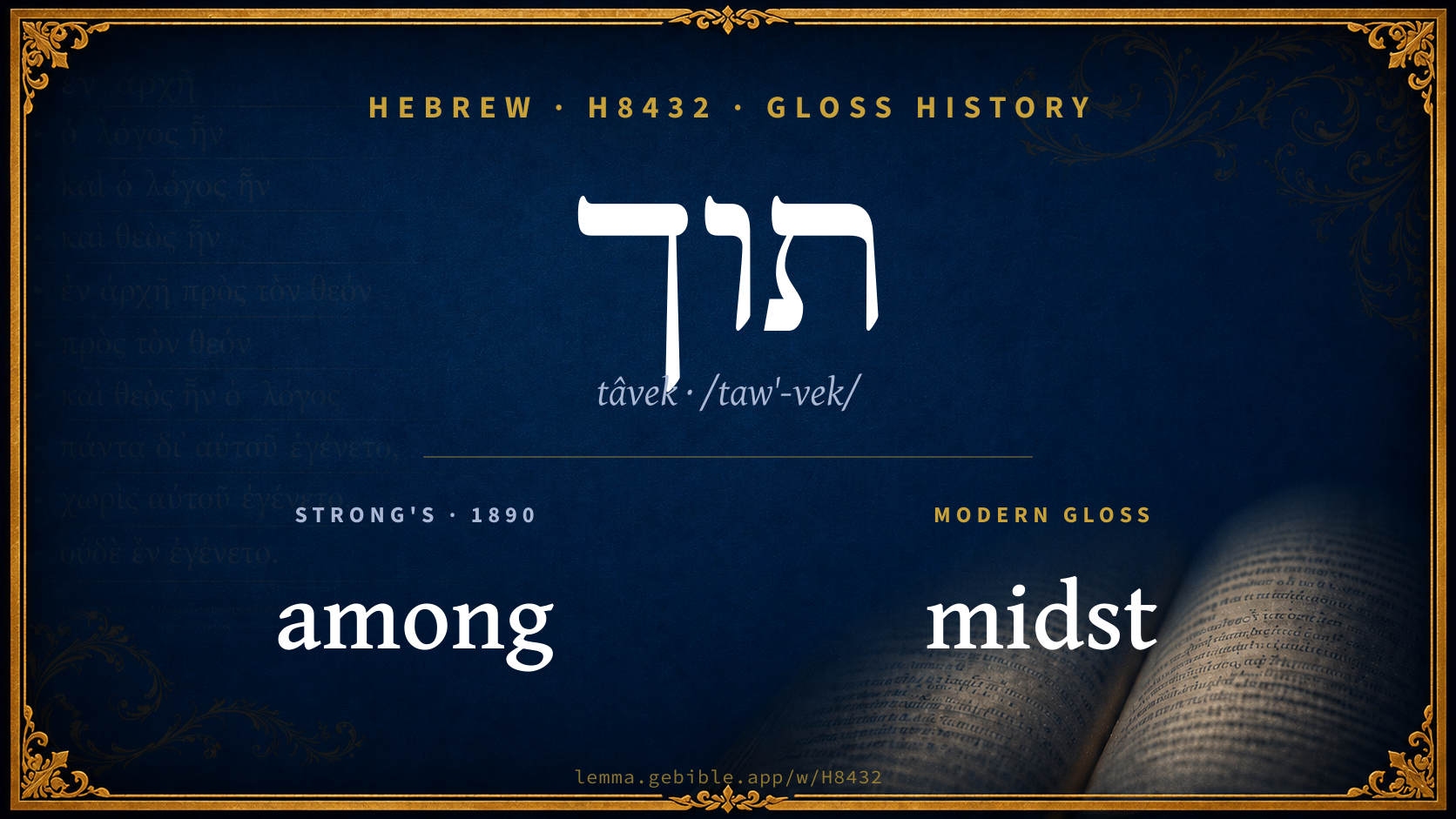
Gloss history
Strong's 1890 vs modern scholarship
About this word
Strong's H8432 catalogs a Hebrew word from the Hebrew Old Testament.
These counts are not copied from any lexicon or concordance. They are computed here, from the morphology-tagged Hebrew Old Testament. What Lemma adds →
- 390
- distinct verses
- The word appears in 390 distinct verses.
- 27 / 39
- OT books
- The word appears in 27 of 39 Old Testament books.
- #119
- by frequency
- Top 250 most frequent Hebrew words (rank 119 of 8,640 Hebrew words by occurrence).
View all 390 occurrences in the concordance →
By section of the Old Testament
By traditional corpus
Conventional, traditional groupings — biblical authorship is debated, so this is a traditional corpus grouping, not an authorship claim. Each share is this word’s portion of its verses in that division of the Hebrew canon. Each figure is a share of the word’s 390 distinct verses.
- Prophets (Nevi'im) 221 verses · 57%
- Torah (Pentateuch) 123 verses · 32%
- Writings (Ketuvim) 46 verses · 12%
How translations render this word
Counts come from each version’s own published word-to-Strong’s tagging or interlinear alignment — an approximate guide to how each version renders this word, not a word-level alignment the data otherwise carries. Because each total is that version’s own tagged count, the per-version totals vary from one another and need not match the appearance or distinct-verse counts above. These counts may also differ from a printed concordance because Lemma counts each distinctly tagged rendering and does not collapse phrase taggings into a single head-word total. This is a fixed set of word-tagged versions (KJV, ASV, BSB, ULT) and does not change with the reading translation you choose elsewhere. Each version’s license is shown beside its name below (and on Sources).
- King James Version: Midst 170×, Among 118×, Within 17×
- American Standard Version: Midst 154×, Among 83×, Within 17×
- Berean Standard Bible: Among 83×, Among them 30×, Middle 30×
- unfoldingWord Literal Text: Midst of 135×, Midst 92×, Middle of 28×
King James Version Public Domain
Renders H8432 across 411 tagged occurrences — most commonly:
Plus other, less common renderings. Plus 47 renderings that appear only once — usually multi-word phrases or single function words the recovered tagging swept in, not distinct renderings. Not rendered by a distinct English word in 4 further occurrences.
American Standard Version Public Domain
Renders H8432 across 407 tagged occurrences — most commonly:
Plus other, less common renderings. Plus 71 renderings that appear only once — usually multi-word phrases or single function words the recovered tagging swept in, not distinct renderings.
Berean Standard Bible Public Domain
Renders H8432 across 379 tagged occurrences — most commonly:
Plus other, less common renderings. Plus 36 renderings that appear only once — usually multi-word phrases or single function words the recovered tagging swept in, not distinct renderings. Not rendered by a distinct English word in 38 further occurrences.
unfoldingWord Literal Text CC BY-SA 4.0
Renders H8432 across 404 tagged occurrences — most commonly:
Plus other, less common renderings. Plus 51 renderings that appear only once — usually multi-word phrases or single function words the recovered tagging swept in, not distinct renderings.
Senses in BDB
The 5 senses BDB distinguishes for this word, in lexicon order (not ranked by frequency or importance). The full entry — with sub-senses — is in the Lexicon Entry tab.
- midst, middle
- into, through (after verbs of motion)
- among (of a number of persons)
- between (of things arranged by twos)
- from among (as to take or separate etc)
Word origin
subst. midst (NH id., also denom. תִּוֵּוךְ; √ unknown; not apparently in cognate languages);—abs. תָּ֫וֶךְ Gn 15:10 +; cstr. תּוֹךְ 1:6 +; תּוֹכִי, תּוֹכוֹ, etc., 2 fs. תּוֹכֵ֫כִי †ψ 116:19; 135:9, תּוֹכֹה †Ez 48:15, 2f, תּוֹכֲכֶם Gn 23:9 +, תּוֹכָ֑הְנָה † Ez 16:53 (Ges§ 91 f);—midst, whether of a space or place, a number of people or things, or of a line: abs. †Ju 16:29 עַמּוּדֵי הַתָּוֶךְ = the middle columns, Je 39:3 שַׁעַר הַתּ׳, בַּתָּוֶךְ Gn 15:10 וַיְבַתֵּר אֹתָם בַּתּ׳, Nu 35:5 וְהָעִיר בַּתָּוֶךְ, Jos 8:22 Ju 15:4 Is 66:17 אַחַר אֶחָד בַּתָּוֶךְ; cstr. 1 K 8:64 קִדַּשׁ הַמֶּלֶךְ אֶת־ תּוֹךְ הֶחָצֵר, Ez 15:4 וְתוֹכוֹ נָחָר; usually c. prep., as בְּ (often = an emph. in, in the very heart and midst of), Gn 1:6 בְּתוֹךְ הַמַּיִם, 2:9 בְּת׳ הַגָּן, 9:21 בְּת׳ אָהֳלֹה, 18:24 בְּת׳ הָעִיר, 37:7 בְּת׳ הַשָּׂדֶה, Ex 11:4 אני יוצא בת׳ מצרים, 39:3, Jos 8:9 בְּת׳ הָעָם, Ju 7:16 בת׳ הַכַּדִּים, 1 K 3:20 בְּת׳ הַלַּיְלָה; בְּתוֹכָהּ (of land or city) Nu 13:32 Is 7:6, etc.; in Ez בְּתוֹכֵךְ, בְּתוֹכָהּ, etc., of sins done, or judgment to be wrought, in the very midst of Jerusalem, Ez 5:8, 10; 9:4; 22:3, 7, 9, 13 +; בְּת׳ מֵעַי ψ 22:15, 40:9 תּוֹרָֽתְךָ בְּת׳ מֵעָ֑י, בְּת׳ לִבִּי v 11, cf. Pr 4:21; after verbs of motion, = into Ex 14:27 1 S 9:14, = through Ex 14:29; Nu 33:8; Ez 9:4; Ne 9:11; of a number of persons = among (not necess. of the actual middle), Gn 40:20 בְּת׳ עֲבָדָיו, בְּתוֹכֵנוּ 23:6, בְּתוֹכָם 1 S 10:10; Jb 1:6, etc., הַגָּר בְּתוֹכֲכֶם Lv 17:8, 10, 13 +; = between (of things arranged by twos) Ex 39:25; in P often (12 times) of the divine presence, or dwelling, in the midst of Isr., Ex 25:8; 29:45, 46; Lv 15:31; 16:16 + (CarpenterHex. i. 209, ed. 2, 410; JED in such cases have always קֶרֶב), so Ez 37:26, 28; 43:7, 9, cf. Hg. 2:5; מִן, as Gn 19:29 מִתּוֹךְ הַהֲפֵכָה, Ex 3:2 מִתּ׳ הַסְּנֶה, 33:11 לֹא יָמִישׁ מִתּ׳ הָאֹהֶל, Dt 4:12 + מִתּ׳ הָאֵשׁ, 1 S 15:6 רְדוּ מִתּ׳ עֲמָלֵק; = from among, as to take, separate, etc., מִתּוֹכָם, מִתּ׳ הָעָם, etc., Ex 7:5; 28:1; Nu 3:12; 4:2, 18; 16:21, 33; 17:10; 19:20 (all P) +; אֶל, as Ex 14:23 ויבאו … אֶל־תּוֹךְ הַיָּם, Lv 11:33; Nu 17:12 וַיָּרָץ אֶל־תּ׳ הַקָּהָל, 19:6 Dt 21:12 וַהֲבֵאתָהּ אֶל־תּ׳ בֵּיתֶ֑ךָ, 22:2; 23:11; 2 S 3:27; Je 21:4 +; עַד 2 S 4:6; מֵעַל †Ez 11:23.—תוך is used by most writers, occ. c. 8–10 times in many books, but is especially frequent in P (c. 106 times) and Ez (116 times). Syn. קֶרֶב, q.v.
— Brown-Driver-Briggs (Oxford 1906, public domain), digitized via Sefaria, supplemented by the OpenScriptures HebrewLexicon (CC BY 4.0). See Sources.
Origin: from an unused root meaning to sever
Jastrow Dictionary
A second Hebrew/Aramaic lexicon for comparison, covering Aramaic and post-biblical (Talmudic, Targumic, Midrashic) usage that the biblical-Hebrew BDB does not. Matched by lemma rather than by Strong’s number, so a lemma may carry more than one Jastrow headword (shown separately below), and the entries cover usage well beyond the Bible.
תָּוֶוךְ
- (b. h.) middle. Num. R. s. 149 כנגד שני עמודי הת׳ אשר הפיל corresponding to the two middle pillars which he (Samson) pulled down. Y. Erub. V, 22ᶜ שער הת׳ the Middle Gate, name of a Temple gate.—V. תּוֹךְ.
תָּוֶךְ
- , v. תָּוֶוךְ, a. תּוֹךְ II.
תָּוַךְ
- , Pi. תִּוֵּוךְ, v. תִּוֵּוךְ.
תּוֹךְ I
- tokh, the sound of boiling. Ber. 39ᵃ יתיב … ועביד ת׳ ת׳ it stands on the stove and makes tokh tokh (boils thoroughly); Erub. 29ᵃ. Pes. 74ᵃ ר"י קוריהו ת׳ ת׳ R. J. called it (the kid roasted with its loose pieces inside) tokh tokh (boiled); v., however, תַּכְבְּרָא.
תּוֹךְ II
- , constr. תּוֹךְ)
- 1. middle, inside, receptacle. Kel. XXVII, 1 כל שאין לו ת׳ וכ׳ earthen vessels which have no inside (receptacle), have no back, i.e. their back is not susceptible of levitical uncleanness. Ib. XXV, 2. Ib. 4 כלי שנטמאו … לא נטמא תוֹכוֹ if the outside of a vessel has become unclean, its inside is not affected thereby. Yoma 72ᵇ, v. בַּר I; a. fr.—Pl. תּוֹכוֹת. Gitt. 20ᵃ חק ת׳, v. חָקַק.
- 2. (prep.) in, into, within. Nidd. 45ᵇ ת׳ זמן within the period (during the year of developing puberty); B. Bath. 155ᵇ. Ib. 5ᵃ פרעתיך בת׳ זמני I paid thee within my appointed time (before the debt was due). Dem. VII, 5 בת׳ ביתו in his house. Kil. I, 8 לת׳ האבטיח into a melon; a. v. fr.–ת׳ כדי דיבור, v. דַּי.—מִתּ׳ immediately from, through, because of. Ber. V, 1 מת׳ כובד ראש in a mood of humility, v. כּוֹבֶד. Ib. 31ᵃ אין … לא מת׳ דין וכ׳ you must not rise for prayer immediately after giving judgment, or after an undecided discussion &c. Ib. מת׳ עצבות from a mood of grief. Pes. 50ᵇ מת׳ שלא לשמה, v. שֵׁם; Naz. 23ᵇ.—Shebu. 32ᵇ, a. fr. מת׳ שאינו יכול לישבע וכ׳ because he cannot make oath, he must pay. Bets. 12ᵃ, a. e. מת׳ שהותרה הוצאה וכ׳ since carrying for an immediate need (on the Holy Bay) has once been permitted, it has also been permitted for a less immediate need; a. v. fr.
תּוּךְ
- to press, make to suffer, punish, v. תְּכַךְ I.
A Dictionary of the Targumim, the Talmud Babli and Yerushalmi, and the Midrashic Literature (Marcus Jastrow; London, Luzac, 1903) — Public Domain. Digitized via Sefaria. Digitized via Sefaria. Full attribution on Sources.
Forms in the corpus
The 108 distinct written forms H8432 takes in the Hebrew Bible, most frequent first — each parse links to that state’s occurrences in the concordance. Hebrew forms include their vowel points and cantillation, so a single lemma takes many written forms.
The 60 most common forms are shown; 48 rarer forms follow in the full concordance.
Same root — word family
Other BDB entries built from the same root as H8432, grouped by Strong’s listed origin. These share a root / origin per the lexicon — not necessarily a shared meaning. Each links to that word’s own entry.
Derived from this word
Compare all same-root words → They share a root, not necessarily a meaning.
Septuagint verse parallels
This word appears in 368 verses that also exist in the Greek Old Testament (Septuagint), out of the 390 Hebrew verses it occurs in. You can read those verses in Greek by switching the Old Testament edition to the Septuagint.
Read these verses in the Septuagint
- Genesis 1:6
- Exodus 2:5
- Leviticus 11:33
- Numbers 1:47
- Deuteronomy 3:16
- Joshua 3:17
- Judges 7:16
- 1 Samuel 7:3
- 2 Samuel 1:25
- 1 Kings 3:8
- 2 Kings 4:13
- 1 Chronicles 11:14
This is a verse-level parallel only — the same verses exist in both the Hebrew and Greek Old Testaments. No word-level Hebrew↔Greek correspondence is claimed: the data carries no such alignment, so no Greek word is shown as this Hebrew word’s translation. Coverage is not total — the Septuagint omits the deuterocanon and renumbers the Psalms, so some Hebrew verses have no direct Greek parallel.