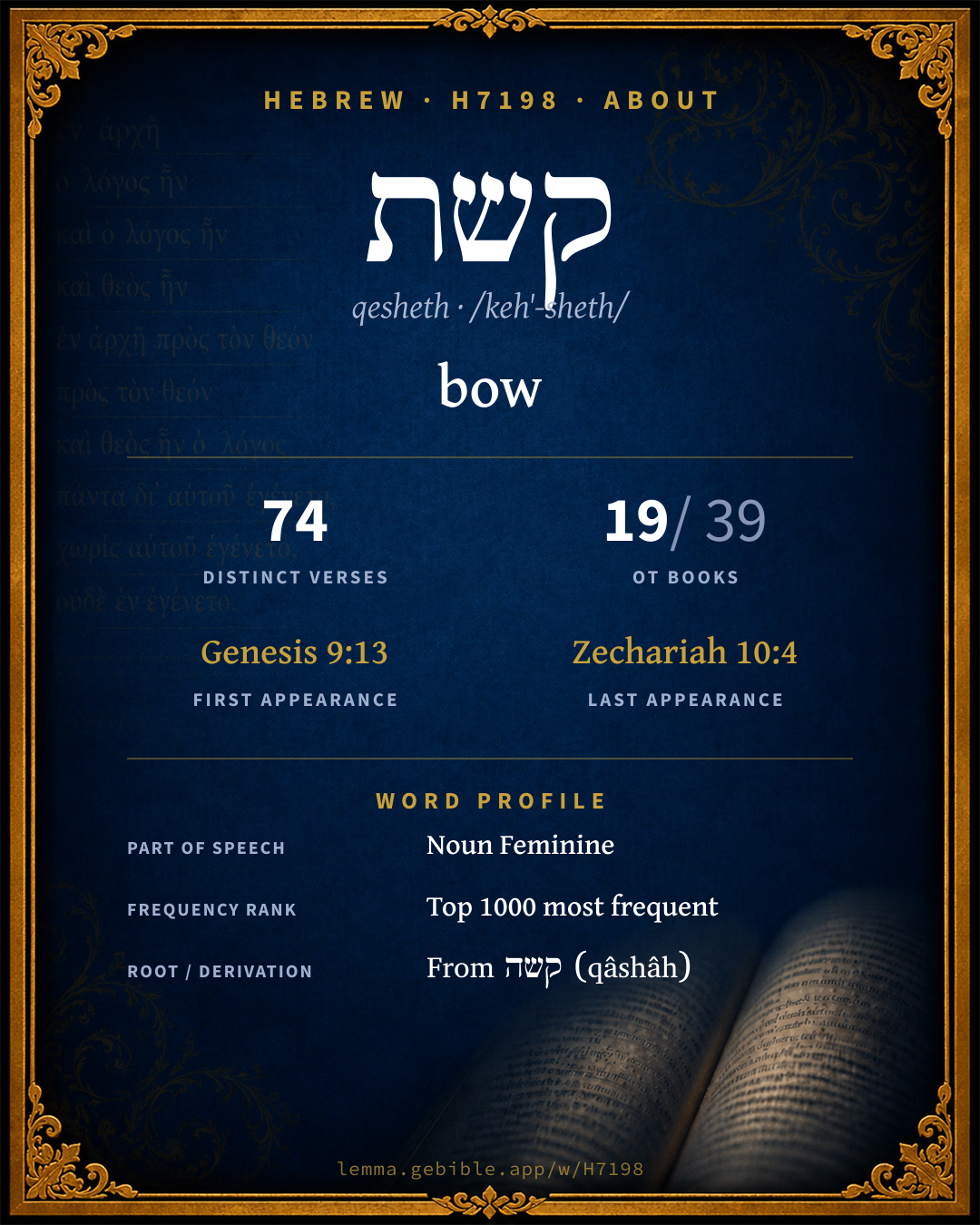
קֶ֫שֶׁת
bow
‘bow’ is one of 5 main senses fuller range ↓
Full lexicon entry — Brown-Driver-Briggs (BDB)
From Brown-Driver-Briggs (BDB)
Where this word appears
See every Construct-state word in the Hebrew Bible →
Grammar key — what these labels mean
Part of speech
- Noun
- A naming word — a person, place, thing, or idea.
Noun type
- Common
- A common noun — a general class of person, place, or thing (“king,” “city,” “water”), not a specific name.
State
- Absolute
- The independent form of a noun, not bound to a following word.
- Construct
- A noun bound to a following noun in a possessive / “of” relationship (the construct chain).
Gender
- Feminine
- Grammatically feminine.
Number
- Singular
- One.
- Plural
- More than one (in Hebrew, generally three or more).
Every verse where H7198 appears in the Book of Zechariah — 3 distinct verses. Click any verse to open its interlinear word-by-word view. Verse text shown in the World English Bible for context — . Each verse’s Hebrew form is shown with its reference; the English is not keyword-highlighted, since the data carries no word-level English alignment. Use “Compare translations” on any verse to read it across multiple English versions. This concordance covers the Hebrew Bible; Septuagint (Greek Old Testament) occurrences are not indexed here.
Zechariah
- Zechariah 9:10 קֶ֣שֶׁת n c fs cs I will cut off the chariot from Ephraim, And the horse from Jerusalem; And the battle bow will be cut off; And he will speak peace to the nations: And his dominion will be from sea to sea, And from the River to the ends of the earth.
- Zechariah 9:13 קֶ֚שֶׁת n c fs For indeed I bend Judah as a bow for me. I have filled the bow with Ephraim; And I will stir up your sons, Zion, Against your sons, Greece, And will make you like the sword of a mighty man.
- Zechariah 10:4 קֶ֣שֶׁת n c fs cs From him will come forth the corner-stone, From him the nail, From him the battle bow, From him every ruler together.
About this entry
At a glance — auto-summarized from this page’s data, not written by a person. Every figure links to its source below. This summary describes the numbers; it doesn’t interpret them.
קשת — transliterated qesheth — is a Hebrew noun carrying the sense “bow.” It is not a single-sense word — see its full sense range. The Hebrew Bible uses it across 74 verses — moderately common. It first appears in Genesis 9:13. Related forms include קשה, מקשה and קשה. See the sense tree, 74-verse concordance, and the renderings breakdown below.
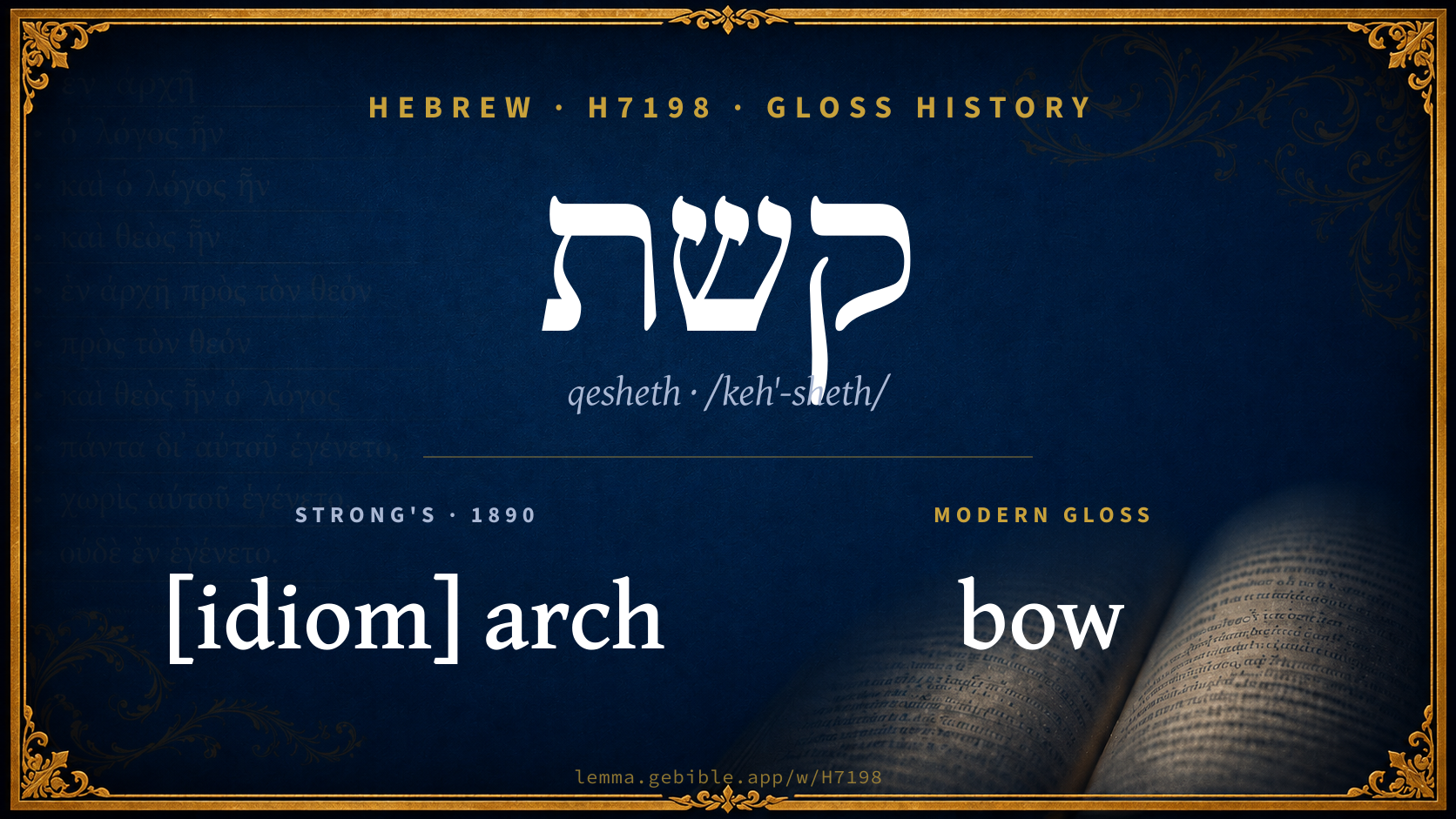
Gloss history
Strong's 1890 vs modern scholarship
About this word
Strong's H7198 catalogs a Hebrew word from the Hebrew Old Testament.
These counts are not copied from any lexicon or concordance. They are computed here, from the morphology-tagged Hebrew Old Testament. What Lemma adds →
- 74
- distinct verses
- The word appears in 74 distinct verses.
- 19 / 39
- OT books
- The word appears in 19 of 39 Old Testament books.
- #523
- by frequency
- Top 1000 most frequent Hebrew words (rank 523 of 8,640 Hebrew words by occurrence).
View all 74 occurrences in the concordance →
By section of the Old Testament
By traditional corpus
Conventional, traditional groupings — biblical authorship is debated, so this is a traditional corpus grouping, not an authorship claim. Each share is this word’s portion of its verses in that division of the Hebrew canon. Each figure is a share of the word’s 74 distinct verses.
- Prophets (Nevi'im) 42 verses · 57%
- Writings (Ketuvim) 25 verses · 34%
- Torah (Pentateuch) 7 verses · 9%
How translations render this word
Counts come from each version’s own published word-to-Strong’s tagging or interlinear alignment — an approximate guide to how each version renders this word, not a word-level alignment the data otherwise carries. Because each total is that version’s own tagged count, the per-version totals vary from one another and need not match the appearance or distinct-verse counts above. These counts may also differ from a printed concordance because Lemma counts each distinctly tagged rendering and does not collapse phrase taggings into a single head-word total. This is a fixed set of word-tagged versions (KJV, ASV, BSB, ULT) and does not change with the reading translation you choose elsewhere. Each version’s license is shown beside its name below (and on Sources).
- King James Version: Bow 52×, Bows 11×, Archers 2×
- American Standard Version: Bow 50×, Bows 11×, Archers 2×
- Berean Standard Bible: Bow 43×, Bows 11×, Rainbow 3×
- unfoldingWord Literal Text: Bow 49×, Bows 9×, Bow of 5×
King James Version Public Domain
Renders H7198 across 71 tagged occurrences — most commonly:
Plus 6 renderings that appear only once — usually multi-word phrases or single function words the recovered tagging swept in, not distinct renderings. Not rendered by a distinct English word in 6 further occurrences.
American Standard Version Public Domain
Renders H7198 across 71 tagged occurrences — most commonly:
Plus 8 renderings that appear only once — usually multi-word phrases or single function words the recovered tagging swept in, not distinct renderings.
Berean Standard Bible Public Domain
Renders H7198 across 65 tagged occurrences — most commonly:
Plus 4 renderings that appear only once — usually multi-word phrases or single function words the recovered tagging swept in, not distinct renderings. Not rendered by a distinct English word in 11 further occurrences.
unfoldingWord Literal Text CC BY-SA 4.0
Renders H7198 across 75 tagged occurrences — most commonly:
Plus 6 renderings that appear only once — usually multi-word phrases or single function words the recovered tagging swept in, not distinct renderings.
7 senses and sub-senses in the full BDB
What do BDB’s symbols mean?
BDB uses these scholarly abbreviations:
| Symbol | Meaning |
|---|---|
| 𝔊 | the Septuagint (the ancient Greek translation, LXX) |
| 𝔙 | the Vulgate (the Latin translation) |
| 𝔖 | the Syriac version (the Peshitta) |
| 𝔗 | the Targum (the Aramaic translation) |
| ψ | the Psalms |
| √ | root (the underlying root or stem) |
| ‖ | parallel passage (a synonymous or contrasted parallel) |
| † | the dagger: every passage where the word occurs is cited |
The 7 senses and sub-senses the full Brown-Driver-Briggs lexicon distinguishes for this word, in lexicon order (not ranked by frequency), with BDB’s own verbatim wording and sub-sense lettering. Shown in Hebrew script with BDB’s own scholarly abbreviations. The condensed entry is in the Lexicon Entry tab. See also the Forms in the corpus table below.
- 1. bow:
- a. for hunting Gn 27:3 (J; + תְּלִי). e.g. Genesis 27:3
- b. battle: + (or ‖) חֶרֶב, Gn 48:22; Jos 24:12 (both E), Ho 1:7; 2:20 1 S 18:4 (+ חֲגֹרוֹ), 2 S 1:22; 2 K 6:22; Is 41:2 Ne 4:7 (+ רָמְחֵיחֶם), Zc 9:13 (fig. of Judah as י׳’s bow), ψ 37:15 (fig.), 44:7 (+ or ‖ חֶרֶב also infr.); + (or ‖) חִזִּים Is 7:24; 2 K 13:15(×2); Ez 39:3, 9; 1 Ch 12:2a; cf. רִשְׁפֵי ק׳ ψ 76:4 = arrow (+ מָגֵן וְחֶרֶב) so בֶּן ק׳ Jb 41:20 (cf. La 3:13; Jb 5:7); + חֲנִית ψ 46:10, + כִּידוֹן Je 6:23; 50:42; + various weapons Ne 4:10; 2 Ch 26:14; alone Is 13:18 (context corrupt), 22:3; Je 51:56; Hb 3:9 (of י׳ as warrior); ק׳ מִלְחָמָה Zc 9:10; 10:4; in sim. כְּק׳ רְמִיָּה like a bow of deception Ho 7:16 ψ 78:57 (i.e. one that misses its aim; al. slack bow). e.g. Genesis 48:22
- c. ק׳ coll. = bow(-men), archers Is 21:17. e.g. Isaiah 21:17
- d. phrases are: הַמּוֹרִים אֲנָשִׁים בַּקּ׳ 1 S 31:3 archers, bowmen (but dub.; Dr Kit Löhr tr., א׳ הַמּ׳; We Bu del. א׳, as ‖ 1 Ch 10:3; HPS Now del. א׳ בַּקּ׳), הַמּוֹרִים בַּקּ׳ 1 Ch 10:3; מְטַחֲוֵי ק׳ Gn 21:16 (v. [טָחָה]), רמֵה ק׳ Je 4:29, cf. perhaps Gn 21:21 v. קַשַּׁת, ‖ נשְׁקֵי ק׳ (v. II. נָשַׁק) 1 Ch 12:2 b; 2 Ch 17:17, נוֹ׳ רוֹמֵי ק׳ ψ 78:9; תֹּפֵשׂ הַקּ׳ Am 2:15 one grasping the bow, (v. Je 46:9 infr.) v. also מִלֵּא יָדוֹ בַקּ׳ 2 K 9:24, הַרְכֵּב יָֽדְךָ עַל־הַקּ׳ 13:16; דָּרַךְ ק׳ bend (lit. tread) the bow, Is 5:28 (pt. pass), 21:15 (id.; ‖ חֶרֶב), Je 50:14, 29; 51:3; 1 Ch 5:18; 8:40; 2 Ch 14:7; ψ 37:14 (‖ חֶרֶב), in fig. 11:2 (‖ חֵץ), and, of God, La 2:4; 3:12 ψ 7:13 (‖ חֶרֶב); תֹּפְשֵׂי דֹּרְכֵי ק׳ Je 46:9; cf. (fig.) וַיַּדְרְכוּ אֶת־לְשׁוֹנָם קַשְׁתָּם Je 9:2; also וְנִחֲתָה ק׳ נְחוּשָׁה ψ 18:35 = 2 S 22:35 (read וְנִחֲתָה for וְנִחַת); מָשַׁךְ בַּקּ׳ draw the bow 1 K 22:34 = 2 Ch 18:33; Is 66:19. e.g. 1 Samuel 31:3
- e. bow (passing over into) fig. of might, Gn 49:24 (poem), 1 S 2:4; Ho 1:5; Je 49:35; Jb 29:20 (cf. ψ 37:15, b. supr.). f. ק׳ נְחוּשָׁה fig. of divine judgment Jb 20:24 (‖ נֵשֶׁק בַּרְזֶל). e.g. Genesis 49:24
- 2. rainbow: כְּמַרְאֵה הַקּ׳ אֲשֶׁר יִהְיֶה בֶעָנָן בְּיוֹם הַגֶּשֶׁם Ez 1:28; Gn 9:13, 14, 16 (P).—וַיֹּאמֶד לְלַמֵּד בְּנֵי־יְהוּדָה קָ֑שֶׁת 2 S 1:18 is corrupt; 𝔊 al. om.; We Now think misplaced gloss on v 6; v. further HPS. e.g. Ezekiel 1:28
Senses from the full Brown-Driver-Briggs lexicon (Brown, Driver, Briggs; Oxford 1906 — public domain), digitized via Sefaria, supplemented by the OpenScriptures HebrewLexicon (CC BY 4.0). Full attribution on Sources.
Word origin
n.f. Gn 9:14 (appar. m. 2 S 1:22 but v. AlbrZAW xvi (1896) 91) bow (orig. √ perhaps קושׁ, meaning unknown; NH id.; Assyrian ḳaštu; Ethiopic ቀስት: Arabic قَوْسٌ, pl. قُسِىٌّ, قِسِىٌّ, etc.; 𝔗 קַשְׁתָּא and (ט for ת after ק) קוּשְׁטָא (rare), all bow, קַשָּׁתָא bowman; Syriac ܩܶܫܬܳܐ bow, ܩܰܫܳܬܳܐ bowman; Old Aramaic קשת bow, Mand. כשטא (Frä 206); Palm. קשטא bowman);—abs. ק׳ Ho 1:7 +, קָ֑שֶׁת Je 46:9 +; cstr. קֶ֫שֶׁת Ho 1:5 +; sf. קַשְׁתִּי Gn 48:22 +, etc.; pl. abs. קְשָׁתוֹת 2 Ch 26:14 +; sf. קַשְּׁתֹתָיו (Ges§ 20 h) Is 5:28, קַשְּׁתוֹתָם Je 51:56 ψ 37:15, קַשְּׁתֹתֵיהֶם Ne 4:7 (קַשְׁתֹּתָיו etc., van d. H. [except ψ 37:15]);—
— Brown-Driver-Briggs (Oxford 1906, public domain), digitized via Sefaria, supplemented by the OpenScriptures HebrewLexicon (CC BY 4.0). See Sources.
Derived from קשה (qâshâh) (H7185) — to be hard.
Jastrow Dictionary
A second Hebrew/Aramaic lexicon for comparison, covering Aramaic and post-biblical (Talmudic, Targumic, Midrashic) usage that the biblical-Hebrew BDB does not. Matched by lemma rather than by Strong’s number, so a lemma may carry more than one Jastrow headword (shown separately below), and the entries cover usage well beyond the Bible.
קְשַׁת
- (v. קְשַׁט) to shoot. Targ. Ez. XXI, 26. Targ. Y. II, Ex. XV, 4; a. e.
- same. Targ. Is. XXXVII, 33 יַקְשִׁית ed. Wil. (ed. Lag. יִקְשַׁת); Targ. II Kings XIX, 32.
- to be shot forth. Targ. Y. II, Ex. XIX, 13 (v. קְשַׁט).
קֶשֶׁת
- c. (b. h.; preced.) bow; rainbow. Erub. 55ᵃ עיר העשויה כק׳ a town built in the shape of a bow; ib. עשויה כמין ק׳. Ber. 59ᵃ הרואה את הק׳ בענן he who sees a rainbow in the clouds. Ḥag. 16ᵃ. Gen. R. s. 35; a. fr.—Pl. קְשָתוֹת. Lam. R. introd. (R. Joḥ. 1) (ref. to Is. XXII, 3) שהיו מתירין גידי קַשְׁתּוֹתָם וכ׳ they loosened the strings of their bows and tied them with them; Yalk. Is. 289. Sifré Deut. 18 עקרבים כק׳ scorpions as large as bows; Yalk. ib. 803; a. e.—Trnsf. membrum virile, potentia virilis. Sot. 36ᵇ; Y. Hor. II, 46ᵈ; a. e. e.g. Isaiah 22:3
קֶשֶׁת ²
- 1. bow; rainbow. Targ. Is. XXI, 15. Targ. Gen. XXI, 16. Ib. IX, 13; a. fr.—Pl. קַשְׁתִּין, קַשְׁתָּן, קַשְׁתָּתָא, קַשְׁוָותָא. Targ. Is. VII, 24. Targ. II Chr. XXVI, 14. Targ. I Sam. II, 4 קַשְׁתַּת constr. (followed by ד־). Targ. Y. Gen. XXI, 20. Targ. Ps. XXXVII, 14, sq.; a. e.
- 2. the curved side of the stomach, opp. to יִתְרָא. Ḥull. 50ᵃ דאק׳ the fat covering the curved &c.
קַשָּׁת
- preced.) archer; esp. ק׳ (מזל) Sagittarius, a sign of the Zodiac. Gen. R. s. 98. Pesik. R. s. 20; Yalk. Ex. 418; a. e.—Pl. קַשָּׁתִים, קַשָּׁתִין. Lam. R. to II, 2, a. e., v. קַשָּׁט.
A Dictionary of the Targumim, the Talmud Babli and Yerushalmi, and the Midrashic Literature (Marcus Jastrow; London, Luzac, 1903) — Public Domain. Digitized via Sefaria. Digitized via Sefaria. Full attribution on Sources.
Forms in the corpus
The 48 distinct written forms H7198 takes in the Hebrew Bible, most frequent first — each parse links to that state’s occurrences in the concordance. Hebrew forms include their vowel points and cantillation, so a single lemma takes many written forms.
Same root — word family
Other BDB entries built from the same root as H7198, grouped by Strong’s listed origin. These share a root / origin per the lexicon — not necessarily a shared meaning. Each links to that word’s own entry.
Derives from
Shares the same root
Derived from this word
Compare all same-root words → Showing 4 of 6 — not the complete family. They share a root, not necessarily a meaning.
Septuagint verse parallels
This word appears in 63 verses that also exist in the Greek Old Testament (Septuagint), out of the 74 Hebrew verses it occurs in. You can read those verses in Greek by switching the Old Testament edition to the Septuagint.
Read these verses in the Septuagint
- Genesis 9:13
- Joshua 24:12
- 1 Samuel 2:4
- 2 Samuel 1:18
- 1 Kings 22:34
- 2 Kings 6:22
- 1 Chronicles 5:18
- 2 Chronicles 14:8
- Job 20:24
- Psalms 7:12
- Isaiah 5:28
- Jeremiah 4:29
This is a verse-level parallel only — the same verses exist in both the Hebrew and Greek Old Testaments. No word-level Hebrew↔Greek correspondence is claimed: the data carries no such alignment, so no Greek word is shown as this Hebrew word’s translation. Coverage is not total — the Septuagint omits the deuterocanon and renumbers the Psalms, so some Hebrew verses have no direct Greek parallel.