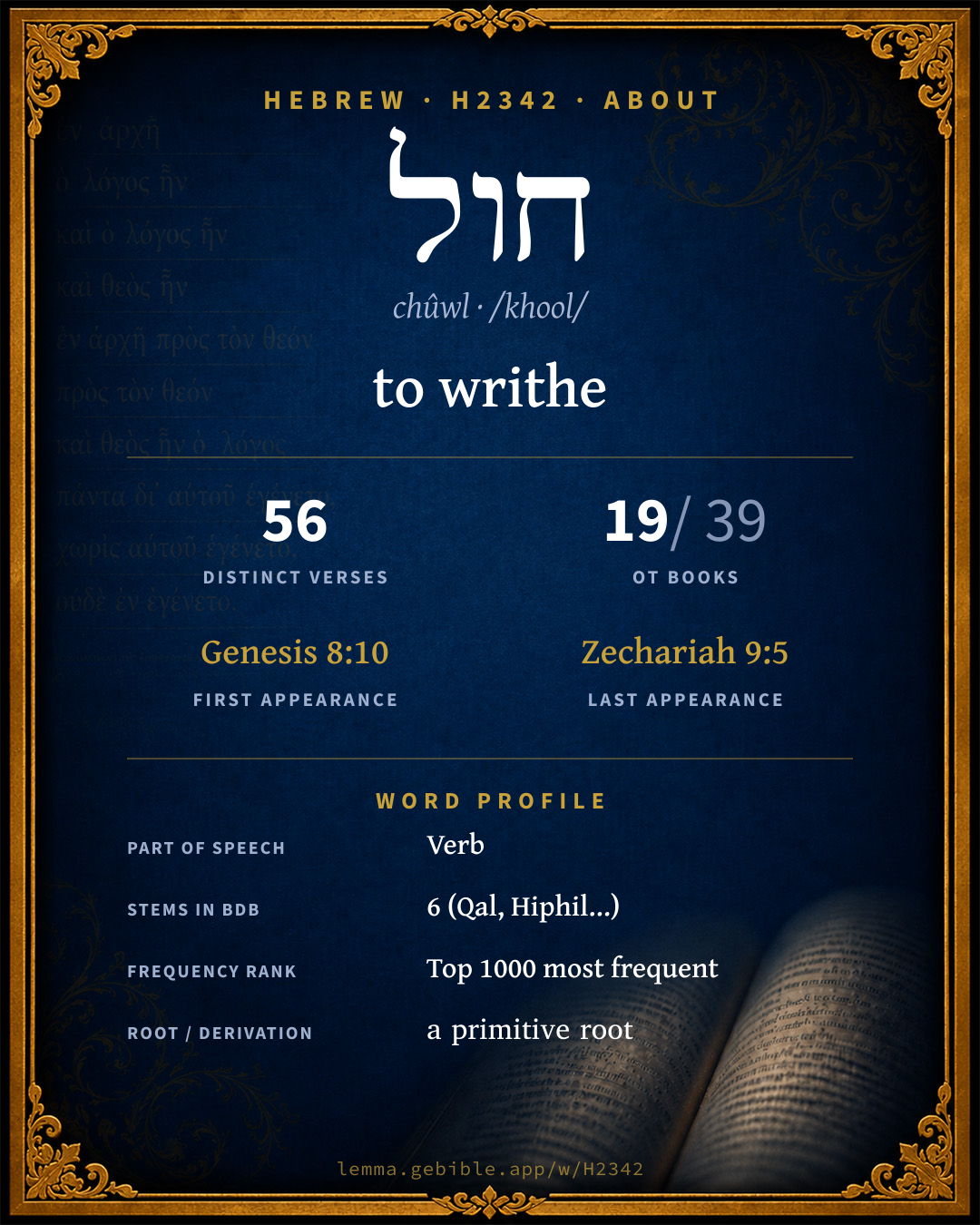
חוּל
to writhe
‘to writhe’ is one of 3 main senses fuller range ↓
Full lexicon entry — Brown-Driver-Briggs (BDB)
From Brown-Driver-Briggs (BDB)
Where this word appears
Grammar key — what these labels mean
Part of speech
- Verb
- An action or state-of-being word.
Stem
- Qal
- The basic, simple active stem — the plain form of the verb (“he wrote”). Here: ‘dance Ju 21’
- Polal
- The passive counterpart of the Polel. Here: ‘be made to writhe Jb 26’
- Hiphil
- The causative active stem (“he caused / brought about”).
- Hithpolel
- The reflexive counterpart of the Polel.
- Polel
- A stem of hollow/geminate roots functioning like the Piel — intensive active. Here: ‘dance Ju 21’
- Piel
- An intensive or resultative active stem.
- Hophal
- The passive counterpart of the Hiphil (“he was caused to…”).
Form
- Imperfect
- An incomplete, ongoing, or future action (“he will / would write”).
- Perfect
- A completed action or state — Hebrew marks aspect (completeness) more than strict tense (“he wrote”).
- Sequential Imperfect
- An imperfect with prefixed waw — the standard past-narrative form (waw-consecutive imperfect).
- Imperative
- A direct command (“write!”).
- Participle Active
- A verbal adjective expressing ongoing or characteristic action (“writing / one who writes”).
- Sequential Perfect
- A perfect with prefixed waw continuing a preceding imperfect or command (waw-consecutive perfect).
- Infinitive Construct
- A bound verbal noun, frequently with prepositions (“to write / in writing”).
- Cohortative
- A first-person volitional form expressing wish or resolve (“let me / let us write”).
State
- Absolute
- The independent form of a noun, not bound to a following word.
- Construct
- A noun bound to a following noun in a possessive / “of” relationship (the construct chain).
Person
- 3rd Person
- The one spoken about (“he / she / it / they”).
- 1st Person
- The speaker (“I / we”).
- 2nd Person
- The one addressed (“you”).
Gender
- Masculine
- Grammatically masculine.
- Feminine
- Grammatically feminine.
- Common
- Either gender — not distinguished for this form.
Number
- Plural
- More than one (in Hebrew, generally three or more).
- Singular
- One.
Every verse where H2342 appears in the Book of Zechariah — 1 distinct verse. Click any verse to open its interlinear word-by-word view. Verse text shown in the World English Bible for context — . Each verse’s Hebrew form is shown with its reference; the English is not keyword-highlighted, since the data carries no word-level English alignment. Use “Compare translations” on any verse to read it across multiple English versions. This concordance covers the Hebrew Bible; Septuagint (Greek Old Testament) occurrences are not indexed here.
Zechariah
About this entry
At a glance — auto-summarized from this page’s data, not written by a person. Every figure links to its source below. This summary describes the numbers; it doesn’t interpret them.
At its core, חול (chûwl) means “to writhe.” The verb spans 6 stems, from Qal to Hiphil. With 56 verses in 19 books, it is a moderately common word in the Hebrew Bible. Scripture first uses it in Genesis 8:10. Sharing its root, it stands alongside חול, חיל and חיל. Dig into 56-verse concordance and the renderings breakdown below.
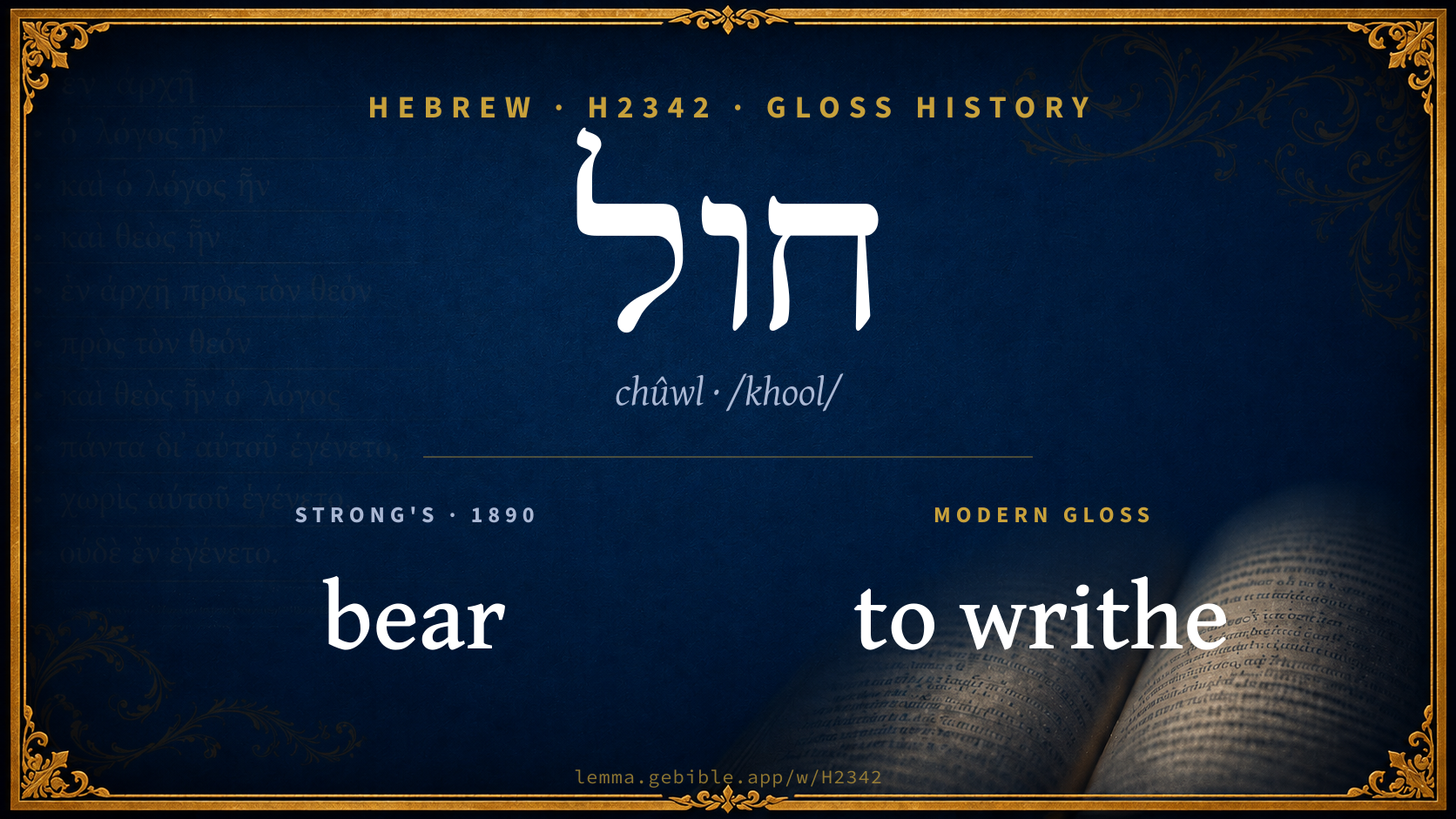
Gloss history
Strong's 1890 vs modern scholarship
About this word
Strong's H2342 catalogs a Hebrew word from the Hebrew Old Testament.
These counts are not copied from any lexicon or concordance. They are computed here, from the morphology-tagged Hebrew Old Testament. What Lemma adds →
- 56
- distinct verses
- The word appears in 56 distinct verses.
- 19 / 39
- OT books
- The word appears in 19 of 39 Old Testament books.
- #629
- by frequency
- Top 1000 most frequent Hebrew words (rank 629 of 8,640 Hebrew words by occurrence).
View all 56 occurrences in the concordance →
By section of the Old Testament
By traditional corpus
Conventional, traditional groupings — biblical authorship is debated, so this is a traditional corpus grouping, not an authorship claim. Each share is this word’s portion of its verses in that division of the Hebrew canon. Each figure is a share of the word’s 56 distinct verses.
- Prophets (Nevi'im) 28 verses · 50%
- Writings (Ketuvim) 25 verses · 45%
- Torah (Pentateuch) 3 verses · 5%
How translations render this word
Counts come from each version’s own published word-to-Strong’s tagging or interlinear alignment — an approximate guide to how each version renders this word, not a word-level alignment the data otherwise carries. Because each total is that version’s own tagged count, the per-version totals vary from one another and need not match the appearance or distinct-verse counts above. These counts may also differ from a printed concordance because Lemma counts each distinctly tagged rendering and does not collapse phrase taggings into a single head-word total. This is a fixed set of word-tagged versions (KJV, ASV, BSB, ULT) and does not change with the reading translation you choose elsewhere. Each version’s license is shown beside its name below (and on Sources).
BDB lists this Strong’s number as 5 distinct words (homographs). Each count above pools all of them and is not split by sense — see the Senses section below. A low-frequency rendering may belong to a different one of those words, not the primary meaning.
- King James Version†: Fear 2×, Grievous 2×, Shaketh 2×
- American Standard Version†: Tremble 4×, Him 2×, Is in pain 2×
- Berean Standard Bible†: Tremble 5×, I was brought forth 3×, Gave you birth 2×
- unfoldingWord Literal Text†: Tremble 9×, Writhed 3×, Writhes 3×
King James Version Public Domain
Renders H2342 across 61† tagged occurrences — most commonly:
Plus 55 renderings that appear only once — usually multi-word phrases or single function words the recovered tagging swept in, not distinct renderings. Not rendered by a distinct English word in 1 further occurrence.
American Standard Version Public Domain
Renders H2342 across 62† tagged occurrences — most commonly:
Plus 46 renderings that appear only once — usually multi-word phrases or single function words the recovered tagging swept in, not distinct renderings.
Berean Standard Bible Public Domain
Renders H2342 across 58† tagged occurrences — most commonly:
Plus 40 renderings that appear only once — usually multi-word phrases or single function words the recovered tagging swept in, not distinct renderings. Not rendered by a distinct English word in 2 further occurrences.
unfoldingWord Literal Text CC BY-SA 4.0
Renders H2342 across 68† tagged occurrences — most commonly:
Plus 41 renderings that appear only once — usually multi-word phrases or single function words the recovered tagging swept in, not distinct renderings.
23 senses and sub-senses in the full BDB
Hebrew verbs can shift meaning by stem (binyan): Qal is the basic action, Niphal is often passive or reflexive, Piel often intensifies or makes it factitive, and Hiphil is typically causative. The senses below are grouped under the stem BDB assigns to each. This entry also uses one or more reduplicated stems (the Pōlēl/Pilpēl type), which for hollow or geminate roots behave much like Piel — often intensive or iterative.
What do BDB’s symbols mean?
BDB uses these scholarly abbreviations:
| Symbol | Meaning |
|---|---|
| 𝔊 | the Septuagint (the ancient Greek translation, LXX) |
| 𝔙 | the Vulgate (the Latin translation) |
| 𝔖 | the Syriac version (the Peshitta) |
| 𝔗 | the Targum (the Aramaic translation) |
| ψ | the Psalms |
| √ | root (the underlying root or stem) |
| ‖ | parallel passage (a synonymous or contrasted parallel) |
| † | the dagger: every passage where the word occurs is cited |
The 23 senses and sub-senses the full Brown-Driver-Briggs lexicon distinguishes for this word, in lexicon order (not ranked by frequency), with BDB’s own verbatim wording and sub-sense lettering. Shown in Hebrew script with BDB’s own scholarly abbreviations. The condensed entry is in the Lexicon Entry tab. See also the Forms in the corpus table below.
חול I [חִיל] vb. whirl, dance, writhe (NH, Aramaic id., dance
Qal
- Pf. 3 fs. חָ֫לָה Mi 1:12 + 2 times; וְחָלָה֫ consec. Ho 11:6; חַלְתִּי Is 23:4; חָ֫לוּ Je 5:3 (but v. infr.), La 4:6; וְחָלוּ֫ Dt 2:25; חַ֫לְנוּ Is 26:18; Impf. יָחוּל Je 23:19; 30:23; 3 fs. תָּחוּל Ez 30:16 Qr (Kt Co תחיל); וַתָּחֹ֑ל Je 51:29; אחולה Je 4:19 Kt (Qr אוֹחִילָה, Hiph. יחל); יָחֻ֫לוּ 2 S 3:29; but also יָחִיל ψ 55:5 (Jb 20:21 v. ii. חול); וַיָּ֫חֶל 1 S 31:3 = 1 Ch 10:3 + Gn 8:10 (where read prob. וַיִּיָּ֫חֶל as v 12; = וַיְיַחֵל Ol Di); 3 fs. תָּחִיל Is 26:17 + 2 times + Ez 30:16 Kt (cf. supr.); וַתָּ֑חֶל ψ 97:4; 2 fs. תְּחִלִין Is 45:10; יָחִילוּ ψ 77:17 = 3 times (ψ 10:5 v. ii. חול); וַיָּחִ֫ילוּ Ju 3:25; וַחִילוּן Is 13:8; תָּחִ֫ילוּ Je 5:22; Imv. fs. חוּ֫לִי Mi 4:10 ψ 114:7; mpl. חִילוּ ψ 96:9 1 Ch 16:30; Inf. cstr. (לָ)חוּל Ju 21:21 Ez 30:16 (= Inf. abs.); Pt. fs. חוֹלָה Je 4:31 vid. Gf Gie and Ges§ 72 R.1.;— e.g. Micah 1:12
- 1. dance Ju 21:21 (לָחוּל בַּמְּחֹלוֹת ψ 96:9). e.g. Judges 21:21
- 2. twist, writhe:
- a. in pain, especially childbirth Is 26:17; 45:10 מַה־תח׳ (‖ מה־תוליד); metaph., of sea Is 23:4 (‖ ילד); Israel 26:18 (‖ הרה), 54:1 (‖ ילד); Zion 66:7, 8 (‖ id.), Mi 4:10 (‖ גֹּ֫חִי, sim. כיולדה; cf. v. 9), Je 4:31. e.g. Isaiah 26:17
- b. fig., be in severe pain, or anguish (mostly poet. and elevated prose), sq. מפני Dt 2:25 (‖ רגז, cf. also פַּחַד and יִרְאָה v a); Ez 30:16 Je 5:22 (‖ ירא); sq. מִלִּפְנֵי 1 Ch 16:30 ψ 114:7; abs. ψ 55:5 (‖ אימות מָוֶת נפלו עלי), Je 4:19 Kt, ψ 77:17 (‖ רגז) 97:4 Is 13:8; 23:5 Je 51:29 (‖ רָעַשׁ), Jo 2:6 Zc 9:5 (‖ ירֵא), prob. also 1 S 31:3 (cf. 28:5) = 1 Ch 10:3, cf. Öt; fig. of mts. Hb 3:10. e.g. Deuteronomy 2:25
- c. in contrition Je 5:3, חָ֫לוּ der. from חול Ew Gf Gie; חלה (wrongly accented; vid. חלה Qal 2). e.g. Jeremiah 5:3
- d. in anxious longing עַד בּוֹשׁ Ju 3:25, sq. לְ Mi 1:12 (on Gn 8:10, cf. supr.) e.g. Judges 3:25
- 3. whirl, whirl about עַל־רֹאשׁ יוֹאָב (i.e. blood—דמים—of Abner, from sword) 2 S 3:29; of attach of sword itself Ho 11:6 (‖ כִּלָּה, אכל), cf. La 4:6 לא חָ֫לוּ בה ידים; of tempest על ראשׁ רשׁעים יחול Je 23:19 (v a סער מִתְחוֹלֵל) = 30:23 (v a סַעַר מִתְגּוֹרֵר). e.g. 2 Samuel 3:29
Poʿlel
- Impf. יְחוֹלֵל ψ 29:9; 3 fs. תְּחוֹלֵל Pr 25:23; sf. תְּחוֹלֶלְכֶם Is 51:2; 2 ms. תְּחוֹלֵל Jb 35:14; וַתְּחוֹלֵל ψ 90:2; Inf. cstr. חֹלֵל Jb 39:1; Pt. מְחוֹלֵל Pr 26:10; מְחֹלֶלְךָ Dt 32:18; מְחֹלְלוֹת Ju 21:23;—1 S 18:6 ψ 87:7 v infr.; on Is 51:9 and Jb 26:13 v. I. חלל;— e.g. Psalms 29:9
- 1. dance Ju 21:23, so perhaps also 1 S 18:6 (read חַמְּחֹלְלוֹת 𝔊 We Dr; and חֹלֲלִים pt. (מ om.) ψ 87:7 RV Pe De Che Bae; cf. Qal 1). e.g. Judges 21:23
- 2. writhe in travail with, bear, bring forth (poet.), of Sarah, mother of Isr., Is 51:2 (‖ אַבְרָהָם אֲבִיכֶם); of hinds Jb 39:1 ψ 29:9 (caus.); fig. of י׳’s producing earth ψ 90:2 (‖ יֻלָּד֑וּ); of his bringing forth Isr. (with difficulty, v. Di) Dt 32:18; of north wind bringing forth rain Pr 25:23; רַב מְחוֹלֵל כֹּ֑ל 26:10 a master produceth everything (on trans. see VB; Ew. al. derive from חלל wound). e.g. Isaiah 51:2
- 3. wait anxiously (cf. Qal 2 d), sq. לְ Jb 35:14 (Elihu). e.g. Job 35:14
Poʿlal
- Pf. חוֹלָ֑לתִּי ψ 51:7 + 2 times; חוֹלָ֑לְתָּ Jb 15:7; Impf. יְחוֹלָ֑לוּ Jb 26:5;— e.g. Psalms 51:7
- 1. be made to writhe Jb 26:5 (הָֽרְפָאִים). e.g. Job 26:5
- 2. be brought forth Jb 15:7 (‖ תִּוָּלֵד), ψ 51:7 (‖ יחם), metaph. of wisdom Pr 8:24, 25. e.g. Job 15:7
Hiphil
- Impf. יָחִיל ψ 29:8(×2) cause to be in anguish, c. acc. מִדְבָּר, subj. י׳. Hoph. Impf. יוּחַל Is 66:8 be born (= travailed with, Che), subj. אֶרֶץ (‖ יִוָּלֵד גוי). e.g. Psalms 29:8
Hithpol
- 1. Pt. מִתְחוֹלֵל whirling סַעַר מתח׳ Je 23:19 (= סער מִתְגּוֹרֵר 30:23). e.g. Jeremiah 23:19
- 2. writhing, suffering torture Jb 15:20 (of life of wicked). e.g. Job 15:20
- 3. Imv. הִתְחוֹלֵל ψ 37:7 wait longingly sq. לְ for, ‖ דּוֹם. e.g. Psalms 37:7
Hithpalp
- Impf. 3 fs. וַתִּתְחַלְחַל Est 4:4 and she writhed in anxiety. e.g. Esther 4:4
חול II
- 1. writhing (contortions of fear) Ex 15:14 (‖ vb. רָגַז). e.g. Exodus 15:14
- 2. anguish, always in sim. כַּיּוֹלֵדָה ψ 48:7 (allied kings against Jerus.); Zion, before Assyrians Mi 4:9; before Scythians or Chaldeans Je 6:24 (‖ צָרָה), = 50:43 (of king of Babylon; ‖ צָרָה); 22:23 (‖ חבלים q.v.) e.g. Psalms 48:7
חול III be firm, strong (Aramaic Pa. Strengthen, חֵילָא, ܚܰܝܠܴܐ strength
Qal
- Impf. in לֹא יָחִיל טוּבוֹ Jb 20:21 his prosperity is not firm (does not endure); יָחִילוּ דְרָכָו֯ בְּכָל־עֵת ψ 10:5 his ways are always firm (stable, prosperous), so Ol De Pe Che al. e.g. Job 20:21
חול IV m. a ‘son’ of Aramaic Gn 10
Senses from the full Brown-Driver-Briggs lexicon (Brown, Driver, Briggs; Oxford 1906 — public domain), digitized via Sefaria, supplemented by the OpenScriptures HebrewLexicon (CC BY 4.0). Full attribution on Sources.
Word origin
I. v. sub I. II. חול supr.
I. [חִיל] vb. whirl, dance, writhe (NH, Aramaic id., dance; Arabic حَاَل change, turn; Assyrian ḫîlu, writhe in fear DlPr 191 (on ḫ = ح v. DHMZK i. 357); on form of Heb. vb. v. NöZMG, 1883, 536)—
I. n.m. Ex 15:14 a writhing, anguish;—ח׳ abs. Ex 15:14 + 5 times—
I. vb. be firm, strong (Aramaic Pa. Strengthen, חֵילָא, ܚܰܝܠܴܐ strength; Palm. רב חילא רבא general-in-chief VogNo. 28 al.; Sab. חֿיל Sab. Denkm.91 (on חֿל in Sab. n.pr.v HalJAS Juin, 1872, 533); Ethiopic ኄለ, ኀyየለ be strong, ኀይል strength, army, ኀyያl strong; Assyrian ḫâ(i)ltu, army Flood Tabl. iii.22 horses (as strong ones? cf. ψ 33:17))—only
II. n.pr.m. a ‘son’ of Aramaic Gn 10:23 = 1 Ch 1:17, named between עוּץ and גֶּתֶר 𝔊 Ουλ.
— Brown-Driver-Briggs (Oxford 1906, public domain), digitized via Sefaria, supplemented by the OpenScriptures HebrewLexicon (CC BY 4.0). See Sources.
Origin: a primitive root
Jastrow Dictionary
A second Hebrew/Aramaic lexicon for comparison, covering Aramaic and post-biblical (Talmudic, Targumic, Midrashic) usage that the biblical-Hebrew BDB does not. Matched by lemma rather than by Strong’s number, so a lemma may carry more than one Jastrow headword (shown separately below), and the entries cover usage well beyond the Bible.
חוּל
- [to turn around, circle,]
- 1. to dance. Part. חָל, חוֹל; perf. חָל. Taan. IV, 8 יוצאות וחוֹלוֹת וכ׳ used to go out and dance in the vineyards; Lam. R. introd. וחָלוֹת (ר׳ זעירא) (ed. Wil. וחולות). Koh. R. to I, 11 חָלִין לפניו dance before Him, v. חוֹלָה. Gen. R. s. 74 חָלִים; Cant. R. to VII, 1; a. e.
- 2. (cmp. חַג) to come in turn, to occur. Meg. I, 1 חל להיות וכ׳ if the fourteenth fell on a Monday. R. Hash. IV, 1; a. v. fr.
- 3. (with על) to hover around one’s head, to rest upon one as a duty; to take effect (as a law). Shebu. 25ᵃ הנדרים חָלִים על וכ׳ vows are binding even if referring to a religious obligation. Ib. שבועות חָלוֹת וכ׳ oaths are binding &c.; Ned. 15ᵃ. Ib. 17ᵃ אין חָלָה וכ׳ one vow of nazaritism does not take effect &c.; Ḥull. 101ᵃ איסור חל וכ׳, v. אִיסּוּר. Y. Sabb. VII, 9ᵃ top; a. v. fr.
- [to be made to circle,] to be commenced, established. Ber. 31ᵃ הוּחֲלָה it (prayer at fixed times) was instituted.
חוּל ²
- 1. to dance. Part. חָיֵיל. Targ. Y. Ex. XV, 20 חיילין (read חַיְילָן).
- 2. to take effect. Yoma 14ᵃ חַיְילָא עליה וכ׳ the observation of mourning rests upon him. Ned. 17ᵃ ח׳ נזירות וכ׳, v. preced. Shebu. 24ᵇ ח׳ אתאנים takes effect with reference to figs. Ḥull. 103ᵃ אתי … ח׳ comes and takes effect in addition to &c. Ib. … ובמיתי מֵיחַל (מֵיחוּל) וכ׳ and they differ as to whether or not the prohibition of … comes to take effect &c.; a. fr.
- 3. to hover over one’s head, be impending. Targ. Jer. VII, 20; a. e.
- to turn in a circle, dance. Targ. Ps. XLII, 5 (h. text אדדם).
חוּל II
- (v. חָלָה) to be smooth, quiet, v. infra.
- to be quieted. Ber. 30ᵇ כדי שתִּתְחוֹלֵל דעתו עליו (Ms. M., Yalk. Ex. 392, Deut. 813 שתָּחוּל) until his mind is quieted (collected for prayer).
חוּל ³
- , to be smooth, lax; to be forgiving, renounce; to be sweet. Targ. O. Gen. IV, 26 חָליּ וכ׳ men became lax in worshipping.—Keth. 86ᵃ top תיזיל ותֵיחוּל וכ׳ Alf. (ed. ותיחלה, Asheri ותימחל) let her go and renounce her mother’s widowhood in favor of her father.—Gitt. 47ᵃ דלֵיחוֹל אַדְּמֵיה that he (the gladiator) may be in a forgiving mood for his life (which he is forced to risk); [oth. opin. דלֵיחוֹל אִדְמֵיה that his blood may be sweet, Ar. s. v. אדמא].
- to sweeten (by adding good wine), to improve. B. Mets. 60ᵃ דילמא טפי ומְחַיְּילֵיה וכ׳ lest he may add unmixed wine and improve it, and then sell it (for pure wine).
- (אַחֲלֵי, fr. חלי) to be liberal, to forgive. Ber. 12ᵇ אֲחִילוּ ליה מן וכ׳ they in heaven forgave him. Sabb. 30ᵃ דא׳ להו עון וכ׳ He pardoned them for the violation of the Day of Atonement; M. Kat. 9ᵃ. Keth. l. c. אֲחִילְתָּהּ she renounced it, v. supra.—B. Mets. 73ᵃ אֲחוּלֵי … מַחֲלֵי וכ׳ Ms. R. (ed. אוזולי … מוזלי, v. זוּל I ch.) they were liberal towards you. B. Bath. 144ᵃ אחולי אַחֲלָה she resigned her claim. [M. Kat. 17ᵃ מיתחיל = מִתְחֲלִיל, v. חֲלַל.] V. מְחַל.
חוֹל I
- sand, sand-region, esp. the sand used for glass-making. Sabb. VIII, 5 ח׳ הדק fine sand (marl used for manure); ח׳ הגס coarse sand (for cementing). Meg. 6ᵃ, v. זְכוּכִית. [Sabb. 90ᵃ בורית זה ח׳, v. אֳהָל.]—Pl. חוֹלוֹת sandy region, sea-shore, desert. Sabb. 31ᵃ בין הח׳ on an oasis surrounded with sand-land. Meg. 6ᵃ Cæsarea שהיא יושבת בין הח׳ which was situated between the sea-places, v. חוֹלַת.—Lev. R. s. 5 ח׳ אנטוכיא, v. חוֹלַת.—Y. B. Kam. I, 2ᶜ top בחופר בח׳ if one digs a pit in sandy ground. Sifré Deut. 39 בית הח׳, v. חוֹלָסִית.
חוֹל II
- Ḥol, name of a fabulous bird (Phoenix). Gen. R. s. 19 (ref. to Job XXIX, 18); Midr. Sam. ch. XII; Yalk. Job 917. Cmp. אַיְורַשְׁנָא. e.g. Job 29:18
חוֹל III
- [outside of the sanctuary, foreign,] profane, common, opp. קוֹדֶשׁ; week-day, opp. שַׁבָּת, מוֹעֵד. Pes. 104ᵃ; Ḥull. 26ᵇ בין קודש לח׳ between what is sacred and what is secular. Shebu. 35ᵇ כל שמות … חוץ מזה שהוא ח׳ all names of lordship (Adonay) … are sacred, except the following which is secular (referring to persons).—חוֹלוֹ של מועד, or חול המועד the half-festive days intervening between the first and the last days of Passover or of Succoth. Meg. 22ᵇ; a. fr.—Maas. Sh. III, 8 פתוחות לח׳ having an entrance on secular ground; ib. תוכן ח׳ their inside is secular ground. B. Mets. 84ᵇ כלי … ישתמש בו ח׳ shall the vessel once used for sacred things, be used for secular purposes (shall R. Eleazar’s widow marry Rabbi)?; a. v. fr.—Pl. חוּלִּין profane things, animals &c. not consecrated, ordinary objects. Ḥull. 2ᵇ, a. e. ח׳ שנעשו על וכ׳ ordinary food (not T’rumah) prepared with the precautions required for the levitical cleanness of consecrated food.—Pes. 22ᵃ, a. fr. ח׳ שנשחטו בעזרה animals not consecrated for sacrifices which were slaughtered in the Temple court. Ib., a. fr. ח׳ … דאורייתא the law forbidding the use of ordinary animals slaughtered &c., is not Biblical. Gitt. 62ᵃ עיסת חוּלָּיו his ordinary dough; זיתי חוליו (not ים …), v. טָהֳרָה. Ḥag. I, 3 באות מן הח׳ are procured from secular funds, opp. to proceeds from second tithes; a. fr.—Ber. 32ᵃ (play on ויחל, Ex. XXXII, 11) ח׳ הוא לך וכ׳ it is too foreign to thy nature to do such a thing; Yalk. Gen. 83, v. חָלִילָה.—Ḥullin (= שְׁחִיטַת ח׳), name of a treatise of the Mishnah, Tosefta and Talmud Babli, of the Order of Kodashim, containing the laws concerning ordinary meat. e.g. Exodus 32:11
A Dictionary of the Targumim, the Talmud Babli and Yerushalmi, and the Midrashic Literature (Marcus Jastrow; London, Luzac, 1903) — Public Domain. Digitized via Sefaria. Digitized via Sefaria. Full attribution on Sources.
Forms in the corpus
The 56 distinct written forms H2342 takes in the Hebrew Bible, most frequent first — each parse links to that stem’s occurrences in the concordance. Hebrew forms include their vowel points and cantillation, so a single lemma takes many written forms.
Same root — word family
Other BDB entries built from the same root as H2342, grouped by Strong’s listed origin. These share a root / origin per the lexicon — not necessarily a shared meaning. Each links to that word’s own entry.
Derived from this word
- חול chôwl H2344 sand
- חיל chîyl H2427 anguish
- חיל chayil H2428 strength
- חלה châlâh H2470 to be sick
- מחול mâchôwl H4234 dance
Proper names from this root
People and places named from this root — a name, not an additional meaning of the word.
Compare all same-root words → Showing 4 of 9 — not the complete family. 3 of the same-root words are proper names (people or places). They share a root, not necessarily a meaning.
Septuagint verse parallels
This word appears in 56 verses that also exist in the Greek Old Testament (Septuagint), out of the 56 Hebrew verses it occurs in. You can read those verses in Greek by switching the Old Testament edition to the Septuagint.
Read these verses in the Septuagint
- Genesis 8:10
- Deuteronomy 2:25
- Judges 3:25
- 1 Samuel 31:3
- 2 Samuel 3:29
- 1 Chronicles 10:3
- Esther 4:4
- Job 15:7
- Psalms 10:5
- Proverbs 8:24
- Isaiah 13:8
- Jeremiah 4:19
This is a verse-level parallel only — the same verses exist in both the Hebrew and Greek Old Testaments. No word-level Hebrew↔Greek correspondence is claimed: the data carries no such alignment, so no Greek word is shown as this Hebrew word’s translation. Coverage is not total — the Septuagint omits the deuterocanon and renumbers the Psalms, so some Hebrew verses have no direct Greek parallel.