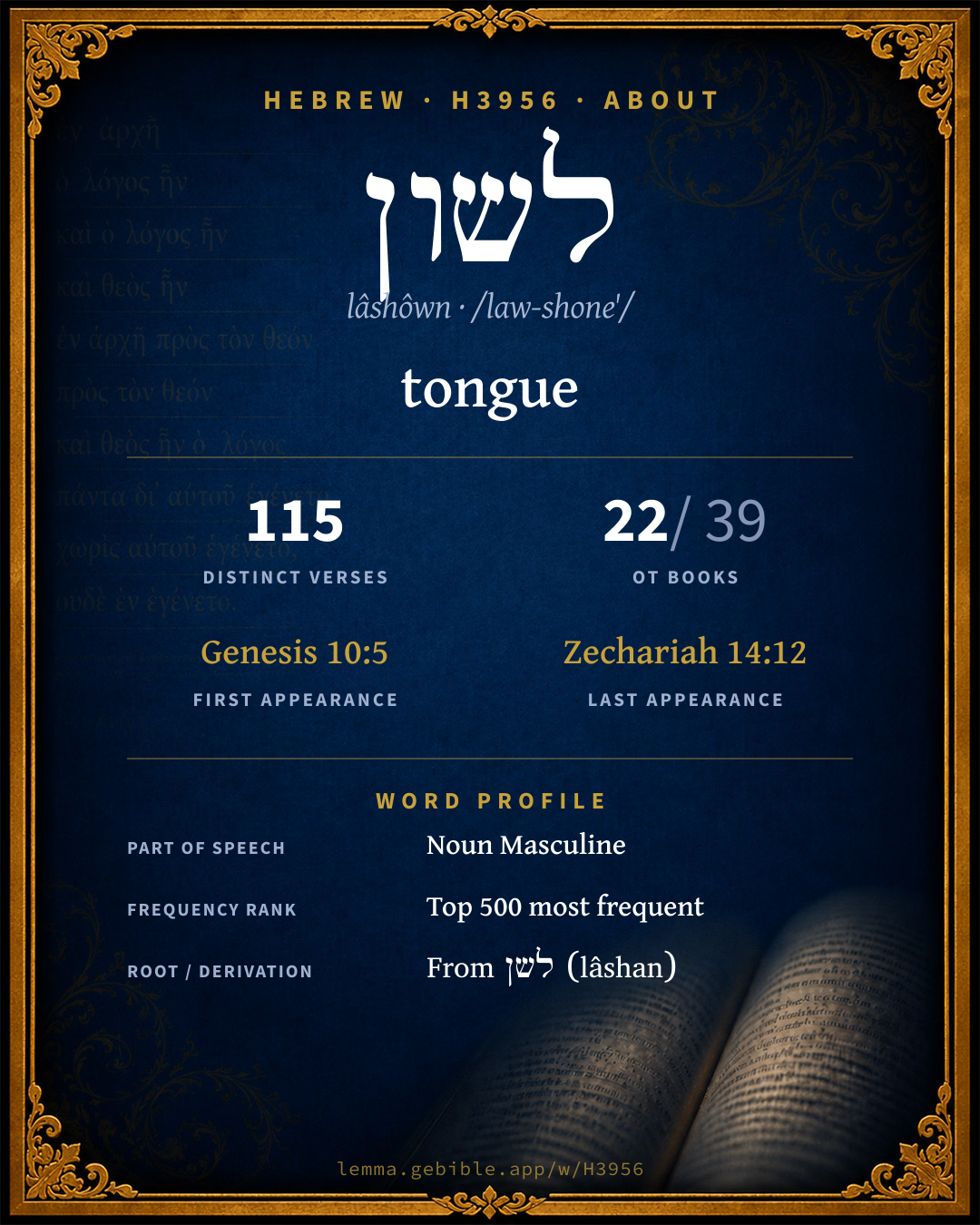
לָשׁוֹן
tongue
‘tongue’ is one of 6 main senses fuller range ↓
Full lexicon entry — Brown-Driver-Briggs (BDB)
From Brown-Driver-Briggs (BDB)
Where this word appears
Grammar key — what these labels mean
Part of speech
- Noun
- A naming word — a person, place, thing, or idea.
Noun type
- Common
- A common noun — a general class of person, place, or thing (“king,” “city,” “water”), not a specific name.
State
- Construct
- A noun bound to a following noun in a possessive / “of” relationship (the construct chain).
- Absolute
- The independent form of a noun, not bound to a following word.
Gender
- Both
- Attested as both masculine and feminine.
Number
- Singular
- One.
- Plural
- More than one (in Hebrew, generally three or more).
Every verse where H3956 appears in the Book of Lamentations — 1 distinct verse. Click any verse to open its interlinear word-by-word view. Verse text shown in the World English Bible for context — . Each verse’s Hebrew form is shown with its reference; the English is not keyword-highlighted, since the data carries no word-level English alignment. Use “Compare translations” on any verse to read it across multiple English versions. This concordance covers the Hebrew Bible; Septuagint (Greek Old Testament) occurrences are not indexed here.
Lamentations
About this entry
At a glance — auto-summarized from this page’s data, not written by a person. Every figure links to its source below. This summary describes the numbers; it doesn’t interpret them.
לשון — transliterated lâshôwn — is a Hebrew noun carrying the sense “tongue.” The lexicon spreads it across several senses; see its full sense range. With 115 verses in 22 books, it is a common word in the Hebrew Bible. Its uses concentrate in Psalms (30% of all occurrences). Debuting at Genesis 10:5, it then recurs through the corpus. Each statement above links to its evidence; the full detail follows below.
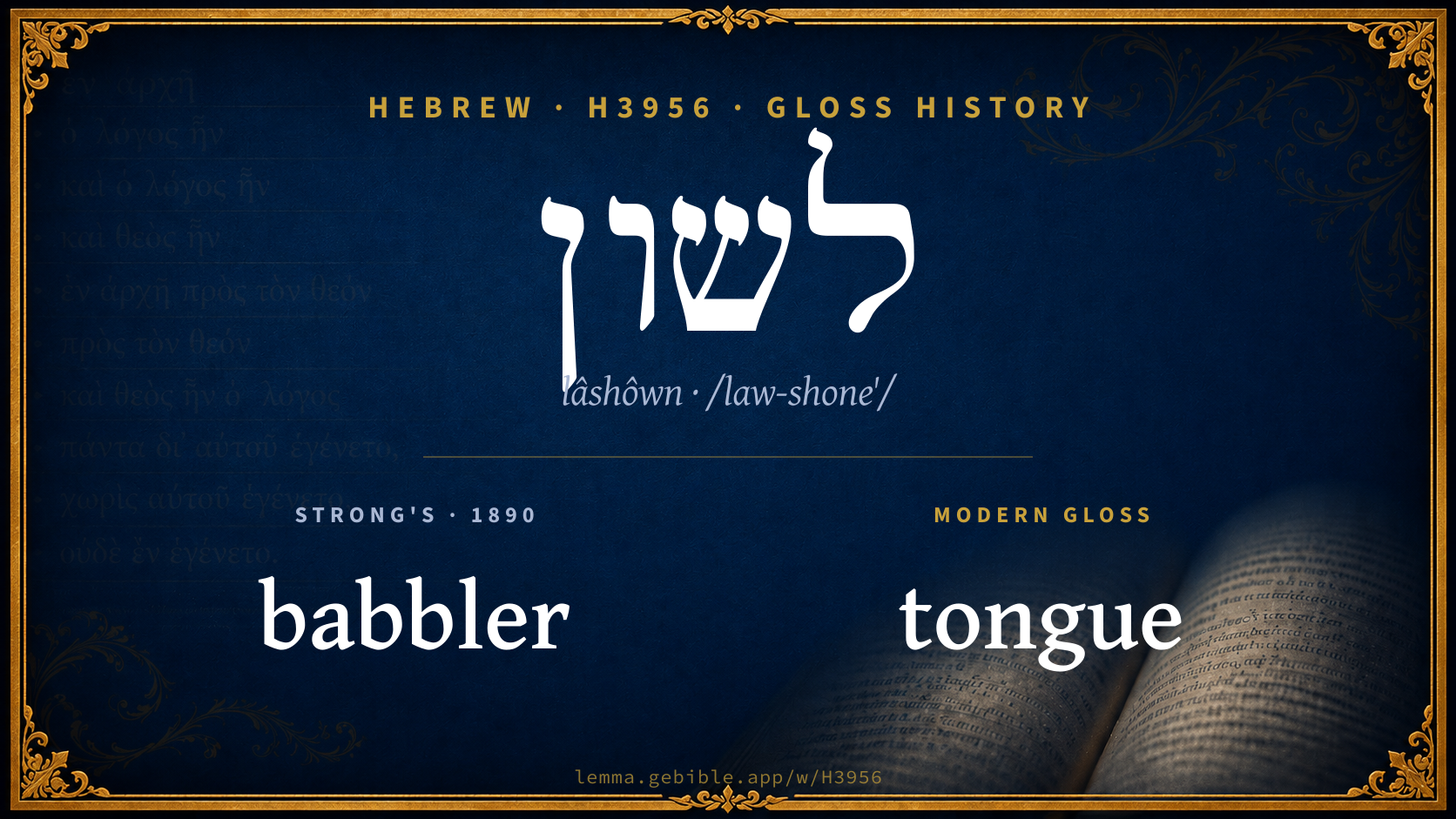
Gloss history
Strong's 1890 vs modern scholarship
About this word
Strong's H3956 catalogs a Hebrew word from the Hebrew Old Testament.
These counts are not copied from any lexicon or concordance. They are computed here, from the morphology-tagged Hebrew Old Testament. What Lemma adds →
- 115
- distinct verses
- The word appears in 115 distinct verses.
- 22 / 39
- OT books
- The word appears in 22 of 39 Old Testament books.
- #372
- by frequency
- Top 500 most frequent Hebrew words (rank 372 of 8,640 Hebrew words by occurrence).
View all 115 occurrences in the concordance →
By section of the Old Testament
By traditional corpus
Conventional, traditional groupings — biblical authorship is debated, so this is a traditional corpus grouping, not an authorship claim. Each share is this word’s portion of its verses in that division of the Hebrew canon. Each figure is a share of the word’s 115 distinct verses.
- Writings (Ketuvim) 71 verses · 62%
- Prophets (Nevi'im) 38 verses · 33%
- Torah (Pentateuch) 6 verses · 5%
How translations render this word
Counts come from each version’s own published word-to-Strong’s tagging or interlinear alignment — an approximate guide to how each version renders this word, not a word-level alignment the data otherwise carries. Because each total is that version’s own tagged count, the per-version totals vary from one another and need not match the appearance or distinct-verse counts above. These counts may also differ from a printed concordance because Lemma counts each distinctly tagged rendering and does not collapse phrase taggings into a single head-word total. This is a fixed set of word-tagged versions (KJV, ASV, BSB, ULT) and does not change with the reading translation you choose elsewhere. Each version’s license is shown beside its name below (and on Sources).
- King James Version: Tongue 76×, Tongues 7×, After their language 3×
- American Standard Version: Tongue 74×, Every people after their language 3×, Language 3×
- Berean Standard Bible: Tongue 58×, Tongues 21×, Language 9×
- unfoldingWord Literal Text: Tongue 66×, Tongue of 25×, Tongues 3×
King James Version Public Domain
Renders H3956 across 116 tagged occurrences — most commonly:
Plus 15 renderings that appear only once — usually multi-word phrases or single function words the recovered tagging swept in, not distinct renderings. Not rendered by a distinct English word in 1 further occurrence.
American Standard Version Public Domain
Renders H3956 across 116 tagged occurrences — most commonly:
Plus 19 renderings that appear only once — usually multi-word phrases or single function words the recovered tagging swept in, not distinct renderings.
Berean Standard Bible Public Domain
Renders H3956 across 112 tagged occurrences — most commonly:
Plus 13 renderings that appear only once — usually multi-word phrases or single function words the recovered tagging swept in, not distinct renderings. Not rendered by a distinct English word in 5 further occurrences.
unfoldingWord Literal Text CC BY-SA 4.0
Renders H3956 across 129 tagged occurrences — most commonly:
Plus 19 renderings that appear only once — usually multi-word phrases or single function words the recovered tagging swept in, not distinct renderings.
9 senses and sub-senses in the full BDB
What do BDB’s symbols mean?
BDB uses these scholarly abbreviations:
| Symbol | Meaning |
|---|---|
| 𝔊 | the Septuagint (the ancient Greek translation, LXX) |
| 𝔙 | the Vulgate (the Latin translation) |
| 𝔖 | the Syriac version (the Peshitta) |
| 𝔗 | the Targum (the Aramaic translation) |
| ψ | the Psalms |
| √ | root (the underlying root or stem) |
| ‖ | parallel passage (a synonymous or contrasted parallel) |
| † | the dagger: every passage where the word occurs is cited |
The 9 senses and sub-senses the full Brown-Driver-Briggs lexicon distinguishes for this word, in lexicon order (not ranked by frequency), with BDB’s own verbatim wording and sub-sense lettering. Shown in Hebrew script with BDB’s own scholarly abbreviations. The condensed entry is in the Lexicon Entry tab. See also the Forms in the corpus table below.
- 1. tongue of men,
- a. used in lapping Ju 7:5; cleaving to the palate (חֵק), in thirst La 4:4, so as to produce dumbness Jb 29:10 (‖ קוֹל נֶחְבָּא), ψ 137:6; Ez 3:26 (‖ נֶאֱלַם); cleaving to jaws (מַלְקוֹחַ) ψ 22:16; ל׳ בַּצָּמָא נָשָׁ֑תָּה Is 41:17 their tongue for thirst is parched; לְ׳ תִּמַּק בְּפִיהֶם Zc 14:12 (of י׳’s judgment); a choice morsel is held תַּחַת ל׳ Jb 20:12 (fig. of mischief), cf. ψ 10:7 (ready to be uttered), 66:17 (‖ פֶּה), Ct 4:11. e.g. Judges 7:5
- b. usually as organ of speech, both good and bad (especially ψ Pr, often ‖ פֶּה, שָׂפָה);—כְּבַד ל׳ Ex 4:10 (J) heavy of tongue; מַעֲנֵה ל׳ Pr 16:1, מִלָּתוֹ עַל־לְשׁוֹנִי 2 S 23:2, cf. Pr. 31:26, ψ 139:4 (בִּל׳), הֲיֵשׁ בִּלְשׁוֹנִי עַוְלָה Jb 6:30; מָוֶת וְחַיִּים בְּיַד ל׳ Pr 18:21, cf. 21:23; 25:15; of (false) proph., הַלֹּקְחִים ל׳ Je 23:31; subj. of vb. of speaking, דִּבֶּר:—דִּבְּרָה לְשׁוֹנִי בְחִכִּי Jb 33:2 ψ 12:4; 37:30; cf. (Je 9:7 infr. and) ל׳..תְּמַהֵר לְדַבֵּר Is 32:4, לְשׁוֹנִי עֵט סֹפֵר מָהִיר ψ 45:2, i.e. as swift as a rapid scribe’s stylus; subj. of הָגָה Is 59:3; Jb 27:4 ψ 35:28; 71:24; subj. of נִשְׁבַּע Is 45:23; ל׳ תִּהֲלַךְ בָּאָרֶץ ψ 73:9; of hostile speech, insolence, etc., Jos 10:21 (JE; obj. of i. חָרַץ q.v., cf. 3 infr.), Je 18:18; Is 3:8; זַעַם ל׳ Ho 7:16 (but text dub., cf. We Now), ל׳ חֶרֶב חַדָּה ψ 57:6, cf. 64:4; שָֽׁנְנוּ ל׳ כְּמוֹ נָחָשׁ 140:4; כָּל־ל׳ תָּקוּם אִתָּךְ Is 54:17; הֶאֱרִיךְ ל׳ 57:4; further, Je 9:2, 4; as instr. of seductive flattery (הֶחֱלִיק), without בְּ, ψ 5:10; Pr 28:23, cf. חֶלְקַת לָ׳ נָכְרִיָּה Pr 6:24; of falsehood ψ 78:36 (cf. infr.); of slander (cf. לוֹשֵׁן) רָגַל עַל־ל׳ ψ 15:3, אִישׁ לָשׁוֹן 140:12, cf. לְ׳ סָ֑תֶר Pr 25:33; חָטָא בְּל׳ ψ 39:2; cf. 64:9 (text dub., v. Hup Che Bae); moral qualities ascribed to:—as arrogant ψ 12:5 (cf. v 4 supr.); as devising injuries, הַוּוֹת תַּחְשֹׁב ל׳ ψ 52:4, cf. לְ׳ הַוֹּת Pr 17:4; ל׳ תַּצְמִיד מִרְמָה ψ 50:19 nectere fraudem; נְצֹר ל׳ מֵרָ֑ע ψ 34:14 (‖ וּשְׂפָתֶיךָ מִדַּבֵּר מִרְמָה); often of lying tongue: לְשׁוֹן שֶׁקֶר Pr 6:17; 12:19; 21:6; 26:28 ψ 109:2; לְ׳ מִרְמָה 52:6; לָ׳ רְמִיָּה Mi 6:12 ψ 120:2, 3; לְ׳ תַּרְמִית Zp 3:13; לְ׳ תַּהְפֻּכוֹת Pr 10:31, and נֶהְפָּךְ בִּל׳ Pr 17:20; ל׳ עֲרוּמִים Jb 15:5; also ל׳ מִרְמָה דִּבֵּ֑ר Je 9:7; on the other hand לְ׳ צַדִּיק Pr 10:20; ל׳ חֲכָמִים 12:18; 15:2; מַרְפֵּה לָ׳ v 4; לְ׳ לִמּוּדִים Is 50:4.—Note phrases שׁוֹט ל׳ Jb 5:21 scourge of (the) tongue, רִיב לְשֹׁנוֹת ψ 31:21; פַּלַּג לְשׁוֹנָם ψ 55:10: also בַּעַל הַלּ׳ Ec 10:11 (of serpent-charmer), and וַתֵּעֲלוּ עַל־שְׂפַת ל׳ Ez 36:3.—On tongue of י׳ (once), v. 4 infr. e.g. Exodus 4:10
- c. organ of singing, subj. of רָנַן ψ 51:16; 126:2; Is 35:6, עָנָה ψ 119:172. e.g. Psalms 51:16
- 2. = language Dt 28:49 Je 5:15 and later, viz.: Ez 3:5, 6 (כִּבְדֵי ל׳, ‖ עִמְקֵי שָׂפָה, but del. 𝔊 Codd. Co SgfrKauAT), Is 28:11 (‖ ל׳ אַחֶרֶת, לַעֲגֵי שָׂפָה, fig. of י׳’s unintelligible dealings); עַם … נִלְעַג ל׳ 33:19 (‖ עִמְקֵי שָׂפָה); 66:18 (‖ גּוֹיִם), Zc 8:23; Gn 10:5, 20, 31 (all P), Ne 13:24; Est 1:22(×2), 3:12, 8:9(×2) Dn 1:4. e.g. Deuteronomy 28:49
- 3. tongue of animals: dog Ex 11:7 (J; obj. of i. חָרַץ q.v.; cf. 1 b), ψ 68:24; adder Jb 20:16 (subj. of תַּהֲרֹג); crocodile 40:25. e.g. Exodus 11:7
- 4. tongue of fire, devouring, כֶּאֱכֹל קַשׁ לְשׁוֹן אֵשׁ Is 5:24; cf. of י׳, וּלְשׁוֹנוֹ כְּאֵשׁ אֹכָ֑לֶת 30:27 (‖ שְׂפָתָיו מָֽלְאוּ זַעַם). e.g. Isaiah 5:24
- 5. = (tongue-shaped) wedge of gold Jos 7:21, 24 (JE). so Assyrian lišânu; v. MeissnerZAW xxiii (1903), 151 f. JohnsAssyrian Deeds 2, 281. e.g. Joshua 7:21
- 6. = (tongue-shaped) bay of sea Is 11:15 Jos 15:2, 5; 18:19 (all P). e.g. Isaiah 11:15
Senses from the full Brown-Driver-Briggs lexicon (Brown, Driver, Briggs; Oxford 1906 — public domain), digitized via Sefaria, supplemented by the OpenScriptures HebrewLexicon (CC BY 4.0). Full attribution on Sources.
Word origin
n.m. Jos 7:21 and (more often) f. Is 28:11 tongue (NH id.; also Assyrian lišânu; Arabic لِسَانٌ; Ethiopic ልሳn; Aramaic לִשָּׁן, לִיּשָּׁן, ܠܶܫܳܢܳܐ (all li-); Zinj. לשן DHMSendsch. 59);—abs. ל׳ Ex 4:10 +; הַלָּשֹׁן Jos 15:2; cstr. לְשׁוֹן Jos 7:21 +; sf. לְשׁוֹנִי 2 S 23:2; לְשֹׁנוֹ Ex 11:7 + 2 times; לְשׁוֹנוֹ Ju 7:5; Est 1:22; לְשׁוֹנְךָ ψ 34:14; לְשׁוֹנְכֶם Is 59:3, etc.; pl. לְשֹׁנוֹת abs. ψ 31:21; Is 66:18; cstr. Zc 8:23; sf. לְשֹׁנֹתָם Gn 10:20, 31;—
— Brown-Driver-Briggs (Oxford 1906, public domain), digitized via Sefaria, supplemented by the OpenScriptures HebrewLexicon (CC BY 4.0). See Sources.
Derived from לשן (lâshan) (H3960) — to slander.
Jastrow Dictionary
A second Hebrew/Aramaic lexicon for comparison, covering Aramaic and post-biblical (Talmudic, Targumic, Midrashic) usage that the biblical-Hebrew BDB does not. Matched by lemma rather than by Strong’s number, so a lemma may carry more than one Jastrow headword (shown separately below), and the entries cover usage well beyond the Bible.
לָשׁוֹן
- c. (b. h.;
- 1. tongue. Ber. 61ᵃ, v. חָתַךְ. Bekh. VI, 8 (40ᵃ), v. מְדַבֵּר. Lev. R. s. 16; a. v. fr.—Pl. לְשׁוֹנוֹת. Lev. R. s. 33, beg.; a. e.—Transf. a) language. Sot. 49ᵇ ל׳ סורסי, Syriac, v. סוּרְסִי; לְ׳ הקודש (abbr. לה"ק) Hebrew; ל׳ יונית Greek; a. v. fr.—b) expression, phraseology, parlance. Ber. 31ᵇ, a. fr. כלְשׁוֹן בני אדם, v. דָּבַר. Y. Ned. VI, beg. 39ᶜ לְ׳ תורה Biblical usage; לְ׳ ב"א common parlance (later Hebrew).—ל׳ נקי or ל׳ נקייה decent expression, euphemism. Gen. R. s. 70; s. 86 (ref. to Gen. XXXIX, 6) ל׳נ׳ it is a euphemism, i.e. ‘the bread which he ate’ means his marital life. Pes. 3ᵃ; a. fr.—Ib. 3ᵇ לְ׳ כבוד respectful, chaste language.—Par. I, 1 מה הל׳ שלשית what does the expression שלשית mean?—Eduy. I, 3; Sabb. 15ᵃ שחייב אדם לומר בל׳ רבו in transmitting a tradition one must use the very words of the teacher, v. הִין; Ber. 47ᵃ.—ל׳ כפול a reiteration of the same word or an amplification. Cant. R. to I, 16, opp. ל׳ פשוט plain expression, v. infra.—ל׳ נופל על ל׳ assonance, alliteration. Gen. R. s. 31 (נָחָשׁ a. נְחשֶׁת); a. e.—ל׳ הרע (abbr. לה"ר) evil talk, calumny, gossip, denunciation. Arakh. 15ᵇ; a. v. fr.—לְ׳ זכר, לְ׳ נקבה, v. זָכָר, נְקֵבָה.—Pl. as ab. Y. Sabb. XIX, 17ᵃ; Y. Yeb. VIII, 8ᵈ bot. (ref. to המול ימול, Gen. XVII, 13) ל׳ ריבויין הן the double expressions intimate amplification (repeated action); ל׳ כפולין וכ׳ (ל׳ כפולות) they are merely double expressions, the Torah speaking in the usual way (according to popular usage, v. supra); Y. Ned. I, beg. 36ᶜ. Y. B. Bath. VIII, end, 16ᶜ בעלי ל׳ linguists; a. fr. e.g. Genesis 39:6
- 2. anything tongue-shaped, strip, strap, wedge. Yoma VI, 8, v. זְהוֹרִית. Erub. 12ᵃ לְ׳ ים a small inlet, creek; a. fr.—Pl. as ab. B. Mets. II, 1 ל׳ של ארגמן purple wool coming in straps; Erub. 96ᵇ, opp. חוטין in threads. Tosef. Kel. B. Mets. VIII, 6 שתי ל׳ two straps of a bed, v. לוּחַ I.—Kel. XVIII, 4 מלבן שנתנו על ל׳ a bottom of a bed made to rest on wedge-shaped corner pieces; a. e.
A Dictionary of the Targumim, the Talmud Babli and Yerushalmi, and the Midrashic Literature (Marcus Jastrow; London, Luzac, 1903) — Public Domain. Digitized via Sefaria. Digitized via Sefaria. Full attribution on Sources.
Forms in the corpus
The 78 distinct written forms H3956 takes in the Hebrew Bible, most frequent first — each parse links to that state’s occurrences in the concordance. Hebrew forms include their vowel points and cantillation, so a single lemma takes many written forms.
The 60 most common forms are shown; 18 rarer forms follow in the full concordance.
Same root — word family
Other BDB entries built from the same root as H3956, grouped by Strong’s listed origin. These share a root / origin per the lexicon — not necessarily a shared meaning. Each links to that word’s own entry.
Derives from
Derived from this word
Compare all same-root words → They share a root, not necessarily a meaning.
Septuagint verse parallels
This word appears in 104 verses that also exist in the Greek Old Testament (Septuagint), out of the 115 Hebrew verses it occurs in. You can read those verses in Greek by switching the Old Testament edition to the Septuagint.
Read these verses in the Septuagint
- Genesis 10:5
- Exodus 4:10
- Deuteronomy 28:49
- Joshua 7:21
- Judges 7:5
- 2 Samuel 23:2
- Esther 1:22
- Job 5:21
- Psalms 5:9
- Proverbs 6:17
- Ecclesiastes 10:11
- Song of Solomon 4:11
This is a verse-level parallel only — the same verses exist in both the Hebrew and Greek Old Testaments. No word-level Hebrew↔Greek correspondence is claimed: the data carries no such alignment, so no Greek word is shown as this Hebrew word’s translation. Coverage is not total — the Septuagint omits the deuterocanon and renumbers the Psalms, so some Hebrew verses have no direct Greek parallel.