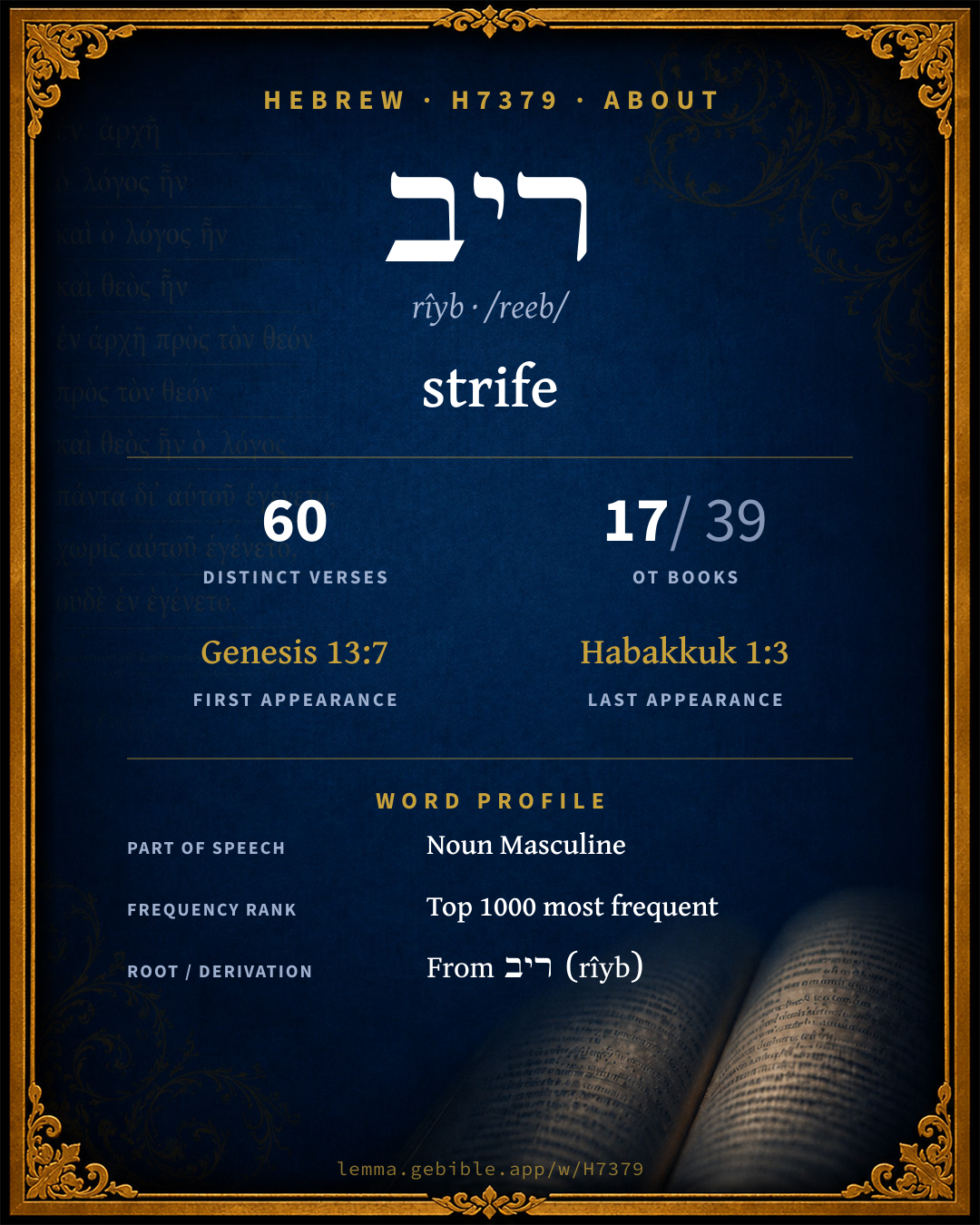
רִיב
strife
also: controversy, dispute fuller range ↓
Full lexicon entry — Brown-Driver-Briggs (BDB)
From Brown-Driver-Briggs (BDB)
Where this word appears
See every Construct-state word in the Hebrew Bible →
Grammar key — what these labels mean
Part of speech
- Noun
- A naming word — a person, place, thing, or idea.
Noun type
- Common
- A common noun — a general class of person, place, or thing (“king,” “city,” “water”), not a specific name.
State
- Absolute
- The independent form of a noun, not bound to a following word.
- Construct
- A noun bound to a following noun in a possessive / “of” relationship (the construct chain).
Gender
- Both
- Attested as both masculine and feminine.
Number
- Singular
- One.
- Plural
- More than one (in Hebrew, generally three or more).
4 verses where H7379 appears in the Construct state in the Book of Isaiah. Filtered view — show all forms. Click any verse to open its interlinear word-by-word view. Verse text shown in the World English Bible for context — . Each verse’s Hebrew form is shown with its reference; the English is not keyword-highlighted, since the data carries no word-level English alignment. Use “Compare translations” on any verse to read it across multiple English versions. This concordance covers the Hebrew Bible; Septuagint (Greek Old Testament) occurrences are not indexed here.
Isaiah
- Isaiah 1:23 וְ/רִ֥יב conj + n c bs cs Your princes are rebellious, and companions of thieves. Everyone loves bribes, and follows after rewards. They don't judge the fatherless, Neither does the cause of the widow come to them.
- Isaiah 34:8 לְ/רִ֥יב prep + n c bs cs For Yahweh has a day of vengeance, a year of recompense for the cause of Zion.
- Isaiah 41:11 רִיבֶֽ/ךָ n c bs cs + sfx pers 2ms Behold, all those who are incensed against you shall be disappointed and confounded: those who strive with you shall be as nothing, and shall perish.
- Isaiah 41:21 רִֽיבְ/כֶ֖ם n c bs cs + sfx pers 2mp Produce your cause, says Yahweh; bring forth your strong reasons, says the King of Jacob.
About this entry
At a glance — auto-summarized from this page’s data, not written by a person. Every figure links to its source below. This summary describes the numbers; it doesn’t interpret them.
At its core, ריב (rîyb) means “strife.” The King James Version usually renders it “cause,” while modern versions prefer “case” (Berean Standard Bible) and “dispute” (unfoldingWord Literal Text) — see the renderings breakdown. Spanning 60 verses in 17 books, it ranks among the moderately common words of the Hebrew Bible. Scripture first uses it in Genesis 13:7. Not a single-sense word: its full sense range also takes in “controversy” and “dispute”. Each statement above links to its evidence; the full detail follows below.
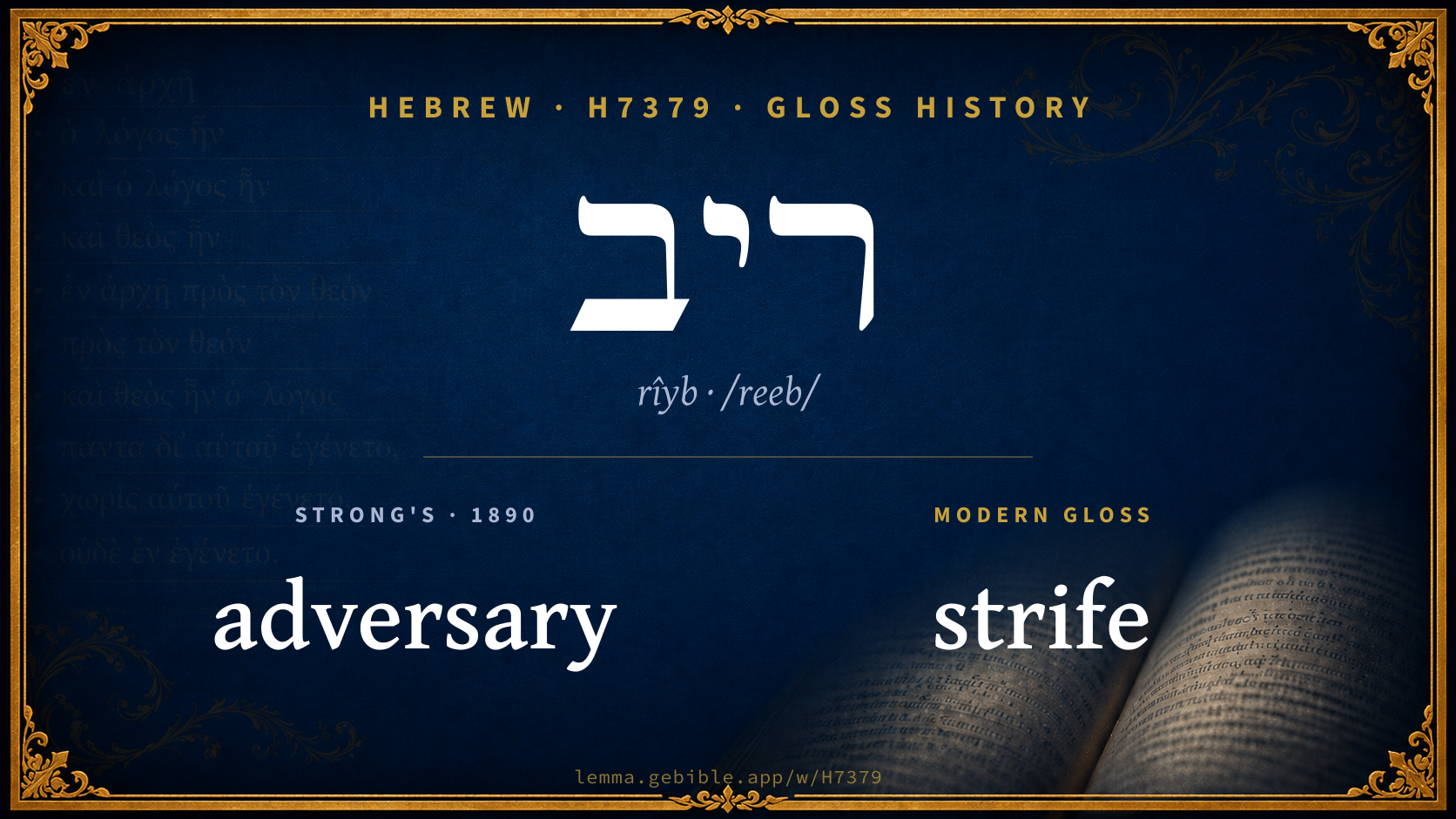
Gloss history
Strong's 1890 vs modern scholarship
About this word
Strong's H7379 catalogs a Hebrew word from the Hebrew Old Testament.
These counts are not copied from any lexicon or concordance. They are computed here, from the morphology-tagged Hebrew Old Testament. What Lemma adds →
- 60
- distinct verses
- The word appears in 60 distinct verses.
- 17 / 39
- OT books
- The word appears in 17 of 39 Old Testament books.
- #629
- by frequency
- Top 1000 most frequent Hebrew words (rank 629 of 8,640 Hebrew words by occurrence).
View all 60 occurrences in the concordance →
By section of the Old Testament
By traditional corpus
Conventional, traditional groupings — biblical authorship is debated, so this is a traditional corpus grouping, not an authorship claim. Each share is this word’s portion of its verses in that division of the Hebrew canon. Each figure is a share of the word’s 60 distinct verses.
- Writings (Ketuvim) 27 verses · 45%
- Prophets (Nevi'im) 23 verses · 38%
- Torah (Pentateuch) 10 verses · 17%
How translations render this word
Counts come from each version’s own published word-to-Strong’s tagging or interlinear alignment — an approximate guide to how each version renders this word, not a word-level alignment the data otherwise carries. Because each total is that version’s own tagged count, the per-version totals vary from one another and need not match the appearance or distinct-verse counts above. These counts may also differ from a printed concordance because Lemma counts each distinctly tagged rendering and does not collapse phrase taggings into a single head-word total. This is a fixed set of word-tagged versions (KJV, ASV, BSB, ULT) and does not change with the reading translation you choose elsewhere. Each version’s license is shown beside its name below (and on Sources).
BDB lists this Strong’s number as 2 distinct words (homographs). Each count above pools all of them and is not split by sense — see the Senses section below. A low-frequency rendering may belong to a different one of those words, not the primary meaning.
- King James Version†: Cause 19×, Strife 12×, Controversy 4×
- American Standard Version†: Cause 12×, Strife 8×, Contention 3×
- Berean Standard Bible†: Case 9×, Strife 9×, Cause 8×
- unfoldingWord Literal Text†: Dispute 19×, Strife 7×, Case 6×
King James Version Public Domain
Renders H7379 across 59† tagged occurrences — most commonly:
Plus 15 renderings that appear only once — usually multi-word phrases or single function words the recovered tagging swept in, not distinct renderings. Not rendered by a distinct English word in 3 further occurrences.
American Standard Version Public Domain
Renders H7379 across 59† tagged occurrences — most commonly:
Plus 27 renderings that appear only once — usually multi-word phrases or single function words the recovered tagging swept in, not distinct renderings.
Berean Standard Bible Public Domain
Renders H7379 across 61† tagged occurrences — most commonly:
Plus 19 renderings that appear only once — usually multi-word phrases or single function words the recovered tagging swept in, not distinct renderings. Not rendered by a distinct English word in 1 further occurrence.
unfoldingWord Literal Text CC BY-SA 4.0
Renders H7379 across 59† tagged occurrences — most commonly:
Plus 14 renderings that appear only once — usually multi-word phrases or single function words the recovered tagging swept in, not distinct renderings.
8 senses and sub-senses in the full BDB
What do BDB’s symbols mean?
BDB uses these scholarly abbreviations:
| Symbol | Meaning |
|---|---|
| 𝔊 | the Septuagint (the ancient Greek translation, LXX) |
| 𝔙 | the Vulgate (the Latin translation) |
| 𝔖 | the Syriac version (the Peshitta) |
| 𝔗 | the Targum (the Aramaic translation) |
| ψ | the Psalms |
| √ | root (the underlying root or stem) |
| ‖ | parallel passage (a synonymous or contrasted parallel) |
| † | the dagger: every passage where the word occurs is cited |
The 8 senses and sub-senses the full Brown-Driver-Briggs lexicon distinguishes for this word, in lexicon order (not ranked by frequency), with BDB’s own verbatim wording and sub-sense lettering. Shown in Hebrew script with BDB’s own scholarly abbreviations. The condensed entry is in the Lexicon Entry tab. See also the Forms in the corpus table below.
ריב I [NöZMG xxxvii (1883), 530, 534 Ges§ 73b] vb. strive, contend (cf. Arabic رَابَ (ى) agitate (the mind), رَيْبٌ disquiet
- 1. involving bodily struggle Ex 21:18 (sc. one with another; E); public hostilities, יָדָיו רָב לוֹ Dt 33:7 (with) his hands he strove for it, c. עִם of Israel, הֲרוֹב רָב Ju 11:25 (‖ נִלְחַם). e.g. Exodus 21:18
- 2. with words, c. ב pers., Gn 31:36 (E), Ex 17:2a (J) Ju 6:32, so (in fig.) Ho 2:4 cf. v 4; often = quarrel, c. עִם pers. Gn 26:20; Ex 17:2b; Nu 20:3 (all J), Ne 13:25; subj. God Jb 9:3; 13:19; 23:6; also 40:2 (עִם of God; on inf. abs. v. Ges§ 114ee), in gen. Pr 3:30; c. אֵת pers. Ju 8:1; Ne 5:7; 13:11, 17, subj. י׳ Is 49:25 (cf. i. יָרִיב infr.), ψ 35:1 (‖ לָחַם); אֵת of י׳ Is 45:9 (pt. one striving), Nu 20:13 (P); c. עַל rei Gn 26:21, 22; abs. = find fault Ho 4:4 (‖ הוֹכִיחַ). Especially e.g. Genesis 31:36
- 3. conduct a (legal) case, suit, usually fig., י׳ sub.; Is 3:13 (‖ דִּין), 57:16 (‖ קָצַף), ψ 103:9 (נָטַר [אַף]), cf. קֹרֵא לָרִב בָּאֵשׁ Am 7:4; c. acc. pers. with whom (unfriendly sense), Jb 10:2; Is 27:8; c. acc. cogn. רִיב in good sense, = take one’s part, 1 S 24:15 (Gi; v 16 van d. H. Baer; ‖ שָׁפַט), Mi 7:9; Je 50:34 (רִיב יָרִיב אֶת־רִיבָם, inf. cstr. = inf. abs., v. supr.), 51:36 (‖ נקם), La 3:58; Pr 22:23 ψ 43:1 (+ מִגּוֹי; ‖ שָׁפַט), 119:154 (+ גָּאַל), also 74:22 (God, his own cause); + מִיַד pers. against whom 1 S 25:39 (of vengeance); + אֵת pers. against whom Pr 23:11, so (without acc. cogn.) Is 50:8 Je 2:9(×2); cf. אֶת־ הֶהָרִים Mi 6:1 (II. אֵת 1 c; 𝔊 πρός, whence We Now אֶל־ in the presence of, but on רִיב אֶל v. 4); ר׳ = plead, c. ל pers. for whom Ju 6:31(×3) Jb 13:8, c. acc. pers. for whom Is 1:17, of God 51:22, cf. Dt 33:8 (obscure, v. Dr); of human disputes Pr 25:8, רִיבְךָ ר׳ אֶת־רֵעֶ֑ךָ v 9. e.g. Isaiah 3:13
- 4. = make complaint, c. אֶל pers. unto and against whom Ju 21:22; Je 2:29; 12:1; Jb 33:13. Hiph. Pt. sf. מריבו 1 S 2:10 Kt (Qr מְּרִיבָיו), i.e. (those) displaying contention against him (י׳), cf. pl. cstr. וְעַמְּךָ כִמְרִיבֵי כֹהֵן Ho 4:4, obscure; RSProph. 406 מָרוּ בִי thy people have rebelled against me, O priest! Beck Wü We GASm וְעַמִּי כִּכְמָרָיו הַכֹּהֵן (הַכּ׳ as voc., and [by some] joined to v 5); HermannSK, 1879, 516 וְעִמְּךָ עמרִיבִי הַכּ׳, cf. Oort (רִיבִי); Ruben Crit. Rem. ad loc. וְעַמִּי כָמוֹךָ הַכּ׳, so Now.—וַיָּרֶב 1 S 15:5 v. ארב Hiph. e.g. Judges 21:22
ריב II
- 1. in words, Ex 17:7 (J), Dt 1:12, about pasturage Gn 13:7 (J; = מְרִיבָה v 8), in gen. Pr 15:18; 17:14; 20:3; 26:17, 21; 30:33, + מָדוֹן Hb 1:3, so זִבְהֵי־ר׳ Pr 17:1; fig. ר׳ עֲצָמָיו Jb 33:19 Kt (Qr רוב, i.e. רֹב q.v.); ר׳ לְשֹׁנוֹת ψ 31:21, cf. Is 58:4; Pr 18:6; אִישׁ ר׳ Je 15:10 (+ א׳ מָדוֹן). e.g. Exodus 17:7
- 2. of public hostilities 2 S 22:44 = ψ 18:44, cf. אִישׁ רִיב Ju 12:2, אַנְשֵׁי רִיבֶ֑ךָ Is 41:11; ‖ חָמָם ψ 55:10. e.g. 2 Samuel 22:44
- 3. 39 especially dispute, controversy, case at law: Ex 23:2, 3, 6 (E), Dt 21:5 (+ נֶגַע), 25:1 2 S 15:2, 4 (‖ מִשְׁפָּט), + 10 times, + (of י׳) Ho 4:1; 12:3 Mi 6:2(×2) Je 25:31; Ez 44:24; La 3:36; as acc. cogn., case, cause Mi 7:9 Je 50:34 + 8 times (v. √ 3), + רִיב חֶרְפָּתִי 1 S 25:39, רִיבֵי נַפְשִׁי La 3:58; דִּבְרֵי רִיבֹת Dt 17:8 matters of controversy; ר׳ 19:17 dispute as to guilt; אִישׁ רִיבִי Jb 31:35 = accuser. e.g. Exodus 23:2
- 4. plea: Pr 18:17, רִבוֹת שְׂפָתַי Jb 13:6 pleadings of my lips. e.g. Proverbs 18:17
Senses from the full Brown-Driver-Briggs lexicon (Brown, Driver, Briggs; Oxford 1906 — public domain), digitized via Sefaria, supplemented by the OpenScriptures HebrewLexicon (CC BY 4.0). Full attribution on Sources.
Word origin
I. [NöZMG xxxvii (1883), 530, 534 Ges§ 73b] vb. strive, contend (cf. Arabic رَابَ (ى) agitate (the mind), رَيْبٌ disquiet; cf. also Syriac ܪܳܒ cry, shout, Aph. also quarrel noisily, ܪܰܘܒܳܐ shouting, clamour (v. Nöl.c.); on Sab. n.pr. ריב = Arabic رياب v. DHMib. 14);—Qal Pf. 3 ms. רָב Ju 11:25 1 S 25:39; 2 ms. רַבְתָּ La 3:58, רִיבוֹתָ Jb 33:13, etc.; Impf. 3 ms. יָרִיב Ju 6:31 +, juss. יָרֵב Ho 4:4; 1 S 24:16, יָרֶ֫ב לוֹ(בּוֹ) Ju 6:31, 32; וַיָּ֫רֶב Gn 31:36 +; 2 ms. תרוב Pr 3:30 Kt, תָּרִיב Qr; 3 mpl. יְרִיבֻן Ex 21:18, etc.; Imv. ms. רִיב Mi 6:1; Pr 25:9, רִיבָה ψ 35:1 +, mpl. רִיבוּ Is 1:17; Ho 2:4; Inf. abs. רוֹב Ju 11:25, רֹב Jb 40:2; רִיב Je 50:34 (Ges§ 73d Köi. 509 BaNB 80); cstr. רִיב Is 3:13; Jb 9:3 + Ju 21:22 Qr (Kt רוב), רִב Am 7:4; Pr 25:8; Pt. רָב Is 19:20 +;—strive:
II. n.m. Is 1:23 strife, dispute;—abs. ר׳ Gn 13:7 +, רִב Ex 23:2 +; cstr. רִיב 17:7 +; sf. רִיבִי 1 S 24:16 +, בְּרִבָם Jb 31:13 (or inf.?), etc.; pl. רִיבֹת Dt 17:8; cstr. רִיבֵי 2 S 22:44 + 2 times, רִבוֹת Jb 13:6;—strife, quarrel:
— Brown-Driver-Briggs (Oxford 1906, public domain), digitized via Sefaria, supplemented by the OpenScriptures HebrewLexicon (CC BY 4.0). See Sources.
Derived from ריב (rîyb) (H7378) — to contend.
Jastrow Dictionary
A second Hebrew/Aramaic lexicon for comparison, covering Aramaic and post-biblical (Talmudic, Targumic, Midrashic) usage that the biblical-Hebrew BDB does not. Matched by lemma rather than by Strong’s number, so a lemma may carry more than one Jastrow headword (shown separately below), and the entries cover usage well beyond the Bible.
רִיב I
- (b. h.) to contend, strive; to plead. Meg. 21ᵇ הרָב את ריבנו who pleaded our cause.
- same. Tanḥ. Naso 12 כל זמן … אינה מְרִיבָה as long as she was engaged in it, she did not quarrel, v. רָנַן. Y. Taan. IV, 68ᵈ, v. מְסַרְבַּיי. Mekh. B’shall., Vayassʿa, s. 6 כל … מְרִיבִין וכ׳ whenever you strive with me, you tempt God. Tanḥ. Mick. 10 עד … מֵרִיב עמו while he was yet in his mother’s womb, Esau was contending with him. Num. R. s. 5 שלא יָרִיבוּ זה עם זה that they might not quarrel with one another; היה זה מריב וכ׳ this one contended and said, I want to load here &c.; a. fr.
רִיב II
- preced.) strife, contest, cause. Meg. 21ᵇ רִיבֵנוּ, v. preced.; a. e.—Pl. רִיבוֹת, רִיבִים. Lev. R. s. 9 מַצּוּת ור׳ ed. Wil. (oth. ed. only מצות) strife and lawsuits. Snh. 34ᵇ; Nidd. 50ᵃ; Sifré Deut. 208 (ref. to Deut. XXI, 5) מקיש ר׳ לנגעים וכ׳ the text puts lawsuits on a level with plagues, as the former must be transacted in day-time &c.; Yeb. 104ᵃ e.g. Deuteronomy 21:5
A Dictionary of the Targumim, the Talmud Babli and Yerushalmi, and the Midrashic Literature (Marcus Jastrow; London, Luzac, 1903) — Public Domain. Digitized via Sefaria. Digitized via Sefaria. Full attribution on Sources.
Forms in the corpus
The 45 distinct written forms H7379 takes in the Hebrew Bible, most frequent first — each parse links to that state’s occurrences in the concordance. Hebrew forms include their vowel points and cantillation, so a single lemma takes many written forms.
Same root — word family
Other BDB entries built from the same root as H7379, grouped by Strong’s listed origin. These share a root / origin per the lexicon — not necessarily a shared meaning. Each links to that word’s own entry.
Derives from
Shares the same root
Proper names from this root
People and places named from this root — a name, not an additional meaning of the word.
- ירב Yârêb H3377 Jareb
- ירבעל Yᵉrubbaʻal H3378 Jerubbaal
- ירבעם Yârobʻâm H3379 Jeroboam
- ירבשת Yᵉrubbesheth H3380 Jerubbesheth
- מריב בעל Mᵉrîyb Baʻal H4807 Merib-baal
- ריבי Rîybay H7380 Ribai
Compare all same-root words → Showing 4 of 10 — not the complete family. 6 of the same-root words are proper names (people or places). They share a root, not necessarily a meaning.
Septuagint verse parallels
This word appears in 52 verses that also exist in the Greek Old Testament (Septuagint), out of the 60 Hebrew verses it occurs in. You can read those verses in Greek by switching the Old Testament edition to the Septuagint.
Read these verses in the Septuagint
- Genesis 13:7
- Exodus 17:7
- Deuteronomy 1:12
- Judges 12:2
- 1 Samuel 24:15
- 2 Samuel 15:2
- 2 Chronicles 19:8
- Job 13:6
- Psalms 43:1
- Proverbs 15:18
- Isaiah 1:23
- Jeremiah 11:20
This is a verse-level parallel only — the same verses exist in both the Hebrew and Greek Old Testaments. No word-level Hebrew↔Greek correspondence is claimed: the data carries no such alignment, so no Greek word is shown as this Hebrew word’s translation. Coverage is not total — the Septuagint omits the deuterocanon and renumbers the Psalms, so some Hebrew verses have no direct Greek parallel.