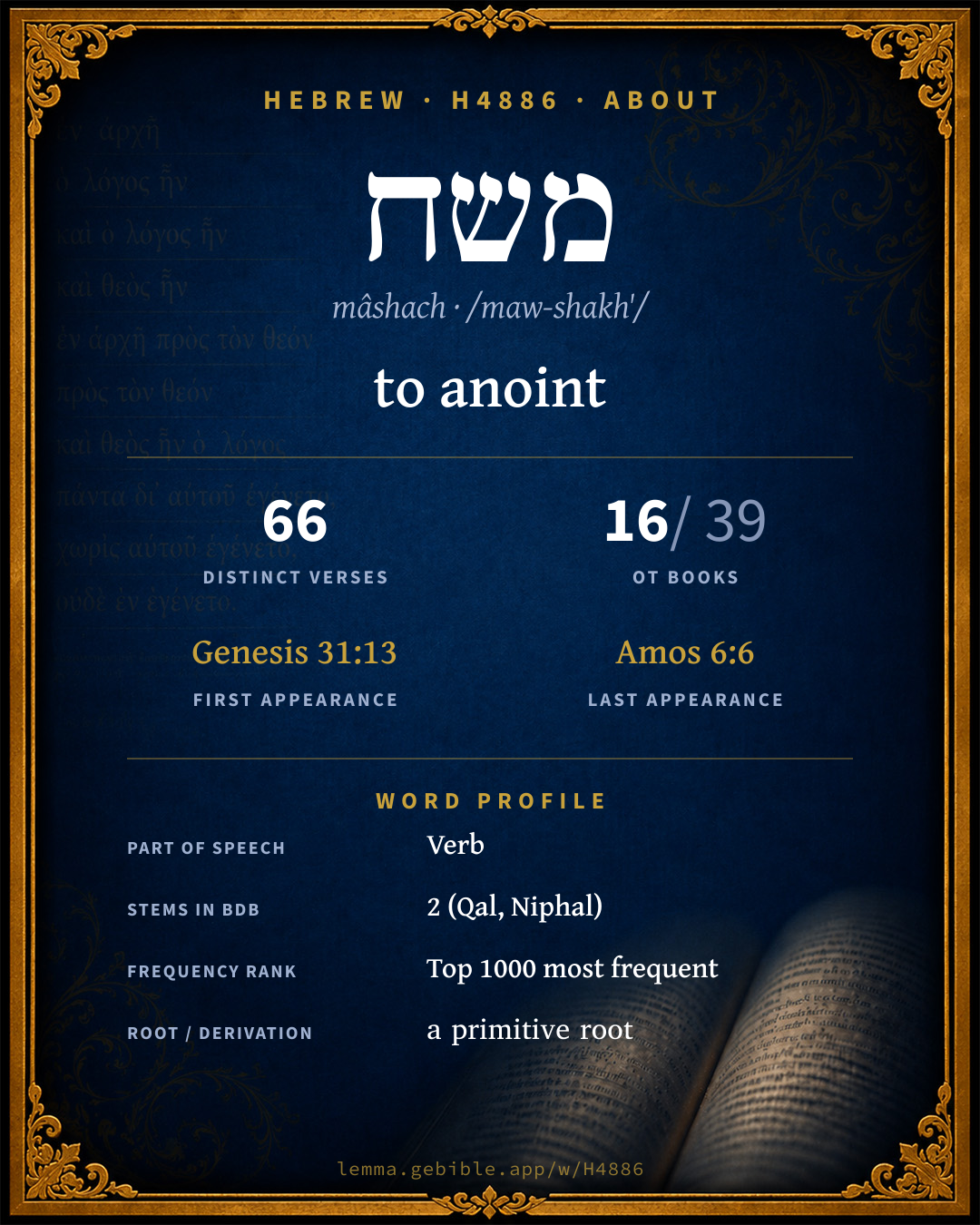
מָשַׁח
to anoint
‘to anoint’ is one of 2 main senses fuller range ↓
Full lexicon entry — Brown-Driver-Briggs (BDB)
From Brown-Driver-Briggs (BDB)
Where this word appears
See every Qal verb in the Hebrew Bible →
Grammar key — what these labels mean
Part of speech
- Verb
- An action or state-of-being word.
Stem
- Qal
- The basic, simple active stem — the plain form of the verb (“he wrote”). Here: ‘smear’
- Niphal
- Usually the simple passive or reflexive of the Qal (“he was written”).
Form
- Sequential Perfect
- A perfect with prefixed waw continuing a preceding imperfect or command (waw-consecutive perfect).
- Sequential Imperfect
- An imperfect with prefixed waw — the standard past-narrative form (waw-consecutive imperfect).
- Infinitive Construct
- A bound verbal noun, frequently with prepositions (“to write / in writing”).
- Perfect
- A completed action or state — Hebrew marks aspect (completeness) more than strict tense (“he wrote”).
- Participle Passive
- A verbal adjective expressing action received (“written”).
- Imperfect
- An incomplete, ongoing, or future action (“he will / would write”).
- Infinitive Absolute
- An unbound verbal noun, often intensifying or standing in for a finite verb.
- Participle Active
- A verbal adjective expressing ongoing or characteristic action (“writing / one who writes”).
- Imperative
- A direct command (“write!”).
State
- Absolute
- The independent form of a noun, not bound to a following word.
Person
- 2nd Person
- The one addressed (“you”).
- 3rd Person
- The one spoken about (“he / she / it / they”).
- 1st Person
- The speaker (“I / we”).
Gender
- Masculine
- Grammatically masculine.
- Common
- Either gender — not distinguished for this form.
Number
- Singular
- One.
- Plural
- More than one (in Hebrew, generally three or more).
5 distinct verses where H4886 appears in the Niphal stem, across 3 books. Filtered view — show all forms. Click any verse to open its interlinear word-by-word view. Verse text shown in the World English Bible for context — . Each verse’s Hebrew form is shown with its reference; the English is not keyword-highlighted, since the data carries no word-level English alignment. Use “Compare translations” on any verse to read it across multiple English versions. This concordance covers the Hebrew Bible; Septuagint (Greek Old Testament) occurrences are not indexed here.
Leviticus 1 verse
Numbers 3 verses
- Numbers 7:10 הִמָּשַׁ֣ח Niphal inf.cs The princes gave offerings for the dedication of the altar in the day that it was anointed, even the princes gave their offerings before the altar.
- Numbers 7:84 הִמָּשַׁ֣ח Niphal inf.cs This was the dedication of the altar, on the day when it was anointed, by the princes of Israel: twelve silver platters, twelve silver bowls, twelve golden ladles;
- Numbers 7:88 הִמָּשַׁ֥ח Niphal inf.cs and all the oxen for the sacrifice of peace offerings twenty-four bulls, the rams sixty, the male goats sixty, the male lambs a year old sixty. This was the dedication of the altar, after it was anointed.
1 Chronicles 1 verse
About this entry
At a glance — auto-summarized from this page’s data, not written by a person. Every figure links to its source below. This summary describes the numbers; it doesn’t interpret them.
“to anoint” is the headline sense of the Hebrew verb משח (mâshach). The King James Version usually renders it “anointed,” while modern versions prefer “you shall anoint” (unfoldingWord Literal Text) — see the renderings breakdown. With 66 verses in 16 books, it is a moderately common word in the Hebrew Bible. Scripture first uses it in Genesis 31:13. Across 2 stems, its meaning turns on the binyan (Qal, Niphal). The sections below give every sense, occurrence, and version rendering.
Gloss history
Strong's 1890 vs modern scholarship
About this word
Strong's H4886 catalogs a Hebrew word from the Hebrew Old Testament.
These counts are not copied from any lexicon or concordance. They are computed here, from the morphology-tagged Hebrew Old Testament. What Lemma adds →
- 66
- distinct verses
- The word appears in 66 distinct verses.
- 16 / 39
- OT books
- The word appears in 16 of 39 Old Testament books.
- #575
- by frequency
- Top 1000 most frequent Hebrew words (rank 575 of 8,640 Hebrew words by occurrence).
View all 66 occurrences in the concordance →
By section of the Old Testament
By traditional corpus
Conventional, traditional groupings — biblical authorship is debated, so this is a traditional corpus grouping, not an authorship claim. Each share is this word’s portion of its verses in that division of the Hebrew canon. Each figure is a share of the word’s 66 distinct verses.
- Prophets (Nevi'im) 31 verses · 47%
- Torah (Pentateuch) 27 verses · 41%
- Writings (Ketuvim) 8 verses · 12%
How translations render this word
Counts come from each version’s own published word-to-Strong’s tagging or interlinear alignment — an approximate guide to how each version renders this word, not a word-level alignment the data otherwise carries. Because each total is that version’s own tagged count, the per-version totals vary from one another and need not match the appearance or distinct-verse counts above. These counts may also differ from a printed concordance because Lemma counts each distinctly tagged rendering and does not collapse phrase taggings into a single head-word total. This is a fixed set of word-tagged versions (KJV, ASV, BSB, ULT) and does not change with the reading translation you choose elsewhere. Each version’s license is shown beside its name below (and on Sources).
- King James Version: Anointed 15×, Anoint 10×, Thou shalt anoint 8×
- American Standard Version: Anointed 15×, Thou shalt anoint 9×, Anoint 5×
- Berean Standard Bible: Anoint 9×, Anointed 9×, Was anointed 4×
- unfoldingWord Literal Text: You shall anoint 10×, Anoint 7×, He anointed 6×
King James Version Public Domain
Renders H4886 across 69 tagged occurrences — most commonly:
Plus 14 renderings that appear only once — usually multi-word phrases or single function words the recovered tagging swept in, not distinct renderings.
American Standard Version Public Domain
Renders H4886 across 69 tagged occurrences — most commonly:
Plus 17 renderings that appear only once — usually multi-word phrases or single function words the recovered tagging swept in, not distinct renderings.
Berean Standard Bible Public Domain
Renders H4886 across 67 tagged occurrences — most commonly:
Plus 23 renderings that appear only once — usually multi-word phrases or single function words the recovered tagging swept in, not distinct renderings. Not rendered by a distinct English word in 2 further occurrences.
unfoldingWord Literal Text CC BY-SA 4.0
Renders H4886 across 74 tagged occurrences — most commonly:
Plus other, less common renderings. Plus 20 renderings that appear only once — usually multi-word phrases or single function words the recovered tagging swept in, not distinct renderings.
7 senses and sub-senses in the full BDB
Hebrew verbs can shift meaning by stem (binyan): Qal is the basic action, Niphal is often passive or reflexive, Piel often intensifies or makes it factitive, and Hiphil is typically causative. The senses below are grouped under the stem BDB assigns to each.
What do BDB’s symbols mean?
BDB uses these scholarly abbreviations:
| Symbol | Meaning |
|---|---|
| 𝔊 | the Septuagint (the ancient Greek translation, LXX) |
| 𝔙 | the Vulgate (the Latin translation) |
| 𝔖 | the Syriac version (the Peshitta) |
| 𝔗 | the Targum (the Aramaic translation) |
| ψ | the Psalms |
| √ | root (the underlying root or stem) |
| ‖ | parallel passage (a synonymous or contrasted parallel) |
| † | the dagger: every passage where the word occurs is cited |
The 7 senses and sub-senses the full Brown-Driver-Briggs lexicon distinguishes for this word, in lexicon order (not ranked by frequency), with BDB’s own verbatim wording and sub-sense lettering. Shown in Hebrew script with BDB’s own scholarly abbreviations. The condensed entry is in the Lexicon Entry tab. See also the Forms in the corpus table below.
Qal
- Pf. 3 ms. מ׳ Nu 3:3 + 2 times; sf. מְשָֽׁחֲךָ ψ 45:8 1 S 10:1; מְשָׁחוֹ 2 Ch 22:7; 2 ms. מָשַׁחְתָּ Gn 31:13 + 12 times, + 9 times Pf.; Impf. 3 ms. יִמְשַׁח Lv 16:32 + 6 times; 3 mpl. יִמְשָׁ֑חוּ Am 6:6, + 13 times Impf.; Imv. sf. מְשָׁחֵהוּ 1 S 16:12; pl. מִשְׁחוּ Is 21:5; Inf. abs. מָשׁוֹחַ Je 22:14; cstr. מְשֹׁחַ Ju 9:8; Dn 9:24 + Ho 8:3 𝔊 We GASm Now; מָשְׁחָה Ex 29:29; sf. מְשָֽׁחֳךָ 1 S 15:1 (Baer); מָשְׁחוֹ Lv 7:36; מָשְׁחָתָם Ex 40:15; Pt. pl. מֹשְׁחִים Ju 9:15; pass. מָשׁוּחַ 2 S 3:39 (We suggests deriv. from שׁח, defect. משׁח (מֻשַׁח), wrongly read as מָשֻׁחַ; or by transposition משׁוח may have been mistaken for an unexampled מוּשָׁח Hoph. Pt. of שׁוח); מָשִׁיחַ 2 S 1:21 (but read מָשֻׁחַ (or נמשׁח) Codd. We Dr Kit Bu HPS); pl. מְשֻׁחִים Ex 29:2 + 4 times;— e.g. Numbers 3:3
- 1. smear, house with colour (paint) Je 22:14; shield with oil (anoint) Is 21:5; 2 S 1:21 (cf. Dr; Gr כְּלִי מָשׁוּחַ weapon anointed; PetersJBL 1893, 56 כְּלֵי מָשׁוּחַ weapons of one (the king) anointed); the person, with ointments Am 6:6; unleavened cakes, with oil Ex 29:2; Lv 2:4; 7:12; Nu 6:15 (P). e.g. Jeremiah 22:14
- 2. anoint, as consecration, solemn setting apart to an office, always by the use of oil poured on the head: לנביא as a prophet 1 K 19:16 (Elisha by Elijah) Is 61:1; elsewhere of king, c. acc., מֶלֶךְ Ju 9:8 (E), so Ho 8:3 reading מִמְּשֹׁחַ מֶלֶךְ (for MT מִמַּשָּׂא מ׳) We GASm Now; also Ho 7:3 reading יִמְשְׁחוּ (for MT יְשַׂמְּחוּ) We Now; elsewhere acc. pers. 1 S 16:3, 12, 13; 1 K 1:39; 2 K 11:12; 23:30; 2 Ch 22:7; 23:11; בְּשֶׁמֶן קָדְשִׁי ψ 89:21 with my holy oil; שׁמן שָׂשׂוֹן ψ 45:8 (fig.); c. על, 2 S 19:11 whom we have anointed over us; לְמֶלֶךְ 1 K 1:45; 5:15; c. עַל, לְמֶלֶךְ Ju 9:15; 2 S 2:4, 7; 1 K 19:15; על ישׂראל over Israel 1 S 15:1, 17; 2 S 5:3 = 1 Ch 11:3, 2 S 5:17; 12:7; 1 K 1:34; 19:16; אֶל־ישׂראל 2 K 9:3, 6, 12 (Ephr.); לנגיד 1 Ch 29:22; על 1 S 9:16; 10:1; מָשׁוּחַ מֶלֶךְ 2 S 3:39 (? v. supr.) e.g. 1 Kings 19:16
- 3. anoint, consecrate to religious service:
- a. Aaronic priests, only P, c. acc. pers. Ex 28:41; 29:7; 30:30; 40:13, 15(×3) Lv 7:36; 8:12; 16:32; Nu 35:25; abs. Ex 29:29; הכהנים הַמְּשֻׁחִים Nu 3:3. e.g. Exodus 28:41
- b. sacred things: מַצֵּבָה Gn 31:13 (E) Nu 7:1(×2); tabernacle and its vessels Ex 29:36; 30:26; 40:9, 10, 11; Lv 8:10, 11 (all P); קדשׁ קדשׁים Dn 9:24. e.g. Genesis 31:13
Niphal
- Pf. 3. ms. נִמְשַׁח 1 Ch 14:8; Inf. הִמָּשַׁח Lv 6:13 + 3 times;—be anointed, למלך על כל ישׂראל 1 Ch 14:8; Aaron and his sons Lv 6:13 (P); altar Nu 7:10, 84, 88. e.g. 1 Chronicles 14:8
Senses from the full Brown-Driver-Briggs lexicon (Brown, Driver, Briggs; Oxford 1906 — public domain), digitized via Sefaria, supplemented by the OpenScriptures HebrewLexicon (CC BY 4.0). Full attribution on Sources.
Word origin
vb. smear, anoint (NH id.; orig. prob. as Arabic مَسَحَ wipe or stroke with the hand (cf. RSSem. i. 215; 2nd ed., 233), anoint, Aramaic ܡܫܰܚ, מְשַׁח anoint; on משח, id. (?) in Aramaic inscr. v. CISii. 1, No. 145, C, 1; Palm. משחא oil Vog No. 16; Ethiopic መስሐ anoint, feast, dine DiLex 176; (Assyrian mašâḫu is measure; Aramaic מְשַׁח id.; Arabic مساحة measurement, cf. DlProl 178 Frä 282));—
— Brown-Driver-Briggs (Oxford 1906, public domain), digitized via Sefaria, supplemented by the OpenScriptures HebrewLexicon (CC BY 4.0). See Sources.
Origin: a primitive root
Jastrow Dictionary
A second Hebrew/Aramaic lexicon for comparison, covering Aramaic and post-biblical (Talmudic, Targumic, Midrashic) usage that the biblical-Hebrew BDB does not. Matched by lemma rather than by Strong’s number, so a lemma may carry more than one Jastrow headword (shown separately below), and the entries cover usage well beyond the Bible.
מָשַׁח I
- (b. h.) to stroke, smear; esp. to anoint; to install in office by anointing. Ker. 5ᵇ מושְׁחִין את המלכים כמין נזר וכ׳ in anointing kings you draw the figure of a crown with the oil on your finger &c., v. כי. Ib. אין מושחין מלך וכ׳ a king succeeding his father is not anointed; a. v. fr.—Part. pass. מָשׁוּחַ, pl. מְשׁוּחִים, מְשׁוּחִין. כהן מ׳ a high priest installed with the ceremony of anointing, contrad. to מרובה בגדים, v. מְרוּבֶּה. Hor. III, 4; Meg. I, 9 אין כין כהן מ׳ בשמן וכ׳ there is no difference between the anointed and the unanointed high priest except &c. Sifré Tsav, Par. 3, ch. V; a. fr., v. מָשִׁיחַ.—מְשׁוּחַ מלחמה the priest anointed as the chaplain of the army. Yoma 72ᵇ; a. fr., v. מָשִׁיחַ.—Pesik. R. s. 8 מ׳ מלחמה, v. מָשִׁיחַ end. Hor. 12ᵃ, v. יָמַן. Ib. 11ᵇ מלכי בית דוד מ׳ וכ׳ the kings of the house of David are anointed kings, those of Israel are not installed by anointment; a. fr.
- to be anointed. Ib. יהוא לא נ׳ וכ׳ Jehu would not have been anointed but for the contest of Joram’s followers. Ib. וממנו היה נִמְשָׁח המשכן וכ׳ with that oil (prepared by Moses) were anointed the Tabernacle &c.; Y. Sot. VIII, 22ᶜ. Num. R. s. 12 עד שנִמְשְׁחוּ כולם until all the vessels were anointed; a. fr.
מְשַׁח
- Targ. O. Gen. XXXI, 13. Targ. Ps. LXIV, 4 (Ms. מתח); a. fr.—Part. pass. מְשִׁיחַ. Targ. II Sam. I, 21; a. e.—Ker. 5ᵇ ההוא דמשיח וכ׳ (not דמשח) that son of the high priest that was anointed was high priest &c.; Hor. 11ᵇ אי הוה משיח וכ׳.
- to be rubbed with oil, perfumed. Targ. Am. VI, 6.
מָשַׁח II
- to stretch, measure. Denom. מָשׁוֹחַ, מְשִׁיחָה.
- to draw the outlines. Yalk. Num. 719 עומד ומַמְשִׁיחַ בה stood there drawing (the pattern of the candlestick).
מְשַׁח ²
- Targ. Y. Gen. X, 25. Targ. Ez. XL, 5; a. fr.—Sabb. 19ᵃ נִימְשַׁח וניתיב ליה נימשח ונשקול מיניה Ms. M. (ed., v. מִשְׁחָא II) let him measure when giving it out and again when receiving it back. B. Mets. 107ᵇ לא תִימְשְׁחִינְהוּ כלל Ms. M. (ed. תימשחנו) do not measure (survey) at all.
מְשַׁח III
- (מְשַׁח I)
- 1. oil, fat. Targ. Num. VII, 13. Targ. Ex. XXIX, 7; a. fr.—Y. Maas. Sh. IV, 54ᵈ bot. הוה ליה משח וכ׳ had oil which he took down to Acco (for sale). Ib. ההוא מִישְׁחָךְ וכ׳ (not מישחף, some ed. מישחא) that oil of thine at Beth M.—Ab. Zar. 37ᵃ דשרו מ׳ who permitted oil (of gentiles). Ib. 28ᵃ מ׳ דאווזא goose-fat; a. fr.
- 2. resin. Targ. Is. XLI, 19 אעין דמ׳ pine-wood (h. text עצי שמן, v. דדנין).—Succ. 40ᵃ, v. מִשְׁחָן. Gitt. 69ᵇ, v. כּוּפְרָא II.
מְשַׁח IV
- (מְשַׁח II) measure, length. Targ. II Chr. IV, 2 חוט מ׳ measuring line; a. e.—[Targ. I Kings VI, 25 משחא חדא, v. מִשְׁחֲתָא.]—B. Bath. 145ᵇ עתיר משח rich in things that are measured (corn &c.).—Sabb. 19ᵃ במ׳ ניתיב וכ׳ let him give it out (for washing) by measure &c., v. מְשַׁח II.—V. מִשְׁחֲתָא.
A Dictionary of the Targumim, the Talmud Babli and Yerushalmi, and the Midrashic Literature (Marcus Jastrow; London, Luzac, 1903) — Public Domain. Digitized via Sefaria. Digitized via Sefaria. Full attribution on Sources.
Forms in the corpus
The 56 distinct written forms H4886 takes in the Hebrew Bible, most frequent first — each parse links to that stem’s occurrences in the concordance. Hebrew forms include their vowel points and cantillation, so a single lemma takes many written forms.
Same root — word family
Other BDB entries built from the same root as H4886, grouped by Strong’s listed origin. These share a root / origin per the lexicon — not necessarily a shared meaning. Each links to that word’s own entry.
Derived from this word
- ממשח mimshach H4473 anointed
- משח mᵉshach H4887 oil
- משחה mishchâh H4888 anointing oil
- משיח mâshîyach H4899 anointed one
Compare all same-root words → Showing 4 of 5 — not the complete family. They share a root, not necessarily a meaning.
Septuagint verse parallels
This word appears in 64 verses that also exist in the Greek Old Testament (Septuagint), out of the 66 Hebrew verses it occurs in. You can read those verses in Greek by switching the Old Testament edition to the Septuagint.
Read these verses in the Septuagint
- Genesis 31:13
- Exodus 28:41
- Leviticus 2:4
- Numbers 3:3
- Judges 9:8
- 1 Samuel 9:16
- 2 Samuel 2:4
- 1 Kings 1:34
- 2 Kings 9:3
- 1 Chronicles 11:3
- 2 Chronicles 22:7
- Psalms 45:7
This is a verse-level parallel only — the same verses exist in both the Hebrew and Greek Old Testaments. No word-level Hebrew↔Greek correspondence is claimed: the data carries no such alignment, so no Greek word is shown as this Hebrew word’s translation. Coverage is not total — the Septuagint omits the deuterocanon and renumbers the Psalms, so some Hebrew verses have no direct Greek parallel.