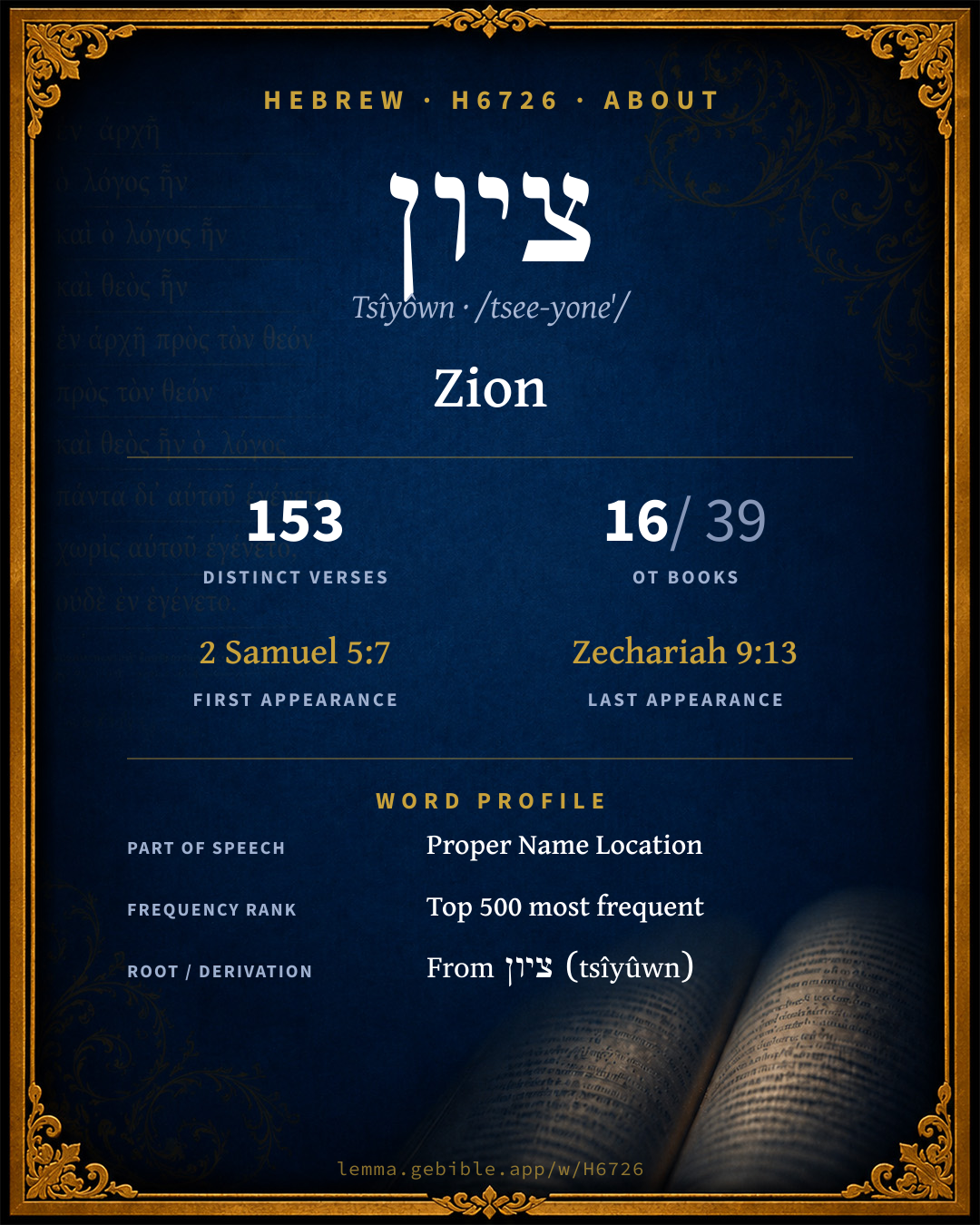
צִיּוֹן
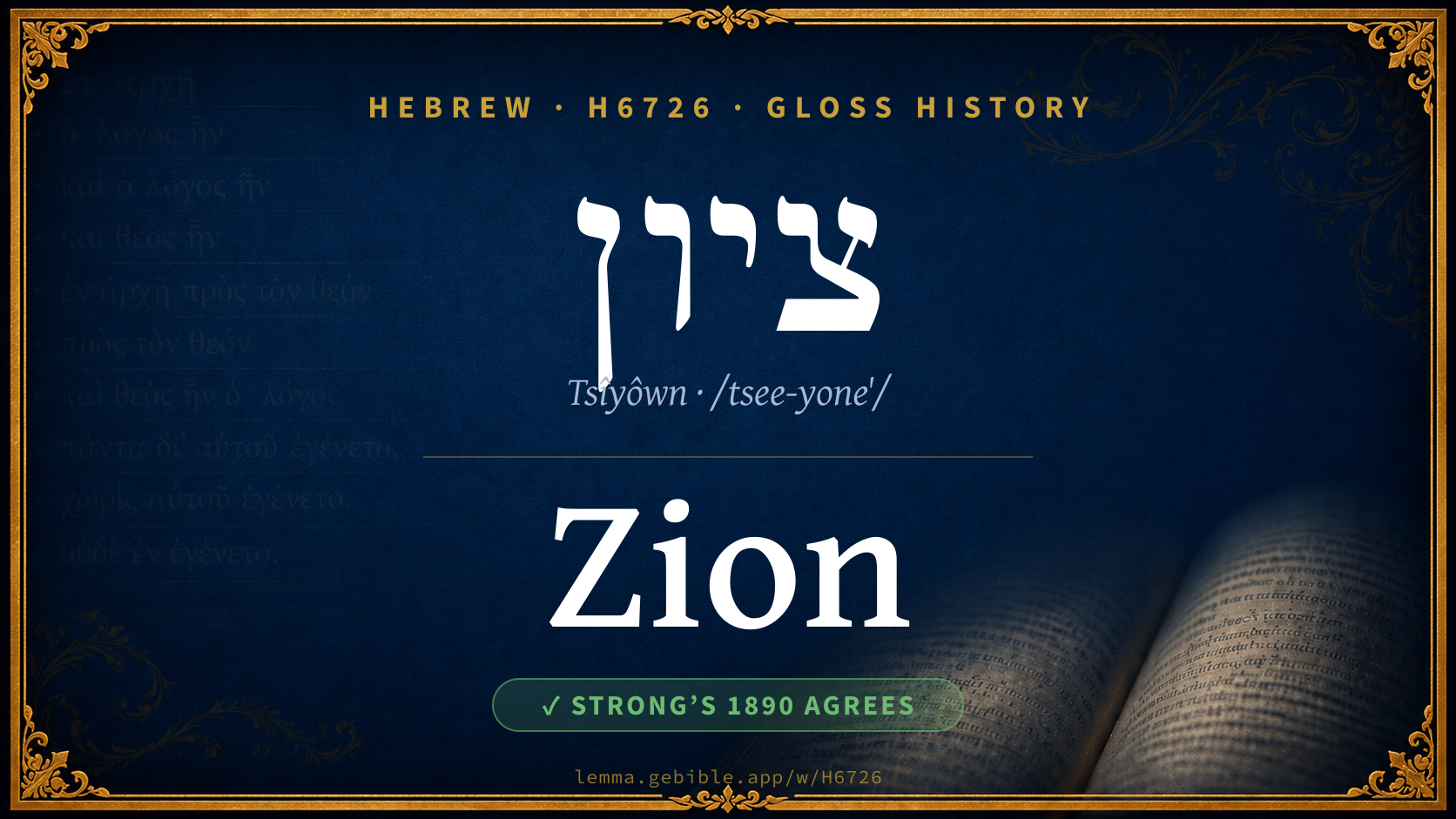
Zion
BDB lists 2 entries for ‘Zion’ fuller range ↓
Full lexicon entry — Brown-Driver-Briggs (BDB)
From Brown-Driver-Briggs (BDB)
Where this word appears
Grammar key — what these labels mean
Part of speech
- Noun
- A naming word — a person, place, thing, or idea.
Noun type
- Proper
- A name of a specific person, place, or people (e.g. Abraham, Zion, Israel).
Every verse where H6726 appears in the Book of 2 Samuel — 1 distinct verse. Click any verse to open its interlinear word-by-word view. Verse text shown in the World English Bible for context — . Each verse’s Hebrew form is shown with its reference; the English is not keyword-highlighted, since the data carries no word-level English alignment. Use “Compare translations” on any verse to read it across multiple English versions. This concordance covers the Hebrew Bible; Septuagint (Greek Old Testament) occurrences are not indexed here.
2 Samuel
About this entry
At a glance — auto-summarized from this page’s data, not written by a person. Every figure links to its source below. This summary describes the numbers; it doesn’t interpret them.
At its core, ציון (Tsîyôwn) means “Zion.” First canonically at 2 Samuel 5:7, it enters the text early. It appears 153 verses across 16 books of the Hebrew Bible, among its common vocabulary. The word gravitates to Isaiah (30%), then Psalms and Jeremiah. Each statement above links to its evidence; the full detail follows below.
Gloss history
Strong's 1890 vs modern scholarship
About this word
Strong's H6726 catalogs a Hebrew word from the Hebrew Old Testament.
These counts are not copied from any lexicon or concordance. They are computed here, from the morphology-tagged Hebrew Old Testament. What Lemma adds →
- 153
- distinct verses
- The word appears in 153 distinct verses.
- 16 / 39
- OT books
- The word appears in 16 of 39 Old Testament books.
- #294
- by frequency
- Top 500 most frequent Hebrew words (rank 294 of 8,640 Hebrew words by occurrence).
View all 153 occurrences in the concordance →
By section of the Old Testament
By traditional corpus
Conventional, traditional groupings — biblical authorship is debated, so this is a traditional corpus grouping, not an authorship claim. Each share is this word’s portion of its verses in that division of the Hebrew canon. Each figure is a share of the word’s 153 distinct verses.
- Prophets (Nevi'im) 97 verses · 63%
- Writings (Ketuvim) 56 verses · 37%
How translations render this word
Counts come from each version’s own published word-to-Strong’s tagging or interlinear alignment — an approximate guide to how each version renders this word, not a word-level alignment the data otherwise carries. Because each total is that version’s own tagged count, the per-version totals vary from one another and need not match the appearance or distinct-verse counts above. These counts may also differ from a printed concordance because Lemma counts each distinctly tagged rendering and does not collapse phrase taggings into a single head-word total. This is a fixed set of word-tagged versions (KJV, ASV, BSB, ULT) and does not change with the reading translation you choose elsewhere. Each version’s license is shown beside its name below (and on Sources).
- King James Version: Zion 137×, Thee out of zion 3×, Is zion 2×
- American Standard Version: Zion 129×, Thee out of zion 3×, Daughter of zion 2×
- Berean Standard Bible: Zion 147×
- unfoldingWord Literal Text: Zion 141×, Is in zion 2×
King James Version Public Domain
Renders H6726 across 154 tagged occurrences — most commonly:
Plus 10 renderings that appear only once — usually multi-word phrases or single function words the recovered tagging swept in, not distinct renderings.
American Standard Version Public Domain
Renders H6726 across 154 tagged occurrences — most commonly:
Plus 16 renderings that appear only once — usually multi-word phrases or single function words the recovered tagging swept in, not distinct renderings.
Berean Standard Bible Public Domain
Renders H6726 across 153 tagged occurrences — most commonly:
Plus 6 renderings that appear only once — usually multi-word phrases or single function words the recovered tagging swept in, not distinct renderings. Not rendered by a distinct English word in 1 further occurrence.
unfoldingWord Literal Text CC BY-SA 4.0
Renders H6726 across 148 tagged occurrences — most commonly:
Plus 5 renderings that appear only once — usually multi-word phrases or single function words the recovered tagging swept in, not distinct renderings.
Senses in BDB
The 2 senses BDB distinguishes for this word, in lexicon order (not ranked by frequency or importance). The full entry — with sub-senses — is in the Lexicon Entry tab.
- Zion = "parched place"
- another name for Jerusalem especially in the prophetic books
Word origin
n.pr.loc. Σ(ε)ιων; Ṣîyyôn, Zion (Syriac ܨܶܗܝܘܿܢ, older form, according to LagBN 84, cf. 198);—צ׳ 2 S 5:7 +; צִיּו֫נָה Je 4:6;—stronghold (of Jebusites), מְצֻדַת צ׳ captured by David, and made his residence 2 S 5:7 = 1 Ch 11:5 (both + הִיא עִיר דָּוִד), on S. part of E. hill of Jerusalem, distinct from site of temple 1 K 8:1 = 2 Ch 5:2 (both מֵעִיר ד׳ הִיא צ׳), not elsewhere in narrative, but often in poets and proph.: as name of Jerus., from political point of view (sometimes = inhabitants), Am 6:7 (‖ הַר־שֹׁמְרוֹן), ‖ יְרוּשָׁלַםִ Mi 3:10, 12 = Je 26:18; Is 4:3; 30:19; 40:9; 41:27; 52:1; 62:1; 64:9 Zp 3:16; Zc 1:14, 17 ψ 51:20 and (בַּת־צ׳) Is 52:2; Mi 4:8 (‖ בַּת־יְרוּשׁ׳), La 2:13 (‖ id.), also (יוֹשֶׁבֶת צ׳) Je 51:35; = Jerus. also Is 14:32; 33:5 +, so especially in phr. בְּנוֹת צ׳ Is 3:16, 17; 4:4; Ct 3:11, בְּנֵי צ׳ La 4:2; Jo 2:23 ψ 149:2 (‖ יִשְׂרָאֵל), cf. Zc 9:13, יָֽלְדָה צ׳ אֶת־בָּנֶיהָ Is 66:8, and even הַר־צ׳ 2 K 19:31 = Is 37:32 (both ‖ יְרוּשׁ׳), Is 29:8 (‖ אֲרִיאֵל v 7), Ob 17, 21 ψ 48:12 (‖ בְּנוֹת יֶהוֹדָה), 125:1; so also הַר־בַּת צ׳ Is 16:1 and 10:32 Qr (Kt בית: ‖ גִּבְעַת־יְרוּשׁ׳); cf. מְרוֹם־צ׳ Je 31:12; in foll. הַר־צ׳ might refer to temple-hill Is 10:12 (+ יְרוּשׁ׳), 31:4 (+ גִּבְעָתָהּ = יְרוּשׁ׳ v 5), La 5:18; Jo 3:5 (+ יְרוּשׁ׳); specif. of Jerus. as abode of י׳ and place of his worship Am 1:2; Is 31:9; Zc 8:3; Mi 4:2 = Is 2:3; Jo 4:16 ψ 102:22; 135:21; 147:12 (all ‖ יְרוּשׁ׳), 76:3 (‖ שָׁלֵם); partic. of sanctuary 20:3 (‖ קֹדֶשׁ), 14:7 = 53:7 +; of Jerus. הַר־צ׳ ψ 48:3 (‖ קִרְיַת מֶלֶךְ רָ֑ב), 78:68 (‖ שֵׁבֶט יְהוּדָה), Is 24:23 (‖ יְרוּשׁ׳), etc.; הַרֲרֵי צ׳ in same sense †ψ 133:3; particularly of sanctuary Is 4:5 and (‖ הַר־קָדְשִׁי) Jo 2:1; 4:17; צ׳ הַר־קָדְשִׁי ψ 2:6 is seat of king.—Vid. also בַּת־צ׳, הַר־צ׳, ישֶׁבֶת צ׳, sub בַּת, הַר, יָשַׁב.
— Brown-Driver-Briggs (Oxford 1906, public domain), digitized via Sefaria, supplemented by the OpenScriptures HebrewLexicon (CC BY 4.0). See Sources.
Derived from ציון (tsîyûwn) (H6725) — signpost.
Jastrow Dictionary
A second Hebrew/Aramaic lexicon for comparison, covering Aramaic and post-biblical (Talmudic, Targumic, Midrashic) usage that the biblical-Hebrew BDB does not. Matched by lemma rather than by Strong’s number, so a lemma may carry more than one Jastrow headword (shown separately below), and the entries cover usage well beyond the Bible.
צִיּוֹן
- (b. h.) pr. n. Mount Zion, Zion (= Jerusalem). Midr. Till. to Ps. XLVIII אבל בצ׳ אינו כן but this is not the case with the city of Zion. Midr. Till. to Ps. LXXXVII צ׳ שהוא פלטין שלי Zion which is my (the Lord’s) palace; a. fr.
צִיּוּן
- heap of stones, mark, esp. the mark put up to indicate the neighborhood of an unclean place. Erub. 54ᵇ מאי … צ׳ לישנא דסימנא הוא what evidence is there that this tsiyyun (Jer. XXXI, 20) means sign? Answ. ref. to Ez. XXXIX, 15. Y. Shek. I, 46ᵃ מיכן לצ׳ from here (Ez. l. c.) we have an evidence for the custom of marking sunken graves; M. Kat. 5ᵃ. Ib. 5ᵇ אין מעמידין צ׳ במקום וכ׳ we must not put up a mark on the very spot of uncleanness. Ex. R. s. 52 (play on צִיוֹן, Cant. III, 11) מה הצ׳ הזה נראה באצבע וכ׳ as a mark is seen (pointed at) with the finger, so is Israel (distinguishable by his features); a. e.—Pl. צִיּוּנִים, צִיּוּנִין. Erub. l. c. (ref. to Jer. l. c.) עשו צ׳ לתורה make marks (mnemonical notes) for the study of the Law, v. סִימָן; Yalk. Jer. 315.—Denom. צִיֵּן. e.g. Jeremiah 31:20
A Dictionary of the Targumim, the Talmud Babli and Yerushalmi, and the Midrashic Literature (Marcus Jastrow; London, Luzac, 1903) — Public Domain. Digitized via Sefaria. Digitized via Sefaria. Full attribution on Sources.
Forms in the corpus
The 45 distinct written forms H6726 takes in the Hebrew Bible, most frequent first — each parse links to that state’s occurrences in the concordance. Hebrew forms include their vowel points and cantillation, so a single lemma takes many written forms.
| Form | Parsing | Example | Uses |
|---|---|---|---|
| צִיּ֔וֹן | Noun, Proper | 1 Chronicles 11:5 | 23 |
| צִיּ֑וֹן | Noun, Proper | 2 Kings 19:31 | 16 |
| צִיּ֖וֹן | Noun, Proper | Isaiah 1:8 | 16 |
| צִיּֽוֹן | Noun, Proper | 1 Kings 8:1 | 16 |
| צִיּ֗וֹן | Noun, Proper | Isaiah 51:3 | 8 |
| צִיּוֹן֙ | Noun, Proper | Isaiah 24:23 | 7 |
| בְּ/צִיּ֔וֹן | Noun, Proper | Amos 6:1 | 4 |
| לְ/צִיּ֖וֹן | Noun, Proper | Isaiah 41:27 | 4 |
| צִ֝יּ֗וֹן | Noun, Proper | Psalms 2:6 | 4 |
| בְּ/צִיּ֑וֹן | Noun, Proper | Joel 2:15 | 3 |
| בְּ/צִיּ֗וֹן | Noun, Proper | Isaiah 4:3 | 3 |
| בְּ/צִיּ֣וֹן | Noun, Proper | Joel 3:17 | 3 |
| צִ֭יּוֹן | Noun, Proper | Psalms 48:2 | 3 |
| צִיּ֜וֹן | Noun, Proper | Isaiah 4:5 | 3 |
| בְ/צִיּוֹן֙ | Noun, Proper | Isaiah 33:14 | 2 |
| בְּ/צִיּ֖וֹן | Noun, Proper | Isaiah 28:16 | 2 |
| בְּ/צִיּֽוֹן | Noun, Proper | Joel 3:21 | 2 |
| בְּ/צִיּוֹן֙ | Noun, Proper | Jeremiah 14:19 | 2 |
| מִ/צִּיּ֑וֹן | Noun, Proper | Psalms 110:2 | 2 |
| מִ/צִּיּוֹן֙ | Noun, Proper | Isaiah 2:3 | 2 |
| מִ/צִּיּוֹן֮ | Noun, Proper | Psalms 14:7 | 2 |
| צִיּ֛וֹן | Noun, Proper | Jeremiah 4:31 | 2 |
| צִיּ֣וֹן | Noun, Proper | Jeremiah 30:17 | 2 |
| בְ/צִיּ֔וֹן | Noun, Proper | Jeremiah 51:10 | 1 |
| בְ/צִיּ֖וֹן | Noun, Proper | Jeremiah 51:24 | 1 |
| בְ/צִיּֽוֹן | Noun, Proper | Psalms 76:2 | 1 |
| בְּ/צִיּ֥וֹן | Noun, Proper | Isaiah 30:19 | 1 |
| בְּ֭/צִיּוֹן | Noun, Proper | Psalms 102:21 | 1 |
| וּ/לְ/צִיּ֖וֹן | Noun, Proper | Zechariah 1:14 | 1 |
| וּ֝/מִ/צִּיּ֗וֹן | Noun, Proper | Psalms 20:2 | 1 |
| וּֽ/לֲ/צִיּ֨וֹן | Noun, Proper | Psalms 87:5 | 1 |
| לְ/צִיּוֹן֙ | Noun, Proper | Isaiah 59:20 | 1 |
| מִ/צִיּ֣וֹן | Noun, Proper | Amos 1:2 | 1 |
| מִ/צִּ֫יּ֥וֹן | Noun, Proper | Psalms 128:5 | 1 |
| מִ/צִּיּ֖וֹן | Noun, Proper | Jeremiah 9:19 | 1 |
| מִ/צִּיּ֗וֹן | Noun, Proper | Psalms 135:21 | 1 |
| מִ/צִּיּ֣וֹן | Noun, Proper | Joel 3:16 | 1 |
| מִ/צִּיּ֥וֹן | Noun, Proper | Psalms 50:2 | 1 |
| צִ֠יּוֹן | Noun, Proper | Lamentations 2:18 | 1 |
| צִ֫יּ֥וֹן | Noun, Proper | Psalms 133:3 | 1 |
| צִיּ֔וֹנָ/ה | Noun, Proper | Jeremiah 4:6 | 1 |
| צִיּ֞וֹן | Noun, Proper | Jeremiah 26:18 | 1 |
| צִיּ֥וֹן | Noun, Proper | Psalms 125:1 | 1 |
| צִיּ֨וֹן | Noun, Proper | Joel 2:32 | 1 |
| צִיּוֹן֒ | Noun, Proper | Jeremiah 31:12 | 1 |
Same root — word family
Other BDB entries built from the same root as H6726, grouped by Strong’s listed origin. These share a root / origin per the lexicon — not necessarily a shared meaning. Each links to that word’s own entry.
Derives from
Proper names from this root
People and places named from this root — a name, not an additional meaning of the word.
Compare all same-root words → 1 of the same-root words is a proper name (a person or place). They share a root, not necessarily a meaning.
Bible dictionary
Public-domain dictionary articles matched to this entry by name (Zion). A biblical name can be shared by more than one person or place, so an article may treat several.
Easton's Bible Dictionary · M. G. Easton, 1897
Sunny; height, one of the eminences on which Jerusalem was built. It was surrounded on all sides, except the north, by deep valleys, that of the Tyropoeon (q.v.) separating it from Moriah (q.v.), which it surpasses in height by 105 feet. It was the south-eastern hill of Jerusalem.
When David took it from the Jebusites (Josh. 15:63; 2 Sam. 5:7) he built on it a citadel and a palace, and it became "the city of David" (1 Kings 8:1; 2 Kings 19:21, 31; 1 Chr. 11:5). In the later books of the Old Testament this name was sometimes used (Ps. 87:2; 149:2; Isa. 33:14; Joel 2:1) to denote Jerusalem in general, and sometimes God's chosen Israel (Ps. 51:18; 87:5).
In the New Testament (see SION) it is used sometimes to denote the Church of God (Heb. 12:22), and sometimes the heavenly city (Rev. 14:1).
Smith's Bible Dictionary · William Smith, 1863
[Jerusalem]
Hitchcock's Bible Names Dictionary · Roswell D. Hitchcock, 1869
monument; raised up; sepulcher
Classic public-domain reference works; full attribution on Sources.
Septuagint verse parallels
This word appears in 142 verses that also exist in the Greek Old Testament (Septuagint), out of the 153 Hebrew verses it occurs in. You can read those verses in Greek by switching the Old Testament edition to the Septuagint.
Read these verses in the Septuagint
- 2 Samuel 5:7
- 1 Kings 8:1
- 2 Kings 19:21
- 1 Chronicles 11:5
- 2 Chronicles 5:2
- Psalms 2:6
- Song of Solomon 3:11
- Isaiah 1:8
- Jeremiah 3:14
- Lamentations 1:4
- Joel 2:1
- Amos 1:2
This is a verse-level parallel only — the same verses exist in both the Hebrew and Greek Old Testaments. No word-level Hebrew↔Greek correspondence is claimed: the data carries no such alignment, so no Greek word is shown as this Hebrew word’s translation. Coverage is not total — the Septuagint omits the deuterocanon and renumbers the Psalms, so some Hebrew verses have no direct Greek parallel.