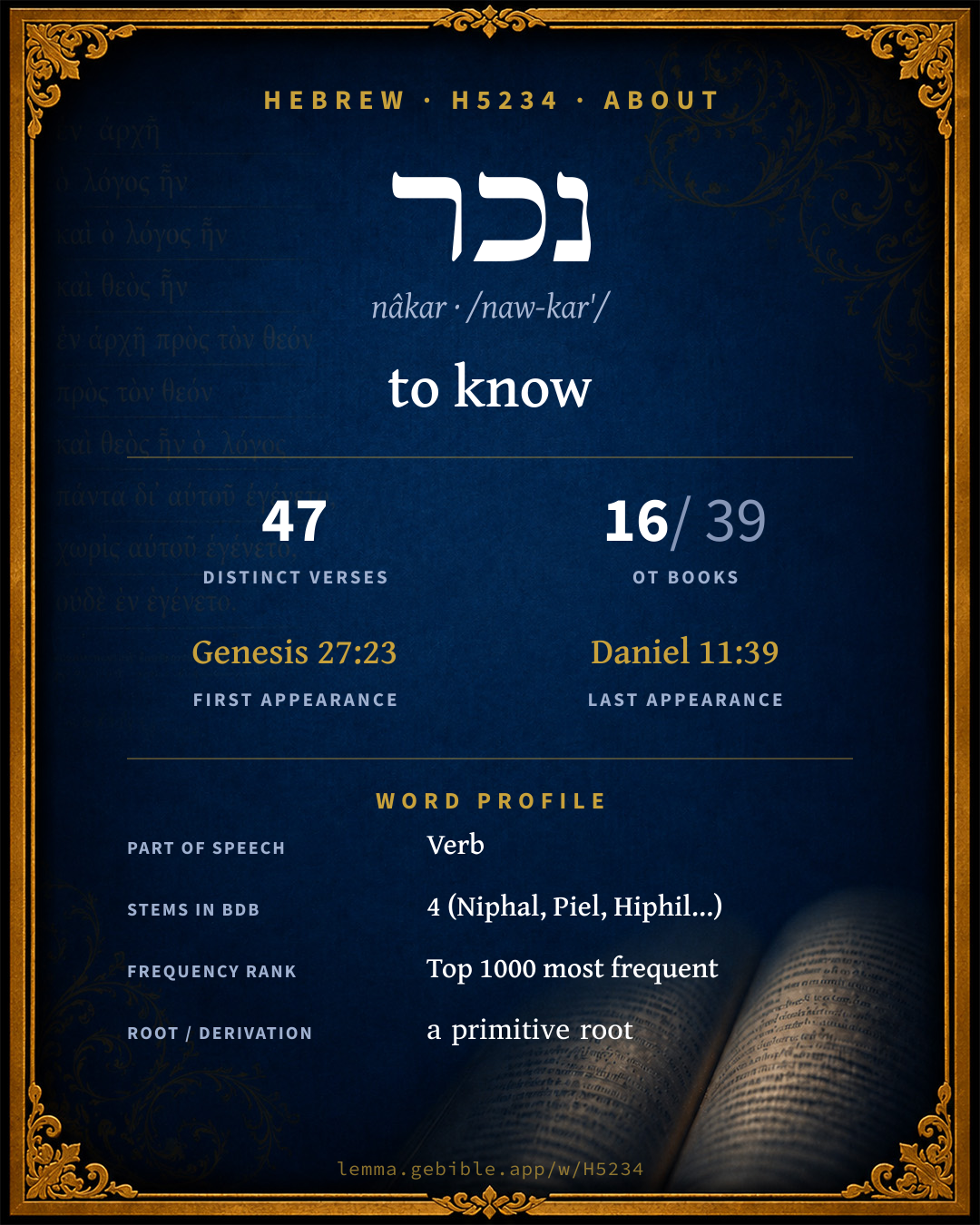
נָכַר
to know
‘to know’ is one of 2 main senses fuller range ↓
Full lexicon entry — Brown-Driver-Briggs (BDB)
From Brown-Driver-Briggs (BDB)
Where this word appears
Grammar key — what these labels mean
Part of speech
- Verb
- An action or state-of-being word.
Stem
- Hiphil
- The causative active stem (“he caused / brought about”). Here: ‘regard’
- Piel
- An intensive or resultative active stem.
- Hithpael
- The reflexive or reciprocal stem (the subject acts on itself).
- Niphal
- Usually the simple passive or reflexive of the Qal (“he was written”).
Form
- Imperfect
- An incomplete, ongoing, or future action (“he will / would write”).
- Sequential Imperfect
- An imperfect with prefixed waw — the standard past-narrative form (waw-consecutive imperfect).
- Perfect
- A completed action or state — Hebrew marks aspect (completeness) more than strict tense (“he wrote”).
- Imperative
- A direct command (“write!”).
- Infinitive Absolute
- An unbound verbal noun, often intensifying or standing in for a finite verb.
- Participle Active
- A verbal adjective expressing ongoing or characteristic action (“writing / one who writes”).
- Infinitive Construct
- A bound verbal noun, frequently with prepositions (“to write / in writing”).
State
- Absolute
- The independent form of a noun, not bound to a following word.
- Construct
- A noun bound to a following noun in a possessive / “of” relationship (the construct chain).
Person
- 3rd Person
- The one spoken about (“he / she / it / they”).
- 2nd Person
- The one addressed (“you”).
- 1st Person
- The speaker (“I / we”).
Gender
- Masculine
- Grammatically masculine.
- Common
- Either gender — not distinguished for this form.
- Feminine
- Grammatically feminine.
Number
- Singular
- One.
- Plural
- More than one (in Hebrew, generally three or more).
Every verse where H5234 appears in the Book of Lamentations — 1 distinct verse. Click any verse to open its interlinear word-by-word view. Verse text shown in the World English Bible for context — . Each verse’s Hebrew form is shown with its reference; the English is not keyword-highlighted, since the data carries no word-level English alignment. Use “Compare translations” on any verse to read it across multiple English versions. This concordance covers the Hebrew Bible; Septuagint (Greek Old Testament) occurrences are not indexed here.
Lamentations
About this entry
At a glance — auto-summarized from this page’s data, not written by a person. Every figure links to its source below. This summary describes the numbers; it doesn’t interpret them.
The Hebrew verb נכר centers on the idea of “to know.” Across 4 stems, its meaning turns on the binyan (Niphal, Piel). The Hebrew Bible uses it across 47 verses — moderately common. Its earliest occurrence is Genesis 27:23. Sharing its root, it stands alongside הכרה, מכר and נכר. For the data behind this summary, explore the sense tree and the renderings breakdown below.
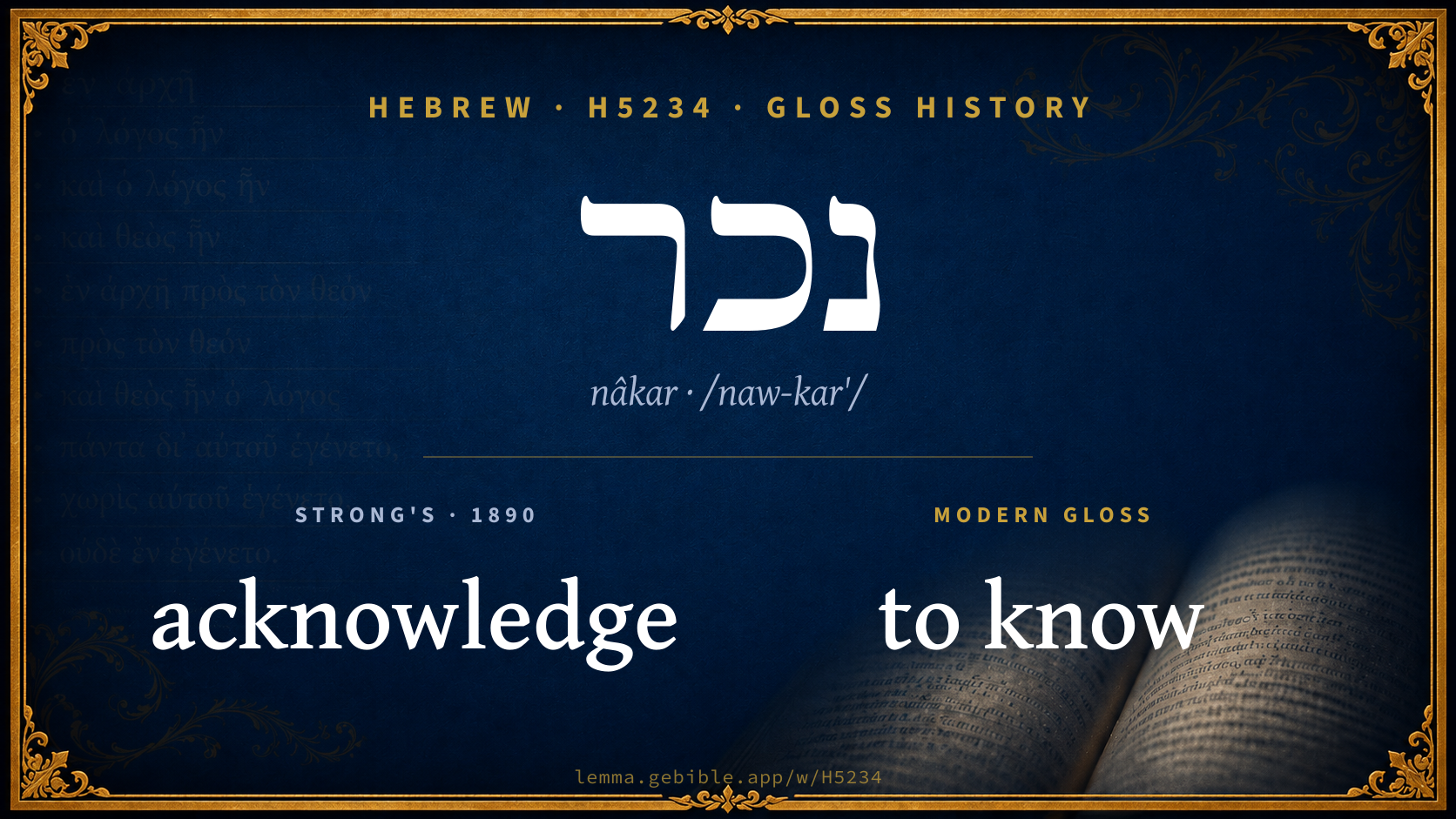
Gloss history
Strong's 1890 vs modern scholarship
About this word
Strong's H5234 catalogs a Hebrew word from the Hebrew Old Testament.
These counts are not copied from any lexicon or concordance. They are computed here, from the morphology-tagged Hebrew Old Testament. What Lemma adds →
- 47
- distinct verses
- The word appears in 47 distinct verses.
- 16 / 39
- OT books
- The word appears in 16 of 39 Old Testament books.
- #739
- by frequency
- Top 1000 most frequent Hebrew words (rank 739 of 8,640 Hebrew words by occurrence).
View all 47 occurrences in the concordance →
Most concentrated in
- Genesis 8 verses 17%
- Job 8 verses 17%
- Deuteronomy 5 verses 11%
By section of the Old Testament
By traditional corpus
Conventional, traditional groupings — biblical authorship is debated, so this is a traditional corpus grouping, not an authorship claim. Each share is this word’s portion of its verses in that division of the Hebrew canon. Each figure is a share of the word’s 47 distinct verses.
- Writings (Ketuvim) 22 verses · 47%
- Torah (Pentateuch) 13 verses · 28%
- Prophets (Nevi'im) 12 verses · 26%
How translations render this word
Counts come from each version’s own published word-to-Strong’s tagging or interlinear alignment — an approximate guide to how each version renders this word, not a word-level alignment the data otherwise carries. Because each total is that version’s own tagged count, the per-version totals vary from one another and need not match the appearance or distinct-verse counts above. These counts may also differ from a printed concordance because Lemma counts each distinctly tagged rendering and does not collapse phrase taggings into a single head-word total. This is a fixed set of word-tagged versions (KJV, ASV, BSB, ULT) and does not change with the reading translation you choose elsewhere. Each version’s license is shown beside its name below (and on Sources).
- King James Version: Knew 3×, Discern 2×, Have respect 2×
- American Standard Version: Knew 3×, Discern 2×, Have respect 2×
- Berean Standard Bible: Recognized 6×, Recognize him 2×, Show partiality 2×
- unfoldingWord Literal Text: Recognized 5×, And 4×, Acknowledge 3×
King James Version Public Domain
Renders H5234 across 49 tagged occurrences — most commonly:
Plus 34 renderings that appear only once — usually multi-word phrases or single function words the recovered tagging swept in, not distinct renderings. Not rendered by a distinct English word in 1 further occurrence.
American Standard Version Public Domain
Renders H5234 across 49 tagged occurrences — most commonly:
Plus 38 renderings that appear only once — usually multi-word phrases or single function words the recovered tagging swept in, not distinct renderings.
Berean Standard Bible Public Domain
Renders H5234 across 48 tagged occurrences — most commonly:
Plus 38 renderings that appear only once — usually multi-word phrases or single function words the recovered tagging swept in, not distinct renderings. Not rendered by a distinct English word in 1 further occurrence.
unfoldingWord Literal Text CC BY-SA 4.0
Renders H5234 across 69 tagged occurrences — most commonly:
Plus 44 renderings that appear only once — usually multi-word phrases or single function words the recovered tagging swept in, not distinct renderings.
9 senses and sub-senses in the full BDB
Hebrew verbs can shift meaning by stem (binyan): Qal is the basic action, Niphal is often passive or reflexive, Piel often intensifies or makes it factitive, and Hiphil is typically causative. The senses below are grouped under the stem BDB assigns to each. This entry also uses Hithpael (reflexive or reciprocal).
What do BDB’s symbols mean?
BDB uses these scholarly abbreviations:
| Symbol | Meaning |
|---|---|
| 𝔊 | the Septuagint (the ancient Greek translation, LXX) |
| 𝔙 | the Vulgate (the Latin translation) |
| 𝔖 | the Syriac version (the Peshitta) |
| 𝔗 | the Targum (the Aramaic translation) |
| ψ | the Psalms |
| √ | root (the underlying root or stem) |
| ‖ | parallel passage (a synonymous or contrasted parallel) |
| † | the dagger: every passage where the word occurs is cited |
The 9 senses and sub-senses the full Brown-Driver-Briggs lexicon distinguishes for this word, in lexicon order (not ranked by frequency), with BDB’s own verbatim wording and sub-sense lettering. Shown in Hebrew script with BDB’s own scholarly abbreviations. The condensed entry is in the Lexicon Entry tab. See also the Forms in the corpus table below.
Niphal
- Pf. 3 mpl. לֹא נִכְּרוּ La 4:8 they are not recognized. e.g. Lamentations 4:8
Piel
- Pf. לֹא נִכַּר שׁוֹעַ לִפְנֵי־דָ֑ל Jb 34:19 he regardeth not the opulent above the poor (‖ לֹא־נָשָׂא פְּנֵי שָׂרִים); Impf. לֹא תְנַכֵּ֑רוּ Jb 21:29 do ye not recognize their tokens. e.g. Job 34:19
Hiphil
- Pf. הִכִּיר Dt 33:9; Dn 11:39 Kt; sf. הִכִּירוֹ Gn 27:23; 3 pl. הִכִּירוּ Ju 18:3 + 2 times, sf. הִכִּירֻהוּ Jb 2:12, הִכִּרֻהוּ Gn 42:8; Impf. יַכִּיר Dt 21:17 + 3 times + Dn 11:39 Qr; וַיַּכֵּר Gn 38:26 +; sf. וַיַּכִּרֵ֫הוּ 1 K 18:7, יַכִּירֶ֫נּוּ Jb 7:10, וַיַּכִּירָהּ Gn 37:33, etc.; Imv. הַֽכֶּר־ Gn 31:32 + 2 times; Inf. abs. הַכֵּֽר־ (Ginsb van d. H. הַֽכֶּר־) Pr 24:23; 28:21; cstr. sf. הַכִּירֵנִי Ru 2:10; Pt. מַכִּיר ψ 142:5, sf. מַכִּירֵךְ Ru 2:19, etc.;— e.g. Deuteronomy 33:9
- 1. regard, observe, especially with a view to recognition, c. obj. cl., Gn 31:32; 37:32; 38:25; pay attention to, c. acc. pers. Ru 2:10, 19; acc. rei (of God) Jb 34:25; acc. rei om. 2 S 3:36; י׳ subj. כֵּן אַכִּיר … לְטוֹבָה Je 24:5 so will I regard the exiles … for good; Antiochus subj. Dn 11:39; הִכִּיר פָּנִים pay regard to (shew partiality, = נָשָׂא פְּנֵי פ׳) Dt 1:17; 16:19 (‖ הִטָּה מִשְׁפָּט), Pr 24:23; 28:21. e.g. Genesis 31:32
- 2. Recognize (as formerly known) c. acc. pers. vel rei, Gn 27:23; 37:33; 38:26 (all J), 42:7, 8(×2) (E), 1 K 18:7; 20:41; Jb 2:12; proverb. בְּטֶרֶם יַכִּיר אִישׁ אֶת־רֵעֵהוּ Ru 3:14 before a man could recognize his fellow (i.e. before dawn); recognize voice (קוֹל), Ju 18:3; 1 S 26:17; = perceive the true situation, וָאַכִּירָה וְהִנֵּה Ne 6:12 and I perceived, and lo! God had not sent him. e.g. Genesis 27:23
- 3. Be willing to recognize, acknowledge Dt 21:17; 33:9; Is 63:16 (‖ יָדַע), ψ 142:5; acknowledge with honour Is 61:9. e.g. Deuteronomy 21:17
- 4. Be acquainted with, לֹא יַכִּירֶנּוּ עוֹד מְקוֹמוֹ Jb 7:10 his place shall be acquainted with him no more (he shall be gone and forgotten), cf. ψ 103:16; c. acc. rei Jb 24:13, 17. e.g. Job 7:10
- 5. Distinguish, understand, הִכִּיר קוֹל … לְקוֹל Ezr 3:13 could not distinguish, etc.; cf. Jb 4:16 could not distinguish its appearance; הִכִּיר לְדַבֵּר Ne 13:24 understand how to speak, etc. e.g. Ezra 3:13
Hithpael
- Impf. יִתְנַכֶּר־נָ֑עַר Pr 20:11 by his deeds a youth maketh himself known, whether his doing be pure, etc. e.g. Proverbs 20:11
Senses from the full Brown-Driver-Briggs lexicon (Brown, Driver, Briggs; Oxford 1906 — public domain), digitized via Sefaria, supplemented by the OpenScriptures HebrewLexicon (CC BY 4.0). Full attribution on Sources.
Word origin
vb. (not Qal) regard, recognize (NH Hiph. know, be acquainted with; 𝔗 Aph. id.; Syriac Aph. ܐܰܟܰܪ id.; cf. also Arabic نَكِرَ in sense be shrewd, appar. rare, cf. نُكْرٌ cunning Lane 2850 a. v. p. 1125);—
— Brown-Driver-Briggs (Oxford 1906, public domain), digitized via Sefaria, supplemented by the OpenScriptures HebrewLexicon (CC BY 4.0). See Sources.
Origin: a primitive root
Jastrow Dictionary
A second Hebrew/Aramaic lexicon for comparison, covering Aramaic and post-biblical (Talmudic, Targumic, Midrashic) usage that the biblical-Hebrew BDB does not. Matched by lemma rather than by Strong’s number, so a lemma may carry more than one Jastrow headword (shown separately below), and the entries cover usage well beyond the Bible.
נָכַר
- (b. h.) to be unknown, strange.
- 1. to recognize, know; to favor. Ruth R. to II, 10 (ref. to להכירני, ib.) נתנבאה … להַכִּירָהּ כדרך וכ׳ she prophesied that he would know her in the way of all people (as his wife, cmp. יָדַע). Ber. 10ᵇ האשה מַכֶּרֶת באורחין וכ׳ woman recognizes the character of guests better than man. R. Hash. II, 1 אם אינן מַכִּירִין אותו if the court does not know him personally. Y. Yeb. IV, 6ᵇ כנסה ולא הִכִּירָהּ he married her but did not touch her (v. supra). Snh. 7ᵇ (ref. to Deut. I, 17) לא תַכִּירֵהוּ thou shalt not favor him (if he is thy friend); a. fr.—Num. R. s. 9 במקום שמכיר where he knows (the people), where he is acquainted; Sifré Num. 14 במקום שמכירין אותו. e.g. Deuteronomy 1:17
- 2. to make known, identify; to acknowledge, own. R. Hash. l. c. מן המכירים on the declaration of those who identify (the witnesses; v. Rabb. D. S. a. l. note 2). Gen. R. s. 43 לא היה שמי ניכר … והִכַּרְתָּ אותי וכ׳ my name was unknown … and thou hast made me known among my creatures. Sifré Deut. 217; Kidd. 78ᵇ, a. e. (ref. to יכיר, Deut. XXI, 17) יַכִּירֶנּוּ לאחרים he may identify him before others (as his first born son). Sifré Deut. 312 שאהיה מַכִּירוֹ that I may make it known as mine. Ib. מהיכן המקום מַכִּיר את חלקו beginning with whom does the Lord acknowledge his share (claim as his)? With Jacob; a. fr. e.g. Deuteronomy 21:17
- to be recognized; to be discernible. Kidd. III, 5 ה׳ עוברה her pregnancy was certain, v. הַכָּרָה; ib. 62ᵇ. B. Mets. 93ᵇ ה׳ הגנב the thief was found out; a. e.
- same. Part. נִיכָּר. Ber. 28ᵃ מכותלי … אתה נ׳ וכ׳ by the walls of thy house, one sees that thou art a smith. Kidd. 31ᵃ מסוף דברך נ׳ וכ׳ from thy last words (the fifth and following commandments of the decalogue) it is seen that thy first one is true. Ib. מבין ריסי עיניך נ׳, v. רִיס. Gitt. 53ᵃ שאינו נ׳, v. הֶיזֵּק. Sabb. 91ᵇ מקומו נ׳ its location is discernible. Sot. 9ᵇ נִיכָּרִין דברי אמת words of truth are easily recognized. Gen. R. s. 43, v. supra; a. fr.
- to treat as a stranger, ignore; to discriminate against. Snh. l. c. (ref. to Deut. I, 17) לא תְנַכְּרֵהוּ (if he is thy enemy) do not discriminate against him (v. supra). Sifré Deut. 322 בשעת … מְנַכְּרִים וכ׳ when Israel is in trouble, the nations ignore them and act as though they did not know them; a. e. e.g. Deuteronomy 1:17
נְכַר
- ; Af. אַכֵּר to recognize, know. Targ. Y. I Gen. XXXVIII, 25, sq.
- to be distinguishable. B. Kam. 5ᵃ דמִינַּכְּרָא, v. הֶיוֵּקָא. Ib. 97ᵃ מִינַּכַּר היזיקה its reduction in value is distinguishable.
- to make strange, remove. Sabb. 82ᵇ (ref. to תזרם, Is. XXX, 22) נַכְּרִינְהוּ מינך כַּוָּר (v. Rabb. D. S. a. l. note) remove them from thee like a strange (disgusting) thing. e.g. Isaiah 30:22
A Dictionary of the Targumim, the Talmud Babli and Yerushalmi, and the Midrashic Literature (Marcus Jastrow; London, Luzac, 1903) — Public Domain. Digitized via Sefaria. Digitized via Sefaria. Full attribution on Sources.
Forms in the corpus
The 45 distinct written forms H5234 takes in the Hebrew Bible, most frequent first — each parse links to that stem’s occurrences in the concordance. Hebrew forms include their vowel points and cantillation, so a single lemma takes many written forms.
Same root — word family
Other BDB entries built from the same root as H5234, grouped by Strong’s listed origin. These share a root / origin per the lexicon — not necessarily a shared meaning. Each links to that word’s own entry.
Derived from this word
- הכרה hakkârâh H1971 appearance
- מכר makkâr H4378 friend
- נכר neker H5235 calamity
- נכר nêkâr H5236 foreign
Compare all same-root words → Showing 4 of 5 — not the complete family. They share a root, not necessarily a meaning.
Septuagint verse parallels
This word appears in 44 verses that also exist in the Greek Old Testament (Septuagint), out of the 47 Hebrew verses it occurs in. You can read those verses in Greek by switching the Old Testament edition to the Septuagint.
Read these verses in the Septuagint
- Genesis 27:23
- Deuteronomy 1:17
- Judges 18:3
- Ruth 2:10
- 1 Samuel 23:7
- 2 Samuel 3:36
- 1 Kings 14:5
- Ezra 3:13
- Job 2:12
- Psalms 103:16
- Proverbs 20:11
- Isaiah 61:9
This is a verse-level parallel only — the same verses exist in both the Hebrew and Greek Old Testaments. No word-level Hebrew↔Greek correspondence is claimed: the data carries no such alignment, so no Greek word is shown as this Hebrew word’s translation. Coverage is not total — the Septuagint omits the deuterocanon and renumbers the Psalms, so some Hebrew verses have no direct Greek parallel.