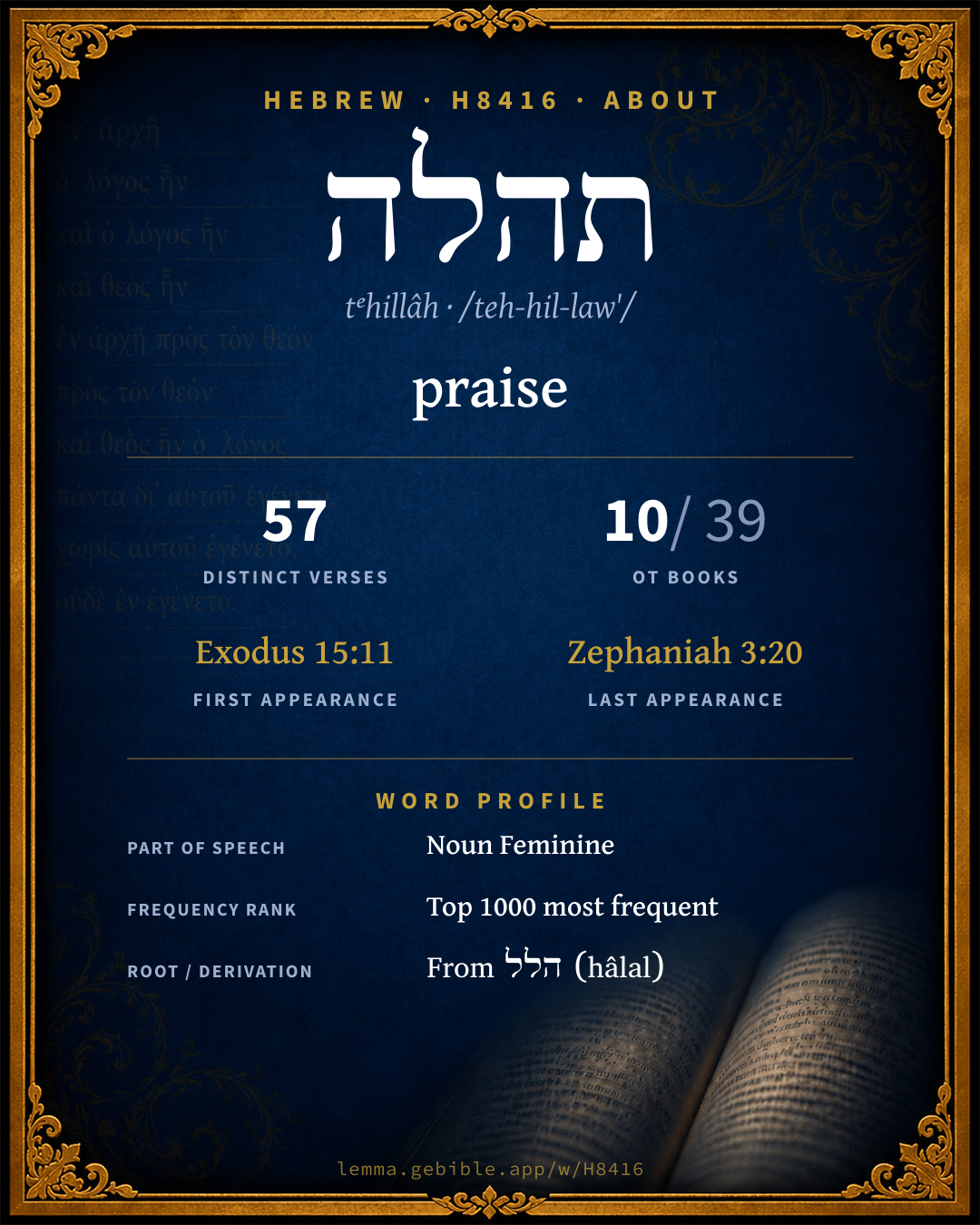
תְּהִלָּה
praise
‘praise’ is one of 6 main senses fuller range ↓
Full lexicon entry — Brown-Driver-Briggs (BDB)
From Brown-Driver-Briggs (BDB)
Where this word appears
Grammar key — what these labels mean
Part of speech
- Noun
- A naming word — a person, place, thing, or idea.
Noun type
- Common
- A common noun — a general class of person, place, or thing (“king,” “city,” “water”), not a specific name.
State
- Absolute
- The independent form of a noun, not bound to a following word.
- Construct
- A noun bound to a following noun in a possessive / “of” relationship (the construct chain).
Gender
- Feminine
- Grammatically feminine.
Number
- Singular
- One.
- Plural
- More than one (in Hebrew, generally three or more).
Every verse where H8416 appears in the Book of 2 Chronicles — 1 distinct verse. Click any verse to open its interlinear word-by-word view. Verse text shown in the World English Bible for context — . Each verse’s Hebrew form is shown with its reference; the English is not keyword-highlighted, since the data carries no word-level English alignment. Use “Compare translations” on any verse to read it across multiple English versions. This concordance covers the Hebrew Bible; Septuagint (Greek Old Testament) occurrences are not indexed here.
2 Chronicles
About this entry
At a glance — auto-summarized from this page’s data, not written by a person. Every figure links to its source below. This summary describes the numbers; it doesn’t interpret them.
The Hebrew noun תהלה centers on the idea of “praise.” Psalms dominates its distribution — 30 of 57 verses. Spanning 57 verses in 10 books, it ranks among the moderately common words of the Hebrew Bible. Its earliest occurrence is Exodus 15:11. Its meaning spans more than one sense — see its full sense range. For the data behind this summary, explore the sense tree and the renderings breakdown below.
Gloss history
Strong's 1890 vs modern scholarship
About this word
Strong's H8416 catalogs a Hebrew word from the Hebrew Old Testament.
These counts are not copied from any lexicon or concordance. They are computed here, from the morphology-tagged Hebrew Old Testament. What Lemma adds →
- 57
- distinct verses
- The word appears in 57 distinct verses.
- 10 / 39
- OT books
- The word appears in 10 of 39 Old Testament books.
- #658
- by frequency
- Top 1000 most frequent Hebrew words (rank 658 of 8,640 Hebrew words by occurrence).
View all 57 occurrences in the concordance →
By section of the Old Testament
By traditional corpus
Conventional, traditional groupings — biblical authorship is debated, so this is a traditional corpus grouping, not an authorship claim. Each share is this word’s portion of its verses in that division of the Hebrew canon. Each figure is a share of the word’s 57 distinct verses.
- Writings (Ketuvim) 34 verses · 60%
- Prophets (Nevi'im) 20 verses · 35%
- Torah (Pentateuch) 3 verses · 5%
How translations render this word
Counts come from each version’s own published word-to-Strong’s tagging or interlinear alignment — an approximate guide to how each version renders this word, not a word-level alignment the data otherwise carries. Because each total is that version’s own tagged count, the per-version totals vary from one another and need not match the appearance or distinct-verse counts above. These counts may also differ from a printed concordance because Lemma counts each distinctly tagged rendering and does not collapse phrase taggings into a single head-word total. This is a fixed set of word-tagged versions (KJV, ASV, BSB, ULT) and does not change with the reading translation you choose elsewhere. Each version’s license is shown beside its name below (and on Sources).
BDB lists this Strong’s number as 2 distinct words (homographs). Each count above pools all of them and is not split by sense — see the Senses section below. A low-frequency rendering may belong to a different one of those words, not the primary meaning.
- King James Version†: Praise 42×, Praises 5×
- American Standard Version†: Praise 42×, Praises 5×
- Berean Standard Bible†: Praise 41×, Praises 7×
- unfoldingWord Literal Text†: Praise 41×, And 4×, Praises of 3×
King James Version Public Domain
Renders H8416 across 57† tagged occurrences — most commonly:
Plus 10 renderings that appear only once — usually multi-word phrases or single function words the recovered tagging swept in, not distinct renderings.
American Standard Version Public Domain
Renders H8416 across 56† tagged occurrences — most commonly:
Plus 9 renderings that appear only once — usually multi-word phrases or single function words the recovered tagging swept in, not distinct renderings.
Berean Standard Bible Public Domain
Renders H8416 across 57† tagged occurrences — most commonly:
Plus 9 renderings that appear only once — usually multi-word phrases or single function words the recovered tagging swept in, not distinct renderings.
unfoldingWord Literal Text CC BY-SA 4.0
Renders H8416 across 57† tagged occurrences — most commonly:
Plus 5 renderings that appear only once — usually multi-word phrases or single function words the recovered tagging swept in, not distinct renderings.
8 senses and sub-senses in the full BDB
What do BDB’s symbols mean?
BDB uses these scholarly abbreviations:
| Symbol | Meaning |
|---|---|
| 𝔊 | the Septuagint (the ancient Greek translation, LXX) |
| 𝔙 | the Vulgate (the Latin translation) |
| 𝔖 | the Syriac version (the Peshitta) |
| 𝔗 | the Targum (the Aramaic translation) |
| ψ | the Psalms |
| √ | root (the underlying root or stem) |
| ‖ | parallel passage (a synonymous or contrasted parallel) |
| † | the dagger: every passage where the word occurs is cited |
The 8 senses and sub-senses the full Brown-Driver-Briggs lexicon distinguishes for this word, in lexicon order (not ranked by frequency), with BDB’s own verbatim wording and sub-sense lettering. Shown in Hebrew script with BDB’s own scholarly abbreviations. The condensed entry is in the Lexicon Entry tab. See also the Forms in the corpus table below.
- 1. praise, adoration, thanksgiving, paid to י׳:—ψ 48:11 כשׁמך אלהים כן תהלתך על קצוי ארץ as thy name, O God, so is thy praise to the ends of the earth, 111:10 תהלתו עמדת לעד, תָּמִיד תְּהִלָּתוֹ בְּפִי ψ 34:2 continually is his praise in my mouth (‖ אֲבָֽרֲכָה אֶת־י׳) cf. 71:6, also ימָּלֵא פִי תְהִלָּתֶ֑ךָ 71:8, פִּי יַגִּיד ת׳ 51:17, תַּבַּעְנָה שְׂפָתַי ת׳ 119:171, ת׳ י׳ יְדַבֶּר פִּי 145:21 (‖ וִיבָרֵךְ כָּל־בָּשָׂר שֵׁם קָדְשׁוֹ); as sung, song of praise יָשִׁירוּ תְּהִלָּתוֹ 106:12; הַמְשֹׁרֲרִים וְשִׁיר־תְּהִלָּה וְהוֹדוֹת לֵאלֹהִים Ne 12:46; cf. ת׳ לֵאלֹהֵינוּ ψ 40:4 (appos. שִׁיר חָדָשׁ) & Is 42:10 (appos. id.), also לַיְשָׁרִים נָאוָה ת׳ 33:1 (‖ רַנֲנוּ צַדִּיקִים בי׳); vid. perhaps ψ 148:14 (Che; yet see De VB); note further אֱלֹהֵי תְהִלָּתִי ψ 109:1; יוֹשֵׁב תְּהִלּוֹת יִשְׂרָאֵל ψ 22:4 inhabiting the praises of Isr.; וּמְרוֹמָם עַל־כָּל־בְּרָכָה וּתְהִלָּה Ne 9:5 exalted above all blessing and praise; cf. also תְּהִלָּתִי Is 48:9 (‖ שְׁמִי), & of praise due to י׳ Is 42:8. e.g. Psalms 48:11
- 2. the act of general, public, praise (cf. also supr. especially ψ 22:4; 33:1; 106:12 Ne 12:46);—בֹּאוּ שְׁעָרָיו בְּתוֹדָה חֲצֵרֹתָיו בִּת׳ ψ 100:4 enter his gates with thanksgiving, his courts with praise; שִׁירוּ לי׳ שִׁיר חָדָשׁ תְּהִלָּתוֹ בִּקְהַל חֲסִידִים ψ 149:1; cf. ψ 22:26; 65:2; 66:2; 147:1; before the army הֵחֵלּוּ בְרִנָּה וּתְהִלָּה 2 Ch 20:22; in exhortation to the peoples הַשְׁמִיעוּ קוֹל תְּהִלָּתוֹ ψ 66:8 (‖ בָּֽרֲכוּ עַמִּים אֱלֹהֵינוּ), cf. Is 42:12. e.g. Psalms 22:4
- 3. praise-song, as title, תְּהִלָּה לְדָוִד ψ 145:1 (so NH ספר תהלות & תְּהִלִּים, תִּילִּים, = Psalms). e.g. Psalms 145:1
- 4. qualities, deeds, etc., of י׳, demanding praise:—נוֹרָא תְהִלֹּת Ex 15:11 (song), i.e. terrible in attributes that call for praise (‖ נֶאְדָּר בַּקֹּדֶשׁ & עֹשֵׁה פֶלֶא); often (both sg. and pl.) of Yahweh’s deeds c. vb. סִפֵּר ψ 9:15; 78:4; 79:13 Is 43:21, also + שֵׁם י׳ ψ 102:22; c. יַשְׁמִיעַ ψ 106:2 (‖ יְמַלֵּל גְּבוּרוֹת י׳); + צִדְקֶ֑ךָ c. יֶהְגֶּה ψ 35:28; c. יְבַשֵּׂ֑רוּ Is 60:6; + חַסְדֵי י׳, c. אַזְכִּיר Is 63:7; vid. also לְהֹדוֹת לְשֵׁם קָדְשֶׁ֑ךָ לְהִשְׁתַּבֵּחַ בִּתְהִלָּתֶ֑ךָ ψ 106:47 = 1 Ch 16:35 to give thanks unto thy holy name, to glory in thy praises (= praiseworthy deeds). e.g. Exodus 15:11
- 5. renown, fame, glory:
- a. of Damascus עִיר תְּהִלָּ֑ה֯ Je 49:25 (on Qr תְּהִלָּ֑ת v. Hi Ges§ 80. 2 b); comp. perhaps מַעֲטֵה תְהִלָּה Is 61:3 mantle of renown (renown as a mantle, cf. De VB; > Di splendid garment; but Bi Che Du read מַעֲטֵה אֵ֔בֶל and translate ת׳ praise, song of praise, cf. 1. 2). e.g. Jeremiah 49:25
- b. of י׳, כִּסָּה שָׁמַים הוֹדוֹ וּת׳ מָֽלְאָה הָאָרֶץ Hb 3:3 his splendour hath covered (the) heavens, and of his renown the earth is full. Also e.g. Habakkuk 3:3
- c. fig., praise, renown, = obj. of praise, possessor of renown; used (a) of Israel Dt 26:19 (abs.), Je 13:11 (+ לִי) 33:9 (+ לִי and לְכֹל גּוֹיֵי הָאָרֶץ)—all ‖ שֵׁם, תִּפְאֶרֶת; v. also Is 61:11, & perhaps ψ 148:14 (see sub 1 supr.); (b) of Jerusalem Is 62:7, also Zp 3:19, 20 (both ‖ שֵׁם), all these c. vb. הָיָה or שִׂים; cf. וְקָרָאת יְשׁוּעָה חוֹמֹתַיִךְ וּשְׁעָרַיִךְ ת׳ Is 60:18; (c) of Babylon וַתִּתָּפֵשׂ תְּהִלַּת כָּל־הָאָרֶץ Je 51:41; (d) of Moab אֵין עוֹד ת׳ מוֹאָב Je 48:2; (e) of י׳, הוּא תְהִלָּֽתְךָ וְהוּא אֱלֹהֶיךָ Dt 10:21, כִּי תְהִלָּתִי אָ֑תָּה Je 17:14 (no vb.) e.g. Deuteronomy 26:19
Senses from the full Brown-Driver-Briggs lexicon (Brown, Driver, Briggs; Oxford 1906 — public domain), digitized via Sefaria, supplemented by the OpenScriptures HebrewLexicon (CC BY 4.0). Full attribution on Sources.
Word origin
n.f. praise, song of praise (cf. Arabic يَهْلِيلٌ, the shouting of a sacred formula; SprengerMuḥammad iii. 527 WeSkizzen iii. 107 ff. 114.117.214 NöZMG 1887, 723 RSSem i. 411 CheOP 460) abs. ת׳ Is 60:18 + 19 times + Je 49:25 Kt, v. infr.; cstr. תְּהִלַּת Je 48:2 + 2 times; sf. תְּהִלָּתִי Je 17:14 + 6 times; תְּהִלָּֽתְךָ Dt 10:21, ψ 48:11, תְּהִלָּתֶ֑ךָ ψ 35:28 + 6 times; תְּהִלָּתֶיךָ ψ 19:15; on תְּהִלָּ֫תֶ֥יךָ ψ 9:15 as error for -לָּ֫תֶ֥ךָ or -לֹּ֫תֶ֥יךָ, v. Ol§ 131 k; 39 c Sta§ 354 b Hup-Now al. ad. loc. תְּהִלָּתוֹ Is 42:10 + 10 times; pl. abs. תְּהִלֹּת Ex 15:11; cstr. תְּהִלּוֹת ψ 22:4 + 3 times;—
— Brown-Driver-Briggs (Oxford 1906, public domain), digitized via Sefaria, supplemented by the OpenScriptures HebrewLexicon (CC BY 4.0). See Sources.
Derived from הלל (hâlal) (H1984) — to praise.
Jastrow Dictionary
A second Hebrew/Aramaic lexicon for comparison, covering Aramaic and post-biblical (Talmudic, Targumic, Midrashic) usage that the biblical-Hebrew BDB does not. Matched by lemma rather than by Strong’s number, so a lemma may carry more than one Jastrow headword (shown separately below), and the entries cover usage well beyond the Bible.
תְּהִלָּה
- praise, song. Pes. 117ᵃ בעשרה … בת׳ וכ׳ the Book of Psalms contains ten expressions for praise: nitstsuaḥ … t’hillah &c. Ber. 4ᵇ כל האומר ת׳ לדוד וכ׳ he who recites the Praise of David (Ps. CXLV) three times a day &c. Taan. 16ᵇ (ref. to Nehem. IX, 5) על כל ברכה וברכה תן לו ת׳ after every benediction give him praise (close with ברוך שם כבוד וכ׳); a. e.—Pl. תְּהִלּוֹת; תְּהִלִּים, תְּהִילּ׳. Mekh. B’shall, Shir., s. 8 (ref. to Ex. XV, 12) נורא ת׳ לא מעכשיו אלא מעולם נורא ת׳ not from now is he fearful in praises (i.e. נורא is not meant as participle present), but from eternity was he &c.—Esp. תְּהִלִּים (סֵפֶר), תְּהִילִּ׳; contr. תִּלִּים, תִּילִּ׳ the Book of Psalms. Pes. l. c. B. Bath. 14ᵇ sq. דוד כתב ס׳ ת׳ על ידי וכ׳ David composed the Book of Psalms through the agency of ten elders …, and of the three sons of Korah. Gen. R. s. 68 חמשה … שבס׳ ת׳ the fifteen ‘songs of the ascents’ in the Psalms; ib. s. 74. Y. Sabb. XVI, 15ᶜ bot. מאה … בת׳ וכ׳ the one hundred and forty-five psalms in the Psalms correspond to the years of Jacob; Treat. Sof’rim ch. XVI, 17 בספר ת׳. Y. B. Bath. I, end, 13ᵃ; a. fr.—Gen. R. s. 33 מסתכל הייתי באגדת ת׳ I was meditating over the Agadah on the Psalms; Y. Kil. IX, 32ᵇ bot.; Y. Keth. XIII, 35ᵃ bot. אשגרית עיניי בכל ספר ת׳ אגדה (not עינוי) I let my glance pass through the whole ‘Book of Psalms, an Agadah.’—Chald. תִּילִּין, תִּילֵּי. Pes. l. c. חזינא להו לת׳ דבי רב וכ׳ I saw a copy of the Psalms of the house of R. … in which Halleluiah was written in the middle of a chapter (psalm).—[תִּלִּים, תִּלִּין, תִּילִּ׳, pl. of תֵּל, q. v.] e.g. Psalms 145:21
A Dictionary of the Targumim, the Talmud Babli and Yerushalmi, and the Midrashic Literature (Marcus Jastrow; London, Luzac, 1903) — Public Domain. Digitized via Sefaria. Digitized via Sefaria. Full attribution on Sources.
Forms in the corpus
The 45 distinct written forms H8416 takes in the Hebrew Bible, most frequent first — each parse links to that state’s occurrences in the concordance. Hebrew forms include their vowel points and cantillation, so a single lemma takes many written forms.
Same root — word family
Other BDB entries built from the same root as H8416, grouped by Strong’s listed origin. These share a root / origin per the lexicon — not necessarily a shared meaning. Each links to that word’s own entry.
Derives from
Shares the same root
- הוללה hôwlêlâh H1947 madness
- הוללות hôwlêlûwth H1948 madness
- הלול hillûwl H1974 rejoicing
- מהלל mahălâl H4110 praise
- תהלה tohŏlâh H8417 error
Proper names from this root
People and places named from this root — a name, not an additional meaning of the word.
Compare all same-root words → Showing 4 of 10 — not the complete family. 3 of the same-root words are proper names (people or places). They share a root, not necessarily a meaning.
Septuagint verse parallels
This word appears in 47 verses that also exist in the Greek Old Testament (Septuagint), out of the 57 Hebrew verses it occurs in. You can read those verses in Greek by switching the Old Testament edition to the Septuagint.
Read these verses in the Septuagint
- Exodus 15:11
- Deuteronomy 10:21
- 1 Chronicles 16:35
- 2 Chronicles 20:22
- Psalms 9:14
- Isaiah 42:8
- Jeremiah 13:11
- Habakkuk 3:3
- Zephaniah 3:19
This is a verse-level parallel only — the same verses exist in both the Hebrew and Greek Old Testaments. No word-level Hebrew↔Greek correspondence is claimed: the data carries no such alignment, so no Greek word is shown as this Hebrew word’s translation. Coverage is not total — the Septuagint omits the deuterocanon and renumbers the Psalms, so some Hebrew verses have no direct Greek parallel.