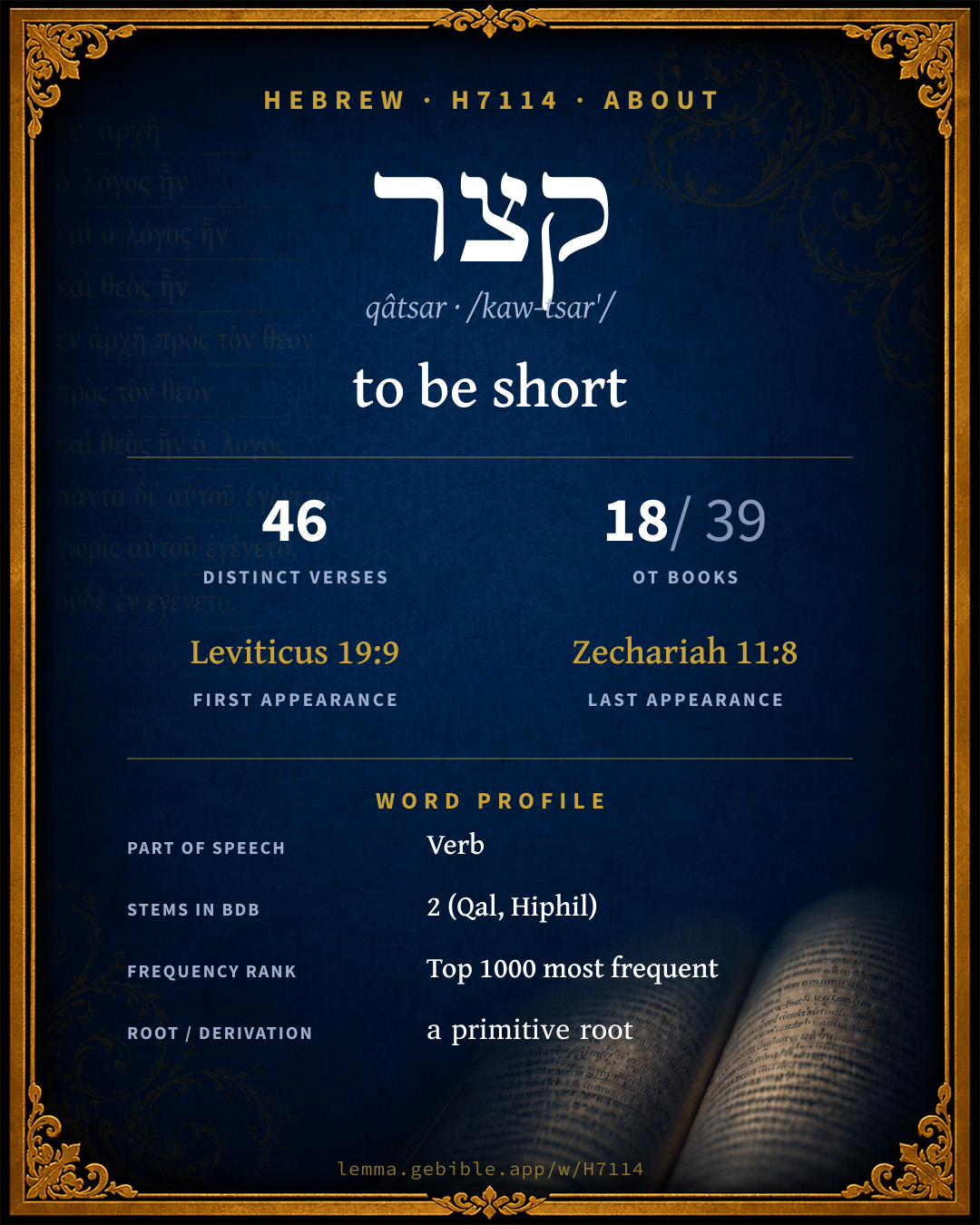
קצר
to be short
also: be impatient, be vexed, be grieved fuller range ↓
Full lexicon entry — Brown-Driver-Briggs (BDB)
From Brown-Driver-Briggs (BDB)
Where this word appears
Grammar key — what these labels mean
Part of speech
- Verb
- An action or state-of-being word.
Stem
- Qal
- The basic, simple active stem — the plain form of the verb (“he wrote”).
- Hiphil
- The causative active stem (“he caused / brought about”).
- Piel
- An intensive or resultative active stem.
Form
- Participle Active
- A verbal adjective expressing ongoing or characteristic action (“writing / one who writes”).
- Sequential Imperfect
- An imperfect with prefixed waw — the standard past-narrative form (waw-consecutive imperfect).
- Imperfect
- An incomplete, ongoing, or future action (“he will / would write”).
- Infinitive Construct
- A bound verbal noun, frequently with prepositions (“to write / in writing”).
- Imperative
- A direct command (“write!”).
- Perfect
- A completed action or state — Hebrew marks aspect (completeness) more than strict tense (“he wrote”).
- Sequential Perfect
- A perfect with prefixed waw continuing a preceding imperfect or command (waw-consecutive perfect).
- Infinitive Absolute
- An unbound verbal noun, often intensifying or standing in for a finite verb.
- Participle Passive
- A verbal adjective expressing action received (“written”).
State
- Absolute
- The independent form of a noun, not bound to a following word.
Person
- 3rd Person
- The one spoken about (“he / she / it / they”).
- 2nd Person
- The one addressed (“you”).
Gender
- Masculine
- Grammatically masculine.
- Feminine
- Grammatically feminine.
- Common
- Either gender — not distinguished for this form.
Number
- Plural
- More than one (in Hebrew, generally three or more).
- Singular
- One.
Every verse where H7114 appears in the Book of Jeremiah — 2 distinct verses. Click any verse to open its interlinear word-by-word view. Verse text shown in the World English Bible for context — . Each verse’s Hebrew form is shown with its reference; the English is not keyword-highlighted, since the data carries no word-level English alignment. Use “Compare translations” on any verse to read it across multiple English versions. This concordance covers the Hebrew Bible; Septuagint (Greek Old Testament) occurrences are not indexed here.
Jeremiah
- Jeremiah 9:22 הַ/קֹּצֵ֖ר ptcl def.art + Qal ptcp.act ms Speak, Thus says Yahweh, The dead bodies of men shall fall as dung on the open field, and as the handful after the harvester; and none shall gather [them].
- Jeremiah 12:13 קָצָ֔רוּ Qal pf 3cp They have sown wheat, and have reaped thorns; they have put themselves to pain, and profit nothing: and you shall be ashamed of your fruits, because of the fierce anger of Yahweh.
About this entry
At a glance — auto-summarized from this page’s data, not written by a person. Every figure links to its source below. This summary describes the numbers; it doesn’t interpret them.
“to be short” is the headline sense of the Hebrew verb קצר (qâtsar). First canonically at Leviticus 19:9, it enters the text early. It turns up in 46 verses across 18 books, a moderately common footprint. Different stems carry different senses — BDB groups them under 2 stems, among them Qal and Hiphil. From the same root come קציר, קצר and קצר. See the sense tree, 46-verse concordance, and the renderings breakdown below.
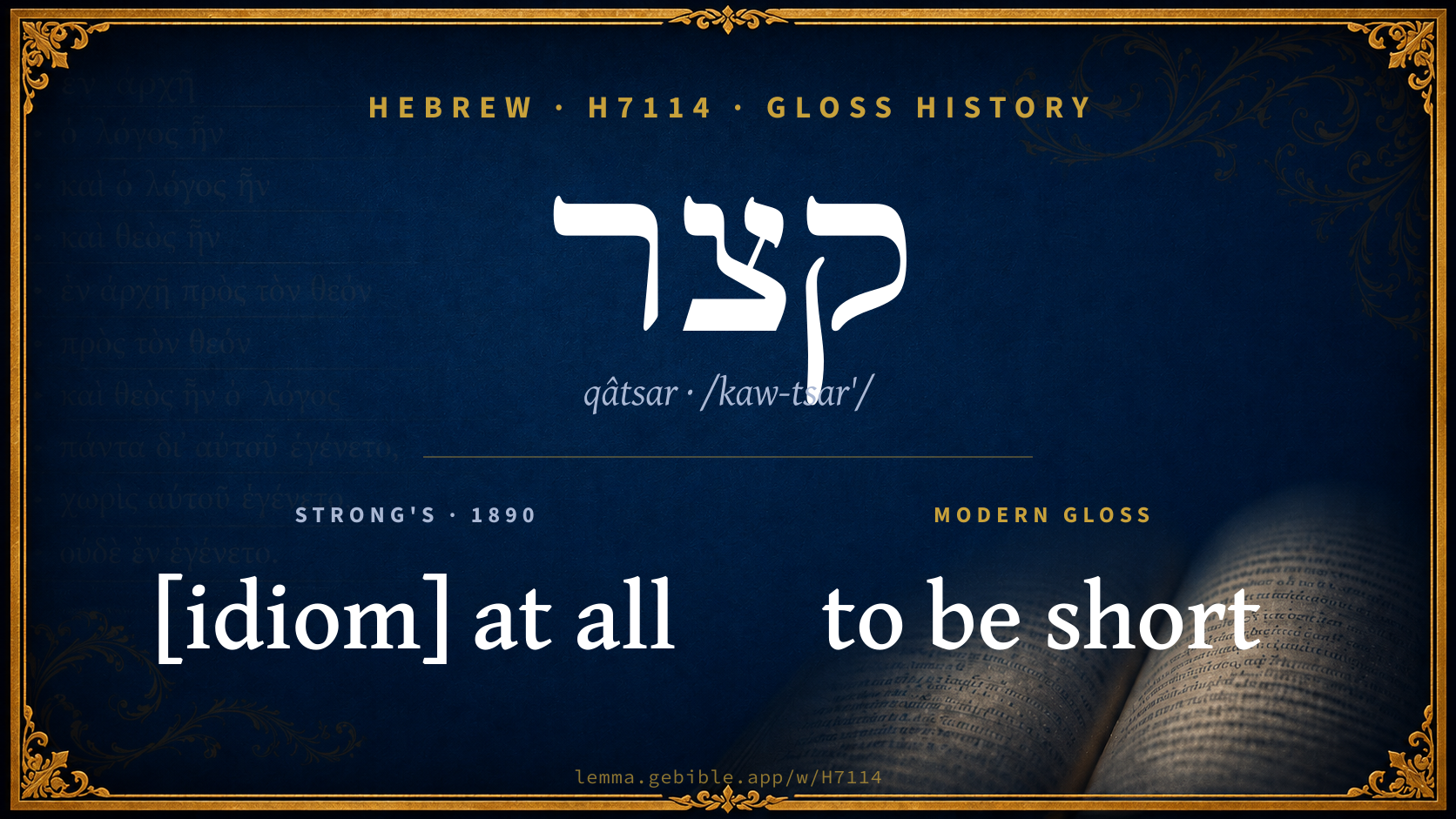
Gloss history
Strong's 1890 vs modern scholarship
About this word
Strong's H7114 catalogs a Hebrew word from the Hebrew Old Testament.
These counts are not copied from any lexicon or concordance. They are computed here, from the morphology-tagged Hebrew Old Testament. What Lemma adds →
- 46
- distinct verses
- The word appears in 46 distinct verses.
- 18 / 39
- OT books
- The word appears in 18 of 39 Old Testament books.
- #723
- by frequency
- Top 1000 most frequent Hebrew words (rank 723 of 8,640 Hebrew words by occurrence).
View all 46 occurrences in the concordance →
By section of the Old Testament
By traditional corpus
Conventional, traditional groupings — biblical authorship is debated, so this is a traditional corpus grouping, not an authorship claim. Each share is this word’s portion of its verses in that division of the Hebrew canon. Each figure is a share of the word’s 46 distinct verses.
- Prophets (Nevi'im) 21 verses · 46%
- Writings (Ketuvim) 17 verses · 37%
- Torah (Pentateuch) 8 verses · 17%
How translations render this word
Counts come from each version’s own published word-to-Strong’s tagging or interlinear alignment — an approximate guide to how each version renders this word, not a word-level alignment the data otherwise carries. Because each total is that version’s own tagged count, the per-version totals vary from one another and need not match the appearance or distinct-verse counts above. These counts may also differ from a printed concordance because Lemma counts each distinctly tagged rendering and does not collapse phrase taggings into a single head-word total. This is a fixed set of word-tagged versions (KJV, ASV, BSB, ULT) and does not change with the reading translation you choose elsewhere. Each version’s license is shown beside its name below (and on Sources).
BDB lists this Strong’s number as 2 distinct words (homographs). Each count above pools all of them and is not split by sense — see the Senses section below. A low-frequency rendering may belong to a different one of those words, not the primary meaning.
- King James Version†: Reapers 5×, Reap 4×, Shall reap 3×
- American Standard Version†: Reapers 5×, Reap 3×, Over the reapers 2×
- Berean Standard Bible†: Reap 8×, Harvesters 6×, Reaper 3×
- unfoldingWord Literal Text†: Reapers 7×, Harvest 5×, Reap 5×
King James Version Public Domain
Renders H7114 across 48† tagged occurrences — most commonly:
Plus 28 renderings that appear only once — usually multi-word phrases or single function words the recovered tagging swept in, not distinct renderings. Not rendered by a distinct English word in 1 further occurrence.
American Standard Version Public Domain
Renders H7114 across 48† tagged occurrences — most commonly:
Plus 32 renderings that appear only once — usually multi-word phrases or single function words the recovered tagging swept in, not distinct renderings.
Berean Standard Bible Public Domain
Renders H7114 across 46† tagged occurrences — most commonly:
Plus 21 renderings that appear only once — usually multi-word phrases or single function words the recovered tagging swept in, not distinct renderings. Not rendered by a distinct English word in 3 further occurrences.
unfoldingWord Literal Text CC BY-SA 4.0
Renders H7114 across 62† tagged occurrences — most commonly:
Plus 21 renderings that appear only once — usually multi-word phrases or single function words the recovered tagging swept in, not distinct renderings.
Senses in the full BDB
Hebrew verbs can shift meaning by stem (binyan): Qal is the basic action, Niphal is often passive or reflexive, Piel often intensifies or makes it factitive, and Hiphil is typically causative. The senses below are grouped under the stem BDB assigns to each.
What do BDB’s symbols mean?
BDB uses these scholarly abbreviations:
| Symbol | Meaning |
|---|---|
| 𝔊 | the Septuagint (the ancient Greek translation, LXX) |
| 𝔙 | the Vulgate (the Latin translation) |
| 𝔖 | the Syriac version (the Peshitta) |
| 𝔗 | the Targum (the Aramaic translation) |
| ψ | the Psalms |
| √ | root (the underlying root or stem) |
| ‖ | parallel passage (a synonymous or contrasted parallel) |
| † | the dagger: every passage where the word occurs is cited |
The 2 senses and sub-senses the full Brown-Driver-Briggs lexicon distinguishes for this word, in lexicon order (not ranked by frequency), with BDB’s own verbatim wording and sub-sense lettering. Shown in Hebrew script with BDB’s own scholarly abbreviations. The condensed entry is in the Lexicon Entry tab. See also the Forms in the corpus table below.
קצר I I. קָצַר (Ges§ 44 c Sta§ 384, 2) vb. be short (NH קָצֵר short, קִצֵּר, shorten
קצר II reap, harvest (NH id., also קָצִיר harvest
Qal
- Pf. 3 pl. קָצָ֑רוּ Je 12:13, etc.; Impf. 3 ms. יִקְצוֹר Is 17:5; Ec 11:4 + Pr 22:8 Kt (Qr יִקְצָר־); 3 mpl. יִקְצֹרוּן Ru 2:9, etc.; Imv. mpl. קִצְרוּ Ho 10:12 +; Inf. cstr. לִקְצֹר 1 S 8:12 +; sf. קֻצְרֶ֑ךָ Lv 23:22, קֻצְרְכֶם 19:9; 23:22; Pt. קוֹצֵר Je 9:21 +, etc.:—reap, c. acc. of crop: acc. cogn. קָצִיר 1 S 6:13; 8:12 (+ חָרַשׁ), Lv 19:9; 23:10, 22 (all H) Dt 24:19; acc. of grain Is 17:5 (fig.; ‖ אָסַף), Jb 24:6 (Qr; Kt vid. Hiph.), cf. Lv 25:5 (H), v 11 (P; + זָרַע), so (obj. om.) 2 K 19:29 = Is 37:30, Mi 6:15 (opp. זָרַע), Lv 19:9b; 23:22b; Ru 2:9; Ec 11:4 (+ זָרַע); obj. קֹצִים Je 12:13 (opp. זָרַע); Pt. = reaper Am 9:13 (+ חוֹרֵשׁ), Je 9:21 (sim.), ψ 129:7 (‖ מְעַמֵּר), + Is 17:5 (for קָצִיר, so BuhlLex 13 Marti); pl. 2 K 4:18; Ru 2:3, 4, 5, 6, 7, 14; fig. of reaping fruits of righteousness Ho 10:12 (+ זָרַע), of evil Ho 8:7 (both + זָרַע), 10:13 (+ חָרַשׁ), Jb 4:8 (+ חָרַשׁ, זָרַע), Pr 22:8; ψ 126:5 they that sow (זָרַע) in tears shall reap in joy. e.g. Jeremiah 12:13
Hiphil
- Impf. יקצירו Jb 24:6 Kt (יִקְצ֑וֹרוּ, v. supr.). e.g. Job 24:6
Senses from the full Brown-Driver-Briggs lexicon (Brown, Driver, Briggs; Oxford 1906 — public domain), digitized via Sefaria, supplemented by the OpenScriptures HebrewLexicon (CC BY 4.0). Full attribution on Sources.
Word origin
I. I. קָצַר (Ges§ 44 c Sta§ 384, 2) vb. be short (NH קָצֵר short, קִצֵּר, shorten; Arabic قَصَرَ shorten, قَصُرَ be short, c. عَن come short of; J.Aram קְצַר be short);—Qal Pf. 3 ms. קָצַר Is 28:20 Mi 2:7 (SS קְצַר from adj. קָצֵר); 3 fs. קָֽצְרָה Is 50:2; 59:1; Impf. 3 fs. תִּקְצַר Jb 21:4 +, 3 fpl. תִּקְצֹרְנָה Pr 10:27; Inf. abs. קָצוֹר Is 50:2; Pt. pass. fpl. קְצֻרוֹת Ez 42:5;—be short, of bed Is 28:20 (fig.), of לְשָׁכוֹת Ez 42:5; especially (fig.) of יַד י׳, i.e. be ineffective, powerless Nu 11:23 (JE), c. מִן comp. Is 50:2 (+ inf. abs.), 59:1; c. נֶפֶשׁ, רוּחַ, = be impatient (opp. [אָרַךְ] Hiph. 1 (c)): וַתִּק׳ נֶפֶשׁ הָעָם Nu 21:4b (JE), of utter discouragement, cf. (of רוּחַ) Jb 21:4; וַתִּק׳ נַפְשׁוֹ Ju 16:16 i.e. he was worn out (by importunity), so of proph. (representing י׳) Zc 11:8 (ב pers.) reach limit of patience with, endurance of; of י׳ Ju 10:16 (ב rei); ק׳ רוּחַ י׳ Mi 2:7 (v. supr.); ק׳ of time †Pr 10:27 (years of wicked). Pi. shorten Pf. 3 ms. קִצַּר יָמַי ψ 102:24. Hiph. id., Pf. 3 ms. הִקְצַרְתָּ יְמֵי וגו׳ ψ 89:46.
I. vb. reap, harvest (NH id., also קָצִיר harvest; cf. Assyrian ḳaṣâru, join together, collect; v. DlPr 166 f. ZehnpfBAS i. 503 (not Syriac ܩܛܰܪ bind, Ethiopic ቈጸረ [ቈፀረ] constringere, v. NöZMG xl (1886), 735));—
— Brown-Driver-Briggs (Oxford 1906, public domain), digitized via Sefaria, supplemented by the OpenScriptures HebrewLexicon (CC BY 4.0). See Sources.
Origin: a primitive root
Jastrow Dictionary
A second Hebrew/Aramaic lexicon for comparison, covering Aramaic and post-biblical (Talmudic, Targumic, Midrashic) usage that the biblical-Hebrew BDB does not. Matched by lemma rather than by Strong’s number, so a lemma may carry more than one Jastrow headword (shown separately below), and the entries cover usage well beyond the Bible.
קָצַר
- (b. h.)
- 1. to cut, reap. Sabb. VII, 2 (among the labors forbidden on the Sabbath) הקוֹצֵר cutting plants. Ib. 73ᵇ משום קוצר as an act coming under the category of reaping. Pes. IV, 8 קוֹצְרִין וגודשין וכ׳ they reaped (the barley) and piled it before the ʿOmer was offered. Peah II, 7 שדה שקְצָרוּהָ וכ׳ a field which gentiles reaped (for themselves) or which robbers reaped. Ib. 8 נותן … שק׳ he must give up the poor man’s share from what he reaped. Ib. III, 6 כדי לִקְצוֹר ולשנות large enough for cutting (swinging the sickle) once and a second time; a. fr.
- 2. to be short, v. קָצֵר.
- 3. (with נפש) to be impatient, vexed; to be sick of. Gen. R. s. 52 אבל היא לא קָצְרָה נפשה וכ׳ but she was not vexed (did not suffer from unsatisfied desire) &c.; Y. Keth. V, 30ᵇ; Yalk. Jud. 70. Tanḥ. Ḥuck. 19 קצרה נפשם בדרך they were sick of marching.
- to shorten, be brief in doing. Ber. I, 4 מקום … לקַצֵּר וכ׳ where they prescribed a lengthy benediction, one is not permitted to shorten, where they prescribed a short formula &c. Y. Yoma VI, beg. 43ᵇ שלא יהא … קַצֵּר (ב)דבריך not that one of the contestants be permitted to speak as long as he needs, and the other be told, make thy speech brief; Y. Snh. III, 21ᶜ top. Ber. 34ᵃ היה מְקַצֵּר וכ׳ gave a very brief prayer. Mekh. B’shall., Vayassʿa, s. 1 ק׳ (ב)ברכותיו gave short benedictions (prayers); לא ק׳ … ממשה he was not briefer than Moses (in his prayer, Num. XII, 13). Ib. יש שעה לְקַצֵּר וכ׳ there is a time to be brief &c.; a. fr. e.g. Numbers 12:13
- 1. to be shortened. Lev. R. s. 21 היו … מִתְקַצְּרוֹת their years (of life) were shortened.
- 2. (with נפש) to be impatient, sick. Tanḥ. l. c. נִתְקַצְּרָה נפש העם בדרך (not נתקצר), v. supra.
קְצַר
- 1. to be short. Targ. Ps. CII, 24 קְצָרוּן Ms. (ed. איתקצרון).
- 2. to shorten, v. infra., v. infra.
- 3. (v. קְצִירָא) to be sick. B. Kam. 91ᵃ למימד גברא כמה מיקצר … לא מִקְצַר וכ׳ Ms. M. (ed. כמה לִיקְצַר) as to estimating how long a person is likely to suffer from such a wound and how long he will not, i.e. as to estimating positively the time needed for recovery, I have no doubt that we can do it.
- to shorten. Targ. Ps. LXXXIX, 46 Ms. (ed. קְ׳, Pe.).
- to be shortened, reduced. Targ. II Kings XIX, 26; Targ. Is. XXXVII, 27. Ib. XXVIII, 20. Targ. Y. Gen. XXVIII, 10; a. e.
קָצֵר
- (b. h.) short. Ab. II, 15 היום ק׳ וכ׳ the day (of life) is short, and the work large. Y. Pes. VII, 35ᵇ bot. ילך לו בק׳ let him take the shortest road to it; a. fr.—Fem. קְצָרָה. Mekh. B’shall., Vayassʿa, s. 1 תפילת הצדיקים ק׳ the prayer of the pious is short. Ber. I, 4 אחת … ואחת ק׳ one lengthy and one short benediction. Ib. IV, 2 היה … תפלה ק׳ used to say a short prayer on entering and on leaving the school-house. Ib. 4. Y. Hor. II, 46ᵈ top בא לו … בק׳ if he came by the shortest road; a. fr.—Midr. Till. to Ps. LIII ע"י שהיתה ידו ק׳ במצות because his hand was short (he was wanting) in good deeds; Yalk. ib. 769; Yalk. Sam. 135 נפשו ק׳; a. fr.—Pl. קְצָרִים; קְצָרוֹת. Cant. R. to VI, 2 ארוכות וק׳, v. אָרוּךְ. Midr. Till. to Ps. LXVIII, ולא היו קִצְרֵי יד בו they were not short-handed with it, i.e. they did not have to economize. Midr. Till. to Ps. CXIX, 81 אתה ארך אפים ואנו קְצֵירֵי רוח thou art long-suffering, but we are hasty of spirit; a. e.—V. קְצָרָה.
קַצָּר
- (preced. wds.) [one who causes shrinking,] fuller, washer. Targ. Josh. XV, 7, a. e. עין ק׳ (h. text עֵין רֹגֵל) the washer’s well.—Y. Ber. IV, 7ᵈ top (Bab. ib. 28ᵃ כובס); a. fr.—B. Kam. 119ᵇ ק׳ שמיה וק׳ שקיל ליה a fuller is named ḳatsra (a shortener), let the ḳatsra take it (the dark border of a white cloth belongs to the fuller).—Pl. קַצְרַיָּא, קַצְרֵי. Targ. I Sam. XIII, 21. Targ. Is. VII, 3 (ed. Wil. קציר׳, corr. acc.).—Snh. 92ᵃ, a. e., v. אוּבְלָא II. Taan. 29ᵇ בטלי ק׳ דבי רב the fullers of the house of Rab are idle (during the week preceding the ninth of Ab); a. e.
A Dictionary of the Targumim, the Talmud Babli and Yerushalmi, and the Midrashic Literature (Marcus Jastrow; London, Luzac, 1903) — Public Domain. Digitized via Sefaria. Digitized via Sefaria. Full attribution on Sources.
Forms in the corpus
The 48 distinct written forms H7114 takes in the Hebrew Bible, most frequent first — each parse links to that stem’s occurrences in the concordance. Hebrew forms include their vowel points and cantillation, so a single lemma takes many written forms.
Same root — word family
Other BDB entries built from the same root as H7114, grouped by Strong’s listed origin. These share a root / origin per the lexicon — not necessarily a shared meaning. Each links to that word’s own entry.
Derived from this word
Compare all same-root words → They share a root, not necessarily a meaning.
Septuagint verse parallels
This word appears in 44 verses that also exist in the Greek Old Testament (Septuagint), out of the 46 Hebrew verses it occurs in. You can read those verses in Greek by switching the Old Testament edition to the Septuagint.
Read these verses in the Septuagint
- Leviticus 19:9
- Numbers 11:23
- Deuteronomy 24:19
- Judges 10:16
- Ruth 2:3
- 1 Samuel 6:13
- 2 Kings 4:18
- Job 4:8
- Psalms 126:5
- Proverbs 10:27
- Ecclesiastes 11:4
- Isaiah 17:5
This is a verse-level parallel only — the same verses exist in both the Hebrew and Greek Old Testaments. No word-level Hebrew↔Greek correspondence is claimed: the data carries no such alignment, so no Greek word is shown as this Hebrew word’s translation. Coverage is not total — the Septuagint omits the deuterocanon and renumbers the Psalms, so some Hebrew verses have no direct Greek parallel.