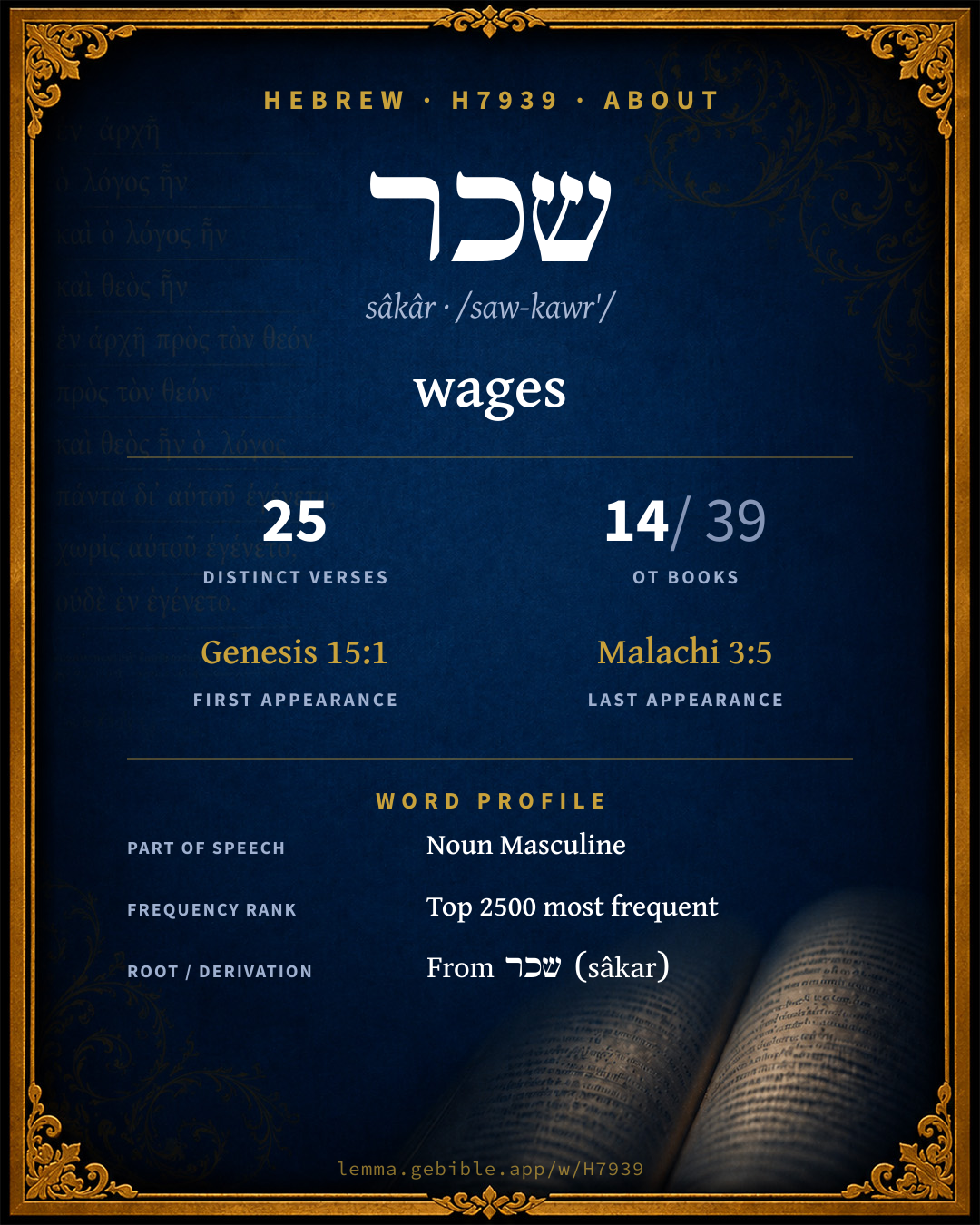
שָׂכָר
wages
‘wages’ is one of 4 main senses fuller range ↓
Full lexicon entry — Brown-Driver-Briggs (BDB)
From Brown-Driver-Briggs (BDB)
Where this word appears
Grammar key — what these labels mean
Part of speech
- Noun
- A naming word — a person, place, thing, or idea.
Noun type
- Common
- A common noun — a general class of person, place, or thing (“king,” “city,” “water”), not a specific name.
State
- Absolute
- The independent form of a noun, not bound to a following word.
- Construct
- A noun bound to a following noun in a possessive / “of” relationship (the construct chain).
Gender
- Masculine
- Grammatically masculine.
Number
- Singular
- One.
Every verse where H7939 appears in the Book of 1 Kings — 1 distinct verse. Click any verse to open its interlinear word-by-word view. Verse text shown in the World English Bible for context — . Each verse’s Hebrew form is shown with its reference; the English is not keyword-highlighted, since the data carries no word-level English alignment. Use “Compare translations” on any verse to read it across multiple English versions. This concordance covers the Hebrew Bible; Septuagint (Greek Old Testament) occurrences are not indexed here.
1 Kings
About this entry
At a glance — auto-summarized from this page’s data, not written by a person. Every figure links to its source below. This summary describes the numbers; it doesn’t interpret them.
“wages” is the headline sense of the Hebrew noun שכר (sâkâr). Where the King James Version says “hire,” newer translations reach for “wages” (Berean Standard Bible); the renderings breakdown has the detail. It appears 25 verses across 14 books of the Hebrew Bible, among its uncommon vocabulary. First canonically at Genesis 15:1, it enters the text early. Its meaning spans more than one sense — see its full sense range. The sections below give every sense, occurrence, and version rendering.
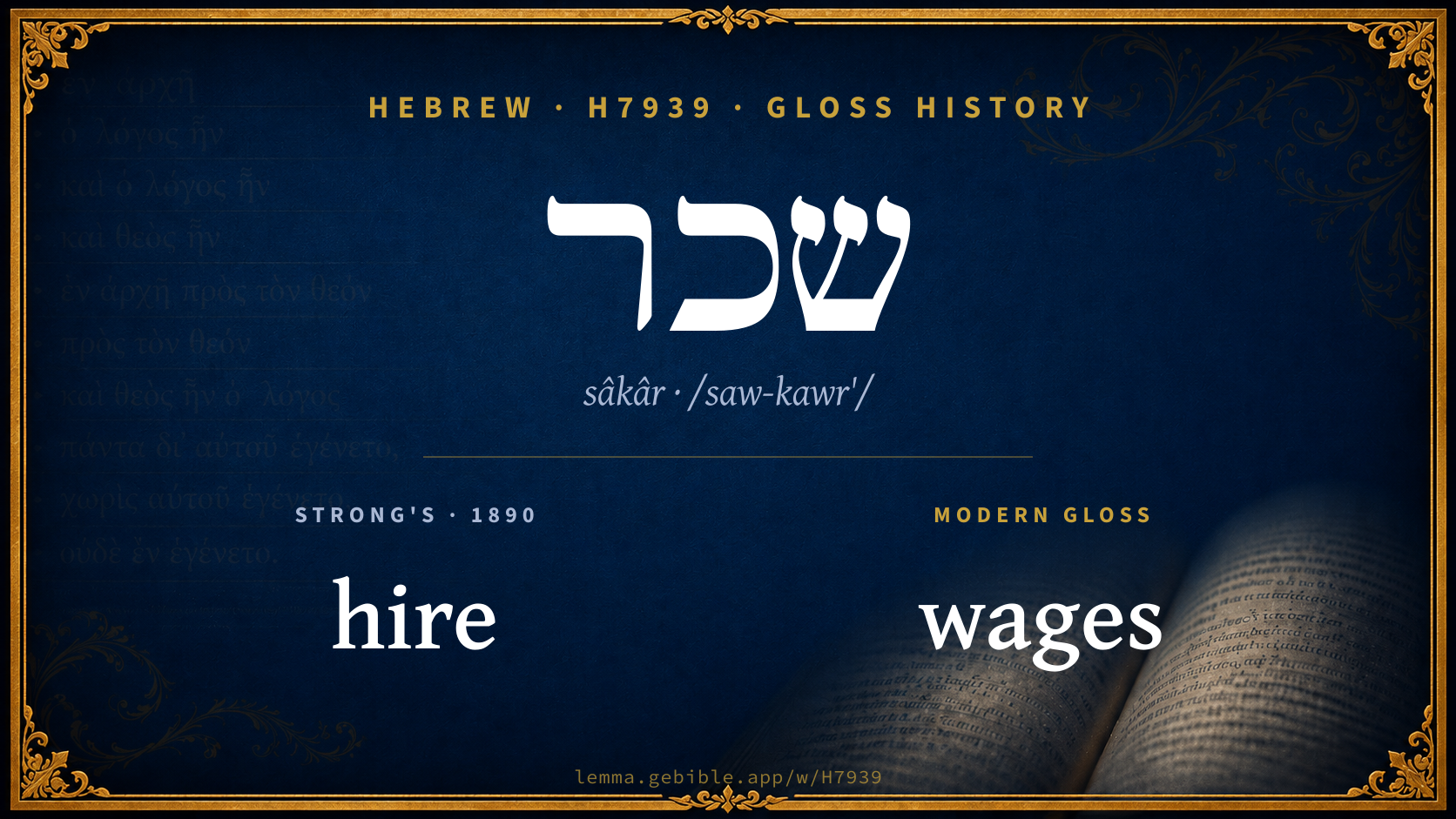
Gloss history
Strong's 1890 vs modern scholarship
About this word
Strong's H7939 catalogs a Hebrew word from the Hebrew Old Testament.
These counts are not copied from any lexicon or concordance. They are computed here, from the morphology-tagged Hebrew Old Testament. What Lemma adds →
- 25
- distinct verses
- The word appears in 25 distinct verses.
- 14 / 39
- OT books
- The word appears in 14 of 39 Old Testament books.
- #1,190
- by frequency
- Top 2500 most frequent Hebrew words (rank 1,190 of 8,640 Hebrew words by occurrence).
View all 25 occurrences in the concordance →
Most concentrated in
- Genesis 6 verses 24%
- Exodus 2 verses 8%
- Deuteronomy 2 verses 8%
By section of the Old Testament
By traditional corpus
Conventional, traditional groupings — biblical authorship is debated, so this is a traditional corpus grouping, not an authorship claim. Each share is this word’s portion of its verses in that division of the Hebrew canon. Each figure is a share of the word’s 25 distinct verses.
- Torah (Pentateuch) 11 verses · 44%
- Prophets (Nevi'im) 10 verses · 40%
- Writings (Ketuvim) 4 verses · 16%
How translations render this word
Counts come from each version’s own published word-to-Strong’s tagging or interlinear alignment — an approximate guide to how each version renders this word, not a word-level alignment the data otherwise carries. Because each total is that version’s own tagged count, the per-version totals vary from one another and need not match the appearance or distinct-verse counts above. These counts may also differ from a printed concordance because Lemma counts each distinctly tagged rendering and does not collapse phrase taggings into a single head-word total. This is a fixed set of word-tagged versions (KJV, ASV, BSB, ULT) and does not change with the reading translation you choose elsewhere. Each version’s license is shown beside its name below (and on Sources).
BDB lists this Strong’s number as 2 distinct words (homographs). Each count above pools all of them and is not split by sense — see the Senses section below. A low-frequency rendering may belong to a different one of those words, not the primary meaning.
- King James Version†: Hire 6×, Behold his reward 2×, Price 2×
- American Standard Version†: Hire 4×, Reward 2×, Rewarded 2×
- Berean Standard Bible†: Wages 13×, Reward 6×
- unfoldingWord Literal Text†: Wages 9×, Reward 6×, Wage 3×
King James Version Public Domain
Renders H7939 across 28† tagged occurrences — most commonly:
Plus 12 renderings that appear only once — usually multi-word phrases or single function words the recovered tagging swept in, not distinct renderings.
American Standard Version Public Domain
Renders H7939 across 27† tagged occurrences — most commonly:
Plus 17 renderings that appear only once — usually multi-word phrases or single function words the recovered tagging swept in, not distinct renderings.
Berean Standard Bible Public Domain
Renders H7939 across 26† tagged occurrences — most commonly:
Plus 7 renderings that appear only once — usually multi-word phrases or single function words the recovered tagging swept in, not distinct renderings. Not rendered by a distinct English word in 2 further occurrences.
unfoldingWord Literal Text CC BY-SA 4.0
Renders H7939 across 31† tagged occurrences — most commonly:
Plus 8 renderings that appear only once — usually multi-word phrases or single function words the recovered tagging swept in, not distinct renderings.
Senses in the full BDB
What do BDB’s symbols mean?
BDB uses these scholarly abbreviations:
| Symbol | Meaning |
|---|---|
| 𝔊 | the Septuagint (the ancient Greek translation, LXX) |
| 𝔙 | the Vulgate (the Latin translation) |
| 𝔖 | the Syriac version (the Peshitta) |
| 𝔗 | the Targum (the Aramaic translation) |
| ψ | the Psalms |
| √ | root (the underlying root or stem) |
| ‖ | parallel passage (a synonymous or contrasted parallel) |
| † | the dagger: every passage where the word occurs is cited |
The 5 senses and sub-senses the full Brown-Driver-Briggs lexicon distinguishes for this word, in lexicon order (not ranked by frequency), with BDB’s own verbatim wording and sub-sense lettering. Shown in Hebrew script with BDB’s own scholarly abbreviations. The condensed entry is in the Lexicon Entry tab. See also the Forms in the corpus table below.
שכר I
- 1. wages, of servant, Gn 30:28, 32, 33 (J), 31:8(×2); Ex 2:9 (all E), Dt 15:18 (שְׂ׳ שָׂכִיר), 24:15; 1 K 5:20; Zc 8:10; Mal 3:5 (שְׂ׳ שָׂכִיר); soldiers Ez 29:18, 19; shepherd (symb.) Zc 11:12(×2); beast Ex 22:14 (E), Zc 8:10. e.g. Genesis 30:28
- 2. = reward, for work done, faithfulness, etc., Gn 15:1 (JE), 30:18 (E) in expl. of name יששכר, Nu 18:31 (P), כִּי יֵשׁ שׂ׳ לִפְעֻלָּתֵךְ Je 31:16 (cf. 2 Ch 15:7), Is 40:10 = 62:11 (fig. of reward of י׳’s labours), ψ 127:3; Ec 4:9; 9:5. e.g. Genesis 15:1
- 3. passage-money, fare, Jon 1:3. e.g. Jonah 1:3
שכר II
- 1. father of hero of Dvd. 1 Ch 11:35, Αχαρ, A Σαχαρ, (‖ שָׁרָר 2 S 23:33). e.g. 1 Chronicles 11:35
- 2. doorkeeper 26:4, Σαχαρ. e.g. 1 Chronicles 26:4
Senses from the full Brown-Driver-Briggs lexicon (Brown, Driver, Briggs; Oxford 1906 — public domain), digitized via Sefaria, supplemented by the OpenScriptures HebrewLexicon (CC BY 4.0). Full attribution on Sources.
Word origin
n.m. Ez 29:18 hire, wages, only sg., not c. art.;—abs. שׂ׳ Nu 18:31 +, cstr. שְׂכַר Dt 15:18 +, sf. שְׂכָרִי Gn 30:18 +, etc.;—
— Brown-Driver-Briggs (Oxford 1906, public domain), digitized via Sefaria, supplemented by the OpenScriptures HebrewLexicon (CC BY 4.0). See Sources.
Derived from שכר (sâkar) (H7936) — to hire.
Jastrow Dictionary
A second Hebrew/Aramaic lexicon for comparison, covering Aramaic and post-biblical (Talmudic, Targumic, Midrashic) usage that the biblical-Hebrew BDB does not. Matched by lemma rather than by Strong’s number, so a lemma may carry more than one Jastrow headword (shown separately below), and the entries cover usage well beyond the Bible.
שָׂכַר
- to hire, engage; to rent. B. Mets. VI, 1 השׂוֹכֵר את וכ׳ if one engages artisans (through an agent). Ib. VIII, 2 שאלה … ושְׂכָרָהּ וכ׳ if he borrowed the cow for half a day, and hired her for half a day. Tosef. ib. IX, 1, sq. השׂוֹכֵר שדה if one rents a field; a. v. fr.—שׂוֹכֵר hirer, employer; tenant. B. Mets. 103ᵃ ש׳ מהימן בשבועה the employer is believed on his oath (that he has paid the wages). Ib. 102ᵇ כוליה לש׳ the whole (rent for the thirteenth month of the leap year) goes to the tenant, i.e. he need not pay extra rent for the intercalated month; a. v. fr.—Esp. שוכר tenant of land for rent payable in money, contrad. to חכיר. Tosef. Dem. VI, 2 ש׳ במעות וכ׳ the sokher pays the rent in cash, the ḥakkir (or ḥokher) in kind; a. fr.—Part. pass. שָׂכוּר; f. שְׂכוּרָה. B. Mets. VIII, 2 if the hirer says, ש׳ מתה it is the hired cow that died; ביום שהיתה ש׳ מתה she died on the day when I used her for hire; בשעה … ש׳ וכ׳ she died at that time of the day when I used her for hire; a. fr.
- 1. to lease, let. B. Bath. 110ᵃ לעולם יַשְׂכִּיר אדם את עצמו וכ׳ a man should hire himself out for &c., v. עֲבוֹרָה. B. Mets. VIII, 7 המַשְׂכִּיר … המשכיר וכ׳ if one lets a house …, the landlord has to furnish &c. Ib. 8 ה׳ לו להדשים … למשכיר if he let the house by the month, … the landlord has the benefit of the intercalated month, v. עָבַר. Pes. 4ᵃ על המ׳ לבדוק the landlord is obliged to search the house for leavened matter; a. fr.
- 2. (denom. of שָׂכָר) to cause to profit, to benefit. Tanḥ. ed. Bub., Vayesheb 13 צריך … משכיר אותו (not משביר) a man must pray for the welfare of him that benefits him.
- (denom. of שָׂכָר) to be rewarded, benefited; to have the advantage. Yeb. 92ᵇ אם כן מצינו חוטא נִשְׂכָּר if this be the law, then he that sinned would be at an advantage; Keth. 11ᵃ, a. e. שלא יהא חוטא נ׳ it is done in order that the sinner should not be at an advantage. Pes. 50ᵇ; Tosef. Yeb. IV, 8, v. זָרִיז; a. fr.
- to profit; to deal in. Tanḥ. l. c. לפי … מִשְׂתַּכֵּר מצאנו וכ׳ because Jacob was benefited by his flock &c. Pesik. R. s. 40 ונִשְׂתַּכַּרְתִּי, v. נָצַח. Pes. l. c. המשתכר בקנים וכ׳ he that deals in reeds and vessels. Ib. 54ᵇ ואין אדם יודע במה משתכר and no man knows which of his enterprises will turn out profitable; Mekh. B’shall., Vayass‘a, s. 5. B. Bath. 91ᵃ אין מִשְׂתַּכְּרִין בא"י וכ׳ in Palestine you must not be a dealer in provisions, as wine &c. (serve as middleman between producer and consumer); Tosef. Ab. Zar. IV (V), 1; a. fr.
שָׂכַר ²
- to fill up, dam, v. סָכר, סְכַר.—Snh. 95ᵃ, v. בִּזָּאי, a. שְׂכוֹר.
שָׂכָר
- wages, profit, reward. Shebu. VIII, 1, a. e. נושא ש׳ he that receives wages (for watching), v. שׁוֹמֵר. Succ. 29ᵇ שְׂכַר שכיר, v. עָשַׁק. B. Mets. 112ᵃ כל הכובש שְׂ׳ וכ׳ he that delays the payment of the hired man’s wages, is considered as if taking his life. Ab. V, 11 יצא שְׂכָרוֹ וכ׳, v. הֶפְסֵד. B. Kam. 116ᵃ, a. e. אין לו אלא שְׂכָרוֹ he can claim only the ordinary laborer’s pay, v. שָׁלֵם II; a. fr.—Esp. divine reward. Erub. 22ᵃ (ref. to Deut. VII, 11) היום לעשותם … למחר לקכל שְׂכָרָם ‘to do them to-day’, and not to do them to-morrow (do not procrastinate); ‘to do them to-day’, and to receive the reward for them tomorrow (expect not immediate reward). Ib. 65ᵃ לא נכרא יין … לשלם ש׳ לרשעים wine has been created for the purpose of comforting (cheering up) mourners and paying reward to the wicked (for what good they may do, in this world); Num. R. s. 104. Ab. II, 16 נאמן … שְׂכַר פעולתך thy employer may be trusted that he will pay thee the wages due for thy work. Ib. ודע שמתן שְׂכָרָם וכ׳ but keep in mind that the reward of the righteous is reserved for the hereafter; a. fr.—בִּשְׂכַר as a reward for, on account of (cmp. זְבוּת). Sot. 11ᵇ בש׳ נשים צדקניות וכ׳ for the sake of the righteous women of that generation were the Israelites redeemed; Ex. R. s. 1. Ḥull. 88ᵇ בש׳ שאמר וכ׳ as a reward for what Abraham our father said (Gen. XVIII, 27) &c. Ex. R. s. 45 בש׳ שלש זכה לשלש on account of three things he (Moses) was granted three things; בש׳ ויסתר וכ׳ on account of ‘he hid his face’ (Ex. III, 6) &c.; a. fr.—[Yalk. Is. 371 שכרן, read: שִׂבְרָן, v. סֵבֶר.] e.g. Deuteronomy 7:11
שָׁכַר
- (b. h.) to fill, saturate; to drink freely.—Part. pass. שָׁכוּר; f. שְׁכוּרָה. Taan. 22ᵇ לא ש׳ ולא צמאה וכ׳ that the soil be neither soaked nor thirsty, but between the two extremes. Midr. Till. to Ps. XXXV (ref. to Is. LI, 21) וממה את ש׳ מן הצרות וכ׳ and wherefrom art thou drunk? From the troubles, but not from too much wine; a. e. e.g. Isaiah 51:21
- to make drunk, intoxicate. Erub. 64ᵇ דרך … מְשַׁכַּרְתּוֹ walking (after drinking) makes him unsteady, and sleep makes him drunk; Taan. 17ᵇ. Erub. l. c. רביעית … מְשַׁכֵּר one fourth of a Log of Italian wine intoxicates. Cant. R. to I, 4 ועשו … ושִׁכְּרַתּוֹ וכ׳ they made a great feast, and she made him drink more than enough; Yalk. Gen. 15; a. e.
- to be, become intoxicated. Keth. 8ᵇ התחילו … ומִשְׁתַּכְּרִין וכ׳ when they began to drink (at the mourners’ meals) and get intoxicated &c. Snh. 42ᵃ אל יִשְׁתַּכְּרוּ, v. רָז. Esth. R. to III, 9 אכלו ושתו ונִשְׁתַּכְּרוּ וכ׳ they ate and drank, and became drunk, and acted disgracefully. Num. R. s. 108 דברים שלא יִשְׁתַּכֵּר מהם things from which one cannot become intoxicated; a. fr.
שְׁכַר
- to make drunk. Lev. R. s. 12 אשקוניה ושַׁכְּרוּנֵיה וכ׳ they gave him drink, and made him drunk, and carried him out &c.
- to drink freely. Ber. 9ᵃ אִשְׁתַּכּוּר בהלולא וכ׳ they drank freely at the wedding of &c. (and slept beyond the time of prayer).
שֵׁכָר
- preced.) intoxicating drink. Num. R. s. 108 (ref. to Num. VI, 3) והלא יין הוא ש׳ וש׳ וכ׳ are not yayin and shekhar the same?; יין זה חי וש׳ זה מזוג yayin is unmixed wine, and shekhar is mixed wine; a. e.—Esp. beer of dates or barley. Pes. III, 1 ש׳ המדי Median beer, expl. ib. 42ᵇ דרמו ביה מי שערי date beer into which they put a concoction of barley. Ib. 107ᵃ אין מקדשין על הש׳ you must not pronounce the Ḳiddush (קִידּוּשׁ) over beer; a. fr. e.g. Numbers 6:3
A Dictionary of the Targumim, the Talmud Babli and Yerushalmi, and the Midrashic Literature (Marcus Jastrow; London, Luzac, 1903) — Public Domain. Digitized via Sefaria. Digitized via Sefaria. Full attribution on Sources.
Forms in the corpus
The 22 distinct written forms H7939 takes in the Hebrew Bible, most frequent first — each parse links to that state’s occurrences in the concordance. Hebrew forms include their vowel points and cantillation, so a single lemma takes many written forms.
Same root — word family
Other BDB entries built from the same root as H7939, grouped by Strong’s listed origin. These share a root / origin per the lexicon — not necessarily a shared meaning. Each links to that word’s own entry.
Derives from
Shares the same root
Derived from this word
Proper names from this root
People and places named from this root — a name, not an additional meaning of the word.
Compare all same-root words → Showing 4 of 7 — not the complete family. 1 of the same-root words is a proper name (a person or place). They share a root, not necessarily a meaning.
Septuagint verse parallels
This word appears in 24 verses that also exist in the Greek Old Testament (Septuagint), out of the 25 Hebrew verses it occurs in. You can read those verses in Greek by switching the Old Testament edition to the Septuagint.
Read these verses in the Septuagint
- Genesis 15:1
- Exodus 2:9
- Numbers 18:31
- Deuteronomy 15:18
- 2 Chronicles 15:7
- Psalms 127:3
- Ecclesiastes 4:9
- Isaiah 40:10
- Jeremiah 31:16
- Ezekiel 29:18
- Jonah 1:3
- Zechariah 8:10
This is a verse-level parallel only — the same verses exist in both the Hebrew and Greek Old Testaments. No word-level Hebrew↔Greek correspondence is claimed: the data carries no such alignment, so no Greek word is shown as this Hebrew word’s translation. Coverage is not total — the Septuagint omits the deuterocanon and renumbers the Psalms, so some Hebrew verses have no direct Greek parallel.