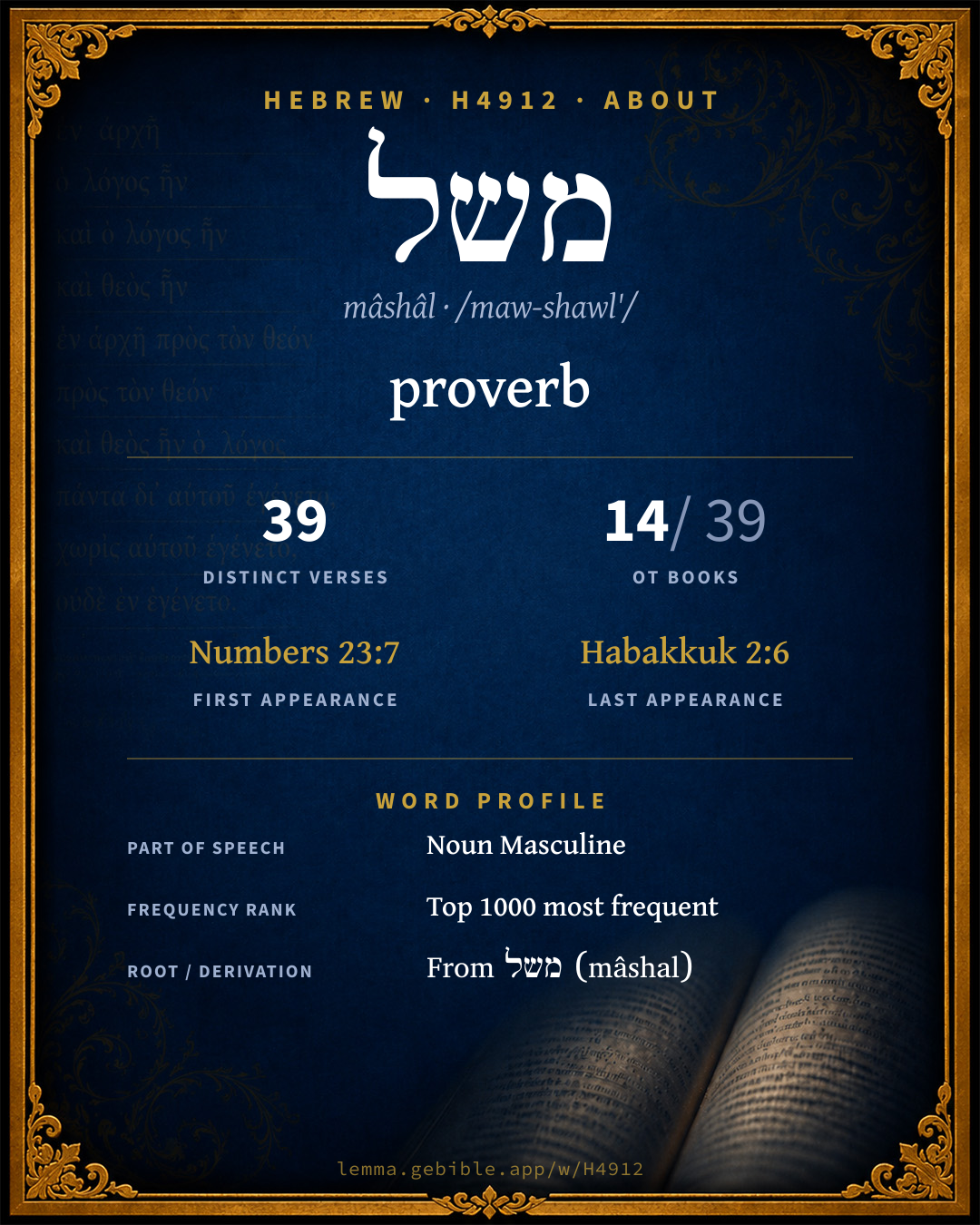
מָשָׁל
proverb
‘proverb’ is one of 6 main senses fuller range ↓
Full lexicon entry — Brown-Driver-Briggs (BDB)
From Brown-Driver-Briggs (BDB)
Where this word appears
See every Absolute-state word in the Hebrew Bible →
Grammar key — what these labels mean
Part of speech
- Noun
- A naming word — a person, place, thing, or idea.
Noun type
- Common
- A common noun — a general class of person, place, or thing (“king,” “city,” “water”), not a specific name.
State
- Construct
- A noun bound to a following noun in a possessive / “of” relationship (the construct chain).
- Absolute
- The independent form of a noun, not bound to a following word.
Gender
- Masculine
- Grammatically masculine.
Number
- Singular
- One.
- Plural
- More than one (in Hebrew, generally three or more).
1 verse where H4912 appears in the Absolute state in the Book of 1 Samuel. Filtered view — show all forms. Click any verse to open its interlinear word-by-word view. Verse text shown in the World English Bible for context — . Each verse’s Hebrew form is shown with its reference; the English is not keyword-highlighted, since the data carries no word-level English alignment. Use “Compare translations” on any verse to read it across multiple English versions. This concordance covers the Hebrew Bible; Septuagint (Greek Old Testament) occurrences are not indexed here.
1 Samuel
About this entry
At a glance — auto-summarized from this page’s data, not written by a person. Every figure links to its source below. This summary describes the numbers; it doesn’t interpret them.
משל (mâshâl) is a Hebrew noun most often rendered “proverb.” Not a single-sense word: explore its full sense range. With 39 verses in 14 books, it is a moderately common word in the Hebrew Bible. It first appears in Numbers 23:7. It clusters with משל, ממשל and משל under a shared root. Dig into 39-verse concordance and the renderings breakdown below.
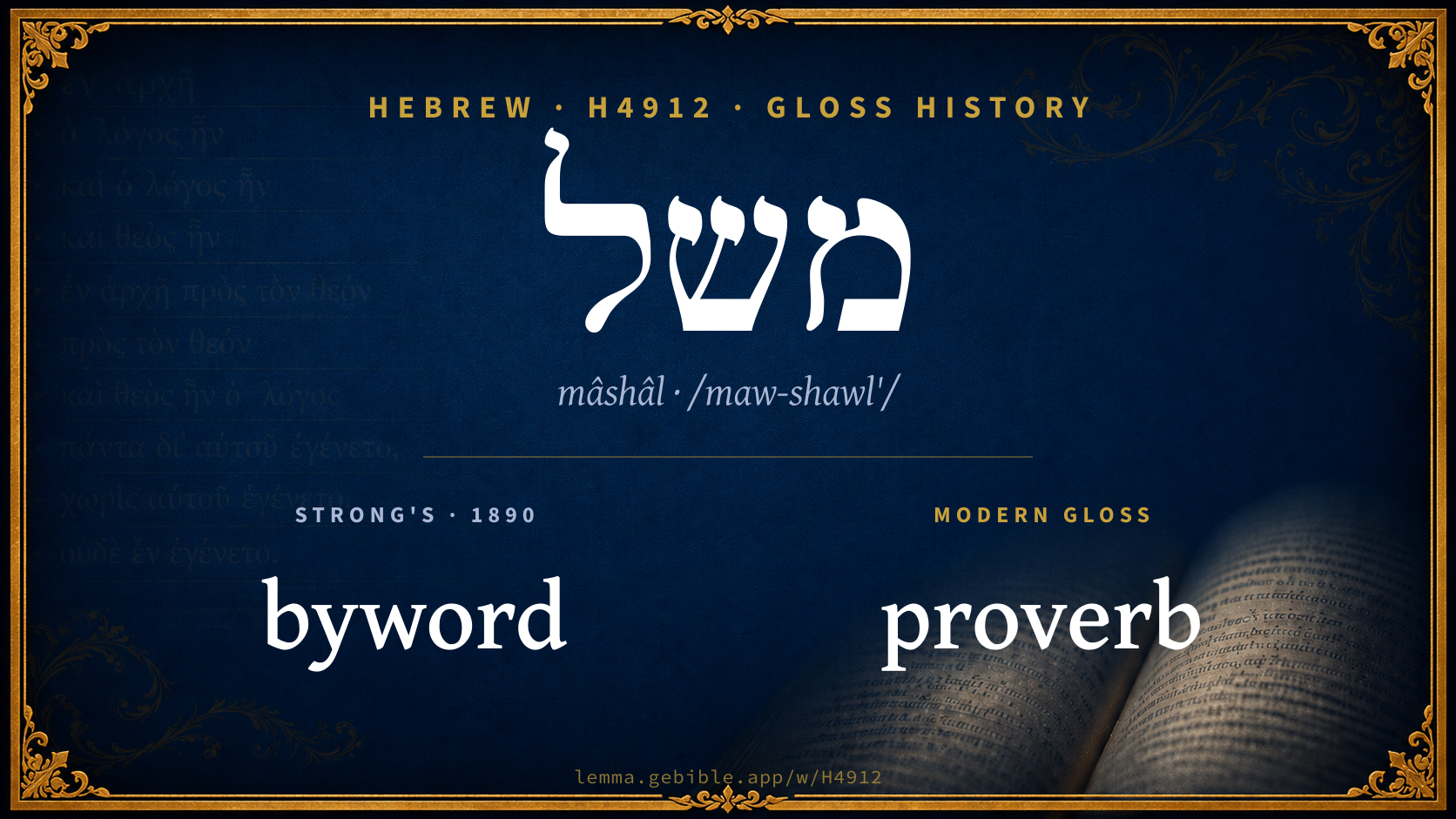
Gloss history
Strong's 1890 vs modern scholarship
About this word
Strong's H4912 catalogs a Hebrew word from the Hebrew Old Testament.
These counts are not copied from any lexicon or concordance. They are computed here, from the morphology-tagged Hebrew Old Testament. What Lemma adds →
- 39
- distinct verses
- The word appears in 39 distinct verses.
- 14 / 39
- OT books
- The word appears in 14 of 39 Old Testament books.
- #922
- by frequency
- Top 1000 most frequent Hebrew words (rank 922 of 8,640 Hebrew words by occurrence).
View all 39 occurrences in the concordance →
By section of the Old Testament
By traditional corpus
Conventional, traditional groupings — biblical authorship is debated, so this is a traditional corpus grouping, not an authorship claim. Each share is this word’s portion of its verses in that division of the Hebrew canon. Each figure is a share of the word’s 39 distinct verses.
- Prophets (Nevi'im) 16 verses · 41%
- Writings (Ketuvim) 15 verses · 38%
- Torah (Pentateuch) 8 verses · 21%
How translations render this word
Counts come from each version’s own published word-to-Strong’s tagging or interlinear alignment — an approximate guide to how each version renders this word, not a word-level alignment the data otherwise carries. Because each total is that version’s own tagged count, the per-version totals vary from one another and need not match the appearance or distinct-verse counts above. These counts may also differ from a printed concordance because Lemma counts each distinctly tagged rendering and does not collapse phrase taggings into a single head-word total. This is a fixed set of word-tagged versions (KJV, ASV, BSB, ULT) and does not change with the reading translation you choose elsewhere. Each version’s license is shown beside its name below (and on Sources).
BDB lists this Strong’s number as 2 distinct words (homographs). Each count above pools all of them and is not split by sense — see the Senses section below. A low-frequency rendering may belong to a different one of those words, not the primary meaning.
- King James Version†: Parable 15×, Proverb 8×, Proverbs 4×
- American Standard Version†: Parable 14×, Proverb 6×, Proverbs 4×
- Berean Standard Bible†: Proverb 8×, Oracle 7×, Proverbs 6×
- unfoldingWord Literal Text†: Proverb 18×, Discourse 9×, Parable 2×
King James Version Public Domain
Renders H4912 across 39† tagged occurrences — most commonly:
Plus 10 renderings that appear only once — usually multi-word phrases or single function words the recovered tagging swept in, not distinct renderings.
American Standard Version Public Domain
Renders H4912 across 39† tagged occurrences — most commonly:
Plus 13 renderings that appear only once — usually multi-word phrases or single function words the recovered tagging swept in, not distinct renderings.
Berean Standard Bible Public Domain
Renders H4912 across 36† tagged occurrences — most commonly:
Plus 6 renderings that appear only once — usually multi-word phrases or single function words the recovered tagging swept in, not distinct renderings. Not rendered by a distinct English word in 3 further occurrences.
unfoldingWord Literal Text CC BY-SA 4.0
Renders H4912 across 39† tagged occurrences — most commonly:
Plus 6 renderings that appear only once — usually multi-word phrases or single function words the recovered tagging swept in, not distinct renderings.
Senses in the full BDB
What do BDB’s symbols mean?
BDB uses these scholarly abbreviations:
| Symbol | Meaning |
|---|---|
| 𝔊 | the Septuagint (the ancient Greek translation, LXX) |
| 𝔙 | the Vulgate (the Latin translation) |
| 𝔖 | the Syriac version (the Peshitta) |
| 𝔗 | the Targum (the Aramaic translation) |
| ψ | the Psalms |
| √ | root (the underlying root or stem) |
| ‖ | parallel passage (a synonymous or contrasted parallel) |
| † | the dagger: every passage where the word occurs is cited |
The 6 senses and sub-senses the full Brown-Driver-Briggs lexicon distinguishes for this word, in lexicon order (not ranked by frequency), with BDB’s own verbatim wording and sub-sense lettering. Shown in Hebrew script with BDB’s own scholarly abbreviations. The condensed entry is in the Lexicon Entry tab. See also the Forms in the corpus table below.
משל I loc. v. מִשְׁאָל.
משל II
- 1. proverbial saying, brief terse sentence of popular sagacity 1 S 10:12; Ez 12:22, 23; 18:2, 3; מ׳ הַקַּדְמֹנִי 1 S 24:14 proverb of the ancients. e.g. 1 Samuel 10:12
- 2. by-word ψ 44:15; 69:12; לְמָשָׁל וְלִשְׁנִינָה Dt 28:37 1 K 9:7; 2 Ch 7:20; Je 24:9; לְאוֹת וּלְמָשָׁל Ez 14:8. e.g. Psalms 44:15
- 3. prophetic figurative discourse: נָשָׂא מָשָׁל lift up, utter a מ׳ Nu 23:7, 18; 24:3, 15, 20, 21, 23 (all of Balaam); Is 14:4; Mi 2:4 (‖ נהי) Hb 2:6 (‖ חידה), (cf. Jb 27:1; 29:1 for same phrase under 6). e.g. Numbers 23:7
- 4. similitude, parable, Ez 17:2; 21:5; 24:3. e.g. Ezekiel 17:2
- 5. poem, of various kinds: the ode (Nu 21:27–30), the 3,000 pieces traditionally ascribed to Solomon 1 K 5:12, didactic psalms ψ 49:5; 78:2. e.g. Numbers 21:27
- 6. sentences of ethical wisdom דִּבְרֵי חֲכָמִים collected in the מִשְׁלֵי שְׁלֹמֹה Pr 10:1; 25:1 (10:1–22:16 consisting of 376 couplets chiefly antithetical; 25–29 chiefly couplets of an emblematic type, but also occasional tristichs, tetrastichs, pentastichs, and decastichs. To these are appended דְּבָרִים of a more mixed character as to size and content in 22:7–24:22; 24:23–34; 30:1–14; v 15–33; 31:1–9; v 10–31; the Praise of Wisdom 1:8–9 is prefixed, and an introduction to the whole 1:1–7, in which the whole contents are represented as) משׁלים Pr 1:1, cf. v 6. The references in Jb 13:12; 27:1; 29:1; Pr 26:7, 9 Ec 12:9 are to the same type of wisdom. e.g. Proverbs 10:1
Senses from the full Brown-Driver-Briggs lexicon (Brown, Driver, Briggs; Oxford 1906 — public domain), digitized via Sefaria, supplemented by the OpenScriptures HebrewLexicon (CC BY 4.0). Full attribution on Sources.
Word origin
n.m. Is 14:4 proverb, parable (of sentences constructed in parallelism, usually of Hebrew Wisdom, but occas. of other types);—abs. מ׳ Ez 17:2 + 20 times; cstr. מְשַׁל 1 S 24:14; sf. מְשַׁלוֹ Nu 23:7 + 8 times; pl. מְשָׁלִים Ec 12:9 + 2 times; cstr. מִשְׁלֵי Pr 1:1 + 3 times;—
— Brown-Driver-Briggs (Oxford 1906, public domain), digitized via Sefaria, supplemented by the OpenScriptures HebrewLexicon (CC BY 4.0). See Sources.
Derived from משל (mâshal) (H4910) — to rule.
Jastrow Dictionary
A second Hebrew/Aramaic lexicon for comparison, covering Aramaic and post-biblical (Talmudic, Targumic, Midrashic) usage that the biblical-Hebrew BDB does not. Matched by lemma rather than by Strong’s number, so a lemma may carry more than one Jastrow headword (shown separately below), and the entries cover usage well beyond the Bible.
מָשַׁל I
- (b. h.)
- 1. to handle, to touch. Yoma 46ᵃ מָשְׁלָה בהן האור the flames had attacked them.
- 2. to attend, manage, control. B. Mets. 75ᵇ מי שאשתו מוֹשֶׁלֶת עליו he whom his wife rules. Ḥull. 60ᵇ לכי ומְשׁוֹלִי ביום וכ׳ (not ומשול; Rashi לך ומְשׁוֹל) go thou and attend by day and by night.—B. Bath. 78ᵇ (ref. to Num. XXI, 27) המוֹשְׁלִים ביצרם who control their inclinations; a. e.—מוֹשֵׁל governor, consul. Yad. IV, 8 אתם כותבים את המושל וכ׳ you write the governor’s name and year together with the name of Moses in a document. [B. Kam. 38ᵃ מוֹשְׁלֵי, מוֹשְׁלִים, censorial emendations for מַלְכוּת, v. Rabb. D. S. a. l. notes.] e.g. Numbers 21:27
- to handle, dispose of, use. Gen. R. s. 20 יכול מְמַשְּׁלָהּ מכל צד you might think, he may use her in whatever way he pleases; Yalk. ib. 32.
- to make a ruler. Sot. 36ᵇ עבד … תַּמְשִׁילֵהוּ עלינו a slave whom his master bought for twenty pieces of silver,—wilt thou make him a ruler over us?; a. e.
מָשַׁל II
- denom. of next w.)
- 1. to speak metaphorically. Nidd. V, 7 מָשָׁל מָשְׁלוּ וכ׳ the scholars introduced metaphors for designating the stages of female puberty.
- 2. to compare, to give an illustration. Tosef. Ber. I, 11 משלו משל למה וכ׳ they made a comparison: what is this to be compared to? To &c. R. Hash. 17ᵇ אֶמְשׁוֹל לך משל למה וכ׳ let me tell thee a parable: what is this like to? To &c. Cant. R. to II, 15 כשחוא מוֹשֵׁל את המלכיות אינו מוֹשְׁלָן אלא באש when one wants to find a simile for hostile governments, one compares them to fire; a. v. fr.—Part. pass. מָשׁוּל; f. מְשׁוּלָה; pl. מְשׁוּלִים, מְשׁוּלִין; מְשׁוּלוֹת. Meg. 16ᵃ אומה זו מ׳ לעפר ומ׳ וכ׳ that nation (Israel) is compared now to dust and now to the stars; a. v. fr.
- to be compared (followed by ל־, כ־ or ב־). Taan. 7ᵃ נִמְשְׁלוּ דברי תורה לאש Ms. M. (ed. כאש, באש. v. Rabb. D. S. a. l. note) the words of the Law are compared to fire. Gen. R. s. 41 התורה שנִמְשְׁלָה למים the Law which is compared to water; a. v. fr.
מָשָׁל
- v. מָשַׁל I) [something tangible, substantial, plausible; cmp. אֲמַתְלָא,] a truth substantiated by an illustration, wise saying; fable, allegory; example; mashal. Cant. R. introd. אל יהי המ׳ הזח קל וכ׳ do not esteem the mashal lightly, for through it man gets at the basis of &c. Ib. יש לו מקרא ויש לו מ׳ וכ׳, v. מְלִיצָה. Ex. R. s. 40, beg. צריך אדם לחיות נוטל מ׳ man should take an example (of the Lord). Pes. 49ᵃ bot. מ׳ לענבי וכ׳ it is like mixing grapes with &c.—מ׳ למה הדבר דומה, v. דָּמָה a. preced.—B. Bath. 15ᵃ איוב לא היה … אלא מ׳ היה the story of Job never occurred, but was invented merely as a parable. Snh. 92ᵇ אמת מ׳ היה (the vision of the valley of the dead) was the truth of a mashal, (emended:) באמת מ׳ היה in the truth (the fact of resurrection) there was a symbol (for the redemption of Israel from captivity; Ez. XXXVII, 11).—Y. Keth. IV, 28ᶜ top; Y. Snh. VIII, 26ᶜ top זה … שנאמרו בתורה במ׳ this is one of the three verses in which the Law uses metaphorical expressions (Ex. XXI, 19; XXII, 2; Deut. XXII, 17); Mekh. Mishp. 6; a. fr.—Pl. מְשָׁלִים, מְשָׁלוֹת. Sot. IX, 15 (49ᵃ) משמת ר"מ בטלו מושלי מ׳ with the death of R. M. ceased the composers of fables. Cant. R. l. c. מִשְׁלוֹתָיו של וכ׳ the wise sayings of Solomon. Ib. דברי מ׳ didactic literature, opp. זמר. Ib. שלש מ׳ three collections of sayings (Prov. I to IX; X to XXIV; XXV to XXXI). Num. R. s. 14, end ועם בלעם … כי אם במ׳ God spoke to Balaam only through allegories (visions).—Succ. 28ᵃ מִשְׁלוֹת שועלין (Ms. M. מִמְשְׁלוֹת, v. Rabb. D. S. a. l. note) fox-fables; מ׳ כובסין washers’ fables; B. Bath. 134ᵃ. Snh. 38ᵇ (Ms. M. ממשלת); Yalk. Prov. 947.—Gitt. 35ᵃ bot. ספר איוב ומִמְשָׁלוֹת copies of the Books of Job and Proverbs (v. infra).—מִשְׁלֵי (sub. שלמה) Mishlé, the Book of Proverbs (commencing with the word mishlé). Cant. R. l. c. B. Bath. 14ᵇ. Y. Yoma I, end, 39ᵇ; a. e. e.g. Ezekiel 37:11
שַׁל
- v. שַׁלְוָה) carelessness, negligence. Sot. 35ᵃ (expl. II Sam. VII, 7) על עיסקי שַׁלּוֹ for his careless handling (of the Ark); Num. R. s. 420; Yalk. Sam. 142; Num. R. s. 2112 על השל מפני ששגגת וכ׳ ‘for the carelessness’, because an involuntary act of a scholar counts as a wilful act. e.g. 2 Samuel 7:7
שַׁל ²
- , v. שַׁלְצִיּוֹן
שֶׁל
- , v. שֶׁ־) belonging to, of. Ab. II, 2 בנו של ר׳ וכ׳ the son of &c. Ib. 12 יהי ממון … כשֶׁלְּךָ let thy neighbor’s property be as dear to thee as thine own. Ib. V, 10 האומר שֶׁלִּי שלי ושֶׁלְּךָ שֶׁלָּךְ he who says, what is mine is mine, and what is thine is thine. B. Mets. I, 1 זה אומר כולה שלי וכ׳ one says, it belongs entirely to me &c. Ib. 30ᵃ שהיתה מלאכה שֶׁלּוֹ … משל חבירו when his own work is more valuable than that required for his neighbor, i.e. when by helping his neighbor he would lose more than he could save for his neighbor. Gen. R. s. 49 אמרו לו מה נאמר … שאכלנו מִשֶּׁלּוֹ they (the strangers entertained by Araham) said to him, what shall we say? Said he, say, blessed be the God of the world of whose belongings we have partaken; a. v. fr.—Kidd. 57ᵇ שחוט שלי בשלי וכ׳ (not לי) slaughter what is owing to me (the sacrifice) on what belongs to me (on Temple grounds), and what is for thee, on thy own ground.
A Dictionary of the Targumim, the Talmud Babli and Yerushalmi, and the Midrashic Literature (Marcus Jastrow; London, Luzac, 1903) — Public Domain. Digitized via Sefaria. Digitized via Sefaria. Full attribution on Sources.
Forms in the corpus
The 26 distinct written forms H4912 takes in the Hebrew Bible, most frequent first — each parse links to that state’s occurrences in the concordance. Hebrew forms include their vowel points and cantillation, so a single lemma takes many written forms.
Same root — word family
Other BDB entries built from the same root as H4912, grouped by Strong’s listed origin. These share a root / origin per the lexicon — not necessarily a shared meaning. Each links to that word’s own entry.
Derives from
Shares the same root
Derived from this word
Compare all same-root words → Showing 4 of 5 — not the complete family. They share a root, not necessarily a meaning.
Septuagint verse parallels
This word appears in 36 verses that also exist in the Greek Old Testament (Septuagint), out of the 39 Hebrew verses it occurs in. You can read those verses in Greek by switching the Old Testament edition to the Septuagint.
Read these verses in the Septuagint
- Numbers 23:7
- Deuteronomy 28:37
- 1 Samuel 10:12
- 1 Kings 9:7
- 2 Chronicles 7:20
- Job 13:12
- Psalms 44:14
- Proverbs 1:1
- Ecclesiastes 12:9
- Isaiah 14:4
- Jeremiah 24:9
- Ezekiel 12:22
This is a verse-level parallel only — the same verses exist in both the Hebrew and Greek Old Testaments. No word-level Hebrew↔Greek correspondence is claimed: the data carries no such alignment, so no Greek word is shown as this Hebrew word’s translation. Coverage is not total — the Septuagint omits the deuterocanon and renumbers the Psalms, so some Hebrew verses have no direct Greek parallel.