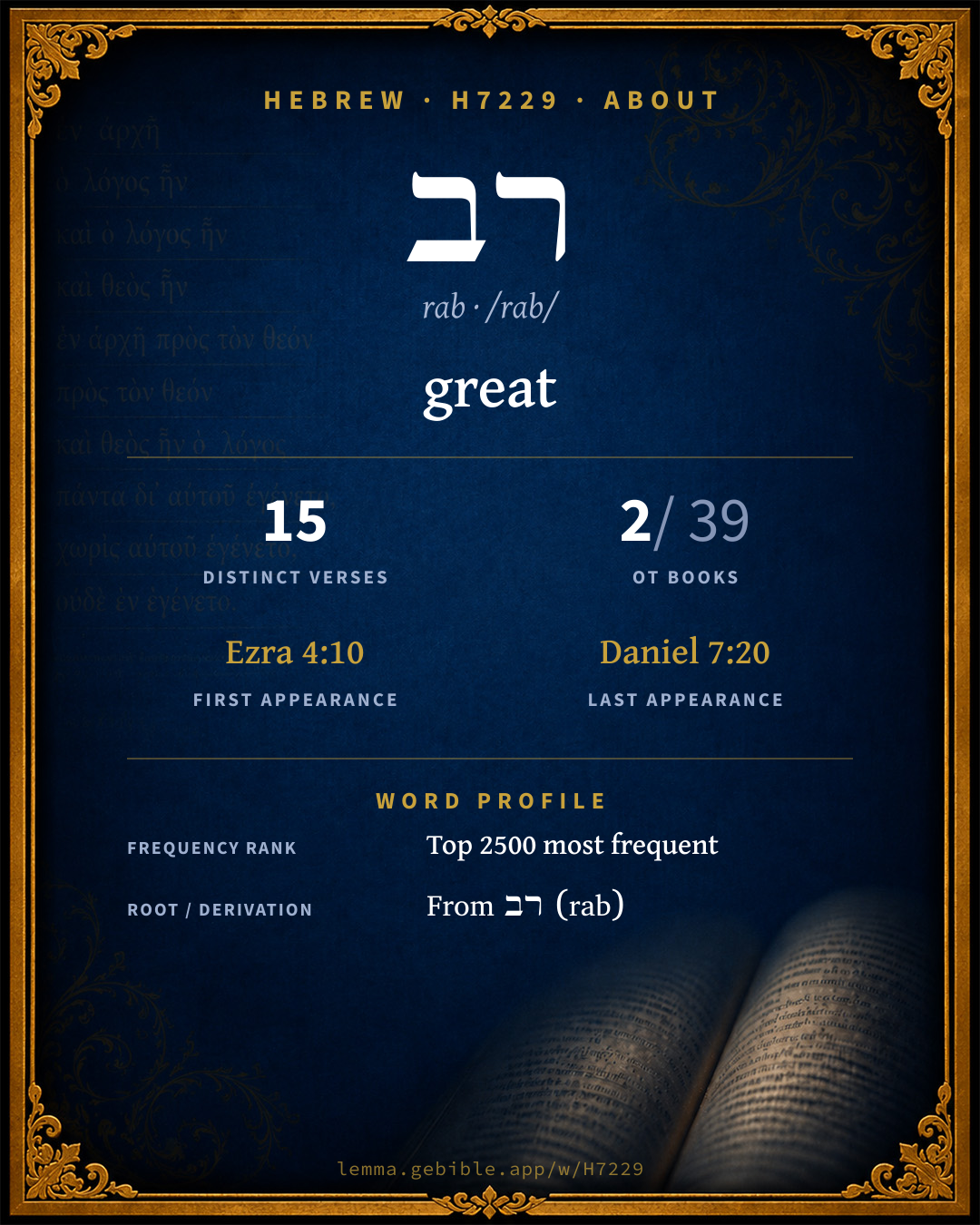
רַב
great
‘great’ is one of 2 main senses fuller range ↓
Full lexicon entry — Brown-Driver-Briggs (BDB)
From Brown-Driver-Briggs (BDB)
Where this word appears
See every Absolute-state word in the Hebrew Bible →
Grammar key — what these labels mean
Part of speech
- Adjective
- A word that describes or qualifies a noun.
State
- Absolute
- The independent form of a noun, not bound to a following word.
- Construct
- A noun bound to a following noun in a possessive / “of” relationship (the construct chain).
Gender
- Masculine
- Grammatically masculine.
Number
- Singular
- One.
4 verses where H7229 appears in the Construct state in the Book of Daniel. Filtered view — show all forms. Click any verse to open its interlinear word-by-word view. Verse text shown in the World English Bible for context — . Each verse’s Hebrew form is shown with its reference; the English is not keyword-highlighted, since the data carries no word-level English alignment. Use “Compare translations” on any verse to read it across multiple English versions. This concordance covers the Hebrew Bible; Septuagint (Greek Old Testament) occurrences are not indexed here.
Daniel
- Daniel 2:14 רַב adj Adjective ms cs Then Daniel returned answer with counsel and prudence to Arioch the captain of the king's guard, who was gone forth to kill the wise men of Babylon;
- Daniel 2:48 וְ/רַב conj + Adjective Adjective ms cs Then the king made Daniel great, and gave him many great gifts, and made him to rule over the whole province of Babylon, and to be chief governor over all the wise men of Babylon.
- Daniel 4:9 רַ֣ב adj Adjective ms cs Belteshazzar, master of the magicians, because I know that the spirit of the holy gods is in you, and no secret troubles you, tell me the visions of my dream that I have seen, and the interpretation of it.
- Daniel 5:11 רַ֧ב adj Adjective ms cs There is a man in your kingdom, in whom is the spirit of the holy gods; and in the days of your father light and understanding and wisdom, like the wisdom of the gods, were found in him; and the king Nebuchadnezzar your father, the king, [I say], your father, made him master of the magicians, enchanters, Chaldeans, and soothsayers;
About this entry
At a glance — auto-summarized from this page’s data, not written by a person. Every figure links to its source below. This summary describes the numbers; it doesn’t interpret them.
The Hebrew word רב centers on the idea of “great.” Daniel dominates its distribution — 12 of 15 verses. The Hebrew Bible uses it across 15 verses — uncommon. First canonically at Ezra 4:10, it enters the text early. Its meaning spans more than one sense — see its full sense range. Dig into 15-verse concordance and the renderings breakdown below.
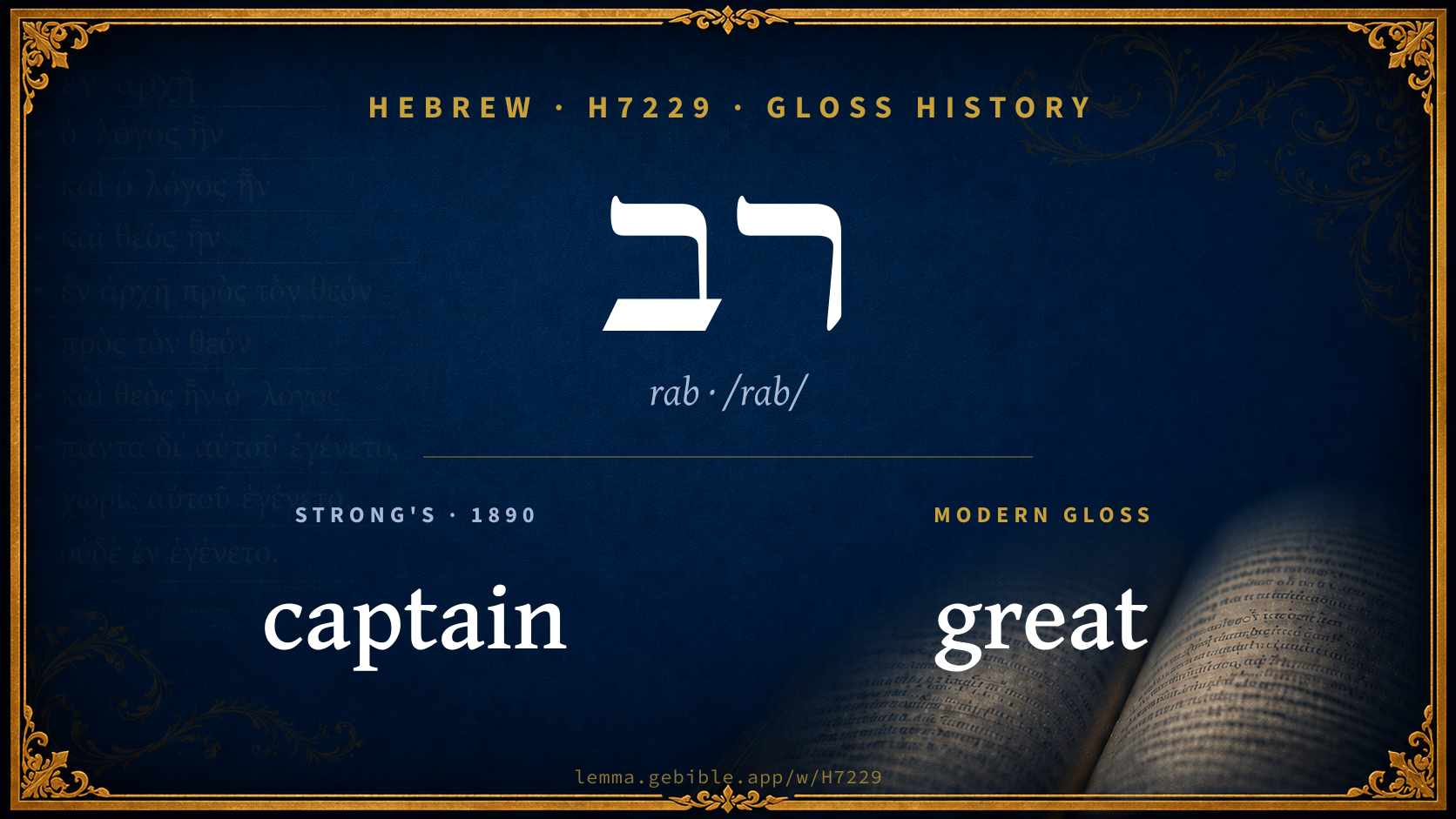
Gloss history
Strong's 1890 vs modern scholarship
About this word
Strong's H7229 catalogs a Hebrew word from the Hebrew Old Testament.
These counts are not copied from any lexicon or concordance. They are computed here, from the morphology-tagged Hebrew Old Testament. What Lemma adds →
- 15
- distinct verses
- The word appears in 15 distinct verses.
- 2 / 39
- OT books
- The word appears in 2 of 39 Old Testament books.
- #1,836
- by frequency
- Top 2500 most frequent Hebrew words (rank 1,836 of 8,640 Hebrew words by occurrence).
View all 15 occurrences in the concordance →
By traditional corpus
Conventional, traditional groupings — biblical authorship is debated, so this is a traditional corpus grouping, not an authorship claim. Each share is this word’s portion of its verses in that division of the Hebrew canon. Each figure is a share of the word’s 15 distinct verses.
- Writings (Ketuvim) 15 verses · 100%
How translations render this word
Counts come from each version’s own published word-to-Strong’s tagging or interlinear alignment — an approximate guide to how each version renders this word, not a word-level alignment the data otherwise carries. Because each total is that version’s own tagged count, the per-version totals vary from one another and need not match the appearance or distinct-verse counts above. These counts may also differ from a printed concordance because Lemma counts each distinctly tagged rendering and does not collapse phrase taggings into a single head-word total. This is a fixed set of word-tagged versions (KJV, ASV, BSB, ULT) and does not change with the reading translation you choose elsewhere. Each version’s license is shown beside its name below (and on Sources).
BDB lists this Strong’s number as 4 distinct words (homographs). Each count above pools all of them and is not split by sense — see the Senses section below. A low-frequency rendering may belong to a different one of those words, not the primary meaning.
- King James Version†: Great 9×, Master 2×
- American Standard Version†: Great 7×, Master 2×
- Berean Standard Bible†: Great 9×, Chief 3×
- unfoldingWord Literal Text†: Great 9×, Chief of 2×
King James Version Public Domain
Renders H7229 across 15† tagged occurrences — most commonly:
Plus 4 renderings that appear only once — usually multi-word phrases or single function words the recovered tagging swept in, not distinct renderings.
American Standard Version Public Domain
Renders H7229 across 15† tagged occurrences — most commonly:
Plus 6 renderings that appear only once — usually multi-word phrases or single function words the recovered tagging swept in, not distinct renderings.
Berean Standard Bible Public Domain
Renders H7229 across 14† tagged occurrences — most commonly:
Plus 2 renderings that appear only once — usually multi-word phrases or single function words the recovered tagging swept in, not distinct renderings. Not rendered by a distinct English word in 1 further occurrence.
unfoldingWord Literal Text CC BY-SA 4.0
Renders H7229 across 15† tagged occurrences — most commonly:
Plus 4 renderings that appear only once — usually multi-word phrases or single function words the recovered tagging swept in, not distinct renderings.
12 senses and sub-senses in the full BDB
What do BDB’s symbols mean?
BDB uses these scholarly abbreviations:
| Symbol | Meaning |
|---|---|
| 𝔊 | the Septuagint (the ancient Greek translation, LXX) |
| 𝔙 | the Vulgate (the Latin translation) |
| 𝔖 | the Syriac version (the Peshitta) |
| 𝔗 | the Targum (the Aramaic translation) |
| ψ | the Psalms |
| √ | root (the underlying root or stem) |
| ‖ | parallel passage (a synonymous or contrasted parallel) |
| † | the dagger: every passage where the word occurs is cited |
The 12 senses and sub-senses the full Brown-Driver-Briggs lexicon distinguishes for this word, in lexicon order (not ranked by frequency), with BDB’s own verbatim wording and sub-sense lettering. Shown in Hebrew script with BDB’s own scholarly abbreviations. The condensed entry is in the Lexicon Entry tab. See also the Forms in the corpus table below.
רב I much, many, great
- a. (1) much: of substances, gold 1 K 10:2 ψ 19:11, silver (money) 2 K 12:11 = 2 Ch 24:11, bronze 1 Ch 18:8, wine Est 1:7; of other quantities, e.g. spoil 2 S 3:22, property 2 Ch 32:29, seed Dt 28:38, etc.; רַב שֶׁיִּהְיוּ Ec 6:3b be it much that his days amount to; (2) especially of collectives, numerous, עַם־רַב Jos 11:4 2 S 13:34, עֲבֻדָּה רַבָּה Gn 26:14 Jb 1:3, מִקְנֶה רַב Dt 3:19 +, etc. e.g. 1 Kings 10:2
- b. pl. many: pers. Ex 5:5; Ju 8:30; 9:40; 1 K 4:20; 11:1 +, things Gn 30:43 Am 5:12 Dt 31:17 +; n. om. רַבּוֹת Dn 11:41 (sc. lands; read רִבּוֹת myriads Kmp Bev Behrm Marti Prince); יָמִים רַבִּים many days (a long time) Gn 21:34; 37:24 + 28 times, שָׁנִים רַבּוֹת Ne 9:30; Ec 6:3a, אִם עוֹד רַבּוֹת בַּשָּׁנִים Lv 25:51; רַבּוֹת עִתִּים Ne 9:28 many times (v. supr.) = פְּעָמִים רַבּוֹת ψ 106:43 Ec 7:22; מַכָּה רַבָּה Dt 25:3 many blows; מַיִם רַבִּים many waters Nu 20:11; 24:7 + 27 times, cf. Is 8:7; etc. e.g. Exodus 5:5
- c. רַב as subst. coll. pers. Ex 19:21, also (opp. מְעַט) 1 S 14:6; Nu 13:18; 26:54, 56; 33:54; 35:8; so רַבַּת (Ges§ 130a) 2 Ch 30:17, 18, and (rei; = much) Ez 24:12; רַב cstr. before abstr. (= רֹב) Is 21:7; 63:7 ψ 145:7; especially pl. רֵבִּים of pers. Ex 23:2(×2) + 37 times + בַּת־רַבִּים Ct 7:5 (v. p. 123). e.g. Exodus 19:21
- d. cstr. = abounding in, רַב־בְּרָכוֹת Pr 28:20, רַב־חֶסֶד (v. 1. חֶסֶד 3), רַב־כֹּחַ ψ 147:5, רַב־מְאֵרוֹת Pr 28:27, רַב הַמְּהוּמָה Ez 22:5, רַב־נוֹצָה 17:7, רַב־הָעֲלִילִיָּה Je 32:19, רַב־פְּעָלִים 2 S 23:20 = 1 Ch 11:22, רַב־פָּ֑שַׁע Pr 29:22, רַב־תְּבוּנָה 14:29; רַבַּת אוֹצָרֹת Je 51:13, רַבַּת בָּנִים 1 S 2:5, רַבָּ֫תִי עָם La 1:1 (Ges§ 90 1). e.g. Proverbs 28:20
- e. + מִן comp. = more numerous than Ex 1:9; Nu 22:15; Jos 10:11; Ju 16:30; 2 K 6:16; Is 54:1; 1 Ch 24:4; 2 Ch 32:7; Dn 11:13; sq. inf., too many to Gn 36:7; Ju 7:2 (cf. v 4); vid. also foll. e.g. Exodus 1:9
- f. רַב = abundant, enough Gn 24:25; 33:9; as exclam. enough! Gn 45:28; 2 S 24:16 = 1 Ch 21:15; 1 K 19:4, so (+ מִן inf.) Ex 9:28 (מִן 6 d); רַב־לָךְ (with implication of excess) Dt 3:26 (let it) suffice thee! so רַב־לָכֶם Ez 45:9, also Nu 16:3, 7 = ye assume too much! + inf. it is enough for you to Dt 1:6; 2:3 (i.e. you have done it enough), so + מִן inf. 1 K 12:28, מִן subst. Ez 44:6. e.g. Genesis 24:25
- g. as adv. much, exceedingly (only ψψ), רַב ψ 123:3, רָ֜ב ψ 18:15 (Hup De Che al.; HPS 2 S 22:15 conj. רָמָה; om. ‖ 2 S 22:15); רַבָּה ψ 62:3; 78:15; 89:8 (𝔊 Bae רַב הוּא); רַבַּת (Aramaism, cf. Syriac ܪܶܒܰܬ, ܪܰܒܰܬ, Nö§ 155 A WSG 135) ψ 65:10; 120:6 (= long enough), 123:4; 129:1, 2. e.g. Psalms 123:3
- 2. great:
- a. of person ψ 48:3, space 1 S 26:13, the deep Am 7:4 Gn 7:11 Is 51:10 ψ 36:7 (fig.), city La 1:1 (רַבָּ֫תִי בַגּוֹיִם Ges§ 90 1),—v. also צִידוֹן, חֲמָת;—plague Nu 11:33, empire Est 1:20, goodness ψ 31:20, wickedness Gn 6:5, etc. e.g. Psalms 48:3
- b. specif. strong (opp. אֵין כֹּחַ) 2 Ch 14:10; רַב לְהוֹשִׁיעַ Is 63:1; so רַבִּים as subst. Is 53:12 (‖ עֲצוּמִים). e.g. 2 Chronicles 14:10
- c. major natu Gn 25:23 (opp. צָעִיר); רַבִּים as subst. grandævi, Jb 32:9. e.g. Genesis 25:23
- d. + מִן comp. greater than Dt 7:1, 17; 9:14; 20:1; too great for Jos 19:9; 1 K 19:7.—Pr 26:10 is hopelessly corrupt, v. Toy. e.g. Deuteronomy 7:1
רב II chief (Assyrian-Bab. influence, cf. rab DlHWB 609b
רב III archer
Senses from the full Brown-Driver-Briggs lexicon (Brown, Driver, Briggs; Oxford 1906 — public domain), digitized via Sefaria, supplemented by the OpenScriptures HebrewLexicon (CC BY 4.0). Full attribution on Sources.
Word origin
III. adj. much, many, great;—ms. abs. ר׳ Gn 24:25 +, רָ֑ב Gn 33:9 +, also רָב֥ 2 Ch 20:2, רָב֖ 28:8, רָב֨ Ezr 10:13, etc.; cstr. רַב Ex 34:6 +; fs. רַבָּה Nu 11:33 +; cstr. רַבַּת Ez 22:5 +, רַבָּ֫תִי (Ges§ 90 k l) La 1:1(×2); mpl. abs. רַבִּים Ex 23:2(×2) +, cstr. v. ii. רב; fpl. abs. רַבּוֹת Gn 30:43 +;—[often both as pred. and as attrib.; as attrib. preceding n. (infl. of usage for numerals? KöSynt. § 334 k Ges§ 132b): רַב Is 63:7 ψ 145:7 (but read prob. רֹב, רָב־; in Is 21:7 ר׳ is pred.), רַבִּים Je 16:16 ψ 32:10; 89:51 (on context BöNÄ Bae, also Hup), Pr 7:26 1 Ch 28:5, רַבּוֹת Ne 9:28 Pr 31:29];—
IV. n.m. chief (Assyrian-Bab. influence, cf. rab DlHWB 609b; Biblical Aramaic רַב);—cstr. ר׳ Je 39:9 +; pl. cstr. רַבֵּי 39:13; 41:1 (but v. infr.);—especially רַב־ טַבָּחִים chief of guardsmen (v. טַבָּח), only as title of Bab. officer Je 39:9, 10 + 15 times Je, 7 times ‖ 2 K 25 (cf. שַׂר הַטּ׳ in Gn [JE]); also †רַב הַחֹבֵל Jon 1:6 chief of the sailors, i.e. captain; †in gen. כָּל־רַב בֵּיתוֹ Est 1:8, †רַב־סָרִיסָיו Dn 1:3 (v. סָרִיס), and so רַבֵּי מֶלֶךְ בָּבֶל Je 39:13, רַבֵּי הַמֶּלֶךְ 41:1 (late gloss; om. 𝔊 and ‖ 2 K 25:25, so Hi Gf Gie). †The foll. titles of Assyrian-Bab. officers are prob. loan-words in Heb.: רַב־מָ֑ג Je 39:3, 13 usually chief soothsayer (v. מָ֑ג), but = rab-mugi [? chief of princes] Pinches Hast. DB. Rab-mag; רַב־סָרִיס (cf. Old Aramaic [Nineveh] רב סרס Lzb366), 2 K 18:17 (Assyrian; not in ‖ Is 36:2), Je 39:3, 13 (Bab.), usually chief eunuch, but = rabû-ša-rêši, chief of the heads (the principal men) Wkl Unters. z. altor. Gesch., 1889, Excurs. v, p. 138 (actually found as rubû-ša-ri-ešu PinchesAcad. June 25, 1892, 618), PinchesHast. DB. Rab-saris; רַב־שָׁקֵה (van d. H. רַבְשָׁקֵה) chief of the officers (?) (so prob. Assyrian rab- ŠAḲ; šaḳû = high one; COT 2 K 18:17 KBii. 23 DlHWB 685a TieleBab.-Assyrian Gesch. 497. 513 PinchesHast. DB. iv. 191), 2 K 18:17, 19, 26, 27, 28, 37; 19:4, 8 = Is 36:2, 4, 11, 12, 13, 22; 37:4, 8.
V. n.m. archer;—s. רַב Pr 26:10, pl. רַבִּים Je 50:29 (‖ דֹּרְכֵי קֶשֶׁת), sf. רַבָּיו Jb 16:13 (in fig.; Bö al. רֹבָיו; Vrss. Ew al. his missiles).
— Brown-Driver-Briggs (Oxford 1906, public domain), digitized via Sefaria, supplemented by the OpenScriptures HebrewLexicon (CC BY 4.0). See Sources.
Derived from רב (rab) (H7227) — many.
Jastrow Dictionary
A second Hebrew/Aramaic lexicon for comparison, covering Aramaic and post-biblical (Talmudic, Targumic, Midrashic) usage that the biblical-Hebrew BDB does not. Matched by lemma rather than by Strong’s number, so a lemma may carry more than one Jastrow headword (shown separately below), and the entries cover usage well beyond the Bible.
רַב I
- large, great; much. Y. Yeb. XII, 12ᶜ bot. (in Chald. dict.) לא הוה לבן רב וכ׳ they would not have dared to do so. Ber. 62ᵇ (ref. to II Sam. XXIV, 16) the Lord said to the angel, טול לי רב שבהם וכ׳ take me the greatest of them in whom there is (merit enough) with which to pay their debts (sins); a. e.—Pl. רַבִּים, רַבִּין. Keth. 8ᵇ ר׳ שתו ר׳ ישתו many have drunk (the cup of mourning), many shall drink. Yeb. 63ᵇ (from Ben Sira) מנע ר׳ מתיך וכ׳ keep the many off thy house, nor bring every body to thy house. Ib. ר׳ יהיו דורשי וכ׳ let thy well-wishers be many, but reveal a secret to one out of a thousand. Ab. Zar. 43ᵇ (in Chald. dict.) ר׳ שאני where several people meet to pray, it is different. Ib. שכיחי ר׳ גביה many people are usually with him. Ber. 9ᵃ, a. fr. יחיד ור׳, v. יָחִיד; a. fr.—Esp. רַבִּים community, public. Y. Meg. III, 73ᵈ בה"כ של ר׳ a synagogue belonging to a community, opp. של יחיד. Bab. Meg. 28ᵇ הספד של ר׳ funeral ceremonies in a case of public mourning (for a public man), opp. של יחיד. Sabb. 67ᵃ צריך … לר׳ ור׳ וכ׳ should make his trouble known to the people, and the people will pray for him. Ab. V, 18. Ber. 8ᵃ תפלתן של ר׳ congregational prayer; a. v. fr.—בָּרַ׳ in public. Ib. 61ᵇ, a. e., v. קָהַל. B. Mets. 58ᵇ, v. לָבָן II; a. fr.—Fem. רַבָּה. Gen. R. s. 33 (ref. to Ps. XXXVI, 7) את מדקדק … עד תהום ר׳ thou dealest strictly with them (the wicked) (searching their doings) ‘to the great deep’; a. fr.—[Ib. s. 27, v. רָבַב.]—Pl. רַבּוֹת. Ḥag. 5ᵃ (ref. to Deut. XXXI, 21) צרות ר׳ ורעות Ms. M. many troubles and evils, v. מָצָא; a. e.—[מדרש רַבּיֹת, v. מִדְרָשׁ.] e.g. 2 Samuel 24:16
רַב II
- (preced.)
- 1. superior, master. Gitt. 23ᵇ העבד … רַבּוֹ של חבירו אבל לא מיד רַבּוֹ שלו a slave may receive a deed of manumission in behalf of a fellow slave at the hand of his fellow’s master, but not at the hands of his own master (if both slaves belong to the same master). Ab. I, 3, v. עֶבֶד. Ḥag. 5ᵃ, v. מָצָא; a. fr.
- 2. teacher. Ber. 63ᵇ יאמרו הרב בכעס וכ׳ they will say, the teacher (the Lord) is angry, and the disciple (Moses) is angry, what is to become of Israel? Ib. כל תלמיד … רבו וכ׳ a student with whom his teacher is angry for the first time, and who keeps silence. Eduy. I, 3, v. לָשׁוֹן. Ab. I, 16 עשה לך רב וכ׳ get thyself a teacher, and be relieved of doubt. R. Hash. II, 9 רַבִּי ותלמידי רבי וכ׳ my teacher and my pupil; my teacher in wisdom &c.; v. רַבִּי.—M. Kat. 9ᵃ, a. fr. למדתנו רַבֵּינוּ thou, our teacher, hast taught us; v. רַבֵּנוּ; a. v. fr.—Esp. רַב Rab, a) title of the Babylonian Amoraim. Pes. 52ᵇ; a. v. fr.—בי רב the school of, v. בֵּי.—b) surname of Abba Arekha, the founder of the academy of Sura in Babylonia (v. Graetz, Gesch. d. Jud.1 IV, p. 312, sq.; Fr. M’bo, p. 122ᵇ). Ḥull. 95ᵇ כולהו שני דרב וכ׳ as long as Rab lived, R. Joḥ. addressed his letters to Babylonia, ‘to our teacher in Babylonia.’ Ab. Zar. 10ᵇ אדרכן שמשיה לרב A. (a Parthian ruler) attended (associated with) Rab. Y. Peah VI, 19ᶜ רב כד נחת לתמן when Rab came down to Babylonia. Erub. 50ᵇ, a. fr. רב תנא הוא ופליג Rab is a Tannai and has a right to differ (with other Tannaim). Nidd. 24ᵇ, a. fr. הלכתא כרב וכ׳, v. אִיסּוּרָא; a. v. fr.—ספרא דבי רב, ספרי דבי רב, v. סִפְרָא.—Pl. רַבּוֹת (only with suffix). Taan. 7ᵃ, a. e. מרַבּוֹתַי, v. לָמַד. Shebu. 47ᵃ רַבּוֹתֵינוּ שבבבל וכ׳ ‘our teachers in Babylonia’ means Rab and Samuel. Y. Gitt. VII, 48ᵈ top ורבותינו אמרו and our teachers said; מנו רבותינו וכ׳ who are meant by ‘our teachers’? Ib., a. e. בשלשה … רבותיני on three occasions R. Judah (with his court) is quoted as ‘our teachers.’ Y. Sabb. V, end, 7ᶜ רבותינו שבגולה our teachers in the diaspora (Babylonia, v. supra); Y. Bets. II, 61ᶜ bot. Y. Meg. I, 70ᵈ כתבו אגרת ושלחו לרבותינו שהן וכ׳ they (Mordecai and Esther) wrote a letter addressed ‘to our teachers (in Palestine) that be’, saying to them &c.; a. fr.—Fem. רַבָּה mistress. Ruth R. to II, 5 רַבָּתָהּ וכ׳ her mistress (Naomi) &c., v. רָפָה.
רַב
- 1. large, great, numerous; senior. Targ. Josh. XXII, 10. Targ. Y. Deut. I, 28. Targ. Gen. I, 16. Ib. X, 21 (Y. ed. Vien. רַבָּה); a. fr.—[In Talmudic literature mostly רַבָּה, q. v.]
- 2. chief, master, teacher. Targ. I Sam. XXII, 14 (h. text סָר). Targ. Gen. XXXVII, 36 (Y. II שליטא; h. text סריס). Ib. (h. text שַׂר). Ib. IV, 20, sq. Targ. Job III, 18 ינקי בית ר׳ school children; a. fr.—Targ. I Chr. XI, 22, v. סִפְרָא.—R. Hash. 31ᵇ לאו אירח … לרַבֵּיה רַבָּךְ it is not customary to say to one’s own teacher, ‘thy teacher’ (has said &c.). Ab. Zar. 17ᵇ רַבָּן של וכ׳, v. רַבִּי; a. fr.—בֵּי רַב school, academy. Snh. 33ᵇ, a. e. זיל קרי בי רב הוא this is a case when you may say, ‘go and learn it (in the Bible) at school’, i.e. an erroneous judgment of such a nature must be reversed. Erub. 22ᵃ הוה קאזיל לבי רב left home in order to study; a. fr.—V. בֵּי.—Fem. רַבָּא, רַבְּתָא, רַבְּתָה. Targ. Jer. XLVIII, 34. Targ. Gen. XXVII, 34. Ib. XIX, 31; a. fr.—Pl. רַבָּתָא, רַבָּתָה. Y. Snh. X, 29ᵃ top אתה עבדת ר׳ וכ׳ (not עברת) thou (Doeg) hast done great things, turn thou around &c.—V. רַבְּתָא.
A Dictionary of the Targumim, the Talmud Babli and Yerushalmi, and the Midrashic Literature (Marcus Jastrow; London, Luzac, 1903) — Public Domain. Digitized via Sefaria. Digitized via Sefaria. Full attribution on Sources.
Forms in the corpus
The 13 distinct written forms H7229 takes in the Hebrew Bible, most frequent first — each parse links to that state’s occurrences in the concordance. Hebrew forms include their vowel points and cantillation, so a single lemma takes many written forms.
| Form | Parsing | Example | Uses |
|---|---|---|---|
| רַ֣ב | Adjective, Adjective, Masculine, Singular, Absolute | Daniel 2:10 | 2 |
| רַ֔ב | Adjective, Adjective, Masculine, Singular, Absolute | Daniel 5:1 | 2 |
| וְ/רַב | Adjective, Adjective, Masculine, Singular, Construct | Daniel 2:48 | 1 |
| רַ֖ב | Adjective, Adjective, Masculine, Singular, Absolute | Daniel 2:35 | 1 |
| רַ֛ב | Adjective, Adjective, Masculine, Singular, Absolute | Daniel 2:31 | 1 |
| רַ֥ב | Adjective, Adjective, Masculine, Singular, Absolute | Daniel 7:20 | 1 |
| רַ֧ב | Adjective, Adjective, Masculine, Singular, Construct | Daniel 5:11 | 1 |
| רַב | Adjective, Adjective, Masculine, Singular, Construct | Daniel 2:14 | 1 |
| רַב֙ | Adjective, Adjective, Masculine, Singular, Absolute | Daniel 2:45 | 1 |
| רַבְּתָ֑/א | Particle, Definite Article | Daniel 4:30 | 1 |
| רַבָּ֔/א | Particle, Definite Article | Ezra 5:8 | 1 |
| רַבָּ֣/א | Particle, Definite Article | Ezra 4:10 | 1 |
| רַבָּֽ/א | Particle, Definite Article | Daniel 7:2 | 1 |
Same root — word family
Other BDB entries built from the same root as H7229, grouped by Strong’s listed origin. These share a root / origin per the lexicon — not necessarily a shared meaning. Each links to that word’s own entry.
Derives from
Shares the same root
Derived from this word
Proper names from this root
People and places named from this root — a name, not an additional meaning of the word.
Compare all same-root words → Showing 4 of 8 — not the complete family. 2 of the same-root words are proper names (people or places). They share a root, not necessarily a meaning.
Septuagint verse parallels
This word appears in 14 verses that also exist in the Greek Old Testament (Septuagint), out of the 15 Hebrew verses it occurs in. You can read those verses in Greek by switching the Old Testament edition to the Septuagint.
Read these verses in the Septuagint
This is a verse-level parallel only — the same verses exist in both the Hebrew and Greek Old Testaments. No word-level Hebrew↔Greek correspondence is claimed: the data carries no such alignment, so no Greek word is shown as this Hebrew word’s translation. Coverage is not total — the Septuagint omits the deuterocanon and renumbers the Psalms, so some Hebrew verses have no direct Greek parallel.