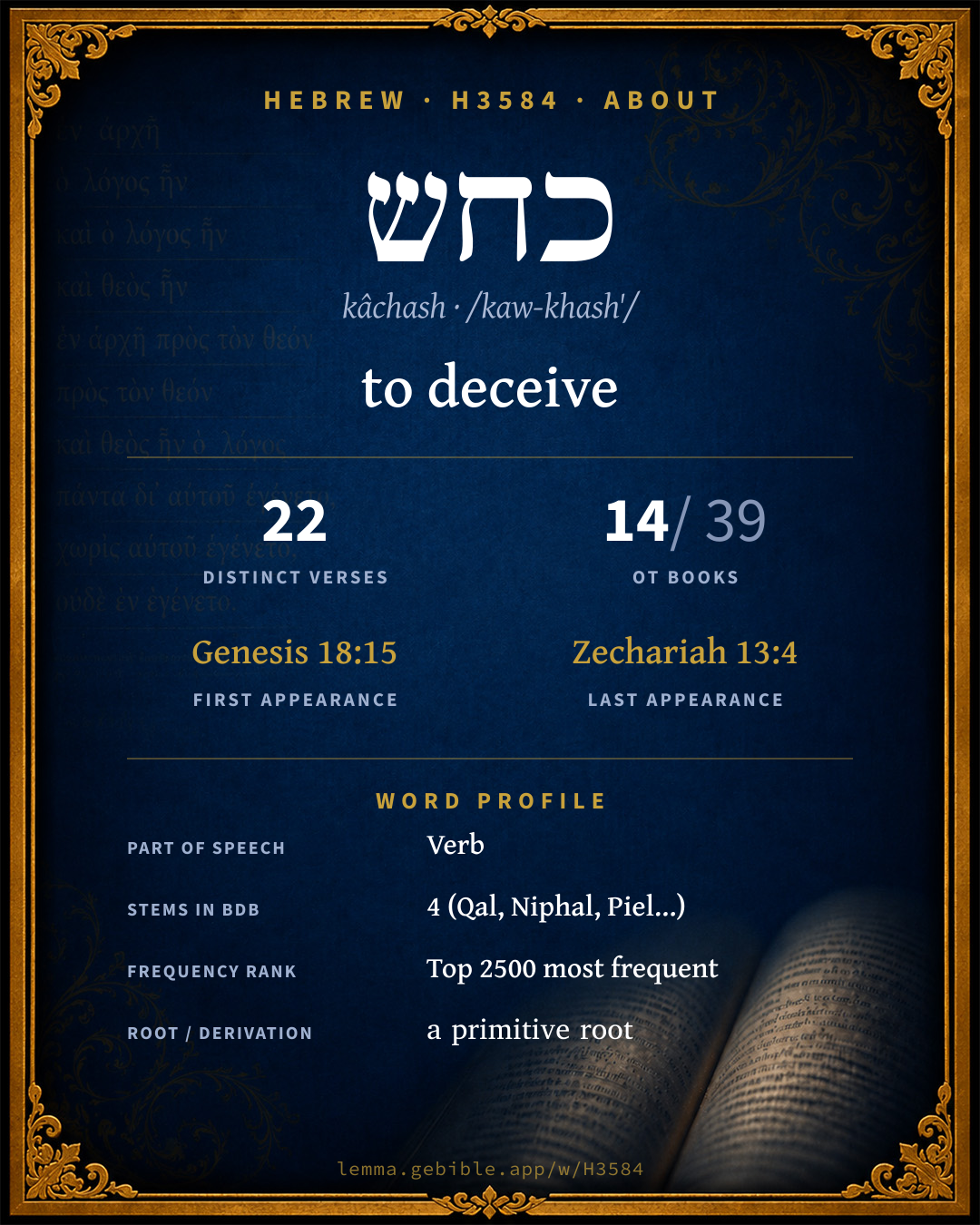
כָּחַשׁ
to deceive
also: lie, fail, grow lean, be disappointing fuller range ↓
Full lexicon entry — Brown-Driver-Briggs (BDB)
From Brown-Driver-Briggs (BDB)
Where this word appears
See every Piel verb in the Hebrew Bible →
Grammar key — what these labels mean
Part of speech
- Verb
- An action or state-of-being word.
Stem
- Piel
- An intensive or resultative active stem. Here: ‘deceive’
- Niphal
- Usually the simple passive or reflexive of the Qal (“he was written”).
- Qal
- The basic, simple active stem — the plain form of the verb (“he wrote”).
- Hithpael
- The reflexive or reciprocal stem (the subject acts on itself).
Form
- Sequential Perfect
- A perfect with prefixed waw continuing a preceding imperfect or command (waw-consecutive perfect).
- Imperfect
- An incomplete, ongoing, or future action (“he will / would write”).
- Infinitive Absolute
- An unbound verbal noun, often intensifying or standing in for a finite verb.
- Perfect
- A completed action or state — Hebrew marks aspect (completeness) more than strict tense (“he wrote”).
- Sequential Imperfect
- An imperfect with prefixed waw — the standard past-narrative form (waw-consecutive imperfect).
- Infinitive Construct
- A bound verbal noun, frequently with prepositions (“to write / in writing”).
Person
- 3rd Person
- The one spoken about (“he / she / it / they”).
- 1st Person
- The speaker (“I / we”).
- 2nd Person
- The one addressed (“you”).
Gender
- Masculine
- Grammatically masculine.
- Common
- Either gender — not distinguished for this form.
- Feminine
- Grammatically feminine.
Number
- Singular
- One.
- Plural
- More than one (in Hebrew, generally three or more).
Every verse where H3584 appears in the Book of Psalms — 4 distinct verses. Click any verse to open its interlinear word-by-word view. Verse text shown in the World English Bible for context — . Each verse’s Hebrew form is shown with its reference; the English is not keyword-highlighted, since the data carries no word-level English alignment. Use “Compare translations” on any verse to read it across multiple English versions. This concordance covers the Hebrew Bible; Septuagint (Greek Old Testament) occurrences are not indexed here.
Psalms
- Psalms 18:44 יְכַחֲשׁוּ Piel impf 3mp As soon as they hear of me they shall obey me. The foreigners shall submit themselves to me.
- Psalms 66:3 יְֽכַחֲשׁ֖וּ Piel impf 3mp Tell God, "How awesome are your deeds! Through the greatness of your power, your enemies submit themselves to you.
- Psalms 81:15 יְכַֽחֲשׁוּ Piel impf 3mp The haters of Yahweh would cringe before him, And their punishment would last forever.
- Psalms 109:24 כָּחַ֥שׁ Qal pf 3ms My knees are weak through fasting. My body is thin and lacks fat.
About this entry
At a glance — auto-summarized from this page’s data, not written by a person. Every figure links to its source below. This summary describes the numbers; it doesn’t interpret them.
The Hebrew verb כחש centers on the idea of “to deceive.” Read the stem: it spans 4 stems, including Qal and Niphal. The Hebrew Bible uses it across 22 verses — uncommon. First canonically at Genesis 18:15, it enters the text early. Related forms include כחש and כחש. For the data behind this summary, explore the sense tree and the renderings breakdown below.
Gloss history
Strong's 1890 vs modern scholarship
About this word
Strong's H3584 catalogs a Hebrew word from the Hebrew Old Testament.
These counts are not copied from any lexicon or concordance. They are computed here, from the morphology-tagged Hebrew Old Testament. What Lemma adds →
- 22
- distinct verses
- The word appears in 22 distinct verses.
- 14 / 39
- OT books
- The word appears in 14 of 39 Old Testament books.
- #1,412
- by frequency
- Top 2500 most frequent Hebrew words (rank 1,412 of 8,640 Hebrew words by occurrence).
View all 22 occurrences in the concordance →
By section of the Old Testament
By traditional corpus
Conventional, traditional groupings — biblical authorship is debated, so this is a traditional corpus grouping, not an authorship claim. Each share is this word’s portion of its verses in that division of the Hebrew canon. Each figure is a share of the word’s 22 distinct verses.
- Prophets (Nevi'im) 10 verses · 45%
- Writings (Ketuvim) 7 verses · 32%
- Torah (Pentateuch) 5 verses · 23%
How translations render this word
Counts come from each version’s own published word-to-Strong’s tagging or interlinear alignment — an approximate guide to how each version renders this word, not a word-level alignment the data otherwise carries. Because each total is that version’s own tagged count, the per-version totals vary from one another and need not match the appearance or distinct-verse counts above. These counts may also differ from a printed concordance because Lemma counts each distinctly tagged rendering and does not collapse phrase taggings into a single head-word total. This is a fixed set of word-tagged versions (KJV, ASV, BSB, ULT) and does not change with the reading translation you choose elsewhere. Each version’s license is shown beside its name below (and on Sources).
- King James Version: Lying 2×, Shall fail 2×, Shall submit 2×
- American Standard Version: Shall submit 2×
- Berean Standard Bible: Cower 2×
- unfoldingWord Literal Text: Cringe 2×, He denies 2×
King James Version Public Domain
Renders H3584 across 22 tagged occurrences — most commonly:
Plus 16 renderings that appear only once — usually multi-word phrases or single function words the recovered tagging swept in, not distinct renderings.
American Standard Version Public Domain
Renders H3584 across 21 tagged occurrences — most commonly:
Plus 19 renderings that appear only once — usually multi-word phrases or single function words the recovered tagging swept in, not distinct renderings.
Berean Standard Bible Public Domain
Renders H3584 across 22 tagged occurrences — most commonly:
Plus 20 renderings that appear only once — usually multi-word phrases or single function words the recovered tagging swept in, not distinct renderings.
unfoldingWord Literal Text CC BY-SA 4.0
Renders H3584 across 27 tagged occurrences — most commonly:
Plus 23 renderings that appear only once — usually multi-word phrases or single function words the recovered tagging swept in, not distinct renderings.
8 senses and sub-senses in the full BDB
Hebrew verbs can shift meaning by stem (binyan): Qal is the basic action, Niphal is often passive or reflexive, Piel often intensifies or makes it factitive, and Hiphil is typically causative. The senses below are grouped under the stem BDB assigns to each. This entry also uses Hithpael (reflexive or reciprocal).
What do BDB’s symbols mean?
BDB uses these scholarly abbreviations:
| Symbol | Meaning |
|---|---|
| 𝔊 | the Septuagint (the ancient Greek translation, LXX) |
| 𝔙 | the Vulgate (the Latin translation) |
| 𝔖 | the Syriac version (the Peshitta) |
| 𝔗 | the Targum (the Aramaic translation) |
| ψ | the Psalms |
| √ | root (the underlying root or stem) |
| ‖ | parallel passage (a synonymous or contrasted parallel) |
| † | the dagger: every passage where the word occurs is cited |
The 8 senses and sub-senses the full Brown-Driver-Briggs lexicon distinguishes for this word, in lexicon order (not ranked by frequency), with BDB’s own verbatim wording and sub-sense lettering. Shown in Hebrew script with BDB’s own scholarly abbreviations. The condensed entry is in the Lexicon Entry tab. See also the Forms in the corpus table below.
Qal
- Pf. 3 ms. וּבְשָׂרִי כָּחַשׁ מִשָּׁ֑מֶן ψ 109:24 my flesh hath grown lean (away) from fatness (‖ בִּרְכַּי כָּֽשְׁלוּ מִצּוֹם). e.g. Psalms 109:24
Niphal
- Impf. וְיִכָּֽחֲשׁוּ אֹיְבֶיךָ לָךְ Dt 33:29 thine enemies shall cringe (come cringing, i.e. orig. act deceptively, feigning obedience) to thee (cf. also Pi 3, Hithp.) e.g. Deuteronomy 33:29
Piel
- Pf. 3 ms. כִּחֵשׁ 1 K 13:18 Hb 3:17; וְכִ֫חֶשׁ consec. (bef. monosyll.) Lv 5:22 Jb 8:18, etc.; Impf. (בָּהּ) יְכַ֫חֶשׁ Ho 9:2; 3 fs. וַתְּכַחֵשׁ Gn 18:15, etc.; inf. abs. כַּחֵשׁ Ho 4:2 Is 59:13; cstr. Zc 13:4;— e.g. 1 Kings 13:18
- 1. deceive, abs. Gn 18:15 (J), Jos 7:11 (JE), Ho 4:2 (אלה וכחשׁ together = false swearing according to WeKl. Pr.; + וְרָצֹחַ וְגָנֹב וְנָאֹ֑ף), cf. לֹא תִגְנֹ֑בוּ וְלֹא־תְכַחֲשׁוּ וְלֹא תְשַׁקְּרוּ אִישׁ בַּעֲמִיתוֹ Lv 19:11 (H); לְמַעַן כ׳ Zc 13:4 in order to deceive; sq. לְ pers. 1 K 13:18 Jb 31:28; sq. בְ pers. et rei Lv 5:21, בְ rei v 22. e.g. Genesis 18:15
- 2. act deceptively against (i.e. seem to acknowledge, but not really do so), sq. בְ pers. Jos 24:27 (E) Je 5:12 Is 59:13 Jb 8:18, appar. also וְתִירוֹשׁ יכ׳ בָּהּ Ho 9:2 and new wine shall deny her (Isr.; i.e. refuse to acknowledge her as its mistress, not yield itself to her); abs. Pr 30:9. e.g. Joshua 24:27
- 3. cringe = come cringing (make shew of obedience, v. Niph.), sq. בְ pers. ψ 18:45 (Hithp. in ‖ 2 S 22:45); sq. לְ pers. ψ 66:3; 81:16. e.g. Psalms 18:45
- 4. disappoint, fail, abs. כִּחֵשׁ מַעֲשֵׂה זַיִת Hb 3:17 the product of the olive hath failed (in sense comp. Ho 9:2 supr.) e.g. Habakkuk 3:17
Hithpael
- Impf. יִתְכַּחֲשׁוּ לִי 2 S 22:45 shall come cringing to me (‖ ψ 18:45, v. supr.) e.g. 2 Samuel 22:45
Senses from the full Brown-Driver-Briggs lexicon (Brown, Driver, Briggs; Oxford 1906 — public domain), digitized via Sefaria, supplemented by the OpenScriptures HebrewLexicon (CC BY 4.0). Full attribution on Sources.
Word origin
vb. be disappointing, deceive, fail, grow lean (NH כָּחַשׁ grow lean; Hiph. convict of falsehood, refute; Aramaic כְּחַשׁ grow lean; כַּחְשָׁא leanness, כְּחִישׁוּתָא leanness, weakness; Aph. as NH Hiph.)—
— Brown-Driver-Briggs (Oxford 1906, public domain), digitized via Sefaria, supplemented by the OpenScriptures HebrewLexicon (CC BY 4.0). See Sources.
Origin: a primitive root
Jastrow Dictionary
A second Hebrew/Aramaic lexicon for comparison, covering Aramaic and post-biblical (Talmudic, Targumic, Midrashic) usage that the biblical-Hebrew BDB does not. Matched by lemma rather than by Strong’s number, so a lemma may carry more than one Jastrow headword (shown separately below), and the entries cover usage well beyond the Bible.
חָשׁ
- , v. חוּשׁ, חָשַׁשׁ, חֲשַׁשׁ.
כָּחַשׁ
- 1. to fail, be reduced, be lean, opp. בריא, שמן. B. Kam. 34ᵃ כ׳ כשעת וכ׳ if the injured ox became reduced after being wounded, damage is assessed according to the value at the time of standing before court; Y. ib. III, end, 3ᵈ הִכְחִישׁ. Gen. R. s. 53 (ref. to Hab. III, 17) כּוֹחֲשִׁים היו (Sarah’s face) was haggard (and the announcement of the angels made it shine like olive oil); Yalk. Hab. 565 כְּחוּשִׁים; [oth. interpret., v. infra].—Part. pass. כָּחוּשׁ, f. כְּחוּשָה; pl. כְּחוּשִׁים, כְּחוּשׁוֹת lean, reduced, weak. Snh. 78ᵃ כח כ׳ a weak force. Ḥull. 97ᵃ (in Chald. diction). B. Kam. 6ᵇ אכל כ׳ if he ate fruits of a garden-bed with scanty fruits; Gitt. 48ᵇ; a. fr. e.g. Habakkuk 3:17
- 2. (cmp. כָּזַב) to be false. Gen. R. l. c. כּוֹחֲשִׁים היו were they (the angels) false (deceiving)?—
- 1. to be reduced, fail, deteriorate. Y. B. Kam. l. c., v. supra.—Meïl. 17ᵃ מי שיש … יַכְחִישׁ וכ׳ if you have an enemy, do you desire him to be weak or strong? Ib. ימולו … ויַכְחִישׁוּ let their children be circumcised …, and they will become weak. Yeb. 34ᵇ ויַכְחִישׁ יופיה her beauty may be ruined. Y. M. Kat. I, beg. 80ᵃ עמדה מלהַכְחִישׁ if the field ceased to deteriorate; a. e.
- 2. to lessen, reduce, ruin, weaken. Gitt. 70ᵃ ג׳ … מַכְחִישִׁים כחו וכ׳ three things lessen a man’s energies. Snh. 84ᵇ הִכְחִישָׁחּ באבנים he ruined the animal by loading stones upon her (without causing a wound). Y. B. Kam. l. c. הִכְחִישׁוֹ חמשים וכ׳ he lessened his (the ox’s) value by fifty Zuz. Esth. R. to I, 1 (play on אח̇ש̇ור̇ש̇) שהכח̇יש̇ ר̇אש̇ן וכ׳ he caused haggardness to the heads of &c. Sabb. 22ᵃ מַכְחִישׁ מצוה he impairs the religious act (lessens the brightness of the Ḥănuckah lights). Snh. 67ᵇ; Ḥull. 7ᵇ, v. כְּשָׁפִים; a. fr.—[Yalk. Ps. 627 אַכְחֵישׁ, v. כָּעַס.]
- 3. to declare false, deny, contradict, v. הַכְחָשָׁה. Keth. 20ᵃ כשם שאין מזימין … אין מַכְחִישִׁין וכ׳ as an evidence of alibi cannot be taken up except by confrontation, so cannot contradictory evidence &c. Ber. 27ᵇ יכול החי להַבְחִישׁ וכ׳ can the living contradict the living? Gen. R. s. 48, beg. מפני מה אתה מַכְחִישֵׁנִי וכ׳ why dost thou contradict me (declare me wrong) in the presence of my servant?—Sifra introd., v. כָּרַע; a. fr.
- to be false; to flatter. Sifré Deut. 356 בשעת מְכַחֲשִׁים להם … when the Israelites prosper, the nations flatter them; Yalk. Deut. 967.
- to be contradicted, rebutted. B. Kam. 74ᵇ עדים שהוּכְחֲשׁוּ בנפש witnesses that have been contradicted in a capital case.—Ib. מוּכְחָשִׁין witnesses whose evidence has been contradicted (but not rebutted through an alibi). Keth. l. c. עדות מוּכְחֶשֶׁת a rebutted evidence; a. fr.
- to contradict each other. Sifré Deut. 37 מִתְכַּחֲשׁוֹת; v., however, כָּתַשׁ.
כְּחַשׁ
- , to be lean, weak; v. כָּחִישׁ.—Snh. 95ᵃ כ׳ חיליה his strength failed him. B. Mets. 104ᵇ (prov.) תִּכְחוֹשׁ ארעא ולא לִיכְּחוּשׁ מרה Ms. M. (ed. כחשא) let the land deteriorate (exhausted by strong seeds) rather than that its owner become reduced (by reduced income); a. e.
- 1. to reduce, weaken, impair. Nidd. 47ᵇ; Yeb. 97ᵃ אַכְחֲשׁוּהוּ reduce him (by scanty food); B. Bath. 155ᵇ אכחשיה Ms. M. (corr. acc., ed. ליכחוש, v. infra). B. Kam. 34ᵃ את מַכְחֲשָׁהּ ואנא וכ׳ thou didst ruin her (by neglect), and I should pay for it?
- 2. to contradict. Gen. R. s. 48, beg. אַכְחֲשָׁהּ קדמה he contradicted her (his wife) in her (the servant’s) presence.
- 1. to reduce one’s self, to be reduced. B. Bath. l. c. לִיכְּחוּשׁ let him reduce himself. B. Mets. l. c., v. supra.
- 2. to be contradicted, rebutted. B. Kam. 74ᵃ מִתְכַּחֲשֵׁי are contradicted, contrad. to מיתזמי, v. זְמַם I.—Snh. 81ᵇ אִתְכְּחוּשׁ בבדיקות they contradicted each other in cross-examinations, v. בְּדִיקָה.
A Dictionary of the Targumim, the Talmud Babli and Yerushalmi, and the Midrashic Literature (Marcus Jastrow; London, Luzac, 1903) — Public Domain. Digitized via Sefaria. Digitized via Sefaria. Full attribution on Sources.
Forms in the corpus
The 21 distinct written forms H3584 takes in the Hebrew Bible, most frequent first — each parse links to that stem’s occurrences in the concordance. Hebrew forms include their vowel points and cantillation, so a single lemma takes many written forms.
Same root — word family
Other BDB entries built from the same root as H3584, grouped by Strong’s listed origin. These share a root / origin per the lexicon — not necessarily a shared meaning. Each links to that word’s own entry.
Derived from this word
Compare all same-root words → They share a root, not necessarily a meaning.
Septuagint verse parallels
This word appears in 19 verses that also exist in the Greek Old Testament (Septuagint), out of the 22 Hebrew verses it occurs in. You can read those verses in Greek by switching the Old Testament edition to the Septuagint.
Read these verses in the Septuagint
- Genesis 18:15
- Leviticus 6:2
- Deuteronomy 33:29
- Joshua 7:11
- 2 Samuel 22:45
- 1 Kings 13:18
- Job 8:18
- Psalms 66:3
- Proverbs 30:9
- Isaiah 59:13
- Jeremiah 5:12
- Hosea 4:2
This is a verse-level parallel only — the same verses exist in both the Hebrew and Greek Old Testaments. No word-level Hebrew↔Greek correspondence is claimed: the data carries no such alignment, so no Greek word is shown as this Hebrew word’s translation. Coverage is not total — the Septuagint omits the deuterocanon and renumbers the Psalms, so some Hebrew verses have no direct Greek parallel.