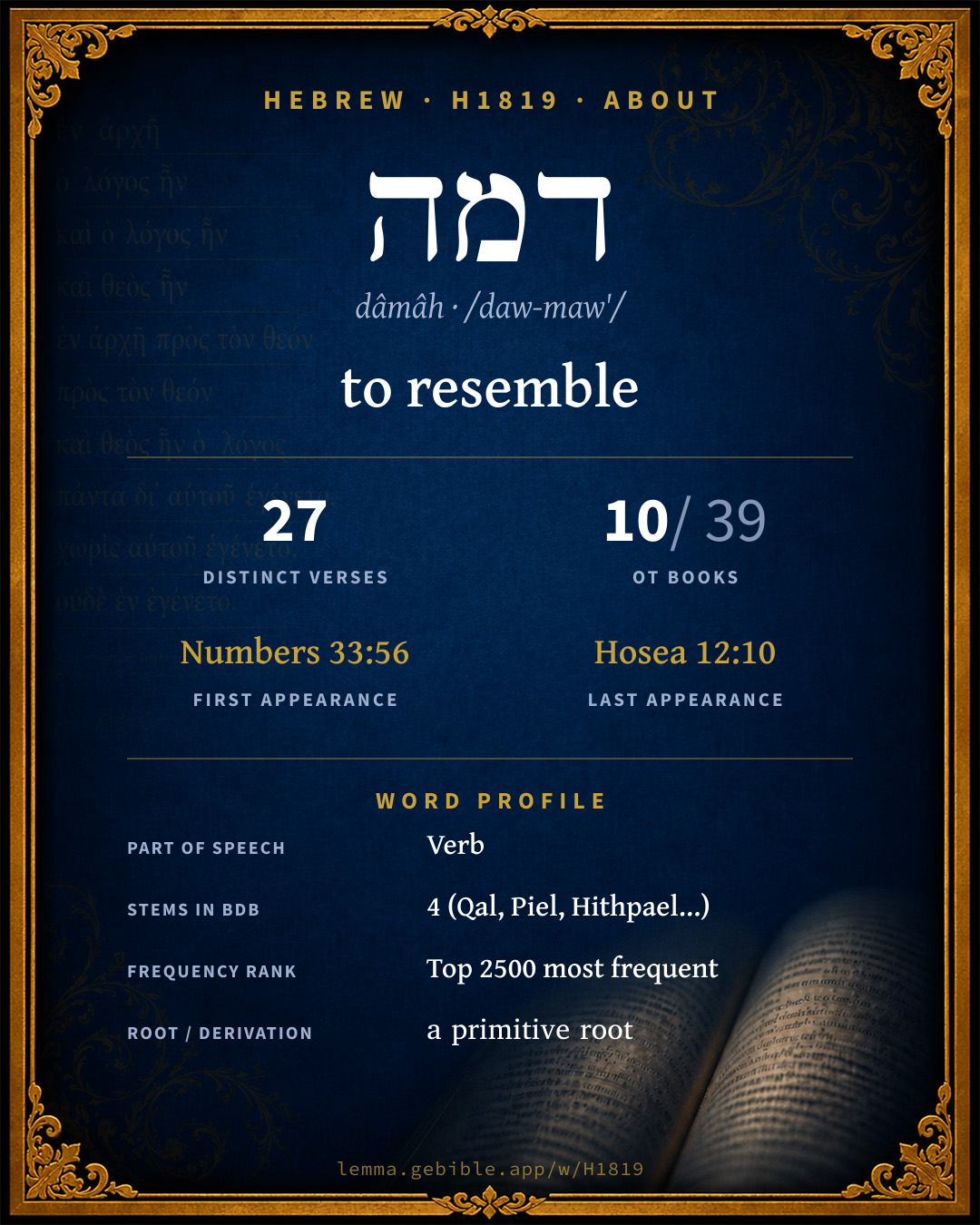
דָּמָה
to resemble
‘to resemble’ is one of 3 main senses fuller range ↓
Full lexicon entry — Brown-Driver-Briggs (BDB)
From Brown-Driver-Briggs (BDB)
Where this word appears
Grammar key — what these labels mean
Part of speech
- Verb
- An action or state-of-being word.
Stem
- Piel
- An intensive or resultative active stem. Here: ‘liken’
- Qal
- The basic, simple active stem — the plain form of the verb (“he wrote”). Here: ‘intr. cease Je 14’
- Niphal
- Usually the simple passive or reflexive of the Qal (“he was written”).
- Hithpael
- The reflexive or reciprocal stem (the subject acts on itself). Here: ‘make oneself or become like’
Form
- Imperfect
- An incomplete, ongoing, or future action (“he will / would write”).
- Perfect
- A completed action or state — Hebrew marks aspect (completeness) more than strict tense (“he wrote”).
- Imperative
- A direct command (“write!”).
- Jussive
- A third- or second-person volitional form expressing wish or command (“let him write”).
- Participle Active
- A verbal adjective expressing ongoing or characteristic action (“writing / one who writes”).
State
- Absolute
- The independent form of a noun, not bound to a following word.
Person
- 1st Person
- The speaker (“I / we”).
- 2nd Person
- The one addressed (“you”).
- 3rd Person
- The one spoken about (“he / she / it / they”).
Gender
- Common
- Either gender — not distinguished for this form.
- Masculine
- Grammatically masculine.
- Feminine
- Grammatically feminine.
Number
- Singular
- One.
- Plural
- More than one (in Hebrew, generally three or more).
Every verse where H1819 appears in the Book of Lamentations — 1 distinct verse. Click any verse to open its interlinear word-by-word view. Verse text shown in the World English Bible for context — . Each verse’s Hebrew form is shown with its reference; the English is not keyword-highlighted, since the data carries no word-level English alignment. Use “Compare translations” on any verse to read it across multiple English versions. This concordance covers the Hebrew Bible; Septuagint (Greek Old Testament) occurrences are not indexed here.
Lamentations
About this entry
At a glance — auto-summarized from this page’s data, not written by a person. Every figure links to its source below. This summary describes the numbers; it doesn’t interpret them.
דמה (dâmâh) is a Hebrew verb most often rendered “to resemble.” The verb spans 4 stems, from Qal to Piel. It turns up in 27 verses across 10 books, a moderately common footprint. It concentrates in Isaiah, which alone accounts for 26% of its uses. Scripture first uses it in Numbers 33:56. The sections below give every sense, occurrence, and version rendering.
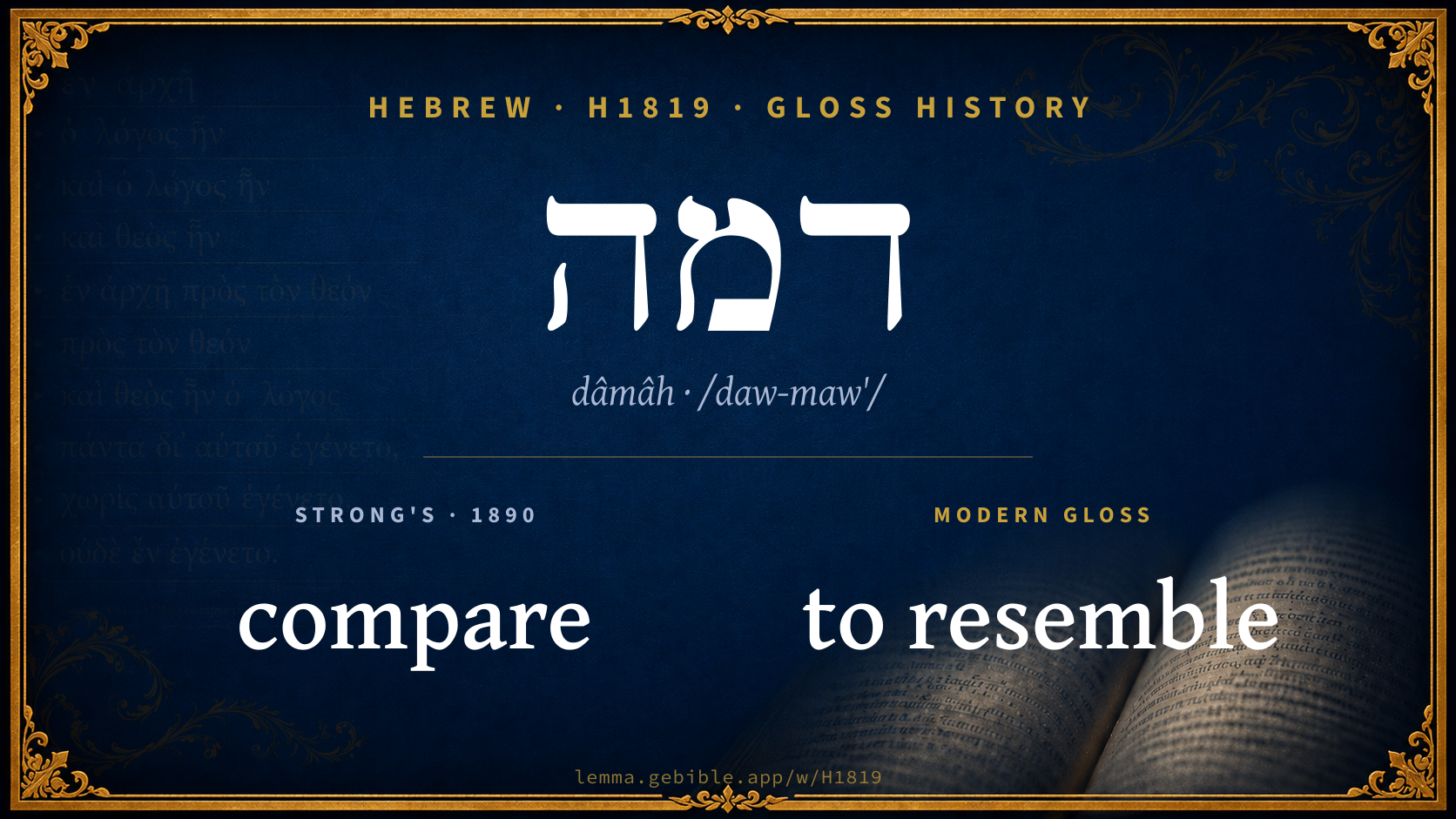
Gloss history
Strong's 1890 vs modern scholarship
About this word
Strong's H1819 catalogs a Hebrew word from the Hebrew Old Testament.
These counts are not copied from any lexicon or concordance. They are computed here, from the morphology-tagged Hebrew Old Testament. What Lemma adds →
- 27
- distinct verses
- The word appears in 27 distinct verses.
- 10 / 39
- OT books
- The word appears in 10 of 39 Old Testament books.
- #1,160
- by frequency
- Top 2500 most frequent Hebrew words (rank 1,160 of 8,640 Hebrew words by occurrence).
View all 27 occurrences in the concordance →
Most concentrated in
- Isaiah 7 verses 26%
- Psalms 5 verses 19%
- Song of Solomon 5 verses 19%
By section of the Old Testament
By traditional corpus
Conventional, traditional groupings — biblical authorship is debated, so this is a traditional corpus grouping, not an authorship claim. Each share is this word’s portion of its verses in that division of the Hebrew canon. Each figure is a share of the word’s 27 distinct verses.
- Prophets (Nevi'im) 14 verses · 52%
- Writings (Ketuvim) 12 verses · 44%
- Torah (Pentateuch) 1 verse · 4%
How translations render this word
Counts come from each version’s own published word-to-Strong’s tagging or interlinear alignment — an approximate guide to how each version renders this word, not a word-level alignment the data otherwise carries. Because each total is that version’s own tagged count, the per-version totals vary from one another and need not match the appearance or distinct-verse counts above. These counts may also differ from a printed concordance because Lemma counts each distinctly tagged rendering and does not collapse phrase taggings into a single head-word total. This is a fixed set of word-tagged versions (KJV, ASV, BSB, ULT) and does not change with the reading translation you choose elsewhere. Each version’s license is shown beside its name below (and on Sources).
BDB lists this Strong’s number as 2 distinct words (homographs). Each count above pools all of them and is not split by sense — see the Senses section below. A low-frequency rendering may belong to a different one of those words, not the primary meaning.
- King James Version†: Is like 3×, Will ye liken 3×, Be thou like 2×
- American Standard Version†: Is like 4×, Be thou like 2×, Will ye liken 2×
- Berean Standard Bible†: Is like 4×, Be like 2×, Will you liken me 2×
- unfoldingWord Literal Text†: Compares 2×, Resemble 2×, Will you liken me 2×
King James Version Public Domain
Renders H1819 across 29† tagged occurrences — most commonly:
Plus 21 renderings that appear only once — usually multi-word phrases or single function words the recovered tagging swept in, not distinct renderings.
American Standard Version Public Domain
Renders H1819 across 29† tagged occurrences — most commonly:
Plus 21 renderings that appear only once — usually multi-word phrases or single function words the recovered tagging swept in, not distinct renderings.
Berean Standard Bible Public Domain
Renders H1819 across 30† tagged occurrences — most commonly:
Plus 22 renderings that appear only once — usually multi-word phrases or single function words the recovered tagging swept in, not distinct renderings.
unfoldingWord Literal Text CC BY-SA 4.0
Renders H1819 across 31† tagged occurrences — most commonly:
Plus 25 renderings that appear only once — usually multi-word phrases or single function words the recovered tagging swept in, not distinct renderings.
9 senses and sub-senses in the full BDB
Hebrew verbs can shift meaning by stem (binyan): Qal is the basic action, Niphal is often passive or reflexive, Piel often intensifies or makes it factitive, and Hiphil is typically causative. The senses below are grouped under the stem BDB assigns to each. This entry also uses Hithpael (reflexive or reciprocal).
What do BDB’s symbols mean?
BDB uses these scholarly abbreviations:
| Symbol | Meaning |
|---|---|
| 𝔊 | the Septuagint (the ancient Greek translation, LXX) |
| 𝔙 | the Vulgate (the Latin translation) |
| 𝔖 | the Syriac version (the Peshitta) |
| 𝔗 | the Targum (the Aramaic translation) |
| ψ | the Psalms |
| √ | root (the underlying root or stem) |
| ‖ | parallel passage (a synonymous or contrasted parallel) |
| † | the dagger: every passage where the word occurs is cited |
The 9 senses and sub-senses the full Brown-Driver-Briggs lexicon distinguishes for this word, in lexicon order (not ranked by frequency), with BDB’s own verbatim wording and sub-sense lettering. Shown in Hebrew script with BDB’s own scholarly abbreviations. The condensed entry is in the Lexicon Entry tab. See also the Forms in the corpus table below.
דמה I be like, resemble (NH id., Aramaic דְּמֵי, דְּמָא, ܕܡܳܐ cf. דמין, ܕܡܰܝܳܐ price, Nab. דמי id. (Nö in EutNab.Inscr. p. 35)
Qal
- Pf. 3 ms. ד׳ Ez 31:8 ψ 144:4; 3 fs. דָּֽמְתָה Ct 7:8; 2 ms. דָּמִיתָ Ez 31:2, 18; 1 s. דָּמִיתִי ψ 102:7; 3 pl. דָּמוּ Ez 31:8; 1 pl. דָּמִינוּ Is 1:9; Impf. 3 ms. יִדְמֶה ψ 89:7; 1 pl. וְנִדְמֶה consec. Is 46:5; Imv. ms. דְּמֵה Ct 2:17; 8:14; Pt. דּוֹמֶה Ct 2:9;—be like, resemble, of external appearance, sq. לְ, Ct 7:8; 2:9, 17; 8:14; sq. אֶל־ Ez 31:8(×2), 18 (all of tree, fig. of Pharaoh); of condition or quality sq. לְ Is 1:9 ψ 102:7; 144:4; so מִי … יִדְמֶה ליהוה ψ 89:7; also abs. Is 46:5; sq. אֶל Ez 31:2. e.g. Ezekiel 31:8
Piel
- Pf. דִּמָּה 2 S 21:5, דִּמִּיתָ ψ 50:21; דִּמִּיתִי Nu 33:56, Is 14:24; sf. דִּמִּיתִיךָ Ct 1:9, דִּמּוּ 2 S 21:5; Impf. יְדַמֶּה Is 10:7; 2 fs. תְּדַמִּי Est 4:13 (juss.); אֲדַמֶּה La 2:13; Ho 12:11; 2 mpl. תְּדַמְּיוּן Is 40:18; sf. תְּדַמְּיוּנִי Is 40:25; 46:5;—liken, compare; imagine, think, devise;— e.g. 2 Samuel 21:5
- 1. liken, i.e. consider to be like, compare, causat. of Qal, sq. לְ of external appearance Ct 1:9; of quality or condition Is 46:5 (obj. י׳) La 2:13; sq. אֶל of external a appearance Is 40:18, 25 (both obj. God in ref. to idols); abs. use comparisons or similitudes (parables, symbols, etc.) Ho 12:11 (subj. י׳). e.g. Song of Solomon 1:9
- 2. imagine, form an idea, devise 2 S 21:5 (on context cf. Dr); think, intend, sq. Inf. Nu 33:56 (J or H); Ju 20:5; Est 4:13; abs. Is 10:7; cf. 14:24; think that, sq. obj. cl. (Impf. without conj.) ψ 50:21; think of, sq. acc. ψ 48:10. e.g. 2 Samuel 21:5
Hithpael
- make oneself or become like; Impf; אֶדַּמֶּה לְעֶלְיוֹן Is 14:14 I will make myself like the Most High (on form cf. Ges§ 54, 2). e.g. Isaiah 14:14
דמה II cease, cause to cease, cut off, destroy
Qal
- Perf. 1 s. דָּמִיתִי Je 6:2, וְדָמִ֫יתִי consec. Ho 4:5; Impf. 3 fs. תִּדְמֶה La 3:49; 3 fpl. juss. תִּדְמֶינָה Je 14:17;— e.g. Jeremiah 6:2
- 1. intr. cease Je 14:17 (eyes from weeping) La 3:49 (id.) e.g. Jeremiah 14:17
- 2. cause to cease, cut off, destroy, c. acc. Israel (under fig. of בת־ציון) Je 6:2; (under fig. of אִמֶּ֑ךָ) Ho 4:5. e.g. Jeremiah 6:2
Niphal
- Pf. נִדְמָה Is 15:1, 1 +; 3 fs. נִדְמְתָה Je 47:5; 2 ms. נִדְמֵיתָה Ob 5, נִדְמֵיתָ Ez 32:2; 1 s. נִדְמֵיתִי Is 6:5; 3 pl. נִדְמוּ Ho 4:6 +; Inf. abs. נִדְמֹה Ho 10:15; Pt. נִדְמֶה Ho 10:7; be cut off, destroyed, ruined, of a city Is 15:1, 1 (‖ שֻׁדַּד) Je 47:5; of people Ho 4:6; Zp 1:11; Ob 5; of king Ho 10:7, 15(×2) cf. Ez 32:2; of beasts ψ 49:13, 21; be ruined, undone, prophet at sight of Yahweh Is 6:5. e.g. Isaiah 15:1
Senses from the full Brown-Driver-Briggs lexicon (Brown, Driver, Briggs; Oxford 1906 — public domain), digitized via Sefaria, supplemented by the OpenScriptures HebrewLexicon (CC BY 4.0). Full attribution on Sources.
Word origin
I. vb. be like, resemble (NH id., Aramaic דְּמֵי, דְּמָא, ܕܡܳܐ cf. דמין, ܕܡܰܝܳܐ price, Nab. דמי id. (Nö in EutNab.Inscr. p. 35); also ܕܡܽܘܬܳܐ, and ܕܽܘܡܝܳܐ likeness (whence Arabic دُمْيَةٌ image, effigy, as loan-wd. Frä272) cf. דְּמוּת)—
II. vb. cease, cause to cease, cut off, destroy—
— Brown-Driver-Briggs (Oxford 1906, public domain), digitized via Sefaria, supplemented by the OpenScriptures HebrewLexicon (CC BY 4.0). See Sources.
Origin: a primitive root
Jastrow Dictionary
A second Hebrew/Aramaic lexicon for comparison, covering Aramaic and post-biblical (Talmudic, Targumic, Midrashic) usage that the biblical-Hebrew BDB does not. Matched by lemma rather than by Strong’s number, so a lemma may carry more than one Jastrow headword (shown separately below), and the entries cover usage well beyond the Bible.
דָּמָה
- pr. n. m., v. דָּמָא
דָּמָה ²
- , v. דמי
דמי
- v. דמם,
- 1. to mumble, think (cmp. דבב); to be silent. Denom. (דִּימָה,) דָּמוּת.
- 2. to imagine, compare. Denom. דְּמוּת.
- 3. (denom. of דְּמוּת) to resemble, be like, to imitate. Sabb. 133ᵇ הוי דוֹמֶה לו imitate Him. Ber. 29ᵇ שתפלתו דוֹמָה עליו וכ׳ to whom his prayer appears like a burden. Taan. 22ᵇ אין דורו דומה יפה (v. Rabb. D. S. a. l. note 20) his generation was not considered worthy. B. Kam. 92ᵇ; Yalk. Jud. 67 ובן אדם לדו׳ לו (not ובני) and man associates with his equal. Sifra Sh’mini Par. 10, ch. XII; Ḥull. 76ᵇ הַדֹּומֶה that which resembles the animal specified in the Bible (species); הד׳ לַדֹּומֶה what resembles the animal classified with the animal specified in the Bible (genus); a. fr.—אֵינוֹ דוֹמֶה there is no resemblance, you cannot compare. Yeb. 64ᵃ א׳ ד׳ תפלת … לתפלת וכ׳ you cannot compare the prayer of … to the prayer of &c. Sabb. 119ᵇ; a. fr.—Ḥull. 48ᵇ זו דוֹמָה לזו these are analogous cases, v. Pi.—(משל) למה הדבר דומה (abbrev. מלה"ד, לה"ד) (a simile:) to what can this be compared?, a phrase introducing a simile. Taan. 25ᵇ. Yoma 86ᵇ; a. v. fr.
- [
- 1. (b. h.) to be silenced, undone].].
- 2. to be compared, to be imagined; to appear in the disguise of; to seem. Kidd. 32ᵇ כמה"ש נִדְמוּ לו that they appeared to him as ministering angels; נדמו לו לערביים they appeared to him as if they were Arabs. Succ. 52ᵃ צדיקים נ׳ להם כהר וכ׳ to the righteous sin will appear like a high mount; a. fr.—נִדְמֶה an animal suspected to be a hybrid or looking like one (cmp. דְּמַאי), esp. a lamb looking like a kid, and vice versa. Bekh. 12ᵃ ‘a ewe which gave birth to what looked like a kid’. Ḥull. 38ᵇ; a. fr.
- 1. to compare, judge from analogy. Lev. R. s. 32 דִּמִּיתִיךָ להם I made thee like them (beasts). B. Bath. 130ᵇ ובלבד שלא יְדַמֶּה וכ׳ but one must not decide ritual cases by analogy; v. Ḥull. 48ᵇ
- 2. to have an opinion without authority to refer to. Gitt. 19ᵃ; 37ᵃ מפני שאנו מְדַמִּין because we have such an opinion.—Part. pass. מְדוּמֶּה, pl. מְדוּמִּין; כמ׳ אני it seems to me, כמ׳ אנו it seems to us &c. Men. 18ᵃ. Taan. 23ᵃ; a. fr.—Y. Ber. II, 5ᵇ bot. כמ׳ הייתי I thought.
A Dictionary of the Targumim, the Talmud Babli and Yerushalmi, and the Midrashic Literature (Marcus Jastrow; London, Luzac, 1903) — Public Domain. Digitized via Sefaria. Digitized via Sefaria. Full attribution on Sources.
Forms in the corpus
The 29 distinct written forms H1819 takes in the Hebrew Bible, most frequent first — each parse links to that stem’s occurrences in the concordance. Hebrew forms include their vowel points and cantillation, so a single lemma takes many written forms.
Same root — word family
Other BDB entries built from the same root as H1819, grouped by Strong’s listed origin. These share a root / origin per the lexicon — not necessarily a shared meaning. Each links to that word’s own entry.
Derived from this word
Compare all same-root words → They share a root, not necessarily a meaning.
Septuagint verse parallels
This word appears in 27 verses that also exist in the Greek Old Testament (Septuagint), out of the 27 Hebrew verses it occurs in. You can read those verses in Greek by switching the Old Testament edition to the Septuagint.
Read these verses in the Septuagint
- Numbers 33:56
- Judges 20:5
- 2 Samuel 21:5
- Esther 4:13
- Psalms 48:9
- Song of Solomon 1:9
- Isaiah 1:9
- Lamentations 2:13
- Ezekiel 31:2
- Hosea 12:10
This is a verse-level parallel only — the same verses exist in both the Hebrew and Greek Old Testaments. No word-level Hebrew↔Greek correspondence is claimed: the data carries no such alignment, so no Greek word is shown as this Hebrew word’s translation. Coverage is not total — the Septuagint omits the deuterocanon and renumbers the Psalms, so some Hebrew verses have no direct Greek parallel.