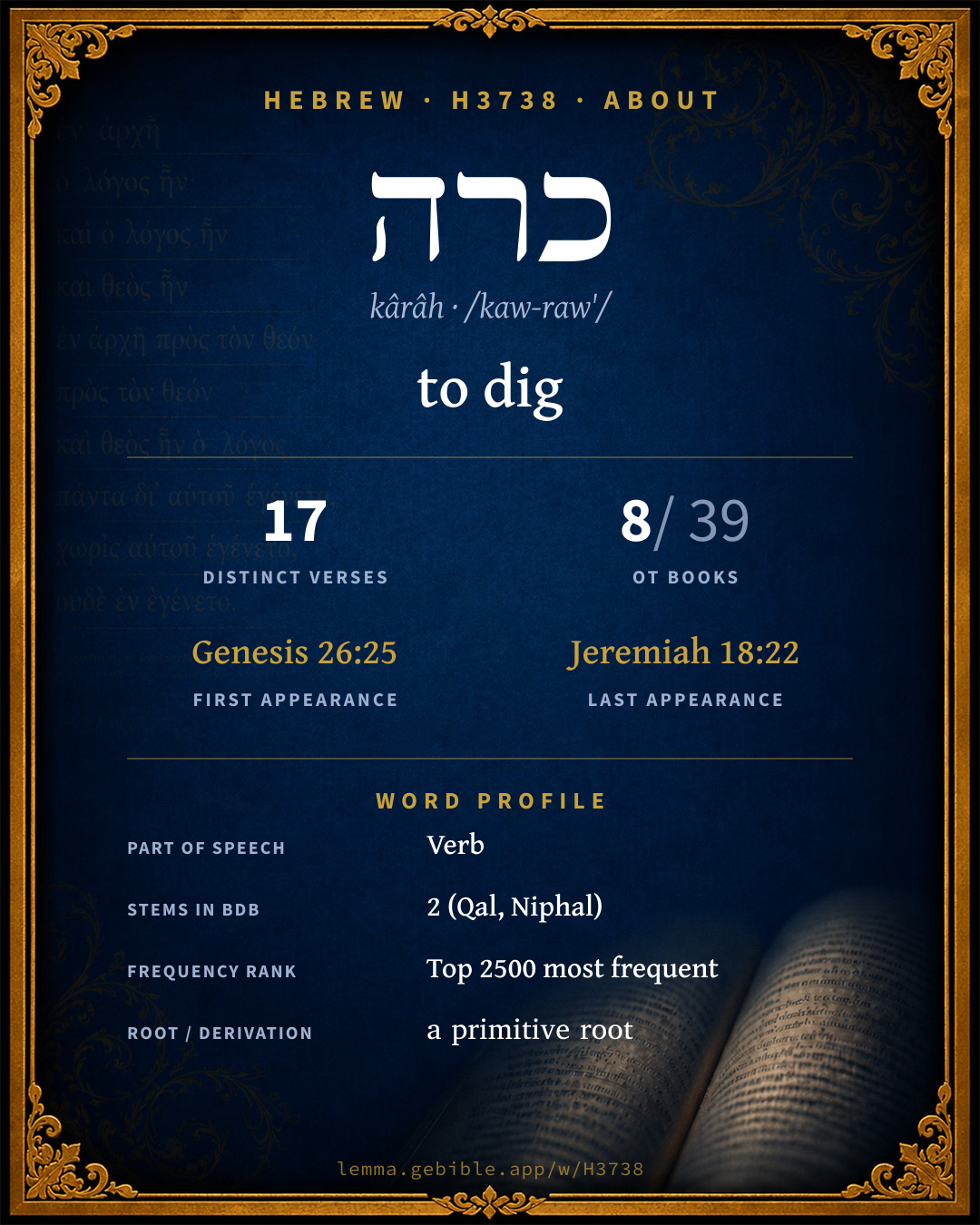
כָּרָה
to dig
also: excavate, dig through fuller range ↓
Full lexicon entry — Brown-Driver-Briggs (BDB)
From Brown-Driver-Briggs (BDB)
Where this word appears
See every Qal verb in the Hebrew Bible →
Grammar key — what these labels mean
Part of speech
- Verb
- An action or state-of-being word.
Noun type
- Common
- A common noun — a general class of person, place, or thing (“king,” “city,” “water”), not a specific name.
Stem
- Qal
- The basic, simple active stem — the plain form of the verb (“he wrote”).
- Niphal
- Usually the simple passive or reflexive of the Qal (“he was written”).
Form
- Perfect
- A completed action or state — Hebrew marks aspect (completeness) more than strict tense (“he wrote”).
- Participle Active
- A verbal adjective expressing ongoing or characteristic action (“writing / one who writes”).
- Imperfect
- An incomplete, ongoing, or future action (“he will / would write”).
- Sequential Imperfect
- An imperfect with prefixed waw — the standard past-narrative form (waw-consecutive imperfect).
State
- Absolute
- The independent form of a noun, not bound to a following word.
Person
- 3rd Person
- The one spoken about (“he / she / it / they”).
- 2nd Person
- The one addressed (“you”).
- 1st Person
- The speaker (“I / we”).
Gender
- Common
- Either gender — not distinguished for this form.
- Masculine
- Grammatically masculine.
Number
- Plural
- More than one (in Hebrew, generally three or more).
- Singular
- One.
Grammatical forms 11 distinct
- Verb, Qal, Perfect, 3rd Person, Common, Plural 5 times (29%)
- Verb, Qal, Perfect, 3rd Person, Masculine, Singular 2 times (12%)
- Verb, Qal, Participle Active, Masculine, Singular, Absolute 2 times (12%)
- Verb, Qal, Imperfect, 2nd Person, Masculine, Plural 1 time (6%)
- Verb, Qal, Sequential Imperfect, 3rd Person, Masculine, Plural 1 time (6%)
- Noun, Common, Masculine, Singular, Absolute 1 time (6%)
- Verb, Niphal, Imperfect, 3rd Person, Masculine, Singular 1 time (6%)
- Verb, Qal, Imperfect, 3rd Person, Masculine, Plural 1 time (6%)
+3 more forms (3 occurrences)
Parsed forms decoded from the imported morphology (morphhb / Westminster Leningrad Codex — WLC text public domain, morphhb tagging CC BY 4.0), counted across 17 parsed occurrences — not distinct verses.
Every verse where H3738 appears — 17 distinct verses across 8 books. Click any verse to open its interlinear word-by-word view. Verse text shown in the World English Bible for context — . Each verse’s Hebrew form is shown with its reference; the English is not keyword-highlighted, since the data carries no word-level English alignment. Use “Compare translations” on any verse to read it across multiple English versions. This concordance covers the Hebrew Bible; Septuagint (Greek Old Testament) occurrences are not indexed here.
Genesis 2 verses
- Genesis 26:25 וַ/יִּכְרוּ conj + Qal wimpf 3mp He built an altar there, and called on the name of Yahweh, and pitched his tent there. There Isaac's servants dug a well.
- Genesis 50:5 כָּרִ֤יתִי Qal pf 1cs 'My father made me swear, saying, "Behold, I am dying. Bury me in my grave which I have dug for myself in the land of Canaan." Now therefore, please let me go up and bury my father, and I will come again.'"
Exodus 1 verse
Numbers 1 verse
2 Chronicles 1 verse
Job 2 verses
Psalms 6 verses
- Psalms 7:15 כָּ֭רָֽה Qal pf 3ms He has dug a hole, And has fallen into the pit which he made.
- Psalms 22:16 כָּ֝/אֲרִ֗י prep det + n c ms For dogs have surrounded me. A company of evil-doers have enclosed me. They pierced my hands and my feet.
- Psalms 40:6 כָּרִ֣יתָ Qal pf 2ms Sacrifice and offering you didn't desire. You have opened my ears: Burnt offering and sin offering you have not required.
- Psalms 57:6 כָּר֣וּ Qal pf 3cp They have prepared a net for my steps. My soul is bowed down. They dig a pit before me. They fall into the midst of it themselves. Selah.
- Psalms 94:13 יִכָּרֶ֖ה Niphal impf 3ms That you may give him rest from the days of adversity, Until the pit is dug for the wicked.
- Psalms 119:85 כָּֽרוּ Qal pf 3cp The proud have dug pits for me, Contrary to your law.
Proverbs 2 verses
Jeremiah 2 verses
- Jeremiah 18:20 כָר֥וּ Qal pf 3cp Shall evil be recompensed for good? for they have dug a pit for my soul. Remember how I stood before you to speak good for them, to turn away your wrath from them.
- Jeremiah 18:22 כָר֤וּ Qal pf 3cp Let a cry be heard from their houses, when you shall bring a troop suddenly on them; for they have dug a pit to take me, and hid snares for my feet.
About this entry
At a glance — auto-summarized from this page’s data, not written by a person. Every figure links to its source below. This summary describes the numbers; it doesn’t interpret them.
כרה (kârâh) is a Hebrew verb most often rendered “to dig.” Scripture first uses it in Genesis 26:25. Spanning 17 verses in 8 books, it ranks among the uncommon words of the Hebrew Bible. Psalms dominates its distribution — 6 of 17 verses. The verb spans 2 stems, from Qal to Niphal. The sections below give every sense, occurrence, and version rendering.
Gloss history
Strong's 1890 vs modern scholarship
About this word
Strong's H3738 catalogs a Hebrew word from the Hebrew Old Testament.
These counts are not copied from any lexicon or concordance. They are computed here, from the morphology-tagged Hebrew Old Testament. What Lemma adds →
- 17
- distinct verses
- The word appears in 17 distinct verses.
- 8 / 39
- OT books
- The word appears in 8 of 39 Old Testament books.
- #1,671
- by frequency
- Top 2500 most frequent Hebrew words (rank 1,671 of 8,640 Hebrew words by occurrence).
View all 17 occurrences in the concordance →
By section of the Old Testament
By traditional corpus
Conventional, traditional groupings — biblical authorship is debated, so this is a traditional corpus grouping, not an authorship claim. Each share is this word’s portion of its verses in that division of the Hebrew canon. Each figure is a share of the word’s 17 distinct verses.
- Writings (Ketuvim) 11 verses · 65%
- Torah (Pentateuch) 4 verses · 24%
- Prophets (Nevi'im) 2 verses · 12%
How translations render this word
Counts come from each version’s own published word-to-Strong’s tagging or interlinear alignment — an approximate guide to how each version renders this word, not a word-level alignment the data otherwise carries. Because each total is that version’s own tagged count, the per-version totals vary from one another and need not match the appearance or distinct-verse counts above. These counts may also differ from a printed concordance because Lemma counts each distinctly tagged rendering and does not collapse phrase taggings into a single head-word total. This is a fixed set of word-tagged versions (KJV, ASV, BSB, ULT) and does not change with the reading translation you choose elsewhere. Each version’s license is shown beside its name below (and on Sources).
BDB lists this Strong’s number as 5 distinct words (homographs). Each count above pools all of them and is not split by sense — see the Senses section below. A low-frequency rendering may belong to a different one of those words, not the primary meaning.
- King James Version†: They have digged 3×, Digged 2×
- American Standard Version†: They have digged 2×
- Berean Standard Bible†: They have dug 2×
- unfoldingWord Literal Text†: They have dug 2×
King James Version Public Domain
Renders H3738 across 16† tagged occurrences — most commonly:
Plus 11 renderings that appear only once — usually multi-word phrases or single function words the recovered tagging swept in, not distinct renderings.
American Standard Version Public Domain
Renders H3738 across 16† tagged occurrences — most commonly:
Plus 14 renderings that appear only once — usually multi-word phrases or single function words the recovered tagging swept in, not distinct renderings.
Berean Standard Bible Public Domain
Renders H3738 across 14† tagged occurrences — most commonly:
Plus 12 renderings that appear only once — usually multi-word phrases or single function words the recovered tagging swept in, not distinct renderings.
unfoldingWord Literal Text CC BY-SA 4.0
Renders H3738 across 19† tagged occurrences — most commonly:
Plus 17 renderings that appear only once — usually multi-word phrases or single function words the recovered tagging swept in, not distinct renderings.
Senses in the full BDB
Hebrew verbs can shift meaning by stem (binyan): Qal is the basic action, Niphal is often passive or reflexive, Piel often intensifies or makes it factitive, and Hiphil is typically causative. The senses below are grouped under the stem BDB assigns to each.
What do BDB’s symbols mean?
BDB uses these scholarly abbreviations:
| Symbol | Meaning |
|---|---|
| 𝔊 | the Septuagint (the ancient Greek translation, LXX) |
| 𝔙 | the Vulgate (the Latin translation) |
| 𝔖 | the Syriac version (the Peshitta) |
| 𝔗 | the Targum (the Aramaic translation) |
| ψ | the Psalms |
| √ | root (the underlying root or stem) |
| ‖ | parallel passage (a synonymous or contrasted parallel) |
| † | the dagger: every passage where the word occurs is cited |
The 4 senses and sub-senses the full Brown-Driver-Briggs lexicon distinguishes for this word, in lexicon order (not ranked by frequency), with BDB’s own verbatim wording and sub-sense lettering. Shown in Hebrew script with BDB’s own scholarly abbreviations. The condensed entry is in the Lexicon Entry tab. See also the Forms in the corpus table below.
כרה I [m.] smelting-pot or furnace (Arabic كُور
כרה II dig (NH id.
Qal
- Pf. 3 ms. כָּרָה 2 Ch 16:14 ψ 7:16; 2 ms. כָּרִיתָ ψ 40:7; 1 s. כָּרִיתִי Gn 50:5; 3 pl. כָּרוּ Je 18:20 + 3 times; sf. כָּרוּהָ Nu 21:18; Impf. 3 ms. יִכְרֶה Ex 21:33; 3 mpl. וַיִּכְרוּ Gn 26:25; Pt. כֹּרֶה Pr 16:27; 26:27;—dig a grave, קֶבֶר Gn 50:5 (J), cf. 2 Ch 16:14; a well, בְּאֵר Gn 26:25 (J), Nu 21:18 (song in JE); a pit, בּוֹר Ex 21:33; fig. of plotting against others ψ 7:16; so sq. שׁוּחָה Je 18:20, 22, sq. שִׁיחָה ψ 57:7; 119:85; sq. שַׁחַת Pr 26:27; hence כֹּרֶה רָעָה Pr 16:27 one digging a calamity; אָזְנַיִם כ׳ לִי ψ 40:7 ears hast thou dug (with allusion to the cavity of the ear) for me, thou hast given me the means of hearing and obeying thy will.—On ψ 22:17 v. II. כּוּר. e.g. 2 Chronicles 16:14
Niphal
- Impf. 3 ms. עַד יִכָּרֶה שַׁחַת ψ 94:13 until the pit be digged for the wicked, fig. of judgment. e.g. Psalms 94:13
כרה III cistern (or well), only pl. cstr. in נְוֹת כְּרֹת רֹעִים Zp 2
כרה IV get by trade, trade (NH כִּירָה act of buying, purchase (so ‘in den Küstenländern,’) LevyNWB ii. 323 f.)
Qal
- Impf. 1 s. sf. וָאֶכְּרֶהָ Ho 3:2 (d. f. dirim., si vera l. punctat., Ges§ 20. 2, b; but cf. We); 3 mpl. יִכְרוּ Jb 40:30; 2 mpl. תִּכְרוּ Dt 2:6 Jb 6:27;—get by trade, buy, c. acc. Ho 3:2 Dt 2:6; sq. עַל־ trade in, make trade of Jb 6:27; 40:30. e.g. Hosea 3:2
כרה V give a feast (lit. perhaps bring (guests), invite
Qal
- Impf. c. acc. cogn., וַיִּכְרֶה לָהֶם כֵּרָה גְדוֹלָה 2 K 6:23 and he gave a great feast for them (the context requires this sense, but text dubious, Nö ZMG 1886, 724, cf. Klo). e.g. 2 Kings 6:23
Senses from the full Brown-Driver-Briggs lexicon (Brown, Driver, Briggs; Oxford 1906 — public domain), digitized via Sefaria, supplemented by the OpenScriptures HebrewLexicon (CC BY 4.0). Full attribution on Sources.
Word origin
I. n.[m.] smelting-pot or furnace (Arabic كُور; NH id.; Aramaic id., ܟܽܘܪ; Ethiopic ከውር: )—pot or furnace for smelting metals, but alw. in metaph. or sim. of human sufferings in punishment or discipline: iron (fig. of Egypt as place of bondage) מִכּ׳ הַבַּרְזֶל Dt 4:20 Je 11:4, מִתּוֹךְ כ׳ הַבּ׳ 1 K 8:51; gold כ׳ לַזָּהָב Pr 17:3 = 27:21 (‖ מַצְרֵף); various metals Ez 22:18, 20, 22; once בְּכוּר עֹ֑נִי Is 48:10 in a smelting-pot of a affliction.
I. vb. dig (NH id.; Aramaic כְּרָא, Ethiopic ከረየ Arabic كَرَا (c. و and especially ى, Dozy ii. 461); Syriac ܟܪܳܐ is be short, cut off (i.e. rounded off ?), Arabic كُرَةٌ ball; 𝔗 כְּרֵי heap Dalm Gr 109; Syriac ܟܰܪܝܳܐ, Mish. כרי id.; Assyrian karê, large vessels for holding corn, etc., DlHWB 353, cf. kirû (dub.) Wkl Tel Am. Vocab.; Ba ZMG 1887, 615 conjectures be round as orig. √ meaning, and comp. Arabic كَرِيَتِ السَّاقُ the leg is round);—
II. n.f. cistern (or well), only pl. cstr. in נְוֹת כְּרֹת רֹעִים Zp 2:6 pastures of (= with) wells of shepherds, but text dub.; כ׳ a gloss according to Kö ii. 176, (§ 94 a) Anm.; 𝔊 κρήτη; We (והיתה כרת נות רעים, as 𝔊) kereth = Philistia; v. further כְּרֵתִי; Böhme ZAW vii. 1887, 212 views כְּרֹת, plausibly, as erron. variant of preceding נְוֹת, so Schwally ib. x. 1890, 185, 186; Rothstein in KauAT.
III. vb. get by trade, trade (NH כִּירָה act of buying, purchase (so ‘in den Küstenländern,’) LevyNWB ii. 323 f.); Arabic كَرَى let for hire);—only
IV. vb. give a feast (lit. perhaps bring (guests), invite; cf. Assyrian karû, bring, kirêtu, feast, kireti iškun, he gave a feast, DlHWB 352);— only
— Brown-Driver-Briggs (Oxford 1906, public domain), digitized via Sefaria, supplemented by the OpenScriptures HebrewLexicon (CC BY 4.0). See Sources.
Origin: a primitive root
Jastrow Dictionary
A second Hebrew/Aramaic lexicon for comparison, covering Aramaic and post-biblical (Talmudic, Targumic, Midrashic) usage that the biblical-Hebrew BDB does not. Matched by lemma rather than by Strong’s number, so a lemma may carry more than one Jastrow headword (shown separately below), and the entries cover usage well beyond the Bible.
כֵּירָה
- a circle, esp. banquet. B. Bath. 75ᵃ (expl. יכרו Job XL, 30, with ref. to II Kings VI, 23) אין כ׳ אלא סעודה kerah means banquet. e.g. Job 40:30
כָּרָה
- , v. כרי
כֵּרָה
- , v. כֵּירָה
כְּרַהּ
- (v. כרח) to shrink, be narrow, (with or sub. רוחא) to be ill-tempered.—Part. כְּרִי, f. כַּרְיָא (= כריה, כריהא); pl. כְּרִין. Targ. Prov. XIV, 17; 29 דכ׳ רוחיה (h. text קצר רוח, קצר אפים).—ענבי דכְרִין grapes which shrunk, undeveloped (blackish) grapes. Naz. 34ᵇ, a. e., v. כְּרוּם ch.
- to be ill. Targ. Prov. XXIII, 35.
כרי
- (b. h.) [to round, heap, cave,]
- 1. to dig. Mekh. Mishp., N’zikin, s. 11 כּוֹרֶה מנין how am I to know that he who digs a pit is responsible?—B. Kam. 51ᵃ כורה אחר כורה one who digs after another one, i.e. who completes the pit to its legal size. Succ. 53ᵃ; Macc. 11ᵃ בשעה שכ׳ דוד וכ׳ when David dug for the foundations; a. fr.—Part. pass. כָּרוּי, f. כְּרוּיָה hollowed out. Kel. III, 5, a. e., v. חִידּוּק a. בָּרָה.
- 2. to sit in a circle, v. infra.
- 1. to heap, pile. Gen. R. s. 100 (ref. to כריתי, Gen. L, 5) הרבה ממון תַּכְרֶה עליה much money shalt thou pile up (give me) for it (the grave); (some ed. הכרה Jacob piled up in settling with Esau). Ib. הִכְרֵתִי (corr. הִכְרֵיתִי); v. כְּרִי; Pesik. R. s. 1 וכל ממון שהיה לו ה׳ וכ׳ (not מסר לו) and he (Jacob) piled up whatever money he had to place it before Esau &c. e.g. Genesis 50:5
- 2. to invite to a banquet;
- 3. (with play on כרת) to excise, to destroy. Snh. 20ᵃ; Yalk. Sam. 142 (ref. to להברות, II Sam. III, 35, where Raba had before him a K’thib. להכרות) כתיב להכרות … בתחלה להַכְרוֹתוֹ וכ׳ it is written l’hakhroth (to entertain) and read l’habroth (v. בָּרָה): originally they came with the intention of destroying him (for the murder of Abner), and finally (when convinced of his innocence) they came to comfort him; [Yalk. Ms. to Sam. l. c., quoted in Rabb. D. S. Snh. l. c. note 9: כתיב לִבְרוֹת וקרינן להַבְרוֹת בתחלה לברות וכ׳ it is written libroth (to pierce, cmp. Ez. XXIII, 47), and we read l’habroth &c.]. e.g. 2 Samuel 3:35
A Dictionary of the Targumim, the Talmud Babli and Yerushalmi, and the Midrashic Literature (Marcus Jastrow; London, Luzac, 1903) — Public Domain. Digitized via Sefaria. Digitized via Sefaria. Full attribution on Sources.
Forms in the corpus
The 17 distinct written forms H3738 takes in the Hebrew Bible, most frequent first — each parse links to that stem’s occurrences in the concordance. Hebrew forms include their vowel points and cantillation, so a single lemma takes many written forms.
Same root — word family
Other BDB entries built from the same root as H3738, grouped by Strong’s listed origin. These share a root / origin per the lexicon — not necessarily a shared meaning. Each links to that word’s own entry.
Derived from this word
Compare all same-root words → They share a root, not necessarily a meaning.
Septuagint verse parallels
This word appears in 14 verses that also exist in the Greek Old Testament (Septuagint), out of the 17 Hebrew verses it occurs in. You can read those verses in Greek by switching the Old Testament edition to the Septuagint.
Read these verses in the Septuagint
- Genesis 26:25
- Exodus 21:33
- Numbers 21:18
- 2 Chronicles 16:14
- Job 6:27
- Psalms 7:15
- Proverbs 16:27
- Jeremiah 18:20
This is a verse-level parallel only — the same verses exist in both the Hebrew and Greek Old Testaments. No word-level Hebrew↔Greek correspondence is claimed: the data carries no such alignment, so no Greek word is shown as this Hebrew word’s translation. Coverage is not total — the Septuagint omits the deuterocanon and renumbers the Psalms, so some Hebrew verses have no direct Greek parallel.