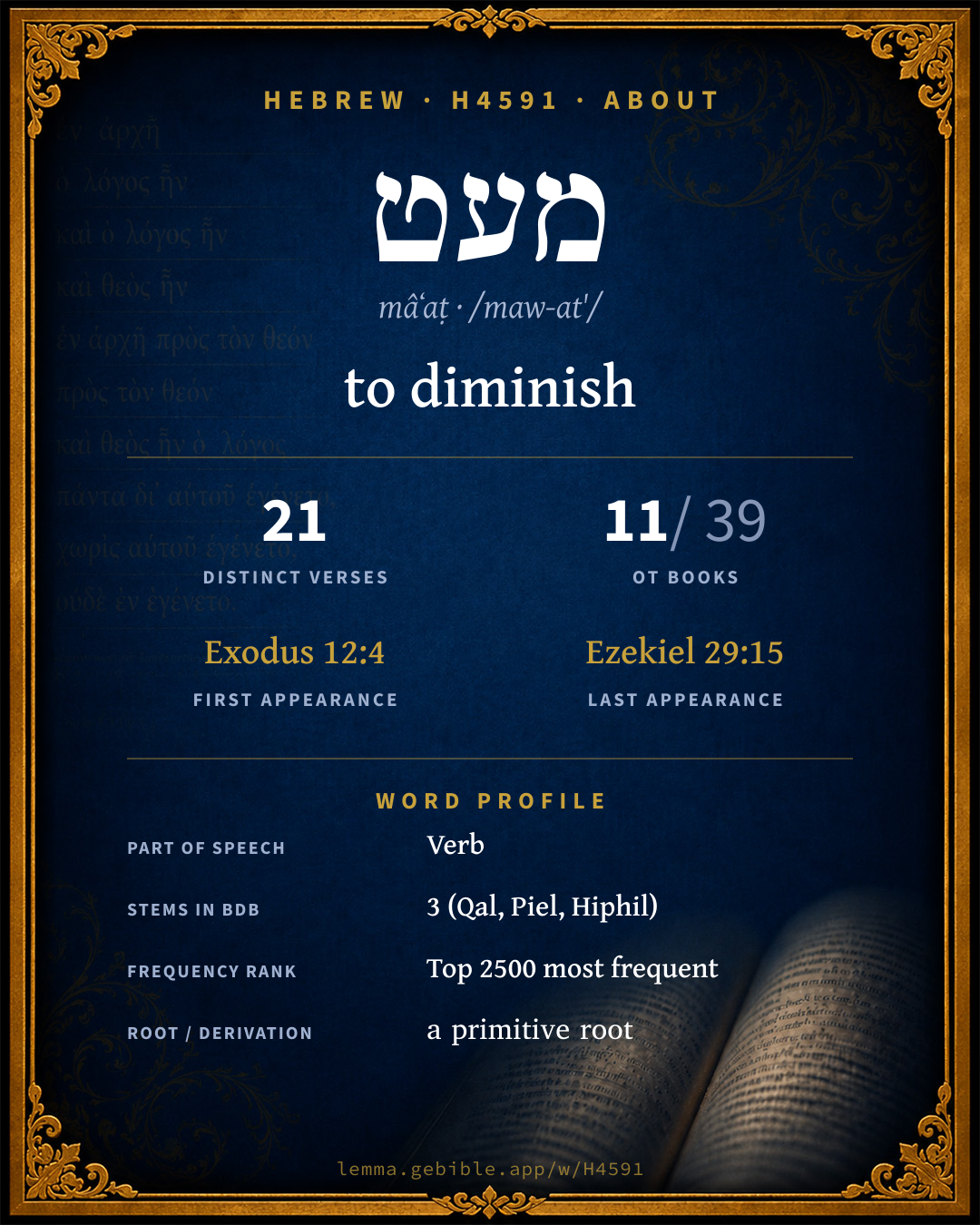
מָעַט
to diminish
‘to diminish’ is one of 2 main senses fuller range ↓
Full lexicon entry — Brown-Driver-Briggs (BDB)
From Brown-Driver-Briggs (BDB)
Where this word appears
See every Hiphil verb in the Hebrew Bible →
Grammar key — what these labels mean
Part of speech
- Verb
- An action or state-of-being word.
Stem
- Hiphil
- The causative active stem (“he caused / brought about”). Here: ‘qualifying an action’
- Qal
- The basic, simple active stem — the plain form of the verb (“he wrote”).
- Piel
- An intensive or resultative active stem. Here: ‘become few’
Form
- Imperfect
- An incomplete, ongoing, or future action (“he will / would write”).
- Participle Active
- A verbal adjective expressing ongoing or characteristic action (“writing / one who writes”).
- Sequential Perfect
- A perfect with prefixed waw continuing a preceding imperfect or command (waw-consecutive perfect).
- Sequential Imperfect
- An imperfect with prefixed waw — the standard past-narrative form (waw-consecutive imperfect).
- Jussive
- A third- or second-person volitional form expressing wish or command (“let him write”).
- Perfect
- A completed action or state — Hebrew marks aspect (completeness) more than strict tense (“he wrote”).
- Infinitive Construct
- A bound verbal noun, frequently with prepositions (“to write / in writing”).
State
- Absolute
- The independent form of a noun, not bound to a following word.
Person
- 2nd Person
- The one addressed (“you”).
- 3rd Person
- The one spoken about (“he / she / it / they”).
- 1st Person
- The speaker (“I / we”).
Gender
- Masculine
- Grammatically masculine.
- Common
- Either gender — not distinguished for this form.
- Feminine
- Grammatically feminine.
Number
- Singular
- One.
- Plural
- More than one (in Hebrew, generally three or more).
1 distinct verse where H4591 appears in the Piel stem, across 1 book. Filtered view — show all forms. Click any verse to open its interlinear word-by-word view. Verse text shown in the World English Bible for context — . Each verse’s Hebrew form is shown with its reference; the English is not keyword-highlighted, since the data carries no word-level English alignment. Use “Compare translations” on any verse to read it across multiple English versions. This concordance covers the Hebrew Bible; Septuagint (Greek Old Testament) occurrences are not indexed here.
Ecclesiastes 1 verse
About this entry
At a glance — auto-summarized from this page’s data, not written by a person. Every figure links to its source below. This summary describes the numbers; it doesn’t interpret them.
מעט (mâʻaṭ) is a Hebrew verb most often rendered “to diminish.” Scripture first uses it in Exodus 12:4. Spanning 21 verses in 11 books, it ranks among the uncommon words of the Hebrew Bible. The verb spans 3 stems, from Qal to Piel. Sharing its root, it stands alongside מעט and מעט. For the data behind this summary, explore the sense tree and the renderings breakdown below.
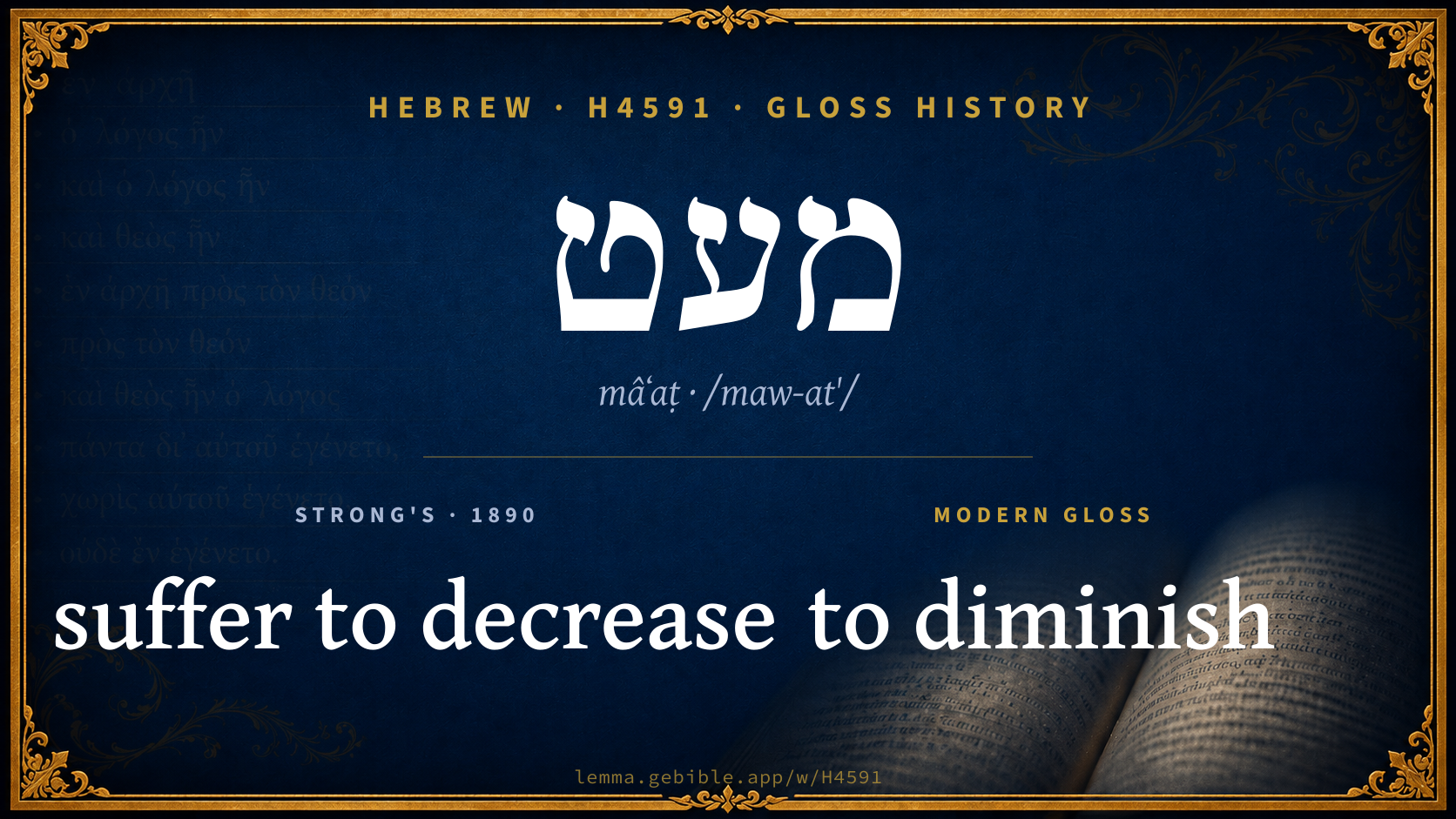
Gloss history
Strong's 1890 vs modern scholarship
About this word
Strong's H4591 catalogs a Hebrew word from the Hebrew Old Testament.
These counts are not copied from any lexicon or concordance. They are computed here, from the morphology-tagged Hebrew Old Testament. What Lemma adds →
- 21
- distinct verses
- The word appears in 21 distinct verses.
- 11 / 39
- OT books
- The word appears in 11 of 39 Old Testament books.
- #1,412
- by frequency
- Top 2500 most frequent Hebrew words (rank 1,412 of 8,640 Hebrew words by occurrence).
View all 21 occurrences in the concordance →
By section of the Old Testament
By traditional corpus
Conventional, traditional groupings — biblical authorship is debated, so this is a traditional corpus grouping, not an authorship claim. Each share is this word’s portion of its verses in that division of the Hebrew canon. Each figure is a share of the word’s 21 distinct verses.
- Torah (Pentateuch) 10 verses · 48%
- Prophets (Nevi'im) 6 verses · 29%
- Writings (Ketuvim) 5 verses · 24%
How translations render this word
Counts come from each version’s own published word-to-Strong’s tagging or interlinear alignment — an approximate guide to how each version renders this word, not a word-level alignment the data otherwise carries. Because each total is that version’s own tagged count, the per-version totals vary from one another and need not match the appearance or distinct-verse counts above. These counts may also differ from a printed concordance because Lemma counts each distinctly tagged rendering and does not collapse phrase taggings into a single head-word total. This is a fixed set of word-tagged versions (KJV, ASV, BSB, ULT) and does not change with the reading translation you choose elsewhere. Each version’s license is shown beside its name below (and on Sources).
- King James Version: Shall be diminished 2×
- American Standard Version: Thou shalt give the less 2×
- Berean Standard Bible: Decrease 2×
- unfoldingWord Literal Text: Do 3×, You shall decrease 3×
King James Version Public Domain
Renders H4591 across 23 tagged occurrences — most commonly:
Plus 21 renderings that appear only once — usually multi-word phrases or single function words the recovered tagging swept in, not distinct renderings.
American Standard Version Public Domain
Renders H4591 across 22 tagged occurrences — most commonly:
Plus 20 renderings that appear only once — usually multi-word phrases or single function words the recovered tagging swept in, not distinct renderings.
Berean Standard Bible Public Domain
Renders H4591 across 22 tagged occurrences — most commonly:
Plus 20 renderings that appear only once — usually multi-word phrases or single function words the recovered tagging swept in, not distinct renderings.
unfoldingWord Literal Text CC BY-SA 4.0
Renders H4591 across 27 tagged occurrences — most commonly:
Plus 21 renderings that appear only once — usually multi-word phrases or single function words the recovered tagging swept in, not distinct renderings.
Senses in the full BDB
Hebrew verbs can shift meaning by stem (binyan): Qal is the basic action, Niphal is often passive or reflexive, Piel often intensifies or makes it factitive, and Hiphil is typically causative. The senses below are grouped under the stem BDB assigns to each.
What do BDB’s symbols mean?
BDB uses these scholarly abbreviations:
| Symbol | Meaning |
|---|---|
| 𝔊 | the Septuagint (the ancient Greek translation, LXX) |
| 𝔙 | the Vulgate (the Latin translation) |
| 𝔖 | the Syriac version (the Peshitta) |
| 𝔗 | the Targum (the Aramaic translation) |
| ψ | the Psalms |
| √ | root (the underlying root or stem) |
| ‖ | parallel passage (a synonymous or contrasted parallel) |
| † | the dagger: every passage where the word occurs is cited |
The 5 senses and sub-senses the full Brown-Driver-Briggs lexicon distinguishes for this word, in lexicon order (not ranked by frequency), with BDB’s own verbatim wording and sub-sense lettering. Shown in Hebrew script with BDB’s own scholarly abbreviations. The condensed entry is in the Lexicon Entry tab. See also the Forms in the corpus table below.
Qal
- Impf. יִמְעַט Ex 12:4, 2 mpl. תִּמְעָ֑טוּ Je 29:6, 3 mpl. יִמְעָ֑טוּ Is 21:17 +, וַיִּמְעֲטוּ ψ 107:39; Inf. מְעֹם Lv 25:16;—Ex 12:4 אִם־יִמְעַט הַבַּיִת מִהְיוֹת מִשֶּׂה if the house be too small for a lamb; Ne 9:32 אַל־יִמְעַט לְפָנֶיךָ אֵת כָּל־הַתְּלָאָה (cf. Ges§ 117 l); of a people, Je 29:6 וּרְבוּ שָׁם וְאַל־תִּמְעָ֑טוּ and become not few, 30:19 וְהִרְבִּתִים וְלֹא יִמְעָ֔טוּ, Is 21:17 ψ 107:39; Pr 13:11 הוֹן מֵהֶבֶל יִמְעָ֑ט diminishes (opp. יַרְבֶּה); Lv 25:16 וּלְפִי מְעֹט הַשָּׁנִים according to the fewness of the years. e.g. Exodus 12:4
Piel
- become few (Ges§ 52 k), Pf. 3 pl. Ec 12:3 וּבָֽטְלוּ הַטֹּחֲנוֹת כִּי מִעֵ֔טוּ. e.g. Ecclesiastes 12:3
Hiphil
- Pf. 3 fs. consec. וְהִמְעִ֫יטָה (Ges§ 49 k), Lv 26:22, 1 s. with sf. וְהִמְעַטְתִּים Ez 29:15; Impf. 2 ms. תַּמְעִיט Lv 25:16, תַּמְעִטֵ֫נִי Je 10:24, 2 fs. תַּמְעִ֫יטִי 2 K 4:3, etc.;—make small or few, diminish: e.g. Leviticus 26:22
- a. Lv 26:22 (of the sword) וְהִמְעִ֫יטָה אֶתְכֶם, Ez 29:15 וְהִמְעַטְתִּים, Je 10:24 אַל־בְּאַפְּךָ פֶּן־תַּמְעִטֵנִי lest thou make me (the people) small, ψ 107:38 וּבְהֶמְתָּם לֹא יַמְעִיט; Lv 25:16 וּלְפִי מְעֹט הַשָּׁנִים תַּמְעִיט מִקְנָתוֹ according to the smallness (fewness) of the years, thou shalt make small its price, Nu 26:54 לָרַב תַּרְבֶּה נַחֲלָתוֹ וְלַמְעַט תַּמְעִיט נַחֲלָתוֹ and to the small (few) thou shalt make small his inheritance (so 33:54). e.g. Leviticus 26:22
- b. qualifying an action (sometimes to be understood from the context), Ex 16:17 וַיִּלְקְמוּ הַמַּרְבֶּה וְהַמַּמְעִיט and they gathered, he that made much, and he that made little (sc. לִלְקֹט), v 18 Nu 11:32 הממעיט אסף עשׂרה חמרים, 2 K 4:3 כֵּלִים רֵקִים אַל־תַּמְעִיטִי empty vessels make not few (sc. in borrowing); Ex 30:15 הֶעָשִׁיר לֹא יַרְבֶּה וְהַדַּל לֹא יַמְעִיט מִמַּחֲצִית הַשָּׁ֑קֶל לָתֵת וגו׳ shall not diminish from the half shekel to give, i.e. shall not give less, Nu 35:8 מֵאֵת הָרַב תַּרְבּוּ וּמֵאֵת הַמְעַט תַּמְעִיטוּ and from the few ye shall make few (sc. לָתֵת) i.e. ye shall give few (cities). e.g. Exodus 16:17
Senses from the full Brown-Driver-Briggs lexicon (Brown, Driver, Briggs; Oxford 1906 — public domain), digitized via Sefaria, supplemented by the OpenScriptures HebrewLexicon (CC BY 4.0). Full attribution on Sources.
Word origin
vb. be or become small, diminished, few (NH, Talm., id.; Arabic مَعِطَ is to be without hair on the body)—
— Brown-Driver-Briggs (Oxford 1906, public domain), digitized via Sefaria, supplemented by the OpenScriptures HebrewLexicon (CC BY 4.0). See Sources.
Origin: a primitive root
Jastrow Dictionary
A second Hebrew/Aramaic lexicon for comparison, covering Aramaic and post-biblical (Talmudic, Targumic, Midrashic) usage that the biblical-Hebrew BDB does not. Matched by lemma rather than by Strong’s number, so a lemma may carry more than one Jastrow headword (shown separately below), and the entries cover usage well beyond the Bible.
מָעַט
- to be thin, minute.—Part. pass. מָעוּט, f. מְעוּטָה; pl. מְעוּטִים, מְעוּטִין; מְעוּטוֹת. Y. Pes. V, 32ᵃ bot.; Y. Snh. I, 18ᶜ bot. גסי רוח ומְעוּטֵי תודה big in spirit (haughty) and small in learning (of narrow capacity). Tosef. Ḥall. I, 7; a. e.—Tam. IV, 2 במעוטה at least (Talm. ed. 31ᵃ במעוטן, comment. במיעוטן on the smallest of the tables).
- 1. to diminish, reduce; to do little. Ab. IV, 10 הוי מְמַעֵט בעסק וכ׳ do less business, and busy thyself with the Law. M. Kat. 22ᵃ, v. עֵסֶק. Taan. I, 7 מְמַעֲטִין במשא וכ׳ we must reduce business transactions, building &c. Ib. IV, 6 משנכנס אב ממעטין בשמחה with the beginning of the month of Ab we must reduce rejoicing. Ḥull. 60ᵇ לכי ומַעֲטִי את עצמך go and make thyself smaller (be reduced). Snh. 17ᵃ הואיל ומִיעַטְתֶּם עצמיכם because you made yourselves small (were modest); Num. R. s. 15. Tosef. Erub. IX (VI), 15 מִיעֲטָהּ באבנים וכ׳ if he reduced the size of the gap by means of stones &c. Y. ib. VII, beg. 24ᵇ ממעטין בכלים you may use utensils for reducing the opening. Bab. ib. 77ᵇ ממעט effects the reduction, i.e. puts the two adjoining places in the legal condition of dwellings connected by a gate; a. fr.
- 2. (interpret.) to limit, qualify, exclude from the rule. Shebu. 26ᵃ היה דורש את כל התורה בריבה ומיעט interpreted the entire Law on the principle of ‘It includes and it excludes’, i.e. on the principle that if, in the Biblical text, a specification is preceded and followed by general terms, both an extension (ריבוי) and a limitation (מיעוט) must be found; e. g. ib. (ref. to Lev. V, 4) או נפש … להרע … מי׳ וכ׳ ‘or if a soul swears’, this is a general expression, ‘for bad or for good’, this limits (the sphere of the law to things which are either an advantage or a disadvantage); ‘whatsoever it be &c.’, this is again a generalization; now what does it include? All kinds of words (vows); ומאי מ׳ מ׳ וכ׳ and what does it exclude? It excludes a religious act (the vow of doing a forbidden thing or not doing a commanded thing). Sifra Tsav, ch. XV, Par. 11 אם מִיעַטְתִּים מסמיכה מרובה לא אֲמַעֲטֵם בתנופה וכ׳ if I exclude them (the gentiles) from the privilege of laying hands on the sacrifice, which has a wider sphere of application, must I not exclude them from the privilege of waving &c.?; a. fr.—Part. pass. מְמוּעָט, v. מוּעָט. e.g. Leviticus 5:4
- to do little, less. Ber. 17ᵃ שמא תאמר אני מרבה והוא מַמְעִיט lest you say, I do much good, and he but little; שנינו אחד המרבה ואחד הממעיט וכ׳ we have learned, whether one does much or little (they are equally worthy), provided one directs his heart &c.; Men. XIII, 11; a. fr.
- to be diminished, reduced. Erub. VII, 5 נ׳ התבן מעשרה וכ׳ if the pile of straw has been reduced to less than ten handbreadths. Ib. 54ᵇ; Ab. Zar. 19ᵃ מִתְמַעֵט he will become less (will decline in learning). Arakh. 30ᵇ נ׳ כספו if his value was reduced. Tosef. Sot. XIV, 10 נִתְמַעֲטוּ הימים וכ׳ the days were reduced, and the years shortened. Ib. התחילו הגוים להתרבות וישראל להִתְמעֵט the nations began to grow and the Israelites to be reduced (in rank). Pesik. R. s. 14 נִתְמַעֲטָה ידו he became reduced in fortune. Midr. Till. to Ps. XII, end נפשם מִתְמַעֶטֶת עליהם their soul within them shrinks, i.e. they feel jealous and angry; Yalk. ib. 659; Lev. R. s. 32, beg. מתמענת (corr. acc.). Sifra l. c. נִתְמַעֶטֶת תנופה the sphere of the act of waving is the smaller one; נִתְמַעֲטָה סמיכה the laying on of hands has the smaller sphere; a. fr.—Erub. 80ᵇ מאי נתמעט נתמטמט ‘it was reduced’ (Mish. ib. VII, 7) means, it was reduced to atoms, v. מִטְמֵט.—B. Mets. 71ᵃ נכסיו מִתְמַעֲטִין, v. מוּט h.—Tosef. Mikv. VI (VII), 14 מִתְמַעֲטִין, v. מָעַךְ.
מְעַט I
- Pa. מַעֵט same, to reduce; to exclude. Yoma 74ᵃ למַעוּטֵי מאי … למַ׳ וכ׳ this ‘none but’ is to exclude what (whom)?… It excludes the king; Shebu. 31ᵃ Ms. M. (ed. לאפוקי); a. fr.
- to be reduced; to be excluded. Erub. 79ᵇ דא׳ מאיתמול when its size was reduced the day before; a. e.
מְעַט II
- preced.) a little, little. Ab. I, 15 אמור מ׳ ועשה הרבה promise little and do much. Sabb. 31ᵇ (ref. to Koh. VII, 16) הא מ׳ לירשע but a little wrong one may do?; a. e.—V. מוּעָט. e.g. Ecclesiastes 7:16
A Dictionary of the Targumim, the Talmud Babli and Yerushalmi, and the Midrashic Literature (Marcus Jastrow; London, Luzac, 1903) — Public Domain. Digitized via Sefaria. Digitized via Sefaria. Full attribution on Sources.
Forms in the corpus
The 20 distinct written forms H4591 takes in the Hebrew Bible, most frequent first — each parse links to that stem’s occurrences in the concordance. Hebrew forms include their vowel points and cantillation, so a single lemma takes many written forms.
Same root — word family
Other BDB entries built from the same root as H4591, grouped by Strong’s listed origin. These share a root / origin per the lexicon — not necessarily a shared meaning. Each links to that word’s own entry.
Derived from this word
Compare all same-root words → They share a root, not necessarily a meaning.
Septuagint verse parallels
This word appears in 18 verses that also exist in the Greek Old Testament (Septuagint), out of the 21 Hebrew verses it occurs in. You can read those verses in Greek by switching the Old Testament edition to the Septuagint.
Read these verses in the Septuagint
- Exodus 12:4
- Leviticus 25:16
- Numbers 11:32
- 2 Kings 4:3
- Proverbs 13:11
- Ecclesiastes 12:3
- Isaiah 21:17
- Jeremiah 10:24
- Ezekiel 29:15
This is a verse-level parallel only — the same verses exist in both the Hebrew and Greek Old Testaments. No word-level Hebrew↔Greek correspondence is claimed: the data carries no such alignment, so no Greek word is shown as this Hebrew word’s translation. Coverage is not total — the Septuagint omits the deuterocanon and renumbers the Psalms, so some Hebrew verses have no direct Greek parallel.