

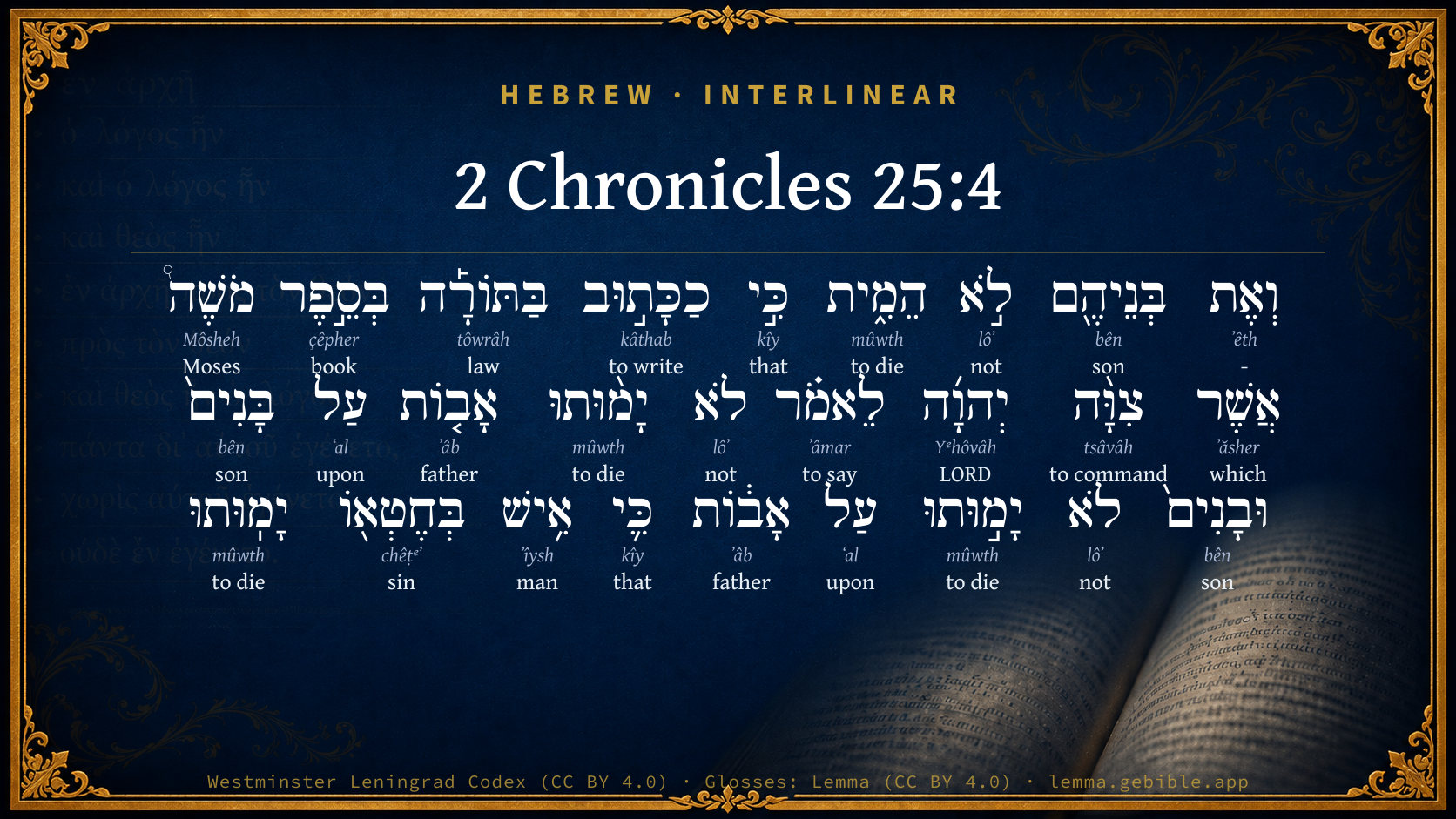
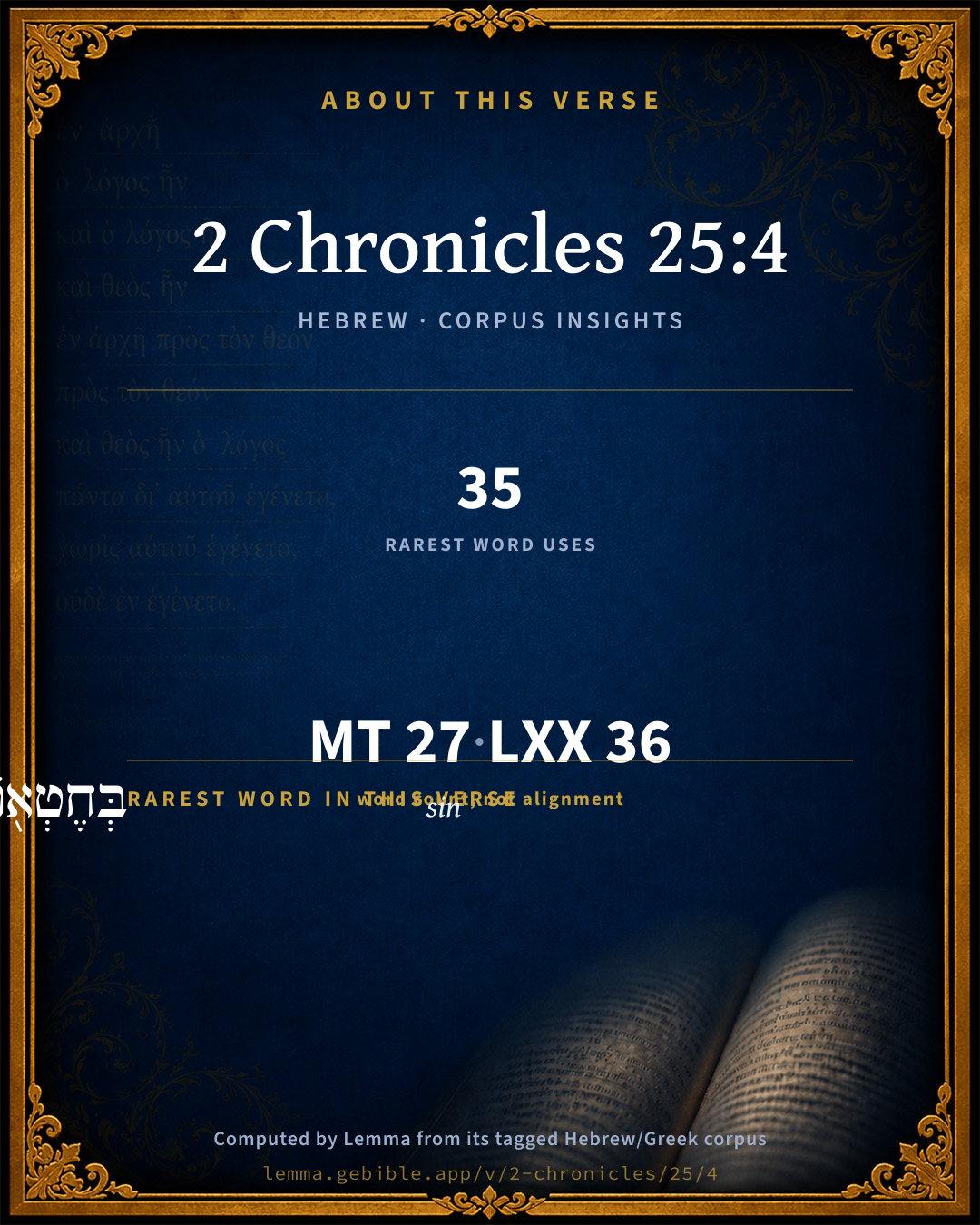
וְאֶת בְּנֵיהֶ֖ם לֹ֣א הֵמִ֑ית כִּ֣י כַכָּת֣וּב בַּתּוֹרָ֡ה בְּסֵ֣פֶר מֹשֶׁה֩ אֲשֶׁר צִוָּ֨ה יְהוָ֜ה לֵאמֹ֗ר לֹא יָמ֨וּתוּ אָב֤וֹת עַל בָּנִים֙ וּבָנִים֙ לֹא יָמ֣וּתוּ עַל אָב֔וֹת כִּ֛י אִ֥ישׁ בְּחֶטְא֖וֹ יָמֽוּתוּ
But he didn't put their children to death, but did according to that which is written in the law in the book of Moses, as Yahweh commanded, saying, The fathers shall not die for the children, neither shall the children die for the fathers; but every man shall die for his own sin.
World English Bible · Public Domain
Commentary
Notes on 2 Chronicles 25:4 from classic Christian and Jewish commentators (each source and its license shown beneath its notes). The classic Christian expositions comment on the surrounding passage and are grouped to its opening verse, so a note may address several verses; the Jewish commentaries on the Tanakh (Rashi and others) are per-verse, so they appear only where the commentator wrote on this verse.
Lemma curates 59 commentaries, every one of them public domain or Creative Commons licensed, each selected and text-cleaned for this edition rather than reprinted as found. About our sources →
Geneva Bible (1599)
Geneva Bible translators
Geneva Bible (1599) marginal notes — public domain. Text via Bolls.life.
Ellicott's Commentary for English Readers
A Bible Commentary for English Readers, edited by Charles John Ellicott (1878–1897) — public domain. Text from a community e-Sword module.
The Cambridge Bible for Schools and Colleges
gen. ed. J. J. S. Perowne
The Cambridge Bible for Schools and Colleges (gen. ed. J. J. S. Perowne; Cambridge University Press, 1878–1918) — public domain. Text from a community e-Sword module.
The Pulpit Commentary
The Pulpit Commentary (1880–1919), ed. H.D.M. Spence-Jones & Joseph S. Exell — public domain. Text from a community e-Sword module.