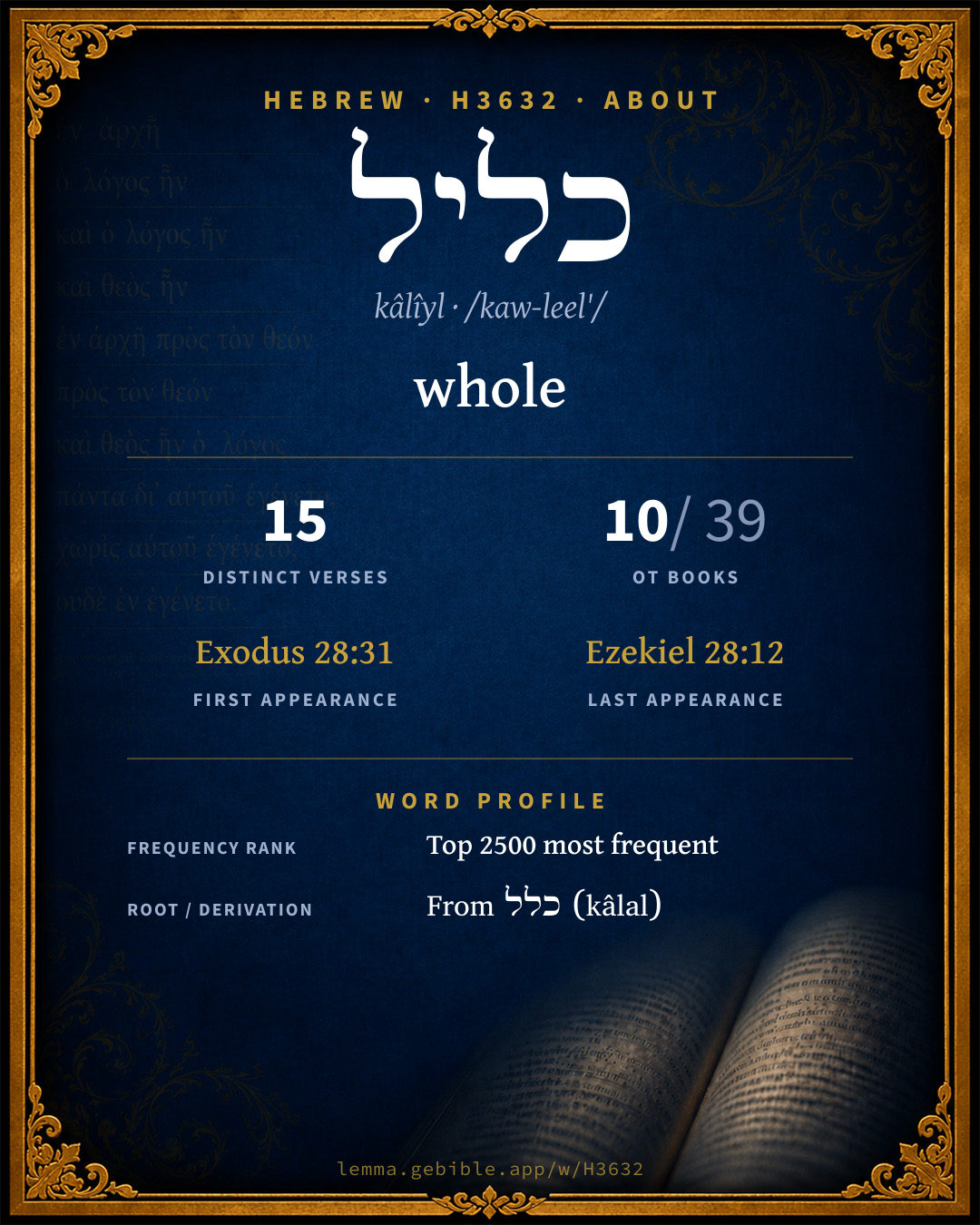
כָּלִיל
whole
‘whole’ is one of 3 main senses fuller range ↓
Full lexicon entry — Brown-Driver-Briggs (BDB)
From Brown-Driver-Briggs (BDB)
Where this word appears
Grammar key — what these labels mean
Part of speech
- Adjective
- A word that describes or qualifies a noun.
State
- Absolute
- The independent form of a noun, not bound to a following word.
- Construct
- A noun bound to a following noun in a possessive / “of” relationship (the construct chain).
Gender
- Masculine
- Grammatically masculine.
- Feminine
- Grammatically feminine.
Number
- Singular
- One.
Every verse where H3632 appears in the Book of Numbers — 1 distinct verse. Click any verse to open its interlinear word-by-word view. Verse text shown in the World English Bible for context — . Each verse’s Hebrew form is shown with its reference; the English is not keyword-highlighted, since the data carries no word-level English alignment. Use “Compare translations” on any verse to read it across multiple English versions. This concordance covers the Hebrew Bible; Septuagint (Greek Old Testament) occurrences are not indexed here.
Numbers
About this entry
At a glance — auto-summarized from this page’s data, not written by a person. Every figure links to its source below. This summary describes the numbers; it doesn’t interpret them.
The Hebrew word כליל centers on the idea of “whole.” First canonically at Exodus 28:31, it enters the text early. The Hebrew Bible uses it across 15 verses — uncommon. Its meaning spans more than one sense — see its full sense range. Related forms include כלל, כל and כלה. Dig into 15-verse concordance and the renderings breakdown below.
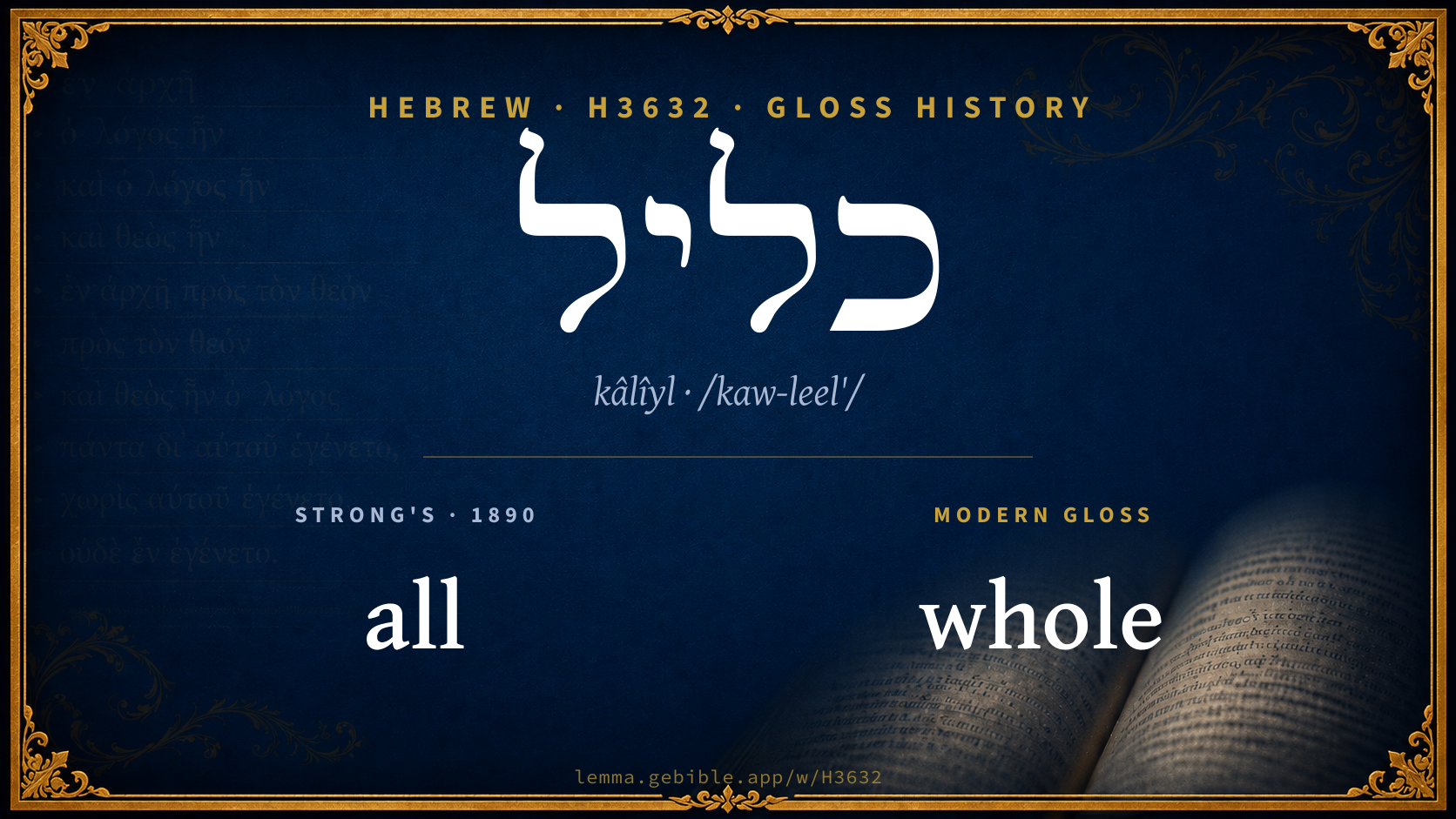
Gloss history
Strong's 1890 vs modern scholarship
About this word
Strong's H3632 catalogs a Hebrew word from the Hebrew Old Testament.
These counts are not copied from any lexicon or concordance. They are computed here, from the morphology-tagged Hebrew Old Testament. What Lemma adds →
- 15
- distinct verses
- The word appears in 15 distinct verses.
- 10 / 39
- OT books
- The word appears in 10 of 39 Old Testament books.
- #1,836
- by frequency
- Top 2500 most frequent Hebrew words (rank 1,836 of 8,640 Hebrew words by occurrence).
View all 15 occurrences in the concordance →
By section of the Old Testament
By traditional corpus
Conventional, traditional groupings — biblical authorship is debated, so this is a traditional corpus grouping, not an authorship claim. Each share is this word’s portion of its verses in that division of the Hebrew canon. Each figure is a share of the word’s 15 distinct verses.
- Torah (Pentateuch) 7 verses · 47%
- Prophets (Nevi'im) 6 verses · 40%
- Writings (Ketuvim) 2 verses · 13%
How translations render this word
Counts come from each version’s own published word-to-Strong’s tagging or interlinear alignment — an approximate guide to how each version renders this word, not a word-level alignment the data otherwise carries. Because each total is that version’s own tagged count, the per-version totals vary from one another and need not match the appearance or distinct-verse counts above. These counts may also differ from a printed concordance because Lemma counts each distinctly tagged rendering and does not collapse phrase taggings into a single head-word total. This is a fixed set of word-tagged versions (KJV, ASV, BSB, ULT) and does not change with the reading translation you choose elsewhere. Each version’s license is shown beside its name below (and on Sources).
- King James Version: All 2×, Wholly 2×
- American Standard Version: All 3×, Whole 2×
- Berean Standard Bible: Completely 3×, Whole 3×, Entirely 2×
- unfoldingWord Literal Text: Whole 4×, Completely 3×, Perfect 3×
King James Version Public Domain
Renders H3632 across 15 tagged occurrences — most commonly:
Plus 11 renderings that appear only once — usually multi-word phrases or single function words the recovered tagging swept in, not distinct renderings.
American Standard Version Public Domain
Renders H3632 across 15 tagged occurrences — most commonly:
Plus 10 renderings that appear only once — usually multi-word phrases or single function words the recovered tagging swept in, not distinct renderings.
Berean Standard Bible Public Domain
Renders H3632 across 15 tagged occurrences — most commonly:
Plus 5 renderings that appear only once — usually multi-word phrases or single function words the recovered tagging swept in, not distinct renderings.
unfoldingWord Literal Text CC BY-SA 4.0
Renders H3632 across 18 tagged occurrences — most commonly:
Plus 4 renderings that appear only once — usually multi-word phrases or single function words the recovered tagging swept in, not distinct renderings.
Senses in the full BDB
What do BDB’s symbols mean?
BDB uses these scholarly abbreviations:
| Symbol | Meaning |
|---|---|
| 𝔊 | the Septuagint (the ancient Greek translation, LXX) |
| 𝔙 | the Vulgate (the Latin translation) |
| 𝔖 | the Syriac version (the Peshitta) |
| 𝔗 | the Targum (the Aramaic translation) |
| ψ | the Psalms |
| √ | root (the underlying root or stem) |
| ‖ | parallel passage (a synonymous or contrasted parallel) |
| † | the dagger: every passage where the word occurs is cited |
The 4 senses and sub-senses the full Brown-Driver-Briggs lexicon distinguishes for this word, in lexicon order (not ranked by frequency), with BDB’s own verbatim wording and sub-sense lettering. Shown in Hebrew script with BDB’s own scholarly abbreviations. The condensed entry is in the Lexicon Entry tab. See also the Forms in the corpus table below.
- 1. adj. Ez 16:14 (of Jerus.) the report בְּיָפְיֵךְ כִּי כָּלִיל הוּא, 28:12 כְּלִיל יֹֽפִי׃ (of the king of Tyre) entire, perfect in beauty; 27:3 אֲנִי כְּלִילַת יֹֽפִי׃ (of Tyre), La 2:15 (of Jerus.) הֲזֹאת הָעִיר שֶׁיֹּאמְרוּ כְּלִילַת יֹפִי. e.g. Ezekiel 16:14
- 2. subst.
- a. entirety, whole, Ex 28:31 thou shalt make the robe of the ephod כְּלִיל תְּכֵלֶת a whole of purple (i.e. wholly purple); so 39:22; Nu 4:6 בֶּגֶד כְּלִיל תְּכֵלֶת; Ju 20:40 והנה עלה כְּלִיל־הָעִיר השׁמימה the whole of the city (perhaps with allusion to meaning b); as adv. acc., Is 2:18 וְהָאֱלִילִים כָּלִיל יַחֲלֹף will pass away in entirety, wholly. e.g. Exodus 28:31
- b. as a sacrif. term, entire- or whole-offering, holocaust, of a sacrifice consumed wholly on the altar (cf. Ph. כלל CISI, i, 165, 167; RSRel. Sem. 237), usually a descriptive syn. of עוֹלָה: Dt 33:10 יָשִׂימוּ קְטוֹרָה בְּאַפֶּ֔ךָ וְכָלִיל עַל מִזְבְּחֶֽךָ׃, ψ 51:21 אז תחפץ זבחי צדק עוֹלָה וְכָלִיל, in app. 1 S 7:9 ויעלה עוֹלָה כָּלִיל ליהוה; of the priests’ מִנְחָה, Lv 6:15 ליהוה כָּלִיל תָּקְטָֽר, v 16 וְכָל־מִנְחַת כֹּהֵן כָּלִיל תִּהְיֶה לֹא תֵאָכֵל; fig. Dt 13:17 (of idol. city) ושׂרפת באשׁ את־העיר ואת־כל שׁללהּ כָּלִיל לי׳ אלהיך and thou shalt burn the city and all its spoil as a whole-offering to י׳. e.g. Deuteronomy 33:10
Senses from the full Brown-Driver-Briggs lexicon (Brown, Driver, Briggs; Oxford 1906 — public domain), digitized via Sefaria, supplemented by the OpenScriptures HebrewLexicon (CC BY 4.0). Full attribution on Sources.
Word origin
adj. and subst. entire, whole, holocaust, cstr. כְּלִיל, fem. constr. כְּלִילַת:—
— Brown-Driver-Briggs (Oxford 1906, public domain), digitized via Sefaria, supplemented by the OpenScriptures HebrewLexicon (CC BY 4.0). See Sources.
Derived from כלל (kâlal) (H3634) — to perfect.
Jastrow Dictionary
A second Hebrew/Aramaic lexicon for comparison, covering Aramaic and post-biblical (Talmudic, Targumic, Midrashic) usage that the biblical-Hebrew BDB does not. Matched by lemma rather than by Strong’s number, so a lemma may carry more than one Jastrow headword (shown separately below), and the entries cover usage well beyond the Bible.
כָּלִיל
- entire, esp. Kalil, a sacrifice burnt entirely. Sifra Tsav, Par. 3, ch. V; Men. 51ᵇ בכ׳ תקטר shall be burned as a Kalil. Y. Sot. III, 19ᵇ top קריבה בכלול is offered as a K.—Men. 74ᵃ; a. e.—Tosef. Par. I, 2; Zeb. V, 4 כ׳ לאישים, v. אִישֶּׁה.
כְּלִיל
- c. (כְּלַל)
- 1. circle, wreath, crown. Targ. Y. II, Ex. XXV, 11. Targ. Num. VI, 7 (h. text נֵזֶר). Targ. Y. I Deut. XIV, 1 כ׳ דיסער (cmp. כִּלְכּוּל). Ib. XXXIV, 5 fem. (also כְּלִילַת constr.). Targ. Is. XXVIII, 5; a. fr.—Sabb. 152ᵃ, v. חִילְפָא II. Gen. R. s. 98, end (ref. to נזיר, Gen. XLIX, 26) כְּלִילֵיהוֹן דאחוך the crown of thy brothers. Gitt. 7ᵃ כ׳ לברתיה a bridal wreath for his daughter. B. Bath. 4ᵃ, v. יָילָא; a. e.—Pl. כְּלִילַיָּא, כְּלִילָן, כְּלִילֵי. Targ. Y. Deut. l. c. Targ. Job XXXI, 36. Targ. Jud. VIII, 26 ed. Lag. (oth. ed. sing.); a. e.—B. Bath. 16ᵇ כלילי הוו להו Ms. M. (ed. sing.) they had wreaths (each dedicated to a friend). e.g. Genesis 49:26
- 2. דמי כ׳ or כ׳ coronation tax (aurum coronarium, v. Sm. Ant. s. v.). Ib. 8ᵃ כההוא דמי כ׳ וכ׳ as in the case of a coronation tax which they put on the city of Tiberias. Ib. פקע כ׳ (Ms. M. בטל) the tax was repealed.
- 3. כ׳ מלכא or כ׳ melilot. Keth. 77ᵇ. Sabb. 109ᵇ חד כ׳ one dose of melilot.—Pl. כְּלִילֵי. Ib. חמשא כ׳ five parts of melilot (Rashi: roses). [Y. M. Kat. II, 81ᵈ bot. וגנבון מנהין כליליא, read: כל ליליא.]
כְּלַל
- 1. to surround, crown. Targ. Cant. III, 11.
- 2. (denom. of כּוֹלָּא) to make whole, combine. Y. Meg. IV, 75ᵇ bot. לינן חזרין וכָלְלִין לון do we not again combine them (the separated portions)?
- 1. to surround, crown. Targ. Ps. V, 13.
- 2. (v. כִּילָה, כִּילְתָא I) to prepare a bridal room. B. Mets. 101ᵇ כַּלְּלֵיה לבריח if the owner of the rented dwelling gave it to his son as a bridal room (Rashi: if he was making preparations for his son’s wedding, and needed the dwelling for the young couple). Gen. R. s. 70; Yalk. Gen. 125 כולי יומא הוו מְכַלְּלִין (ביה) ליה the whole day they were helping him to prepare the bridal chamber (decorating it).
- to crown, surround. Targ. Ps. LXV, 12. Ib. CIII, 4; a. e.—[Kidd. 81ᵇ מכלליה, read: מכלי להו, v. כְּלֵי I.]
- 1. to be crowned, to adorn one’s self. Gen. R. s. 34, beg. (expl. Ps. CXLII, 8) יִתְכַּלְּלוּן בי וכ׳ the righteous shall adorn themselves with me. e.g. Psalms 142:8
- 2. to be led into the bridal room, be married. Meg. 27ᵇ כי איכ׳ רבה וכ׳ when his son R. was to marry.
ליל
- , Tosef. B. Bath. I, 4, read: לוּל.
לֵיל
- , Targ. Y. II, Deut. XXXII, 10 = יְלֵיל, v. יְלָלָא
לַיִל
- (b. h.)
- 1. night, evening; darkness; metaph. suffering, misery. Cant. R. to II, 17 לֵילָן של מלכיות the misery (of exile) under the governments; לילן של מצוים the sufferings in Egypt; v. פִּיחָה. Y. Taan. I, 64ᵃ top, v. בֹּקֶר. Ber. 3ᵃ ג׳ משמרות הוי הל׳ the night is divided into three watches. Zeb. V, 3 ליום וָלַ׳ וכ׳ the same day and the night following to midnight. Snh. 96ᵃ שנעשה עמו מעשה ל׳ Ms. M. (v. Rabb. D. S. a. l.) night-work was done for him (the stars helping, v. Jud. V, 20); a. v. fr.—Pl. לֵילוֹת, constr. לֵילֵי (also used as a sing.: night-time, v. next w.). Ber. I, 5 בַּלֵּ׳ at night (in the night prayer). Taan. 23ᵃ בל׳ רביעיות ובל׳ שבתות (not רביעית) in the nights of Wednesdays and Sabbaths. Sifra B’ḥuck. ch. I מל׳ שבת לל׳ שבת every Sabbath night; Lev. R. s. 35 בל׳ שבתות. Pes. 71ᵃ ל׳ יו"ט האחרון the night of the last (eighth) day of the festival; Succ. 48ᵃ; a. fr. e.g. Judges 5:20
- 2. pr. n. Laylah (ref. to Job III, 3), name of the angel of night and of conception. (ref. to Job III, 3), name of the angel of night and of conception. Snh. 96ᵃ. Nidd. 16ᵇ e.g. Job 3:3
A Dictionary of the Targumim, the Talmud Babli and Yerushalmi, and the Midrashic Literature (Marcus Jastrow; London, Luzac, 1903) — Public Domain. Digitized via Sefaria. Digitized via Sefaria. Full attribution on Sources.
Forms in the corpus
The 13 distinct written forms H3632 takes in the Hebrew Bible, most frequent first — each parse links to that state’s occurrences in the concordance. Hebrew forms include their vowel points and cantillation, so a single lemma takes many written forms.
Same root — word family
Other BDB entries built from the same root as H3632, grouped by Strong’s listed origin. These share a root / origin per the lexicon — not necessarily a shared meaning. Each links to that word’s own entry.
Derives from
Shares the same root
- כל kôl H3605 all
- כלה kallâh H3618 bride
- כלל kᵉlal H3635 to finish
- מכלול miklôwl H4358 perfection
- מכלל miklâl H4359 perfection
- מכלל miklul H4360 perfect thing
Proper names from this root
People and places named from this root — a name, not an additional meaning of the word.
Compare all same-root words → Showing 4 of 9 — not the complete family. 1 of the same-root words is a proper name (a person or place). They share a root, not necessarily a meaning.
Septuagint verse parallels
This word appears in 14 verses that also exist in the Greek Old Testament (Septuagint), out of the 15 Hebrew verses it occurs in. You can read those verses in Greek by switching the Old Testament edition to the Septuagint.
Read these verses in the Septuagint
- Exodus 28:31
- Leviticus 6:22
- Numbers 4:6
- Deuteronomy 13:16
- Judges 20:40
- 1 Samuel 7:9
- Isaiah 2:18
- Lamentations 2:15
- Ezekiel 16:14
This is a verse-level parallel only — the same verses exist in both the Hebrew and Greek Old Testaments. No word-level Hebrew↔Greek correspondence is claimed: the data carries no such alignment, so no Greek word is shown as this Hebrew word’s translation. Coverage is not total — the Septuagint omits the deuterocanon and renumbers the Psalms, so some Hebrew verses have no direct Greek parallel.