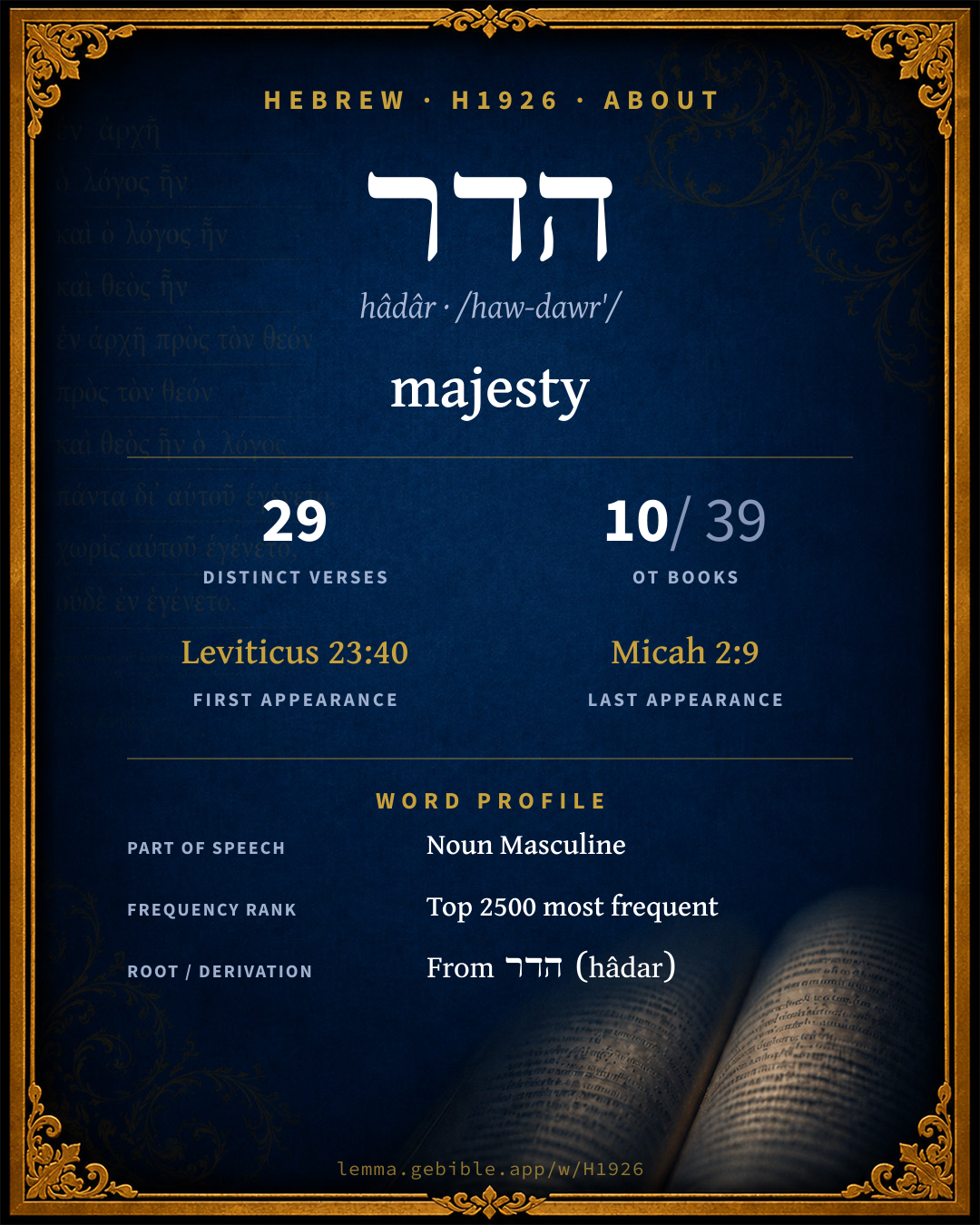
הָדָר
majesty
‘majesty’ is one of 4 main senses fuller range ↓
Full lexicon entry — Brown-Driver-Briggs (BDB)
From Brown-Driver-Briggs (BDB)
Where this word appears
Grammar key — what these labels mean
Part of speech
- Noun
- A naming word — a person, place, thing, or idea.
Noun type
- Common
- A common noun — a general class of person, place, or thing (“king,” “city,” “water”), not a specific name.
State
- Absolute
- The independent form of a noun, not bound to a following word.
- Construct
- A noun bound to a following noun in a possessive / “of” relationship (the construct chain).
Gender
- Masculine
- Grammatically masculine.
Number
- Singular
- One.
- Plural
- More than one (in Hebrew, generally three or more).
Every verse where H1926 appears in the Book of Deuteronomy — 1 distinct verse. Click any verse to open its interlinear word-by-word view. Verse text shown in the World English Bible for context — . Each verse’s Hebrew form is shown with its reference; the English is not keyword-highlighted, since the data carries no word-level English alignment. Use “Compare translations” on any verse to read it across multiple English versions. This concordance covers the Hebrew Bible; Septuagint (Greek Old Testament) occurrences are not indexed here.
Deuteronomy
About this entry
At a glance — auto-summarized from this page’s data, not written by a person. Every figure links to its source below. This summary describes the numbers; it doesn’t interpret them.
The Hebrew noun הדר centers on the idea of “majesty.” Translators differ — “glory” in the King James Version, then “splendor” (Berean Standard Bible), as the renderings breakdown shows. It turns up in 29 verses across 10 books, a moderately common footprint. The word gravitates to Psalms (45%), then Isaiah and Proverbs. Its meaning spans more than one sense — see its full sense range. For the data behind this summary, explore the sense tree and the renderings breakdown below.
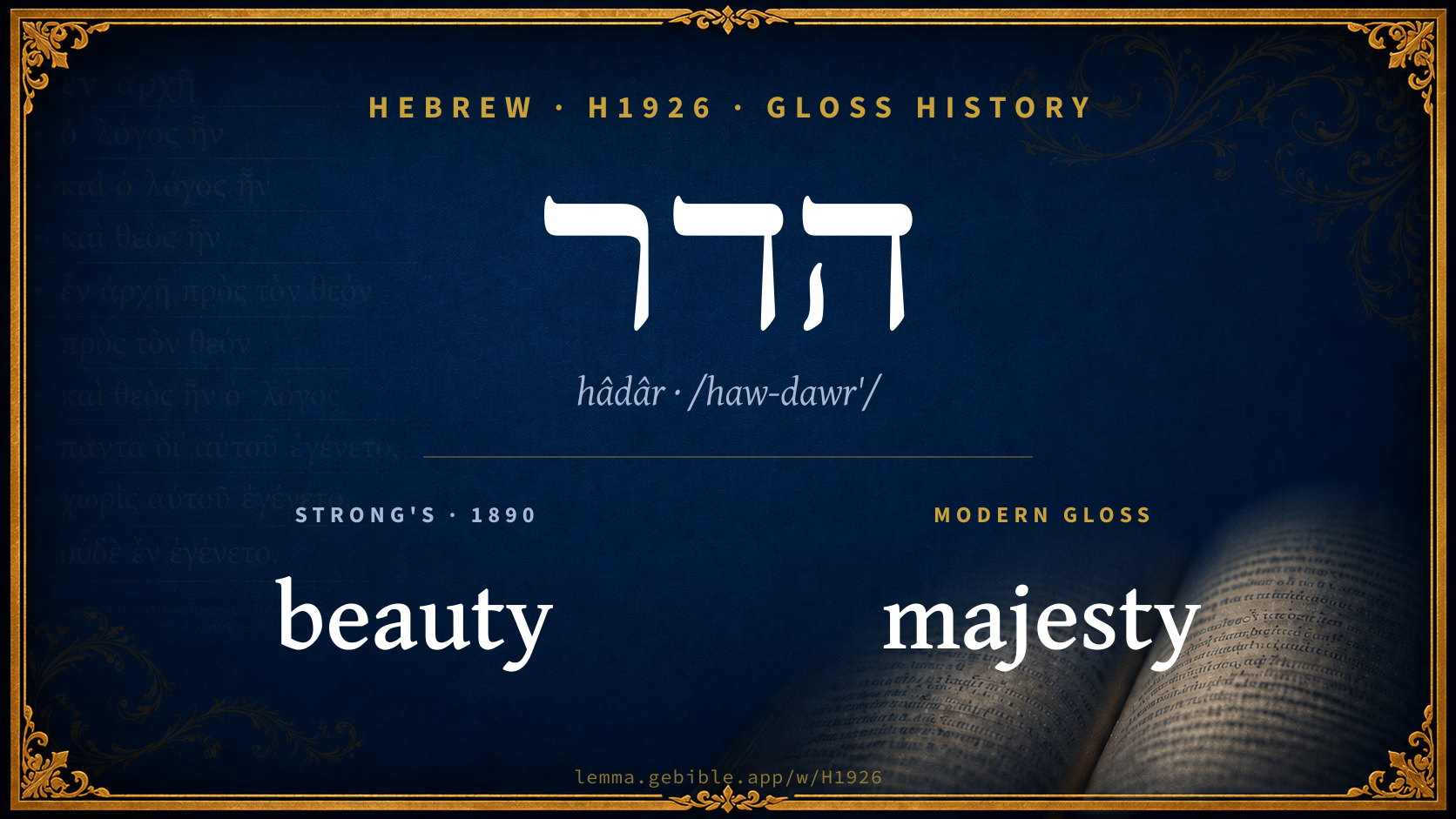
Gloss history
Strong's 1890 vs modern scholarship
About this word
Strong's H1926 catalogs a Hebrew word from the Hebrew Old Testament.
These counts are not copied from any lexicon or concordance. They are computed here, from the morphology-tagged Hebrew Old Testament. What Lemma adds →
- 29
- distinct verses
- The word appears in 29 distinct verses.
- 10 / 39
- OT books
- The word appears in 10 of 39 Old Testament books.
- #1,139
- by frequency
- Top 2500 most frequent Hebrew words (rank 1,139 of 8,640 Hebrew words by occurrence).
View all 29 occurrences in the concordance →
By section of the Old Testament
By traditional corpus
Conventional, traditional groupings — biblical authorship is debated, so this is a traditional corpus grouping, not an authorship claim. Each share is this word’s portion of its verses in that division of the Hebrew canon. Each figure is a share of the word’s 29 distinct verses.
- Writings (Ketuvim) 18 verses · 62%
- Prophets (Nevi'im) 9 verses · 31%
- Torah (Pentateuch) 2 verses · 7%
How translations render this word
Counts come from each version’s own published word-to-Strong’s tagging or interlinear alignment — an approximate guide to how each version renders this word, not a word-level alignment the data otherwise carries. Because each total is that version’s own tagged count, the per-version totals vary from one another and need not match the appearance or distinct-verse counts above. These counts may also differ from a printed concordance because Lemma counts each distinctly tagged rendering and does not collapse phrase taggings into a single head-word total. This is a fixed set of word-tagged versions (KJV, ASV, BSB, ULT) and does not change with the reading translation you choose elsewhere. Each version’s license is shown beside its name below (and on Sources).
- King James Version: Glory 7×, Majesty 6×, Honour 5×
- American Standard Version: Glory 6×, Majesty 6×, Honor 2×
- Berean Standard Bible: Splendor 13×, Majesty 5×, Honor 3×
- unfoldingWord Literal Text: Majesty 11×, Splendor of 7×, Splendor 4×
King James Version Public Domain
Renders H1926 across 30 tagged occurrences — most commonly:
Plus 6 renderings that appear only once — usually multi-word phrases or single function words the recovered tagging swept in, not distinct renderings.
American Standard Version Public Domain
Renders H1926 across 26 tagged occurrences — most commonly:
Plus 12 renderings that appear only once — usually multi-word phrases or single function words the recovered tagging swept in, not distinct renderings.
Berean Standard Bible Public Domain
Renders H1926 across 30 tagged occurrences — most commonly:
Plus 6 renderings that appear only once — usually multi-word phrases or single function words the recovered tagging swept in, not distinct renderings.
unfoldingWord Literal Text CC BY-SA 4.0
Renders H1926 across 31 tagged occurrences — most commonly:
Plus 7 renderings that appear only once — usually multi-word phrases or single function words the recovered tagging swept in, not distinct renderings.
Senses in the full BDB
What do BDB’s symbols mean?
BDB uses these scholarly abbreviations:
| Symbol | Meaning |
|---|---|
| 𝔊 | the Septuagint (the ancient Greek translation, LXX) |
| 𝔙 | the Vulgate (the Latin translation) |
| 𝔖 | the Syriac version (the Peshitta) |
| 𝔗 | the Targum (the Aramaic translation) |
| ψ | the Psalms |
| √ | root (the underlying root or stem) |
| ‖ | parallel passage (a synonymous or contrasted parallel) |
| † | the dagger: every passage where the word occurs is cited |
The 3 senses and sub-senses the full Brown-Driver-Briggs lexicon distinguishes for this word, in lexicon order (not ranked by frequency), with BDB’s own verbatim wording and sub-sense lettering. Shown in Hebrew script with BDB’s own scholarly abbreviations. The condensed entry is in the Lexicon Entry tab. See also the Forms in the corpus table below.
- 1. ornament Pr 20:29 (grey hair, for old men; ‖ תִּפְאֶרֶת), Ez 16:14 (fig. of ornaments of Jerus. as bride of י׳); פְּרִי עֵץ הָדָר Lv 23:40 (H) i.e. fruit of goodly (ornamental, beautiful) trees, so AV RV & most, or goodly tree-fruit, 𝔊 καρπὸν ξύλου ὡραῖον, so Di;—here would come also בהדרי קדשׁ ψ 110:3, ref. to sacred, festal garments, according to Thes al. cf. RVm; but read prob. on the holy mountains, vid. supr. e.g. Proverbs 20:29
- 2. splendour, majesty Dt 33:17 of Ephraim under figure of a noble bull (cf. Di); of Jerusalem Is 5:14 cf. La 1:6; of Carmel Is 35:2 (‖ כָּבוֹד); of majesty & dignity conferred by י׳ on man ψ 8:6 (‖ כָּבוֹד), on king 21:6 (‖ id., הוֹד), cf. 45:4 (‖ הוֹד) & v 5 (but text perhaps erron. Checrit. n.); denied of suffering servant of י׳ Is 53:2 (‖ תֹּאַר); of dignity of good & capable woman (אֵשֶׁת חַיִל) Pr 31:25 (‖ עֹז); of splendour due to warlike equipment Ez 27:10; especially of majesty of י׳ 1 Ch 16:27 = ψ 96:6, cf. Jb 40:10 ψ 111:3 (all ‖ הוֹד); also ψ 104:1 (‖ id., under fig. of garment); further ψ 29:4 (‖ כֹּחַ), 90:16 (‖ פֹּעַל); in combination הֲדַר כְּבוֹד הוֹדְךָ ψ 145:5; כְּבוֹד ה׳ v 12; הֲדַר גְּאֹנוֹ Is 2:10, 19, 21. e.g. Deuteronomy 33:17
- 3. honour, glory ψ 149:9 for saints of י׳; cf. Mi 2:9 of י׳’s glory as possession of his people, lost by exile & slavery: but perhaps textual error; HoffmZAW 182, 103 proposes הַדְּרוֹר, from their children ye take freedom (yet מֵעַל then hardly suitable). e.g. Psalms 149:9
Senses from the full Brown-Driver-Briggs lexicon (Brown, Driver, Briggs; Oxford 1906 — public domain), digitized via Sefaria, supplemented by the OpenScriptures HebrewLexicon (CC BY 4.0). Full attribution on Sources.
Word origin
n.m. ψ 149:9 ornament, splendour, honour (chiefly poet.)—abs. ה׳ Dt 33:17 + 12 times; cstr. הֲדַר Is 2:10 + 7 times; sf. הֲדָרִי Mi 2:9 (but cf. infr.) Ez 16:14; הֲדָרְךָ ψ 45:5; 90:16; הֲדָרֶ֑ךָ ψ 45:4; הֲדָרֵךְ Ez 27:10; הֲדָרָהּ Is 5:14 La 1:6; pl. cstr. הַדְרֵי ψ 110:3 (but read prob. הררי so Symm Jer edd.; Ol Hup Gr Bi Che);—
— Brown-Driver-Briggs (Oxford 1906, public domain), digitized via Sefaria, supplemented by the OpenScriptures HebrewLexicon (CC BY 4.0). See Sources.
Derived from הדר (hâdar) (H1921) — to honor.
Jastrow Dictionary
A second Hebrew/Aramaic lexicon for comparison, covering Aramaic and post-biblical (Talmudic, Targumic, Midrashic) usage that the biblical-Hebrew BDB does not. Matched by lemma rather than by Strong’s number, so a lemma may carry more than one Jastrow headword (shown separately below), and the entries cover usage well beyond the Bible.
דֹּר
- , v. דּוֹר
דָּר
- part. of דּוּר.
דָּר ²
- (דּוּר) row.—Pl. דָּרִין. Gen. R. s. 20 (explain. דַּרְדַּר) שהיא עשוייה ד׳ ד׳ because it consists of rows above rows (of the imbricated form of the artichoke).
דָּר ³
- 1. same, row, range, order. Keth. 60ᵃ בד׳ דנשי in a row of women. B. Kam. 117ᵃ בד׳ קמא in the first row of scholars. Ḥull. 11ᵃ top ד׳ דגברי a row of men. Ib. 47ᵃ בד׳ דאוני within the ranges of the lobes of the lungs. Ib. 53ᵃ בד׳ דסיחופיה in the order in which the claws of the lion’s paw appear when he assaults an animal. Snh. 97ᵇ ד׳ קמא דקמי וכ׳ Ms. M. (ed. ד׳ דקמי; Ms. K. a. Ar. דָּרֵי, pl.) the first row (of righteous men) before the Lord; Succ. 45ᵇ (v. Rabb. D. S. a. l. note 9).—Kidd. 36ᵇ ר"י דדריה R. J. his class-mate; a. fr.—Pl. דָּרִין, דָּרֵי. Meg. 12ᵃ (expl. דַּר, Esth. I, 6) ד׳ ד׳ ranges of mosaics. Nidd. 20ᵃ תלתא ד׳ וכ׳ there are three ranges of leaves, and three leaves in each. Ber. 28ᵃ ד׳ חיוורתא rows of white hair. Ib. 62ᵇ (phonetic etymol. of קפנדריא) אַדָּ׳ וכ׳ אדמקיפנא in place of going around the rows of houses &c. Ab. Zar. 28ᵃ ומייתי דמא מבי דרי ed. (Ms. M. מבי ככי); Yoma 84ᵃ ואתי דמא מבי ד׳ (Ms. M. ומייתי ליה דמא מבי ככי ושיני) and he makes blood come (and blood will come) out from between the rows of teeth. [Ib. בככי דריה, v. דְּרָרָא.] [Taan. 3ᵇ; B. Mets. 73ᵃ; B. Kam. 113ᵇ בי ד׳, v. דָּרֵי.] e.g. Esther 1:6
- 2. a range of wood, pyre. Cant. R. to III, 4 ד׳ יקידא יקדת a burning pyre hast thou set on fire, v. יְקַד.—Pl. as above. Targ. Ps. LXXXII, 15 Ms. (ed. זרזי).
- 3. (v. דּוֹר) period, generation. Targ. Deut. XXXIII, 7. Targ. Job. VI, 17; a. fr.—Ḥag. 5ᵃ עד דמלי להו לד׳ until they have completed the period (lived the years allotted to them). Snh. 97ᵇ בכל ד׳ וד׳ (Ms. M.) in each generation; a. fr.—Pl. דָּרִין, דָּרַיָּא, דָּרֵי. Targ. Is. LI, 8 sq.—Targ. Ps. XLIX, 12 (Ms. דָּרָתָא); a. fr.—Ḥull. 93ᵇ; Yeb. 39ᵇ אכשור ד׳ have the generations (the present) grown better?
הָדַר
- to enclose, go around. Part. pass. הָדוּר
- 1. rounded. Ḥull. 59ᵇ הֲדוּרוֹת בעינן Ar. (ed. חֲדוּרוֹת, v. חָדַר) the horns must de rounded (not flat; Ar.: showing circular layers).
- 2. (b. h.) distinguished, adorned, beautiful. Gen. R. s. 60 (ref. to הלזה, Gen. XXIV, 25) ראתה אותו ה׳ she saw his commanding appearance; Midr. Till. to Ps. XC, end. e.g. Genesis 24:25
- 1. to crown, adorn, distinguish. Lev. R. s. 30 שהִדְּרוֹ הקב"ה וכ׳ whom the Lord crowned with old age. Kidd. 32ᵇ יְהַדְּרֶנּוּ בממון that he must show him honor even at a material sacrifice; a. e.—Part. pass. מְהוּדָּר. Lev. R. s. 3 שיהא המזבח מה׳ וכ׳ that the altar may appear adorned by the poor man’s offering; a. e.
- 2. to go around searching, whence to be zealous in religious observances, to look out for the best method of doing good. Sabb. 21ᵇ המְהַדְּרִין the zealous, המה׳ מן המה׳ the most zealous. V. הִידּוּר.
- to be crowned, glorified. Gen. R. s. 1 הוא לבדו מִתְהַדֵּר וכ׳ He alone is glorified through His world.
הֲדַר
- (preced.) to go around, come back, return. Targ. Y. Gen. III, 19; a. fr.—B. Mets. 14ᵃ what thou takest from him, עלי דידי ה׳ comes back on my property (I am responsible for it). Ib. 69ᵇ הַדְרָא בעינא is returned bodily. Pes. 29ᵇ, a. fr. ה׳ ביה went back on himself, changed his opinion. B. Mets. 65ᵃ הַדְרִי בי I take it back. B. Bath. 84ᵃ לא מצית הַדְרַת בך וכ׳ thou wouldst not have been at liberty to retract (the transaction), and now thou shouldst &c.?; a. fr. [Frequ. used adverbially.] B. Mets. 6ᵃ שתיק מעיקרא וה׳ צוח first he kept silence and then (reconsidering) he protested. Gitt. 8ᵇ ה׳ אמר אביי another time A. said. Ḥull. 76ᵇ (הדר) הֲדוּר שלחו another time they sent word; a. fr.
- (v. preced.Pi.)
- 1. to honor, distinguish. Dan. IV, 31.—Targ. O. Lev. XIX, 15 (ed. Berl. תַהְדּר Af.).—B. Bath. 3ᵇ הַדְּרֵי, v. הוּדְרָא. e.g. Daniel 4:31
- 2. to go around searching, be zealous, anxious. Ḥull. 76ᵇ; Nidd. 65ᵇ הַדּוּרֵי אפירכא what need is there to go around searching for an argument (why do you resort to unknown authorities)? Sabb. 23ᵃ הוה מְהַדֵּר מר וכ׳ my teacher used to be anxious for puppy-oil. Ib. מהדרא אמשחא (read: מהדר אמ׳); a. fr.
- 3. to restore;
- 4. to review; v. Af.
- l) to return, restore; to lead back; to turn around. Targ. Y. Deut. XXXII, 3 (some ed. Pa.). Targ. Cant. VII, 5; a. fr.—B. Mets. 26ᵃ אי … לאַהֲדוּרָהּ אַהַדְרוּהָ ניהלי if they had had the intention of returning it, they would have returned it to me. Ib. אמרי קמייהו … לִיהַדְּרוּ לי ולא הַדְּרוּ לי וכ׳ (differ. in Mss., v. Rabb. D. S. a. l. note) I spoke in their presence several times (of my loss); they might have returned it to me, but did not; will they now return it?—Ḥull. 20ᵃ בדלא א׳ when he did not turn round (the windpipe &c.). Ḥag. 5ᵇ עמא דַאֲהַדְרִינְהוּ … מיניה a people from which its master has turned away his face; a. fr.—2) to repeat, review. M. Kat. 28ᵃ אֲהַדְרִי לתלמודאי that I may review my studies. Ber. 38ᵇ מַהֲדַר תלמודיה (or מְהַדֵּר); a. fr.—3) to reply. Ḥull. 34ᵃ מאי אהדרי וכ׳ what did … reply to one another?; a. e.—4) to carry around in procession. Yeb. 110ᵃ Ar., v. כּוּרְסַיָּא; v. אֲדוּרֵי.
- 1. to go around begging. Sabb. 151ᵇ אַהֲדוּרֵי אפיתחא לא מִיהֲדַר he will not be forced to go around begging.
- 2. to go back. Ned. 50ᵃ איהדר לאחורי I will go back again.
הָדָר
- preced.)
- 1. adornment, crown, beauty, glory. Ab. Zar. 24ᵇ ברוב הֲדָרֵךְ in the abundance of thy glory. Gen. R. s. 39 (ref. to Ps. CX, 3) מֵהֲדָרוֹ של עולם וכ׳ from the glory of the world (the East) have I consecrated thee; (Yalk. Ps. 869 בהררי קדש בהררי של עולם וכ׳ ‘in the mountains of holiness’, among the mountains, i.e. the distinguished, of the world &c.).—Y. Succ. III, 53ᵈ a tree שפריו ה׳ וכ׳ whose fruit is beautiful &c.—Lev. R. s. 30; a. fr.—[Ib. תרגם עקילס הגר הדר Aquila in his translation read our w. haddar, v. דּוּר I.] e.g. Psalms 110:3
- 2. עֵץ הָדָר (b. h.) the tree Hadar. Ib.; a. fr.
A Dictionary of the Targumim, the Talmud Babli and Yerushalmi, and the Midrashic Literature (Marcus Jastrow; London, Luzac, 1903) — Public Domain. Digitized via Sefaria. Digitized via Sefaria. Full attribution on Sources.
Forms in the corpus
The 23 distinct written forms H1926 takes in the Hebrew Bible, most frequent first — each parse links to that state’s occurrences in the concordance. Hebrew forms include their vowel points and cantillation, so a single lemma takes many written forms.
Same root — word family
Other BDB entries built from the same root as H1926, grouped by Strong’s listed origin. These share a root / origin per the lexicon — not necessarily a shared meaning. Each links to that word’s own entry.
Derives from
Shares the same root
Derived from this word
Proper names from this root
People and places named from this root — a name, not an additional meaning of the word.
Compare all same-root words → Showing 4 of 6 — not the complete family. 1 of the same-root words is a proper name (a person or place). They share a root, not necessarily a meaning.
Septuagint verse parallels
This word appears in 27 verses that also exist in the Greek Old Testament (Septuagint), out of the 29 Hebrew verses it occurs in. You can read those verses in Greek by switching the Old Testament edition to the Septuagint.
Read these verses in the Septuagint
- Leviticus 23:40
- Deuteronomy 33:17
- 1 Chronicles 16:27
- Job 40:10
- Psalms 8:5
- Proverbs 31:25
- Isaiah 2:10
- Lamentations 1:6
- Ezekiel 16:14
- Micah 2:9
This is a verse-level parallel only — the same verses exist in both the Hebrew and Greek Old Testaments. No word-level Hebrew↔Greek correspondence is claimed: the data carries no such alignment, so no Greek word is shown as this Hebrew word’s translation. Coverage is not total — the Septuagint omits the deuterocanon and renumbers the Psalms, so some Hebrew verses have no direct Greek parallel.