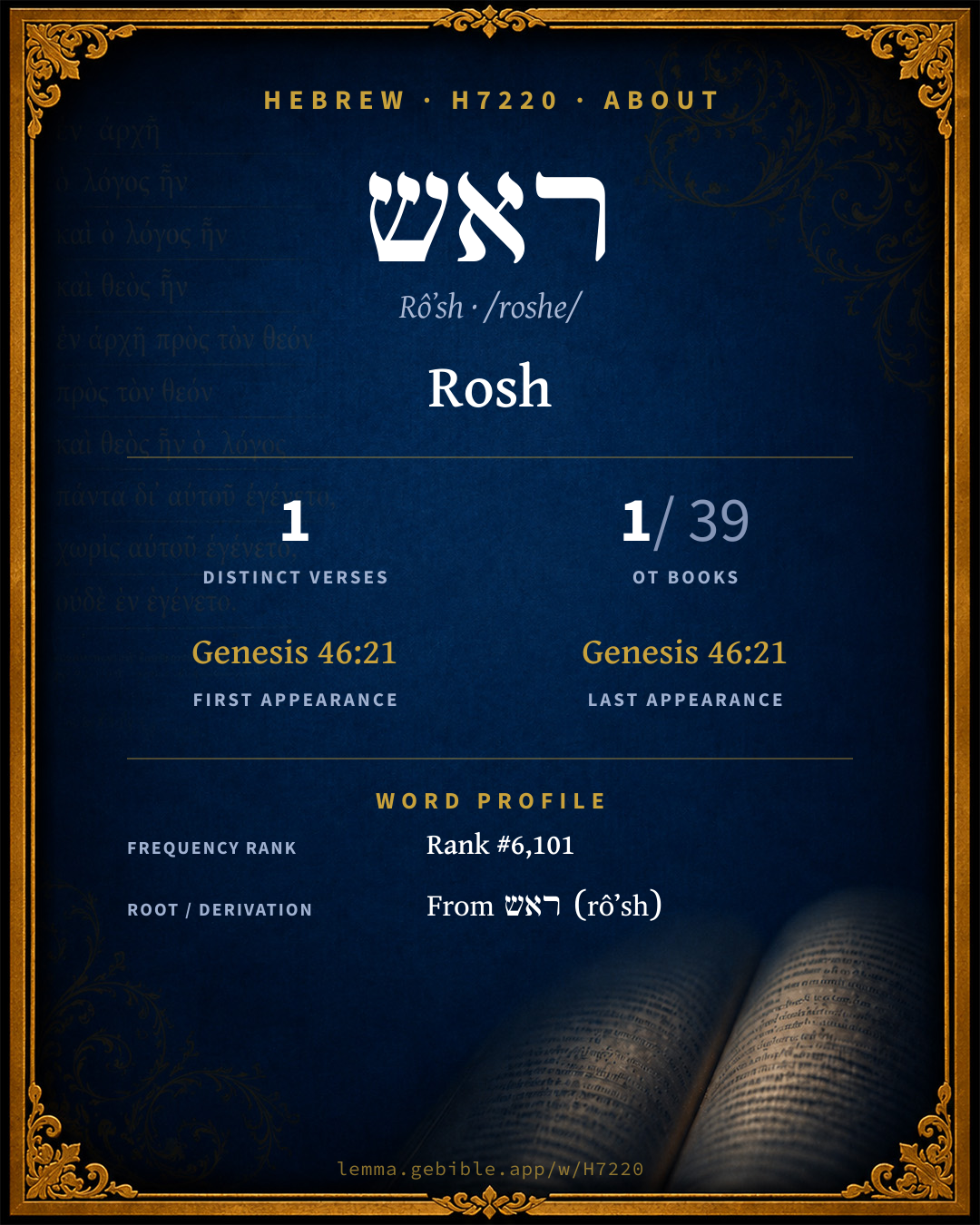
רֹאשׁ
Rosh
BDB lists 2 entries for ‘Rosh’ fuller range ↓
Full lexicon entry — Brown-Driver-Briggs (BDB)
From Brown-Driver-Briggs (BDB)
Where this word appears
Grammar key — what these labels mean
Noun type
- Proper
- A name of a specific person, place, or people (e.g. Abraham, Zion, Israel).
Every verse where H7220 appears — 1 distinct verse across 1 book. Click any verse to open its interlinear word-by-word view. Verse text shown in the World English Bible for context — . Each verse’s Hebrew form is shown with its reference; the English is not keyword-highlighted, since the data carries no word-level English alignment. Use “Compare translations” on any verse to read it across multiple English versions. This concordance covers the Hebrew Bible; Septuagint (Greek Old Testament) occurrences are not indexed here.
Genesis 1 verse
About this entry
At a glance — auto-summarized from this page’s data, not written by a person. Every figure links to its source below. This summary describes the numbers; it doesn’t interpret them.
At its core, ראש (Rôʼsh) means “Rosh.” With only 1 verse it sits in the long tail of Hebrew Bible vocabulary. The word gravitates to Genesis (100%). It occurs only once, in Genesis 46:21. Each statement above links to its evidence; the full detail follows below.
Gloss history
Strong's 1890 vs modern scholarship
About this word
Strong's H7220 catalogs a Hebrew word from the Hebrew Old Testament.
These counts are not copied from any lexicon or concordance. They are computed here, from the morphology-tagged Hebrew Old Testament. What Lemma adds →
- 1
- distinct verses
- The word appears in 1 distinct verse.
- 1 / 39
- OT books
- The word appears in 1 of 39 Old Testament books.
- #6,101
- by frequency
- Rank #6,101 (rank 6,101 of 8,640 Hebrew words by occurrence).
View all 1 occurrence in the concordance →
Most concentrated in
- Genesis 1 verse 100%
By section of the Old Testament
By traditional corpus
Conventional, traditional groupings — biblical authorship is debated, so this is a traditional corpus grouping, not an authorship claim. Each share is this word’s portion of its verses in that division of the Hebrew canon. Each figure is a share of the word’s 1 distinct verse.
- Torah (Pentateuch) 1 verse · 100%
How translations render this word
Counts come from each version’s own published word-to-Strong’s tagging or interlinear alignment — an approximate guide to how each version renders this word, not a word-level alignment the data otherwise carries. Because each total is that version’s own tagged count, the per-version totals vary from one another and need not match the appearance or distinct-verse counts above. These counts may also differ from a printed concordance because Lemma counts each distinctly tagged rendering and does not collapse phrase taggings into a single head-word total. This is a fixed set of word-tagged versions (KJV, ASV, BSB, ULT) and does not change with the reading translation you choose elsewhere. Each version’s license is shown beside its name below (and on Sources).
BDB lists this Strong’s number as 4 distinct words (homographs). Each count above pools all of them and is not split by sense — see the Senses section below. A low-frequency rendering may belong to a different one of those words, not the primary meaning.
- King James Version†: Rosh 1×
- American Standard Version†: Rosh 1×
- Berean Standard Bible†: Rosh 1×
- unfoldingWord Literal Text†: Rosh 1×
King James Version Public Domain
Renders H7220 across 1† tagged occurrence — most commonly:
American Standard Version Public Domain
Renders H7220 across 1† tagged occurrence — most commonly:
Berean Standard Bible Public Domain
Renders H7220 across 1† tagged occurrence — most commonly:
unfoldingWord Literal Text CC BY-SA 4.0
Renders H7220 across 1† tagged occurrence — most commonly:
18 senses and sub-senses in the full BDB
What do BDB’s symbols mean?
BDB uses these scholarly abbreviations:
| Symbol | Meaning |
|---|---|
| 𝔊 | the Septuagint (the ancient Greek translation, LXX) |
| 𝔙 | the Vulgate (the Latin translation) |
| 𝔖 | the Syriac version (the Peshitta) |
| 𝔗 | the Targum (the Aramaic translation) |
| ψ | the Psalms |
| √ | root (the underlying root or stem) |
| ‖ | parallel passage (a synonymous or contrasted parallel) |
| † | the dagger: every passage where the word occurs is cited |
The 18 senses and sub-senses the full Brown-Driver-Briggs lexicon distinguishes for this word, in lexicon order (not ranked by frequency), with BDB’s own verbatim wording and sub-sense lettering. Shown in Hebrew script with BDB’s own scholarly abbreviations. The condensed entry is in the Lexicon Entry tab.
ראש I
- 1.
- a. (c. 230 times) head, of human being; man Gn 40:16, 17 + often, לְר׳ גֶּבֶר Ju 5:30 for the head of a man, i.e. for each man, per capita; woman 2 K 9:30; Dt 21:12; Nu 5:18; Est 2:17; boy 2 K 4:19(×2); Gn 48:14(×2) +; of י׳, under fig. of armed man ψ 60:9 = 108:9; of idol 1 S 5:4; of gates, personif. ψ 24:7, 9. e.g. Genesis 40:16
- b. head, of animals: of serpent Gn 3:15, dog 2 S 3:8, ass 2 K 6:25, of הַחַיָּה in Ez 1:22 cf. v 22, 26, of הַכְּרֻבִים 10:1 cf. v 11; of sea-monsters, לִוְיָתָן Jb 40:31 ψ 74:14, תַּנִּינִים v 13; especially of animals for sacrifice Ex 12:9; 29:15, 19 Lv 1:4, 8, 12, 15; 3:2, 8 + 18 times P; in phr. ר׳ וְזָנָב Is 9:13 (fig. of noble and commoner) cf. v 14; 19:15, so (fig. of relative dignity, power, influence) Dt 28:13, 44. e.g. Genesis 3:15
- 2.
- a. top (88 times): of mt., הַר, Gn 8:5; Ex 19:20(×2); 24:17; 34:2 + 34 times; hill, גִּבְעָה, Ex 17:9, 10 (E), 2 S 8:25; ר׳ מְרוֹמִים Pr 8:2 + 1:21 Toy (for MT הֹמִיּוֹת), ר׳ גֵּיא שְׁמָנִים Is 28:1, 4; of rocks, צֻרִים, Nu 23:9 (JE), crag, סֶלַע, 2 Ch 25:12(×2); tower Gn 11:4 (J), stronghold Ju 6:26, ladder Gn 28:12 (E), tree 2 S 5:24 = 1 Ch 14:15, bough Is 17:6 cf. Ez 17:4, 22, mast (?; חִבֵּל) Pr 23:34 (otherwise Toy); of ears of grain, שִׁבֹּלֶת Jb 24:24, of stone Gn 28:18 (E), bed, מִטָּה, 47:31 (J), throne, ר׳ עָגוֹל לַכִּסֵּה 1 K 10:19, tabern., or its wall, Ex 26:24 = 36:29 (P); pillar (= capital) 1 K 7:16, 17 + 13 times, מְכוֹנָה v 35(×2), lampstand Zc 4:2(×2), h.p.’s robe, מְעִיל, Ex 28:32(P), ר׳ פִּנָּה ψ 118:22 top of (the) corner, i.e. most conspicuous stone (fig.); = tip, end, of staves 1 K 8:8=2 Ch 5:9, of sceptre Est 5:2. e.g. Genesis 8:5
- b. height of stars Jb 22:12 (‖ גֹּבַהּ שָׁמַיִם). e.g. Job 22:12
- 3.
- a. head = chief (man) Ju 10:18; 11:8, 9, 11; Ex 18:25 (E), Nu 1:16 (P), Dt 1:15; Ho 2:2; Mi 3:1 + often; appar. combined with idea of first in a series 1 Ch 12:10 (van d. H. v 9, series of 11); of God 2 Ch 13:12. e.g. Judges 10:18
- b. = chief (city) Jos 11:10 (D), cf. (of city and king) Is 7:8(×2), 9(×2). e.g. Joshua 11:10
- c. chief nation Je 31:7. e.g. Jeremiah 31:7
- d. = chief (place, position) 1 S 9:22; 1 K 21:9, 12; Dt 20:9; 1 Ch 4:42 (cf. also 5). e.g. 1 Samuel 9:22
- e. כֹּהֵן הָרֹאשׁ chief priest 2 K 25:18 = Je 52:24; 2 Ch 19:11; 24:11; 26:20, הַכֹּהֵן רֹאשׁ 1 Ch 27:5, הַכּ׳ הָר׳ 2 Ch 31:10; Ezr 7:5; ר׳ alone 2 Ch 24:6; רָאשֵׁי הַכֹּהֲנִים Ne 12:7. e.g. 2 Kings 25:18
- f. especially = head of a family (P Chr); רָאשֵׁי בֵּית (rare רֹאשׁ) אֲבוֹתָ(ם) Ex 6:14; Nu 7:2; 17:18; Jos 22:14; 1 Ch 5:24; 7:7, 9; ר׳ בֵּית הָאָבוֹת v 40; ר׳ לְבֵית אֲבֹתָיו Nu 1:4, cf. 1 Ch 5:15, 24; 7:2; 9:13; 24:4; ר׳ אֻמּוֹת בֵּית־אָב Nu 25:15; ר׳ אֲבוֹת הָעֵדָה 31:26 cf. 32:28 Jos 14:1; 21:1; ר׳ אֲבוֹת הַלְוִיִּם Ex 6:25; Jos 21:1; ר׳ (הָ)אָבוֹת לַלְּוִיִּם 1 Ch 9:33, 34; 15:12, cf. Nu 36:1; Jos 19:51; 1 Ch 8:6, 13; 23:9, 24 + 10 times Chr.; abs. ר׳ (הָ)אָבוֹת 1 Ch 8:10, 28; 9:9; 26:32; 27:1; 2 Ch 1:2 + 8 times Ezr Ne (Chr); ר׳ אֲבֹתֵיהֶם Ezr 8:1; רָאשִׁים לְאָבוֹת Ne 11:13; so also ר׳ alone 1 Ch 5:7, 12; 7:3; 8:28 +; appar. combined with idea of first in a series 23:8 (series of 3), v 11 (of 4), v 19 (of 3), v 20 (of 2). e.g. Exodus 6:14
- 4.
- a. head = front, leader’s place Mi 2:13; 2 Ch 20:27, cf. Am 6:7. e.g. Micah 2:13
- b. of time, beginning, of night-watch Ju 7:19; La 2:19; abs. מֵרֹאשׁ from the beginning Is 40:21; 41:4, 26 (‖ מִלְּפָנִים), 48:16; Pr 8:23 (‖ מֵעוֹלָם), Ec 3:11 (‖ עַד־סוֹף); first of months Ex 12:2 (‖ רִאשׁוֹן), Nu 10:10; 28:11 (all P); בָּרֹאשׁ 1 Ch 16:7 at first. e.g. Judges 7:19
- c. of things, river-heads Gn 2:10 (J); ר׳ עַפְרוֹת תֵּבֵל Pr 8:26. e.g. Genesis 2:10
- 5. chief, choicest, best, of spices, בשׂמ(ים), Ez 27:22; Ex 30:23 (P), Ct 4:14; ר׳ שִׂמְחָתִי ψ 137:6 the choicest of my joy. e.g. Ezekiel 27:22
- 6. head = division of army, company, band: Ju 7:16, 20; 9:34, 37, 43, 44(×2); 1 S 11:11; 13:17(×2), 18(×2); Jb 1:17. e.g. Judges 7:16
- 7. = sum, especially in phr. נָשָׂא אֶת־ר׳ בְּנֵי־יִשׂ׳ Ex 30:12 take the sum of, enumerate, cf. Nu 1:2, 49; 4:2, 22; 26:2; 31:26, 49; בְּרֹאשׁוֹ Lv 5:24 in its sum, i.e. in full, so Nu 5:7 (all P); of י׳’s thoughts ψ 139:17; cf. רֹאשׁ דְּבָֽרְךָ אֱמֶת 119:160. 8. other phr. are: נָשָׂא אֶת־רֹאשׁ פ׳ v. נָשָׂא Qal 1 b (2); יָרוּם רֹאשִׁי עַל־אֹיְבַי ψ 27:6, י׳ מֵרִים רֹאשִׁי 3:4 (ψ 110:7; 140:10 v. רום); shake the head, v. נוּעַ Hiph., cf. יָנִיד בְּרֹאשׁוֹ Je 8:16, מְנוֹד רֹאשׁ ψ 44:15; נָתַן דֶּרֶךְ בְּרֹאשׁ, i.e. requite, v. נתן Qal 2 b ad fin.; יָשׁוּב גְּמֻלְךָ בְּר׳ Ob 15, cf. ψ 7:17 1 K 2:33 (sub דָּם 2 i), and (c. עַל־ר׳) Est 9:25, הֵשִׁיב רָעָה בְּרֹאשׁ Ju 9:57; 1 S 25:39; 1 K 2:44, cf. Jo 4:4, 7; 1 K 2:32 (sub דָּם 2 i), cf. Ne 3:36 (אֶל־רֹאשָׁם), v. also 2 S 3:29 sub I. חוּל 3; see, further, דָּם 2 i; Dn 1:10 v. חוּב Pi. e.g. Exodus 30:12
ראש II and (†Dt 32
- 1. a bitter and poisonous herb, + (or ‖) לַעֲנָה Dt 29:17; La 3:19, so (מֵי רֹאשׁ) Je 9:14; 23:15; מֵי ר׳ (without ל׳) 8:14; עִנְּבֵי־רוֹשׁ Dt 32:32 (‖ מְרֹרֹת); רֹאשׁ וּתְלָאָה La 3:5; ר׳ alone ψ 69:22; וּפָרַח כָּרֹאשׁ מִשְׁפָּט Ho 10:4, הֲפַכְתֶּם לְר׳ מִשְׁפָּט Am 6:12. e.g. Deuteronomy 29:17
- 2. venom, of serpents, ר׳ פְּתָנִים Dt 32:33; Jb 20:16. e.g. Deuteronomy 32:33
ראש III son of Benj.
ראש IV Rôsh (so 𝔊 and most
Senses from the full Brown-Driver-Briggs lexicon (Brown, Driver, Briggs; Oxford 1906 — public domain), digitized via Sefaria, supplemented by the OpenScriptures HebrewLexicon (CC BY 4.0). Full attribution on Sources.
Word origin
I. n.m. Lv 13:45 head (common Sem. word; earliest form *ra’š, Arabic رَأْسٌ, Sab. ראס PräZMG xxix (1875), 425 MordtmHim. Inschr. 31; Ethiopic ርእስ: Amh. ራስ: hence (a heightened) Assyrian rêšu (rarely râšu), Aramaic רֵישָׁא (Egyptian Aramaic ראשׁ CookeNorth-Sem. Inscr. 404), ܪܺܝܫܳܐ, mod. raïša, HuartJAs xii (1878), 491 Duvalid. xiii (1879), 464; Palm. רשׁא, Lzb366, cf. BH רִישׁוֹן, רֵאשִׁית; from *ra’š, also BH *רָאשׁ, רֹאשׁ (LagSymm. i. 113), TelAm. rušu(nu) Wkl 189, 18 (gloss to ḳaḳḳadunu), NH = BH; SI6 ראש, Ph. רש, ראש (in n.pr.), Pun. rus (in n.pr.loc.) SchrödPh. Spr. 133, ראשת choicest, chief; on MI20 (sf.) רשה, l.28 ש[ר], cf. Sm. u. So14 NöLCB Jan. 8, 1887, 60);—ר׳ abs. Gn 3:15 +, cstr. 40:20 +; sf. רֹאשִׁי v 16 +, etc.; pl. *רָאשִׁים (for רְאָשִׁם NöGGA 1884, 1019) Ex 18:25 +; cstr. רָאשֵׁי Ho 7:13 + [מֵרַאֲשֹׁתֵי 1 S 26:12 v. מְרַאֲשׁוֹת infr.]; sf. רָאשֵׁינוּ 1 Ch 12:19, רָאשֵׁיכֶם Is 29:10 +, etc.;—
II. and (†Dt 32:32) רוֹשׁ n.m. Dt 32:33 a bitter and poisonous herb, then venom, always fig.;—
III. n.m. son of Benj.;—Gn 46:21, Ρως.
IV. n.pr.gent. Rôsh (so 𝔊 and most; > chief Ew Sm al. (𝔙 principem capitis) Mosoch);—only in phr. נְשִׂיא רֹאשׁ (אֶרֶץ מָגוֹג) גּוֹג מֶשֶׁךְ וְתֻבָ֑ל Ez 38:2, 3; 39:1, Ρως; not identified.
— Brown-Driver-Briggs (Oxford 1906, public domain), digitized via Sefaria, supplemented by the OpenScriptures HebrewLexicon (CC BY 4.0). See Sources.
Derived from ראש (rôʼsh) (H7218) — head.
Jastrow Dictionary
A second Hebrew/Aramaic lexicon for comparison, covering Aramaic and post-biblical (Talmudic, Targumic, Midrashic) usage that the biblical-Hebrew BDB does not. Matched by lemma rather than by Strong’s number, so a lemma may carry more than one Jastrow headword (shown separately below), and the entries cover usage well beyond the Bible.
רָאשׁ
- poor, v. רָשׁ.
רֹאשׁ
- (b. h.) head, point; beginning, heading; main thing, principal. Ḥull. IV, 1 הוציא את רֹאשׁוֹ וכ׳ if the embryo put forth its head, although it withdrew it again. Gen. R. s. 71, beg., v. סוֹף. Midr. Prov. to I, 7 ר׳ הפרק ר׳ המסכתא ר׳ הפרשה the heading of a chapter, of a treatise, of a section.—ר׳ החדש, ר׳ השנה &c., v. respective determinants.—Meg. 12ᵇ קופץ בר׳, v. הֶדְיוֹט.—בת ר׳, v. בַּת II.—Sifra B’ḥuck., Par. 2, ch. VIII (ref. to יען וביען, Lev. XXVI, 43) וכי ר׳ בר׳ פרעתי מהם וכ׳ did I collect from them full amount for full amount? did I not collect only one hundredth of their sins before me? Snh. 3ᵃ sq. ממון שאינו משתלם בר׳ הוא an indemnity not for the exact amount (more or less). B. Kam. 65ᵇ (ref. to Lev. V, 24) ממון … בר׳ מוסיף חומש וכ׳ where the indemnity is for the full amount (and no more), the fine of a fifth is added, but where it is not for the exact amount (but more) &c.; a. v. fr.—מֵר׳ from the beginning, over again. Ab. Zar. 3ᵃ תנה לנו מר׳ וכ׳ give us it (the Law) over again, and we will observe it.—Pl. רָאשִׁים, רָאשִׁין. Ḥull. II, 2 השוחט שני ר׳ כאחד if one cuts two heads at one time. Ḥag. 13ᵃ רָאשֵׁי פרקים, v. פֶּרֶק; a. fr.—Trnsf. a) chief, magistrate, leader, president. Y. R. Hash. I, 57ᵇ bot. ר׳ גדר היה וכ׳ it was the chief magistrate of Gadara &c., v. רֵאשִׁית; Bab. R. Hash. 22ᵃ שזפר ראשָׁהּ וכ׳ Sh. the chief &c. Sabb. 33ᵇ; Ber. 63ᵇ, v. מְדַבֵּר. Ib. 57ᵇ, v. יְשִׁיבָה. Y. Hor. III, 48ᵇ bot. ר׳ משמר the chief of the Temple guard; ר׳ בית אב the chief of a priestly family. Ib. [read:] ר׳ וזקן ר׳ קודם שאינו ר׳ וכ׳ as between the chief (the Nasi, of the academy) and an elder (scholar), the chief has the precedence, for none can be chief unless he has been an elder; a. v. fr.—Pl. as ab. Ib. משה הקדים ר׳ לזקנים Moses placed the chiefs before the elders (Deut. XXIX, 9). Gen. R. s. 61 כולהון ראשי אומות הן they are all (names derived from) tribal chiefs (v. לוּפָר, a. correct citation acc.); a. fr.—b) crossbeam. Neg. XIII, 2, v. פָּתִין.—Pl. as ab. Ib. נראה בר׳ Bab. ed. (Mish. ed. sing.) if the leprous spot appeared on the crossbeams.—c) ר׳ תּוֹר (Chaldaism) [ox-head,] triangle, wedge. Kel. XVIII, 2 כיצד … ר׳ ת׳ how is a piece of furniture with an arched top-piece measured? By drawing an equilateral triangle circumscribing the curve. Kil. II, 7 היה ר׳ ת׳ חטים וכ׳ if a triangular point of a wheat field is wedged in a barley field. Ib. III, 3. B. Bath. 62ᵃ (if the seller defined the limits of his field by describing one long side and one short side) ויקנה כנגד ר׳ ת׳ why not let the buyer have possession of an ‘ox-head’, i.e. draw a trapezoid with the two unequal sides?—Pl. רָאשֵׁי תוֹרִין. Y. Erub. I, 19ᶜ bot. e.g. Leviticus 26:43
רֹאשׁ ²
- ch., v. רֵישׁ II
A Dictionary of the Targumim, the Talmud Babli and Yerushalmi, and the Midrashic Literature (Marcus Jastrow; London, Luzac, 1903) — Public Domain. Digitized via Sefaria. Digitized via Sefaria. Full attribution on Sources.
Same root — word family
Other BDB entries built from the same root as H7220, grouped by Strong’s listed origin. These share a root / origin per the lexicon — not necessarily a shared meaning. Each links to that word’s own entry.
Derives from
Shares the same root
- מראשה marʼâshâh H4761 dominion
- ראש rêʼsh H7217 chief
- ראש rôʼsh H7219 gall
- ראשה riʼshâh H7221 early time
- ראשה rôʼshâh H7222 top
- ראשית rêʼshîyth H7225 beginning
- ראשת raʼăshôth H7226 head place
Compare all same-root words → Showing 4 of 9 — not the complete family. They share a root, not necessarily a meaning.
Bible dictionary
Public-domain dictionary articles matched to this entry by name (Rosh). A biblical name can be shared by more than one person or place, so an article may treat several.
Easton's Bible Dictionary · M. G. Easton, 1897
(Ezek. 38:2, 3; 39:1) is rendered "chief" in the Authorized Version. It is left untranslated as a proper name in the Revised Version. Some have supposed that the Russians are here meant, as one of the three Scythian tribes of whom Magog was the prince. They invaded the land of Judah in the days of Josiah. Herodotus, the Greek historian, says: "For twenty-eight years the Scythians ruled over Asia, and things were turned upside down by their violence and contempt." (See BETHSHEAN.)
Smith's Bible Dictionary · William Smith, 1863
(Ezekiel 38:2,3; 39:1) probably a proper name, referring to the first of the three great Scythian tribes of which Magog was the head.
(head). In the genealogy of (Genesis 46:21) Rosh is reckoned among the sons of Benjamin.
Hitchcock's Bible Names Dictionary · Roswell D. Hitchcock, 1869
the head; top, or beginning
Classic public-domain reference works; full attribution on Sources.
Septuagint verse parallels
This word appears in 1 verse that also exists in the Greek Old Testament (Septuagint), out of the 1 Hebrew verse it occurs in. You can read those verses in Greek by switching the Old Testament edition to the Septuagint.
Read these verses in the Septuagint
This is a verse-level parallel only — the same verses exist in both the Hebrew and Greek Old Testaments. No word-level Hebrew↔Greek correspondence is claimed: the data carries no such alignment, so no Greek word is shown as this Hebrew word’s translation. Coverage is not total — the Septuagint omits the deuterocanon and renumbers the Psalms, so some Hebrew verses have no direct Greek parallel.