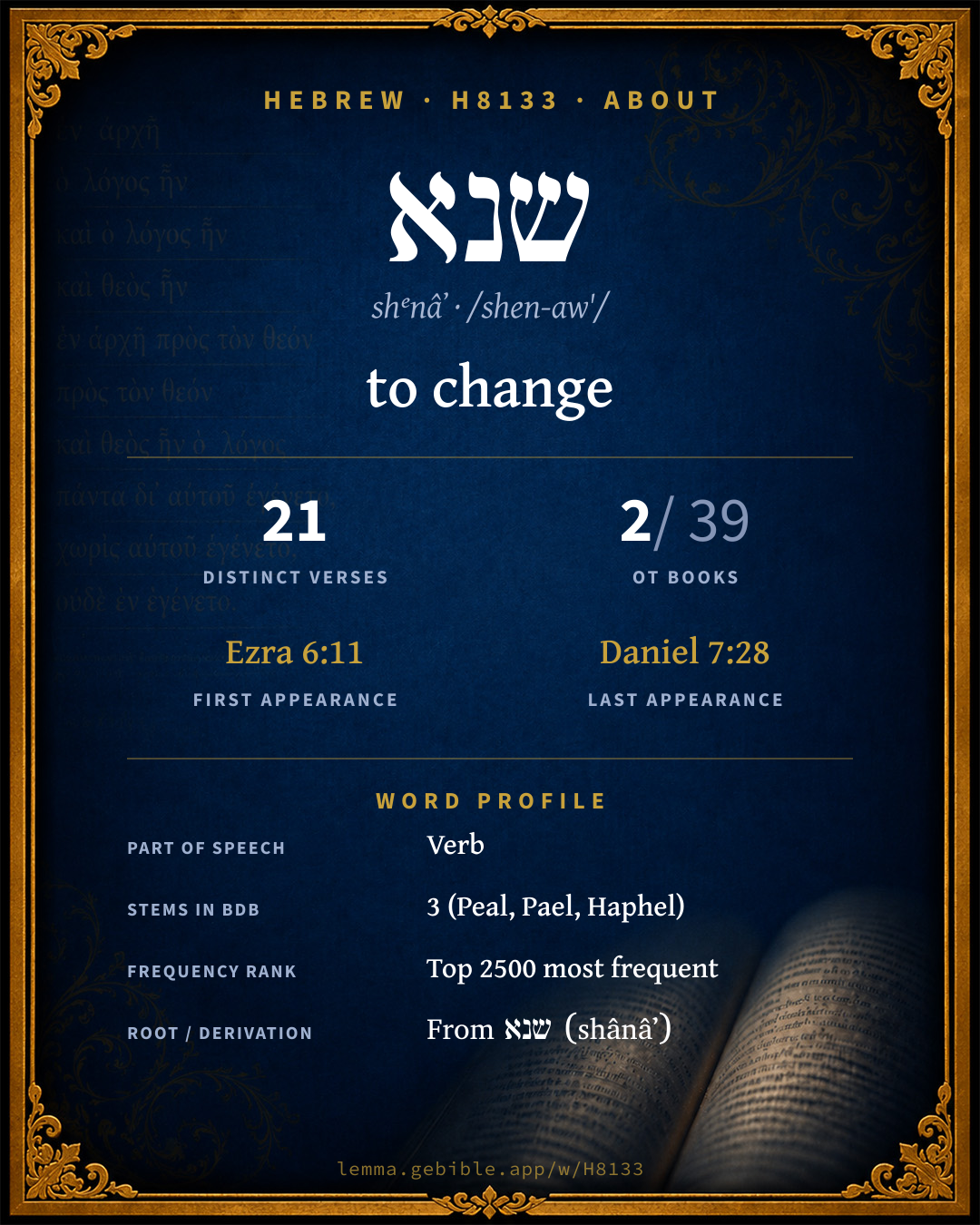
שְׁנָא
to change
also: be altered, be changed fuller range ↓
Full lexicon entry — Brown-Driver-Briggs (BDB)
From Brown-Driver-Briggs (BDB)
Where this word appears
See every Qal verb in the Hebrew Bible →
Grammar key — what these labels mean
Part of speech
- Verb
- An action or state-of-being word.
Stem
- Hiphil
- The causative active stem (“he caused / brought about”).
- Pual
- The passive counterpart of the Piel.
- Qal
- The basic, simple active stem — the plain form of the verb (“he wrote”).
- Piel
- An intensive or resultative active stem.
Form
- Infinitive Construct
- A bound verbal noun, frequently with prepositions (“to write / in writing”).
- Imperfect
- An incomplete, ongoing, or future action (“he will / would write”).
- Perfect
- A completed action or state — Hebrew marks aspect (completeness) more than strict tense (“he wrote”).
- Participle Active
- A verbal adjective expressing ongoing or characteristic action (“writing / one who writes”).
- Participle Passive
- A verbal adjective expressing action received (“written”).
State
- Absolute
- The independent form of a noun, not bound to a following word.
Person
- 3rd Person
- The one spoken about (“he / she / it / they”).
Gender
- Masculine
- Grammatically masculine.
- Feminine
- Grammatically feminine.
Number
- Plural
- More than one (in Hebrew, generally three or more).
- Singular
- One.
3 verses where H8133 appears in the Poal stem in the Book of Daniel. Filtered view — show all forms. Click any verse to open its interlinear word-by-word view. Verse text shown in the World English Bible for context — . Each verse’s Hebrew form is shown with its reference; the English is not keyword-highlighted, since the data carries no word-level English alignment. Use “Compare translations” on any verse to read it across multiple English versions. This concordance covers the Hebrew Bible; Septuagint (Greek Old Testament) occurrences are not indexed here.
Daniel
- Daniel 2:9 יִשְׁתַּנֵּ֑א Poal impf 3ms But if you don't make known to me the dream, there is but one law for you; for you have prepared lying and corrupt words to speak before me, until the time be changed: therefore tell me the dream, and I shall know that you can show me the interpretation of it.
- Daniel 5:10 יִשְׁתַּנּֽוֹ Poal impf 3mp [Now] the queen by reason of the words of the king and his lords came into the banquet house: the queen spoke and said, O king, live forever; don't let your thoughts trouble you, nor let your face be changed.
- Daniel 7:28 יִשְׁתַּנּ֣וֹן Poal impf 3mp Here is the end of the matter. As for me, Daniel, my thoughts much troubled me, and my face was changed in me: but I kept the matter in my heart.
About this entry
At a glance — auto-summarized from this page’s data, not written by a person. Every figure links to its source below. This summary describes the numbers; it doesn’t interpret them.
שנא — transliterated shᵉnâʼ — is a Hebrew verb carrying the sense “to change.” More than three-quarters of its appearances fall in Daniel. The Hebrew Bible uses it across 21 verses — uncommon. It first appears in Ezra 6:11. As a verb its force shifts by stem, across 3 stems (Peal, Pael, and more). See the sense tree, 21-verse concordance, and the renderings breakdown below.
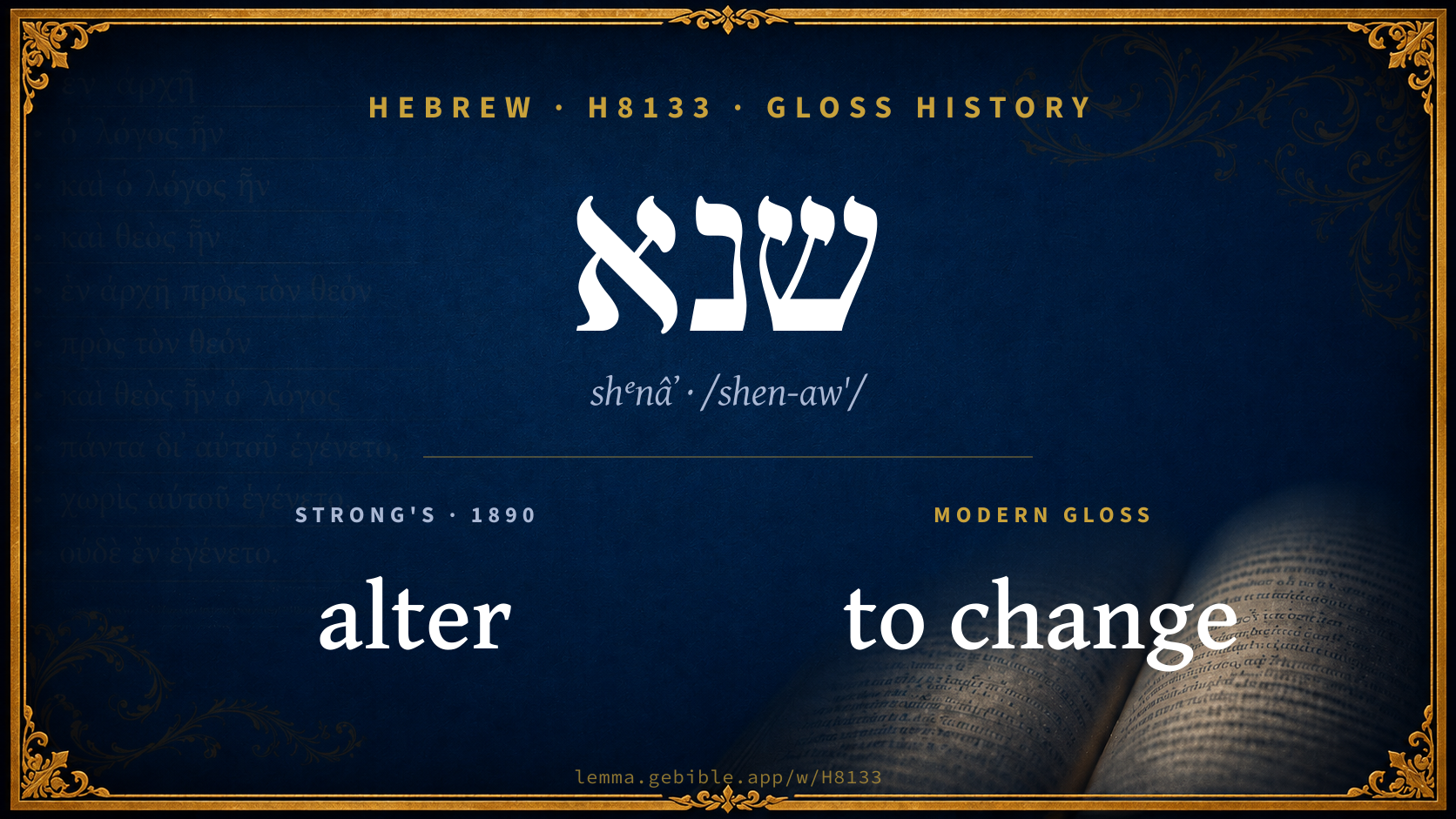
Gloss history
Strong's 1890 vs modern scholarship
About this word
Strong's H8133 catalogs a Hebrew word from the Hebrew Old Testament.
These counts are not copied from any lexicon or concordance. They are computed here, from the morphology-tagged Hebrew Old Testament. What Lemma adds →
- 21
- distinct verses
- The word appears in 21 distinct verses.
- 2 / 39
- OT books
- The word appears in 2 of 39 Old Testament books.
- #1,412
- by frequency
- Top 2500 most frequent Hebrew words (rank 1,412 of 8,640 Hebrew words by occurrence).
View all 21 occurrences in the concordance →
By traditional corpus
Conventional, traditional groupings — biblical authorship is debated, so this is a traditional corpus grouping, not an authorship claim. Each share is this word’s portion of its verses in that division of the Hebrew canon. Each figure is a share of the word’s 21 distinct verses.
- Writings (Ketuvim) 21 verses · 100%
How translations render this word
Counts come from each version’s own published word-to-Strong’s tagging or interlinear alignment — an approximate guide to how each version renders this word, not a word-level alignment the data otherwise carries. Because each total is that version’s own tagged count, the per-version totals vary from one another and need not match the appearance or distinct-verse counts above. These counts may also differ from a printed concordance because Lemma counts each distinctly tagged rendering and does not collapse phrase taggings into a single head-word total. This is a fixed set of word-tagged versions (KJV, ASV, BSB, ULT) and does not change with the reading translation you choose elsewhere. Each version’s license is shown beside its name below (and on Sources).
- King James Version: Be changed 4×, Changed 3×, Was changed 3×
- American Standard Version: Was changed 4×, Be changed 2×, Changed 2×
- Berean Standard Bible: Different 4×, Be changed 2×
- unfoldingWord Literal Text: Change 4×, Be changed 2×, Changed 2×
King James Version Public Domain
Renders H8133 across 21 tagged occurrences — most commonly:
Plus 9 renderings that appear only once — usually multi-word phrases or single function words the recovered tagging swept in, not distinct renderings.
American Standard Version Public Domain
Renders H8133 across 21 tagged occurrences — most commonly:
Plus 11 renderings that appear only once — usually multi-word phrases or single function words the recovered tagging swept in, not distinct renderings.
Berean Standard Bible Public Domain
Renders H8133 across 20 tagged occurrences — most commonly:
Plus 14 renderings that appear only once — usually multi-word phrases or single function words the recovered tagging swept in, not distinct renderings. Not rendered by a distinct English word in 1 further occurrence.
unfoldingWord Literal Text CC BY-SA 4.0
Renders H8133 across 26 tagged occurrences — most commonly:
Plus 10 renderings that appear only once — usually multi-word phrases or single function words the recovered tagging swept in, not distinct renderings.
Senses in the full BDB
Hebrew verbs can shift meaning by stem (binyan): Qal is the basic action, Niphal is often passive or reflexive, Piel often intensifies or makes it factitive, and Hiphil is typically causative. The senses below are grouped under the stem BDB assigns to each. This entry also uses Peal (the basic Aramaic stem, parallel to Qal), Pael (the intensive Aramaic stem, parallel to Piel), and Haphel (the causative Aramaic stem, parallel to Hiphil).
What do BDB’s symbols mean?
BDB uses these scholarly abbreviations:
| Symbol | Meaning |
|---|---|
| 𝔊 | the Septuagint (the ancient Greek translation, LXX) |
| 𝔙 | the Vulgate (the Latin translation) |
| 𝔖 | the Syriac version (the Peshitta) |
| 𝔗 | the Targum (the Aramaic translation) |
| ψ | the Psalms |
| √ | root (the underlying root or stem) |
| ‖ | parallel passage (a synonymous or contrasted parallel) |
| † | the dagger: every passage where the word occurs is cited |
The 4 senses and sub-senses the full Brown-Driver-Briggs lexicon distinguishes for this word, in lexicon order (not ranked by frequency), with BDB’s own verbatim wording and sub-sense lettering. Shown in Hebrew script with BDB’s own scholarly abbreviations. The condensed entry is in the Lexicon Entry tab. See also the Forms in the corpus table below.
Peal
- . intrans. change, be changed
Pael
- . trans. change
Ithpa
- . be changed
Haphel
- . trans. change, alter
Senses from the full Brown-Driver-Briggs lexicon (Brown, Driver, Briggs; Oxford 1906 — public domain), digitized via Sefaria, supplemented by the OpenScriptures HebrewLexicon (CC BY 4.0). Full attribution on Sources.
Word origin
Derived from שנא (shânâʼ) (H8132) — to change.
Jastrow Dictionary
A second Hebrew/Aramaic lexicon for comparison, covering Aramaic and post-biblical (Talmudic, Targumic, Midrashic) usage that the biblical-Hebrew BDB does not. Matched by lemma rather than by Strong’s number, so a lemma may carry more than one Jastrow headword (shown separately below), and the entries cover usage well beyond the Bible.
שְׁנָא I
- to change, v. שְׁנֵי.
נָא I
- = אֲנָא. Y. Ter. V, 43ᶜ bot. ואוף נא וכ׳ I, too, think so. Y. Ber. IV, beg. 7ᵃ וָנָא אמרית וכ׳ and I gave a reason for it; a. fr.—V. דְּנָה, לֵינָא.—Pl. נַן. Y. B. Kam. II, beg. 2ᵈ מה נן אמרין וכ׳ why do we say &c.; a. fr.
נָא II
- (also adverb)(b. h.;
- 1. hurried, half-done. Pes. 41ᵃ bot. אכלו נא if he ate it (the Passover lamb) half-done. Ib.ᵇ ישנו בבל תאכל נא is subject to the law (Ex. XII, 9) &c. Tosef. Macc. IV (III), 1, contrad. to חַי. Men. 78ᵇ מצה נא, v. הַיָנָא; a. fr. e.g. Exodus 12:9
- 2. slender, fine, brittle. — Pl. נָאִין; f. נָאוֹת. Tosef. Kel. B. Kam. II, 9 [read with R. S. to Kel. III, 2:] הוסקו והנאין (= והן נאין) if the vessels were heated but turned out brittle. B. Bath, 97ᵇ (expl. פיטסות, ib. VI, 2) נאות ומגופרות thin, but lined with pitch; Tosef. ib. VI, 3.
נָא III
- (b. h.) I pray, prithee. Yoma IV, 2; a. fr.—Ber. 9ᵃ, a. e. אין נא אלא וכ׳, v. בַּקָּשָׁה.
נַן
- , pl. of נָא I.
שִׁנָא
- , v. שֵׁינְתָא
שָׂנֵא
- (b. h.) to hate. Pes. 49ᵇ גדולה שנאה ששׂוֹנְאִין וכ׳ great is the hatred with which the ignorant hate the scholar, even greater than that which gentiles bear towards Israel. Ib. 113ᵇ שלשה שׂוֹנְאָן three classes of men does the Lord hate. Ib. שלשה שונאין זה וכ׳ three kinds of creatures hate one another, the dog &c. Ib. מצוה לִשְׂנֹאתוֹ (Var. מותר) it is right (permitted) to hate him. Ib. שִׂנְאוּ את אדניכם hate your masters. Snh. 108ᵇ the raven said to Noah, רבך שׂוֹנְאֵנִי ואתה שְׂנֵאתַנִי thy master (God) hates me, and thou hatest me. Ab. I, 10 אהוב … ושְׂנָא וכ׳ love work and hate office; a. fr.—Part. pass. שָׂנוּא; f. שְׂנוּאָה &c. Kidd. 68ᵃ; Yeb. 23ᵃ (ref. to Deut. XXI, 15) וכי יש ש׳ לפני המקום וכ׳ is there before God a hated one and a beloved one (could it be supposed that the law should allow a discrimination between the children of a favored and of a hated wife)? Ib. ש׳ בנישואיה, v. נִישּׂוּאִין; a. e.—Sifra K’doshim, Par. 3, ch. VIII שָׂנְאוּי. e.g. Deuteronomy 21:15
- to be hated. Num. R. s. 48 הר ס̇ינ̇י שבו נִשְׂנְאוּ וכ׳ it is called Mount Sinai, because on it the gentiles became hateful to the Lord &c. (v. שִׂנְאָה); Yalk. Is. 363 נִשְׂתַּנְּאוּ. Taan. 7ᵇ (ref. to ישנא, Koh. VIII, 1) א"ת ישונא אלא יִשָּׂנֵא read not y’shunne (shall be changed), but yissane (shall be hated). e.g. Ecclesiastes 8:1
- same. Pesik. R. s. 14 (ref. to Koh. l. c.) יְשׂוּנֶּא יְסוּנֶּה בסמ"ך read y’sunne, with Samekh (v. supra).
שְׂנֵא
- , v. סְנֵי
שְׁנָא II
- , year. Targ. Lev. XXV, 53 (O. ed. Vien. שְׁנָה); a. fr.—Constr. שְׁנַת. Ib. 5; a. e.—Pl. שְׁנַיָּא, שְׁנִין, שְׁנֵי, שְׁנָתָא. Ib. 3; 15; 52; a. fr.—Targ. Ps. XC, 10 שְׁנָתָנָא Ms. (ed. שְׁנוֹתָנָא).—R. Hash. 31ᵃ שיתא אלפי ש׳ וכ׳ the world will last six thousand years. Ab. Zar. 9ᵃ. Ib. 9ᵇ sq. ההוא … שית ש׳ יתירתא a document dated six years ahead; a. fr.
שְׁנֵי
- 1. to repeat. Targ. I Sam. XXVI, 8 ed. Wil. (v. תְּנֵי).—Snh. 59ᵃ ולמה לי למִישְׁנֵי בסיני and why is it repeated at Sinai?; a. e.
- 2. to change; to be different. Targ. O. Deut. XXXIV, 7.—Lev. R. s. 22 כל מאי דהוה הדין ש׳ הדין ש׳ as the one (the mosquito) changed, so did the other (Titus) change. Yeb. 21ᵇ או דילמא לא שנא (abbrev. ל"ש) or is there no difference (between the wife of a brother on the mother’s side and that of a brother on the father’s side)? Succ. 29ᵇ ל"ש ביו"ט … ול"ש וכ׳ no difference whether it is the first Holy Day or the second. Ib. 30ᵃ ל"ש לפני וכ׳ no difference whether before &c. Sabb. 6ᵃ הכי נמי ל"ש in this case, too, it is the same; a. v. fr.—Yeb. l. c. מאי ש׳ הני מאי ש׳ הא (abbrev. מ"ש) what difference is there between the former and the latter? Sabb. 4ᵃ ומאי ש׳ and wherein lies the difference? Ib. 2ᵇ מ"ש הכא … ומ"ש התם וכ׳ wherein lies the difference (what reason is there) that the Mishnah says here, ‘two which are four within, and two which are four without’, and there (Shebu. I, 1) only, ‘two which are four’?; a. fr.—Part. שָׁאנֵי it is different. Succ. 21ᵇ ש׳ שוורים הואיל וכ׳ it is different in the case of oxen, because &c. Sabb. 7ᵇ ש׳ צרור וכ׳ it is different with bundles and other objects &c. Ker. 11ᵃ והכא ש׳ but here it is different; a. v. fr.—V. שׁנִיא.
- 1. to change; to act strangely. Targ. Gen. XLI, 14. Targ. Ps. LXXXIX, 35. Ib. XXXIV, 1. Targ. Y. II, Deut. XXXII, 5; a. fr.—[Ib. 41 אישני, read: אישנן, v. שְׁנַן.—Targ. Jud. XX, 16 משנן, read: משגן, v. שְׁגֵי.]—Taan. 24ᵇ שַׁנִּי דוכתיך change thy place; ש׳ דוכתיה he changed his place. Ker. 11ᵃ לישנא דשׁנּוּיֵי, v. חָרַף. Bets. 30ᵃ כמה דאפשר לשנויי מְשַׁנִּינָן וכ׳ as much as it is feasible to change (the mode of doing a thing), we must change on the Holy Day; Sabb. 128ᵇ; ib. 117ᵇ מְשַׁנִּין. Bets. l. c. והא הני נשי … ולא מְשַׁנְּיָין וכ׳ but there are those women that fill their pitchers … without any change, and we say nothing to them (to interfere)! Snh. 96ᵃ top שני נפשך (Rashi אַשְׁנִי) disguise thyself; במאי אִישַׁנֵּי how shall I disguise (myself)?; Yalk. Is. 276; a. fr.
- 2. to reply. Sabb. 7ᵇ זימנין מְשַׁנֵּי לה וכ׳ at times he replied to it (met the objection by saying) &c. Ib. 3ᵇ דמשני לך; Keth. 98ᵇ דשַׁנִּינָן, v. שִׁינּוּיָא. Pes. 20ᵇ ומְשַׁנֵּי שאני התם וכ׳ and he answered, it is different in that case; a. fr.—Shebu. 21ᵃ top כדשני ליה (Rashi כדמשני) as he (Abayi) replied to him (R. Papa, further below).
- to change, act strangely. Targ. Mal. III, 6. Targ. O. a. Y. I Deut. XXXII, 5; a. fr.—[Targ. Ps. LXXI, 17 אשני, read with ed. Lag. אתני.]—Snh. 96ᵃ top, v. supra. e.g. Deuteronomy 32:5
- 1. to be changed. Targ. Deut. l. c. Targ. Lam. IV, 1; a. e.—Snh. 71ᵇ נימא הואיל וא׳ א׳ let us say, because his status has changed, he is a different person (not responsible for acts committed in his previous condition); האי דינו א׳ מיתתו לא א׳ this man’s legal status has changed, but the mode of his execution is not affected thereby. Ib. הואיל וא׳ א׳ … דא׳ לגמרי because a change has taken place (by her becoming of age), she is a different person (and the mode of her execution must be different): so much the more here (in the case of a proselyte) where a complete change has taken place. Ib. 96ᵃ א׳ אפיה והוה וכ׳ his face changed, and he looked like a dog. Sabb. 36ᵃ הני … א׳ שמייהו וכ׳ the names of the following three things have changed since the destruction of the Temple; Succ. 34ᵃ; a. e.
A Dictionary of the Targumim, the Talmud Babli and Yerushalmi, and the Midrashic Literature (Marcus Jastrow; London, Luzac, 1903) — Public Domain. Digitized via Sefaria. Digitized via Sefaria. Full attribution on Sources.
Forms in the corpus
The 21 distinct written forms H8133 takes in the Hebrew Bible, most frequent first — each parse links to that stem’s occurrences in the concordance. Hebrew forms include their vowel points and cantillation, so a single lemma takes many written forms.
Same root — word family
Other BDB entries built from the same root as H8133, grouped by Strong’s listed origin. These share a root / origin per the lexicon — not necessarily a shared meaning. Each links to that word’s own entry.
Derives from
Shares the same root
Proper names from this root
People and places named from this root — a name, not an additional meaning of the word.
Compare all same-root words → 1 of the same-root words is a proper name (a person or place). They share a root, not necessarily a meaning.
Septuagint verse parallels
This word appears in 21 verses that also exist in the Greek Old Testament (Septuagint), out of the 21 Hebrew verses it occurs in. You can read those verses in Greek by switching the Old Testament edition to the Septuagint.
Read these verses in the Septuagint
This is a verse-level parallel only — the same verses exist in both the Hebrew and Greek Old Testaments. No word-level Hebrew↔Greek correspondence is claimed: the data carries no such alignment, so no Greek word is shown as this Hebrew word’s translation. Coverage is not total — the Septuagint omits the deuterocanon and renumbers the Psalms, so some Hebrew verses have no direct Greek parallel.