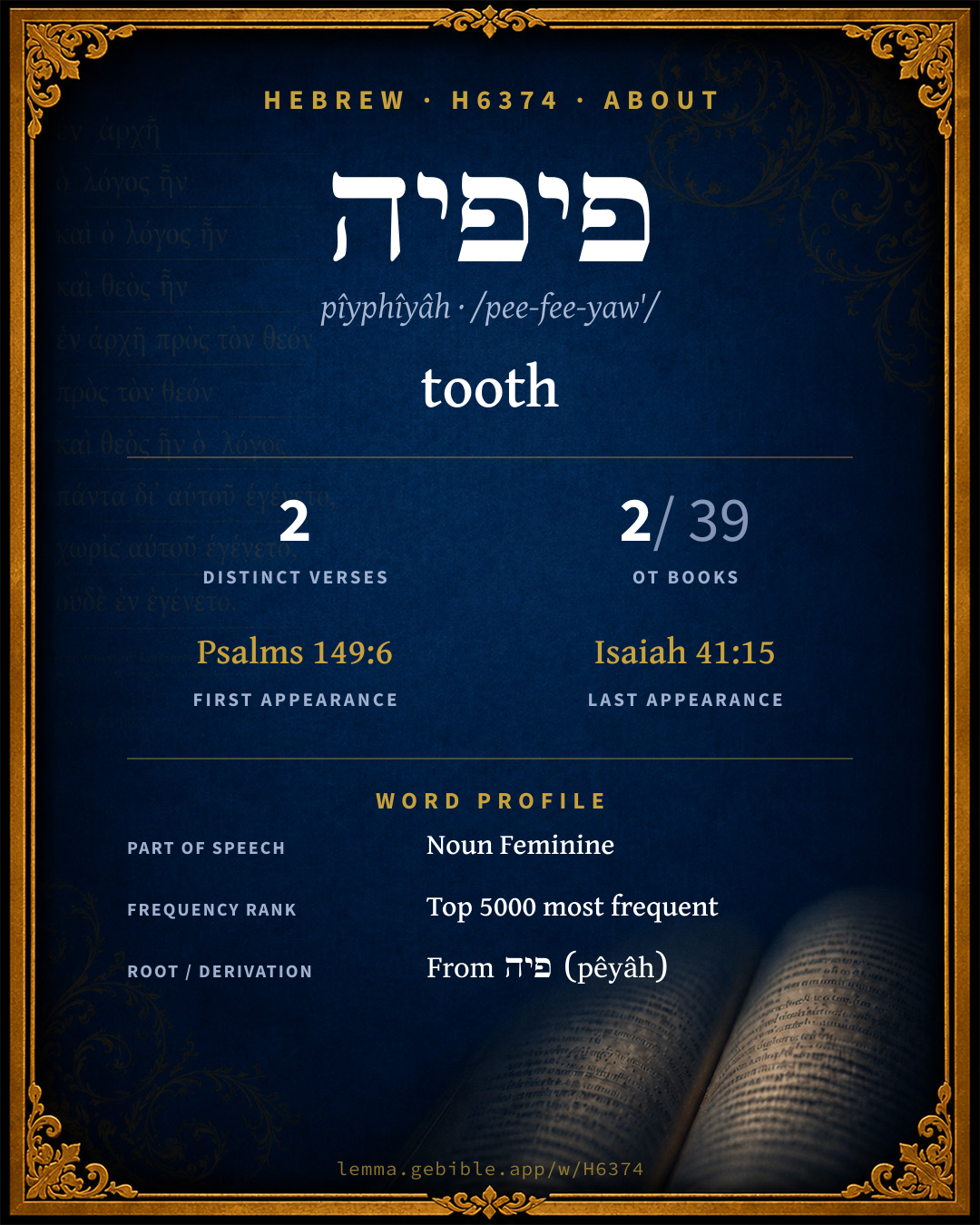
פִּיפִיָּה
tooth
Full lexicon entry — Brown-Driver-Briggs (BDB)
From Brown-Driver-Briggs (BDB)
Where this word appears
Grammar key — what these labels mean
Part of speech
- Noun
- A naming word — a person, place, thing, or idea.
Noun type
- Common
- A common noun — a general class of person, place, or thing (“king,” “city,” “water”), not a specific name.
State
- Absolute
- The independent form of a noun, not bound to a following word.
Gender
- Both
- Attested as both masculine and feminine.
Number
- Plural
- More than one (in Hebrew, generally three or more).
Every verse where H6374 appears — 2 distinct verses across 2 books. Click any verse to open its interlinear word-by-word view. Verse text shown in the World English Bible for context — . Each verse’s Hebrew form is shown with its reference; the English is not keyword-highlighted, since the data carries no word-level English alignment. Use “Compare translations” on any verse to read it across multiple English versions. This concordance covers the Hebrew Bible; Septuagint (Greek Old Testament) occurrences are not indexed here.
Psalms 1 verse
Isaiah 1 verse
About this entry
At a glance — auto-summarized from this page’s data, not written by a person. Every figure links to its source below. This summary describes the numbers; it doesn’t interpret them.
פיפיה — transliterated pîyphîyâh — is a Hebrew noun carrying the sense “tooth.” With only 2 verses it sits in the long tail of Hebrew Bible vocabulary. Its uses cluster heavily in Psalms (50% of all occurrences). Debuting at Psalms 149:6, it then recurs through the corpus. See the sense tree, 2-verse concordance, and the renderings breakdown below.
Gloss history
Strong's 1890 vs modern scholarship
About this word
Strong's H6374 catalogs a Hebrew word from the Hebrew Old Testament.
These counts are not copied from any lexicon or concordance. They are computed here, from the morphology-tagged Hebrew Old Testament. What Lemma adds →
- 2
- distinct verses
- The word appears in 2 distinct verses.
- 2 / 39
- OT books
- The word appears in 2 of 39 Old Testament books.
- #4,807
- by frequency
- Top 5000 most frequent Hebrew words (rank 4,807 of 8,640 Hebrew words by occurrence).
View all 2 occurrences in the concordance →
By traditional corpus
Conventional, traditional groupings — biblical authorship is debated, so this is a traditional corpus grouping, not an authorship claim. Each share is this word’s portion of its verses in that division of the Hebrew canon. Each figure is a share of the word’s 2 distinct verses.
- Prophets (Nevi'im) 1 verse · 50%
- Writings (Ketuvim) 1 verse · 50%
How translations render this word
Counts come from each version’s own published word-to-Strong’s tagging or interlinear alignment — an approximate guide to how each version renders this word, not a word-level alignment the data otherwise carries. Because each total is that version’s own tagged count, the per-version totals vary from one another and need not match the appearance or distinct-verse counts above. These counts may also differ from a printed concordance because Lemma counts each distinctly tagged rendering and does not collapse phrase taggings into a single head-word total. This is a fixed set of word-tagged versions (KJV, ASV, BSB, ULT) and does not change with the reading translation you choose elsewhere. Each version’s license is shown beside its name below (and on Sources).
- King James Version: Teeth 1×, Twoedged 1×
- American Standard Version: Teeth 1×, Two-edged 1×
- Berean Standard Bible: Many teeth 1×
- unfoldingWord Literal Text: Edges 1×, Mouths 1×
King James Version Public Domain
Renders H6374 across 2 tagged occurrences — most commonly:
American Standard Version Public Domain
Renders H6374 across 2 tagged occurrences — most commonly:
Berean Standard Bible Public Domain
Renders H6374 across 1 tagged occurrence — most commonly:
unfoldingWord Literal Text CC BY-SA 4.0
Renders H6374 across 2 tagged occurrences — most commonly:
17 senses and sub-senses in the full BDB
What do BDB’s symbols mean?
BDB uses these scholarly abbreviations:
| Symbol | Meaning |
|---|---|
| 𝔊 | the Septuagint (the ancient Greek translation, LXX) |
| 𝔙 | the Vulgate (the Latin translation) |
| 𝔖 | the Syriac version (the Peshitta) |
| 𝔗 | the Targum (the Aramaic translation) |
| ψ | the Psalms |
| √ | root (the underlying root or stem) |
| ‖ | parallel passage (a synonymous or contrasted parallel) |
| † | the dagger: every passage where the word occurs is cited |
The 17 senses and sub-senses the full Brown-Driver-Briggs lexicon distinguishes for this word, in lexicon order (not ranked by frequency), with BDB’s own verbatim wording and sub-sense lettering. Shown in Hebrew script with BDB’s own scholarly abbreviations. The condensed entry is in the Lexicon Entry tab. See also the Forms in the corpus table below.
- 1.
- a. mouth, of man, organ of eating and drinking Gn 25:28 Ju 7:6 1 S 14:26, 27 Ne 9:20 Pr 19:24 = 26:15 +; fig. as finding things sweet Jb 20:12 ψ 119:103; fig. of earth Gn 4:11, swallowing Korah, etc. Nu 16:30, 32; 26:10 Dt 11:6; fig. also of She’ôl, וּפָֽעֲרָה פִיהָ Is 5:14, cf. ψ 69:16. e.g. Genesis 25:28
- b. external organ, וַיָּשֶׂם פִּיו עַל־פִּיו 2 K 4:34 Pr 30:20; of kissing 1 K 19:18 Ct 1:2; וַתִּשַּׁק יָדִי לְפִי Jb 31:27; cf. phr. שִׂים יָד עַל־פֶּה (of keeping silence) Ju 18:19 Mi 7:16 Jb 21:5, cf. 29:9; 40:4 Pr 30:32; of mocking triumph פָּעַר עָלַי בְּפ׳ Jb 16:10; הִרְחִיב פ׳ עַל ψ 35:21 Is 57:4, also רָחַב פִּי עַל 1 S 2:1. e.g. 2 Kings 4:34
- c. of י׳ in theoph., sending out fire 2 S 22:9 = ψ 18:9. e.g. 2 Samuel 22:9
- 2.
- a. much oftener, as organ of speech, of man: פ׳ speaks Gn 45:12 2 S 1:16 Is 9:16 Jb 9:20; 15:5, 6 ψ 37:30 +; speak בְּמוֹ־פִי Jb 19:16; open פ׳, אֶל־י׳ Ju 11:35, 36, abs. Jb 3:1; 33:2 +; shut פ׳ (be silent) Is 52:15, cf. חָשַׂךְ פ׳ Jb 7:11, and (of iniquity, personif.) קָפַץ פ׳ Jb 5:16 ψ 107:42; guard פ׳, Pr 13:3 (נָצַר), 21:23 (שָׁמַר), cf. שָׁמַר פִּתְחֵי פ׳ Mi 7:5, also ψ 39:2 (v. שׁמר); words, etc., are in (ב) mouth 2 S 17:5; 18:25 Dt 30:14 1 K 17:24; שִׂים דְּבָרִים בְּפ׳ 2 S 14:3, 19 Ex 4:15, also (God subj.) Nu 22:38; 23:12, 16 +; of utterance יָצָא מִפּ׳ Ju 11:36 Nu 30:3; 32:24 Jos 6:10 +; depart from mouth (cease to be mentioned) מוּשׁ מִפּ׳ Jos 1:8 Is 59:21, cf. נִכְרַת מִפּ׳ Je 7:28, לֹא יִשָּׁמַע עַל־פִּיךָ Ex 23:13; אִמְרֵי פ׳ Dt 32:1 words of my mouth, so Jb 8:2 ψ 19:15; 54:4; דִּבְרֵי פ׳ ψ 36:4 Ec 10:12, 13a; of agency, בְּפּ׳ by the mouth of 2 Ch 36:21, 22 = מִפּ׳ Ezr 1:1; דִּבֶּר פִּיו עִם־פִּיו Je 32:4 speak mouth to mouth (cf. 34:3 Nu 12:8); פ׳ = speech Is 29:13 ψ 49:14 Ec 10:13b; כְּבַד פ׳ Ex 4:10 heavy of speech (not eloquent); אֶהְיֶה עִם־פ׳ v 12, 15, i.e. aid thee in speaking; יִהְיֶה־לְּךָ לְפ׳ v 16 he shall be mouth for thee; מִפִּיו יִקְרָא אֵלַי Je 36:18, i.e. dictate; כָּתַב מִפּ׳ v. כָּתַב 1 b (3); bad qualities ascribed to it, עִקְּשׁוּת פ׳ Pr 4:24; 6:12; פִּי תַהְפֻּכוֹת 8:13; פֶּה חָלָק 26:28; אַל־תַּגְדֵּל פ׳ Ob 12, cf. Mi 6:12 Ez 35:13. e.g. Genesis 45:12
- b. as laughing Jb 8:21 ψ 126:2; panting 119:131. e.g. Job 8:21
- c. of God; his mouth speaks Is 1:20; 40:5 Je 9:11 +; he speaks בְּפ׳ 1 K 8:15, 34; wd. proceeds מִפּ׳ Dt 8:3 Is 45:23 +; פֶּה אֶל־פֶּה אֲדַבֵּר בּוֹ Nu 12:8; he creates בְּרוּחַ פִּיו ψ 33:6; he executes judgment בְּשֵׁבֶט פִּיו Is 11:4; especially = command: עָבַר אֶת־פִּי י׳ 1 S 15:24 Nu 14:41; 22:18; 24:13 Pr 8:29; פ׳ (אֶת־) מָרָה 1 S 12:14, 15 Nu 20:24 1 K 13:21 +; cf. 6 d. e.g. Isaiah 1:20
- d. of idols, ψ 115:5; 136:16, 17. e.g. Psalms 115:5
- e. of musical instr. = sound Am 6:5 (cf. 6 d). e.g. Amos 6:5
- 3. of animals: bird Gn 8:11 (carrying), Is 10:14 (chirping); ass Nu 22:28 (speaking); bear, lion 1 S 17:35 (seizing), Am 3:12 (id.), hippop. Jb 40:23 (drinking), crocod. 41:11, 13 (breathing flame); also of human foes, under fig. of ravenous beasts ψ 22:22 Ez 21:27; 34:10; פָּצָה פ׳ עַל ψ 22:14 La 2:16; 3:46; hence of edge of sword, חֶרֶב פִּיּוֹת Pr 5:4 a sword with edges (in sim.), = ח׳ פִּיפִיּוֹת ψ 149:6; cf. Ju 3:16; v. also 6 c (2), infr.; בַּעַל פִּיפִיּוֹת Is 41:15, of מוֹרַג. e.g. Genesis 8:11
- 4. mouth = opening, orifice; of well Gn 29:2, 3(×2), 8, 10; cave Jos 10:18, 22, 27; ravine, abyss Je 48:28 (si vera l., cf. Gie); also of She’ôl ψ 141:7; of a sack Gn 42:27; 43:12, 21; 44:1, 2, 8; ephah Zc 5:8; high-priest’s robe Ex 28:32 + 5 times, cf. prob. ψ 133:2; tunic Jb 30:18; of a round opening also 1 K 7:31(×3) (on text and meaning v. Benz Kit); of mouth of Nile Is 19:7 (others brink); gate of city Pr 8:3 (but read perhaps לִפְנֵי, v. Toy). e.g. Genesis 29:2
- 5.
- a. extremity, end פֶּה לָפֶה from end to end, of a temple 2 K 10:21; city 21:16, מִפֶּה אֶל־פֶּה of land Ezr 9:11. e.g. 2 Kings 10:21
- b. = portion, פִּי שְׁנַיִם †Dt 21:17 2 K 2:9 Zc 13:8. e.g. Deuteronomy 21:17
- 6. with preps.:—
- a. אֶל פִּי, v. infr. d(2).
- b. כְּפִי: (a) according to the command of, 1 Ch 12:23; (b) according to the mouth of, i.e. in proportion to (cf. Assyrian ki-i pi-i, DlHWB325), †Ex 16:21 they gathered it אִישׁ כְּפִי אָכְלוֹ each in proportion to his eating (v 16, 18 לְפִי), Lv 25:52 כְּפִי שָׁנָיו according to the number of his years (cf. v 16 לְפִי); Nu 6:21; 7:5 אִישׁ כְּפִי עֲבֹדָתוֹ (so 2 Ch 31:2), 7:7, 8; 35:8 (all P); Jb 33:6 הֵן־אֲנִי כְפִיךָ לָאֵל I am in the proportion of thee as regards God, i.e. I stand towards God even as thou dost. As conj., כְּפִי אֲשֶׁר, †Ml 2:9 כְּפִי אֲשֶׁר אֵינְכֶם שֹׁמְרִים אֶת־דְּרָכַי acc. as ye do not keep, etc.; and without אשׁר Zc 2:4 כְּפִי אִישׁ־לֹא נָשָׂא רֹאשׁוֹ in such proportion that none did lift up his head (but We Now אֲשֶׁר for אִישׁ, that it, Judah, did not, etc.). e.g. 1 Chronicles 12:23
- c. לְפִי, nearly i.q. כְּפִי (v. לְ 5 i b), but more common (cf. Aramaic לְפוּם, ܠܦܽܘܬ ): (1) †Gn 47:12 לְפִי הַטָּ֑ף, Ex 12:4 ye shall compute אִישׁ לְפִי אָכְלוֹ each according to his eating (according to the quantity which his family will consume), 16:16, 18 Lv 25:16 לְפִי רֹב הַשָּׁנִים, v 16, 51; 27:16 לְפִי זַרְעוֹ, Nu 26:54 Jos 18:4 1 K 17:1 לְפִי דְבָרִי כִּי אִם־, Ho 10:12 קִצְרוּ לְפִי חֶסֶד (‖ לִצְדָקָה), Pr 12:8; 27:21: sq. inf. Nu 9:17 לְפִי הֵעָלוֹת הֶעָנָן = acc. as the cloud was lifted up, Je 29:10. (2) in the phr. לְפִי חֶרֶב according to the mouth, or measure, of the sword, i.e. as the sword devours, without quarter, Gn 34:26 Ex 17:13 Nu 21:24 + often e.g. Genesis 47:12
- d. עַל פִּי: (1) according to (עַל) 1 f a) the mouth of, i.e. (α) the command of, Gn 41:40; 45:21 Ex 17:1; 38:21 Nu 3:16, 39 + (especially P), 2 K 23:35; (β) the evidence or sentence of, Dt 17:6 עַל־פִּי עֵד אֶחָד, 19:15; 21:5 (on עַל־פִּי הַנָּ֑כֶל Am 6:5, v. 2 e supr.). (2) according to the measure of, in accordance with, †Gn 43:7 we told him על פי הדברים האלה according to these words (i.e. the questions Joseph asked), Ex 34:27 in accordance with these words, Lv 27:8 על־פי אשׁר תַּשִּׂיג יַד הנֹּדֵר according to what the hand of the vower can reach to, v 18 (cf. לְפִי 25:16, 51), Dt 17:10, 11 2 S 13:32 (but v. שׂוּמָה), Pr 22:6 חֲנֹךְ לַנַּעַר על פי דרכו. In the same sense אֶל פִּ׳, †Jos 15:13; 17:4; 21:3. e.g. Genesis 41:40
Senses from the full Brown-Driver-Briggs lexicon (Brown, Driver, Briggs; Oxford 1906 — public domain), digitized via Sefaria, supplemented by the OpenScriptures HebrewLexicon (CC BY 4.0). Full attribution on Sources.
Word origin
n.m. Jos 9:2 mouth (prob. bilit. [פו, פי] Sta§ 183; NH = BH; Ph. לפי according to; Assyrian pû, mouth; Arabic فُوهٌ, فَاهٌ, فِيهٌ; Ethiopic አፍ; Syriac ܠܦܽܘܬ according to; but also Arabic فَمّ, فُمّ, فِمّ, Biblical Aramaic פֻּם, 𝔗 פּוּמָא; Syriac ܦܽܘܡܳܐ; Mand. פומא NöM § 87);—abs. פ׳ Ex 4:10 +, cstr. פִּי Is 1:20 +; sf. 1 s. פִּי Gn 45:12 +, 2 ms. פִּיךָ 41:40 +, 3 ms. פִּיו 25:28 +, פִּיהוּ Ex 4:15 +, 3 mpl. פִּיהֶם Ju 7:6 +, פִּימוֹ ψ 17:10 + 2 times, etc.; pl. פִּיּוֹת Pr 5:4, פֵיוֹת (שְׁנֵי) Ju 3:16, פִּיפִיּוֹת Is 41:15 ψ 149:6; פִּים 1 S 13:21 (corrupt, v. Dr al.);—
— Brown-Driver-Briggs (Oxford 1906, public domain), digitized via Sefaria, supplemented by the OpenScriptures HebrewLexicon (CC BY 4.0). See Sources.
Derived from פיה (pêyâh) (H6366) — sword edge.
Forms in the corpus
The 2 distinct written forms H6374 takes in the Hebrew Bible, most frequent first — each parse links to that state’s occurrences in the concordance. Hebrew forms include their vowel points and cantillation, so a single lemma takes many written forms.
| Form | Parsing | Example | Uses |
|---|---|---|---|
| פִּֽיפִיּ֑וֹת | Noun, Common, Both, Plural, Absolute | Isaiah 41:15 | 1 |
| פִּֽיפִיּ֣וֹת | Noun, Common, Both, Plural, Absolute | Psalms 149:6 | 1 |
Septuagint verse parallels
This word appears in 2 verses that also exist in the Greek Old Testament (Septuagint), out of the 2 Hebrew verses it occurs in. You can read those verses in Greek by switching the Old Testament edition to the Septuagint.
Read these verses in the Septuagint
This is a verse-level parallel only — the same verses exist in both the Hebrew and Greek Old Testaments. No word-level Hebrew↔Greek correspondence is claimed: the data carries no such alignment, so no Greek word is shown as this Hebrew word’s translation. Coverage is not total — the Septuagint omits the deuterocanon and renumbers the Psalms, so some Hebrew verses have no direct Greek parallel.