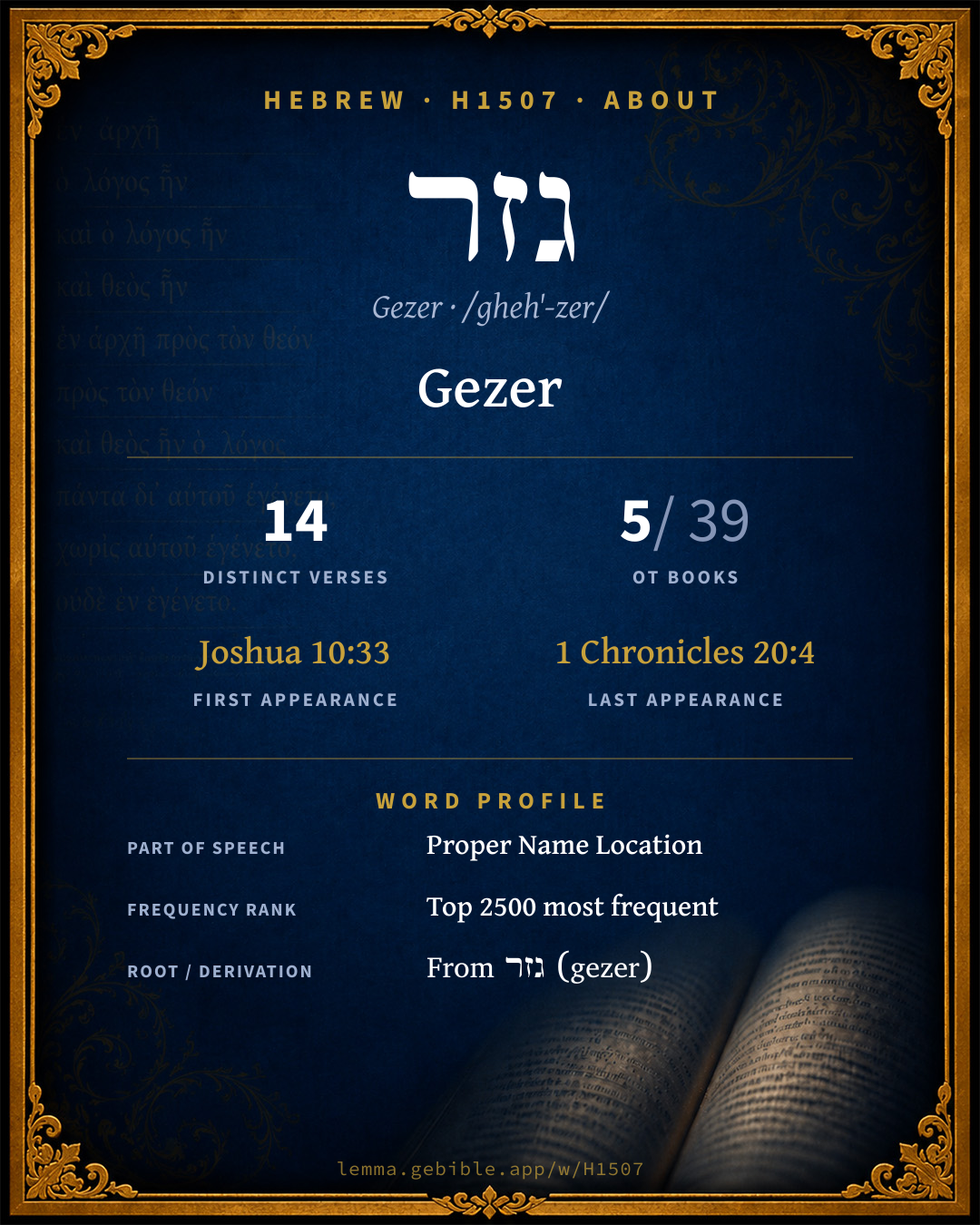
גֶּ֫זֶר
Gezer
BDB lists 2 entries for ‘Gezer’ fuller range ↓
Full lexicon entry — Brown-Driver-Briggs (BDB)
From Brown-Driver-Briggs (BDB)
Where this word appears
Grammar key — what these labels mean
Part of speech
- Noun
- A naming word — a person, place, thing, or idea.
Noun type
- Proper
- A name of a specific person, place, or people (e.g. Abraham, Zion, Israel).
Every verse where H1507 appears in the Book of Joshua — 5 distinct verses. Click any verse to open its interlinear word-by-word view. Verse text shown in the World English Bible for context — . Each verse’s Hebrew form is shown with its reference; the English is not keyword-highlighted, since the data carries no word-level English alignment. Use “Compare translations” on any verse to read it across multiple English versions. This concordance covers the Hebrew Bible; Septuagint (Greek Old Testament) occurrences are not indexed here.
Joshua
- Joshua 10:33 גֶּ֔זֶר n Proper Then Horam king of Gezer came up to help Lachish; and Joshua struck him and his people, until he had left him none remaining.
- Joshua 12:12 גֶּ֖זֶר n Proper the king of Eglon, one; the king of Gezer, one;
- Joshua 16:3 גָּ֑זֶר n Proper and it went down westward to the border of the Japhletites, to the border of Beth Horon the lower, even to Gezer; and the goings out of it were at the sea.
- Joshua 16:10 בְּ/גָ֑זֶר prep + n Proper They didn't drive out the Canaanites who lived in Gezer: but the Canaanites dwell in the midst of Ephraim to this day, and are become servants to do forced labor.
- Joshua 21:21 גֶּ֖זֶר n Proper They gave them Shechem with its suburbs in the hill-country of Ephraim, the city of refuge for the manslayer, and Gezer with its suburbs,
About this entry
At a glance — auto-summarized from this page’s data, not written by a person. Every figure links to its source below. This summary describes the numbers; it doesn’t interpret them.
גזר — transliterated Gezer — is a Hebrew name carrying the sense “Gezer.” Debuting at Joshua 10:33, it then recurs through the corpus. With 14 verses in 5 books, it is an uncommon word in the Hebrew Bible. Its uses concentrate in Joshua (36% of all occurrences). Each statement above links to its evidence; the full detail follows below.
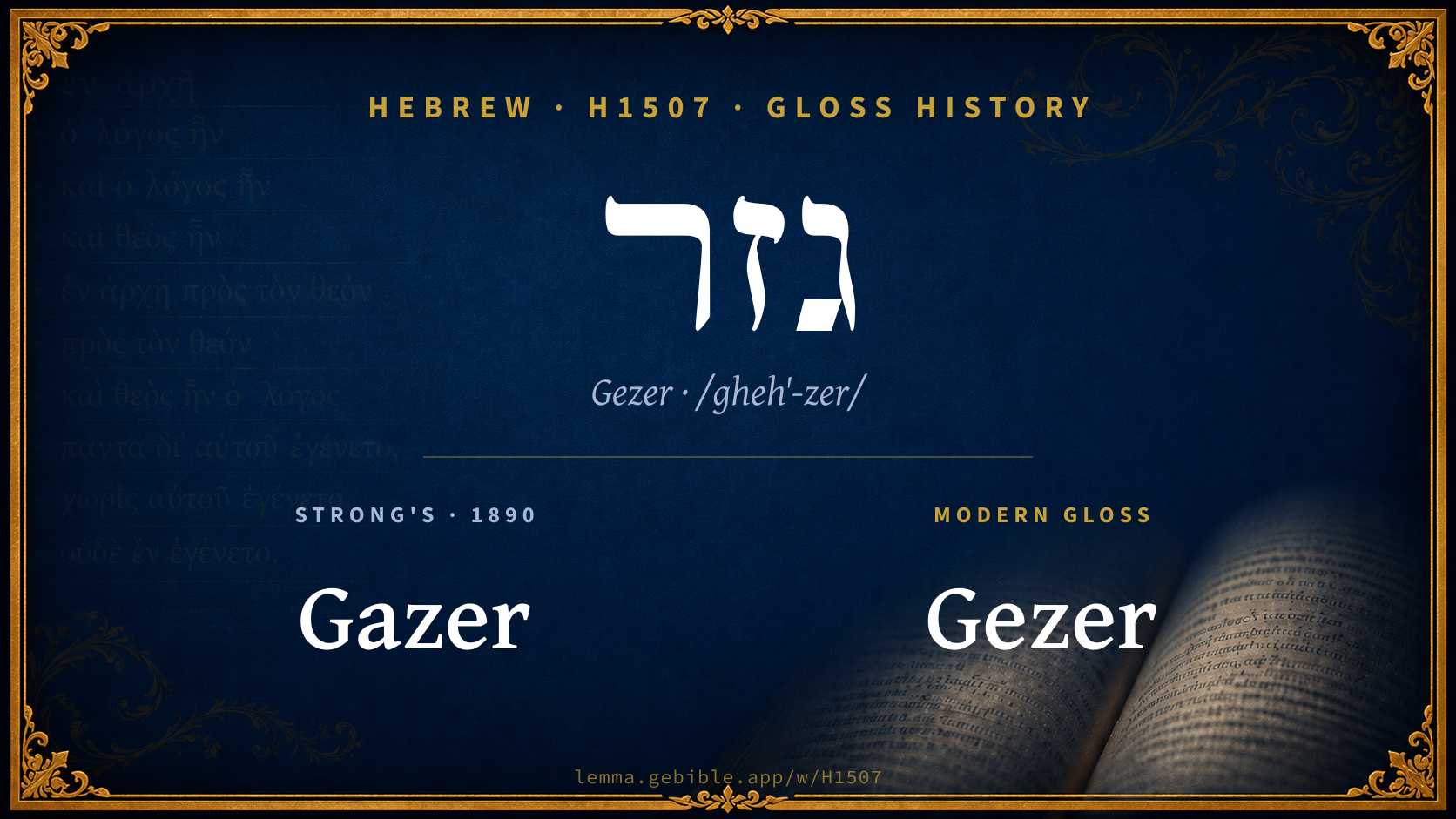
Gloss history
Strong's 1890 vs modern scholarship
About this word
Strong's H1507 catalogs a Hebrew word from the Hebrew Old Testament.
These counts are not copied from any lexicon or concordance. They are computed here, from the morphology-tagged Hebrew Old Testament. What Lemma adds →
- 14
- distinct verses
- The word appears in 14 distinct verses.
- 5 / 39
- OT books
- The word appears in 5 of 39 Old Testament books.
- #1,836
- by frequency
- Top 2500 most frequent Hebrew words (rank 1,836 of 8,640 Hebrew words by occurrence).
View all 14 occurrences in the concordance →
Most concentrated in
- Joshua 5 verses 36%
- 1 Chronicles 4 verses 29%
- 1 Kings 3 verses 21%
By section of the Old Testament
By traditional corpus
Conventional, traditional groupings — biblical authorship is debated, so this is a traditional corpus grouping, not an authorship claim. Each share is this word’s portion of its verses in that division of the Hebrew canon. Each figure is a share of the word’s 14 distinct verses.
- Prophets (Nevi'im) 10 verses · 71%
- Writings (Ketuvim) 4 verses · 29%
How translations render this word
Counts come from each version’s own published word-to-Strong’s tagging or interlinear alignment — an approximate guide to how each version renders this word, not a word-level alignment the data otherwise carries. Because each total is that version’s own tagged count, the per-version totals vary from one another and need not match the appearance or distinct-verse counts above. These counts may also differ from a printed concordance because Lemma counts each distinctly tagged rendering and does not collapse phrase taggings into a single head-word total. This is a fixed set of word-tagged versions (KJV, ASV, BSB, ULT) and does not change with the reading translation you choose elsewhere. Each version’s license is shown beside its name below (and on Sources).
BDB lists this Strong’s number as 2 distinct words (homographs). Each count above pools all of them and is not split by sense — see the Senses section below. A low-frequency rendering may belong to a different one of those words, not the primary meaning.
- King James Version†: Gezer 12×, Gazer 2×
- American Standard Version†: Gezer 15×
- Berean Standard Bible†: Gezer 15×
- unfoldingWord Literal Text†: Gezer 15×
King James Version Public Domain
Renders H1507 across 15† tagged occurrences — most commonly:
Plus 1 rendering that appears only once — usually multi-word phrases or single function words the recovered tagging swept in, not distinct renderings.
American Standard Version Public Domain
Renders H1507 across 15† tagged occurrences — most commonly:
Berean Standard Bible Public Domain
Renders H1507 across 15† tagged occurrences — most commonly:
unfoldingWord Literal Text CC BY-SA 4.0
Renders H1507 across 15† tagged occurrences — most commonly:
Senses in the full BDB
What do BDB’s symbols mean?
BDB uses these scholarly abbreviations:
| Symbol | Meaning |
|---|---|
| 𝔊 | the Septuagint (the ancient Greek translation, LXX) |
| 𝔙 | the Vulgate (the Latin translation) |
| 𝔖 | the Syriac version (the Peshitta) |
| 𝔗 | the Targum (the Aramaic translation) |
| ψ | the Psalms |
| √ | root (the underlying root or stem) |
| ‖ | parallel passage (a synonymous or contrasted parallel) |
| † | the dagger: every passage where the word occurs is cited |
The 0 senses and sub-senses the full Brown-Driver-Briggs lexicon distinguishes for this word, in lexicon order (not ranked by frequency), with BDB’s own verbatim wording and sub-sense lettering. Shown in Hebrew script with BDB’s own scholarly abbreviations. The condensed entry is in the Lexicon Entry tab. See also the Forms in the corpus table below.
גזר I [m.] part, only pl. הַגְּזָרִים Gn 15
גזר II loc. (portion) Levitical city on border of Ephraim Jos 10
Senses from the full Brown-Driver-Briggs lexicon (Brown, Driver, Briggs; Oxford 1906 — public domain), digitized via Sefaria, supplemented by the OpenScriptures HebrewLexicon (CC BY 4.0). Full attribution on Sources.
Word origin
I. n. [m.] part, only pl. הַגְּזָרִים Gn 15:17 of halves of animals; גְּזָרִים ψ 136:13 of divided portions of Red Sea.
II. n.pr.loc. (portion) Levitical city on border of Ephraim Jos 10:33; 12:12; 21:21; 1 K 9:16; 1 Ch 6:52; 7:28; 20:4; גָּ֑זֶר Jos 16:3, 10; Ju 1:29(×2) cf. 2 S 5:25; 1 K 9:15, 17; c. ה—ָ loc. גָּ֑זְרָה 1 Ch 14:16;—cuneiform Gazri, BezTell el-Amarna Tabl. BM. 148; mod. Tell-Jezer, c. 18 m. N. of W. from Jerus., S. of the Jaffa road; Gann in PEF 1873, 78 f.; 1875, 74 f. cf. BdPal. 17.
— Brown-Driver-Briggs (Oxford 1906, public domain), digitized via Sefaria, supplemented by the OpenScriptures HebrewLexicon (CC BY 4.0). See Sources.
Derived from גזר (gezer) (H1506) — part.
Jastrow Dictionary
A second Hebrew/Aramaic lexicon for comparison, covering Aramaic and post-biblical (Talmudic, Targumic, Midrashic) usage that the biblical-Hebrew BDB does not. Matched by lemma rather than by Strong’s number, so a lemma may carry more than one Jastrow headword (shown separately below), and the entries cover usage well beyond the Bible.
גָּזַר
- v. גזז; cmp. גדר)
- 1. to cut; v. גּוֹזֵר.
- 2. to cut off, to guard; v. גִּיזְרָה a. גְּזֵרָה;—trnsf. to institute a precautionary measure (גְּזֵרָה); to enact a prohibition, to decree (mostly in a restrictive sense). Sabb. I, 4 ושמנה … גָּזְרוּ בו ביום they issued eighteen enactments on that day. Ib. 14ᵇ ג׳ טומאה על וכ׳ declared metal vessels (of gentiles) unclean (even when broken and remolten, v. ib. 16ᵇ). Ib. 17ᵇ גזרו על פתן משום וכ׳ they prohibited their (the gentiles’) bread in order to prevent the use of their oil &c. Ib. 30ᵃ מלך בו"ד גּוֹזֵר גזירה a mortal king issues a decree. Ber. 61ᵇ גָּזְרָה מלכות הרשעה שמד על ישראל שלא וכ׳ Ms. M. (v. Rabb. D. S. a. l. note) the wicked (Roman) government decreed religious persecution over Israel, that they should not study the Law &c. R. Hash. 18ᵇ גזרו תענית they ordered a public fast. Ib. II, 9 גּוֹזְרַנִי עליך וכ׳ I order thee to come to me &c. Yoma 67ᵇ (ref. to גזרה, Lev. XVI, 22) אני ה׳ גְּזַרְתִּיו וכ׳ I, the Lord, have ordained it; a. v. fr. e.g. Leviticus 16:22
- to be decreed, ordained. R. Hash. 17ᵇ נִגְזְרָה גזירה it has been decreed. Ber. 58ᵇ; a. fr.
- 1. to be cut to pieces. Yoma l. c. (ref. to גזרה, Lev. l. c.) דבר המִתְגַּזֵּר where an object thrown down is shattered to pieces. [
- 2. to be cut off, be steep. Ib. Ms. 2 מקום המתג׳ a steep place.]
גְּזַר
- 1. to cut, split. Targ. Ps. LXXIV, 13 (h. text פרר). Targ. Y. Lev. XXV, 3 sq. (h. text זמר); a. e.—B. Kam. 81ᵇ גזרתינהו לשקך וכ׳ ed. (Ar. גַּזְרִית, Ms. R. גַּזְרִי, Ms. F. אַגְזַרְתִּינְהוּ Af.) I should have split thy shoulder with the iron weapon (i.e. should have excommunicated thee).—ג׳ קיימא to make a covenant (h. כָּרַת בְּרִית). Targ. Gen. XV, 18; a. fr.
- 2. to circumcise, have one’s self circumcised. Targ. Gen. XVII, 10; 11; a. fr.—Targ. Y. Lev. XIX, 23 ג׳ גזרא (h. text ערל ערלה, v. עָרְלָה).—Part. pass. גְּזִיר, pl. גְּזִירִין. Targ. Y. Gen. XVII, 13. Targ. Josh. V, 5; a. e.—Macc. 11ᵃ (prov.) שכם נסיב ומבגאי גזיר (Gen. R. s. 80 ומגבאי קטע) Shechem wants to marry (Dinah), and Mabgai (his subject) must submit to circumcision. Gen. R. l. c. גְּזוֹר be thou circumcised. Y. Kidd. III, 64ᵈ bot. מהו מִיגְזוֹר וכ׳ how about circumcising … on the Sabbath? Y. Sabb. XIX, 16ᵈ bot. הוה ליה עובדא למיגזור וכ׳ had a case, when he was to have his son … circumcised (on a Sabbath). Y. Meg. I, 72ᵇ bot. אזל וג׳ he (Antoninus) went and had himself circumcised; (Y. Snh. X, 29ᶜ וגייר גרמיה); Koh. R. to IX, 10 הוה גזיר was circumcised; a. fr.
- 3. to decree; to enact a prohibition as a precautionary measure, to prohibit, guard. Targ. Job XXII, 28; a. e. Targ. Is. XXI, 17 גְזִיר כן it is so decreed.—Ab. Zar. 36ᵃ ואתי אינהו וגָזוּר וכ׳ and they came and forbade (gentile bread &c.) even in the field. Sabb. 14ᵃ גַּזְרֵי ביה … טומאה declared him unclean.—Ib. 53ᵇ ולא גַזְרִינָן דילמא וכ׳ and we do not prohibit it (from fear) lest he may &c. Ab. Zar. 38ᵇ גזרינן הא אטו הא we may forbid one thing in order to ward off from another thing; a. v. fr. V. גְּזֵרָה.
- 1. to be cut off. Targ. Job XVIII, 14; a. e.—Ms. מתגייר׳; h. text יתמלל׳. Targ. Ps. LVIII, 8 (Var. מתגורר׳).
- 2. to be decreed. Targ. Koh. VIII, 4; a. e.
גָּזָר
- , constr. (גזר) גְּזַר decree, גְּזַר דִּין sentence, legal decision, divine dispensation. Keth. 8ᵇ אפי׳ נחתם לו ג׳ ד׳ של וכ׳ even if a divine decree granting seventy years of happiness were sealed to him; Sabb. 33ᵃ. Lev. R. s. 26 בלי שטר ובלי ג׳ ד׳ without a note of indebtedness and without a judicial verdict. Ib. כמה גזר דין, corr. גִּזְרֵי דינין.—Y. Snh. III, 21ᵈ top עבדון ליה ג׳ ד׳ the court passes sentence over him; a. fr.—Pl. גִּזְרֵי דינין, גִּיזְ׳. Lev. R. l. c. Y. M. Kat. III, 82ᵃ bot. (expl. גזירות ב"ד, Mish. ib. III, 3) אילו גי׳ ד׳ that means judicial verdicts.
גֶּזֶר
- (גזר) piece (of wood), log, club. Y. Shebi. IX, 39ᵃ top; Y. Shek. VI, end, 50ᵇ מביא גי׳ אחד he may offer one log; (Bab. ed. Var. גזיר).—Pl. גְּזָרִין, גִּיזְרִין, גְּזִירִין. Tam. II, 3. Yoma II, 5 גְּזִירֵי עצים; Y. Shebi. l. c.; Y. Shek. l. c. גיזירי (corr. acc.); Bab. ed. גזרי. Tosef. Kel. B. Kam. I, 6 פצעין את מוחו בגזי׳ they split his scull with clubs; Snh. IX, 6 בגזי׳ Mish.; ib. 82ᵇ בגיז׳; Taan. 18ᵇ בגיז׳; (Sifra Emor Par. 8, ch. IX בבקעיות, v. בְּקַעַת); Koh. R. to III, 17 בגזי׳; a. e.
A Dictionary of the Targumim, the Talmud Babli and Yerushalmi, and the Midrashic Literature (Marcus Jastrow; London, Luzac, 1903) — Public Domain. Digitized via Sefaria. Digitized via Sefaria. Full attribution on Sources.
Forms in the corpus
The 12 distinct written forms H1507 takes in the Hebrew Bible, most frequent first — each parse links to that state’s occurrences in the concordance. Hebrew forms include their vowel points and cantillation, so a single lemma takes many written forms.
| Form | Parsing | Example | Uses |
|---|---|---|---|
| גֶּ֖זֶר | Noun, Proper | 1 Chronicles 6:67 | 3 |
| בְּ/גָ֑זֶר | Noun, Proper | Joshua 16:10 | 2 |
| בְּ/גֶ֖זֶר | Noun, Proper | 1 Chronicles 20:4 | 1 |
| בְּ/גָֽזֶר | Noun, Proper | Judges 1:29 | 1 |
| גָֽזֶר | Noun, Proper | 2 Samuel 5:25 | 1 |
| גֶּ֔זֶר | Noun, Proper | Joshua 10:33 | 1 |
| גֶּ֤זֶר | Noun, Proper | 1 Chronicles 7:28 | 1 |
| גֶּ֨זֶר֙ | Noun, Proper | 1 Kings 9:16 | 1 |
| גָּ֑זֶר | Noun, Proper | Joshua 16:3 | 1 |
| גָּ֔זֶר | Noun, Proper | 1 Kings 9:17 | 1 |
| גָּֽזְרָ/ה | Noun, Proper | 1 Chronicles 14:16 | 1 |
| גָּֽזֶר | Noun, Proper | 1 Kings 9:15 | 1 |
Same root — word family
Other BDB entries built from the same root as H1507, grouped by Strong’s listed origin. These share a root / origin per the lexicon — not necessarily a shared meaning. Each links to that word’s own entry.
Derives from
Shares the same root
Proper names from this root
People and places named from this root — a name, not an additional meaning of the word.
Compare all same-root words → 1 of the same-root words is a proper name (a person or place). They share a root, not necessarily a meaning.
Bible dictionary
Public-domain dictionary articles matched to this entry by name (Gezer). A biblical name can be shared by more than one person or place, so an article may treat several.
Easton's Bible Dictionary · M. G. Easton, 1897
A precipice, an ancient royal Canaanitish city (Josh. 10:33; 12:12). It was allotted with its suburbs to the Kohathite Levites (21:21; 1 Chr. 6:67). It stood between the lower Beth-horon and the sea (Josh. 16:3; 1 Kings 9:17). It was the last point to which David pursued the Philistines (2 Sam. 5:25; 1 Chr. 14:16) after the battle of Baal-perazim. The Canaanites retained possession of it till the time of Solomon, when the king of Egypt took it and gave it to Solomon as a part of the dowry of the Egyptian princess whom he married (1 Kings 9:15-17). It is identified with Tell el-Jezer, about 10 miles south-west of Beth-horon. It is mentioned in the Amarna tablets.
Smith's Bible Dictionary · William Smith, 1863
(a precipice), an ancient city of Canaan, whose king, Hiram or Elam, coming to the assistance of Lachish, was killed with all his people by Joshua. (Joshua 10:33; 12:12) It formed one of the landmarks on the north boundary of Ephraim, between the lower Beth-horon and the Mediterranean, (Joshua 16:3) the western limit of the tribe (1 Chronicles 7:28) It was allotted with its suburbs to the Kohathite Levites, (Joshua 21:21; 1 Chronicles 6:67) but the original inhabitants were not dispossessed, (Judges 1:29) and even down to the reign of Solomon the Canaanites were still dwelling there, and paying tribute to Israel (1 Kings 9:16) It was burned by Pharaoh in Solomon's time, (1 Kings 9:15-17) and given to Solomon's Egyptian wife, and rebuilt by him.
Hitchcock's Bible Names Dictionary · Roswell D. Hitchcock, 1869
dividing, sentence
Classic public-domain reference works; full attribution on Sources.
Septuagint verse parallels
This word appears in 13 verses that also exist in the Greek Old Testament (Septuagint), out of the 14 Hebrew verses it occurs in. You can read those verses in Greek by switching the Old Testament edition to the Septuagint.
Read these verses in the Septuagint
This is a verse-level parallel only — the same verses exist in both the Hebrew and Greek Old Testaments. No word-level Hebrew↔Greek correspondence is claimed: the data carries no such alignment, so no Greek word is shown as this Hebrew word’s translation. Coverage is not total — the Septuagint omits the deuterocanon and renumbers the Psalms, so some Hebrew verses have no direct Greek parallel.