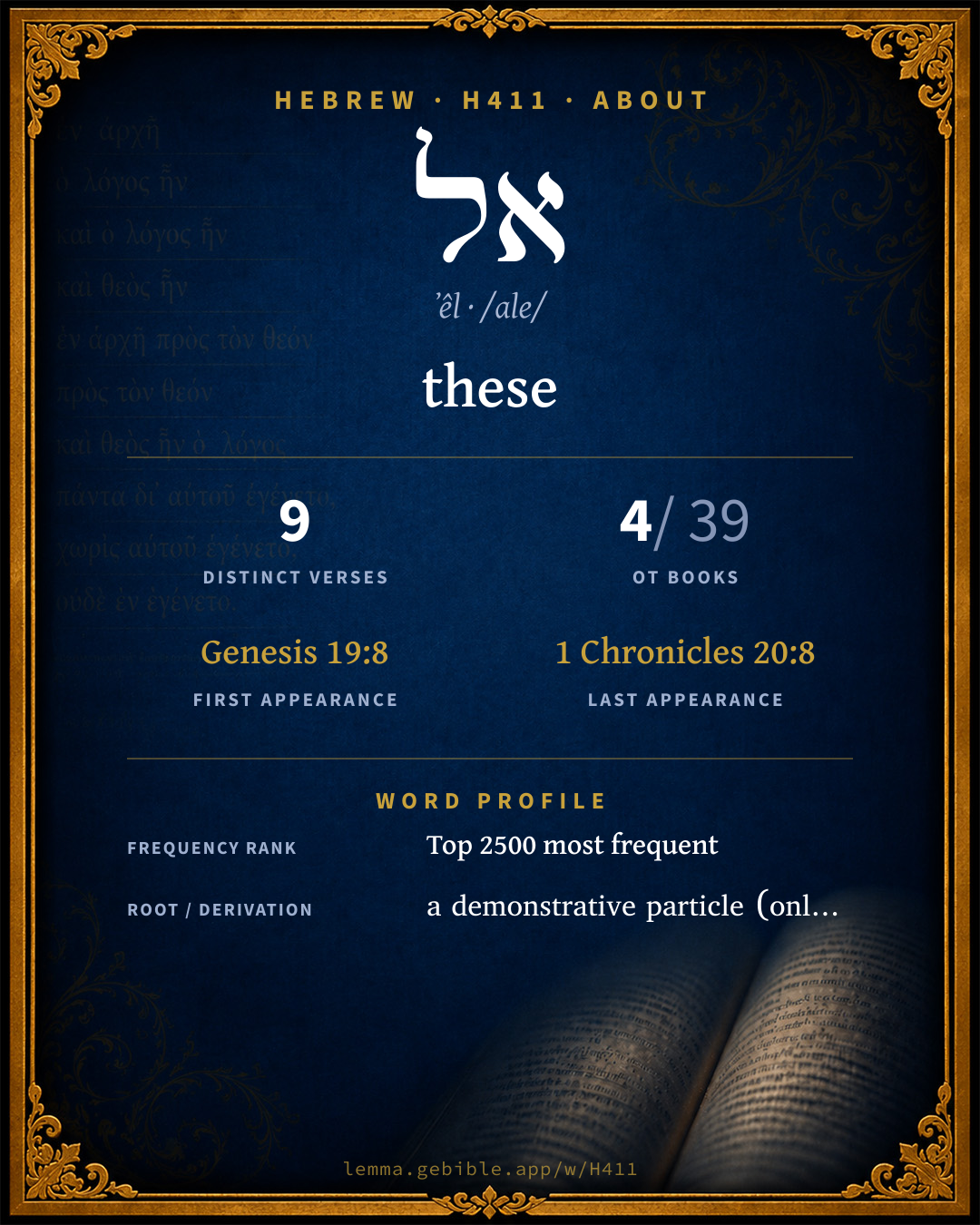
אֵל
these
Full lexicon entry — Brown-Driver-Briggs (BDB)
From Brown-Driver-Briggs (BDB)
Where this word appears
Grammar key — what these labels mean
Part of speech
- Pronoun
- A word standing in for a noun (“he,” “this,” “who”).
Gender
- Common
- Either gender — not distinguished for this form.
Number
- Plural
- More than one (in Hebrew, generally three or more).
Every verse where H411 appears in the Book of Deuteronomy — 3 distinct verses. Click any verse to open its interlinear word-by-word view. Verse text shown in the World English Bible for context — . Each verse’s Hebrew form is shown with its reference; the English is not keyword-highlighted, since the data carries no word-level English alignment. Use “Compare translations” on any verse to read it across multiple English versions. This concordance covers the Hebrew Bible; Septuagint (Greek Old Testament) occurrences are not indexed here.
Deuteronomy
- Deuteronomy 4:42 הָ/אֵ֖ל ptcl def.art + pron dem cp that the manslayer might flee there, who kills his neighbor unawares, and didn't hate him in time past; and that fleeing to one of these cities he might live:
- Deuteronomy 7:22 הָ/אֵ֛ל ptcl def.art + pron dem cp Yahweh your God will cast out those nations before you by little and little: you may not consume them at once, lest the animals of the field increase on you.
- Deuteronomy 19:11 הָ/אֵֽל ptcl def.art + pron dem cp But if any man hate his neighbor, and lie in wait for him, and rise up against him, and strike him mortally so that he dies, and he flee into one of these cities;
About this entry
At a glance — auto-summarized from this page’s data, not written by a person. Every figure links to its source below. This summary describes the numbers; it doesn’t interpret them.
The Hebrew word אל centers on the idea of “these.” Its earliest occurrence is Genesis 19:8. The Hebrew Bible uses it across 9 verses — uncommon. Genesis dominates its distribution — 4 of 9 verses. Sharing its root, it stands alongside אל and אלה. For the data behind this summary, explore the sense tree and the renderings breakdown below.
Gloss history
Strong's 1890 vs modern scholarship
About this word
Strong's H411 catalogs a Hebrew word from the Hebrew Old Testament.
These counts are not copied from any lexicon or concordance. They are computed here, from the morphology-tagged Hebrew Old Testament. What Lemma adds →
- 9
- distinct verses
- The word appears in 9 distinct verses.
- 4 / 39
- OT books
- The word appears in 4 of 39 Old Testament books.
- #2,481
- by frequency
- Top 2500 most frequent Hebrew words (rank 2,481 of 8,640 Hebrew words by occurrence).
View all 9 occurrences in the concordance →
Most concentrated in
- Genesis 4 verses 44%
- Deuteronomy 3 verses 33%
- Leviticus 1 verse 11%
By section of the Old Testament
By traditional corpus
Conventional, traditional groupings — biblical authorship is debated, so this is a traditional corpus grouping, not an authorship claim. Each share is this word’s portion of its verses in that division of the Hebrew canon. Each figure is a share of the word’s 9 distinct verses.
- Torah (Pentateuch) 8 verses · 89%
- Writings (Ketuvim) 1 verse · 11%
How translations render this word
Counts come from each version’s own published word-to-Strong’s tagging or interlinear alignment — an approximate guide to how each version renders this word, not a word-level alignment the data otherwise carries. Because each total is that version’s own tagged count, the per-version totals vary from one another and need not match the appearance or distinct-verse counts above. These counts may also differ from a printed concordance because Lemma counts each distinctly tagged rendering and does not collapse phrase taggings into a single head-word total. This is a fixed set of word-tagged versions (KJV, ASV, BSB, ULT) and does not change with the reading translation you choose elsewhere. Each version’s license is shown beside its name below (and on Sources).
BDB lists this Strong’s number as 3 distinct words (homographs). Each count above pools all of them and is not split by sense — see the Senses section below. A low-frequency rendering may belong to a different one of those words, not the primary meaning.
- King James Version†: All these 3×, These 3×, Those 2×
- American Standard Version†: All these 3×, These 3×, Those 2×
- Berean Standard Bible†: These 9×
- unfoldingWord Literal Text†: These 7×, Those 2×
King James Version Public Domain
Renders H411 across 9† tagged occurrences — most commonly:
Plus 1 rendering that appears only once — usually multi-word phrases or single function words the recovered tagging swept in, not distinct renderings.
American Standard Version Public Domain
Renders H411 across 9† tagged occurrences — most commonly:
Plus 1 rendering that appears only once — usually multi-word phrases or single function words the recovered tagging swept in, not distinct renderings.
Berean Standard Bible Public Domain
Renders H411 across 9† tagged occurrences — most commonly:
unfoldingWord Literal Text CC BY-SA 4.0
Renders H411 across 9† tagged occurrences — most commonly:
7 senses and sub-senses in the full BDB
What do BDB’s symbols mean?
BDB uses these scholarly abbreviations:
| Symbol | Meaning |
|---|---|
| 𝔊 | the Septuagint (the ancient Greek translation, LXX) |
| 𝔙 | the Vulgate (the Latin translation) |
| 𝔖 | the Syriac version (the Peshitta) |
| 𝔗 | the Targum (the Aramaic translation) |
| ψ | the Psalms |
| √ | root (the underlying root or stem) |
| ‖ | parallel passage (a synonymous or contrasted parallel) |
| † | the dagger: every passage where the word occurs is cited |
The 7 senses and sub-senses the full Brown-Driver-Briggs lexicon distinguishes for this word, in lexicon order (not ranked by frequency), with BDB’s own verbatim wording and sub-sense lettering. Shown in Hebrew script with BDB’s own scholarly abbreviations. The condensed entry is in the Lexicon Entry tab. See also the Forms in the corpus table below.
אל I pl.m. & f. = the more usual אֵלָּה, these 1 Ch 20
אל II god, אֶלְדָּד,, אֶלְדָּעָה etc. v. I. אלה.
אל III (also, in n.pr. אֶל, אֱלִי
- 1. applied to men of might and rank, אֵל גוים mighty one of the nations Ez 31:11 (of Neb.; 𝔊 ἂρχων ἒθνων, איל some mss. Co); אֵלִים mighty men Jb 41:17 (אילים, many mss. Di); אֵלֵי גִבּוֹרִים mighty heroes Ez 32:21 (אֵילֵי mss. Co); אֵילֵי הָאָרֶץ Ez 17:13 2 K 24:15 (Kt אולי); אֵילִים Ex 15:15 (prob. pl. of iii. אַיִל, q.v.) These readings are uncertain because of an effort to distinguish these forms from the divine name. אֵל גִּבּוֹר mighty hero (as above) or divine hero (as reflecting the divine majesty) Is 9:5. e.g. Ezekiel 31:11
- 2. angels, בְּנֵי אֵלִים ψ 29:1; 89:7 = בְּנֵי הָאֱלֹהִים. e.g. Psalms 29:1
- 3. gods of the nations, אֵל אֵלִים God of gods, supreme God Dn 11:36; מִי כָמֹכָה בָּאֵלִם who is like thee among the gods Ex 15:11; idols Is 43:10; 44:10, 15, 17; 46:6; מי אל בשמים what God in heaven Dt 3:24; אִל אחר another god Ex 34:14 (J); אֵל זר foreign god ψ 44:21; 81:10; אל נכר Dt 32:12 Mal 2:11 ψ 81:10. e.g. Daniel 11:36
- 4. Ēl n.pr. אל ברית Ēl Berith Ju 9:46 (= בעל ברית Ju 8:33; 9:4); בְּאֵר אֵלִים s. p. 91 b e.g. Judges 9:46
- 5. as characterizing mighty things in nature, הררי אל mighty mountains ψ 36:7 (lit. mountains of Ēl); also ψ 50:10 Ol Bi Che v. sub II. אלף; ארוי אל mighty cedars ψ 80:11; כוכבי אל lofty stars Is 14:13. e.g. Psalms 36:7
- 6. God217, the one only and true God of Israel: (a) הָאֵל the God, the true God Gn 31:13; 35:1, 3; 46:3 (E) 2 S 22:31, 33, 48 (= ψ 18:31, 33, 48) ψ 68:20, 21; 77:15; הָאֵל הַנֶּאֱמָן the faithful God Dt 7:9; האל הגדול the great God Dt 10:17 = Je 32:18 Dn 9:4 Ne 1:5; 9:32; האל הקדשׁ the holy God Is 5:16; האל יהוה the God Yahweh Is 42:5 ψ 85:9. †(b) אֵלִי my God Ex 15:2 (poet.) ψ 18:3; 22:2(×2), 11; 63:2; 68:25; 89:27; 102:25; 118:28; 140:7; Is 44:17. (c) cstr. אל בית אל the God of Bethel, who had his seat there Gn 35:7 (E); אל אביך God of thy father Gn 49:25 (poet.); אל ישראל ψ 68:36; אל יעקב ψ 146:5; אל השמים the God of heaven ψ 136:26; אל סלעי the God who is my rock ψ 42:10; אל שמחת גילי the God who is the joy of my exultation ψ 43:4; אֵל רֳאִי the God who lets himself be seen Gn 16:13 (J); אל הכבוד the God of glory ψ 29:3; אל דעות the all-knowing God 1 S 2:3 (poet.); אֵל עוֹלָם the everlasting God Gn 21:33 (J); אל ישועתי Is 12:2; אל חַיָּי֑ ψ 42:9; אל אמת ψ 31:6 = אל אֱמוּנָה Dt 32:4 (poet.); אל נקמות ψ 94:1(×2) אל גְּמֻלוֹת Je 51:56. (d) אל אֶחָד one God Mal 2:10; אל גדול a great God Dt 7:21 ψ 77:14; 95:3; אל מסתתר a God hiding himself Is 45:15; אל רחום a compassionate God Ex 34:6 (J) Dt 4:31 ψ 86:15; אל נשא a forgiving God ψ 99:8; אל חַנּוּן a gracious God Ne 9:31 Jon 4:2; אל קנא a jealous God Ex 20:5; 34:14 (J) Dt 4:24; 5:9; 6:15 Jos 24:19 (D) = אל קנוא Na 1:2; אֵל חי a living God Jos 3:10 (J) Ho 2:1 ψ 42:3; 84:3; אל צדיק Is 45:21; לא אֵל חפץ רשע ψ 5:5; לא אֵל Dt 32:21 (poet.) Is 31:3 Ez 28:2, 9; מי אל כמוךָ Mi 7:18 (cf. Ex 15:11). (e) God (the only true God, needing no article or predicate to define him) Nu 12:13 (E read אַל Di) always in poetry, Jb 5:8 + (55 times Jb), ψ 7:12; 10:11, 12; 16:1; 17:6; 19:2; 52:3, 7; 55:20; 57:3; 73:11, 17; 74:8; 77:10; 78:7, 8, 18, 19, 34, 41; 82:1; 83:2; 90:2; 104:21; 106:14, 21; 107:11; 118:27; 139:17, 23; 149:6; 150:1 Is 40:18; 43:12; 45:14, 20; 46:9 La 3:41 Ho 11:9; 12:1 Mal 1:9; עִמָּנוּאל God is with us, as name of child in prediction Is 7:14 cf. 8:8, 10.(f) Ēl, a divine name אל אלהי ישראל Gn 33:20 (E); אל אלהי הרוחת Nu 16:22 (P = יהוה אלהי חרוחת Nu 27:16); אל אלהים יהוה Jos 22:22 (P) ψ 50:1. This is probable also in the ancient poems, Nu 23:8, 19, 22, 23; 24:4, 8, 16, 23 (poet. Balaam ‖ שדּי & עליון) Dt 32:18; 33:26 (poet.) Moses ‖ צוּר & אֱלֹהֵי קֶדֶם) 2 S 22:32; 23:5 (poet. David ‖ צוּר) and in the combinations אל עליון (5 times; vid. עלאיון) & אל שדּי (10 times; vid. שַׁדַּי). e.g. Genesis 31:13
- 7. אֵל strength, power (on connection with I. אָלָה cf. Di Gn 1:1; 31:29) in יֶשׁ־לְאֵל יָדִי it is according to the power of my hand = it is in my power, etc. Gn 31:29 (E; sq. לְ + Inf.); בִּהְיוֹת לְאֵל יָדְ֯יךָ Pr 3:27 (sq. id.); יֶשׁ־לְאֵל יָדָם Mi 2:1 (abs.); neg. וְאֵין לְאֵל יָדֶ֑ךָ Dt 28:32 (abs.) = thou shalt be powerless, so Ne 5:5.* v. also BrockZAW xxvi (1906), 29 ff. (meaning ‘might’ very dub.: renders belongs to the god of (my) hand, supposing phrase a survival, with orig. meaning forgotten, of ancient idea, found also among other nations, of spirits conferring powers upon particular members of body). e.g. Genesis 1:1
Senses from the full Brown-Driver-Briggs lexicon (Brown, Driver, Briggs; Oxford 1906 — public domain), digitized via Sefaria, supplemented by the OpenScriptures HebrewLexicon (CC BY 4.0). Full attribution on Sources.
Word origin
II. pr.pl.m. & f. = the more usual אֵלָּה, these 1 Ch 20:8; with art. הָאֵל Gn 19:8, 25; 26:3, 4 Lv 18:27 Dt 4:42; 7:22; 19:11. (Merely an orthogr. variation of אֵלָּה, and doubtless pronounced similarly; the kindred dialects have in genl. a dissyllabic form: v. sub אֵלֶּה. Written similarly in Ph., e.g. CIS 3:22; 14:5; 93:3 (האל), but ZMG1875, 240 (Neo-Punic) אלא; in Plaut. Poen. v. 1. 9 transliterated ily; Schroed.Ph. Gr. p. 81, 160, 286 ff.)
III. god, אֶלְדָּד,, אֶלְדָּעָה etc. v. I. אלה.
IV. n.m. (also, in n.pr. אֶל, אֱלִי; Sam. אל, Ph. אל, אלן (i.e. prob. אֵלֹן), Sab. אל, DHM Or. Congr. Leiden, 1883, As. ilu, DlW; perhaps also Arabic, Aramaic. cf. Nöl.c.; on goddess אלת Ph. Palm. Nab. Sab. (also אלהת) DHMl.c., Arabic إِلَاهَة) (pl. إِلَاهَات) FlKl.Schr. i. 154, Assyrian Allatu Jr 66, Syriac ܐܰܠܳܗܳܬܳܐ,, cf. also BaeRel 58, 90, 97, 271, 297) god, but with various subordinate applications to express idea of might;—hardly ever in prose except with defining word (adj. or gen.); its only suff. is ִי;—
— Brown-Driver-Briggs (Oxford 1906, public domain), digitized via Sefaria, supplemented by the OpenScriptures HebrewLexicon (CC BY 4.0). See Sources.
Origin: a demonstrative particle (only in a plural sense)
Jastrow Dictionary
A second Hebrew/Aramaic lexicon for comparison, covering Aramaic and post-biblical (Talmudic, Targumic, Midrashic) usage that the biblical-Hebrew BDB does not. Matched by lemma rather than by Strong’s number, so a lemma may carry more than one Jastrow headword (shown separately below), and the entries cover usage well beyond the Bible.
אַל־
- a prefix, = עַל; e.g. אַלְתּוּסְבְּרָאוֹת (= על האוצרות) appointed over treasures, v. אַ־.
אַל
- (b. h.) not, no (according to Talmud a milder form of prohibition than לֹא; v. Y. Pes. VI, 33ᵇ). Aboth I, 3.—אל תקרי (abbr. א"ת), v. אֶלָּא. Taan. 11ᵃ א׳ יראה וכ׳ shall not live to see &c.; a. v. fr.
אֶל
- אול to turn) prep. to, toward. — Pl., with prefix מ a. suffix of pers. pron., of itself, of my (his &c.) own accord, on my (his &c.) authority. Yoma 5ᵇ לא מֵאֵלַי not on my own authority. Orlah I, 2 העולה מֵאֵלָיו growing spontaneously.—Y. Peah VII, 20ᵇ bot. its sacred character מֵאֵלָיו למדו they did derive from itself (i.e. from the wording of the law itself).—Hence מִמֵּילָא, v. מֵילָא.
אֵל
- v. אלל) God. Shebu. 35ᵃ divine names which dare not be erased are El &c. Taan. 6ᵇ bot.; a. fr.
A Dictionary of the Targumim, the Talmud Babli and Yerushalmi, and the Midrashic Literature (Marcus Jastrow; London, Luzac, 1903) — Public Domain. Digitized via Sefaria. Digitized via Sefaria. Full attribution on Sources.
Forms in the corpus
The 7 distinct written forms H411 takes in the Hebrew Bible, most frequent first — each parse links to that state’s occurrences in the concordance. Hebrew forms include their vowel points and cantillation, so a single lemma takes many written forms.
| Form | Parsing | Example | Uses |
|---|---|---|---|
| הָ/אֵ֔ל | Pronoun, Demonstrative, Common, Plural | Genesis 19:25 | 3 |
| אֵ֛ל | Pronoun, Demonstrative, Common, Plural | 1 Chronicles 20:8 | 1 |
| הָ/אֵ֑ל | Pronoun, Demonstrative, Common, Plural | Genesis 26:4 | 1 |
| הָ/אֵ֖ל | Pronoun, Demonstrative, Common, Plural | Deuteronomy 4:42 | 1 |
| הָ/אֵ֛ל | Pronoun, Demonstrative, Common, Plural | Deuteronomy 7:22 | 1 |
| הָ/אֵֽל | Pronoun, Demonstrative, Common, Plural | Deuteronomy 19:11 | 1 |
| הָ/אֵל֙ | Pronoun, Demonstrative, Common, Plural | Genesis 19:8 | 1 |
Same root — word family
Other BDB entries built from the same root as H411, grouped by Strong’s listed origin. These share a root / origin per the lexicon — not necessarily a shared meaning. Each links to that word’s own entry.
Derived from this word
Compare all same-root words → They share a root, not necessarily a meaning.
Septuagint verse parallels
This word appears in 9 verses that also exist in the Greek Old Testament (Septuagint), out of the 9 Hebrew verses it occurs in. You can read those verses in Greek by switching the Old Testament edition to the Septuagint.
Read these verses in the Septuagint
This is a verse-level parallel only — the same verses exist in both the Hebrew and Greek Old Testaments. No word-level Hebrew↔Greek correspondence is claimed: the data carries no such alignment, so no Greek word is shown as this Hebrew word’s translation. Coverage is not total — the Septuagint omits the deuterocanon and renumbers the Psalms, so some Hebrew verses have no direct Greek parallel.