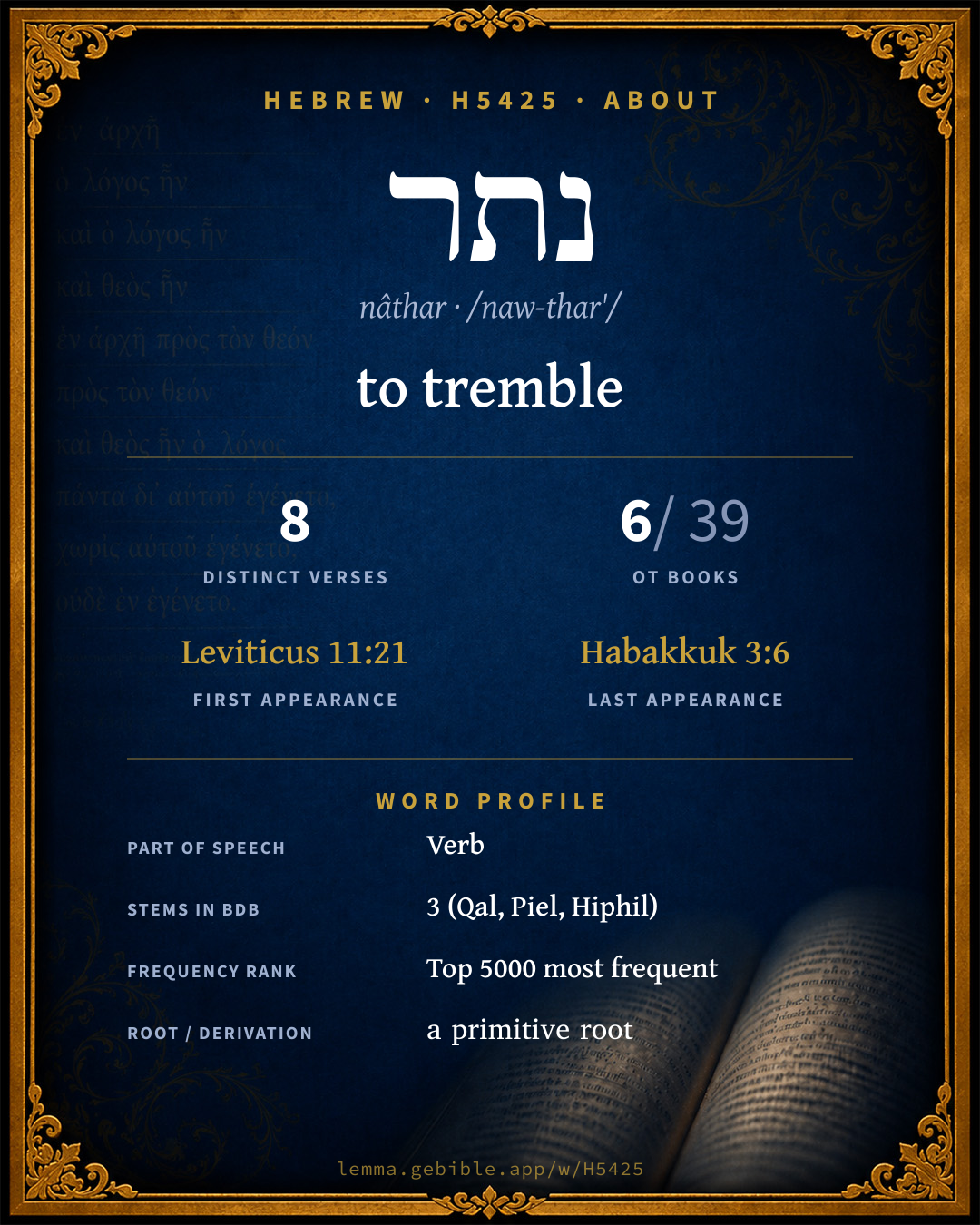
נָתַר
to tremble
‘to tremble’ is one of 2 main senses fuller range ↓
Full lexicon entry — Brown-Driver-Briggs (BDB)
From Brown-Driver-Briggs (BDB)
Where this word appears
See every Hiphil verb in the Hebrew Bible →
Grammar key — what these labels mean
Part of speech
- Verb
- An action or state-of-being word.
Stem
- Hiphil
- The causative active stem (“he caused / brought about”). Here: ‘unfasten’
- Qal
- The basic, simple active stem — the plain form of the verb (“he wrote”).
- Piel
- An intensive or resultative active stem.
Form
- Sequential Imperfect
- An imperfect with prefixed waw — the standard past-narrative form (waw-consecutive imperfect).
- Imperfect
- An incomplete, ongoing, or future action (“he will / would write”).
- Infinitive Construct
- A bound verbal noun, frequently with prepositions (“to write / in writing”).
- Infinitive Absolute
- An unbound verbal noun, often intensifying or standing in for a finite verb.
- Jussive
- A third- or second-person volitional form expressing wish or command (“let him write”).
- Participle Active
- A verbal adjective expressing ongoing or characteristic action (“writing / one who writes”).
State
- Absolute
- The independent form of a noun, not bound to a following word.
Person
- 3rd Person
- The one spoken about (“he / she / it / they”).
Gender
- Masculine
- Grammatically masculine.
Number
- Singular
- One.
1 distinct verse where H5425 appears in the Qal stem, across 1 book. Filtered view — show all forms. Click any verse to open its interlinear word-by-word view. Verse text shown in the World English Bible for context — . Each verse’s Hebrew form is shown with its reference; the English is not keyword-highlighted, since the data carries no word-level English alignment. Use “Compare translations” on any verse to read it across multiple English versions. This concordance covers the Hebrew Bible; Septuagint (Greek Old Testament) occurrences are not indexed here.
Job 1 verse
About this entry
At a glance — auto-summarized from this page’s data, not written by a person. Every figure links to its source below. This summary describes the numbers; it doesn’t interpret them.
The Hebrew verb נתר centers on the idea of “to tremble.” Its earliest occurrence is Leviticus 11:21. The Hebrew Bible uses it across 8 verses — uncommon. Job dominates its distribution — 2 of 8 verses. Read the stem: it spans 3 stems, including Qal and Piel. For the data behind this summary, explore the sense tree and the renderings breakdown below.
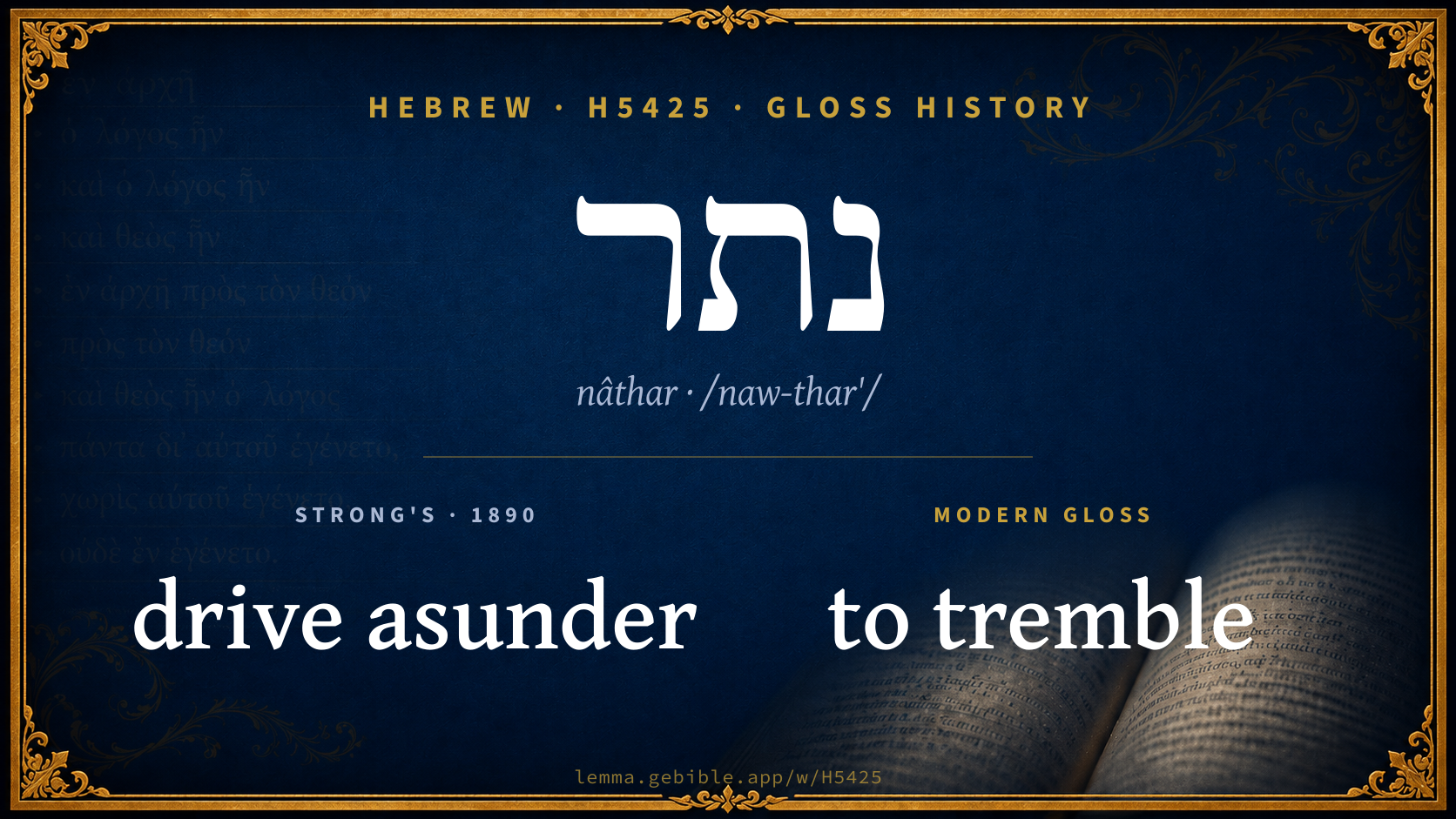
Gloss history
Strong's 1890 vs modern scholarship
About this word
Strong's H5425 catalogs a Hebrew word from the Hebrew Old Testament.
These counts are not copied from any lexicon or concordance. They are computed here, from the morphology-tagged Hebrew Old Testament. What Lemma adds →
- 8
- distinct verses
- The word appears in 8 distinct verses.
- 6 / 39
- OT books
- The word appears in 6 of 39 Old Testament books.
- #2,625
- by frequency
- Top 5000 most frequent Hebrew words (rank 2,625 of 8,640 Hebrew words by occurrence).
View all 8 occurrences in the concordance →
By section of the Old Testament
By traditional corpus
Conventional, traditional groupings — biblical authorship is debated, so this is a traditional corpus grouping, not an authorship claim. Each share is this word’s portion of its verses in that division of the Hebrew canon. Each figure is a share of the word’s 8 distinct verses.
- Writings (Ketuvim) 4 verses · 50%
- Prophets (Nevi'im) 3 verses · 38%
- Torah (Pentateuch) 1 verse · 13%
How translations render this word
Counts come from each version’s own published word-to-Strong’s tagging or interlinear alignment — an approximate guide to how each version renders this word, not a word-level alignment the data otherwise carries. Because each total is that version’s own tagged count, the per-version totals vary from one another and need not match the appearance or distinct-verse counts above. These counts may also differ from a printed concordance because Lemma counts each distinctly tagged rendering and does not collapse phrase taggings into a single head-word total. This is a fixed set of word-tagged versions (KJV, ASV, BSB, ULT) and does not change with the reading translation you choose elsewhere. Each version’s license is shown beside its name below (and on Sources).
BDB lists this Strong’s number as 2 distinct words (homographs). Each count above pools all of them and is not split by sense — see the Senses section below. A low-frequency rendering may belong to a different one of those words, not the primary meaning.
- King James Version†: Drove asunder 1×, He maketh 1×, He would let loose 1×
- American Standard Version†: Drove asunder 1×, He guideth 1×, Is moved out 1×
- Berean Standard Bible†: He makes 1×, Hopping 1×, Leaps 1×
- unfoldingWord Literal Text†: And 1×, He 1×, He makes 1×
King James Version Public Domain
Renders H5425 across 8† tagged occurrences — most commonly:
American Standard Version Public Domain
Renders H5425 across 8† tagged occurrences — most commonly:
Berean Standard Bible Public Domain
Renders H5425 across 8† tagged occurrences — most commonly:
unfoldingWord Literal Text CC BY-SA 4.0
Renders H5425 across 10† tagged occurrences — most commonly:
Senses in the full BDB
Hebrew verbs can shift meaning by stem (binyan): Qal is the basic action, Niphal is often passive or reflexive, Piel often intensifies or makes it factitive, and Hiphil is typically causative. The senses below are grouped under the stem BDB assigns to each.
What do BDB’s symbols mean?
BDB uses these scholarly abbreviations:
| Symbol | Meaning |
|---|---|
| 𝔊 | the Septuagint (the ancient Greek translation, LXX) |
| 𝔙 | the Vulgate (the Latin translation) |
| 𝔖 | the Syriac version (the Peshitta) |
| 𝔗 | the Targum (the Aramaic translation) |
| ψ | the Psalms |
| √ | root (the underlying root or stem) |
| ‖ | parallel passage (a synonymous or contrasted parallel) |
| † | the dagger: every passage where the word occurs is cited |
The 6 senses and sub-senses the full Brown-Driver-Briggs lexicon distinguishes for this word, in lexicon order (not ranked by frequency), with BDB’s own verbatim wording and sub-sense lettering. Shown in Hebrew script with BDB’s own scholarly abbreviations. The condensed entry is in the Lexicon Entry tab. See also the Forms in the corpus table below.
נתר I spring or start up
Qal
- Impf. וְיִתַּר מִמְּקוֹמוֹ Jb 37:1 yea, it (the heart) starts up from its place (‖ יֶחֱרַד). e.g. Job 37:1
Piel
- Inf. לְנַתֵּר בָּהֵן עַל־הָאָרֶץ Lv 11:21 (P), to leap with them (i.e. its legs) upon the earth (of locust). e.g. Leviticus 11:21
Hiphil
- Impf. וַיַּתֵּר גּוֹיִם Hb 3:6 he (י׳) looked, and made nations start up. e.g. Habakkuk 3:6
נתר II be free, loose (? usu. placed sub I., but connexion not obvious
Hiphil
- Impf. 3 ms. juss. יַתֵּר Jb 6:9, sf. וַיַּתִּירֵהוּ ψ 105:20; Inf. abs. הַתֵּר Is 58:6; Pt. מַתִּיר ψ 146:7;— e.g. Job 6:9
- 1. unfasten, loosen, c. acc. rei thongs of yoke Is 58:6 (‖ פַּתֵּחַ, תְּנַתֵּ֑קוּ). e.g. Isaiah 58:6
- 2. set free, unbind c. acc. pers., prisoners ψ 105:20 (‖ וַיְפַתְּחֵהוּ), 146:7; fig. יַתֵּר יָדוֹ Jb 6:9 that he would let loose his hand and cut me off,—וַיַּתֵּר 2 S 22:33 was poss. connected by Mass with תּוּר (v. Comm.), but read וַיִּתֵּן (as ‖ ψ 18:33). e.g. Psalms 105:20
Senses from the full Brown-Driver-Briggs lexicon (Brown, Driver, Briggs; Oxford 1906 — public domain), digitized via Sefaria, supplemented by the OpenScriptures HebrewLexicon (CC BY 4.0). Full attribution on Sources.
Word origin
I. vb. spring or start up;—
II. vb. be free, loose (? usu. placed sub I., but connexion not obvious; cf. also NH Niph. free oneself, Hiph. = BH; perhaps cp. Arabic نَتَرَ rend a garment, break string (of bow), etc.);—
— Brown-Driver-Briggs (Oxford 1906, public domain), digitized via Sefaria, supplemented by the OpenScriptures HebrewLexicon (CC BY 4.0). See Sources.
Origin: a primitive root
Jastrow Dictionary
A second Hebrew/Aramaic lexicon for comparison, covering Aramaic and post-biblical (Talmudic, Targumic, Midrashic) usage that the biblical-Hebrew BDB does not. Matched by lemma rather than by Strong’s number, so a lemma may carry more than one Jastrow headword (shown separately below), and the entries cover usage well beyond the Bible.
נָתַר I
- to sever, loosen.
- 1. to be torn loose, be released. Y. Taan. II, 65ᵈ top, v. נָטַשׁ II a. נָתשׁ.—Trnsf. to be untied, released from an obligation; to become permitted. Y. Yeb. IV, 6ᵇ bot. (ref. to Deut. XXV, 10) בית שהוא נִיתָּר וכ׳ a house (of several wives) which is released (from the leviratical marriage) by means of one ḥălitsah (performed on one of the wives). Y. Bicc. I, 64ᵇ top כל הביכורים שנראו לִיתּוֹר … אינן נִיתּוֹרִין וכ׳ all the first fruits which are to be released (become permitted by being brought to the Temple) in the land (of Palestine), can become so only by reciting the confession (Deut. XXVI, 5—10). Erub. 10ᵃ; 12ᵃ חצר נִיתֶּרֶת וכ׳ a court becomes permitted (for Sabbath purposes) by &c., v. פַּס. Ib. שהוא נִיתָּר וכ׳ that it is made available &c.; a. e. e.g. Deuteronomy 25:10
- 1. to loosen, untie, unscrew. Tosef. Sabb. XVI (XVII), 5 שהִתִּירוֹ which one unscrewed; Sabb. XX, 5 מַתִּירִין, v. מַכְבֵּשׁ. Ib. 22ᵃ מתירין (ציצית) מבגד לבגד you may untie show-fringes from one garment (and put them) on another garment. Gen. R. s. 5 מַתִּירָן ומוציא וכ׳ he unties them (opens the bags) and lets the air in them escape; a. fr.—[Tosef. Shebi. I, 7, v. וָתַר.]
- 2. to permit, declare permitted, opp. אָסַר. Sabb. 4ᵃ הִתִּירוּ לו וכ׳ would they (the scholars) permit him to take it out &c.? Ib. II, 4 ור׳ יהודה מַתִּיר but R. Judah declares it permitted. Ib. 2 וחכמים מַתִּירִין; a. v. fr.—V. מַתִּיר.
- 3. to free, surrender; to outlaw, proscribe. Snh. 40ᵇ ה׳ עצמו למיתה did he surrender himself to death?, i.e. did he declare that he would commit the act in spite of the warning which defined it to be a deadly crime? Ib. 41ᵃ (ref. to Deut. XVII, 6) עד שיַתִּיר וכ׳ until he declares himself ready to undergo capital punishment for his act. Ḥull. 41ᵃ. Y. Peah I, 16ᵃ עילא … להַתִּיר דמן וכ׳ they wanted a pretext to outlaw the rebels; a. fr. e.g. Deuteronomy 17:6
- 1. to be loosened, untied. Lev. R. s. 28, beg., a. fr. הוּתְּרָה הרצועה, v. רְצוּעָה. Sabb. XX, 5 אם היה מוּתָּר וכ׳ if it (the clothes press) was (partly) unscrewed on the eve of the Sabbath, he may unscrew it entirely. B. Kam. 9ᵇ שור מותר an ox that is not tied, opp. קשור. Erub. II, 1 קשורות אבל לא מוּתָּרוֹת closely tied together, but not tied in a loose way; a. e.
- 2. to be permitted. Y. Sabb. II, 5ᵇ bot. ה׳ הנדר, v. נֶדֶר; Snh. 68ᵃ. Ḥull. 17ᵃ בתחילה ה׳ להן וכ׳ originally they were permitted to eat the flesh of an animal killed by stabbing (v. נְחִירָה). Ib. 9ᵃ נשחטה הותרה when the animal has been slaughtered according to the ritual, it is (absolutely) permitted. Erub. 93ᵇ שבת כיון שהותרה הותרה as regards Sabbath laws what has been permitted at the entrance of the Sabbath remains permitted the entire day; ib. 70ᵇ כל שה׳ למקצת וכ׳ whatever is permitted for one part of the Sabbath &c.; a. v. fr.—Part. מוּתָּר; f. מוּתֶּרֶת; pl. מוּתָּרִים, מוּתָּרִין; מוּתָּרוֹת (it is, they are) permitted (of things and persons). Ter. X, 7. Yeb. I, 2 צרתה מ׳ her rival is permitted (to him as wife). Ib. III, 2 ומ׳ באחותה and he is permitted to marry her sister. Ib. II, 10 מותרות לינשא להן may be married to them; a. v. fr.—Pes. 48ᵃ, a. e. (ref. to ממשקה ישראל, Ez. XLV, 15) מן המותר לישראל of what an Israelite is permitted to drink. Sabb. 108ᵃ (ref. to בפיך, Ex. XIII, 9) מדבר המותר בפיך the Torah must be written on the skin of an animal which is permitted in thy mouth (a clean animal). e.g. Ezekiel 45:15
נָתַר II
- , Pi. נִתֵּר (b. h.; [to move.] to leap. B. Kam. 38ᵃ (ref. to Hab. III, 6) מאי משמע דחאי ויתר לישנא דאגלויי הוא what evidence is there that this vayyatter has the meaning of sending into exile (causing to emigrate)? Answ. ref. to לְנַתֵּר (Lev. XI, 21). Lev. R. s. 20 (ref. to Job XXXVII, 1) מהו וְיִתַּר יקפץ וכ׳ what does v’yittar mean? It will leap, as we read (Lev. l. c.) &c. e.g. Habakkuk 3:6
- to exile. B. Kam. l. c., v. supra. Lev. R. s. 6, beg. ומַתִּיר את הגנבים and condemned the thieves to exportation (v., however, גִּיֵּיד).
נְתַר
- , to fall off, drop; to fall apart, decay; to become wearied, faint. Targ. Is. XL, 7. Ib. LXIV, 5; a. fr.—B. Mets. 21ᵇ דנַתְרָא that it (the fig) dropped (and was not taken off the tree). Ib. אע"ג דנַתְרִין זיתי וכ׳ even when the olives have dropped &c. Sabb. 33ᵇ וקא נַתְרָן דמעת עיניה and the tears fell from his eyes; a. fr.
- to drop, shed, let fall. Targ. Ruth II, 16. Targ. Y. II, Ex. IX, 32 ואַתְּרַת (not ואִתָּ׳).—Y. Kil. VII, beg. 30ᵈ דמַתְּרָן טרפיהן וכ׳ where trees shed their leaves even in midsummer. Naz. 42ᵃ אדמה דלא מַתְּרָא an earth which does not cause falling out of the hair; a. e.—Y. Yeb. XVI, 15ᵈ אתרין, v. infra.
- 1. (neut. verb) (neut. verb) to crumble, fall in. B. Kam. 9ᵇ בור דרכה לנַתּוּרֵי a pit is liable to fall in (and mere covering it up is not a sufficient precaution).
- 2. to drop, shed. Targ. Is. I, 30; a. e.—Y. Yeb. XVI, 15ᵈ (if one says of a person) נַתְּרִי פלוני, ‘I have dropped that man’, you must not allow his wife to marry again (it does not necessarily mean that he saw him dead), for I may say, he means [read:] אַתְּרִי לפלוני מאכל I dropped that man something to eat.
נֶתֶר
- ; v. esp. Naz. 42ᵃ quot. quot. in preced.)
- 1. (nitron,) natron, native carbonate of soda (v. Sm. Bibl. Dict. s. v. Nitre, a. Sm. Ant. s. v. Nitron). Sabb. IX, 5; Nidd. IX, 6. Ib. 62ᵃ; Sabb. 90ᵃ, v. אֲלֶכְסַנְדְּרִי a. אַנְטִיפַּטְרִית; a. e.
- 2. כלי נ׳ a vessel made of alum crystals. Kel. II, 1. Ab. Zar. 33ᵇ (expl. כלי מחפורת וכ׳, v. מַחְפּוֹרֶת); a. fr. [v., however, Maim. to Kel. l. c.]
A Dictionary of the Targumim, the Talmud Babli and Yerushalmi, and the Midrashic Literature (Marcus Jastrow; London, Luzac, 1903) — Public Domain. Digitized via Sefaria. Digitized via Sefaria. Full attribution on Sources.
Forms in the corpus
The 8 distinct written forms H5425 takes in the Hebrew Bible, most frequent first — each parse links to that stem’s occurrences in the concordance. Hebrew forms include their vowel points and cantillation, so a single lemma takes many written forms.
| Form | Parsing | Example | Uses |
|---|---|---|---|
| הַתֵּ֖ר | Verb, Hiphil, Infinitive Absolute | Isaiah 58:6 | 1 |
| וְ֝/יִתַּ֗ר | Verb, Qal, Imperfect, 3rd Person, Masculine, Singular | Job 37:1 | 1 |
| וַ/יַּתִּירֵ֑/הוּ | Verb, Hiphil, Sequential Imperfect, 3rd Person, Masculine, Singular | Psalms 105:20 | 1 |
| וַ/יַּתֵּ֣ר | Verb, Hiphil, Sequential Imperfect, 3rd Person, Masculine, Singular | Habakkuk 3:6 | 1 |
| וַ/יַּתֵּ֥ר | Verb, Hiphil, Sequential Imperfect, 3rd Person, Masculine, Singular | 2 Samuel 22:33 | 1 |
| יַתֵּ֥ר | Verb, Hiphil, Jussive, 3rd Person, Masculine, Singular | Job 6:9 | 1 |
| לְ/נַתֵּ֥ר | Verb, Piel, Infinitive Construct | Leviticus 11:21 | 1 |
| מַתִּ֥יר | Verb, Hiphil, Participle Active, Masculine, Singular, Absolute | Psalms 146:7 | 1 |
Same root — word family
Other BDB entries built from the same root as H5425, grouped by Strong’s listed origin. These share a root / origin per the lexicon — not necessarily a shared meaning. Each links to that word’s own entry.
Derived from this word
Compare all same-root words → They share a root, not necessarily a meaning.
Septuagint verse parallels
This word appears in 8 verses that also exist in the Greek Old Testament (Septuagint), out of the 8 Hebrew verses it occurs in. You can read those verses in Greek by switching the Old Testament edition to the Septuagint.
Read these verses in the Septuagint
This is a verse-level parallel only — the same verses exist in both the Hebrew and Greek Old Testaments. No word-level Hebrew↔Greek correspondence is claimed: the data carries no such alignment, so no Greek word is shown as this Hebrew word’s translation. Coverage is not total — the Septuagint omits the deuterocanon and renumbers the Psalms, so some Hebrew verses have no direct Greek parallel.