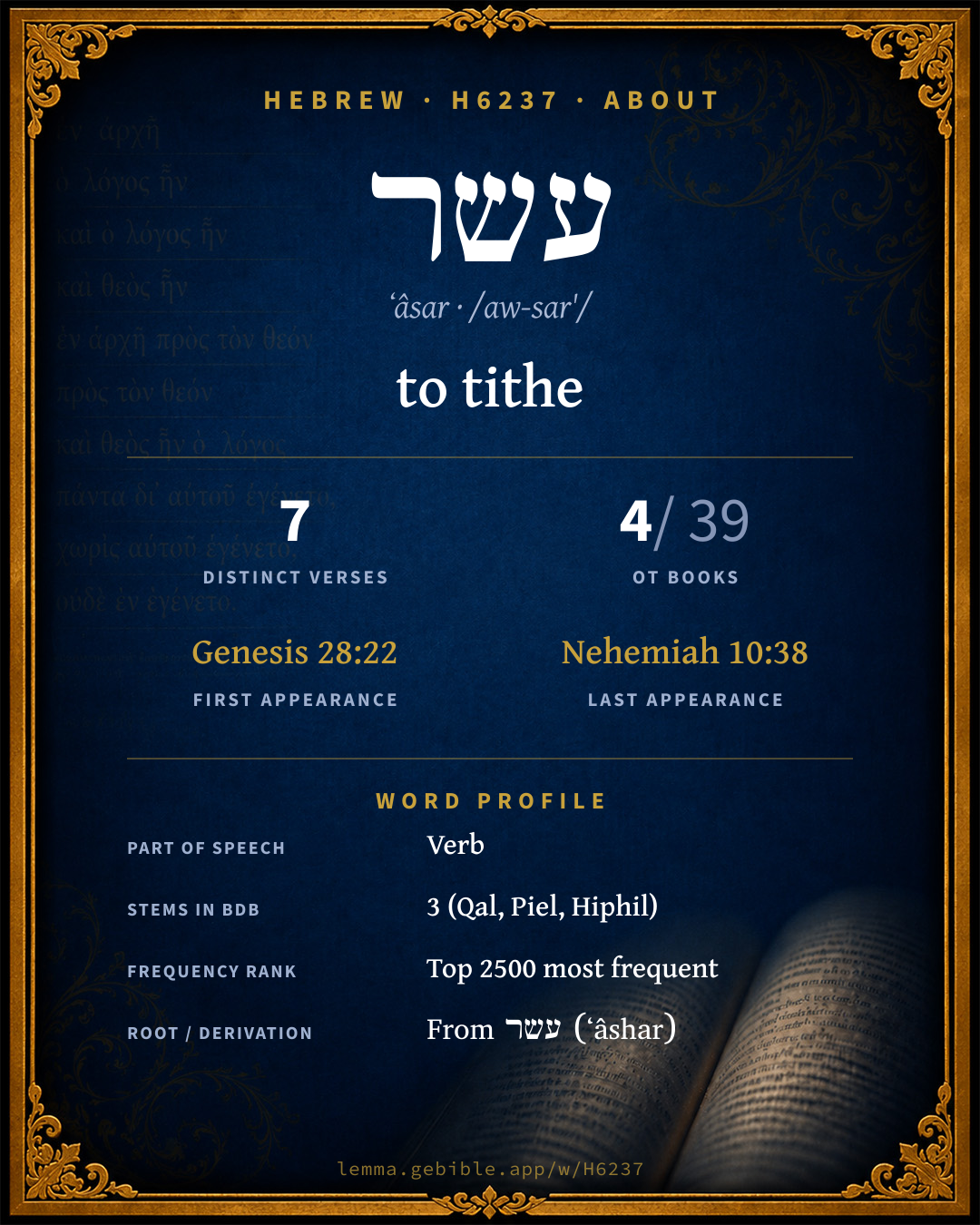
עָשַׂר
to tithe
also: give a tithe, take a tithe fuller range ↓
Full lexicon entry — Brown-Driver-Briggs (BDB)
From Brown-Driver-Briggs (BDB)
Where this word appears
See every Piel verb in the Hebrew Bible →
Grammar key — what these labels mean
Part of speech
- Verb
- An action or state-of-being word.
Stem
- Piel
- An intensive or resultative active stem.
- Qal
- The basic, simple active stem — the plain form of the verb (“he wrote”).
Form
- Infinitive Construct
- A bound verbal noun, frequently with prepositions (“to write / in writing”).
- Infinitive Absolute
- An unbound verbal noun, often intensifying or standing in for a finite verb.
- Imperfect
- An incomplete, ongoing, or future action (“he will / would write”).
- Participle Active
- A verbal adjective expressing ongoing or characteristic action (“writing / one who writes”).
State
- Absolute
- The independent form of a noun, not bound to a following word.
Person
- 3rd Person
- The one spoken about (“he / she / it / they”).
- 1st Person
- The speaker (“I / we”).
- 2nd Person
- The one addressed (“you”).
Gender
- Masculine
- Grammatically masculine.
- Common
- Either gender — not distinguished for this form.
Number
- Singular
- One.
- Plural
- More than one (in Hebrew, generally three or more).
5 distinct verses where H6237 appears in the Piel stem, across 3 books. Filtered view — show all forms. Click any verse to open its interlinear word-by-word view. Verse text shown in the World English Bible for context — . Each verse’s Hebrew form is shown with its reference; the English is not keyword-highlighted, since the data carries no word-level English alignment. Use “Compare translations” on any verse to read it across multiple English versions. This concordance covers the Hebrew Bible; Septuagint (Greek Old Testament) occurrences are not indexed here.
Genesis 1 verse
Deuteronomy 2 verses
- Deuteronomy 14:22 עַשֵּׂ֣ר תְּעַשֵּׂ֔ר Piel inf.abs Piel impf 2ms You shall surely tithe all the increase of your seed, that which comes forth from the field year by year.
- Deuteronomy 26:12 לַ֠/עְשֵׂר prep + Piel inf.cs When you have made an end of tithing all the tithe of your increase in the third year, which is the year of tithing, then you shall give it to the Levite, to the foreigner, to the fatherless, and to the widow, that they may eat within your gates, and be filled.
Nehemiah 2 verses
- Nehemiah 10:37 הַֽ/מְעַשְּׂרִ֔ים ptcl def.art + Piel ptcp.act mp and that we should bring the first fruits of our dough, and our heave-offerings, and the fruit of all manner of trees, the new wine and the oil, to the priests, to the chambers of the house of our God; and the tithes of our ground to the Levites; for they, the Levites, take the tithes in all the cities of our tillage.
- Nehemiah 10:38 בַּ/עְשֵׂ֣ר prep + Piel inf.cs The priest the son of Aaron shall be with the Levites, when the Levites take tithes: and the Levites shall bring up the tithe of the tithes to the house of our God, to the chambers, into the treasure-house.
About this entry
At a glance — auto-summarized from this page’s data, not written by a person. Every figure links to its source below. This summary describes the numbers; it doesn’t interpret them.
עשר — transliterated ʻâsar — is a Hebrew verb carrying the sense “to tithe.” Its earliest occurrence is Genesis 28:22. It appears 7 verses across 4 books of the Hebrew Bible, among its uncommon vocabulary. More than a quarter of its appearances fall in Deuteronomy. Across 3 stems, its meaning turns on the binyan (Qal, Piel). See the sense tree, 7-verse concordance, and the renderings breakdown below.
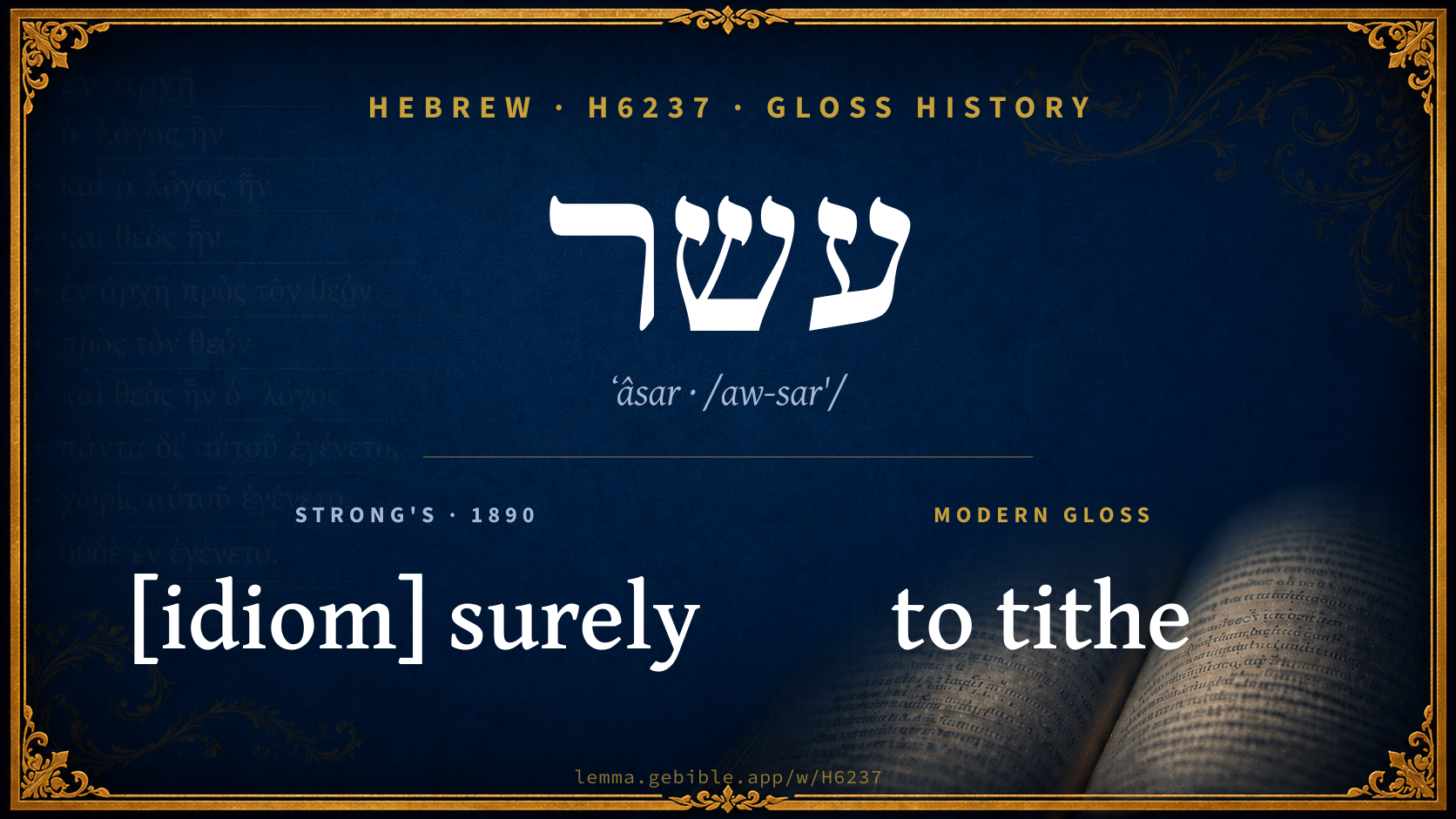
Gloss history
Strong's 1890 vs modern scholarship
About this word
Strong's H6237 catalogs a Hebrew word from the Hebrew Old Testament.
These counts are not copied from any lexicon or concordance. They are computed here, from the morphology-tagged Hebrew Old Testament. What Lemma adds →
- 7
- distinct verses
- The word appears in 7 distinct verses.
- 4 / 39
- OT books
- The word appears in 4 of 39 Old Testament books.
- #2,481
- by frequency
- Top 2500 most frequent Hebrew words (rank 2,481 of 8,640 Hebrew words by occurrence).
View all 7 occurrences in the concordance →
Most concentrated in
- Deuteronomy 2 verses 29%
- 1 Samuel 2 verses 29%
- Nehemiah 2 verses 29%
By section of the Old Testament
By traditional corpus
Conventional, traditional groupings — biblical authorship is debated, so this is a traditional corpus grouping, not an authorship claim. Each share is this word’s portion of its verses in that division of the Hebrew canon. Each figure is a share of the word’s 7 distinct verses.
- Torah (Pentateuch) 3 verses · 43%
- Prophets (Nevi'im) 2 verses · 29%
- Writings (Ketuvim) 2 verses · 29%
How translations render this word
Counts come from each version’s own published word-to-Strong’s tagging or interlinear alignment — an approximate guide to how each version renders this word, not a word-level alignment the data otherwise carries. Because each total is that version’s own tagged count, the per-version totals vary from one another and need not match the appearance or distinct-verse counts above. These counts may also differ from a printed concordance because Lemma counts each distinctly tagged rendering and does not collapse phrase taggings into a single head-word total. This is a fixed set of word-tagged versions (KJV, ASV, BSB, ULT) and does not change with the reading translation you choose elsewhere. Each version’s license is shown beside its name below (and on Sources).
- King James Version: He will take the tenth 2×
- American Standard Version: He will take the tenth 2×
- Berean Standard Bible: He will take a tenth 2×
- unfoldingWord Literal Text: He will tithe 2×, Tithing 2×
King James Version Public Domain
Renders H6237 across 9 tagged occurrences — most commonly:
Plus 7 renderings that appear only once — usually multi-word phrases or single function words the recovered tagging swept in, not distinct renderings.
American Standard Version Public Domain
Renders H6237 across 9 tagged occurrences — most commonly:
Plus 7 renderings that appear only once — usually multi-word phrases or single function words the recovered tagging swept in, not distinct renderings.
Berean Standard Bible Public Domain
Renders H6237 across 7 tagged occurrences — most commonly:
Plus 5 renderings that appear only once — usually multi-word phrases or single function words the recovered tagging swept in, not distinct renderings. Not rendered by a distinct English word in 3 further occurrences.
unfoldingWord Literal Text CC BY-SA 4.0
Renders H6237 across 10 tagged occurrences — most commonly:
Plus 6 renderings that appear only once — usually multi-word phrases or single function words the recovered tagging swept in, not distinct renderings.
Senses in the full BDB
Hebrew verbs can shift meaning by stem (binyan): Qal is the basic action, Niphal is often passive or reflexive, Piel often intensifies or makes it factitive, and Hiphil is typically causative. The senses below are grouped under the stem BDB assigns to each.
What do BDB’s symbols mean?
BDB uses these scholarly abbreviations:
| Symbol | Meaning |
|---|---|
| 𝔊 | the Septuagint (the ancient Greek translation, LXX) |
| 𝔙 | the Vulgate (the Latin translation) |
| 𝔖 | the Syriac version (the Peshitta) |
| 𝔗 | the Targum (the Aramaic translation) |
| ψ | the Psalms |
| √ | root (the underlying root or stem) |
| ‖ | parallel passage (a synonymous or contrasted parallel) |
| † | the dagger: every passage where the word occurs is cited |
The 3 senses and sub-senses the full Brown-Driver-Briggs lexicon distinguishes for this word, in lexicon order (not ranked by frequency), with BDB’s own verbatim wording and sub-sense lettering. Shown in Hebrew script with BDB’s own scholarly abbreviations. The condensed entry is in the Lexicon Entry tab. See also the Forms in the corpus table below.
Qal
- Impf. 3 ms. יַעְשֹׂר 1 S 8:15, 17 (c. acc. of thing tithed). e.g. 1 Samuel 8:15
Piel
- Impf. + Inf. abs. give a tenth of, c. acc. rei: 2 ms. עַשֵּׂר תְּעַשֵּׂר Dt 14:22; 1 s. עַשֵּׂר אֲעַשְּׂרֶנּוּ לָ֑ךְ Gn 28:22 (P); Pt. taking the tenth, הַמְעַשְּׂרִים Ne 10:38. e.g. Deuteronomy 14:22
Hiphil
- (so usually expl.) Inf. לַעְשֵׂר Dt 26:12 c. acc. cogn. i.e. taking, reckoning, tithe, but Inf. cstr. with—ֵ improb., לְעַשֵּׂר Pi.; בַּעְשֵׂר Ne 10:39 abs., i.e. receiving tithes, but read prob. בַּעְשֹׂר Qal (on anom. points, see Ges§ 53 k Dr Dt 26:12). e.g. Deuteronomy 26:12
Senses from the full Brown-Driver-Briggs lexicon (Brown, Driver, Briggs; Oxford 1906 — public domain), digitized via Sefaria, supplemented by the OpenScriptures HebrewLexicon (CC BY 4.0). Full attribution on Sources.
Word origin
vb. denom. take the tenth of, tithe;—
— Brown-Driver-Briggs (Oxford 1906, public domain), digitized via Sefaria, supplemented by the OpenScriptures HebrewLexicon (CC BY 4.0). See Sources.
Derived from עשר (ʻâshar) (H6238) — to become rich.
Jastrow Dictionary
A second Hebrew/Aramaic lexicon for comparison, covering Aramaic and post-biblical (Talmudic, Targumic, Midrashic) usage that the biblical-Hebrew BDB does not. Matched by lemma rather than by Strong’s number, so a lemma may carry more than one Jastrow headword (shown separately below), and the entries cover usage well beyond the Bible.
עוֹשֶׁר
- plenty, wealth, riches. Ab. IV, 9, v. עִוֹנִי. B. Bath. 9ᵇ בעלי ע׳ wealthy men; a. e.—Gen. R. s. 63 (play on ויעתר, Gen. XXV, 21; cmp. עוּתְרָא) שפך תפלות בע׳ he poured out prayers plentifully; Yalk. ib. 110 כעתר (corr. acc., or בְּעֶתֶר, a Hebr. adapt. of עוֹתַר). e.g. Genesis 25:21
עָשַׁר
- (cmp. עֲשַׁן) to be strong, substantial, wealthy.
- 1. (denom. of (denom. of עָשִׁיר) to become wealthy. B. Bath. 25ᵇ ושיַעֲשִׁיר and he who desires to become rich. Ber. 33ᵃ הֶעֱשִׁירוּ קבעוה וכ׳ when they became wealthy, they made it a custom to recite the Habdalah over a cup. Meïl. 17ᵃ, v. עָנָה II, Hif. Ned. 38ᵃ לא ה׳ משה וכ׳ Moses became rich from the chips of the tablets; a. fr.
- 2. to make rich. Keth. 48ᵃ לאו כל הימנו שיעשיר וכ׳ he is not permitted to enrich his children and throw himself on the charities. Ḥull. 84ᵇ (expl. עשתרת, Deut. VII, 13) שמַעֲשִׁירוֹת את בעליהן Ar. (ed. שמְעַשְּׁרוֹת, Pi.) for they make their owners rich; Yalk. Deut. 848 שמעשרות. Cant. R. to VII, 11 (ref. to תעשרנה, Ps. LXV, 10) אם זכיתם תַּעֲשִׁיֶרנָּה ואם לאו תְּעַשְּׂרֶנָּה וכ׳ if you deserve well (it reads:) ‘thou makest her rich’, if not, ‘thou reducest her to one-tenth’, that she yield you only one-tenth; a. e. e.g. Deuteronomy 7:13
- same; v. supra. B. Bath. l. c., v. infra.
- 1. to become rich. Sabb. 119ᵃ; Taan. 9ᵃ (play on עשר תעשר, Deut. XIV, 22) עַשֵּׂר בשביל שתִּתְעַשֵּׂר give tithes in order that thou become rich. B. Bath. l. c. מתוך שמתחכם מִתְעַשֵּׁר for when he grows wise, he will also grow rich; (Ms. M. חכמתו מְעַשַּׁרְתּוֹ his wisdom makes him rich). Pes. 50ᵇ עשרים … שלא יִתְעַשְּׁרוּ שאילמלי מִתְעַשְּׁרִין וכ׳ the men of the Great Assembly held twenty-four fasts to pray that the copyists of sacred books &c. might not become rich, for if they grew rich, they would not write; a. fr.—[2) (b. h.) to pretend to be rich, to pass for a rich man. Men. 85ᵇ. Midr. Till. to Ps. XXIV.] e.g. Deuteronomy 14:22
עֲשַׁר
- ch. same (mostly עֲתַר).
- to become rich. Gitt. 30ᵇ, v. אֲשַׁר.
עשֶׁר
- , v. עוֹשֶׁר
עֶשֶׂר
- (b. h.) ten. Ab. V, 1, v. מַאֲמָר. Ex. R. s. 15, a. fr. עשר מכות (not עשרה) the ten Egyptian plagues. Ib. ע׳ אנשים ten men; a. v. fr.—In compounds עָשָׂר, עֶשְׂרֵה, as אַחַד ע׳ eleven, שְׁנֵים ע׳ twelve &c. R. Hash. I, 1 בחמשה ע׳ בו on the fifteenth day of it (the month of Shebat). Pes. I, 1 אור לארבעה ע׳, v. אוֹר II; a. v. fr.—Pl. עֶשְׂרִים twenty. B. Bath. 107ᵃ ואחד אומר בע׳ and one of the experts says, it is worth twenty (Selaim). Ab. V, 21 בן ע׳ לרריף at the age of twenty years it is time to hunt (for a living); a. v. fr.
עֲשַׂר I
- (also עֲסַר; עַסְרָא) ch. same. Targ. Gen. XLV, 23 (Y. also עֶשֶׂר; O. ed. Berl. עש׳, oth. ed. עס׳); a. fr.—חַד עֲשַׂר, חַד עֲסַר (contr. חַדְסַר) eleven; תרתי סרי twelve &c.—Pl. עַשְׂרִין, עַסְרִין, עֶ׳. Targ. Gen. XXXI, 38. Targ. Num. X, 11 בע׳ on the twentieth; a. fr.—B. Bath. 106ᵇ הויא ע׳ גריוי it contains twenty g’rivas (v. גְּרִיוָא); a. fr.
עָשַׂר
- , Pi. עִשֵּׂר (b. h.;
- 1. to give one-tenth, separate tithes. Sabb. 119ᵃ עַשִּׁר וכ׳, v. עָשַׁר. Maasr. IV, 2 ושכחו לעַשְּׂרָן but had forgotten to pay the tithe of them. Sabb. II, 7 עִשַּׂרְתֶּם have you set aside tithes (of what you intend to use for the Sabbath)? Ib. ספק … אין מְעַשְּׂרִין את הודאי if it is doubtful whether or not night has set in, you must not separate the tithes of what is sure to be subject to tithes (v. דְּמַאי); a. v. fr.—Part. pass. מְעוּשָּׂר; f. מְעוּשֶּׂרֶת; pl. מְעוּשָּׂרִים, מְעוּשָּׂרִין; מְעוּשָּׂרוֹת. Bekh. IX, 7 (קפץ אחד) מן המע׳ לתוכן if one of those (lambs) which have been set aside as tithe, leaped among the flock. Ib. הרי אלו מע׳ they (the flock) are considered as tithed; a. fr.
- 2. to reduce to one-tenth. Cant. R. to VII, 11, v. עָשַׁר.
- , Nithpa. נִתְעַשֵּׂר to be tithed. Maasr. l. c. עד שיֵעָשְׂרוּ (Ms. M. שיִתְעַשְּׂרוּ) until they are tithed. Ib. 5 מִתְעַשֶּׂרֶת זרע וכ׳ must be tithed as seed, as vegetables (if the leaves are used) &c. Bekh. IX, 1 ואינן מִתְעַשְּׂרִים מזה על זה and they (large cattle and small cattle) cannot be tithed one for the other. Ib. 53ᵇ אין דין שיִתְעַשְּׂרוּ זה מזה should we not conclude that they may be tithed one for the other?; a. fr.
עֲשַׂר II
- Pa. עַשֵּׂר, עַסֵּר same, to tithe. Targ. Deut. XIV, 22. Ib. XXVI, 12 (Y. II למַעַשְׂרָא Af.).—Yeb. 93ᵃ ע׳ מפירי דביתיה עילויהו he set aside as tithes from the produces in his house on behalf of those (that were to come in). Ib. לעַשּׂוּרֵי ומיכל as regards tithing and eating; a. e.
A Dictionary of the Targumim, the Talmud Babli and Yerushalmi, and the Midrashic Literature (Marcus Jastrow; London, Luzac, 1903) — Public Domain. Digitized via Sefaria. Digitized via Sefaria. Full attribution on Sources.
Forms in the corpus
The 8 distinct written forms H6237 takes in the Hebrew Bible, most frequent first — each parse links to that stem’s occurrences in the concordance. Hebrew forms include their vowel points and cantillation, so a single lemma takes many written forms.
| Form | Parsing | Example | Uses |
|---|---|---|---|
| יַעְשֹׂ֑ר | Verb, Qal, Imperfect, 3rd Person, Masculine, Singular | 1 Samuel 8:15 | 2 |
| אֲעַשְּׂרֶ֥/נּוּ | Verb, Piel, Imperfect, 1st Person, Common, Singular | Genesis 28:22 | 1 |
| בַּ/עְשֵׂ֣ר | Verb, Piel, Infinitive Construct | Nehemiah 10:38 | 1 |
| הַֽ/מְעַשְּׂרִ֔ים | Verb, Piel, Participle Active, Masculine, Plural, Absolute | Nehemiah 10:37 | 1 |
| לַ֠/עְשֵׂר | Verb, Piel, Infinitive Construct | Deuteronomy 26:12 | 1 |
| עַשֵּׂ֖ר | Verb, Piel, Infinitive Absolute | Genesis 28:22 | 1 |
| עַשֵּׂ֣ר | Verb, Piel, Infinitive Absolute | Deuteronomy 14:22 | 1 |
| תְּעַשֵּׂ֔ר | Verb, Piel, Imperfect, 2nd Person, Masculine, Singular | Deuteronomy 14:22 | 1 |
Same root — word family
Other BDB entries built from the same root as H6237, grouped by Strong’s listed origin. These share a root / origin per the lexicon — not necessarily a shared meaning. Each links to that word’s own entry.
Derives from
Shares the same root
Derived from this word
Compare all same-root words → Showing 4 of 6 — not the complete family. They share a root, not necessarily a meaning.
Septuagint verse parallels
This word appears in 5 verses that also exist in the Greek Old Testament (Septuagint), out of the 7 Hebrew verses it occurs in. You can read those verses in Greek by switching the Old Testament edition to the Septuagint.
Read these verses in the Septuagint
This is a verse-level parallel only — the same verses exist in both the Hebrew and Greek Old Testaments. No word-level Hebrew↔Greek correspondence is claimed: the data carries no such alignment, so no Greek word is shown as this Hebrew word’s translation. Coverage is not total — the Septuagint omits the deuterocanon and renumbers the Psalms, so some Hebrew verses have no direct Greek parallel.