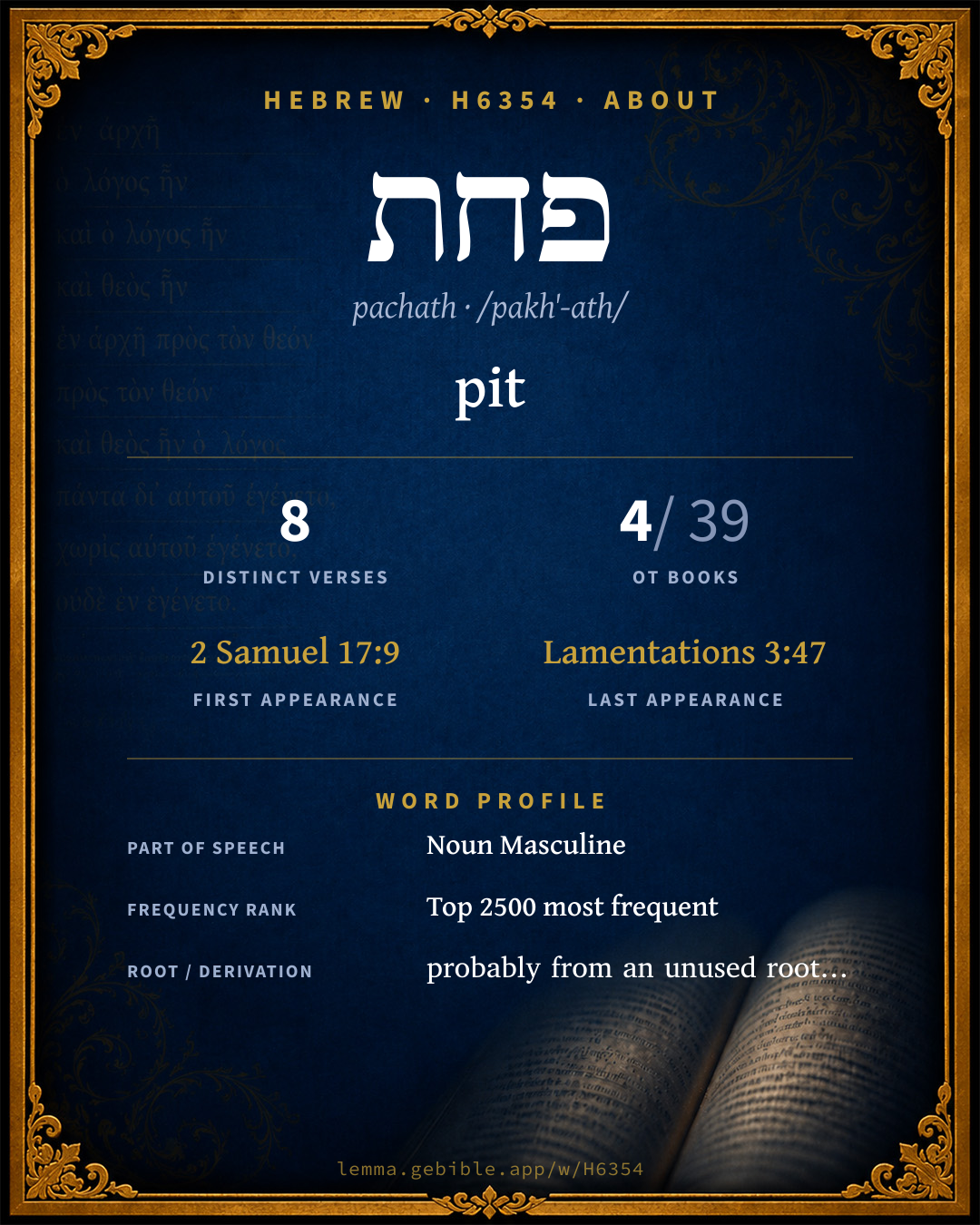
פַּ֫חַת
pit
Full lexicon entry — Brown-Driver-Briggs (BDB)
From Brown-Driver-Briggs (BDB)
Where this word appears
Grammar key — what these labels mean
Part of speech
- Noun
- A naming word — a person, place, thing, or idea.
Noun type
- Common
- A common noun — a general class of person, place, or thing (“king,” “city,” “water”), not a specific name.
State
- Absolute
- The independent form of a noun, not bound to a following word.
Gender
- Masculine
- Grammatically masculine.
Number
- Singular
- One.
- Plural
- More than one (in Hebrew, generally three or more).
Every verse where H6354 appears in the Book of Jeremiah — 3 distinct verses. Click any verse to open its interlinear word-by-word view. Verse text shown in the World English Bible for context — . Each verse’s Hebrew form is shown with its reference; the English is not keyword-highlighted, since the data carries no word-level English alignment. Use “Compare translations” on any verse to read it across multiple English versions. This concordance covers the Hebrew Bible; Septuagint (Greek Old Testament) occurrences are not indexed here.
Jeremiah
- Jeremiah 48:28 פָֽחַת n c ms You inhabitants of Moab, leave the cities, and dwell in the rock; and be like the dove that makes her nest over the mouth of the abyss.
- Jeremiah 48:43 וָ/פַ֖חַת conj + n c ms Fear, and the pit, and the snare, are on you, inhabitant of Moab, says Yahweh.
- Jeremiah 48:44 הַ/פַּ֔חַת הַ/פַּ֔חַת ptcl def.art + n c ms ptcl def.art + n c ms He who flees from the fear shall fall into the pit; and he who gets up out of the pit shall be taken in the snare: for I will bring on him, even on Moab, the year of their visitation, says Yahweh.
About this entry
At a glance — auto-summarized from this page’s data, not written by a person. Every figure links to its source below. This summary describes the numbers; it doesn’t interpret them.
פחת (pachath) is a Hebrew noun most often rendered “pit.” It first appears in 2 Samuel 17:9. The Hebrew Bible uses it across 8 verses — uncommon. Jeremiah dominates its distribution — 3 of 8 verses. Sharing its root, it stands alongside פחתת and פחת מואב. The sections below give every sense, occurrence, and version rendering.
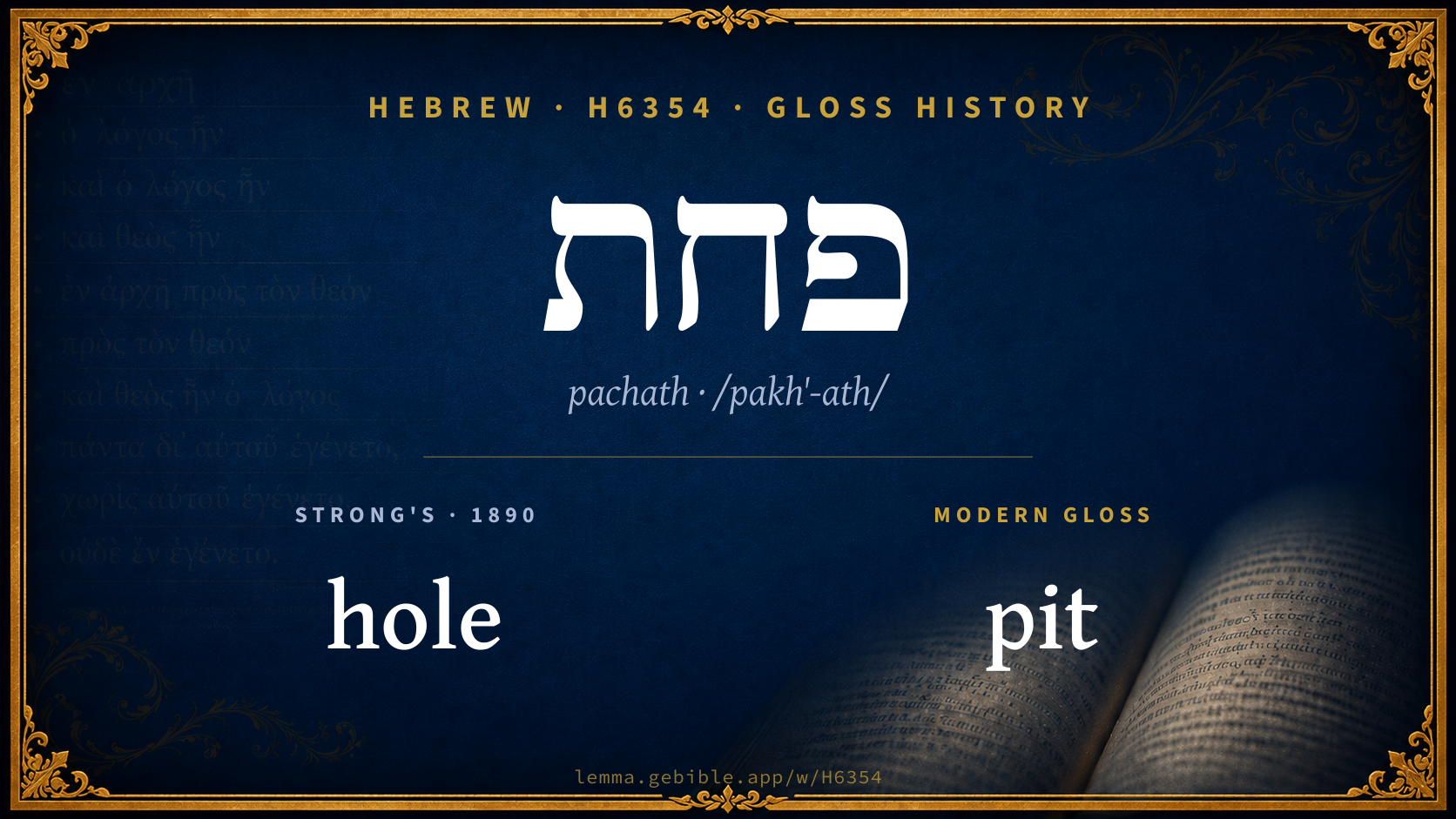
Gloss history
Strong's 1890 vs modern scholarship
About this word
Strong's H6354 catalogs a Hebrew word from the Hebrew Old Testament.
These counts are not copied from any lexicon or concordance. They are computed here, from the morphology-tagged Hebrew Old Testament. What Lemma adds →
- 8
- distinct verses
- The word appears in 8 distinct verses.
- 4 / 39
- OT books
- The word appears in 4 of 39 Old Testament books.
- #2,342
- by frequency
- Top 2500 most frequent Hebrew words (rank 2,342 of 8,640 Hebrew words by occurrence).
View all 8 occurrences in the concordance →
By section of the Old Testament
By traditional corpus
Conventional, traditional groupings — biblical authorship is debated, so this is a traditional corpus grouping, not an authorship claim. Each share is this word’s portion of its verses in that division of the Hebrew canon. Each figure is a share of the word’s 8 distinct verses.
- Prophets (Nevi'im) 7 verses · 88%
- Writings (Ketuvim) 1 verse · 13%
How translations render this word
Counts come from each version’s own published word-to-Strong’s tagging or interlinear alignment — an approximate guide to how each version renders this word, not a word-level alignment the data otherwise carries. Because each total is that version’s own tagged count, the per-version totals vary from one another and need not match the appearance or distinct-verse counts above. These counts may also differ from a printed concordance because Lemma counts each distinctly tagged rendering and does not collapse phrase taggings into a single head-word total. This is a fixed set of word-tagged versions (KJV, ASV, BSB, ULT) and does not change with the reading translation you choose elsewhere. Each version’s license is shown beside its name below (and on Sources).
- King James Version: Pit 8×
- American Standard Version: Pit 9×
- Berean Standard Bible: Pit 7×, Cave 2×
- unfoldingWord Literal Text: Pit 5×
King James Version Public Domain
Renders H6354 across 10 tagged occurrences — most commonly:
Plus 2 renderings that appear only once — usually multi-word phrases or single function words the recovered tagging swept in, not distinct renderings.
American Standard Version Public Domain
Renders H6354 across 10 tagged occurrences — most commonly:
Plus 1 rendering that appears only once — usually multi-word phrases or single function words the recovered tagging swept in, not distinct renderings.
Berean Standard Bible Public Domain
Renders H6354 across 10 tagged occurrences — most commonly:
Plus 1 rendering that appears only once — usually multi-word phrases or single function words the recovered tagging swept in, not distinct renderings.
unfoldingWord Literal Text CC BY-SA 4.0
Renders H6354 across 7 tagged occurrences — most commonly:
Plus 2 renderings that appear only once — usually multi-word phrases or single function words the recovered tagging swept in, not distinct renderings.
Senses in BDB
The 1 sense BDB distinguishes for this word, in lexicon order (not ranked by frequency or importance). The full entry — with sub-senses — is in the Lexicon Entry tab.
- pit, hole
Word origin
n.m. 2 S 18:17 (in 17:9 read בְּאַחַד) pit;—פ׳ abs. Je 48:13 +, פָּ֑חַת v 28; pl. פְּחָתִים 2 S 17:9;—pit, 2 S 17:9; 18:17; Je 48:28 (Gie qu. text); fig. of calamity פַּחַד וָפ׳ וָפָ֑ח Je 48:43 cf. v 44(×2) = Is 24:17 cf. v 18(×2) and La 3:47.
— Brown-Driver-Briggs (Oxford 1906, public domain), digitized via Sefaria, supplemented by the OpenScriptures HebrewLexicon (CC BY 4.0). See Sources.
Origin: probably from an unused root apparently meaning to dig
Jastrow Dictionary
A second Hebrew/Aramaic lexicon for comparison, covering Aramaic and post-biblical (Talmudic, Targumic, Midrashic) usage that the biblical-Hebrew BDB does not. Matched by lemma rather than by Strong’s number, so a lemma may carry more than one Jastrow headword (shown separately below), and the entries cover usage well beyond the Bible.
פָּחַת
- 1. to hollow out, dig. Bets. IV, 4 (32ᵃ) אין פּוֹחֲתִין את הנר (Mish. פיתחין, corr. acc.) you must not hollow out a lump of clay to make it a candlestick (on the Holy Day). Ib. 3 פּיֹחֵת לכתחלה he may start to dig out (take out closely packed fruit), v. infra. Mikv. IV, 5 פְּחָתוּהָ they hollowed it out (widened the aperture in the rock through which the water came forth); Y. Yeb. I, end, 3ᵇ (Bab. ib. 15ᵃ הרחיבוה). Mikv. l. c. עד שיִפְחוֹת רובה (ed. Dehr. a. Mish. ed. עד שיִפְחֲתוּ) until the larger portion of the aperture is chiselled out; Y. Yeb. l. c. שיפחות את רובה; Bab. ib. l. c. שתִּיפָּחֵת ברובה; a. e.
- 2. to diminish, lessen, decrease, opp. הוסיף. Mekh. Yithro, Baḥod., s. 2 שלא תִפְחוֹת ולא תוסיף from which you must not diminish, and to which you must not add. Sabb. 21ᵇ פּוֹחֵת והולך one kindles one light less every night. Meg. IV, 1, sq. אין פּוֹחֲתִין וכ׳ we call up no less (than the number named) nor more. Y. Yeb. IV, 6ᵃ bot. חמרתה (ה) פּוֹחֶתֶת אינה פוחתת וכ׳ a sheass, if short (whose period of pregnance is the shortest possible) gives birth not earlier than a lunar year from conception, if long, not later than a solar year; Y. Nidd. I, 49ᵇ top. Pes. X, 1 ולא יִפְחֲתוּ לו מארבע וכ׳ and they must give him (the poor man) no less than four cupfuls of wine. B. Kam. 85ᵇ שבת הפּוֹחֲתַתּוֹ בדמים (not הפח׳) if the idleness enforced by being wounded has also the effect of lessening his value (if he were to be sold as a slave). Shek. V, 4 אם פָּחֲתוּ פחתו לו Y. ed. (differ. in Mishn. ed.) if money is missing, the loss is his. Tanḥ. R’eh 10 פ׳ הוא עשרה ופָחֲתָה היא וכ׳ he gave ten measures less as tithe, and it (the field) yielded one hundred less; Yalk. Deut. 892; a. v. fr.—[Tanḥ. l. c. מי פחת, v. next w.]—V. פָּחוּת.
- same,
- 1. to diminish, lessen. Ter. IV, 4 פי׳ עשרה וכ׳ (Y. ed. פחת) if he set aside as T’rumah ten fractions less (than 1/50, i.e. 1/60), or ten fractions more (i.e. 1/40), Maim.; [R. S. if he reduced the divisor by ten (i.e. set aside 1/40), or increased the divisor by ten (i.e. set aside 1/60); Y. ib. 42ᵈ bot. הפּוֹחֵת אחד מעשרה.
- 2. to be diminished, lose. Lev. R. s. 2 כלום פי׳ כבודי וכ׳ has my glory or my majesty lost anything &c.?
- 1. to be hollowed out, broken through. Yeb. 15ᵃ שתִּיפָּחֵת, v. supra. Ḥull. 45ᵃ נִפְחֲתָה כדלת if a piece of the windpipe is broken through in the shape of a door (split on three sides and attached by the fourth side). Bets. IV, 3 בית … ונ׳ a room which was packed with fruits and closed up (with bricks), and which was burst open (the bricks giving way to the pressure), v. supra.
- 2. to be reduced in size, numbers &c.; to be lowered. Succ. 18ᵃ בית שנ׳ a building which has been reduced (the walls of which have given way partly). Sot. 5ᵃ bot. כל אדם … לבסוף נ׳ every man in whom there is haughtiness, will finally be lowered; a. e.
- 1. to lessen, wear out, damage. Y. B. Mets. II, 8ᵈ top כלי נחשׁת … מפני שמַפְחִיתָן if one found copper vessels (keeping them until the owner be found), he may use them for hot water, but not over fire, because he wears them out; (Bab. ib. 30ᵃ שמשחיקן); a. e.
- 2. (denom. of פָּחוּת) to become less, be damaged. Succ. 18ᵇ ה׳ דופן אמצעי if the middle wall (of a Succah) became reduced (fell in, v. supra); a. e.
פְּחַת
- 1. to diminish. Pes. 114ᵃ פְּחוֹת ממיכלך וכ׳ diminish from (spend less for) thy eating and drinking, and add to thy dwelling.—Part. pass. פָּחִית. Targ. Ps. XIX, 3 (Var. ed. Lag. a. ed. פתית).—V. פְּחִית.
- 2. to become defective, be broken. Y. Dem. I, 22ᵃ פ׳ פתורא קומוי (prob. to be read: איפחת) the table before him broke down.
- , אִיפְּחִית
- 1. to become defective, be broken, damaged. Y. M. Kat. I, 80ᵇ bot., v. אֲיָירָא. Keth. 62ᵃ איפ׳ בי בנא וכ׳ the floor of the bath-house under him gave way. Ib. אִיפַּחֲתָא דרגא וכ׳ the ladder under him broke down; a. e.
- 2. to grow less. Yalk. Deut. 892 אי׳ ליה שנה מן שנה שנה עליו עידנא (not לה) his crop grew less from year to year; time changed for him (nature changed on his account); Tanḥ. R’eh 10 מי פחת וכ׳ (corr. acc.).
פַּחַת
- c. (b. h.; preced. wds.)
- 1. cavity, pit.—Pl. פְּחָתִים, פְּחָתִין. Sot. 21ᵃ מתיירא מן הקוצין ומן הפ׳ וכ׳ is afraid of the thorns, the pits and the thistles (on the road); a. e.
- 2. defective spot, breach. Bets. IV, 3 נוטל ממקום הפ׳ he may take out the fruits where they burst through the partition.
- 3. broken vessel, fragment.—Pl. as ab. Tosef. Kel. B. Kam. VII, 15 שולי הפ׳ the sides of fragments of vessels (v. מַחַץ).
- 4. diminution, depreciation, loss. Y. Ter. IV, 42ᵈ bot. שאין הפ׳ והתוספת שוין for the reduction and the addition are not of like proportions, i.e. the difference between 1/40 and 1/50 is not the same as that between 1/50 and 1/60 (v. פָּחַת Pi.). B. Kam. 10ᵇ לפ׳ נבלה for the eventual depreciation of the carcass during the time intervening between the accident and the decision of the court. Ib. פ׳ נבלה תנאי היא there is a difference of opinion among Tannaim as regards the liability for the depreciation of the carcass. Y. ib. I, 2ᵇ bot. ישלם פַּחֲתָהּ he must indemnify the owner for its depreciation, i.e. he must pay the difference between the value of the living and that of the dead animal. Esth. R. to III, 8 שהן מכניסין פ׳ בממונו של עולם they (through their idleness) cause a diminution of the wealth of the world; a. e.
פַּחַת ²
- 1. cavity, pit. Targ. Jer. XVIII, 20; 22 (ed. Lag. a. oth. פְּחֵית).—Pl. פַּחֲתִין. Targ. O. Lev. XIV, 37 ed. Berl. (oth. ed. פַּחֲתָן; h. text שקערורת).
- 2. depreciation, decrease, loss. B. Mets. 70ᵃ שקיל אגרא ושקיל פ׳ he charged a compensation for the use of the vessel, and an indemnity for the loss (by wear and tear). Ib. אי אגרא לא פ׳ ואי פ׳ לא אגרא if you take payment for the use of the vessel, you must not charge for wear and tear &c. Y. Ned. IX, end, 41ᶜ תהא פַּחֲתָה בה let a decrease come over it (may his wealth be reduced). Koh. R. to XI, 9 איזיל לפ׳ go to ruin!
- 3. (trnsf.) degraded person. Gen. R. s. 36 (ref. to Gen. IX, 18 אבי כנען) אבוי דפ׳ the father of the degraded. Gen. R. s. 99 (ref. to Gen. XLIX, 5) אחים דפ׳ וכ׳ ‘brothers’ of the degraded (Dinah, with ref. to Gen. XXXIV, 25) …, but no brothers to Joseph. e.g. Genesis 9:18
A Dictionary of the Targumim, the Talmud Babli and Yerushalmi, and the Midrashic Literature (Marcus Jastrow; London, Luzac, 1903) — Public Domain. Digitized via Sefaria. Digitized via Sefaria. Full attribution on Sources.
Forms in the corpus
The 6 distinct written forms H6354 takes in the Hebrew Bible, most frequent first — each parse links to that state’s occurrences in the concordance. Hebrew forms include their vowel points and cantillation, so a single lemma takes many written forms.
| Form | Parsing | Example | Uses |
|---|---|---|---|
| הַ/פַּ֔חַת | Noun, Common, Masculine, Singular, Absolute | Isaiah 24:18 | 4 |
| וָ/פַ֖חַת | Noun, Common, Masculine, Singular, Absolute | Isaiah 24:17 | 2 |
| הַ/פְּחָתִ֔ים | Noun, Common, Masculine, Plural, Absolute | 2 Samuel 17:9 | 1 |
| הַ/פַּ֣חַת | Noun, Common, Masculine, Singular, Absolute | 2 Samuel 18:17 | 1 |
| וָ/פַ֛חַת | Noun, Common, Masculine, Singular, Absolute | Lamentations 3:47 | 1 |
| פָֽחַת | Noun, Common, Masculine, Singular, Absolute | Jeremiah 48:28 | 1 |
Same root — word family
Other BDB entries built from the same root as H6354, grouped by Strong’s listed origin. These share a root / origin per the lexicon — not necessarily a shared meaning. Each links to that word’s own entry.
Derived from this word
Proper names from this root
People and places named from this root — a name, not an additional meaning of the word.
Compare all same-root words → 1 of the same-root words is a proper name (a person or place). They share a root, not necessarily a meaning.
Septuagint verse parallels
This word appears in 5 verses that also exist in the Greek Old Testament (Septuagint), out of the 8 Hebrew verses it occurs in. You can read those verses in Greek by switching the Old Testament edition to the Septuagint.
Read these verses in the Septuagint
This is a verse-level parallel only — the same verses exist in both the Hebrew and Greek Old Testaments. No word-level Hebrew↔Greek correspondence is claimed: the data carries no such alignment, so no Greek word is shown as this Hebrew word’s translation. Coverage is not total — the Septuagint omits the deuterocanon and renumbers the Psalms, so some Hebrew verses have no direct Greek parallel.