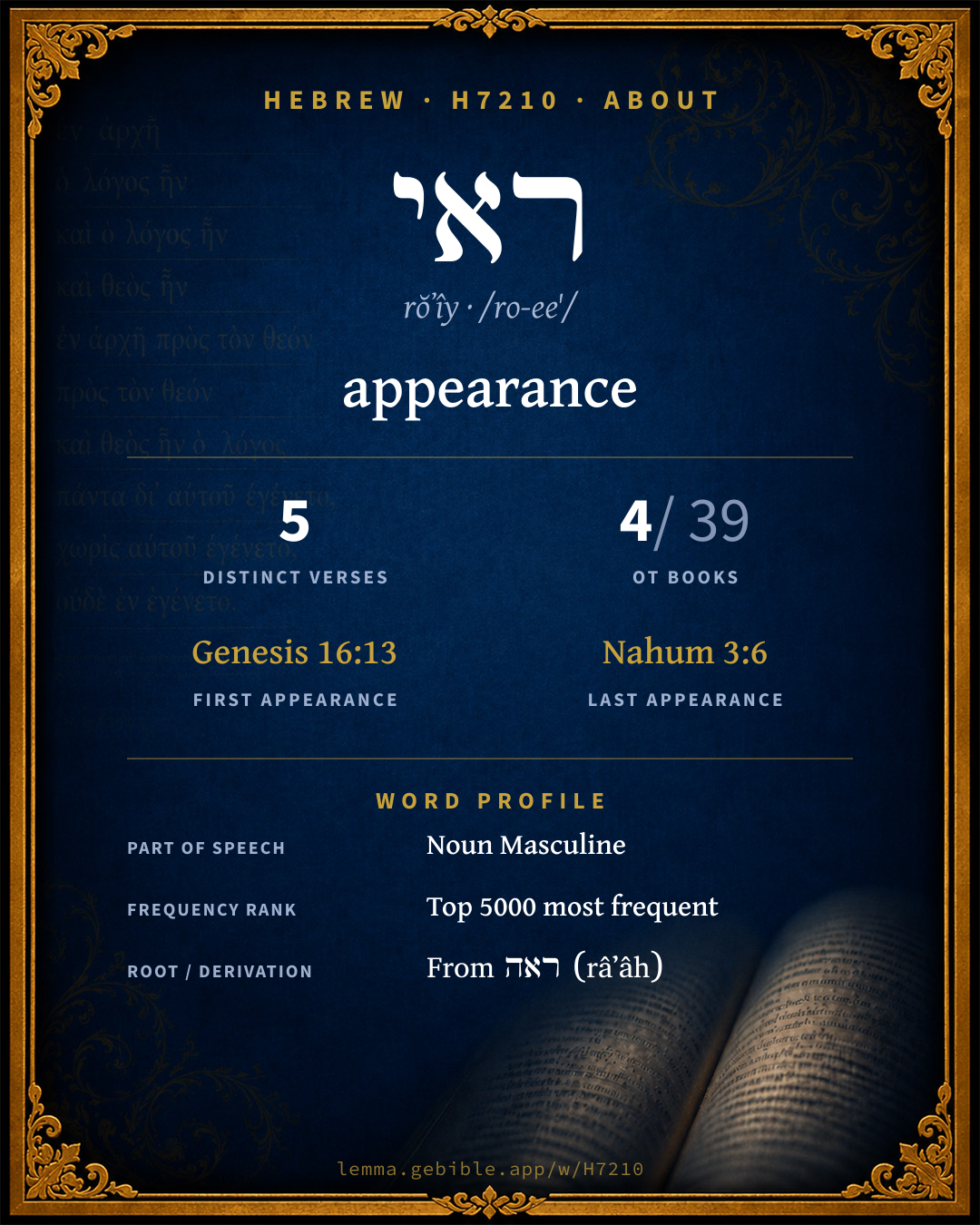
רֳאִי
appearance
also: looking, seeing, sight fuller range ↓
Full lexicon entry — Brown-Driver-Briggs (BDB)
From Brown-Driver-Briggs (BDB)
Where this word appears
Grammar key — what these labels mean
Part of speech
- Noun
- A naming word — a person, place, thing, or idea.
- Verb
- An action or state-of-being word.
Noun type
- Common
- A common noun — a general class of person, place, or thing (“king,” “city,” “water”), not a specific name.
Stem
- Qal
- The basic, simple active stem — the plain form of the verb (“he wrote”).
Form
- Participle Active
- A verbal adjective expressing ongoing or characteristic action (“writing / one who writes”).
State
- Absolute
- The independent form of a noun, not bound to a following word.
Gender
- Masculine
- Grammatically masculine.
Number
- Singular
- One.
Grammatical forms
- Noun, Common, Masculine, Singular, Absolute 4 times (80%)
- Verb, Qal, Participle Active, Masculine, Singular, Absolute 1 time (20%)
Parsed forms decoded from the imported morphology (morphhb / Westminster Leningrad Codex — WLC text public domain, morphhb tagging CC BY 4.0), counted across 5 parsed occurrences — not distinct verses.
Every verse where H7210 appears — 5 distinct verses across 4 books. Click any verse to open its interlinear word-by-word view. Verse text shown in the World English Bible for context — . Each verse’s Hebrew form is shown with its reference; the English is not keyword-highlighted, since the data carries no word-level English alignment. Use “Compare translations” on any verse to read it across multiple English versions. This concordance covers the Hebrew Bible; Septuagint (Greek Old Testament) occurrences are not indexed here.
Genesis 1 verse
1 Samuel 1 verse
Job 2 verses
Nahum 1 verse
About this entry
At a glance — auto-summarized from this page’s data, not written by a person. Every figure links to its source below. This summary describes the numbers; it doesn’t interpret them.
“appearance” is the headline sense of the Hebrew noun ראי (rŏʼîy). A scarce word — 5 verses in all of the Hebrew Bible. More than a third of its appearances fall in Job. Scripture first uses it in Genesis 16:13. Not a single-sense word, it carries 4 senses, among them “looking”, “seeing”, and “sight”. The sections below give every sense, occurrence, and version rendering.
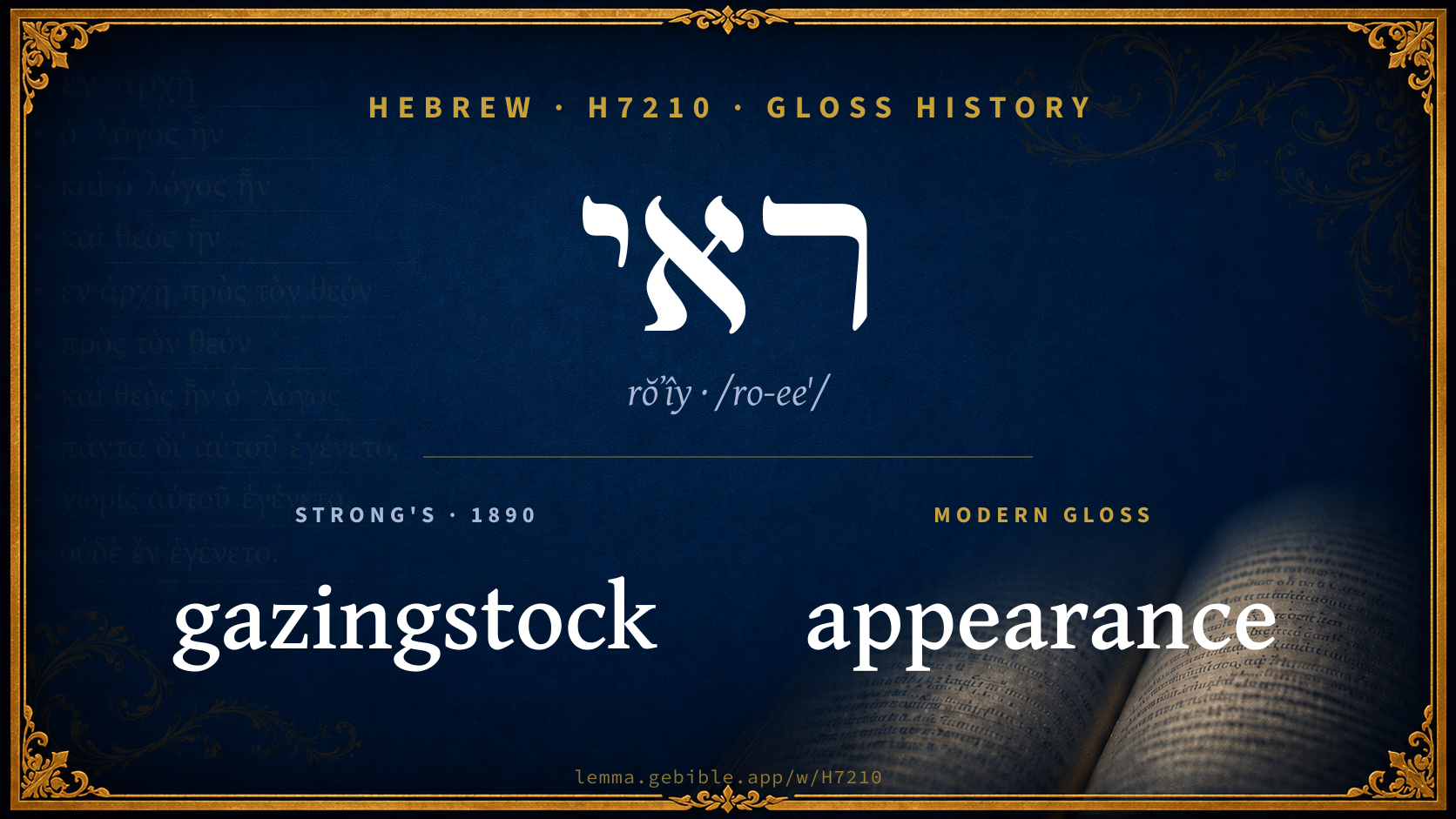
Gloss history
Strong's 1890 vs modern scholarship
About this word
Strong's H7210 catalogs a Hebrew word from the Hebrew Old Testament.
These counts are not copied from any lexicon or concordance. They are computed here, from the morphology-tagged Hebrew Old Testament. What Lemma adds →
- 5
- distinct verses
- The word appears in 5 distinct verses.
- 4 / 39
- OT books
- The word appears in 4 of 39 Old Testament books.
- #3,337
- by frequency
- Top 5000 most frequent Hebrew words (rank 3,337 of 8,640 Hebrew words by occurrence).
View all 5 occurrences in the concordance →
By section of the Old Testament
By traditional corpus
Conventional, traditional groupings — biblical authorship is debated, so this is a traditional corpus grouping, not an authorship claim. Each share is this word’s portion of its verses in that division of the Hebrew canon. Each figure is a share of the word’s 5 distinct verses.
- Prophets (Nevi'im) 2 verses · 40%
- Writings (Ketuvim) 2 verses · 40%
- Torah (Pentateuch) 1 verse · 20%
How translations render this word
Counts come from each version’s own published word-to-Strong’s tagging or interlinear alignment — an approximate guide to how each version renders this word, not a word-level alignment the data otherwise carries. Because each total is that version’s own tagged count, the per-version totals vary from one another and need not match the appearance or distinct-verse counts above. These counts may also differ from a printed concordance because Lemma counts each distinctly tagged rendering and does not collapse phrase taggings into a single head-word total. This is a fixed set of word-tagged versions (KJV, ASV, BSB, ULT) and does not change with the reading translation you choose elsewhere. Each version’s license is shown beside its name below (and on Sources).
- King James Version: Cannot be seen 1×, Hath seen 1×, Look to 1×
- American Standard Version: Cannot be seen 1×, Seeth 1×, Seeth me 1×
- Berean Standard Bible: Appearance 1×, Beholds me 1×, Sees me 1×
- unfoldingWord Literal Text: A 1×, Appearance 1×, One seeing me 1×
King James Version Public Domain
Renders H7210 across 6 tagged occurrences — most commonly:
American Standard Version Public Domain
Renders H7210 across 6 tagged occurrences — most commonly:
Berean Standard Bible Public Domain
Renders H7210 across 5 tagged occurrences — most commonly:
unfoldingWord Literal Text CC BY-SA 4.0
Renders H7210 across 6 tagged occurrences — most commonly:
Senses in BDB
The 4 senses BDB distinguishes for this word, in lexicon order (not ranked by frequency or importance). The full entry — with sub-senses — is in the Lexicon Entry tab.
- looking, appearance, seeing, sight
- seeing
- appearance
- sight, spectacle
Word origin
Derived from ראה (râʼâh) (H7200) — to see.
Jastrow Dictionary
A second Hebrew/Aramaic lexicon for comparison, covering Aramaic and post-biblical (Talmudic, Targumic, Midrashic) usage that the biblical-Hebrew BDB does not. Matched by lemma rather than by Strong’s number, so a lemma may carry more than one Jastrow headword (shown separately below), and the entries cover usage well beyond the Bible.
ראי
- (b. h.) [to meet with,]
- 1. to see. Ber. IX, 1 הרואֶה מקום וכ׳ he who sees (comes to) a place &c. Ib. 56ᵇ הרואה נהר בחלום he who sees a river in his dream. B. Bath. 82ᵃ כל שרואה פני חמה, v. גֶּזַע. Gen. R. s. 56 רוֹאִים אתם … רואה do you see what I see? Ex. R. s. 3 אתה רואה ראייה אחת וכ׳ thou seest only one vision, but I see two; אתה רואה אותן באין וכ׳ thou seest them come to Sinai and receive my Law, but I see &c. B. Mets. 73ᵇ רָאִיתָ שאינו וכ׳ if thou observest that he does not conduct himself properly; a. v. fr.—Snh. 52ᵃ הֵנִרְאֶה מי וכ׳ (Ms. M. הֵא נראה) well, we shall see which &c., v. קָבַר. Sabb. 150ᵃ לא יאמר … הנראה שתעמור וכ׳ one must not say to one’s neighbor (on the Sabbath), well, we shall see (I am confident) that you will be with me in the evening (for business); Ab. Zar. 7ᵃ (Tosaf. = הֲנִרְאֶה בעיניך, Nif. is it pleasing to thee?); Tosef. Sabb. XVII (XVIII), 11 נראה ed. Zuck. (Var. הנ׳). Sifré Num. 84 הנראה שתגיע עמנו וכ׳ be sure to arrive with (meet) us at &c. Ib. הנ׳ שתעמידני וכ׳ be sure to wake me up, for I &c.—ר׳ דם, ר׳ קרי &c. to have an attack, be affected with. Yeb. 76ᵃ לא ר׳ קרי מימיו he never had a nightly pollution. Zab. I, 1 ר׳ אחת … ובשלישי ר׳ שתים (sub. זיבה) if he felt one attack of gonorrhœa …, and on the third day he had two attacks. Ber. III, 6 רָאֲתָה נדה (sub. דם) felt menstruation. Ib. 26ᵃ ר׳ זיבה felt a flux; a. fr.
- 2. to reflect; to reason; to consider. B. Bath. 83ᵃ רוֹאִין … כאילו וכ׳ we consider the central vine-trees as if not existing. Erub. I, 5 רואין אותה … מתכת we consider it (the cross-piece of straw or reeds) as if it were of metal; עקומה רואין וכ׳ if it is curved, we consider it as if it were straight. Gen. R. l. c. הוי רואה דמיו וכ׳ look upon the blood of this ram, as if it were the blood of &c.; a. v. fr.—מה ר׳ what did he see?, what was the reason; in gen. why? B. Bath. 123ᵃ מה ר׳ יעקב שנטל וכ׳ what reason had Jacob to take the birthright from Reuben? Pes. 53ᵇ מה רָאוּ … שמסרו וכ׳ what did Hananiah, Mishael and Azariah have in mind (how did they reason) when they were ready to give up their lives &c.? Sifré Deut. 307 מה ראו … שנשטפו וכ׳ why were the men of the flood drowned &c.?; a. fr.
- 3. to see the reason of, to like, choose, prefer, approve of. Keth. XIII, 3, sq. רואה אני את רברי וכ׳ I like the opinion of Admon. Ib. 109ᵃ כל מקום שאמר … רואח אני וכ׳ wherever R. G. said, I like &c., that opinion is the adopted rule. Ab. II, 7 רואה אני … מדבריכם I prefer what El. … said to what you said; a. fr.—Part. pass. רָאוּי; f. רְאוּיָה; pl. רְאוּיִים, רְאוּיִין; רְאוּיוֹת chosen, selected; designated, predestined; fit, worthy, adapted (v. חֲזִי). Bekh. 59ᵇ, a. e. מנין הר׳, v. מִנְיָן. Ḥull. 83ᵇ, a. fr. כל הר׳ לבילה whatever is capable of being mixed, v. בִּילָה. Nidd. VI, 4 כל הר׳ לדון וכ׳ whoever is fit (authorized) to give judgment in a criminal court, is fit &c. Sabb. 89ᵇ ר׳ היה יעקב וכ׳ Jacob was destined to go down to Egypt in iron chains, but his merits were the cause (that no such force was used). Snh. 107ᵃ ר׳ היתה וכ׳ Bathsheba … was predestined (as wife) for David, only he anticipated fate, v. פַּגָּה. Ber. 4ᵃ ר׳ היו ישראל ליעשות וכ׳ it had been intended that a miracle be performed for the Israelites in Ezra’s days, as it has been in Joshua’s time, but sin was the cause (that it was not done). Nidd. 60ᵃ ר׳ לראות fit (old enough) to have menstruation; a. v. fr.
- 1. to be seen, be visible; to appear; to seem. Gen. R. s. 48 נִרְאִין כאוכלין וכ׳ they had the appearance of eating, one course after the other being removed. Pesik. R. s. 21 בפנים הרבה נ׳ להם וכ׳ the Lord appeared to them at Sinai with various expressions of countenance. Pesik. Vayhi, p. 5ᵃ קרסי זהב נראין … הנראין וכ׳, v. קֶרֶס. Ḥag. 2ᵃ; Snh. 4ᵇ, a. e. (ref. to יראה, Ex. XXIII, 17) יִרְאֶה יֵרָאֶה … לִרְאוֹת … לֵירָאוֹת you may read it yireh (he shall see, the Lord) or yeraëh (he shall be seen): as He comes to see, so does He come to be seen (i.e. he that is blind in one eye is exempt from visiting the Temple. Ḥag. 5ᵇ הנראין ואינן רואין … הרואים יאינן נראין, v. קָבַל I, Hif.—Pes. 53ᵃ שנ׳ כמקדיש וכ׳ it looks as if he dedicated his animal as a sacrifice, and were to eat sacred meat outside of the Temple. Ab. II, 3 נראין כאוהבין וכ׳ they appear to be friends as long as it profits them; a. v. fr. e.g. Exodus 23:17
- 2. to become fit, be fit. Yoma 64ᵃ, v. דָּחָה. Succ. 33ᵇ נ׳ ונדחה חוזר ונ׳ what had been fit at one time of the Holy Day, and was discarded (on account of a temporary unfitness), may again become fit (for use on the same day); a. e.
- 3. to be liked, approved of; to appear reasonable. Ḥull. 108ᵇ נ׳ דברי וכ׳ R. Judah’s opinion is acceptable in the event that no stirring has taken place. Ib. 109ᵃ נ׳ דברי ר׳ י׳ בהא … בהא R. Judah’s opinion is acceptable in such a case, and that of the scholars in such a case. Ber. 33ᵇ ר׳ חייא … נראין R. Ḥ. bar Abba reported Rabbi to have said nirin (it seems acceptable), contrad. to מטין a. מודים; Erub. 46ᵇ; a. fr.
- to cause to see; to show. Pesik. Shek., p. 19ᵃ (ref. to Ex. XXX, 13) כמין מטבע … והֶרְאֵהוּ למשה וכ׳ the Lord took a sort of a coin of fire from under his throne of glory and showed it to Moses, saying, ‘this they shall give’, like this &c. Ib. p. 18ᵇ הקטנה ה׳ לדוד וכ׳ he (Joab) produced before David the smaller census, the larger he did not. Kidd. 48ᵇ; B. Bath. 165ᵃ, a. e. מרְאֶה מקום הוא לו he merely indicated the place to him, v. קְפֵידָא. Ber. 55ᵇ מראין לו חלום טוב is shown a good dream (vision). Ib. הֶרְאוּהוּ חלומו וכ׳ was shown his own dream and the interpretation of his fellow prisoner’s dream. Ab. Zar. 5ᵃ ה׳ לו הקב"ה לאדם דור וכ׳ the Lord allowed Adam to see each coming generation and its preachers &c. Taan. 10ᵇ אל תַּרְאוּ עצמכם וכ׳, v. שָׂבֵעַ I; a. v. fr.—ה׳ פנים a) [to show a (friendly) face,] to visit the mourner. Y. M. Kat. III, 82ᵇ מפני … להַרְאוֹת וכ׳ why is it recommended to visit the mourner (on the Sabbath, when no other mourning ceremonies are otherwise observed)? Ib. 83ᵃ bot. אין מראין וכ׳ a mourner is not visited on New Year’s Day &c. Gen. R. s. 100; a. e.—b) to enlighten, convince by clear argument. Snh. 93ᵇ (ref. to איש תאר, I Sam. XVI, 18) שמראה פנים בהלכה he makes faces shine when he argues; Num. R. s. 13; (Ruth R. to II, 1; Yalk. Sam. 125 שמאיר); a. e. e.g. Exodus 30:13
- to be shown. Y. M. Kat. III, 82ᶜ top אם הוּרְאוּ לו רוב פנים if most of the faces have been shown him, i.e. if the majority of comforters have been to see him (v. supra).
- to show one’s self. Taan. 10ᵇ שכח … אל יִתְרָאֶה בפני הצבור if he forgot and ate and drank (in a place where a fast is held), he must not show himself before the people.
רֳאִי I
- preced.)
- 1. sight. Tosef. Hor. II, 5; Gitt. 58ᵃ תינוק … יפה עינים וטוב ר׳ there is a boy in prison … ‘fair of eyes and goodly to look upon’ (I Sam. XVI, 12). Lev. R. s. 20, beg. (ref. to I Sam. l. c.) טוב ר׳ בהלכה וכ׳ ‘goodly to look upon’ in legal decision; whoever looked up to him recalled what he had learned. e.g. 1 Samuel 16:12
- 2. (v. הֲרֵי I) aspect, nature of a case. B. Kam. 3ᵇ sq. לא ר׳ הקרן … כר׳ השן וכ׳ the case of goring, when nobody is benefited by the damage done, is not analogous to the case of damage by the tooth &c. Zeb. 5ᵃ לא ר׳ זה כר׳ זה … הצד השוה וכ׳ the nature of this (the burnt-offering) is not analogous to the nature of that (the guilt-offering): what is common to both is that &c.; Kidd. 21ᵃ; a. fr.
רֳאִי II
- (v. Rashi to Nah. III, 6) = רְעִי II, excrement, discharge from the bowels. Sifra M’tsorʿa, Zabim, Par. 1; Makhsh. VI, 7.—[Sabb. XX, 4 (140ᵇ) מפני הר׳, Mish. Nap. a. Pes., v. Rabb. D. S. a. l. note 90, v. רְעִי I.]—בית ר׳ digestive organ, crop, maw. Sifra Vayikra, N’dab., Par. 7, ch. IX מה אם … את בית הר׳ וכ׳ where the Scripture permits the use of the digestive organ (the maw of ruminants) &c.; כאן שפסל בית הר׳ וכ׳ here (in the case of fowls) where the Scripture rejects the digestive organ (the crop) &c.—[Kel. XVII, 2 בית הר׳ ed. Dehr., v. רְעִי II.] e.g. Nahum 3:6
A Dictionary of the Targumim, the Talmud Babli and Yerushalmi, and the Midrashic Literature (Marcus Jastrow; London, Luzac, 1903) — Public Domain. Digitized via Sefaria. Digitized via Sefaria. Full attribution on Sources.
Forms in the corpus
The 4 distinct written forms H7210 takes in the Hebrew Bible, most frequent first — each parse links to that state’s occurrences in the concordance. Hebrew forms include their vowel points and cantillation, so a single lemma takes many written forms.
| Form | Parsing | Example | Uses |
|---|---|---|---|
| רֹ֑אִי | Noun, Common, Masculine, Singular, Absolute | 1 Samuel 16:12 | 2 |
| כְּ/רֹֽאִי | Noun, Common, Masculine, Singular, Absolute | Nahum 3:6 | 1 |
| מֵ/רֹ֑אִי | Noun, Common, Masculine, Singular, Absolute | Job 33:21 | 1 |
| רֳאִ֑י | Noun, Common, Masculine, Singular, Absolute | Genesis 16:13 | 1 |
Same root — word family
Other BDB entries built from the same root as H7210, grouped by Strong’s listed origin. These share a root / origin per the lexicon — not necessarily a shared meaning. Each links to that word’s own entry.
Derives from
Shares the same root
- מראה marʼeh H4758 sight
- מראה murʼâh H4760 crop
- ראה râʼâh H7201 bird of prey
- ראה râʼeh H7202 seeing
- ראה rôʼeh H7203 seer
- ראוה raʼăvâh H7207 beholding
- ראי rᵉʼîy H7209 mirror
- ראית rᵉʼîyth H7212 beholding
- רו rêv H7299 appearance
Proper names from this root
People and places named from this root — a name, not an additional meaning of the word.
Compare all same-root words → Showing 4 of 14 — not the complete family. 3 of the same-root words are proper names (people or places). They share a root, not necessarily a meaning.
Septuagint verse parallels
This word appears in 5 verses that also exist in the Greek Old Testament (Septuagint), out of the 5 Hebrew verses it occurs in. You can read those verses in Greek by switching the Old Testament edition to the Septuagint.
Read these verses in the Septuagint
This is a verse-level parallel only — the same verses exist in both the Hebrew and Greek Old Testaments. No word-level Hebrew↔Greek correspondence is claimed: the data carries no such alignment, so no Greek word is shown as this Hebrew word’s translation. Coverage is not total — the Septuagint omits the deuterocanon and renumbers the Psalms, so some Hebrew verses have no direct Greek parallel.