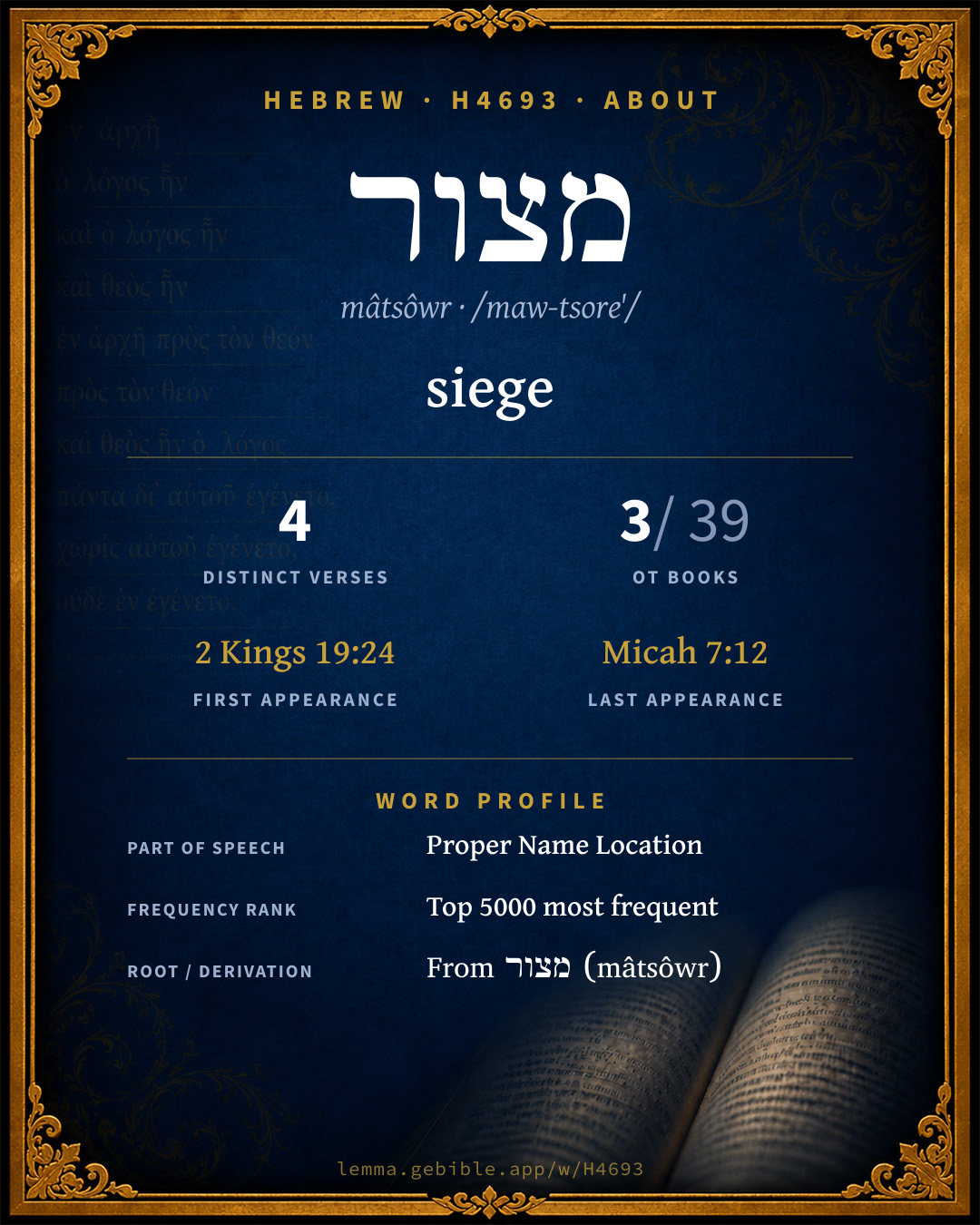
מָצוֹר
siege
BDB lists 2 entries for ‘siege’ fuller range ↓
Full lexicon entry — Brown-Driver-Briggs (BDB)
From Brown-Driver-Briggs (BDB)
Where this word appears
Grammar key — what these labels mean
Part of speech
- Noun
- A naming word — a person, place, thing, or idea.
Noun type
- Proper
- A name of a specific person, place, or people (e.g. Abraham, Zion, Israel).
Every verse where H4693 appears — 4 distinct verses across 3 books. Click any verse to open its interlinear word-by-word view. Verse text shown in the World English Bible for context — . Each verse’s Hebrew form is shown with its reference; the English is not keyword-highlighted, since the data carries no word-level English alignment. Use “Compare translations” on any verse to read it across multiple English versions. This concordance covers the Hebrew Bible; Septuagint (Greek Old Testament) occurrences are not indexed here.
2 Kings 1 verse
Isaiah 2 verses
Micah 1 verse
About this entry
At a glance — auto-summarized from this page’s data, not written by a person. Every figure links to its source below. This summary describes the numbers; it doesn’t interpret them.
מצור — transliterated mâtsôwr — is a Hebrew name carrying the sense “siege.” A scarce word — 4 verses in all of the Hebrew Bible. More than half of its appearances fall in Isaiah. Its earliest occurrence is 2 Kings 19:24. Each statement above links to its evidence; the full detail follows below.
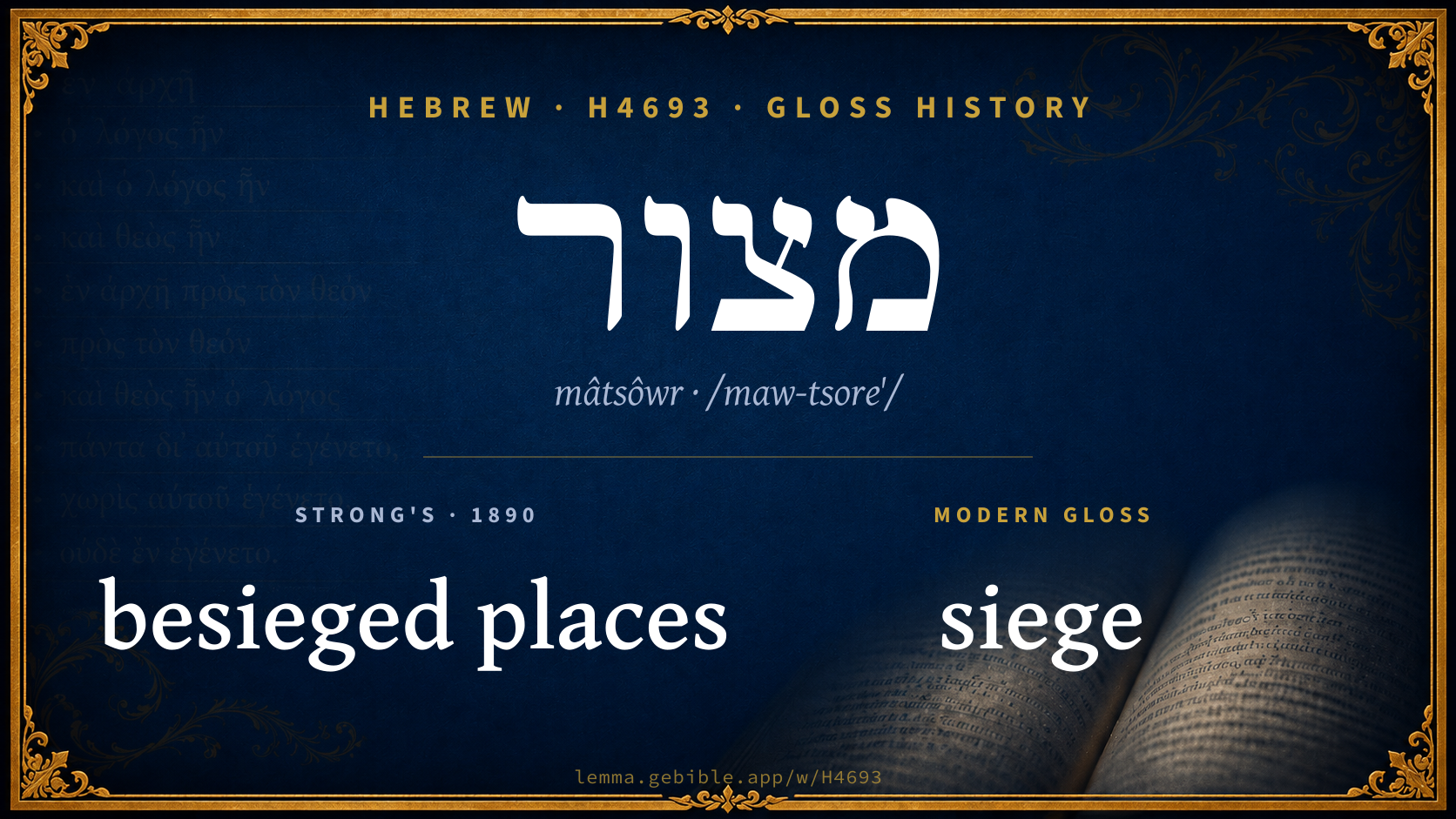
Gloss history
Strong's 1890 vs modern scholarship
About this word
Strong's H4693 catalogs a Hebrew word from the Hebrew Old Testament.
These counts are not copied from any lexicon or concordance. They are computed here, from the morphology-tagged Hebrew Old Testament. What Lemma adds →
- 4
- distinct verses
- The word appears in 4 distinct verses.
- 3 / 39
- OT books
- The word appears in 3 of 39 Old Testament books.
- #3,696
- by frequency
- Top 5000 most frequent Hebrew words (rank 3,696 of 8,640 Hebrew words by occurrence).
View all 4 occurrences in the concordance →
By section of the Old Testament
By traditional corpus
Conventional, traditional groupings — biblical authorship is debated, so this is a traditional corpus grouping, not an authorship claim. Each share is this word’s portion of its verses in that division of the Hebrew canon. Each figure is a share of the word’s 4 distinct verses.
- Prophets (Nevi'im) 4 verses · 100%
How translations render this word
Counts come from each version’s own published word-to-Strong’s tagging or interlinear alignment — an approximate guide to how each version renders this word, not a word-level alignment the data otherwise carries. Because each total is that version’s own tagged count, the per-version totals vary from one another and need not match the appearance or distinct-verse counts above. These counts may also differ from a printed concordance because Lemma counts each distinctly tagged rendering and does not collapse phrase taggings into a single head-word total. This is a fixed set of word-tagged versions (KJV, ASV, BSB, ULT) and does not change with the reading translation you choose elsewhere. Each version’s license is shown beside its name below (and on Sources).
BDB lists this Strong’s number as 5 distinct words (homographs). Each count above pools all of them and is not split by sense — see the Senses section below. A low-frequency rendering may belong to a different one of those words, not the primary meaning.
- King James Version†: Besieged places 2×
- American Standard Version†: Egypt 5×
- Berean Standard Bible†: Egypt 5×
- unfoldingWord Literal Text†: Matsor 3×
King James Version Public Domain
Renders H4693 across 5† tagged occurrences — most commonly:
Plus 3 renderings that appear only once — usually multi-word phrases or single function words the recovered tagging swept in, not distinct renderings.
American Standard Version Public Domain
Renders H4693 across 5† tagged occurrences — most commonly:
Berean Standard Bible Public Domain
Renders H4693 across 5† tagged occurrences — most commonly:
unfoldingWord Literal Text CC BY-SA 4.0
Renders H4693 across 3† tagged occurrences — most commonly:
Senses in the full BDB
What do BDB’s symbols mean?
BDB uses these scholarly abbreviations:
| Symbol | Meaning |
|---|---|
| 𝔊 | the Septuagint (the ancient Greek translation, LXX) |
| 𝔙 | the Vulgate (the Latin translation) |
| 𝔖 | the Syriac version (the Peshitta) |
| 𝔗 | the Targum (the Aramaic translation) |
| ψ | the Psalms |
| √ | root (the underlying root or stem) |
| ‖ | parallel passage (a synonymous or contrasted parallel) |
| † | the dagger: every passage where the word occurs is cited |
The 2 senses and sub-senses the full Brown-Driver-Briggs lexicon distinguishes for this word, in lexicon order (not ranked by frequency), with BDB’s own verbatim wording and sub-sense lettering. Shown in Hebrew script with BDB’s own scholarly abbreviations. The condensed entry is in the Lexicon Entry tab. See also the Forms in the corpus table below.
מצור I Egypt, v. מצר, מִצְרַיִם.
מצור II in pl., dub., usually siege-works
מצור III [m.] siege-enclosure, siege, entrenchment
- 1. siege מ׳ שָׂם עָלֵינוּ Mi 4:14 he hath laid siege to us, cf. וְנָתַתָּ֫ עָלֶיהָ מ׳ Ez 4:2; בּוֹא בַמּ׳ is come into a state of siege Dt 20:19; 2 K 24:10; 25:2; Je 52:5, cf. וְהָֽיְתָה בַמּ׳ Ez 4:3; יוֹשֶׁבֶת֯י בַּמּ׳ Je 10:17; מְצוֹר יְרו׳ Ez 4:7 siege of Jerus., but also מ׳ עַל־יְרו׳ Zc 12:2; יְמֵי מ׳ of duration of siege Ez 4:8; 5:2; מֵי מ׳ Na 3:14 water for a siege; in phr. בְּמ׳ וּבְמָצוֹק in the siege and stress Dt 28:53, 55, 57 Je 19:9. e.g. Micah 4:14
- 2. enclosure, i.e. siege-works Dt 20:20; late = rampart Zc 9:3, עִיר מ׳ entrenched city ψ 31:22 (al. besieged), 60:11 (‖ 108:11 ע׳מִבְצָר), cf. 2 Ch 8:5; עָרִים לְמ׳ 11:5, ישְׁבִים בְּמ׳ בִּירוּשָׁלַם 32:10; מ׳ Hb 2:1 according to most (‖ מִשְׁמֶרֶת); but We der. from נצר, i.e. watch-tower, Now conj. מִצְפֶּה (cf. וַאֲצַפֶּה foll.); > Buhl conj. מְצָד—מ׳ n.pr.terr. v. p. 596. e.g. Deuteronomy 20:20
Senses from the full Brown-Driver-Briggs lexicon (Brown, Driver, Briggs; Oxford 1906 — public domain), digitized via Sefaria, supplemented by the OpenScriptures HebrewLexicon (CC BY 4.0). Full attribution on Sources.
Word origin
III. n.pr.terr.=מִצְרַיִם; only poet.: יְאֹרֵי מ׳ Is 19:6 2 K 19:24=Is 37:25; וְעָדֶיךָ יָבוֹא לְמִנִּי אַשּׁוּר וְעָרֵי מ׳ וּלְמִנִּי מ׳ וְעַד נָהָר Mi 7:12 (𝔊 misunderstands everywhere).
II. n.m. in pl., dub., usually siege-works;—מְצוֹדִים גְּדֹלִים Ec 9:14, but read מְצוּרִים WklAltor. Forsch. i. 353, v. מָצוֹר 2, p. 849 a.
IV. n.[m.] siege-enclosure, siege, entrenchment;—always מ׳ abs., exc. cstr. מְצוֹר Ez 4:7, sf. מְצוּרֶ֑ךָ v 8;—
— Brown-Driver-Briggs (Oxford 1906, public domain), digitized via Sefaria, supplemented by the OpenScriptures HebrewLexicon (CC BY 4.0). See Sources.
Derived from מצור (mâtsôwr) (H4692) — siege.
Jastrow Dictionary
A second Hebrew/Aramaic lexicon for comparison, covering Aramaic and post-biblical (Talmudic, Targumic, Midrashic) usage that the biblical-Hebrew BDB does not. Matched by lemma rather than by Strong’s number, so a lemma may carry more than one Jastrow headword (shown separately below), and the entries cover usage well beyond the Bible.
צוּר I
- rock. Ex. R. s. 15 ומצא שם צ׳ גדול and found there a large rock; a. e.—Pl. צוּרִים. Ib. כאן … על הצ׳ הללו here I will build the fortress, on these rocks.—[Tosef. Pes. VII, 13 שומרי צו׳ ed. Zuck., read: צִירִים, v. צִיר II).—Trnsf. [Protection,] the Lord; (in Agadah derived from יָצַר; v. next w.) the Creator. Ber. 5ᵇ (ref. to Job XVIII, 4) אין צ׳ אלא הקב"ה tsur means the Holy One &c. (with ref. to Deut. XXXII, 18). Lev. R. s. 23 (ref. to Deut. l. c.) התשתם … יוצר you have weakened the power of the Creator. Pirké d’R. El. ch. XLIII מרד בצ׳ עליון rebelled against the Rock on high; a. fr. e.g. Job 18:4
צוּר II
- [to turn,]
- 1. to tie around, wrap. B. Kam. 49ᵇ, a. e. וכי לָצוּר על פי וכ׳ does one want a document to tie around his flask?, i.e. does one care for a paper except for the value it represents? Koh. R. to VIII, 8 (ref. to Zech. XII, 1 ויצר) צָר רוח של אדם בגופו he tied up the spirit of man in his body, v. צָרַר; a. e. e.g. Zechariah 12:1
- 2. to form, shape. Sabb. 75ᵇ הצָר צורה בכלי he who draws a figure on a vessel. Ib. 103ᵇ עד שיָצוּר כולו until he has drawn the entire figure which he intended to draw. Gen. R. s. 7, beg.; Yalk. ib. 11 מדת בו"ד צר צורה … יכול לצור צורה במים (not מלך) a human being draws a design on land, can he draw a design in water?; Mekh. B’shall., Shir., s. 8. Lev. R. s. 14 לשני ציירין זה צר דמותו וכ׳ like two painters, one paints the likeness of one &c.; a. fr.—Zeb. 94ᵃ, v. infra.
- 3. (with על) to surround, besiege. Sifré Deut. 203 אין צָרִים על עיר וכ׳ we must not begin the siege of a town later than three days before the Sabbath; a. e.—[
- 4. (cmp. זוּר) to press, v. צִיר I.]
- to draw, paint; to embroider. Zeb. 94ᵃ בגד עליו לצַיְּירוֹ … Rashi (ed. עליה לצוּרָהּ; v. Rabb. D. S. a. l. note 1) a garment which one intends to embroider.—Part. pass. מְצוּיָּיר, מְצוּיָּר; f. מְצוּיֶּירֶת; pl. מְצוּיָּירִים, מְצוּיָּירִין; מְצוּיָּירוֹת, מְצוּיָּר׳. Num. R. s. 12; Cant. R. to VI, 4 (not צוויינות); Yalk. Num. 713 (not מצויינות), v. צָב I.
צוּר
- 1. to tie around. Snh. 48ᵃ; Ber. 23ᵇ דאזמניה למֵיצַר … צָר וכ׳ which he designated to wrap T’fillin in; if he did so &c. (v. צְרַר).—Part. צָאֵיר צָיֵיר. Y. Ber. IV, 7ᶜ top הוה צ׳ גולתיה וכ׳ tied Rab’s cloak up &c.; Y. Taan. IV, 67ᶜ.—Part. pass. צָיִיר, צָיִר, צָאִיר. Targ. Job XLI, 7.—Ḥull. 105ᵇ כל מילי דצייר וחתים whatever is tied up or sealed. B. Mets. 24ᵇ אשכח … דצָיְירֵי בסדינא found four Zuzin tied up in a sheet. Lev. R. s. 6; a. fr.
- 2. to draw, shape, design. Targ. Am. IV, 13 דצר ed. Lag. (ed. Wil. דִּיצַר, v. יְצַר). Targ. I Kings VII, 15; a. fr.—Part. pass. as ab. Targ. Esth. VIII, 15; a. e.
- 3. (with על) to besiege. Targ. Deut. II, 19. Targ. O. ib. 9 (Y. תעיק; h. text תצר). Targ. O. ib. XX, 12; 19. Targ. I Sam. XXIII, 8 (ed. Lag. לימצר, read למיצר); a. fr.—Gitt. 56ᵃ צר עלה וכ׳ he besieged it (Jerusalem) three years; a. e.
- 1. to form, shape, paint, engrave. Targ. Job X, 8. Targ. Jer. XXII, 14; a. e.—Part. pass. מְצַיַּיר, מְצַיַּר. Targ. O. Ex. XXV, 33, sq. (h. text משקד׳). Targ. Ez. XXIII, 14 (h. text מחקה). Targ. Y. I Lev. XXVI, 1 (h. text משכית).—Gitt. 36ᵃ; 87ᵇ, v. כַּוְורָא, חֲרוּתָא, מָכוּתָא.
- 2. to tie up, fold under. Men. 37ᵇ האי מאן דצַיְּירֵּיה לגלימיה Rashi (ed. דצרייה; Ar. דצארי) he who folds his cloak (and puts the show-fringes on the fold).
- to be embroidered, shaped. Targ. Ps. CXXXIX, 15 (ed. Wil. אצטיד׳, corr. acc.; h. text רקמ׳).—[Ithpe. אִתְצִיר, אִתְצַר, v. יְצַר.]
צוּר III
- (preced. wds.) [twist,] צ׳ דקל band made of palm-bark (cmp. נֵצֶר III).—Pl. constr. צוּרֵי. Sabb. 90ᵇ צ׳ דקל שתים (Ms. M. צַוָּארֵי; Ar. צָרֵי) he who carries palm-bands abroad (on the Sabbath), has transgressed the law by carrying two strips.
צוּר ²
- —Pl. צוּרֵי. Ab. Zar. 75ᵃ bot. חבלי דצ׳ (Ar. צרי) ropes made of palm-bands.
צוֹר
- (b. h.) pr. n. pl. Tyre in Phœnicia. Gen. R. s. 61 end כל צ׳ … מלא בצ׳ מדינה וכ׳ wherever in Scripture Tsor is written plene, the city of Tyre is meant, where it is defective (צר enemy), Rome is meant; Tanḥ. Bo 4; Pesik. R. s. 17. Y. B. Kam. IV, 4ᵇ סולמייא דצ׳; Y. Ab. Zar. I, 40ᵃ bot., v. סוּלָּם, סוּלָּמָא; a. fr.—Denom. צוֹרִי, צוֹרִיִּי. Bekh. VIII, 7, a. e. מנה צ׳, v. מָנֶה. Yalk. Deut. 821 סייף צוריי a Tyrian sword (Tanḥ. Vaëtḥ. 6 הנדיי). Maasr. III, 5, v. חָצֵר; a. fr.—Chald. צוֹרָאָה; pl. צוֹרָאֵי, צוֹרָיֵיא. Y. Sabb. II, 4ᶜ bot.; Y. Meg. II, 73ᵇ bot.
צַוַּר
- , v. צַיַּאר
A Dictionary of the Targumim, the Talmud Babli and Yerushalmi, and the Midrashic Literature (Marcus Jastrow; London, Luzac, 1903) — Public Domain. Digitized via Sefaria. Digitized via Sefaria. Full attribution on Sources.
Forms in the corpus
The 3 distinct written forms H4693 takes in the Hebrew Bible, most frequent first — each parse links to that state’s occurrences in the concordance. Hebrew forms include their vowel points and cantillation, so a single lemma takes many written forms.
| Form | Parsing | Example | Uses |
|---|---|---|---|
| מָצֽוֹר | Noun, Proper | 2 Kings 19:24 | 2 |
| מָצ֑וֹר | Noun, Proper | Isaiah 19:6 | 1 |
| מָצוֹר֙ | Noun, Proper | Micah 7:12 | 1 |
Same root — word family
Other BDB entries built from the same root as H4693, grouped by Strong’s listed origin. These share a root / origin per the lexicon — not necessarily a shared meaning. Each links to that word’s own entry.
Derives from
Shares the same root
Proper names from this root
People and places named from this root — a name, not an additional meaning of the word.
Compare all same-root words → 1 of the same-root words is a proper name (a person or place). They share a root, not necessarily a meaning.
Septuagint verse parallels
This word appears in 4 verses that also exist in the Greek Old Testament (Septuagint), out of the 4 Hebrew verses it occurs in. You can read those verses in Greek by switching the Old Testament edition to the Septuagint.
Read these verses in the Septuagint
This is a verse-level parallel only — the same verses exist in both the Hebrew and Greek Old Testaments. No word-level Hebrew↔Greek correspondence is claimed: the data carries no such alignment, so no Greek word is shown as this Hebrew word’s translation. Coverage is not total — the Septuagint omits the deuterocanon and renumbers the Psalms, so some Hebrew verses have no direct Greek parallel.