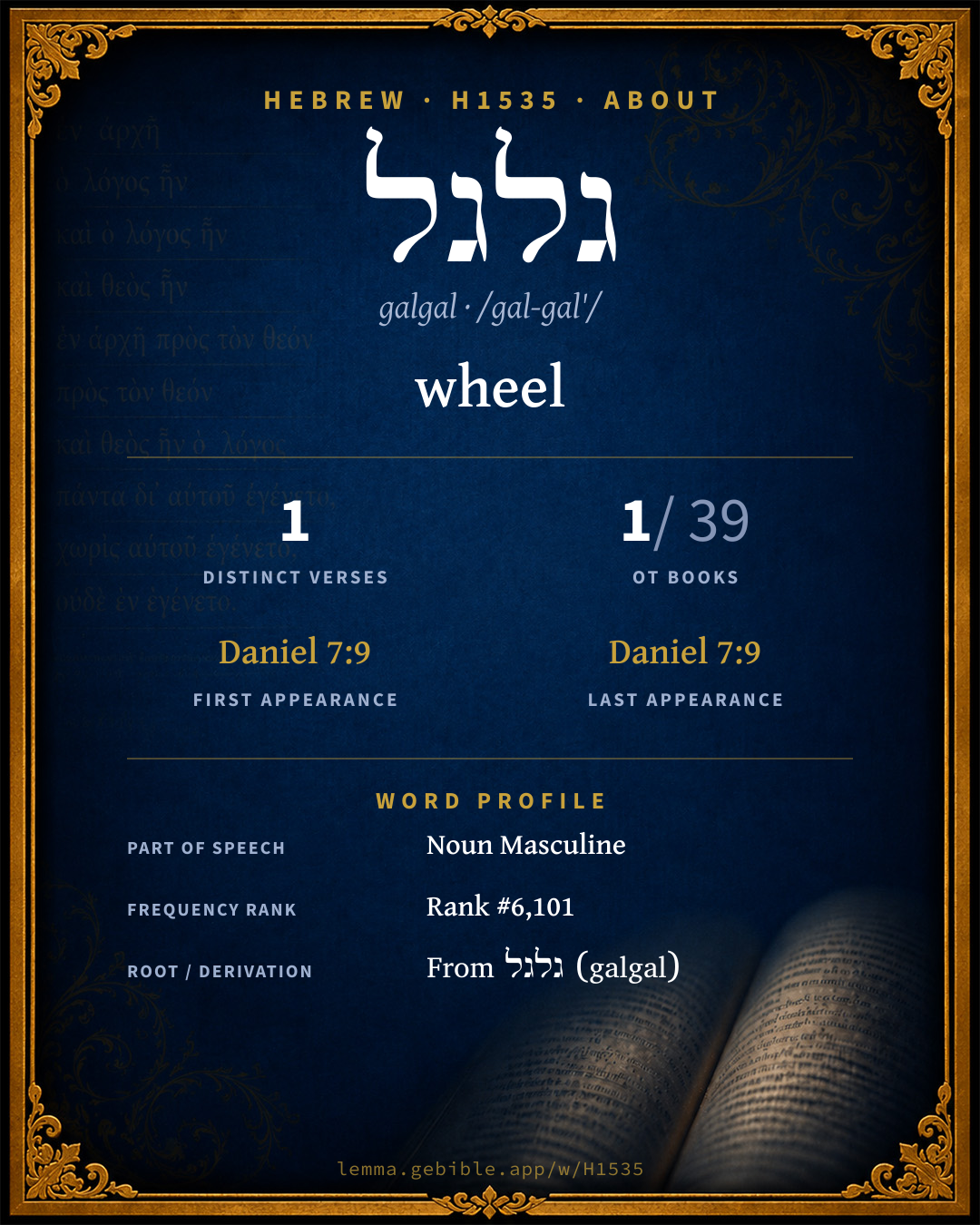
גַּלְגַּל
wheel
Full lexicon entry — Brown-Driver-Briggs (BDB)
From Brown-Driver-Briggs (BDB)
Where this word appears
Grammar key — what these labels mean
Part of speech
- Noun
- A naming word — a person, place, thing, or idea.
Noun type
- Common
- A common noun — a general class of person, place, or thing (“king,” “city,” “water”), not a specific name.
State
- Construct
- A noun bound to a following noun in a possessive / “of” relationship (the construct chain).
Gender
- Masculine
- Grammatically masculine.
Number
- Plural
- More than one (in Hebrew, generally three or more).
Every verse where H1535 appears — 1 distinct verse across 1 book. Click any verse to open its interlinear word-by-word view. Verse text shown in the World English Bible for context — . Each verse’s Hebrew form is shown with its reference; the English is not keyword-highlighted, since the data carries no word-level English alignment. Use “Compare translations” on any verse to read it across multiple English versions. This concordance covers the Hebrew Bible; Septuagint (Greek Old Testament) occurrences are not indexed here.
Daniel 1 verse
About this entry
At a glance — auto-summarized from this page’s data, not written by a person. Every figure links to its source below. This summary describes the numbers; it doesn’t interpret them.
גלגל (galgal) is a Hebrew noun most often rendered “wheel.” With only 1 verse it sits in the long tail of Hebrew Bible vocabulary. Daniel dominates its distribution — 1 of 1 verses. It occurs only once, in Daniel 7:9. Related forms include גלגל and גלגל. For the data behind this summary, explore the sense tree and the renderings breakdown below.
Gloss history
Strong's 1890 vs modern scholarship
About this word
Strong's H1535 catalogs a Hebrew word from the Hebrew Old Testament.
These counts are not copied from any lexicon or concordance. They are computed here, from the morphology-tagged Hebrew Old Testament. What Lemma adds →
- 1
- distinct verses
- The word appears in 1 distinct verse.
- 1 / 39
- OT books
- The word appears in 1 of 39 Old Testament books.
- #6,101
- by frequency
- Rank #6,101 (rank 6,101 of 8,640 Hebrew words by occurrence).
View all 1 occurrence in the concordance →
Most concentrated in
- Daniel 1 verse 100%
By section of the Old Testament
By traditional corpus
Conventional, traditional groupings — biblical authorship is debated, so this is a traditional corpus grouping, not an authorship claim. Each share is this word’s portion of its verses in that division of the Hebrew canon. Each figure is a share of the word’s 1 distinct verse.
- Writings (Ketuvim) 1 verse · 100%
How translations render this word
Counts come from each version’s own published word-to-Strong’s tagging or interlinear alignment — an approximate guide to how each version renders this word, not a word-level alignment the data otherwise carries. Because each total is that version’s own tagged count, the per-version totals vary from one another and need not match the appearance or distinct-verse counts above. These counts may also differ from a printed concordance because Lemma counts each distinctly tagged rendering and does not collapse phrase taggings into a single head-word total. This is a fixed set of word-tagged versions (KJV, ASV, BSB, ULT) and does not change with the reading translation you choose elsewhere. Each version’s license is shown beside its name below (and on Sources).
BDB lists this Strong’s number as 2 distinct words (homographs). Each count above pools all of them and is not split by sense — see the Senses section below. A low-frequency rendering may belong to a different one of those words, not the primary meaning.
- King James Version†: Wheels 1×
- American Standard Version†: Wheels 1×
- Berean Standard Bible†: Wheels 1×
- unfoldingWord Literal Text†: Wheels 1×
King James Version Public Domain
Renders H1535 across 1† tagged occurrence — most commonly:
American Standard Version Public Domain
Renders H1535 across 1† tagged occurrence — most commonly:
Berean Standard Bible Public Domain
Renders H1535 across 1† tagged occurrence — most commonly:
unfoldingWord Literal Text CC BY-SA 4.0
Renders H1535 across 1† tagged occurrence — most commonly:
6 senses and sub-senses in the full BDB
What do BDB’s symbols mean?
BDB uses these scholarly abbreviations:
| Symbol | Meaning |
|---|---|
| 𝔊 | the Septuagint (the ancient Greek translation, LXX) |
| 𝔙 | the Vulgate (the Latin translation) |
| 𝔖 | the Syriac version (the Peshitta) |
| 𝔗 | the Targum (the Aramaic translation) |
| ψ | the Psalms |
| √ | root (the underlying root or stem) |
| ‖ | parallel passage (a synonymous or contrasted parallel) |
| † | the dagger: every passage where the word occurs is cited |
The 6 senses and sub-senses the full Brown-Driver-Briggs lexicon distinguishes for this word, in lexicon order (not ranked by frequency), with BDB’s own verbatim wording and sub-sense lettering. Shown in Hebrew script with BDB’s own scholarly abbreviations. The condensed entry is in the Lexicon Entry tab.
- 1. wheel,
- a. of war-chariot Is 5:28 Je 47:3, also coll. Ez 23:24; 26:10; perhaps also in Ezekiel’s vision Ez 10:2, 6, 13 (cf. wheelwork) but cf. infr. e.g. Isaiah 5:28
- b. for drawing water Ec 12:6. e.g. Ecclesiastes 12:6
- 2.
- a. whirl (of dust or chaff) ψ 83:14 Is 17:13, sim. of foes put to flight by God. e.g. Psalms 83:14
- b. perhaps whirling of wheels Ez 10:2, 6, 13 Sm RV; cf. supr. e.g. Ezekiel 10:2
- c. whirlwind or wheel ψ 77:19. e.g. Psalms 77:19
Senses from the full Brown-Driver-Briggs lexicon (Brown, Driver, Briggs; Oxford 1906 — public domain), digitized via Sefaria, supplemented by the OpenScriptures HebrewLexicon (CC BY 4.0). Full attribution on Sources.
Word origin
n.m. Ec 12:6 wheel, whirl, whirlwind (on format. cf. BaNB 204)—abs. ג׳ Ez 10:2 + 7 times; גַּלְגַּ֑ל ψ 83:14; pl. c. sf. גַּלְגִּלָּיו Is 5:28 Je 47:3;—
— Brown-Driver-Briggs (Oxford 1906, public domain), digitized via Sefaria, supplemented by the OpenScriptures HebrewLexicon (CC BY 4.0). See Sources.
Derived from גלגל (galgal) (H1534) — whirlwind.
Jastrow Dictionary
A second Hebrew/Aramaic lexicon for comparison, covering Aramaic and post-biblical (Talmudic, Targumic, Midrashic) usage that the biblical-Hebrew BDB does not. Matched by lemma rather than by Strong’s number, so a lemma may carry more than one Jastrow headword (shown separately below), and the entries cover usage well beyond the Bible.
גִּלְגֵּל
- 1. to roll, turn. Pirké́ d’R. El. ch. XXXVI לגַלְגֵּל וכ׳ to roll (move) the stone.—Y. Sabb. III, 6ᵃ top מְגַלְגְּלִין ביצה וכ׳ you may roll an egg (for roasting) on &c. Ḥall. III, 1 גִּלְגְּלָה (בחטים) when she has formed the dough (of wheat) by rolling; a. fr.—Part. pass. מְגוּלְגָּל, f. מְגוּלְגֶּלֶת; pl. מְגוּלְגָּלִים, מְגוּלְגָּלִין; מְגוּלְגָּלוֹת. 1) rolled. Pes. 7ᵃ עיסה מג׳ a formed dough. Y. Sot. I, 16ᶜ bot. ביצים מג׳ roasted eggs; a. fr.
- 2. rounded. B. Bath. 16ᵇ מה עדשה זו מְגוּלְגֶּלֶת אף אבילות מִגַּלְגֶּלֶת וכ׳ as the lentil is rounded, so does mourning roll and go around (different version in Ms., v. Rabb. D. S. a. l. note, a. in Yalk. Gen. 110, v. גַּלְגַּל). [Men. 86ᵃ, v. גִּרְגֵּר.].—2) (with על) to roll upon, to put on one’s shoulders, to burden, tax, assess. Keth. VIII, 1 (78ᵃ) אתם מגלגלים עלינו וכ׳ you burden us with old restrictive laws. Y. Shebi. IV, 35ᵇ אתם מג׳ וכ׳ ye impose upon us taxes &c. Y. B. Bath. I, beg. 12ᵈ מג׳ עליו וכ׳ you make him bear the expenses for &c.
- 3. to bring about, cause. Sabb. 32ᵃ; Tosef. Yoma V (IV), 12 מגלגלין זכות ע"י וכ׳ good things are brought about through the agency of good men &c.; a. fr.
- 4. (v. גָּלַל Nif.) to overcome (one’s own feelings), to put up with, bear with. Keth. 67ᵇ רצונך שתְּגַלְגֵּל עמי בעדשים will you bear with me when I offer you only lentils? ג׳ עמו וכ׳ he tried to live with him on lentils, and died. Ib. 111ᵃ ג׳ בעצמו he conquered his love and remained single. Y. ib. VII, beg. 31ᵇ מגלגלת עמו וכ׳ she has to bear with him thirty days longer. Y. Yeb. VIII, 8ᵈ top גַּלְגֵּל עמהן וכ׳ bear with them twelve months (give them time for reconsideration).
- , Nithpalp. נִתְגַּלְגֵּל
- 1. to be rolled. Erub. X, 3 נ׳ הספר מידו the scroll rolled out of his hands (down the roof). Ḥall. III, 1 עד שתִּתְגַּלְגֵּל בחטים in the case of wheat flour, until it (the dough) is rolled, v. supra. Y. Kil. IX, 32ᶜ top; Y. Keth. XII, 35ᵇ top מִתְגַּלְגְּלִין their bodies are rolled underground, v. גִּלְגּוּל. B. Kam. 17ᵇ ונתג׳ למקום אחר but the barrel rolled to another place. Pesik. R. s. 6 מא"י נִתְגַּלְגְלָה וכ׳ from Palestine it (the stone) rolled and arrived just for this momentary use; a. fr.
- 2. to be turned, changed, transferred, caused. Pirké d’R. El. ch. XLIX נתגלגלה המלכות על וכ׳ the royal dignity was transferred on Esther. Shebu. VII, 8 נ׳ לו שבועה וכ׳ if by chance an oath is imposed upon him in another law-suit (with the same persons), the court makes him swear by implication &c.; v. גִּלְגּוּל.
- 3. (of waters) to tower, gather. Pirké d’R. El. ch. V; ch. XXIII.
- 4. (with רחמים) to prevail (over hatred &c.), be moved. Pesik. R. s. 20 נִתְגַּלְגְּלוּ רחמיו וכ׳ the Lord’s compassion was moved. Tanḥ. Vayigg. 4; a. e.
- 5. to throw one’s self upon, to attack. Yalk. Is. 350 (ib. 288 נתגאה).
גַּלְגֵּל
- , to roll. Targ. Y. I Gen. XXVIII, 10 (II גלל). Ib. XXIX, 8 (O. גנדר); a. e.—Y. Shebu. VI, 37ᵃ wait עד דִּיגַלְגֵּל עלן וכ׳ until he heaps upon thee all his claims, and then swear concerning all of them. Ib. VII, end, 38ᵃ או אישתבע ליה כל דמְגַלְגֵּל עלך or thou must swear to him concerning all that he asks thee to swear to by implication.—Part. pass. Ber. 44ᵇ ביעתא מְגוּלְגַּלְתָּא an egg roasted in ashes, v. preced.
- ; אִתְגְּלַל (fr. גְּלַל), אִתְגּוֹלַל (Ithpolel of גּוּל)
- 1. as preced. Hithpalp. 3. Targ. Job XXX, 14.—2) (with רחמין) as preced. Hithpalp. 4. Targ. I Kings III, 26 איתגלגלו ed. Lag. (ed. אִיתְגְּלָלוּ). Targ. O. Gen. XLIII, 30 אִתְגּוֹלָלוּ). Targ. Hos. XI, 8 מתגללא ed. Lag. ed. אִתְגּוֹלָלוּ). Targ. Jer. XXXI, 20 אִתְגּוֹ׳. Targ. II Chr. XXXIII, 13. Targ. Y. Num. XXVI, 1; a. e.—3) to come about, to happen. B. Mets. 40ᵃ, a. e. איגלגל מילתא it so happened in the course of time.—4) (denom. of גולגלתא) to crown, adorn one’s self. Esth. R. to I, 4 whether with its own or with strange (feathers) מִתְגַּלְגְּלַת בת קבריא the raven will adorn itself; ib. 9.
גַּלְגַּל
- preced.)
- 1. wheel, esp. the wheel-work at wells, crane &c. Midd. V, 4. Tosef. B. Bath. II, 16 בית גולגל לרבים ed. Zuck. (Var. גילגל) a public well. B. Bath. IV, 5 את הג׳ the crane of the wine or oil press, v. חוּמַרְתָּא. Erub. X, 14; a. fr.
- 2. globe, celestial sphere, esp. the sphere of the zodiac. Yoma 20ᵇ, a. e. ג׳ חמה the revolution of the Sun. Pes. 94ᵇ ג׳ קבוע ומזלות וכ׳ the sphere of the zodiac is stationary, and the planets make the circuit; ג׳ חוזר וכ׳ the sphere (wheel) turns around and the planets are stationary; a. fr.—B. Bath. 16ᵇ Ms. M. מה עדש זה דומה לג׳ וכ׳ as the lentil resembles a sphere, so is mourning a sphere making a circuit in the world; (diff. in ed., v. גִּלְגֵּל); Yalk. Gen. 110 מה עדשים האלו ג׳ וכ׳.
- 3. the eye-ball. Gen. R. s. 42; Lev. R. s. 11; Ruth R. introd. 6 (ref. to עין משפט Gen. XIV, 7) ג׳ עינו של עולם the eye-ball of the world (Abraham). Snh. 108ᵃ בשביל ג׳ העין וכ׳ on account of (the covetousness of) the eye-ball (v. next w.); a. e.—Pl. גַּלְגִּלִּים. Makhsh. III, 8 wheel works. B. Bath. 58ᵃ שני גַּלְגִּלִּי חמה two Sun-globes.—Y. Nidd. III, 50ᶜ bot. ג׳ אדם וכ׳ the apples of man’s eyes are round.—Trnsf. the rotation of fortune, changes (v. B. Bath. 16ᵇ quot. above). Sabb. 151ᵇ (ref. to בִּגְלַל Deut. XV, 10) ג׳ הוא וכ׳ a wheel rotates in this world, i.e. changes of fortune take place constantly; Ex. R. s. 31, a. e.—3) (= גַּרְגַּר) globule, grain. Sabb. 64ᵇ; 65ᵃ, v. גַּרְגַּר.—Pl. as above. Y. Maasr. V, end, 52ᵃ; Tosef. ib. III, 14 Egyptian beans are those שגַּלְגִּלֵּיהֶן חדין (ed. Zuck. גלוגל׳, Var. גלגל הן, corr. acc.) whose globules are pointed. e.g. Genesis 14:7
גַּלְגַּל ²
- 1. wheel. Targ. Ezek. I, 15 sq. גִּילְ׳ ed. Lag. Targ. Ps. LXXXIII, 14; a. e.—Erub. 104ᵃ למימלא בגי׳ to fill (draw water) with the wheel. Lev. R. s. 34, v. אַנְטְלַיָּא.
- 2. globe, celestial sphere. Targ. Ps. LXXVII, 19. Targ. Job XXXVIII, 33.—B. Bath. 74ᵃ ג׳ דרקיע וכ׳ the sphere of the zodiac which turns around.
- 3. eye-ball. Targ. Ps. XVII, 8 גִּילְגוּל ed. Lag. (oth. ed. גִּלְגּוּל; Ms. גִּיגַּל).—Tam. 32ᵇ they handed him ג׳ דעינא Ar. (ed. גולגלתא incorr.) an eye-ball. Ib. גולגלתא דעינא וכ׳ (read גילגלא) the eye-ball of a mortal which is never satisfied. B. Bath. 73ᵇ
- 4. stubble. Targ. Is. XVII, 13.—Pl. גִּלְגְּלַיָּא, גִּילְ׳. Targ. Ezek. I, 16 sq.—Targ. Ex. XIV, 25 גִּלְגְּלֵי ed. Berl. (ed. a. Y. גַּלְגַּלֵי). Targ. Y. II ib. גֶּלְגְּלַיָּא; a. e.—Koh. R. to XII, 6; Lev. R. s. 18; a. e.—4) (v. next w.) a sort of girdle. Pl. גַּלְגְּלַיָּיה. Y. Sabb. VI, 8ᵇ bot. (transl. of גליונים, Is. III, 22), v. גִּלְיוֹן 3. e.g. Isaiah 3:22
A Dictionary of the Targumim, the Talmud Babli and Yerushalmi, and the Midrashic Literature (Marcus Jastrow; London, Luzac, 1903) — Public Domain. Digitized via Sefaria. Digitized via Sefaria. Full attribution on Sources.
Same root — word family
Other BDB entries built from the same root as H1535, grouped by Strong’s listed origin. These share a root / origin per the lexicon — not necessarily a shared meaning. Each links to that word’s own entry.
Derives from
Shares the same root
Compare all same-root words → They share a root, not necessarily a meaning.
Septuagint verse parallels
This word appears in 1 verse that also exists in the Greek Old Testament (Septuagint), out of the 1 Hebrew verse it occurs in. You can read those verses in Greek by switching the Old Testament edition to the Septuagint.
Read these verses in the Septuagint
This is a verse-level parallel only — the same verses exist in both the Hebrew and Greek Old Testaments. No word-level Hebrew↔Greek correspondence is claimed: the data carries no such alignment, so no Greek word is shown as this Hebrew word’s translation. Coverage is not total — the Septuagint omits the deuterocanon and renumbers the Psalms, so some Hebrew verses have no direct Greek parallel.