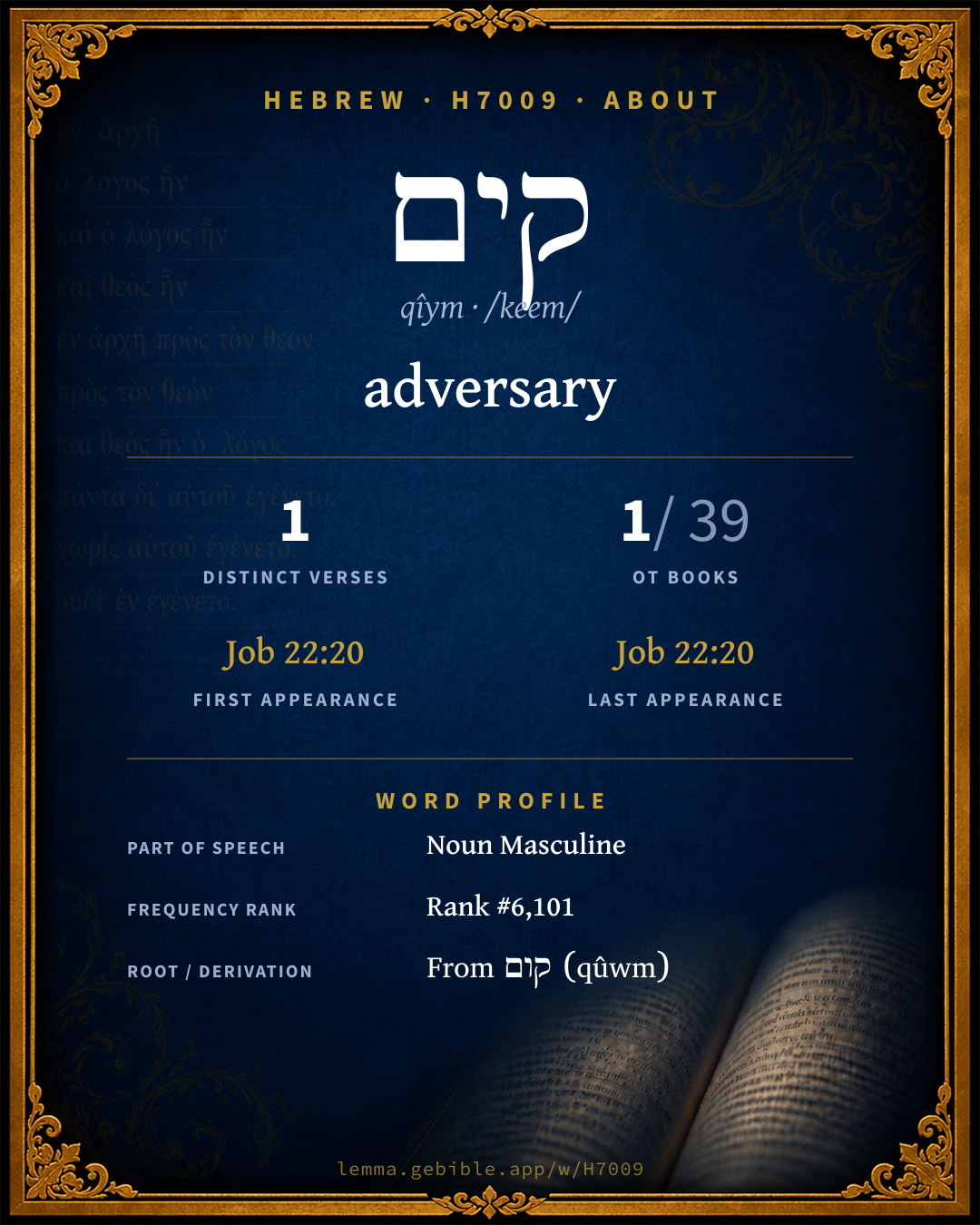
קִים
adversary
Full lexicon entry — Brown-Driver-Briggs (BDB)
From Brown-Driver-Briggs (BDB)
Where this word appears
Grammar key — what these labels mean
Part of speech
- Noun
- A naming word — a person, place, thing, or idea.
Noun type
- Common
- A common noun — a general class of person, place, or thing (“king,” “city,” “water”), not a specific name.
State
- Construct
- A noun bound to a following noun in a possessive / “of” relationship (the construct chain).
Gender
- Masculine
- Grammatically masculine.
Number
- Singular
- One.
Every verse where H7009 appears — 1 distinct verse across 1 book. Click any verse to open its interlinear word-by-word view. Verse text shown in the World English Bible for context — . Each verse’s Hebrew form is shown with its reference; the English is not keyword-highlighted, since the data carries no word-level English alignment. Use “Compare translations” on any verse to read it across multiple English versions. This concordance covers the Hebrew Bible; Septuagint (Greek Old Testament) occurrences are not indexed here.
Job 1 verse
About this entry
At a glance — auto-summarized from this page’s data, not written by a person. Every figure links to its source below. This summary describes the numbers; it doesn’t interpret them.
קים — transliterated qîym — is a Hebrew noun carrying the sense “adversary.” It occurs a mere 1 verse across Scripture. Its uses cluster heavily in Job (100% of all occurrences). It occurs only once, in Job 22:20. From the same root come קום, יקום and מקום. Each statement above links to its evidence; the full detail follows below.
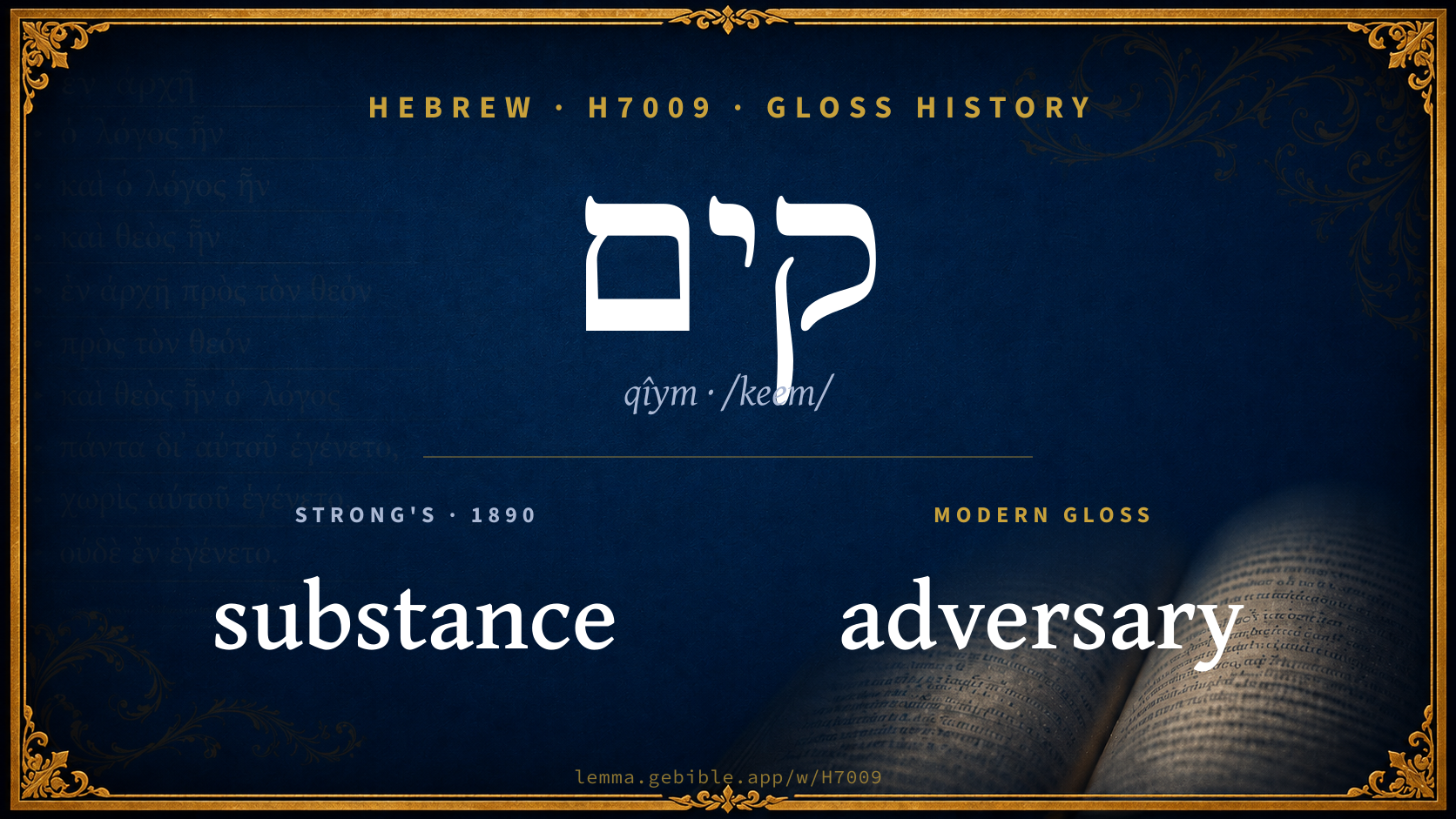
Gloss history
Strong's 1890 vs modern scholarship
About this word
Strong's H7009 catalogs a Hebrew word from the Hebrew Old Testament.
These counts are not copied from any lexicon or concordance. They are computed here, from the morphology-tagged Hebrew Old Testament. What Lemma adds →
- 1
- distinct verses
- The word appears in 1 distinct verse.
- 1 / 39
- OT books
- The word appears in 1 of 39 Old Testament books.
- #6,101
- by frequency
- Rank #6,101 (rank 6,101 of 8,640 Hebrew words by occurrence).
View all 1 occurrence in the concordance →
Most concentrated in
- Job 1 verse 100%
By section of the Old Testament
By traditional corpus
Conventional, traditional groupings — biblical authorship is debated, so this is a traditional corpus grouping, not an authorship claim. Each share is this word’s portion of its verses in that division of the Hebrew canon. Each figure is a share of the word’s 1 distinct verse.
- Writings (Ketuvim) 1 verse · 100%
How translations render this word
Counts come from each version’s own published word-to-Strong’s tagging or interlinear alignment — an approximate guide to how each version renders this word, not a word-level alignment the data otherwise carries. Because each total is that version’s own tagged count, the per-version totals vary from one another and need not match the appearance or distinct-verse counts above. These counts may also differ from a printed concordance because Lemma counts each distinctly tagged rendering and does not collapse phrase taggings into a single head-word total. This is a fixed set of word-tagged versions (KJV, ASV, BSB, ULT) and does not change with the reading translation you choose elsewhere. Each version’s license is shown beside its name below (and on Sources).
- King James Version: Substance 1×
- American Standard Version: Surely they that did rise up against 1×
- Berean Standard Bible: Foes 1×
- unfoldingWord Literal Text: Enemy 1×
King James Version Public Domain
Renders H7009 across 1 tagged occurrence — most commonly:
American Standard Version Public Domain
Renders H7009 across 1 tagged occurrence — most commonly:
Berean Standard Bible Public Domain
Renders H7009 across 1 tagged occurrence — most commonly:
unfoldingWord Literal Text CC BY-SA 4.0
Renders H7009 across 1 tagged occurrence — most commonly:
Senses in BDB
The 1 sense BDB distinguishes for this word, in lexicon order (not ranked by frequency or importance). The full entry — with sub-senses — is in the Lexicon Entry tab.
- adversary
Word origin
[ קִים ] n.m. adversary (prop. uprising, insurgent );—sf. Jb 22:20
— Brown-Driver-Briggs (Oxford 1906, public domain), digitized via Sefaria, supplemented by the OpenScriptures HebrewLexicon (CC BY 4.0). See Sources.
Derived from קום (qûwm) (H6965) — to rise.
Jastrow Dictionary
A second Hebrew/Aramaic lexicon for comparison, covering Aramaic and post-biblical (Talmudic, Targumic, Midrashic) usage that the biblical-Hebrew BDB does not. Matched by lemma rather than by Strong’s number, so a lemma may carry more than one Jastrow headword (shown separately below), and the entries cover usage well beyond the Bible.
קוּם ²
- 1. same. Targ. Gen. XXII, 3. Targ. Lev. XXV, 30; a. v. fr.—Part. קָאֵים, apocop. קָאֵי (q. v.); קָיֵם, קָיֵים; f. קָיְימָא; pl. קָיְימִין; קָיְימָן, קָיְמ׳. Targ. Josh. IV, 10. Targ. O. Ex. XXVI, 15 (Y. קַיָּמִין); a. v. fr.—B. Mets. 19ᵃ (expl. דייתיקי) דא תהי למֵיקַם וכ׳ this is to stand and be, that when I die &c. B. Bath. 43ᵇ bot. ארעא היכא דקָיְימָא תֵיקוּם let the land remain where it is (in the possession of the present incumbent). Gen. R. s. 65 ברייך יְקוּם לך may thy Creator stand by thee. Koh. R. to XI, 1 היידי הוא גברא דקָם ליה עיגוליה here is (I am) the man whom his loaf of bread assisted (who was rewarded for throwing his bread into the sea). Y. Ab. Zar. II, 40ᶜ bot. וקָמוּן and they remained (in the trade), v. עֲקַר I. Macc. 22ᵇ דקָיְימֵי מקמי וכ׳ who stand up before a scroll of the Law and do not stand up before a great man. Kidd. 33ᵇ קום מקמיה אביך stand up before thy father. Ib. קָאִימְנָא מקמיה I should stand up before him. Ib.ᵃ מֵיקַם לא קָאֵי הידור וכ׳ he stood not up before them (gentile old men), but he showed them honor. B. Mets. 7ᵃ ברשותיה קָיְימָא it is in his possession. Lev. R. s. 16 (ref. to Is. V, 19) נדע דמן הוא דקיימא וכ׳ that we know whose counsel will stand (prevail), ours or his; ib. לא ק׳ דידי וק׳ דלהון my counsel does not stand, shall theirs stand?; Yalk. Is. 266 הא קָמַת דידהון דידי לא now, theirs is carried out, and mine should not be?; Yalk. Lam. 1033, sq. (read עצא for על); Pesik. Vattom., p. 133ᵃ (corr. acc.). Y. Ter. I, 40ᵇ top בחרש אנן קָיְימִין we are standing at (are treating of) the case of a deaf mute. Y. Maasr. I, 51ᵇ, a. fr. (ב)מה (א)נן קיימין what are we treating of?; a. v. fr.—Yeb. 32ᵃ וקם ליה באשר לא יבנה וכ׳ (by giving ḥălitsah to one of his brother’s widows) he has been declared one ‘who does not build up his brother’s house’ (Deut. XXV, 9), and the Law says, when one has once refused ‘to build’, one must not ‘build’ again (marry another of his brother’s widows); ib. 44ᵃ.—Shebu. 26ᵃ כי הוו קיימי מקמיה דרב (Ms. F. מפטרי) when they were out of Rab’s sight, opp. כי אתו לקמיה.—ק׳ על, also ק׳ ב־ (cmp. עמד) a) to ascertain. Ab. Zar. 35ᵇ ליכא למֵיקַם עלה דמילתא it cannot be ascertained; a. e.—B. Mets. 19ᵃ קָמוּ … במילתא the Rabbis ascertained the case, v. קִים. Yeb. 31ᵃ; a. fr.—b) to bargain for. Gen. R. s. 11 אנא … קיימין עילויה myself and a certain Jew were bargaining for it (the fish); a. e.—קם ליה בדרבה מיניה, v. קִים.—תֵּיקוּ, נֵיקוּ = תֵּיקוּם, נֵיקוּם. B. Kam. 96ᵃ תקנתא לעכ"ום נ׳ ונעביד shall we get up and make rules for the benefit of gentile (robbers)? Zeb. 17ᵃ כל חדא וחדא ת׳ בדוכתה (not בדוכתיה; Ms. M. תיקום) let each verse stand in its own place, i.e. you can draw no analogies between them.—Esp. תיקו let it stand, i.e. the question remains undecided. B. Kam. l. c. Ḥull. 46ᵃ; a. fr. e.g. Isaiah 5:19
- 2. (v. עָמַד) to curdle. Ab. Zar. 35ᵇ נישקול מיניה קלי ונֵיקוּם (prob. to be read ונוֹקִים) let one take a little of it and curdle it. Ib. קיימי, v. נַסְיוּבֵי.
- 3. to cause to stand (v. קִים).—Inf. מִיקְמָא, מִיקְמָה, v. Af
- , אוֹקֵי
- 1. to put up, erect; to appoint, place; to maintain. Targ. O. Ex. XL, 2 תָּקִים (ed. Berl. a. Y. תְּקִים). Ib. 18 ואָקֵים (ed. Berl. ואָקֵים a. ואֵקִים). Targ. O. Deut. XXV, 7 לאָקָמָא ed. Berl. (oth. ed. לַאֲקָ׳; Y. למִיקְמָא). Targ. Ps. LXXVIII, 13. Targ. Prov. XXIX, 4; a. fr.—B. Mets. 39ᵇ מוֹקְמִינָן … לינוקא we (the court) appoint a guardian over it in behalf of the minor. Ib. מיגו דמוֹקִים … מוקמינן וכ׳ since one appoints a guardian for the one-sixth portion, we may just as well appoint one for the other sixth. B. Bath. 33ᵃ אוֹקְמָהּ … בידיה R. Ḥ. placed it in his possession, i.e. decided that it belonged to him. Ib. 34ᵃ מוֹקְמִינָן לה בידיה we would place (or leave) it in his possession; a. v. fr.—Taan. 8ᵃ, a. fr. אוקים … אמורא, v. אֲמוֹרָא.—Esp. a) to put a case, to treat with reference to. B. Bath. 44ᵃ ולוֹקְמָהּ בגזלן why does he not put the case as treating of a robber?; ולוקמה ביורש let him say, it refers to the case of an heir!; a. fr.—b) to let stand, place, leave (under the presumption). Keth. 12ᵇ, a. e. אוקי ממונא בחזקת מריה leave the money where it is, on the presumption that it belongs to its present owner, i.e. possession has the benefit of the doubt. Ib. אוֹקְמָהּ אחזקה leave the woman in her ascertained condition (v. חֲזָקָה), i.e. consider her as having married as a virgin. Yeb. 31ᵃ אוקי תרי להדי תרי ואשה אוקמה אחזקה leave the two witnesses (on the one side) against the two witnesses (on the other side), and leave the woman &c.; a. fr.—c) to establish, prove. Num. R. s. 6, end ורבנן מוֹקְמִין מהאי קרא וכ׳ and the Rabbis prove from this verse, that as atonement takes place in day-time, so &c.; a. e.—d) א׳ טבאות [to place right] to guarantee, secure. Y. Gitt. I, end, 43ᵈ אנן בעי תְּקִימִינָן ט׳ (not טבאת) we want thee to secure us (against an eventual loss of the money which thou art collecting from us for our creditors); בההוא דלא יכיל למִיקְמָה גרמיה ט׳ in the case of one who has no opportunity to secure himself (who cannot get a collector to take the risk), ברם ההוא דיכיל למיקמה וכ׳ but if he finds a collector to take the risk, he may take it away from the one and give it to the other; Y. Kidd. III, 64ᵃ.—
- 2. (v. עָמַד) to make consistent, curdle. Ab. Zar. 35ᵃ [read:] כיון דאוֹקְמֵיה איסורא הוא דקא מוֹקִים ליה וכ׳ (v. Ms. M. in Rabb. D. S. a. l., a. note) since it had the effect of curdling the milk, it is the forbidden matter that gave it substance, and therefore it (that forbidden substance) is to be considered as if it were there in its natural state. Ib.ᵇ, v. supra.
- to put up; to be placed. Targ. Ex. XL, 17. Targ. Lev. XVI, 10; a. e.
- to put up, erect. Targ. Is. XLIV, 26; a. e.
- 1. as preced. Pi., to establish, confirm, fulfill &c. Targ. O. Deut. XXXII, 8 (Y. Af.). Targ. Num. XXX, 14. Targ. Is. l. c. Targ. Ps. CXIX, 106; a. fr.—Ned. 70ᵃ דהא קַיְּימֵיה לנדריה היום (not קיימי, v. Rashi) for he has confirmed the vow to-day. Ib. (h. form) כיון דקִיְּימוֹ קִיְּימוֹ since he once confirmed it, it remains confirmed. Keth. 19ᵃ זילו קַיְּימוּ שטרייכו go and get evidence for the identification of your documents, and then come to court. Y. Gitt. I, end, 43ᵈ קיַּימְתֵּיה מדאמר וכ׳ thou canst substantiate thy opinion by referring to what R. … said. Pesik. Haʿomer, p. 72ᵇ למְקַיְּימָא לכון וכ׳ in order to fulfill on you the prophecy (Deut. XXXIII, 29) &c.; Yalk. Lev. 643; Pesik. R. s. 18. Y. Ab. Zar. V, 44ᵈ ואנא יכיל קַיֵּים and I can ascertain it (by experiment); a. v. fr.—Part. pass. מְקַיַּים. Ber. 55ᵃ לא חלמא טבא מק׳ וכ׳ (Ms. F. מתקיים) neither a good dream comes true entirely, nor a bad dream &c. e.g. Deuteronomy 33:29
- 2. (v. קְיָים) to swear, vow. Targ. Num. XXX, 3. Targ. Gen. XXVIII, 20. Targ. O. Lev. V, 4; a. e.
- as preced. Hithpa. Targ. Num. XIV, 38. Targ. Ez. XXXIII, 12; a. fr.—Y. Sabb. VI, end, 8ᵈ [read:] תִּתְקַיֵּים לכון נפשיכין בהדין יומכון היך דקַיַּימְתּוּן וכ׳ may your life be restored on that day of yours (when your time comes), as you have restored my life on this day. Erub. 54ᵃ כי היכי דתתקיים בידך ותוריך חיי (not ביך, v. Rabb. D. S. a. l.) in order that it (thy learning) may be preserved in thy possession, and thou mayest live long; a. e.
קִים
- (קוּם) standing; (it is) established, certain; ק׳ ל־ to be certain, to know. Sabb. 136ᵃ ק׳ לי ביה וכ׳ I am certain that its (the infant’s) months were complete (that it was no abortion). Ab. Zar. 76ᵇ מר ק׳ לי בגוויה וכ׳ I am sure about this gentleman (that he is a strict observer); about you I am not. Kidd. 66ᵃ אי לאו דק׳ ליה בנפשיה וכ׳ unless he was sure of himself that &c.; a. fr.—ק׳ ליה בדרבה מיניה (also קָם) he is sure of the larger portion of it, a proverbial expression for the rule, that he who has committed two offences simultaneously, must be held answerable for the severer only. Gitt. 52ᵇ מנסך קם ליה בדר׳ מ׳ he who uses his neighbor’s wine for idolatrous libation (and makes the remainder unavailabe), is exempt from making restitution for the wine, because he has to suffer the severer penalty, which is death. Ib. 53ᵃ משום דלא ק׳ ל׳ בדר׳ מ׳ because this is no case of a severer penalty (when he makes his neighbor’s wine unclean). Ḥull. 81ᵇ קם ל׳ בדר׳ מ׳ (Ms. M. קָאִים) he suffers the severer penalty (for slaughtering for idolatrous purposes, and is exempt from the penalty of stripes for slaughtering the dam and her child in one day); a. fr.
קַיָּם
- , v. sub קיי׳.
A Dictionary of the Targumim, the Talmud Babli and Yerushalmi, and the Midrashic Literature (Marcus Jastrow; London, Luzac, 1903) — Public Domain. Digitized via Sefaria. Digitized via Sefaria. Full attribution on Sources.
Same root — word family
Other BDB entries built from the same root as H7009, grouped by Strong’s listed origin. These share a root / origin per the lexicon — not necessarily a shared meaning. Each links to that word’s own entry.
Derives from
Shares the same root
- יקום yᵉqûwm H3351 substance
- מקום mâqôwm H4725 place
- קום qûwm H6966 to arise
- קומה qôwmâh H6967 height
- קוממיות qôwmᵉmîyûwth H6968 uprightness
- קימה qîymâh H7012 rising up
- קמה qâmâh H7054 standing grain
- תקומה tᵉqûwmâh H8617 standing
- תקומם tᵉqôwmêm H8618 rising against
Proper names from this root
People and places named from this root — a name, not an additional meaning of the word.
- יקים Yâqîym H3356 Jakim
- יקמיה Yᵉqamyâh H3359 Jecamiah
- יקמעם Yᵉqamʻâm H3360 Jekameam
- יקמעם Yoqmᵉʻâm H3361 Jokmeam
- קמואל Qᵉmûwʼêl H7055 Kemuel
- קמון Qâmôwn H7056 Camon
Compare all same-root words → Showing 4 of 17 — not the complete family. 6 of the same-root words are proper names (people or places). They share a root, not necessarily a meaning.
Septuagint verse parallels
This word appears in 1 verse that also exists in the Greek Old Testament (Septuagint), out of the 1 Hebrew verse it occurs in. You can read those verses in Greek by switching the Old Testament edition to the Septuagint.
Read these verses in the Septuagint
This is a verse-level parallel only — the same verses exist in both the Hebrew and Greek Old Testaments. No word-level Hebrew↔Greek correspondence is claimed: the data carries no such alignment, so no Greek word is shown as this Hebrew word’s translation. Coverage is not total — the Septuagint omits the deuterocanon and renumbers the Psalms, so some Hebrew verses have no direct Greek parallel.