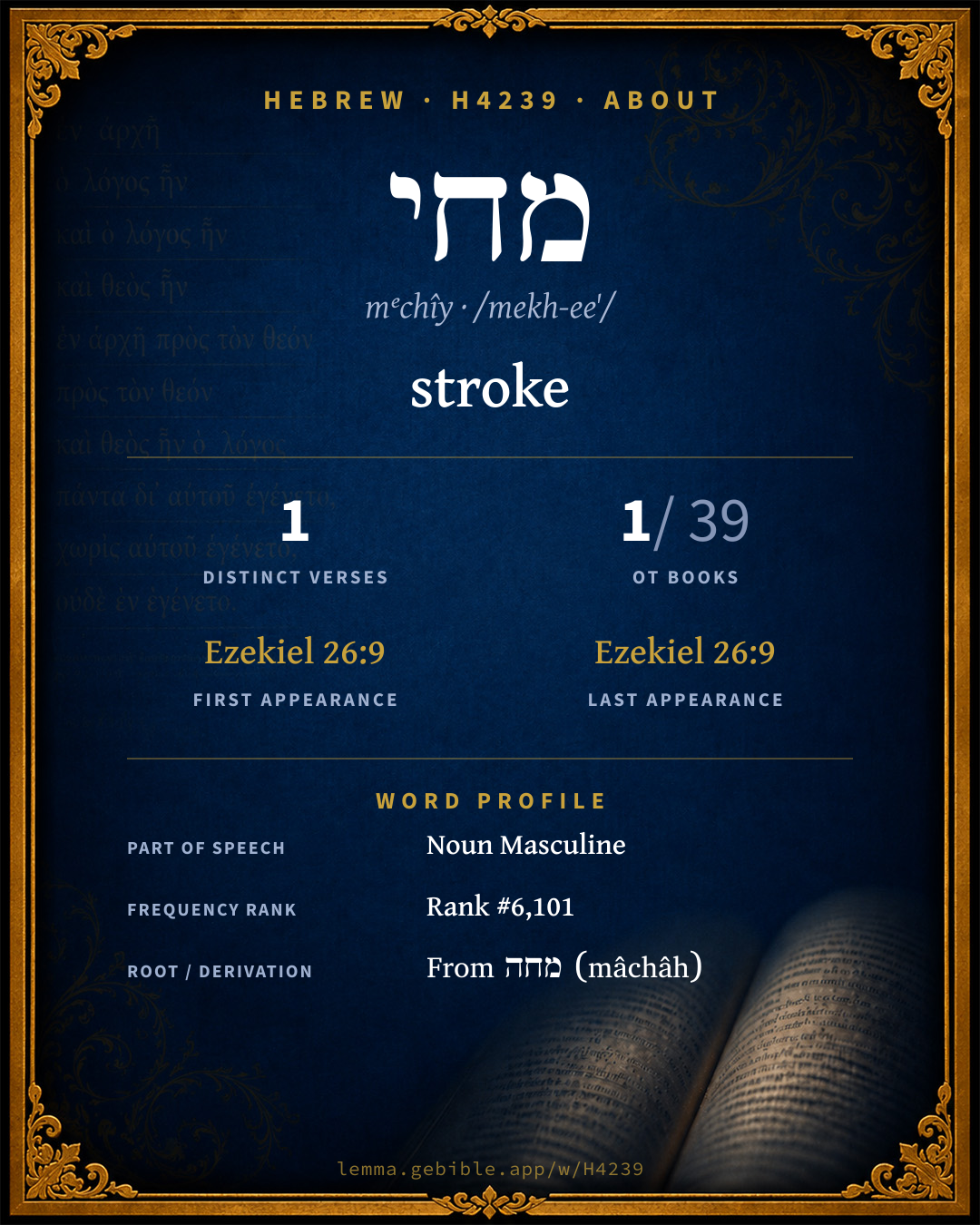
מְחִי
stroke
Full lexicon entry — Brown-Driver-Briggs (BDB)
From Brown-Driver-Briggs (BDB)
Where this word appears
Grammar key — what these labels mean
Noun type
- Common
- A common noun — a general class of person, place, or thing (“king,” “city,” “water”), not a specific name.
State
- Construct
- A noun bound to a following noun in a possessive / “of” relationship (the construct chain).
Gender
- Masculine
- Grammatically masculine.
Number
- Singular
- One.
Every verse where H4239 appears — 1 distinct verse across 1 book. Click any verse to open its interlinear word-by-word view. Verse text shown in the World English Bible for context — . Each verse’s Hebrew form is shown with its reference; the English is not keyword-highlighted, since the data carries no word-level English alignment. Use “Compare translations” on any verse to read it across multiple English versions. This concordance covers the Hebrew Bible; Septuagint (Greek Old Testament) occurrences are not indexed here.
Ezekiel 1 verse
About this entry
At a glance — auto-summarized from this page’s data, not written by a person. Every figure links to its source below. This summary describes the numbers; it doesn’t interpret them.
מחי — transliterated mᵉchîy — is a Hebrew noun carrying the sense “stroke.” It occurs a mere 1 verse across Scripture. More than three-quarters of its appearances fall in Ezekiel. Found nowhere else but Ezekiel 26:9. It shares a root with מחה, מח and מחויאל. Each statement above links to its evidence; the full detail follows below.
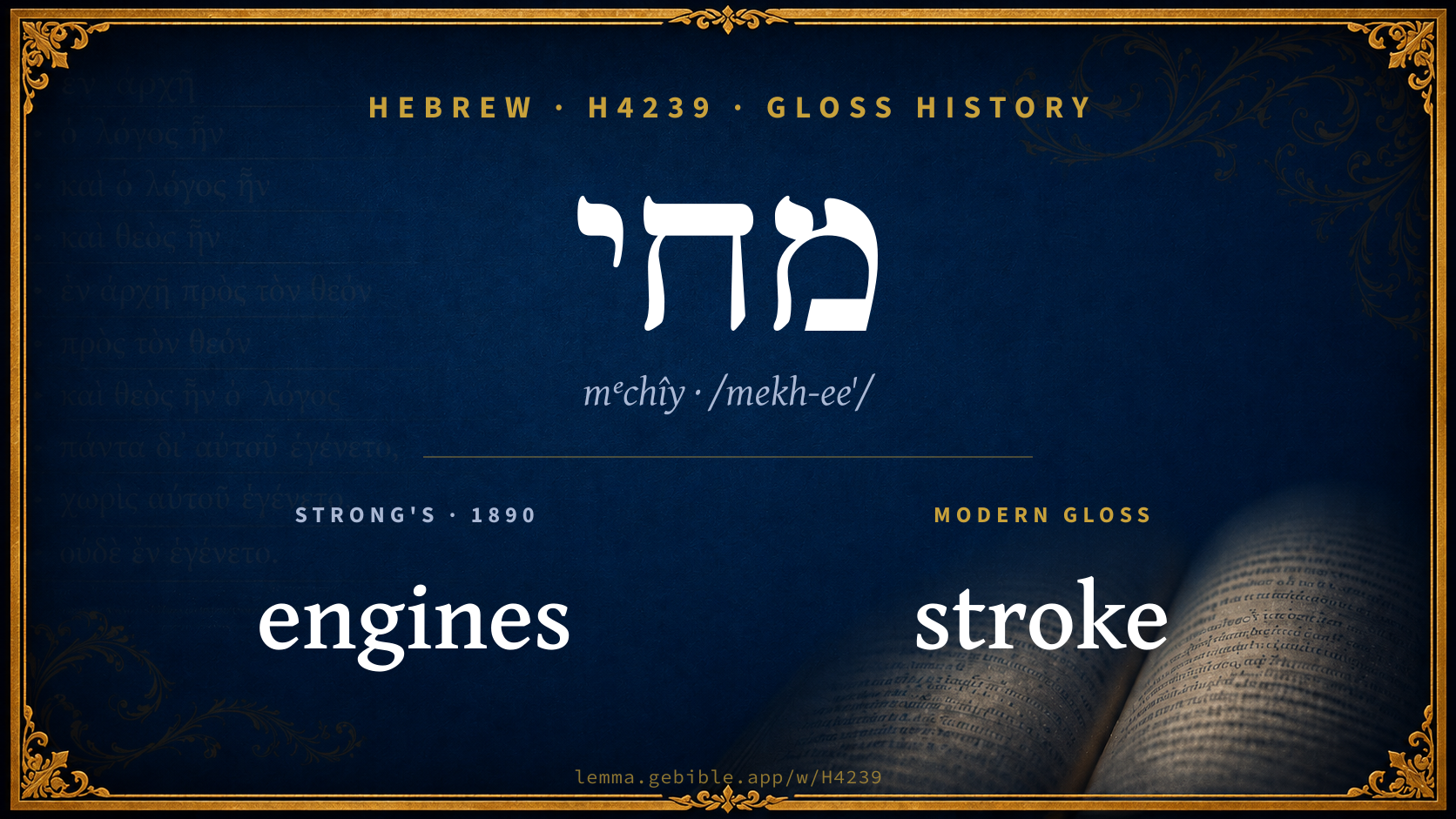
Gloss history
Strong's 1890 vs modern scholarship
About this word
Strong's H4239 catalogs a Hebrew word from the Hebrew Old Testament.
These counts are not copied from any lexicon or concordance. They are computed here, from the morphology-tagged Hebrew Old Testament. What Lemma adds →
- 1
- distinct verses
- The word appears in 1 distinct verse.
- 1 / 39
- OT books
- The word appears in 1 of 39 Old Testament books.
- #6,101
- by frequency
- Rank #6,101 (rank 6,101 of 8,640 Hebrew words by occurrence).
View all 1 occurrence in the concordance →
Most concentrated in
- Ezekiel 1 verse 100%
By section of the Old Testament
By traditional corpus
Conventional, traditional groupings — biblical authorship is debated, so this is a traditional corpus grouping, not an authorship claim. Each share is this word’s portion of its verses in that division of the Hebrew canon. Each figure is a share of the word’s 1 distinct verse.
- Prophets (Nevi'im) 1 verse · 100%
How translations render this word
Counts come from each version’s own published word-to-Strong’s tagging or interlinear alignment — an approximate guide to how each version renders this word, not a word-level alignment the data otherwise carries. Because each total is that version’s own tagged count, the per-version totals vary from one another and need not match the appearance or distinct-verse counts above. These counts may also differ from a printed concordance because Lemma counts each distinctly tagged rendering and does not collapse phrase taggings into a single head-word total. This is a fixed set of word-tagged versions (KJV, ASV, BSB, ULT) and does not change with the reading translation you choose elsewhere. Each version’s license is shown beside its name below (and on Sources).
- King James Version: Engines 1×
- American Standard Version: Engines 1×
- Berean Standard Bible: Blows 1×
- unfoldingWord Literal Text: Hit against 1×
King James Version Public Domain
Renders H4239 across 1 tagged occurrence — most commonly:
American Standard Version Public Domain
Renders H4239 across 1 tagged occurrence — most commonly:
Berean Standard Bible Public Domain
Renders H4239 across 1 tagged occurrence — most commonly:
unfoldingWord Literal Text CC BY-SA 4.0
Renders H4239 across 1 tagged occurrence — most commonly:
Senses in BDB
The 1 sense BDB distinguishes for this word, in lexicon order (not ranked by frequency or importance). The full entry — with sub-senses — is in the Lexicon Entry tab.
- stroke (of a battering ram)
Word origin
מְחִי n.[m.] only in Ez 26:9 the stroke of his battering ram
— Brown-Driver-Briggs (Oxford 1906, public domain), digitized via Sefaria, supplemented by the OpenScriptures HebrewLexicon (CC BY 4.0). See Sources.
Derived from מחה (mâchâh) (H4229) — to wipe out.
Jastrow Dictionary
A second Hebrew/Aramaic lexicon for comparison, covering Aramaic and post-biblical (Talmudic, Targumic, Midrashic) usage that the biblical-Hebrew BDB does not. Matched by lemma rather than by Strong’s number, so a lemma may carry more than one Jastrow headword (shown separately below), and the entries cover usage well beyond the Bible.
מחי
- v. מָהָה) to rub, wipe out; to wear out, destroy. [In Talm. mostly מָחַק.] Erub. 13ᵃ; Sot. II, 4 (17ᵇ) (ref. to ומחה, Num. V, 23) כתב שיכול לִמְחוֹת (Mish. להִמָּחֵק) a writing which one can wash off. Gen. R. s. 23 (play on מחויאל, Gen. IV, 18) מוֹחָן אני וכ׳ I shall wipe them out of the world; a. e.—V. מָחוּי. e.g. Numbers 5:23
- [to strike out, annul,]
- 1. to protest against. B. Bath. 38ᵇ מי׳ בפני שנים if he entered a protest against the illegitimate occupation of his property in the presence of two (v. מְחָאָה). Ib. וכי למָחוֹת וכ׳ must he protest in the occupant’s presence?—Keth. 11ᵃ מִיחֲתָה she protested against her conversion in childhood. Pes. 88ᵃ יכולה למחות she has the privilege of protesting (declaring her preference); a. fr.
- 2. (with ב or ביד of the person) to forewarn, interfere, try to prevent. Sabb. 55ᵇ bot. מפני שהיה לו … בחפני ולא מי׳ (not לחפני, v. Rabb. D. S. a. l. note) it was for Ph. to forewarn Hofni, and he did not. Ib.ᵃ שאם מִיחוּ בהם לא יקבלו מהם (Ms. M. מחו … קבלו) that if they warned them, they would not have heeded them. Pes. IV, 8, a. e. לא מיחו בידם they did not prohibit their doing so; a. fr.—Cant. R. to IV, 12 עמדו הבנות (ו)מִיחוּ על עצמן וכ׳ the daughters (in their father’s absence) entered a protest concerning themselves and gave themselves away to husbands (Pesik. B’shall., p. 82ᵃ, a. e. נתעסקו בעצמן).
- 1. to dissolve, dilute. Y. Pes. III, beg. 29ᵈ ה׳ את החמץ if (by boiling) he made a mush of the leavened matter (made it unrecognizable). Ḥull. 120ᵃ; Y. Maas. Sh. II, beg. 53ᵇ, a. e., v. גָּמָא; a. fr. (interchanging with הִמְהָה).—Tosef. Par. IX (VIII), 8 הִמְחָן באור (not באויר) if he thawed the frozen water by artificial heat.—[Midr. Till. to Ps. VI, 7 וממחה, read וממסה, v. מָסָה.]
- 2. to rub off, cleanse, polish. B. Bath. V, 10 מַמְחֶה משקלותיו cleanses his weights. Lev. R. s. 7 (play on מיחים, Ps. LXVI, 15) כזה שהוא ממחה בקערה like him who wipes a dish (licks the remnants up); Pesik. Eth Korb., p. 61ᵃ; Pesik. R. s. 16; a. e.—Pirké d’R. El. ch. XVII מַמְחָה בכפיה she produces a sound by rubbing her hands (in sympathy with the mourners). e.g. Psalms 66:15
- 3. (denom. of מוּמְחֶה) to recognize as an authority; in gen. to authorize; to appoint. Snh. 23ᵃ לא כל הימנו … שהִמְחוּהוּ רבים עליהם he cannot reject a judge whom the majority has recognized as an authority over them. B. Mets. IX, 12 הִמְחֵהוּ אצל וכ׳ if he gave him an order to the storekeeper. Y. Pes. VIII, 35ᵈ top אם במַמְחִין סתם האשה מַמְחָה וכ׳ if by מדעתו is meant giving authority (and not merely knowing and tolerating), it is tacitly understood that a woman makes an appointment as if saying, I will dine with my children; if it means merely knowing, then the Mishnah (Pes. VIII, 1) means appointment.—[Y. Sabb. XIII, beg. 14ᵃ הממחה צדדיו ed. Krot., v. מָתַח.]
- to be dissolved, washed away; to be wiped out, destroyed. Y. Pes. III, beg. 29ᵈ a cake boiled שלא נ׳ without being mashed beyond recognition (v. supra). Taan. III, 8, a. e. אם נִמְחֵית וכ׳, whether the stone … has been washed away, v. אֶבֶן. Tosef. Par. l. c. נִימּוֹחוּ (fr. מָחַח) the water was thawed up. Gen. R. s. 28. אפי׳ אסטרובולין … נ׳ even the millstone was washed away. Ib. וכמה נימוחו מהם and how many of them were destroyed?; a. e.
מְחִי
- 1. to dissolve, mash (by stirring &c.). Pes. 40ᵇ רבא גופא מָחוּ ליה בחסיסי Ms. M. (insert קידרא) for R. himself they made a mush with flour of parched grains (v. חֲסִיסָא); ed. רבא … מחי לה וכ׳ (read ליה) R. himself had a mush made for himself &c. Ib. למֵימַח קדירא וכ׳ Ms. M. (ed. למִמְחָה) to make a mush &c. (corresp. to h. מלל).—V. מֵיחָא.
- 2. to wipe off, blot out. Targ. Is. XXV, 8. Targ. Ex. XXXII, 32; a. fr.
- 3. to protest, v. infra.
- , Af. אַמְחֵי
- 1. to protest, forewarn, interfere. Targ. Koh. VIII, 4.—B. Bath. 38ᵃ איבעי ליה למָחוּיֵי he ought to have entered a protest. Ib. 39ᵇ (למָחוּיֵ) למָחוּיֵי, v. מְחוּיָאתָא. Keth. 11ᵃ מְמָחְיָיא she may protest (against her conversion in childhood). Y. B. Bath. II, 13ᵇ bot. מַמְחִין וכ׳, v. מַסְמְרָא; a. e.—Ib. יכלין … למִימְחֵי בידהון their neighbors may inhibit them.
- 2. (denom. of מוּמְחֶה) to declare approved, to recognize as efficient. Sabb. 61ᵇ למחויי גברא (Ms. O. a. Rashi לאַמְחוּיֵי) so as to make the man an approved physician; למ׳ קמיע to consider the amulet as approved.
- , אִימְּחֵי
- 1. to be wiped off;to be blotted out. Targ. II Kings XXI, 13. Targ. Ps. CIX, 13 יִתְמַח ed. Lag. (ed. Wil. יתמחי). Ib. 14; a. fr.
- 2. to be diluted, dissolved. Pes. 74ᵇ bot. חלא מִתְמְחָא Ms. M. 2 a. early eds. (v. Rabb. D. S. a. l. note; ed. מִתְמְהָא; Ms. M. 1 אתמהא, corr. acc.) weak vinegar. Gitt. 69ᵃ אִיתְמוּחֵי אִיתְמַח (some ed. ה for ח) it (the liver) is dissolved.
- 3. to be declared approved (מוּמְחֶה). Sabb. l. c. א׳ גברא the person has become an approved physician; א׳ קמיע the amulet is considered approved. Ib. 61ᵃ עד דמִמְּחָא גברא ומִמְּחָא קמיע early ed. (later ed. דמומחה … ומומחה, read מי׳; Ms. O. איתמחי, v. Rabb. D. S. a. l. note 1) until both, the person and the amulet, have been approved; a. e.
מְחִי ²
- (preced.) [to diminish, cmp. נָכָה,] to smite, wound.—Targ. Ex. VII, 20. Targ. II Esth. II, 21 יִמְחֵיה חויא the serpent will bite him; a. v. fr.—Part. מָחֵי, מַחְיָא; pl. מַחְיִין, מַחְיָין. Ib. XXI, 19 (Y. מְחַיָּיא, corr. acc.). Targ. Is. X, 15. Targ. Y. Gen. III, 15; a. e.—Part. pass. pl. מְחָן (מָחָן). Targ. Is. LIII, 4.—B. Bath. 21ᵃ כי מָחִית לינוקא לא תִימְחֵי וכ׳ when thou strikest a child, thou must strike it only with a shoe-strap. M. Kat. 17ᵃ דהוה מָחֵי לבנו גדול was striking a grown up son. Gen. R. s. 41, a. e. אין אמרת מְחֵי מָחֵינָא as soon as thou sayest, ‘strike’, I shall strike. Snh. 109ᵇ דמחי לאיתתא וכ׳ (v. Rabb. D. S. a. l. note) when a person struck his neighbor’s wife, and she miscarried &c.; a. fr.—V. מַחֲתָא.
- to be smitten. Targ. II Sam. XI, 15. Targ. Esth. VII, 9 וזקיף יִתְמְחִי עלוהי (Ezra VI, 11) and hanging thereon he shall be flogged (to death). e.g. Ezra 6:11
מָחֵי
- (= מְאָחֵי; אחי) stitcher, fine weaver. Targ. O. Ex. XXVIII, 32. Targ. II Sam. XXI, 19 (some ed. מוֹחֵי).—[Targ. Is. LIX, 5 מָחַיָא ed. Wil., read מָחְיָא, or with ed. Lag. מָחְיָין.]—Denom.
מָחִי
- to interlace, weave. Targ. Is. XIX, 9 מָחָן. Targ. II Kings XXIII, 7 מָחְיָין. Targ. Is. LIX, 5 (v. preced.).—Y. Sabb. VII, 10ᶜ top כד מָחְיָיא וכ׳ when she interlaces (plaits), she is guilty of an act of weaving. Sabb. 148ᵃ; Ber. 24ᵃ; Pes. 42ᵃ; Ḥull. 58ᵇ, v. מָחִיתָא.—[מחא, Targ. Is. XIX, 10 שתי מ׳, some ed., read: מֹהָא, v. מוֹי.]
- to be interwoven, fastened. Sabb. 58ᵃ דמָחָא [ביה] מִימְּחָא Ms. M. a. Ar. (Ms. O. דמָאחי מִיאֲחָא, v. Rabb. D. S. a. l. note; ed. דמיחא ביה מומחא, some ed. מומחה, corr. acc.) it is fastened to it.
A Dictionary of the Targumim, the Talmud Babli and Yerushalmi, and the Midrashic Literature (Marcus Jastrow; London, Luzac, 1903) — Public Domain. Digitized via Sefaria. Digitized via Sefaria. Full attribution on Sources.
Same root — word family
Other BDB entries built from the same root as H4239, grouped by Strong’s listed origin. These share a root / origin per the lexicon — not necessarily a shared meaning. Each links to that word’s own entry.
Derives from
Shares the same root
Proper names from this root
People and places named from this root — a name, not an additional meaning of the word.
Compare all same-root words → Showing 4 of 5 — not the complete family. 2 of the same-root words are proper names (people or places). They share a root, not necessarily a meaning.
Septuagint verse parallels
This word appears in 1 verse that also exists in the Greek Old Testament (Septuagint), out of the 1 Hebrew verse it occurs in. You can read those verses in Greek by switching the Old Testament edition to the Septuagint.
Read these verses in the Septuagint
This is a verse-level parallel only — the same verses exist in both the Hebrew and Greek Old Testaments. No word-level Hebrew↔Greek correspondence is claimed: the data carries no such alignment, so no Greek word is shown as this Hebrew word’s translation. Coverage is not total — the Septuagint omits the deuterocanon and renumbers the Psalms, so some Hebrew verses have no direct Greek parallel.