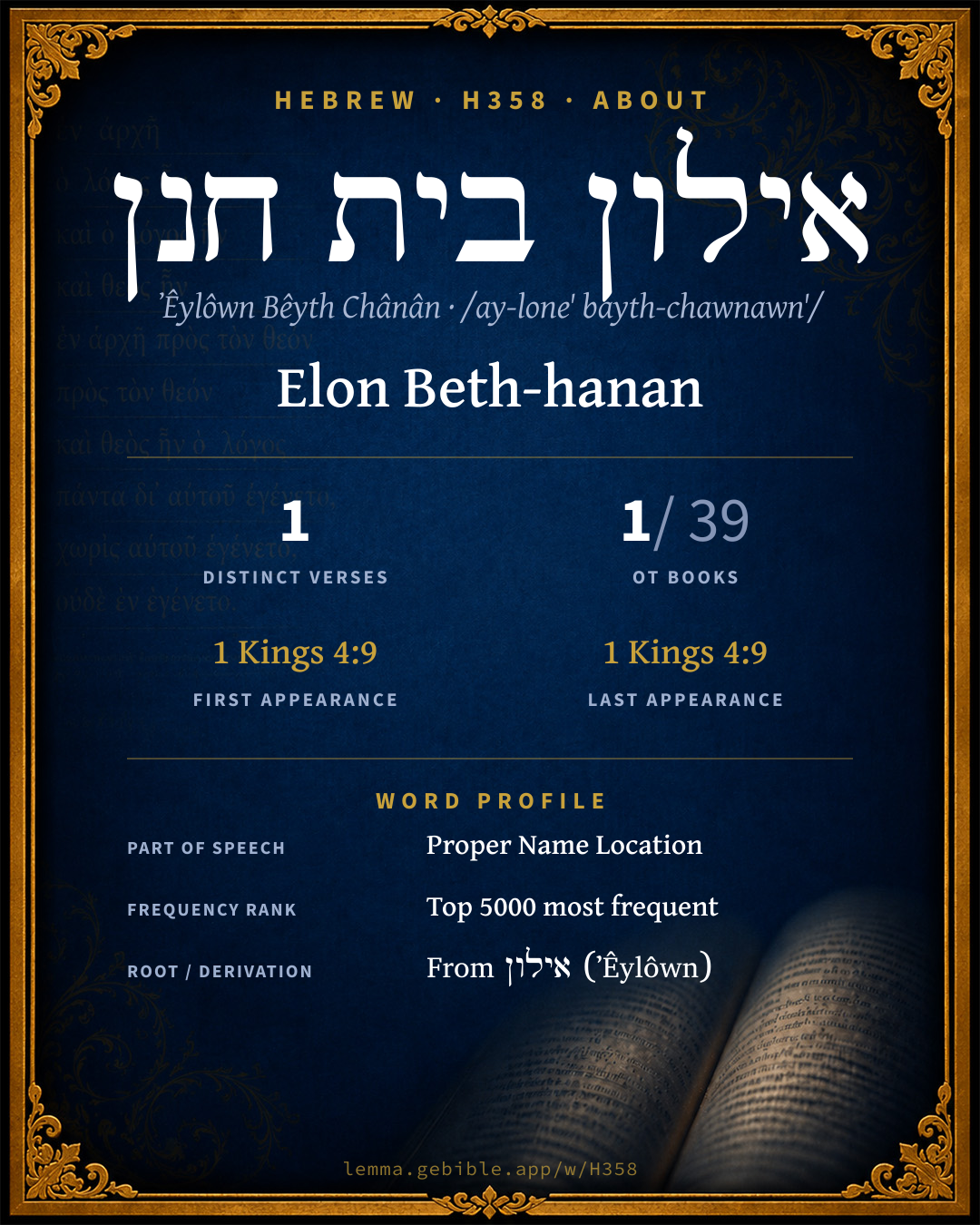
אֵילוֹן בֵּית חָנָן
Elon Beth-hanan
BDB lists 2 entries for ‘Elon Beth-hanan’ fuller range ↓
Full lexicon entry — Brown-Driver-Briggs (BDB)
From Brown-Driver-Briggs (BDB)
Where this word appears
Grammar key — what these labels mean
Part of speech
- Noun
- A naming word — a person, place, thing, or idea.
Noun type
- Proper
- A name of a specific person, place, or people (e.g. Abraham, Zion, Israel).
Every verse where H358 appears — 1 distinct verse across 1 book. Click any verse to open its interlinear word-by-word view. Verse text shown in the World English Bible for context — . Each verse’s Hebrew form is shown with its reference; the English is not keyword-highlighted, since the data carries no word-level English alignment. Use “Compare translations” on any verse to read it across multiple English versions. This concordance covers the Hebrew Bible; Septuagint (Greek Old Testament) occurrences are not indexed here.
1 Kings 1 verse
About this entry
At a glance — auto-summarized from this page’s data, not written by a person. Every figure links to its source below. This summary describes the numbers; it doesn’t interpret them.
At its core, אילון בית חנן (ʼÊylôwn Bêyth Chânân) means “Elon Beth-hanan.” It occurs a mere 1 verse across Scripture. Its uses cluster heavily in 1 Kings (100% of all occurrences). Scripture uses it exactly once, at 1 Kings 4:9. Each statement above links to its evidence; the full detail follows below.
Gloss history
Strong's 1890 vs modern scholarship

About this word
Strong's H358 catalogs a Hebrew word from the Hebrew Old Testament.
These counts are not copied from any lexicon or concordance. They are computed here, from the morphology-tagged Hebrew Old Testament. What Lemma adds →
- 1
- distinct verses
- The word appears in 1 distinct verse.
- 1 / 39
- OT books
- The word appears in 1 of 39 Old Testament books.
- #4,179
- by frequency
- Top 5000 most frequent Hebrew words (rank 4,179 of 8,640 Hebrew words by occurrence).
View all 1 occurrence in the concordance →
Most concentrated in
- 1 Kings 1 verse 100%
By section of the Old Testament
By traditional corpus
Conventional, traditional groupings — biblical authorship is debated, so this is a traditional corpus grouping, not an authorship claim. Each share is this word’s portion of its verses in that division of the Hebrew canon. Each figure is a share of the word’s 1 distinct verse.
- Prophets (Nevi'im) 1 verse · 100%
How translations render this word
Counts come from each version’s own published word-to-Strong’s tagging or interlinear alignment — an approximate guide to how each version renders this word, not a word-level alignment the data otherwise carries. Because each total is that version’s own tagged count, the per-version totals vary from one another and need not match the appearance or distinct-verse counts above. These counts may also differ from a printed concordance because Lemma counts each distinctly tagged rendering and does not collapse phrase taggings into a single head-word total. This is a fixed set of word-tagged versions (KJV, ASV, BSB, ULT) and does not change with the reading translation you choose elsewhere. Each version’s license is shown beside its name below (and on Sources).
- King James Version: Elonbethhanan 1×
- American Standard Version: Elon-beth 1×
- Berean Standard Bible: Elon-beth-hanan 1×
- unfoldingWord Literal Text: Beth 1×, Elon 1×, Hanan 1×
King James Version Public Domain
Renders H358 across 1 tagged occurrence — most commonly:
American Standard Version Public Domain
Renders H358 across 1 tagged occurrence — most commonly:
Berean Standard Bible Public Domain
Renders H358 across 1 tagged occurrence — most commonly:
unfoldingWord Literal Text CC BY-SA 4.0
Renders H358 across 3 tagged occurrences — most commonly:
Senses in BDB
The 2 senses BDB distinguishes for this word, in lexicon order (not ranked by frequency or importance). The full entry — with sub-senses — is in the Lexicon Entry tab.
- Elon Beth-hanan = "oak of the house of grace"
- a city of Dan
Word origin
n.pr.loc. in Dan. (Judah? Philistine territory) 1 K 4:9 (where read וּב׳ ח׳ v. sub ii. אֵלוֹן p. 19);—mod. Beit Ḥanûn cf. RobBR ii. 35.
— Brown-Driver-Briggs (Oxford 1906, public domain), digitized via Sefaria, supplemented by the OpenScriptures HebrewLexicon (CC BY 4.0). See Sources.
Derived from אילון (ʼÊylôwn) (H356) — Elon.
Jastrow Dictionary
A second Hebrew/Aramaic lexicon for comparison, covering Aramaic and post-biblical (Talmudic, Targumic, Midrashic) usage that the biblical-Hebrew BDB does not. Matched by lemma rather than by Strong’s number, so a lemma may carry more than one Jastrow headword (shown separately below), and the entries cover usage well beyond the Bible.
בִּית
- , inf. בּוּת (sec. r. of בוא) to go in, lodge, pass the night. Dan. VI, 19. Targ. Gen. XXXII, 22; a. fr.—Pes. 107ᵃ בת טוות (Dan. l. c.) he went to bed without tasting food. Snh. 95ᵃ (prov.) בת דינא וכ׳ if punishment is procrastinated, punishment is gone. Taan. 24ᵇ ביתו כולי וכ׳ go ye all to bed fasting. Pes. 42ᵃ מיא דביתו (Chald. transl. of the ambiguous מים שֶׁלָּנוּ) water kept in vessels over night. Ber. 60ᵇ בת בדברא he slept in the open field. Snh. 63ᵇ.—Ib. 109ᵃ top בעי למֵיבַת he wanted to stay over night; a. e.—Part. בָּאֵית. Targ. Is. LVIII, 5. e.g. Daniel 6:19
- same. Erub. 73ᵃ (opp. to taking meals).
- to keep over night, postpone burial. Snh. 47ᵃ מֵבִית ליה למת dare one postpone the burial of the dead?
בַּיִת
- cmp. preced.; v. Ges. H. Dict. s. v. as to various etymological attempts), constr. בֵּית, pl. בָּתִּים.
- 1. house, household, home. Yoma 11ᵇ ב׳ מיוחד לדירה bayith means a building intended for a dwelling. Ib. מי שמייחד ביתו לו (Var. v. Rabb. D. S. a. l. note) he who devotes his house (its contents) to himself exclusively (unaccommodating); Arakh. 16ᵃ מי שמיוחד וכ׳.—בעל הב׳ (abbrev. בע"ה) owner, landlord; host; private man, opp. to trader, artisan &c. Ber. 46ᵃ בע"ה בוצע וכ׳ the host breaks the bread, and the guest says the blessing. Tosef. ib. IV, 14 של בע"ה home-made (bread), opp. גלוסקין; Y. ib. VI, 10ᵇ bot.—Sabb. I, 1 בע"ה the donor, opp. עני the recipient. Gen. R. s. 22; a. v. fr.—בן ב׳ inmate, attendant. Ab. I, 5; a. fr.—פסול הב׳ the degraded (slave) of the house. Gen. R. s. 70.
- 2. Esp. (הַ)בַּ׳ the Temple. בפני הב׳ in days when the Temple exists, שלא בפני הב׳ when it does not exist. Ḥull. V, 1; a. fr.—ב׳ שני or ב׳ אחרון the Second Temple. Cant. R. to VIII, 9; a. fr.—הר הב׳ Temple Mount, v. הַר.
- 3. school, college, (collect.) disciples; בֵּית הלל Hillelites &c. Bets. I, 1; a. fr. Treat. Sof’rim IV, 1 של ב׳ וכ׳ those of the house of &c. [Y. Shebi. II, 33ᵈ bot., a. e. דבית … ר׳, usu. דבי, v. בֵּי].
- 4. body. Ber. 44ᵇ אוי לו לב׳ וכ׳ that human body (Rashi: stomach) is to be pitied where vegetables are a constant guest (being the only food).
- 5. wife. Yoma I, 1 ביתו זו וכ׳ ‘his house’—that means his wife. Ib. 13ᵃ והך לאו ביתו היא but this one (designated for him in case of his wife’s death) cannot be called ‘his house’. Sabb. 118ᵇ; a. fr.
- 6. Euphem. pudenda; marital intercourse. Y. Sabb. IX, 12ᵃ top; Mikv. VIII, 4 שמשה את בֵּיתָהּ she had intercourse. Ib. כבדה את הב׳ she washed &c. Y. Sot. I, 16ᶜ bot. אסורה לביתה is forbidden to her husband. Nidd. 5ᵃ מהומת לביתה she hastens to perform her marital duty. Y. ib. I, beg. 48ᵈ. Cmp. חֶדֶר.
- 7. store-house, store-room. בֵּית העצים wood-room; ב׳ התבן straw-magazine; ב׳ הבקר stable; &c. Yoma 11ᵃ; a. fr.
- 8. (geogr.) place, town, in compounds (for which see the respective determinants), e.g. ב׳ בוקיא Beth-Bukya &c.
- 9. (anat.) limb, organ, in compounds (v. supra 8)), e.g. ב׳ הבליעה œsophagus, &c.
- 10. shed for plants, covering. Shebi. II, 4 (pl.). Y. ib. 33ᵈ.—Y. Sabb. VII, 10ᵃ.—1
- receptacle, cover &c., e.g. ב׳ הדיו inkstand. Tosef. Kel. B. Mets. IV, 11; ב׳ יד sleeve, v. אוּנְקְלַי II, &c.—Men. 34ᵇ, a. e. cases of the T’fillin
- , pl. בָּתֵּי אָבוֹת
- 1. paternal home, family. Snh. 38ᵃ שני ב׳ א׳ two families (dynasties); a. fr.—Tosef. Ter. II, 11 בתי אבות = אריסי ב׳ א׳ hereditary land-tenants; B. Bath. 46ᵇ
- 2. priest’s division. Taan. II, 6; a. fr.; v. אֱנוֹשׁ pl.
- 3. origin of a law, rule &c.; cmp. אָב II. Cant. R. to II, 4 ב׳ א׳ של הלכה the origin (principle) of a legal rule. Midr. Till. to Ps. CIV, 29 wherever the root רעש is used, it means cessation of government, ואיזהו ב׳ א׳ שלהם וכ׳ and where is the origin (determining the meaning) of all of them? (Answ. Jer. LI, 29). Lev. R. s. 1, beg. מב׳ א׳ שלהן וכ׳ from the chief passage (Hag. I, 13 ‘Haggai, the messenger’ &c.) we learn that prophets are called messengers (or angels).—בֵּית דִּין (abbr. ב"ד) court.—ב"ד של שבעים ואחד or ב"ד הגדול the Great Sanedrin of seventy one members. Snh. I, 5. Y. ib. 19ᵃ bot.; a. fr.—ב"ד נוטה court of an odd number of judges. ב"ד שקול of an even number of judges. Snh. 3ᵇ.—ב"ד שריא a permitting court, opprobrious name of a court too lax in religious affairs. Y. Gitt. VII, 48ᵈ top; Y. Nidd. III, 50ᵈ bot.—[For all other compounds not self-evident, v. respective determinants.] [בית תר, v. בִּיתֵּר.—Gen. R. s. 12 בית שלו, בית של עולם, v. בִּיָּא.] e.g. Jeremiah 51:29
חנן
- , Y. Peah I, 16ᵇ מה ח׳ קיימין, read, as Y. Snh. X, beg. 27ᶜ, מה נן. [חנן Syr., rare form, v. P. Sm. 250 s. v. אנא.]
חָנַן
- [to cover, surround,] to caress, grace, favor. Sabb. 104ᵃ (in children’s acrostics) זֹן אותך וחָ֗ן אותך sustains and graces thee. Num. R. s. 11 (ref. to Num. VI, 25) יָחוֹן איתך בבנים may He favor thee with (good) children. Ib. (quot. from daily prayers) אתה חוֹנֵן לאדם דעת thou graciously endowest man with knowledge. Ib. עתיד הקב"ה לָחוֹן עליהם the Lord will in due time protect them. Sifré Num. 41 יָחְנְךָ בתלמוד תורה may He grace thee by enabling thee to study the Law. Pesik. Asser, p. 97ᵃ (ref. to מהונך, Prov. III, 9) ממה שחֲנָנְךָ out of what He has endowed thee with; a. fr.—[Midr. Till. to Ps. LXXVIII חָן, v. חָנָה.]—Part. pass. חָניּן, pl. חֲנוּנִים e.g. Numbers 6:25
- 1. graced, endowed. Num. R. l. c. חֲנוּנֵי (ב)דעת endowed with knowledge. Pes. 87ᵃ בני חֲנוּנֶיךָ children of thy favored ones, Abraham &c. (Ms., v. בָּחַן).
- 2. bandaged. Pl. fem. חֲנוּנוֹת. Sabb. V, 4, v. חָנוּן I, 2.
- to be shown favor. Deut. R. s. 7 (ref. to Is. XXVI, 10) אבל אם למד … אינו נ׳ but if he has learned …, he will be shown no favor (will not be forgiven). e.g. Isaiah 26:10
- to bend one’s self, to supplicate (v. תְּחִנָּה). Deut. R. s. 2, beg. מִתְחַנֵּן, v. חָבַט. Ib. התחיל להִתְחַנֵּן (התחיל מתחנן) he began to pray; a. fr.
- = חָנָה) to come to rest, to be collected. Ber. 30ᵇ (adopting the expression in conformity with ואתחנן, Deut. III, 23) until his mind be collected again (for prayer), v. חוּל. e.g. Deuteronomy 3:23
חֲנַן
- ch., pret. חַן same. Targ. O. Gen. XXXIII, 5.—Targ. O. Ex. XXXIII, 19 אֵיחוֹן. Targ. Jud. XXI, 22 חֲנוּנוּן להון ed. Lag. (oth. ed. חנינינון) be gracious to them.—Pes. 110ᵇ (in an incantation) אדחֲנַנִי וחֲנַנְכִי וכ׳ while He graced me and yourselves, I had not come to that (v. Ar. s. v. הר 8, a. Rabb. D. S. a. l. note for var. lect.).
חָנָן
- (b. h.) pr. n. m. Hanan, name of several Tannaim and of several Amoraim, esp. H., one of the Justices of Peace in Jerusalem, v. אַדְמוֹן. Keth. XIII, 1. Y. ib. 35ᶜ a. fr.—Ḥ. the Egyptian: Snh. 17ᵇ; a. e.—H. (interch. with הנין). M. Kat. 25ᵇ אסיקו ליה ח׳ וכ׳ (Ms. M. חנין) they gave him the name of H. from his father (Hanin).—Y. Yeb. XI, 12ᵃ top (ed. Krot. חָנוּן). Y. Sot. VII, 21ᵈ bot. חנינן.—Y. Ber. IV, beg. 7ᵃ (ח׳ בר ווא) ח׳ בר אבא; Y. Pes. IV, 31ᵃ חנין; a. oth.—V. Frank. M’bo p. 86ᵃ
A Dictionary of the Targumim, the Talmud Babli and Yerushalmi, and the Midrashic Literature (Marcus Jastrow; London, Luzac, 1903) — Public Domain. Digitized via Sefaria. Digitized via Sefaria. Full attribution on Sources.
Forms in the corpus
The 3 distinct written forms H358 takes in the Hebrew Bible, most frequent first — each parse links to that state’s occurrences in the concordance. Hebrew forms include their vowel points and cantillation, so a single lemma takes many written forms.
| Form | Parsing | Example | Uses |
|---|---|---|---|
| בֵּ֥ית | Noun, Proper | 1 Kings 4:9 | 1 |
| וְ/אֵיל֖וֹן | Noun, Proper | 1 Kings 4:9 | 1 |
| חָנָֽן | Noun, Proper | 1 Kings 4:9 | 1 |
Bible dictionary
Public-domain dictionary articles matched to this entry by name (Elon Beth-hanan). A biblical name can be shared by more than one person or place, so an article may treat several.
Smith's Bible Dictionary · William Smith, 1863
(oak of the house of grace) is named with two Danite towns as forming one of Solomon's commissariat districts. (1 Kings 4:9)
Hitchcock's Bible Names Dictionary · Roswell D. Hitchcock, 1869
the house of grace or mercy
Classic public-domain reference works; full attribution on Sources.
Septuagint verse parallels
This word appears in 1 verse that also exists in the Greek Old Testament (Septuagint), out of the 1 Hebrew verse it occurs in. You can read those verses in Greek by switching the Old Testament edition to the Septuagint.
Read these verses in the Septuagint
This is a verse-level parallel only — the same verses exist in both the Hebrew and Greek Old Testaments. No word-level Hebrew↔Greek correspondence is claimed: the data carries no such alignment, so no Greek word is shown as this Hebrew word’s translation. Coverage is not total — the Septuagint omits the deuterocanon and renumbers the Psalms, so some Hebrew verses have no direct Greek parallel.