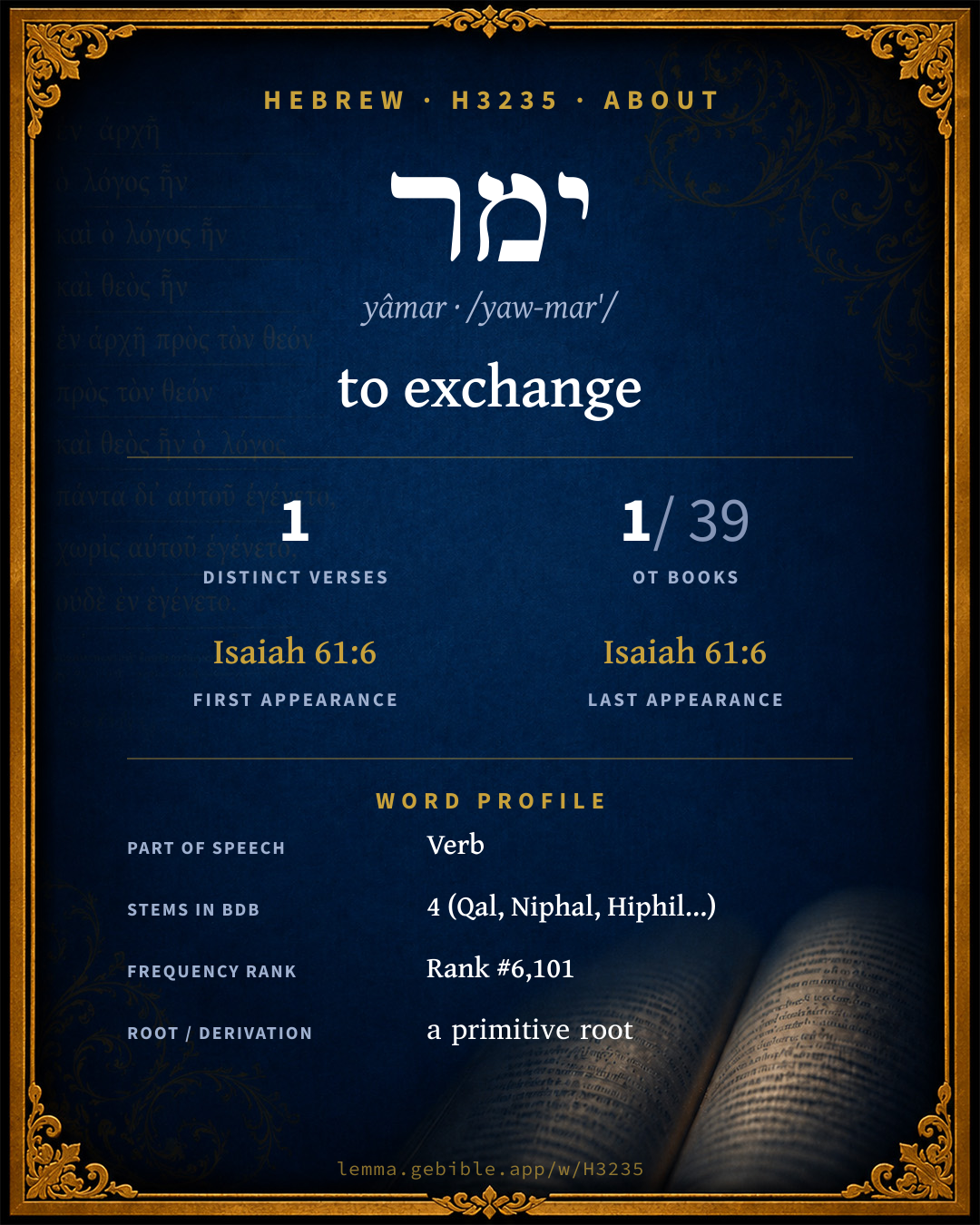
יָמַר
to exchange
‘to exchange’ is one of 2 main senses fuller range ↓
Full lexicon entry — Brown-Driver-Briggs (BDB)
From Brown-Driver-Briggs (BDB)
Where this word appears
Grammar key — what these labels mean
Part of speech
- Verb
- An action or state-of-being word.
Stem
- Hithpael
- The reflexive or reciprocal stem (the subject acts on itself).
Form
- Imperfect
- An incomplete, ongoing, or future action (“he will / would write”).
Person
- 2nd Person
- The one addressed (“you”).
Gender
- Masculine
- Grammatically masculine.
Number
- Plural
- More than one (in Hebrew, generally three or more).
Every verse where H3235 appears — 1 distinct verse across 1 book. Click any verse to open its interlinear word-by-word view. Verse text shown in the World English Bible for context — . Each verse’s Hebrew form is shown with its reference; the English is not keyword-highlighted, since the data carries no word-level English alignment. Use “Compare translations” on any verse to read it across multiple English versions. This concordance covers the Hebrew Bible; Septuagint (Greek Old Testament) occurrences are not indexed here.
Isaiah 1 verse
About this entry
At a glance — auto-summarized from this page’s data, not written by a person. Every figure links to its source below. This summary describes the numbers; it doesn’t interpret them.
ימר — transliterated yâmar — is a Hebrew verb carrying the sense “to exchange.” A scarce word — 1 verse in all of the Hebrew Bible. More than three-quarters of its appearances fall in Isaiah. Scripture uses it exactly once, at Isaiah 61:6. Read the stem: it spans 4 stems, including Qal and Niphal. Each statement above links to its evidence; the full detail follows below.
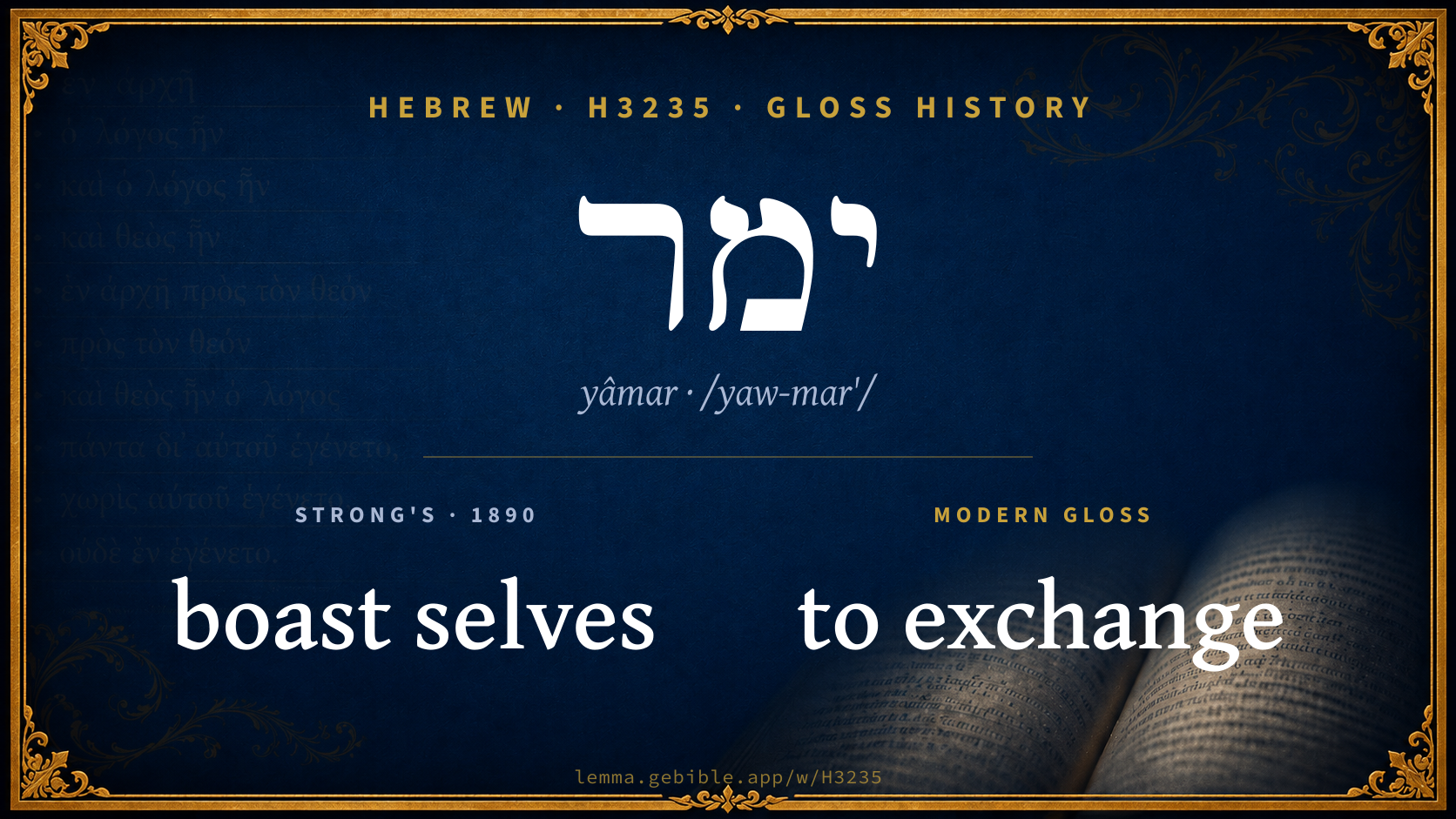
Gloss history
Strong's 1890 vs modern scholarship
About this word
Strong's H3235 catalogs a Hebrew word from the Hebrew Old Testament.
These counts are not copied from any lexicon or concordance. They are computed here, from the morphology-tagged Hebrew Old Testament. What Lemma adds →
- 1
- distinct verses
- The word appears in 1 distinct verse.
- 1 / 39
- OT books
- The word appears in 1 of 39 Old Testament books.
- #6,101
- by frequency
- Rank #6,101 (rank 6,101 of 8,640 Hebrew words by occurrence).
View all 1 occurrence in the concordance →
Most concentrated in
- Isaiah 1 verse 100%
By section of the Old Testament
By traditional corpus
Conventional, traditional groupings — biblical authorship is debated, so this is a traditional corpus grouping, not an authorship claim. Each share is this word’s portion of its verses in that division of the Hebrew canon. Each figure is a share of the word’s 1 distinct verse.
- Prophets (Nevi'im) 1 verse · 100%
How translations render this word
Counts come from each version’s own published word-to-Strong’s tagging or interlinear alignment — an approximate guide to how each version renders this word, not a word-level alignment the data otherwise carries. Because each total is that version’s own tagged count, the per-version totals vary from one another and need not match the appearance or distinct-verse counts above. These counts may also differ from a printed concordance because Lemma counts each distinctly tagged rendering and does not collapse phrase taggings into a single head-word total. This is a fixed set of word-tagged versions (KJV, ASV, BSB, ULT) and does not change with the reading translation you choose elsewhere. Each version’s license is shown beside its name below (and on Sources).
- King James Version: Changed 1×, Shall ye boast 1×
- American Standard Version: Changed 1×, Shall ye boast yourselves 1×
- Berean Standard Bible: Ever changed 1×, You will boast 1×
- unfoldingWord Literal Text: You will boast yourself 1×
King James Version Public Domain
Renders H3235 across 2 tagged occurrences — most commonly:
American Standard Version Public Domain
Renders H3235 across 2 tagged occurrences — most commonly:
Berean Standard Bible Public Domain
Renders H3235 across 2 tagged occurrences — most commonly:
unfoldingWord Literal Text CC BY-SA 4.0
Renders H3235 across 1 tagged occurrence — most commonly:
8 senses and sub-senses in the full BDB
Hebrew verbs can shift meaning by stem (binyan): Qal is the basic action, Niphal is often passive or reflexive, Piel often intensifies or makes it factitive, and Hiphil is typically causative. The senses below are grouped under the stem BDB assigns to each. This entry also uses Hithpael (reflexive or reciprocal).
What do BDB’s symbols mean?
BDB uses these scholarly abbreviations:
| Symbol | Meaning |
|---|---|
| 𝔊 | the Septuagint (the ancient Greek translation, LXX) |
| 𝔙 | the Vulgate (the Latin translation) |
| 𝔖 | the Syriac version (the Peshitta) |
| 𝔗 | the Targum (the Aramaic translation) |
| ψ | the Psalms |
| √ | root (the underlying root or stem) |
| ‖ | parallel passage (a synonymous or contrasted parallel) |
| † | the dagger: every passage where the word occurs is cited |
The 8 senses and sub-senses the full Brown-Driver-Briggs lexicon distinguishes for this word, in lexicon order (not ranked by frequency), with BDB’s own verbatim wording and sub-sense lettering. Shown in Hebrew script with BDB’s own scholarly abbreviations. The condensed entry is in the Lexicon Entry tab.
Qal
- Pf. א׳ Gn 3:1 +, etc.; Impf. יֹאמַר Gn 31:8 +; וַיֹּא֫מֶר Gn 1:3 +; וַיֹּאמַ֑ר Gn 14:19 +; in Jb always וַיֹּא֑מַר Jb 3:2 +; 3 fs. תֹּאמַר Gn 21:12 +; תֹּאמֵ֑ר Pr 1:21; 1 s. אֹמַר Gn 22:2 +; אוֹמְרָה ψ 42:10; וָאֹמַר Gn 20:13 +; וָאוֹמַר Ne 2:7, 17, 20; 3 m. pl. יֹאמְרוּ Ex 4:1 + etc.; sf. יֹמְרוּךָ ψ 139:20; 2 mpl. תֹּמְרוּ 2 S 19:14 (cf. Köi. p. 385); Imv. אֱמֹר (אֱמָר־) Gn 45:17 +, etc.; Inf. abs. אָמוֹר Ex 21:5 +; cstr. אֱמֹר Ez 25:8 +; (הַ)אֲמֹר Jb 34:18 but read הָאֹמֵר 𝔊 𝔙 Di, or better הֶאָמֹר Inf. abs. c. ה interrog. cf. Ew§ 328 d; sf. אָמְרִי Jos 6:10 +; אֲמָרְכֶם Je 23:38; אֱמָרְכֶם Mal 1:7 +; לֵאמֹר Gn 1:22 +, etc.; Pt; act. אֹמֵר Gn 32:10 +, etc.; pass. הֶאָמוּר Mi 2:7, but this grammatically indefensible, read הֶאָמוֹר, Inf. abs. c. ה interrog., v. DrExpositor, April, 1887, 263. e.g. Genesis 3:1
- 1. Say (subj. God Gn 3:1 + or man 32:5, serpent 3:1, ass Nu 22:28, horse יֹאמַר הֶאָח Jb 39:25 etc.; inanimate things, personif. Jb 28:14 cf. v 22 etc.; so in allegory or fable Ju 9:8 2 K 14:9 etc.; especially in narrat., וַיֹּאמֶר etc., Gn 4:6 + very often): mostly sq. thing said, either subst. Je 14:17 (c. cl. app.) Dt 27:16 f. Ju 12:6; pronoun Gn 44:16 2 K 20:14 +; or (usually) clause Gn 1:3; 3:1; 37:20 + often (orat. recta); with adv. thus, so Gn 32:5 Nu 20:14 1 K 20:3, 5 +; especially כֹּה אָמַר י׳ Ex 5:1; 7:17, 26; 8:16; 1 Ch 17:4 + often; the person addressed usually introduced by אֶל Gn 3:1; 15:7; 22:7; Lv 21:1; 2 S 3:7; 1 K 12:5, 23, or לְ Gn 3:13; 4:15; 1 S 20:2; 2 S 2:21; 1 K 14:2 + often; rarer combinations are, א׳ בְּאָזְנֵי Is 49:20 (cf. 5:9 & vid. דבר); א׳ לִפְנֵי Ez 28:9; א׳ לְעֵינֵי Dt 31:7; Jos 10:12; Je 28:11; א׳ בְּ Jo 2:17 ψ 126:2, where בְּ local; in all cases usually sq. dir. obj. of words said, Ex 19:25; Ju 17:2 being singular; Gn 4:8 the object-clause has probably fallen out, cf. Vrss Di; = mention, name, designate Gn 22:2, 3; 43:27, 29 Ex 32:13; Nu 14:40; 1 S 10:16; 16:3; 2 S 6:22 Ne 6:19; cf. ψ 139:20 יֹמְרוּךָ לִמְזִמָּה speak of thee for falsehood (but many, as Hup Pe Dy Che, read יַמְרוּךָ); = tell, declare, proclaim (sq. dir. obj. only) ψ 40:11; Ez 13:7; in reply to question = answer Ex 12:27; Jos 4:7; 1 K 9:9; Je 5:19; 22:9. The obj. spoken of may be referred to by אֶל 2 K 19:32; Je 22:18; 27:19, or לְ Gn 20:13 אִמְרִי לִי say of me, etc. Dt 33:9; Ju 9:54; Is 5:20 ψ 3:3; 71:10, very rarely by a simple accus. Is 3:10 (where read prob. for אִמְרוּ, אַשְׁרֵי), except after אֲשֶׁר where the words used follow (cf. אֲשֶׁר 4 d) Gn 3:17; Nu 10:29; 14:31 Dt 28:68; Ju 7:4; 1 S 9:17, 23b; 1 K 8:29; La 4:20; cf. Nu 21:16; 2 K 17:12; 21:4, & (two extreme cases) Is 8:12; La 2:15 (v. DrSm i. 25, 5); הֶֽאָמוּר Mi 2:7 read inf. abs. c. ה interrog. הֶאָמוֹר (v. supr.) shall one say? shall it be said? After another vb. of saying, introducing thing said: Dt 21:7; 25:9; 27:15; Ct 2:10 +, even after אמר Gn 22:7; Lv 21:1; Je 34:2; Est 7:5 +; especially inf. לֵאמֹר, after דבר Gn 8:15, צוה 2:16; 3:17, ענה 41:16, ברך 1:22, נשׁבע 24:7, נדר 28:20, etc.; after אמר 2 S 3:18; 1 K 12:23; 1 Ch 21:18 +; after שׁלח 2 Ch 35:21 שׁוּב Gn 32:7; cf. also Gn 28:6 Ex 5:13; 9:5; 13:8; 17:4; Nu 11:20; Dt 1:28; 13:7; Ju 8:15; 1 S 23:2; 1 K 13:3; Je 32:3; 37:9; Ru 4:4 +; when subj. of לֵאמֹר differs from that of preceding clause Gn 31:1; 38:13, 24 etc.; after שׁמע Is 37:9 = 2 K 19:9. e.g. Genesis 3:1
- 2. Say in the heart (= think) א׳ בלבב Dt 8:17 cf. 1 K 12:26 ψ 10:6, 11, 13; 14:1; 35:25; Is 14:13; 47:8, 10; 49:21; Ec 2:1, 15; 3:17, 18; א׳ לִלְבָבָם Ho 7:2; א׳ אֶל־לִבּוֹ Gn 8:21 said unto his heart (to himself), subj. י׳, cf. 1 S 27:1; אָֽמְרָה נַפְשִׁי La 3:24; thence א׳ alone Gn 20:11; 26:9 Nu 24:11; Ru 4:4; 1 S 20:26; 2 S 5:6; 12:22; 2 K 5:11; Mal 1:7; with כִּי Ju 15:2; in particular = desire מַה־תֹּאמַר נַפְשְׁךָ 1 S 20:4 cf. Est 2:13; sq. inf. = purpose, Ex 2:14 thinkest thou to kill me, as thou killedst the Egyptian? Jos 22:33; 1 S 30:6; 1 K 5:19; 2 Ch 28:10, 13; expect 2 S 21:16 he expected to slay David 2 Ch 13:8; 32:1. e.g. Deuteronomy 8:17
- 3. Promise (sq. inf.) 1 Ch 27:23; 2 Ch 21:7; Est 4:7; (id. + ל of pers.) 2 K 8:19; Ne 9:15; (sq. acc. of dir. obj. + ל of pers. + inf. of purpose) Ne 9:23. e.g. 1 Chronicles 27:23
- 4. Command (especially late) sq. אֶל־ of person addressed, Nu 15:28; 1 Ch 21:18; sq. ל Jos 11:9; 2 S 16:11 2 K 4:24; Jb 9:7 ψ 106:24 (v. sub אֲשֶׁר 8 e); sq. inf. 1 S 24:11 1 Ch 21:17; 2 Ch 1:18; 29:27, 36; 31:11; 35:21 Est 1:17; 4:13, 15; 6:1; 9:14; inf. + ל of pers. 2 Ch 14:3; 29:21; 31:4; Ne 9:15; Est 1:10; sq. acc. dir. obj. 2 Ch 29:24 the king commanded the burnt-offering and the sin-offering, cf. 1 K 5:20; Est 2:15; sq. cl. with אשׁר = that Ne 13:19; id. + ל of pers. v 22; sq. cl. with כִּי Jb 36:10; abs. 1 S 16:16 (read however prob. יאמרו for יאמר, cf. Dr); also ψ 105:31, 34; 107:25; 1 Ch 14:12; 2 Ch 24:8; Ne 13:9, 19 (all sq. vb. consec.); command by leter א׳ עִם־הַסֵּפֶר Est 9:25 (sq. impf.); appoint, assign לֶחֶם א׳ לוֹ 1 K 11:18 = threaten sq. inf. Dt 9:25 ψ 106:23. e.g. Numbers 15:28
Niphal
- Pf. נֶאֱמַר Dn 8:26; Impf. יֵאָמֵר Gn 22:14 +; יֵאָ֫מֶר לוֹ Is 4:3; יֵאָמַ֑ר Gn 10:9 +; וַיֵּאָמַ֑ר Jos 2:2; be said, told Gn 10:9; 22:14 ψ 87:5; Je 4:11; 16:14 (all abs., indef. subj., of current saying); so said in a book Nu 21:14; be related, told, of vision Dn 8:26; said, told to (sq. ל ind. obj.) Jos 2:2; Ho 2:1(×2) Zp 3:16; either so, or told concerning Nu 23:23; Ez 13:12 (אֶל־); יֵאָמֵר לָכֶם = ye shall be called (it shall be said to you) Is 61:6 (‖ תִּקָּרֵ֔אוּ), cf. 4:3; 19:18; 32:5 (‖ יִקָּרֵא ל) 62:4(×2); hence be called, of Tophet לֹא־יֵאָמֵר עוֹד הַתֹּפֶת Je 7:32; subj. שֵׁם Gn 32:29; Jb 34:31 כִּי אֶל־אֵל חֶאָמַר, Rabb. (cf. AV) treat הֵאָמַר as Niph. Inf. for לְהֵאָמֵר, but against grammar; the form as it stands is Qal Pf., אֶל־אֵל being prefixed to the interrog. for emphasis (cf. Je 22:15; 23:26 Ne 13:27), v. Dr§ 9 Di al.; Hoffm., however, reads הֵאָמֵר inf. abs. = imv. ‘so must one speak (it be spoken) to God.’ e.g. Daniel 8:26
Hiphil
- Pf. avow, avouch Dt 26:17 אֶת־י׳ הֶאֱמַרְתָּ הַיּוֹם לִהְיוֹת לְךָ לֵאלֹהִים; v 18 וי׳ הֶאֱמִירְךָ היום להיות לוֹ לְעַם (lit. cause to declare, i.e. through agency of Moses; on this & other interpr. vid. Di). e.g. Deuteronomy 26:17
Hithpael
- Impf. יִתְאַמְּרוּ ψ 94:4 subj. כָּל־פֹּעֲלֵי אָ֑וֶן act proudly, boast (‖ יַבִּיעוּ יְדַבְּרוּ עָתָק); prob. also 2 mpl. תִּתְיַמָּ֑רוּ Is 61:6 (in good sense, sq. בְּ of thing gloried in) 𝔖 𝔙 𝔗 & cf. 𝔊; GesComm. so De Che Köi. 457 f. (from [ימר] exchange Thes Hi Kn Ew Di; but vid. ימר). e.g. Psalms 94:4
Senses from the full Brown-Driver-Briggs lexicon (Brown, Driver, Briggs; Oxford 1906 — public domain), digitized via Sefaria, supplemented by the OpenScriptures HebrewLexicon (CC BY 4.0). Full attribution on Sources.
Word origin
vb. utter, say (MI Ph. אמר, Aramaic אֲמַר, Ethiopic አመረ I. 2 shew, declare, Arabic أَمَرَ command; perhaps √ אמר orig. = be or make prominent, hence Hithp. infr., אָמִיר; Sab. אמר lofty, epith. of king JHMordtmZMG 1876, 37; cf. DlPr 28 who thinks orig. meaning hell, sichtbar sein, whence Assyrian amâru, see & shew, declare, say)—
— Brown-Driver-Briggs (Oxford 1906, public domain), digitized via Sefaria, supplemented by the OpenScriptures HebrewLexicon (CC BY 4.0). See Sources.
Origin: a primitive root
Jastrow Dictionary
A second Hebrew/Aramaic lexicon for comparison, covering Aramaic and post-biblical (Talmudic, Targumic, Midrashic) usage that the biblical-Hebrew BDB does not. Matched by lemma rather than by Strong’s number, so a lemma may carry more than one Jastrow headword (shown separately below), and the entries cover usage well beyond the Bible.
יָמַר
- , v. מוּר
A Dictionary of the Targumim, the Talmud Babli and Yerushalmi, and the Midrashic Literature (Marcus Jastrow; London, Luzac, 1903) — Public Domain. Digitized via Sefaria. Digitized via Sefaria. Full attribution on Sources.
Same root — word family
Other BDB entries built from the same root as H3235, grouped by Strong’s listed origin. These share a root / origin per the lexicon — not necessarily a shared meaning. Each links to that word’s own entry.
Proper names from this root
People and places named from this root — a name, not an additional meaning of the word.
Compare all same-root words → 1 of the same-root words is a proper name (a person or place). They share a root, not necessarily a meaning.
Septuagint verse parallels
This word appears in 1 verse that also exists in the Greek Old Testament (Septuagint), out of the 1 Hebrew verse it occurs in. You can read those verses in Greek by switching the Old Testament edition to the Septuagint.
Read these verses in the Septuagint
This is a verse-level parallel only — the same verses exist in both the Hebrew and Greek Old Testaments. No word-level Hebrew↔Greek correspondence is claimed: the data carries no such alignment, so no Greek word is shown as this Hebrew word’s translation. Coverage is not total — the Septuagint omits the deuterocanon and renumbers the Psalms, so some Hebrew verses have no direct Greek parallel.