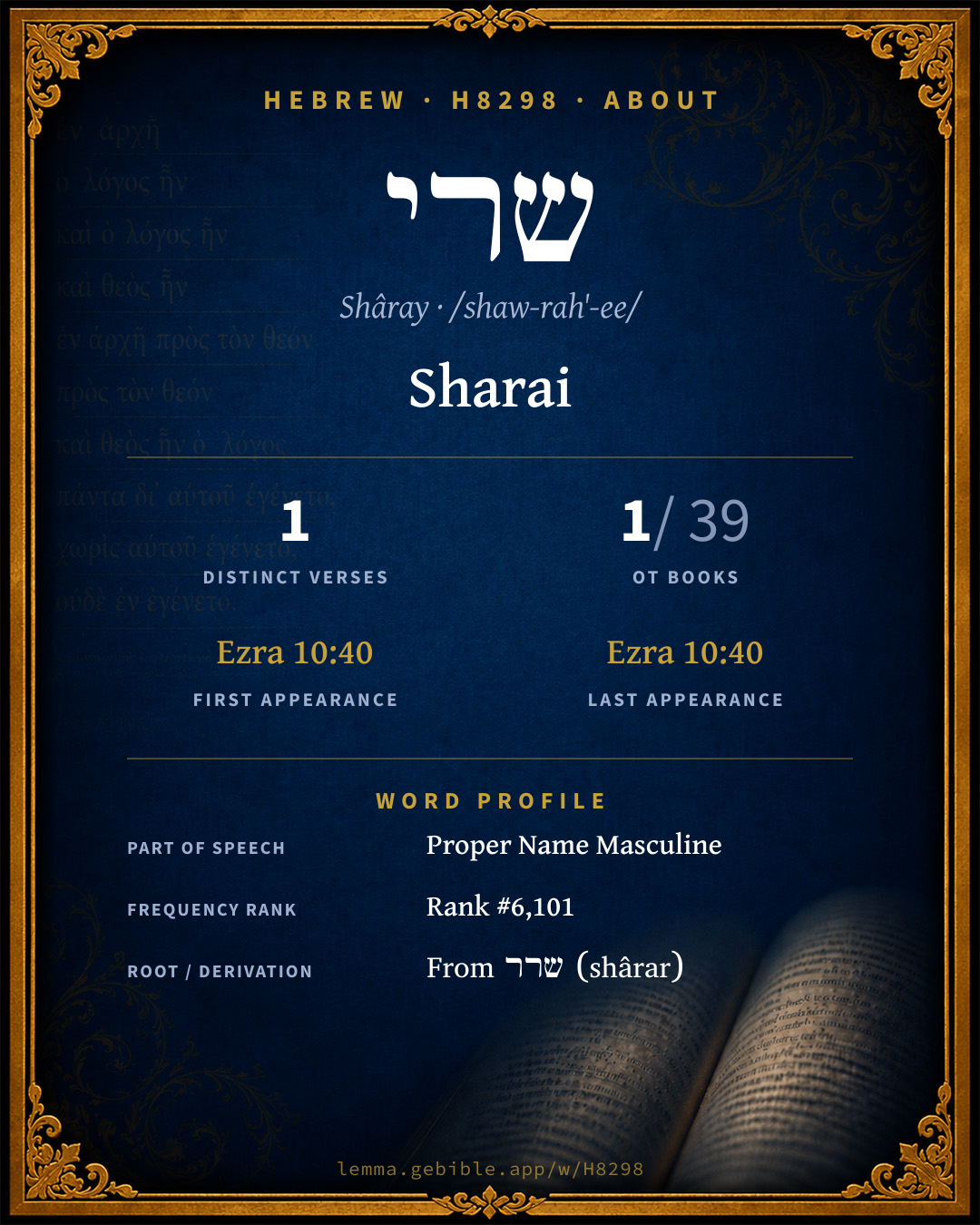
שָׁרָ֑י
Sharai
BDB lists 2 entries for ‘Sharai’ fuller range ↓
Full lexicon entry — Brown-Driver-Briggs (BDB)
From Brown-Driver-Briggs (BDB)
Where this word appears
Grammar key — what these labels mean
Part of speech
- Noun
- A naming word — a person, place, thing, or idea.
Noun type
- Proper
- A name of a specific person, place, or people (e.g. Abraham, Zion, Israel).
Every verse where H8298 appears — 1 distinct verse across 1 book. Click any verse to open its interlinear word-by-word view. Verse text shown in the World English Bible for context — . Each verse’s Hebrew form is shown with its reference; the English is not keyword-highlighted, since the data carries no word-level English alignment. Use “Compare translations” on any verse to read it across multiple English versions. This concordance covers the Hebrew Bible; Septuagint (Greek Old Testament) occurrences are not indexed here.
Ezra 1 verse
About this entry
At a glance — auto-summarized from this page’s data, not written by a person. Every figure links to its source below. This summary describes the numbers; it doesn’t interpret them.
At its core, שרי (Shâray) means “Sharai.” With only 1 verse it sits in the long tail of Hebrew Bible vocabulary. The word gravitates to Ezra (100%). It occurs only once, in Ezra 10:40. Dig into 1-verse concordance and the renderings breakdown below.
Gloss history
Strong's 1890 vs modern scholarship
About this word
Strong's H8298 catalogs a Hebrew word from the Hebrew Old Testament.
These counts are not copied from any lexicon or concordance. They are computed here, from the morphology-tagged Hebrew Old Testament. What Lemma adds →
- 1
- distinct verses
- The word appears in 1 distinct verse.
- 1 / 39
- OT books
- The word appears in 1 of 39 Old Testament books.
- #6,101
- by frequency
- Rank #6,101 (rank 6,101 of 8,640 Hebrew words by occurrence).
View all 1 occurrence in the concordance →
Most concentrated in
- Ezra 1 verse 100%
By section of the Old Testament
By traditional corpus
Conventional, traditional groupings — biblical authorship is debated, so this is a traditional corpus grouping, not an authorship claim. Each share is this word’s portion of its verses in that division of the Hebrew canon. Each figure is a share of the word’s 1 distinct verse.
- Writings (Ketuvim) 1 verse · 100%
How translations render this word
Counts come from each version’s own published word-to-Strong’s tagging or interlinear alignment — an approximate guide to how each version renders this word, not a word-level alignment the data otherwise carries. Because each total is that version’s own tagged count, the per-version totals vary from one another and need not match the appearance or distinct-verse counts above. These counts may also differ from a printed concordance because Lemma counts each distinctly tagged rendering and does not collapse phrase taggings into a single head-word total. This is a fixed set of word-tagged versions (KJV, ASV, BSB, ULT) and does not change with the reading translation you choose elsewhere. Each version’s license is shown beside its name below (and on Sources).
- King James Version: Sharai 1×
- American Standard Version: Sharai 1×
- Berean Standard Bible: Sharai 1×
- unfoldingWord Literal Text: Sharai 1×
King James Version Public Domain
Renders H8298 across 1 tagged occurrence — most commonly:
American Standard Version Public Domain
Renders H8298 across 1 tagged occurrence — most commonly:
Berean Standard Bible Public Domain
Renders H8298 across 1 tagged occurrence — most commonly:
unfoldingWord Literal Text CC BY-SA 4.0
Renders H8298 across 1 tagged occurrence — most commonly:
Senses in BDB
The 2 senses BDB distinguishes for this word, in lexicon order (not ranked by frequency or importance). The full entry — with sub-senses — is in the Lexicon Entry tab.
- Sharai = "releaser"
- a son of Bani who put away his foreign wife in the time of Ezra
Word origin
שָׁרָ֑י n.pr.m. one with foreign wife Ezr 10:40
— Brown-Driver-Briggs (Oxford 1906, public domain), digitized via Sefaria, supplemented by the OpenScriptures HebrewLexicon (CC BY 4.0). See Sources.
Derived from שרר (shârar) (H8324) — enemy.
Jastrow Dictionary
A second Hebrew/Aramaic lexicon for comparison, covering Aramaic and post-biblical (Talmudic, Targumic, Midrashic) usage that the biblical-Hebrew BDB does not. Matched by lemma rather than by Strong’s number, so a lemma may carry more than one Jastrow headword (shown separately below), and the entries cover usage well beyond the Bible.
שְׁרֵי
- 1. to untie, unharness; to disengage, dismiss. Targ. O. Gen. XXIV, 32 וש׳ גמליא (ed. Berl. וש׳ מן ג׳; Y. ושָׁ׳ זממי ג׳ Pa.; h. text ויפתח). Targ. Job XXX, 11. Targ. O. Ex. III, 5 (h. text של); a. fr.—Pes. 113ᵃ שְׁרִי כיסך פתח שפיך untie thy purse (to receive the money), open thy bag (to deliver the goods), i.e. sell for cash. Snh. 98ᵃ כולהון שְׁרוֹ ואסירי … איהו ש׳ חד וכ׳ all of them untie and tie up (their sores) at once (untie all of them, and then tie them up), but he unties and ties up one at a time. Pesik. R. s. 22 [read:] שַׁרְתַּנְהוֹן … ע"ג סודרא she untied them (the two Denars), and placed them on the shawl. Y. Ber. II, 5ᵃ bot. אתת … ושַׁרְתוּן וכ׳ (fr. שרה, cmp. חֲמֵי) when prayer time came, he untied them (the coins), and gave them to R. H.; [read:] קטר פורתיה לפורתיה ויהבון לשמעיה ושרתון וערק he tied his (R. Ḥ’s) share to his own, and gave them to his servant, but he (the servant) untied them and ran away. Y. Meg. IV, 75ᵇ bot. שְׁרוֹן ליה וכ׳, v. סַפְרוּתָא. Y. Keth. XII, 35ᵃ שרון גרמון ומנוניה they dismissed themselves (resigned their office) and appointed him (Hillel) in their place; a. fr.—ש׳ תיגרא to solve a dispute, to settle or decide a case. Ned. 62ᵃ שְׁרוּ לי תיגראי ברישא take my case up first. Yeb. 100ᵃ שָׁרֵינָא וכ׳, v. תִּגְרָא I; a. e.
- 2. to allow, permit; to forgive; to absolve (= h. הִתִּיר). Targ. Y. Num. XXX, 3. Targ. Y. II, Gen. XXII, 14. Targ. Y. II, Num. XIV, 20; a. fr.—Kidd. 13ᵇ הוא אסרה והוא שַׁרְתָהּ (Rashi שרי לה) he tied her (by marrying her), and he untied her (through his death, that she can dispose of herself). Y. Ber. II, 5ᵇ אינון שַׁרְיָין ואינון אסרין do the same men permit and forbid? Y. Snh. VII, end, 25ᵈ [read:] שַׁרְיִי מה דעבדתין אמרה ליה לי נא שַׁרְיָיה undo what thou hast done (by charm); said she to him, I will not undo. Bab. Snh. 99ᵃ ש׳ ליה מריה וכ׳ the Lord forgive R. Hillel. Ab. Zar. 37ᵃ וקרו לן בית דינא שָׁרְיָא and they might call us a permitting court (of lax practice). Ib. כי שְׁרִיתוּהָ לאלתר שריתוה וכ׳ when you permitted her (to marry again), did you permit her to marry at once &c.? Ib. וקרו ליה יוסף שריא and they called him Joseph the permitter. Ib. אנא נמי שְׁרָאִי אחריתי Ms. M. (ed. אנא שרא, corr. acc.) I also permitted another thing (which was forbidden heretofore); a. v. fr.—Part. pass. שָׁרֵי, שַׁרְיָא; f. שַׁרְיָא. Targ. II Esth. III, 8 יומא ש׳ a permitted day (free for trade).—Bets. 3ᵇ לדידי אפי׳ … ש׳ according to my opinion it is permitted even on the first day. Ib. 22ᵃ אפי׳ בשבת ש׳ it is permitted even on the Sabbath. Ned. 62ᵃ ש׳ ליה לאינש לאודועי וכ׳ a man is permitted to make himself known (as a scholar) in a place where they do not know him; a. fr.
- 3. [to loosen the girdle,] to sit down for a meal; trnsf. to start, begin. Targ. Deut. XVI, 9 (O. ed. Berl. תְּשָׁרֵי, Pa.). Targ. II Esth. III, 7; a. fr.—Lam. R. to I, 1 (רבתי) כמה דשְׁרִין למיכל (ed. Wil. דשְׁרוֹ) when they sat down to eat. Y. Dem. I, 21ᵈ bot.; Y. Shek. V, 48ᵈ top שַׁרְיַית מנהקה (not שוריית) she began to bray; a. fr.—Trnsf. (cmp. meanings of b. h. יָאַל Hif.) to consent, be willing. Targ. Josh. VII, 7. Ib. XVII, 12. Targ. Job VI, 9; 28; a. fr.
- 4. to encamp, dwell, rest. Targ. I Sam. XXVI, 5. Targ. Num. II, 2, sq. Targ. Ex. XL, 35. Targ. Ps. XVI, 8, sq.; a. fr.—Y. Ter. VIII, 46ᵃ חמריא שרון וכ׳ ass-drivers took lodging in an inn. Lam. R. to I, 1 רבתי אשכח … שרון יתבין וכ׳ (חד מירוש׳) he found men that had taken lodging there, and sat eating and drinking. Y. Sabb. XIV, 14ᶜ bot. ע"י דהוה ש׳ תמן וכ׳ because he lived there (in Babylonia) &c. Gen. R. s. 20 ויתיר … שרי, v. פָּרָא II. Snh. 39ᵃ כל בי … שָׁרְיָא the Shechinah dwells wherever ten persons are assembled; a. fr.
- same,
- 1. to untie, loosen. Targ. Ps. XXX, 12 (ed. Wil. Pe.). Targ. Job XII, 18 (ed. Wil. מַשְׁרֵי Af.); a. e.
- 2. to begin. Targ. O. Deut. I, 5 (Y. שׁוֹרֵי Poel). Ib. II, 24 (O. ed. Vien. Pe.). Ib. 25. Targ. Jer. IV, 31; a. fr.—Targ. Prov. XIII, 12 דמְשָׁרֵי למעדריה (not משדי, v. Pesh. a. LXX) who begins to help himself (h. text תחלת ממשכה!).
- 3. to cause to rest, v. infra.
- 1. to untie, v. supra.
- 2. to cause to encamp or dwell, to let rest. Targ. Gen. II, 15. Targ. Jer. VII, 7. Targ. Ps. XXIII, 2. Ib. LXXIV, 2 Ms. (ed. Pa.); a. fr.—Sabb. 67ᵃ הסנה … א׳ קודשא וכ׳ O thornbush! not because thou art higher than all other trees did the Lord let his Presence rest upon thee &c. Koh. R. to III, 9, end כל … לא מַשְׁרִין וכ׳ (in the hereafter) they allow every one to dwell only with his fellow tradesmen; ib. beg. מתרין (corr. acc.); a. e.
- 1. to be untied, loosened. Targ. Is. V, 27.—Lev. R. s. 14, v. חֲבִילָא II; a. e.
- 2. to be permitted. Yeb. 106ᵃ כי היכי דתִישְׁתְּרִי לעלמא in order that she may be free to marry again. Bets. 2ᵇ יו"ט בעלמא תשתרי let it be permitted for use on any other Holy Day (not followed by the Sabbath); a. e.
- 3. to be begun, begin. Targ. Y. Gen. XXXVII, 17. Targ. Ps. CXIX, 96, v. שַׁכְלֵל.—Y. Ter. VIII, 46ᵃ מישרי נבח בהון (prob. to be read: אישרי) he began to bark at them; ib. מישרי מתרתר, v. תַּרְתֵּר.—[Lev. R. s. 13 אשתריתין, v. שְׁתַר.]
שָׂרַי
- (b. h.) pr. n. f. Sarai, the original name of Sarah. Ber. 13ᵃ, v. שָׂרָה. Ib. בתחלה … ש׳ לאומתה וכ׳ at first she was Sarai (a little princess) for her own people &c., v. שַׂר. Gen. R. s. 47; a. e.
שרי
- to dissolve, soak, steep. Naz. VI, 1 ש׳ פתו ביין וכ׳ if he (the Nazirite) steeped his bread in wine, and there is enough in both together to make up the size of an olive; Pes. 44ᵇ. Naz. 37ᵃ אם ש׳ ענביו במים וכ׳ if he steeped grapes in water, and a taste of wine remained in it. Pes. II, 7 אין שׁוֹרִין וכ׳ you dare not soak bran for chickens (on the Passover); ib. האשה לא תִשְׁרֶה וכ׳ a woman must not soak bran to take with her to the bathhouse. Sabb. I, 5 אין שורין … כדי שיִשּׁוֹרוּ וכ׳ you must not lay in ink-materials or dyes …, unless they can be dissolved (or soaked through) before the Sabbath sets in. Eduy. I, 8; a. fr.
- to be soaked, dissolved. Y. Ber. IX, 13ᵈ bot. כדי שתִּשָּׁרֶה וכ׳, v. מְגוּפָה; Y. Taan. I, 64ᵇ top שתשרף (corr. acc.). Gen. R. s. 17, end אדם … מיד היא נִשְׁרֵית … אינו נִשְׁרֶה man is made out of earth, when you put a drop of water on it, it is at once dissolved (soft), but woman is made of a bone, which is not dissolved, even if you let it lie in water for many days. Y. Sabb. XIV, 14ᶜ top כל … והיא נשרית … ושאינה נשרית וכ׳ when you put salt in, and it dissolves, it is called salt water, but when it is not dissolved, it is called halmé; a. e.—Sabb. I, 5 יִשּׁוֹרוּ (fr. שור or נשר), v. supra.
שרי ²
- cmp. preced.) to loosen, untie; (cmp. meaning of καταλύω) to take lodging; to rest, dwell. Snh. 11ᵃ יש … שראוי שתִּשְׁרֶה עליו שכינה there is one among you who deserves that the Shechinah should rest upon him. Ib. 65ᵇ כדי שתִּשְׁרֶה וכ׳, v. רָעֵב Hif. Ib. שׁוֹרָה עליו וכ׳ the spirit … comes down upon him. Y. Sabb. VIII, end, 11ᶜ רוח רעה שורה עליה an evil spirit rests upon it (it is injurious to health). Num. R. s. 132 אימתי שָׁרְתָה וכ׳ when did the Shechinah come down to rest on earth? When the Tabernacle was erected. Koh. R. to VII, 2 ושָׁרַת עליהם וכ׳ the holy spirit rested upon them. Midr. Till. to Ps. CXVI ומלאכי … ושׁוֹרִים ביניהם (not ושוררים) the ministering angels rejoice over them (the righteous that die), that they come to dwell among them; ed. Bub. שהוא בא ושורה וכ׳ that he (the righteous man) comes &c.; a. v. fr.—Part. pass. שָׁרוּי; f. שְׁרוּיָה; pl. שְׁרוּיִין; שְׁרוּיוֹת. Yeb. 62ᵇ he that has no wife, ש׳ בלא שמחה וכ׳ lives without joy, without blessing &c. Sot. 48ᵃ בזמן שישראל ש׳ בצער וכ׳ when Israel lives in trouble, and the nations in peace and happiness &c. Meg. 2ᵃ בזמן שהשנים … ש׳ על אדמתן when the years were properly regulated (without Roman interference), and the Israelites lived (undisturbed) on their soil; a. v. fr.
- 1. to cause to rest. Sabb. 139ᵃ אין הקב"ה מַשְׁרֶה וכ׳ the Lord does not let his Presence rest upon Israel, until the bad judges and officers cease to exist. Snh. 7ᵃ כל דיין … משרה a judge that administers true justice faithfully, causes the Shechinah to dwell in Israel. Gen. R. s. 7 מלך … ומשרה דיורין וכ׳ a human king builds a palace, and lets the inmates dwell in the upper and lower stories, הק"בה משרה … בחלל the Lord makes inmates dwell (even) in vacant space. Num. R. s. 136; a. fr.
- 2. (cmp. שֵׁירוּתָא) to board, provide a living for. Keth. V, 8 המשרה את אשתו וכ׳, v. שָׁלִישׁ. Ib. 107ᵃ כשה׳ לזו ולא ה׳ לזו when he provided for the one (his wife), but did not provide for the others (his children); a. e.
שָׁרִי
- , v. שָׁרִיתָא
A Dictionary of the Targumim, the Talmud Babli and Yerushalmi, and the Midrashic Literature (Marcus Jastrow; London, Luzac, 1903) — Public Domain. Digitized via Sefaria. Digitized via Sefaria. Full attribution on Sources.
Same root — word family
Other BDB entries built from the same root as H8298, grouped by Strong’s listed origin. These share a root / origin per the lexicon — not necessarily a shared meaning. Each links to that word’s own entry.
Derives from
Shares the same root
- שר shôr H8270 navel
- שרה shêrâh H8285 bracelet
- שריר shârîyr H8306 sinew
- שרירות shᵉrîyrûwth H8307 stubbornness
- שרר shôrer H8326 navel
- ששר shâshar H8350 vermilion
Proper names from this root
People and places named from this root — a name, not an additional meaning of the word.
Compare all same-root words → Showing 4 of 9 — not the complete family. 1 of the same-root words is a proper name (a person or place). They share a root, not necessarily a meaning.
Bible dictionary
Public-domain dictionary articles matched to this entry by name (Sharai). A biblical name can be shared by more than one person or place, so an article may treat several.
Smith's Bible Dictionary · William Smith, 1863
(releaser), one of the sons of Bani. (Ezra 10:40) (B.C. 457.)
Hitchcock's Bible Names Dictionary · Roswell D. Hitchcock, 1869
my lord; my prince; my song
Classic public-domain reference works; full attribution on Sources.
Septuagint verse parallels
This word appears in 1 verse that also exists in the Greek Old Testament (Septuagint), out of the 1 Hebrew verse it occurs in. You can read those verses in Greek by switching the Old Testament edition to the Septuagint.
Read these verses in the Septuagint
This is a verse-level parallel only — the same verses exist in both the Hebrew and Greek Old Testaments. No word-level Hebrew↔Greek correspondence is claimed: the data carries no such alignment, so no Greek word is shown as this Hebrew word’s translation. Coverage is not total — the Septuagint omits the deuterocanon and renumbers the Psalms, so some Hebrew verses have no direct Greek parallel.