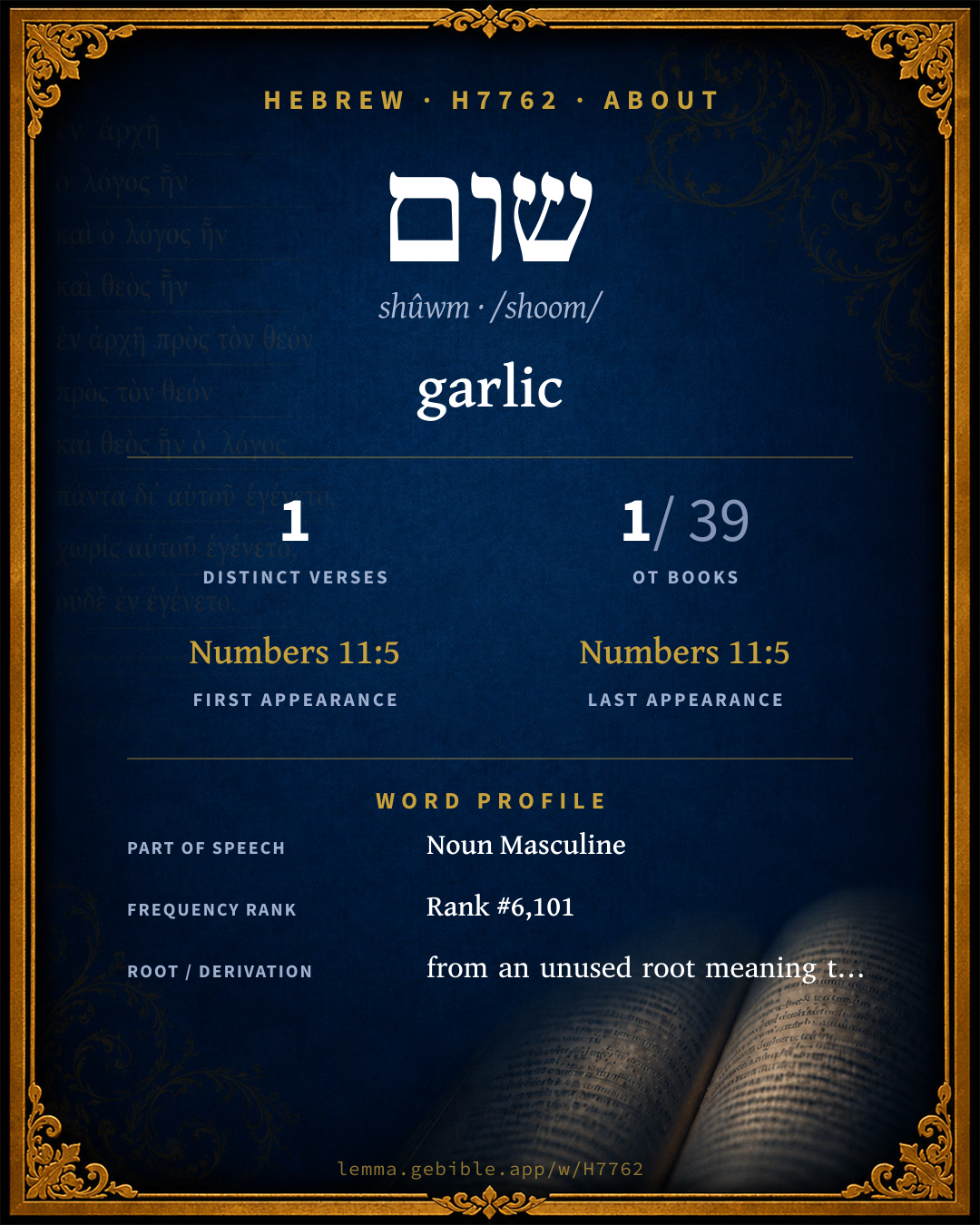
שׁוּם
garlic
Full lexicon entry — Brown-Driver-Briggs (BDB)
From Brown-Driver-Briggs (BDB)
Where this word appears
Grammar key — what these labels mean
Noun type
- Common
- A common noun — a general class of person, place, or thing (“king,” “city,” “water”), not a specific name.
State
- Absolute
- The independent form of a noun, not bound to a following word.
Gender
- Masculine
- Grammatically masculine.
Number
- Plural
- More than one (in Hebrew, generally three or more).
Every verse where H7762 appears — 1 distinct verse across 1 book. Click any verse to open its interlinear word-by-word view. Verse text shown in the World English Bible for context — . Each verse’s Hebrew form is shown with its reference; the English is not keyword-highlighted, since the data carries no word-level English alignment. Use “Compare translations” on any verse to read it across multiple English versions. This concordance covers the Hebrew Bible; Septuagint (Greek Old Testament) occurrences are not indexed here.
Numbers 1 verse
About this entry
At a glance — auto-summarized from this page’s data, not written by a person. Every figure links to its source below. This summary describes the numbers; it doesn’t interpret them.
At its core, שום (shûwm) means “garlic.” With only 1 verse it sits in the long tail of Hebrew Bible vocabulary. Its uses cluster heavily in Numbers (100% of all occurrences). A true hapax — its single appearance is Numbers 11:5. From the same root come שמתי. Dig into 1-verse concordance and the renderings breakdown below.
Gloss history
Strong's 1890 vs modern scholarship
About this word
Strong's H7762 catalogs a Hebrew word from the Hebrew Old Testament.
These counts are not copied from any lexicon or concordance. They are computed here, from the morphology-tagged Hebrew Old Testament. What Lemma adds →
- 1
- distinct verses
- The word appears in 1 distinct verse.
- 1 / 39
- OT books
- The word appears in 1 of 39 Old Testament books.
- #6,101
- by frequency
- Rank #6,101 (rank 6,101 of 8,640 Hebrew words by occurrence).
View all 1 occurrence in the concordance →
Most concentrated in
- Numbers 1 verse 100%
By section of the Old Testament
By traditional corpus
Conventional, traditional groupings — biblical authorship is debated, so this is a traditional corpus grouping, not an authorship claim. Each share is this word’s portion of its verses in that division of the Hebrew canon. Each figure is a share of the word’s 1 distinct verse.
- Torah (Pentateuch) 1 verse · 100%
How translations render this word
Counts come from each version’s own published word-to-Strong’s tagging or interlinear alignment — an approximate guide to how each version renders this word, not a word-level alignment the data otherwise carries. Because each total is that version’s own tagged count, the per-version totals vary from one another and need not match the appearance or distinct-verse counts above. These counts may also differ from a printed concordance because Lemma counts each distinctly tagged rendering and does not collapse phrase taggings into a single head-word total. This is a fixed set of word-tagged versions (KJV, ASV, BSB, ULT) and does not change with the reading translation you choose elsewhere. Each version’s license is shown beside its name below (and on Sources).
- King James Version: Garlick 1×
- American Standard Version: Garlic 1×
- Berean Standard Bible: Garlic 1×
- unfoldingWord Literal Text: Garlic 1×
King James Version Public Domain
Renders H7762 across 1 tagged occurrence — most commonly:
American Standard Version Public Domain
Renders H7762 across 1 tagged occurrence — most commonly:
Berean Standard Bible Public Domain
Renders H7762 across 1 tagged occurrence — most commonly:
unfoldingWord Literal Text CC BY-SA 4.0
Renders H7762 across 1 tagged occurrence — most commonly:
Senses in BDB
The 1 sense BDB distinguishes for this word, in lexicon order (not ranked by frequency or importance). The full entry — with sub-senses — is in the Lexicon Entry tab.
- garlic
Word origin
[ שׁוּם ] n.[m.] garlic;—pl. Nu 11:5
— Brown-Driver-Briggs (Oxford 1906, public domain), digitized via Sefaria, supplemented by the OpenScriptures HebrewLexicon (CC BY 4.0). See Sources.
Origin: from an unused root meaning to exhale
Jastrow Dictionary
A second Hebrew/Aramaic lexicon for comparison, covering Aramaic and post-biblical (Talmudic, Targumic, Midrashic) usage that the biblical-Hebrew BDB does not. Matched by lemma rather than by Strong’s number, so a lemma may carry more than one Jastrow headword (shown separately below), and the entries cover usage well beyond the Bible.
שׂוּם
- v. סוּם) to place, put, appoint, make. Ber. 39ᵇ ששַׂמְתָּ שלום וכ׳ thou hast made peace between the scholars. Mekh. B’shall. introd. במקום הזה שָׂמוּהוּ in this place they (the Egyptians) have put him (Joseph). Ber. 28ᵇ מודה … ששמת חלקי וכ׳ I thank thee, O Lord, that thou hast appointed my lot to be with those who sit in the school-house, and not with those who abide at the corners (idlers); a. fr.
- same. Yeb. 45ᵇ שאתה מֵשִׂים, v. מְשִׂימָה. Ber. 16ᵇ ותָשִׂים חלקנו וכ׳ and that thou mayest place our lot in paradise. Ib. שתשים שלום וכ׳, v. פַּמִילְיָא. Snh. 99ᵇ כל העוסק … משים שלום וכ׳ whosoever is engaged in the study of the Law for its own sake, causes peace to reign &c.; a. e.
שׂוּם ²
- Targ. O. Lev. XIX, 14 (v. סוּם I ch.; Y. תְשַׁוּוּן). Targ. O. Gen. L, 26 (ed. Berl. וסמוהי); Y. II ושמוהי (Y. I ושַׁוּוּן). Targ. Prov. XXII, 17. Ib. XXIV, 32; a. fr.—V. סוּם I ch.
- to be placed. Targ. Hag. II, 15. Targ. Esth. IV, 3.
שׁוּם I
- (cmp. preced.) [to arrange; cmp. עָרַךְ, סָדַר,] to value, estimate; to mark, name. Gitt. V, 1; Tosef. Keth. XII, 2 שָׁמִין להן, v. עִידִּית. Keth. 67ᵃ, v. שְׁוִי. Macc. 3ᵃ כיצד שמין how do we assess (the fine)? Y. Kidd. I, 60ᵈ bot. (expl. נעשח דמים באחר, Mish. Kidd. I, 6) דבר שהוא צריך לָשׁוּם that which has to be prized (which is not itself a standard value). B. Mets. IX, 3 המקבל … שמין אותה וכ׳ if one rents a field on shares and lets it lie waste, we estimate how much it ought to yield &c. Tosef. ib. IX, 9 השָׁם, v. שׁוּם II; a. v. fr.—M. Kat. 5ᵃ (ref. to וְשָׂם, Ps. L, 23) כל השָׁם אורחותיו וכ׳ he who calculates his ways (weighs the consequences of his doings) will be allowed to see the salvation of the Lord (in the hereafter); אל תקרי וְשָׂם אלא וְשָׁם וכ׳ read not v’sam but v’sham &c.; Sot. 5ᵇ; Yalk. Ps. 763; (Lev. R. s. 9 דשָׁיֵים אורחיה).—Part. pass. שׁוּם; f. שׁוּמָה; pl. שׁוּמִים; שׁוּמוֹת. Tosef. B. Kam. X, 1 רואין אוֹתן כאילו הן ש׳ אצל אחרים we consider them (the forcibly taken animals) as if they had been valued (sold for their value) with others, i.e. the robber pays the value of the animals as it was at the time of the robbery; B. Kam. 95ᵃ כאילו היא שומה אצלו בכסף as if the animal had been sold at its value to him (the robber), for cash; ib.ᵇ שומא (Chald. form); ib. רואין … ש׳ אצלו למחצה וכ׳ we consider it, as if it had been valued &c., for the purpose of establishing the additional amount which he has to pay for the increase in value, which is either one half, or one third, or one fourth (according to local usage). Arakh. 21ᵇ וכך היא שומה וכ׳ Rashi (ed. שומא) and so much has it been appraised; whosoever wishes to buy &c.; a. e. e.g. Psalms 50:23
- to be valued, assessed. Kidd. 28ᵃ, v. דָּמִים. Keth. 66ᵇ במנה הנִישּׁוֹם … המתקבל when saying ‘for each Maneh’ (Mish. ib. VI, 4), does that mean for each Maneh as it is valued (by the woman’s relatives), or for each Maneh with which he charges himself (one fifth less)?, v. שׁוּם II; a. e.
שׁוּם
- —Part. שָׁיֵים. Lev. R. s. 9 (ref. to וְשָׂם, Ps. L, 23, v. preced.) דשיים אורחיה סגי שוי (some ed. שגי) he who calculates his way, will be worth much; Yalk. Ps. 763 שגי שוי. B. Kam. 47ᵃ פרה … שָׁיֵימְנָא לך I injured a pregnant cow of thine, and I will estimate (and pay thee) the value of a pregnant cow; a. e.—Part. pass. שׁוּם; f. שׁוּמָא, v. preced. e.g. Psalms 50:23
- to tax, impose fine. Lam. R. to II, 1 (expl. יעיב, ib.) איך ש׳ ה׳ ברוגזיה וכ׳ how heavily the Lord in his anger taxed the daughter of Zion!, v. חוּב ch., a. עִיב.
שׁוּם II
- (preced.)
- 1. valuation, estimate. B. Kam. I, 3 ש׳ כסף, v. שָׁוֶה. Tosef. B. Mets. IX, 9 השם קמתו … את שׁוּמוֹ וכ׳ if one prizes (and buys) his neighbor’s standing corn as ten Cors of wheat, and it yields less or more, the seller has to deliver the estimated quantity (no more nor less); Rabbi Judah says, עשה בפחות נותן לו את שומו וכ׳ if it yielded less, he has to deliver the estimated quantity, if more, he has to deliver whatever it yielded; a. fr.—Esp. the description and valuation of seized property and its advertisement for public sale. Arakh. VI, 1 ש׳ היתומים שלשים יום the advertisement of orphans’ property must be made thirty days in succession (before the sale); Tosef. ib. IV, 1. Tosef. Keth. XI, 2; B. Bath. 107ᵃ שלשה שירדו לש׳ וכ׳ if of three experts called to appraise seized property, one says, it is worth a Maneh &c.; a. fr.
- 2. appraised goods brought into marriage by the wife. Keth. VI, 3 (66ᵃ) פסקה … וכנגד הש׳ וכ׳ if she promises to bring him a thousand Denars, he must obligate himself for fifteen Maneh (as her jointure); but for appraised goods brought to him, he obligates himself for one fifth less than the appraised value. Ib. ש׳ במנה ושוה מנה וכ׳ (Y. ed. ש׳ מנה) if the agreement reads, ‘the goods are charged to the husband for one Maneh and worth a Maneh’, he can claim only one Maneh’s worth of goods; ש׳ במנה היא וכ׳ but if it reads merely, ‘the goods are charged for one Maneh’, she must bring in the value of thirty-one Selaim and one Denar (Tosaf.; differ. in Rashi). Tosef. ib. VI, 6 מקום … מן הש׳ וכ׳ where the usage is not to charge the husband less than the appraised value &c.; a. fr.
- 3. (Chaldaism) name, title; לְשׁוּם in the name of, for the sake of, for the purpose of, in the capacity of. Gitt. IV, 4 עבד … אם לש׳ עבד וכ׳ if a slave was taken captive, and some one redeemed him: if he redeemed him as a slave, he may be held as a slave (of his redeemer), if as a freed man &c. Ib. III, 1 כל גט שנכתב שלא לש׳ אשה a letter of divorce not written with the intention to be used for a special woman. Ib. VIII, 5 כתב לש׳ מלכות אחרת if a letter of divorce is dated in the name of a strange government; (Bab. ed. 79ᵇ שאינה הוגנת, v. הוּגָּן). Yeb. 24ᵇ איש שנתגייר לש׳ אשה a man that embraced the Jewish religion for the sake of a woman; לש׳ שולחן מלכים for the sake of the royal table (v. שׁוּלְחָן); לש׳ עבדי שלמה for the sake of being one of Solomon’s servants; a. v. fr.— [Ib. 47ᵇ לשֵׁם שפחות in her capacity as a slave; לשם שחרור with the purpose of making her a freed woman; a. fr.]—מִשּׁוּם a) in the name of. Maas. Sh. III, 6 ר"ש … מש׳ ר׳ יוסי R. S. ben J. says in behalf of R. José (quoting R. J. as author). Eduy. VIII, 5; a. v. fr.—b) because of, as coming under the category of; for the sake of (preventing). Bets. 2ᵇ, a. fr. גזדה מש׳, v. גְּזֵרָה. Sabb. 17ᵇ מש׳ שמנן, v. גָּזַר. Ab. Zar. 26ᵃ, a. fr. מש׳ איבה, v. אֵיבָה. Sabb. 70ᵇ כלום פריש … מש׳ מלאכות … מש׳ שבת does any one abstain from doing a thing on the Sabbath for any reason but because of the prohibition of labors, and does one abstain from any labor for any reason, but because of the Sabbath? Ib. 73ᵇ חייב מש׳ נוטע is guilty, because the act comes under the category of planting. Kil. I, 9 אינו חושש לא מש׳ כלאים וכ׳ he need not hesitate to use it either on the ground of forbidden mixture, or on the ground of the Sabbatical year (in which planting is forbidden), or because it is subject to tithes. Ib. IX, 8 אין אפור מש׳ וכ׳ nothing is forbidden as mixture of wool and linen unless it is spun &c.; a. v. fr.—Ber. 5ᵇ מש׳ תורה דלא וכ׳ (dost thou weep) on account of the Law, that thou hast not attained much?; או מש׳ מזוני or on account of thy support (that thou art poor)?—משום שֶׁ־, (Chald.) מש׳ דְּ־; על שום שֶׁ־, (Chald.) על ש׳ ד־ because. Pes. X, 5 פסח על ש׳ שפסח וכ׳ the Passover sacrifice is eaten, because the Lord passed over &c. Y. Naz. II, beg. 51ᵈ מש׳ שהוציא וכ׳ because he uttered the word nazir. Keth. 63ᵇ מש׳ דרב זביד וכ׳ because Rab Zebid is a great man &c.; a. v. fr.
שׁוּם ²
- , name. Targ. Gen. II, 11. Targ. Y. ib. V, 2. Targ. I Chr. XVI, 2; a. fr.—V. שְׁמָא.—עַל שׁ׳, מִשּׁ׳, v. preced.
שׁוּם III
- (b. h.) garlic. Maasr. V, 8, v. בְּכִי II; Tosef. ib. III, 14 איזהו ש׳ בעל וכ׳ what species of garlic is named Baal (bek) garlic?, v. זוּר II. Ber. 51ᵃ. Kil. I, 3 הש׳ והשומנית (garden) garlic and wild garlic; Tosef. ib. I, 2; a. fr.—Pl. שׁוּמִים, שׁוּמִין. Sabb. 118ᵇ; a. e.
A Dictionary of the Targumim, the Talmud Babli and Yerushalmi, and the Midrashic Literature (Marcus Jastrow; London, Luzac, 1903) — Public Domain. Digitized via Sefaria. Digitized via Sefaria. Full attribution on Sources.
Same root — word family
Other BDB entries built from the same root as H7762, grouped by Strong’s listed origin. These share a root / origin per the lexicon — not necessarily a shared meaning. Each links to that word’s own entry.
Proper names from this root
People and places named from this root — a name, not an additional meaning of the word.
Compare all same-root words → 1 of the same-root words is a proper name (a person or place). They share a root, not necessarily a meaning.
Septuagint verse parallels
This word appears in 1 verse that also exists in the Greek Old Testament (Septuagint), out of the 1 Hebrew verse it occurs in. You can read those verses in Greek by switching the Old Testament edition to the Septuagint.
Read these verses in the Septuagint
This is a verse-level parallel only — the same verses exist in both the Hebrew and Greek Old Testaments. No word-level Hebrew↔Greek correspondence is claimed: the data carries no such alignment, so no Greek word is shown as this Hebrew word’s translation. Coverage is not total — the Septuagint omits the deuterocanon and renumbers the Psalms, so some Hebrew verses have no direct Greek parallel.