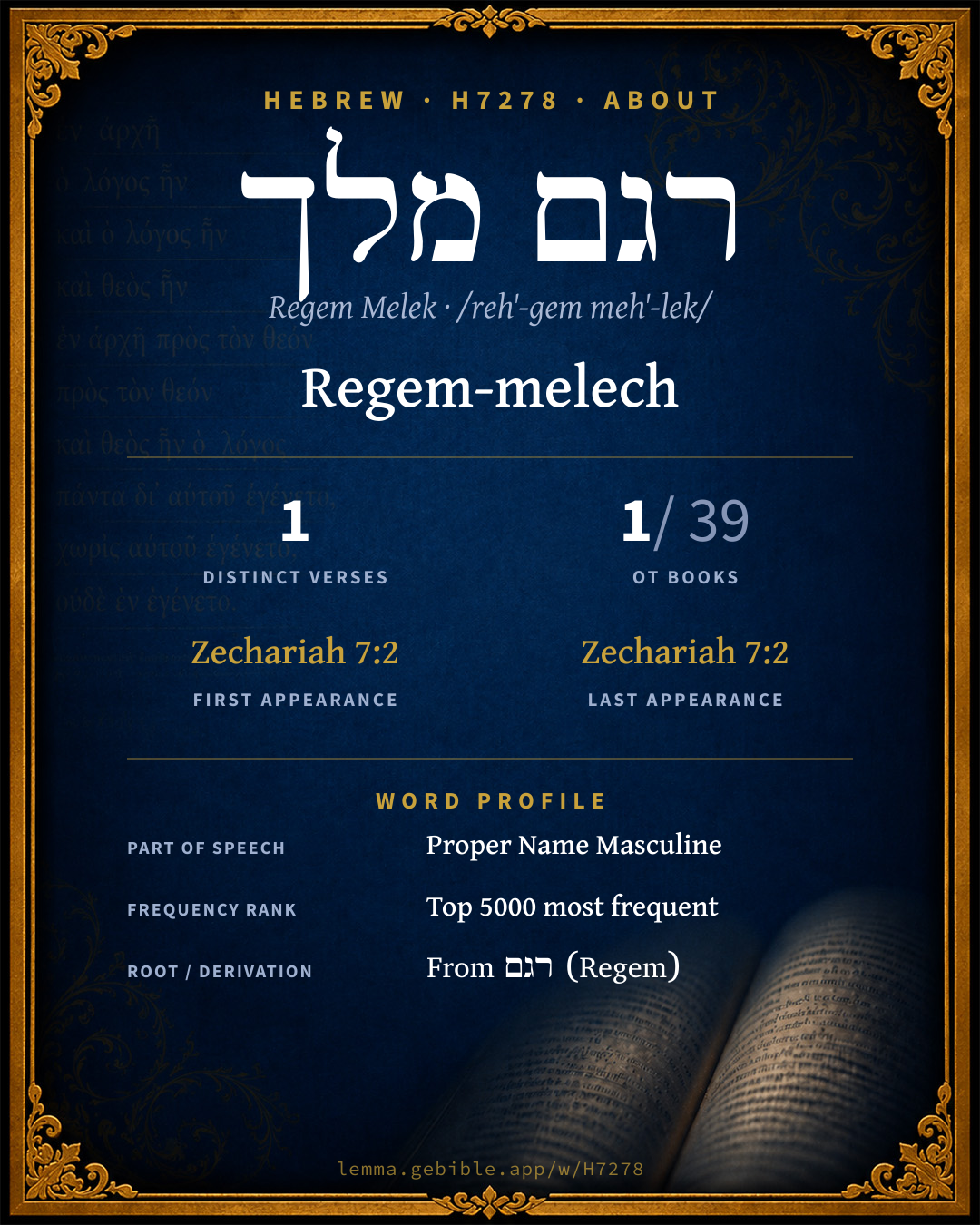
רֶ֫גֶם מֶ֫לֶךְ
Regem-melech
BDB lists 2 entries for ‘Regem-melech’ fuller range ↓
Full lexicon entry — Brown-Driver-Briggs (BDB)
From Brown-Driver-Briggs (BDB)
Where this word appears
Grammar key — what these labels mean
Part of speech
- Noun
- A naming word — a person, place, thing, or idea.
Noun type
- Proper
- A name of a specific person, place, or people (e.g. Abraham, Zion, Israel).
Every verse where H7278 appears — 1 distinct verse across 1 book. Click any verse to open its interlinear word-by-word view. Verse text shown in the World English Bible for context — . Each verse’s Hebrew form is shown with its reference; the English is not keyword-highlighted, since the data carries no word-level English alignment. Use “Compare translations” on any verse to read it across multiple English versions. This concordance covers the Hebrew Bible; Septuagint (Greek Old Testament) occurrences are not indexed here.
Zechariah 1 verse
About this entry
At a glance — auto-summarized from this page’s data, not written by a person. Every figure links to its source below. This summary describes the numbers; it doesn’t interpret them.
The Hebrew name רגם מלך centers on the idea of “Regem-melech.” The Hebrew Bible uses it only 1 verse. The word gravitates to Zechariah (100%). Found nowhere else but Zechariah 7:2. For the data behind this summary, explore 1-verse concordance and the renderings breakdown below.
Gloss history
Strong's 1890 vs modern scholarship
About this word
Strong's H7278 catalogs a Hebrew word from the Hebrew Old Testament.
These counts are not copied from any lexicon or concordance. They are computed here, from the morphology-tagged Hebrew Old Testament. What Lemma adds →
- 1
- distinct verses
- The word appears in 1 distinct verse.
- 1 / 39
- OT books
- The word appears in 1 of 39 Old Testament books.
- #4,807
- by frequency
- Top 5000 most frequent Hebrew words (rank 4,807 of 8,640 Hebrew words by occurrence).
View all 1 occurrence in the concordance →
Most concentrated in
- Zechariah 1 verse 100%
By section of the Old Testament
By traditional corpus
Conventional, traditional groupings — biblical authorship is debated, so this is a traditional corpus grouping, not an authorship claim. Each share is this word’s portion of its verses in that division of the Hebrew canon. Each figure is a share of the word’s 1 distinct verse.
- Prophets (Nevi'im) 1 verse · 100%
How translations render this word
Counts come from each version’s own published word-to-Strong’s tagging or interlinear alignment — an approximate guide to how each version renders this word, not a word-level alignment the data otherwise carries. Because each total is that version’s own tagged count, the per-version totals vary from one another and need not match the appearance or distinct-verse counts above. These counts may also differ from a printed concordance because Lemma counts each distinctly tagged rendering and does not collapse phrase taggings into a single head-word total. This is a fixed set of word-tagged versions (KJV, ASV, BSB, ULT) and does not change with the reading translation you choose elsewhere. Each version’s license is shown beside its name below (and on Sources).
- King James Version: Regemmelech 1×
- American Standard Version: Regem-melech 1×
- Berean Standard Bible: Regem-melech 1×
- unfoldingWord Literal Text: Melek 1×, Regem 1×
King James Version Public Domain
Renders H7278 across 1 tagged occurrence — most commonly:
American Standard Version Public Domain
Renders H7278 across 1 tagged occurrence — most commonly:
Berean Standard Bible Public Domain
Renders H7278 across 1 tagged occurrence — most commonly:
unfoldingWord Literal Text CC BY-SA 4.0
Renders H7278 across 2 tagged occurrences — most commonly:
Senses in BDB
The 2 senses BDB distinguishes for this word, in lexicon order (not ranked by frequency or importance). The full entry — with sub-senses — is in the Lexicon Entry tab.
- Regem-melech = "king's heap"
- a man sent by some of the captivity to make enquiries at the temple concerning fasting
Word origin
n.pr.m. exilic, Zc 7:2; Αρβεσεερ ὁ Βασιλεύς.
— Brown-Driver-Briggs (Oxford 1906, public domain), digitized via Sefaria, supplemented by the OpenScriptures HebrewLexicon (CC BY 4.0). See Sources.
Derived from רגם (Regem) (H7276) — Regem.
Jastrow Dictionary
A second Hebrew/Aramaic lexicon for comparison, covering Aramaic and post-biblical (Talmudic, Targumic, Midrashic) usage that the biblical-Hebrew BDB does not. Matched by lemma rather than by Strong’s number, so a lemma may carry more than one Jastrow headword (shown separately below), and the entries cover usage well beyond the Bible.
*מַלָּךְ
- (= מַה לָךְ) what is it to thee?; of no practical value. Sabb. 150ᵃ sq. חשבונות של מ׳ ושל מה בכך (Ms. M. מה לך, v. Rabb. D. S. a. l. note) accounts of ‘what is it to thee?’ and of ‘what is in it?’, i.e. for no practical purpose. [Oth. opin., v. Ar.]
מָלַךְ
- (b. h.) [to lead in council,] to preside; to officiate; to be ruler. B. Bath. 164ᵇ מ׳ שנה מונין לו שתים when he has been in office one year, they date (in documents) ‘the second year’. Meg. 11ᵃ (ref. to המֹלֵךְ, Esth. I, 1) מ׳ מעצמו started a dynasty with himself (had no claims of succession). Ib. מָלְכוּ בכיפה, v. כִּיפָּה. Zeb. 118ᵇ עשרה שנה שמ׳ וכ׳ ten years during which Samuel ruled alone, ושנה שמ׳ שאול וכ׳ and one year during which Saul and Samuel ruled conjointly; Tem. 15ᵃ; a. fr. e.g. Esther 1:1
- [to be led,]
- 1. to take council, to ask advice or permission. Ber. 3ᵇ נִמְלָכִין בסנהדרין they ask the Sanhedrin for their confirmation. Ib. 4ᵃ כל מה … אני נ׳ במפיבשת וכ׳ in whatever I undertake, I consult the opinion of M., my teacher. Ib. 29ᵇ וכשאתה … הִמָּלֵךְ בקונך וצא and when thou art about to go on a journey, take council of thy Maker (pray) and go out. B. Mets. 14ᵃ צריך לִימָּלֵךְ the scribe must ask for authorization (to insert in the contract); a. fr.
- 2. [to take council with one’s self,] to reconsider, change one’s mind. Gitt. III, 1. Dem. III, 2 הלוקח … ונ׳ להחזיר if one buys vegetables …. and then decides to return (the goods). Ib. 3 נטלן לאוכלן ונ׳ להצניע if he took them up to eat them and changed his mind (deciding) to keep them; a. fr.
- to appoint or elect for rulership, to acknowledge the authority of. Snh. 64ᵃ שהִמְלִיכוּהוּ עליהם, v. מוֹלֶךְ. Y. Ned. IX, beg. 41ᵇ (ref. to Ps. LXXXI, 10) זר שבקרבך אל תַּמְלִיכֵהוּ עליך allow not the tyrant within thee (the evil inclination) to rule over thee. Ab. Zar. 18ᵃ אומה זו מן השמים הִמְלִיכוּהָ this (Roman) nation has been given the rulership by divine decree. R. Hash. 16ᵃ אמרו לפני … מלכיות שתַּמְלִיכוּנִי עליכם recite before me verses of homage (v. מַלְכוּת), in order that you may declare me your ruler; a. fr. e.g. Psalms 81:10
מְלַךְ
- 1. to rule. Targ. Gen. XXXVII, 8; a. fr.—Part. מָלִיךְ. Targ. Jer. XXXIII, 21 (ed. Wil. מְלִיךְ, corr. acc.); a. fr.—Ab. Zar. 10ᵃ בעינא דיִמְלַךְ וכ׳ I desire that my son Severus be king after me; ib. דיִמְלוֹךְ.—Ber. 64ᵃ מ׳ רבה Rabbah officiated (as teacher and judge); a. fr.
- 2. (mostly מליך) to decide. Targ. Is. XIV, 27. Ib. XXIII, 8 (ed. Ven. מַלִּיךְ). Ib. 9 מִילְכָהּ ed. Lag. (some ed. מלכא, read: מִלְכָהּ); a. fr.—Part. pass. מְלִיךְ. Ib. XIV, 26; a. e.
- 3. to advise. Targ. II Sam. XVII, 7. Targ. I Kings I, 12; a. fr.
- 1. to advise. Targ. Job XXVI, 3.
- 2. to decide, v. supra.
- 1. = preced. = preced. Hif. Targ. I Kings III, 7; a. fr.
- 2. to counsel, persuade. Targ. Josh. XV, 18. Targ. Y. Deut. XXX, 6; a. e.—[Targ. Prov. VIII, 15 מַמְלְכִין ed. Lag. rule (oth. ed. מלכין).]
- , אִמְּ׳ = preced. Nif.—Targ. Is. XXXII, 7; a. fr.—B. Bath. 4ᵃ בתר דעבדין מִתְמַלְּכִין do people ask for advice (or permission) after they have acted? Ber. 27ᵇ אִימְּלִיךְ וכ׳ consult my family. Ib. אזיל ואִמְּ׳ וכ׳ he went and consulted his wife. Ned. 54ᵃ כל מילתא דצריך שליחא לאִמְּלוּכֵי וכ׳ any change of order for which the messenger has to ask special authorization, is heterogeneous (to the object of the original commission); כל מילתא דמִימְּלִיךְ שליח עלה וכ׳ a change for which the messenger asks for instructions is homogeneous. Sot. 43ᵇ אי אימ׳ עלה if he reconsiders his original disposal; a. fr.
מֶלֶךְ
- preced.) leader in council, chief, king. Ber. 3ᵇ אדוננו המ׳ our lord the king! Tosef. Snh. VIII, 5, a. fr. מ׳ מלכי המלכים the Most Supreme King (the Lord). Ib. IX, 8 אפי׳ מ׳ של מלכים even a king of kings (great sovereign). Snh. 38ᵃ, a. fr. מ׳ בו"ד (v. בָּשָׂר) a human chief. Ab. Zar. 10ᵃ אין מושיבין מ׳ בן מ׳ they (the Romans) do not allow the son of a king to succeed his father. Kerith. 5ᵇ מ׳ ראשון a first king, starter of a dynasty. Shebu. 6ᵇ מַלְכֹּו של זה this hyparch’s chief. Num. R. s. 18 משה מ׳ וכ׳ Moses has made himself the chief, and Aaron is high priest &c.; a. v. fr.—Pl. מְלָכִים. Hor. 12ᵃ כיצד מושחין את המ׳ וכ׳ how are kings anointed? By drawing with the oil the outlines of a crown; Ker. 5ᵇ. Ib. מַלְכֵי בית דוד the kings of the house of David (southern kingdom); מ׳ ישראל the kings of the northern kingdom; a. v. fr.—בַּת מְ׳ Princess, name of a demon afflicting the eye, also a certain disorder of the eye, v. בַּת I. Sabb. 109ᵃ (Var. בת חורין, v. Rabb. D. S. a. l. note).—Pl. בנות מֶלֶךְ. Tosef. B. Kam. IX, 27 יצאו בנות מ׳ the ‘princesses’ (humors of the eye) escaped (in consequence of a blow).
מֶלֶךְ ²
- Targ. Ps. XXIV, 7; 9. Targ. Ex. I, 8; a. fr.—Snh. 110ᵃ איהו הוה מ׳ he (Moses) himself is chief. Y. Yeb. XVI, 15ᶜ, v. אָרְסְקִינָס. Y. Ter. VIII, 46ᵇ bot. אתעביד מ׳ he (Dioclet) became king; a. fr.—Pl. מַלְכֵין, מַלְכַיָּא, מַלְכֵי. Targ. Gen. XVII, 6. Ib. XIV, 5. Targ. Prov. VIII, 15; a. fr.—Gitt. 62ᵃ שלמא עלייכו מ׳ (to scholars) peace be with you, chiefs!—Shebu. 6ᵇ תרי מ׳ וכ׳ two kings and two viceroys (hyparchs); a. fr.
מֵלַךְ
- (preced. wds.) counsel, advice. Targ. Is. III, 3. Targ. Y. Deut. VIII, 18 (O. עצה; h. text כֹּחַ); a. fr.—Pl. מִלְכִין, מִלְכַיָּא, מִי׳. Targ. Is. XXV, 1. Targ. Job XII, 17 (not מַ׳). Targ. Hos. X, 6; a. e.
רָגַם
- to cast a stone, ball &c., to pelt. Succ. IV, 9; Tosef. ib. III, 16 ורְגָמוּהוּ וכ׳ and all the people pelted him with their Ethrogim. Sot. 37ᵃ (play on רגמתם, Ps. LXVIII, 28) והיו … רוֹגְמִים אותם and the princes of Judah threw stones at them (stirring them up to go into the sea); Mekh. B’shall., s. 5 מְרַגְּמִין וכ׳. Ex. R. s. 1 שר׳ אוהבו וכ׳ who cast stones at the king’s friend; a. e. e.g. Psalms 68:28
- same; to wound with missiles, bruise. Mekh. B’shall. l. c., v. supra.—Tanḥ. K’dosh. ed. Bub. 8; Yalk. Lev. 615 כבר היו מְרַגְּמִין את וכ׳ they would have bruised my face and my whole body with them (the Ethrogim).
- same. Tanḥ. K’dosh. 8 כבר היו מַרְגִּימִין איתי את כל וכ׳ they would have bruised me all over my body &c., v. supra.
רְגַם
- Targ. O. Lev. XXIV, 16. Targ. Lam. I, 18. Targ. Ex. XVII, 4 (O. ed. Berl. ורַגְּמוּנִי Pa.); a. fr.—Kidd. 70ᵇ נפקי … למִירְגְּמֵיה they went out after him ready to stone him. Yalk. Is. 284 [read:] כל חד מינייכו ליתי ליה טינא לחתמא ונִרְגְּמוּנֵיה (גולמא being a gloss to טינא לחתמא, and ונשדי ביה, a Var. of ונרגמוניה) let each of you bring a ball of sealing clay (cylinder) and cast it at it (Jerusalem); Snh. 95ᵃ, v. גּוֹלְמָא.
- same. Targ. II Sam. XVI, 6; 13; a. e.
- to be stoned (to death). Targ. Ex. XIX, 13. Targ. I Kings XXI, 14, sq.; a. e.—[Targ. Is. I, 2, v. רְגֵף.]
רְגָם
- R’gam, v. רְקָם I.
A Dictionary of the Targumim, the Talmud Babli and Yerushalmi, and the Midrashic Literature (Marcus Jastrow; London, Luzac, 1903) — Public Domain. Digitized via Sefaria. Digitized via Sefaria. Full attribution on Sources.
Forms in the corpus
The 2 distinct written forms H7278 takes in the Hebrew Bible, most frequent first — each parse links to that state’s occurrences in the concordance. Hebrew forms include their vowel points and cantillation, so a single lemma takes many written forms.
| Form | Parsing | Example | Uses |
|---|---|---|---|
| וְ/רֶ֥גֶם | Noun, Proper | Zechariah 7:2 | 1 |
| מֶ֖לֶךְ | Noun, Proper | Zechariah 7:2 | 1 |
Same root — word family
Other BDB entries built from the same root as H7278, grouped by Strong’s listed origin. These share a root / origin per the lexicon — not necessarily a shared meaning. Each links to that word’s own entry.
Derives from
Shares the same root
Compare all same-root words → 1 of the same-root words is a proper name (a person or place). They share a root, not necessarily a meaning.
Bible dictionary
Public-domain dictionary articles matched to this entry by name (Regem-melech). A biblical name can be shared by more than one person or place, so an article may treat several.
Easton's Bible Dictionary · M. G. Easton, 1897
Friend of the king, one of the two messengers sent by the exiled Jews to Jerusalem in the time of Darius (Zech. 7:2) to make inquiries at the temple.
Smith's Bible Dictionary · William Smith, 1863
(friend of the king). The names of Sherezer and Regem-melech occur in an obscure passage of Zechariah. (Zechariah 7:2) They were sent on behalf of some of the captivity to make inquiries at the temple concerning fasting (B.C. 617.)
Hitchcock's Bible Names Dictionary · Roswell D. Hitchcock, 1869
he that stones the king; purple of the king
Classic public-domain reference works; full attribution on Sources.
Septuagint verse parallels
This word appears in 1 verse that also exists in the Greek Old Testament (Septuagint), out of the 1 Hebrew verse it occurs in. You can read those verses in Greek by switching the Old Testament edition to the Septuagint.
Read these verses in the Septuagint
This is a verse-level parallel only — the same verses exist in both the Hebrew and Greek Old Testaments. No word-level Hebrew↔Greek correspondence is claimed: the data carries no such alignment, so no Greek word is shown as this Hebrew word’s translation. Coverage is not total — the Septuagint omits the deuterocanon and renumbers the Psalms, so some Hebrew verses have no direct Greek parallel.