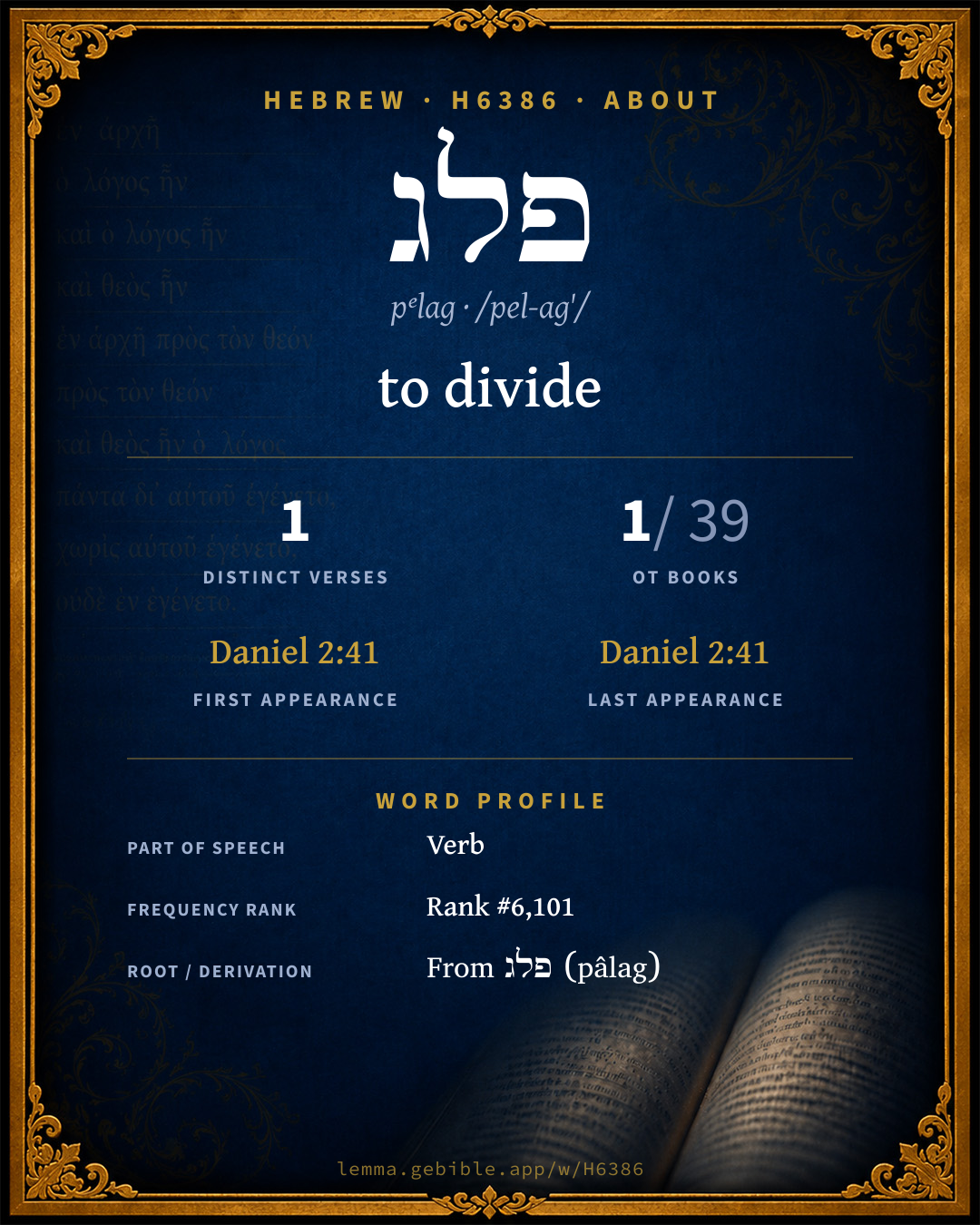
פְּלַג
to divide
‘to divide’ is one of 2 main senses fuller range ↓
Full lexicon entry — Brown-Driver-Briggs (BDB)
From Brown-Driver-Briggs (BDB)
Where this word appears
Grammar key — what these labels mean
Part of speech
- Verb
- An action or state-of-being word.
Stem
- Qal Passive
- An archaic passive of the Qal, preserved in a few forms.
Form
- Participle Passive
- A verbal adjective expressing action received (“written”).
State
- Absolute
- The independent form of a noun, not bound to a following word.
Gender
- Feminine
- Grammatically feminine.
Number
- Singular
- One.
Every verse where H6386 appears — 1 distinct verse across 1 book. Click any verse to open its interlinear word-by-word view. Verse text shown in the World English Bible for context — . Each verse’s Hebrew form is shown with its reference; the English is not keyword-highlighted, since the data carries no word-level English alignment. Use “Compare translations” on any verse to read it across multiple English versions. This concordance covers the Hebrew Bible; Septuagint (Greek Old Testament) occurrences are not indexed here.
Daniel 1 verse
About this entry
At a glance — auto-summarized from this page’s data, not written by a person. Every figure links to its source below. This summary describes the numbers; it doesn’t interpret them.
פלג (pᵉlag) is a Hebrew verb most often rendered “to divide.” With only 1 verse it sits in the long tail of Hebrew Bible vocabulary. Daniel dominates its distribution — 1 of 1 verses. Found nowhere else but Daniel 2:41. Ranging over 2 senses, it is not a single-sense word. The sections below give every sense, occurrence, and version rendering.
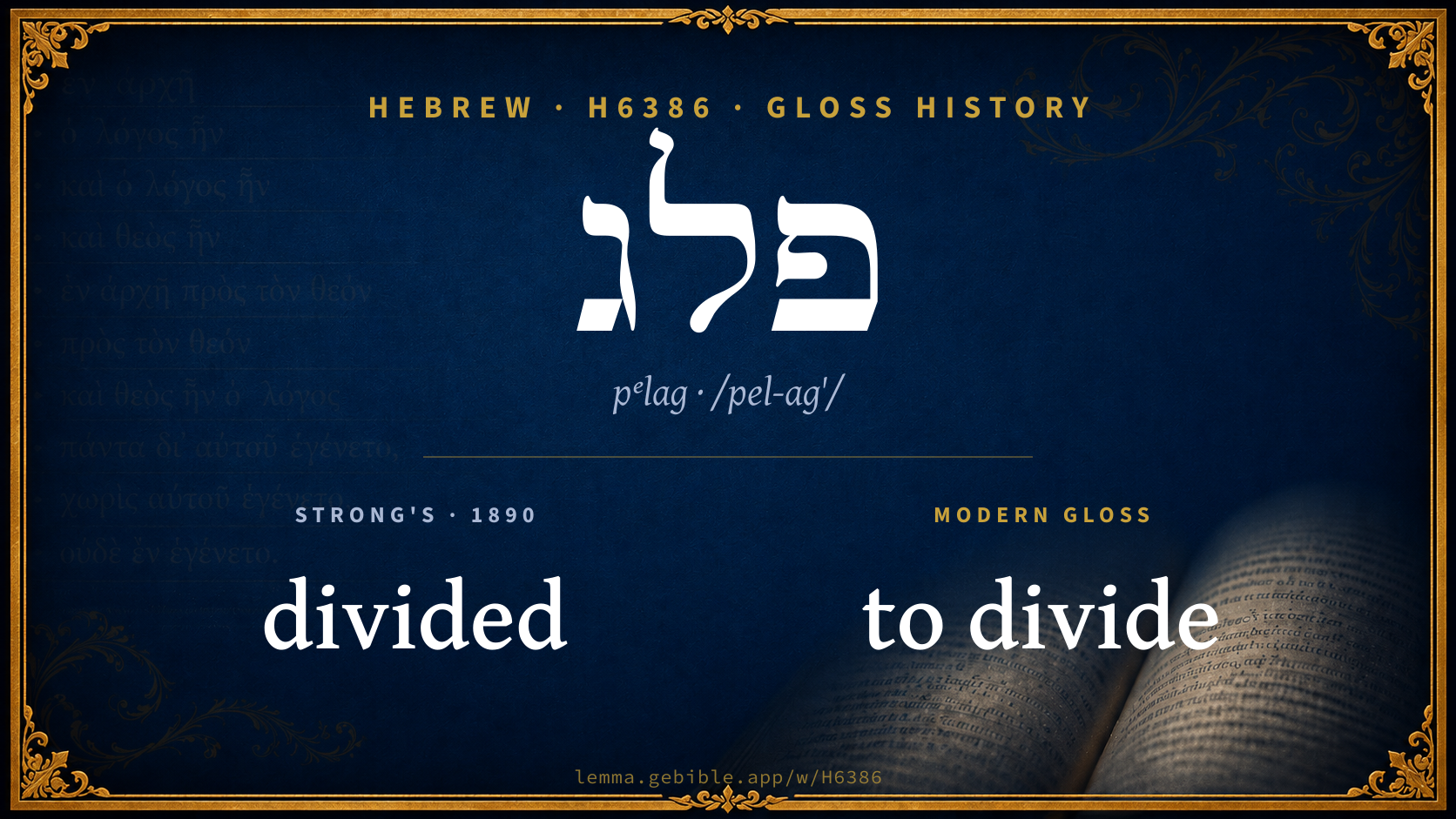
Gloss history
Strong's 1890 vs modern scholarship
About this word
Strong's H6386 catalogs a Hebrew word from the Hebrew Old Testament.
These counts are not copied from any lexicon or concordance. They are computed here, from the morphology-tagged Hebrew Old Testament. What Lemma adds →
- 1
- distinct verses
- The word appears in 1 distinct verse.
- 1 / 39
- OT books
- The word appears in 1 of 39 Old Testament books.
- #6,101
- by frequency
- Rank #6,101 (rank 6,101 of 8,640 Hebrew words by occurrence).
View all 1 occurrence in the concordance →
Most concentrated in
- Daniel 1 verse 100%
By section of the Old Testament
By traditional corpus
Conventional, traditional groupings — biblical authorship is debated, so this is a traditional corpus grouping, not an authorship claim. Each share is this word’s portion of its verses in that division of the Hebrew canon. Each figure is a share of the word’s 1 distinct verse.
- Writings (Ketuvim) 1 verse · 100%
How translations render this word
Counts come from each version’s own published word-to-Strong’s tagging or interlinear alignment — an approximate guide to how each version renders this word, not a word-level alignment the data otherwise carries. Because each total is that version’s own tagged count, the per-version totals vary from one another and need not match the appearance or distinct-verse counts above. These counts may also differ from a printed concordance because Lemma counts each distinctly tagged rendering and does not collapse phrase taggings into a single head-word total. This is a fixed set of word-tagged versions (KJV, ASV, BSB, ULT) and does not change with the reading translation you choose elsewhere. Each version’s license is shown beside its name below (and on Sources).
- King James Version: Divided 1×
- American Standard Version: Divided 1×
- Berean Standard Bible: Divided 1×
- unfoldingWord Literal Text: Divided 1×
King James Version Public Domain
Renders H6386 across 1 tagged occurrence — most commonly:
American Standard Version Public Domain
Renders H6386 across 1 tagged occurrence — most commonly:
Berean Standard Bible Public Domain
Renders H6386 across 1 tagged occurrence — most commonly:
unfoldingWord Literal Text CC BY-SA 4.0
Renders H6386 across 1 tagged occurrence — most commonly:
Senses in BDB
The 2 senses BDB distinguishes for this word, in lexicon order (not ranked by frequency or importance). The full entry — with sub-senses — is in the Lexicon Entry tab.
- to divide
- (Peal) to be divided
Word origin
[ פְּלַג ] vb. divide;— Pe. Dn 2:41
— Brown-Driver-Briggs (Oxford 1906, public domain), digitized via Sefaria, supplemented by the OpenScriptures HebrewLexicon (CC BY 4.0). See Sources.
Derived from פלג (pâlag) (H6385) — to divide.
Jastrow Dictionary
A second Hebrew/Aramaic lexicon for comparison, covering Aramaic and post-biblical (Talmudic, Targumic, Midrashic) usage that the biblical-Hebrew BDB does not. Matched by lemma rather than by Strong’s number, so a lemma may carry more than one Jastrow headword (shown separately below), and the entries cover usage well beyond the Bible.
פָּלַג
- (b. h.) to separate, split.
- 1. to part, go away. Y. Ber. I, 2ᵈ bot. ומצאו שה׳ אף הוא ה׳ (not עוד) and finding that he (the friend that had knocked at the door) had withdrawn, he withdrew likewise.—Esp. to go to sea (cmp. פִּילָגוֹס). Erub. IV, 1 הִפְלִיגָה ספינתם בים their ship went out on the open sea. Sabb. 19ᵃ אין מַפְלִיגִין בספינה וכ׳ you must not start on a sea-voyage less than three days before the Sabbath; Num. R. s. 16, beg. אין מפליגין בספינה בים הגדול (contrad. to פָּרַשׁ along the sea coast).
- 2. ה׳ ממלאכה (or sub. ממלאכה) to rest from work; to pause. Lev. R. s. 30 לכשיַפְלִיג, v. לָקַשׁ. Tosef. Ber. IV, 21 הִפְלִיגוּ צריכין וכ׳ (not צריך) when the laborers take a recess, they must say the benediction for what they have been eating while at work. Y. Yoma III, 40ᵇ bot. להפליג, v. הֶפְלֵג.
- 3. to divert, put off; to discard. Bab. ib. 66ᵇ לא מפני שהִפְלִיגָן בדברים וכ׳ (he made an evasive reply) not because he desired to divert their minds with words (counterquestions), but because he never said anything that he had not heard from his teacher; Tosef. Yeb. III, 4; Succ. 27ᵇ. Y. Ab. Zar. II, 40ᶜ bot. אם שאלו … יַפְלִיגֶינּוּ כשם שה׳ וכ׳ if he asks him whither he is going, let him put him off (state a distant destination), as did Jacob to Esau; Tosef. Ab. Zar. III, 4 מַפְלִיגוֹ. Tosef. Gitt. VII (V), 8 כל תנאי שאי אפשר … לא נתכוון זה אלא להַפְלִיגָהּ whenever an impossibility is made the condition of a letter of divorce, he (the husband) has had only the intention to divert her mind; Y. B. Mets. VII, end, 11ᶜ (corr. acc.). Y. Ber. IX, end, 14ᵈ כיון שה׳ דעתו ממנה when he turns his attentions from her (makes her feel that he does not intend to marry her). Gen. R. s. 17 ראה … והִפְלִיגָהּ ממנו when he saw her full mucus and blood, he kept her away from him; a. fr.
- 4. to reject, disregard, discard. Pesik. R. s. 31 היתה פושעת … ומַפְלֶגֶת את גזירותיו she was careless about his honor and disregarded his decrees. Ib. s. 3 [read:] כל זמן … הוא מַפְלִיג וכ׳ as long as his teacher is alive, he (the pupil) is careless, (saying) whenever it be needed, here is my teacher &c. Ab. IV, 3 אל תהי מפליג לכל דבר discard nothing (saying, this will never happen). Gen. R. s. 8 ה׳ דרכן של רשעים וכ׳ he removed the way of the wicked out of his sight (disregarded the evil doings of the future man); Midr. Till. to Ps. I ed. Bub. (oth. ed. פִּילֵּג Pi.); a. e.
- 5. to decline from the road. Gen. R. s. 48 אם אני רואה אותן שהִפְלִיגוּ את דרכם וכ׳ when I see that they wend their way hither &c.; וכיון שראה אותם שהפליגו and when he saw that they were declining; Yalk. ib. 82.—Trnsf. to be mistaken. Bekh. 43ᵇ bot. הִיפְלַגְתָּ thou art mistaken (Rashi: thou hast gone too far, v. infra); Sifra Emor, ch. II, Par. 3 הִפְלַגְתָּה.—Koh. R. to XI, 9 אל תַּפְלִיג עצמך בדברי תורה do not go thy own way in the interpretation of the Law (cling to tradition).
- 6. ה׳ עצמו [to withdraw one’s self,] to be reserved, speak in indefinite and general terms, opp. פרסם עצמו to reveal one’s self, speak in definite terms. Midr. Sam. ch. XIV (ref. to I Sam. IX, 15, sq.) לשעבר לא אלא עד שלא הגיע הקץ הקב"ה מפליג עצמו … מפרסם עצמו did the Lord never before reveal anything to Samuel? But before the proper time has come, the Lord speaks reservedly, when the time has come, he reveals himself clearly (‘to-morrow’ &c.) e.g. 1 Samuel 9:15
- 7. to differ. Yalk. Jer. 320 מי שמפליג על דבריו של אל who opposes the words of God. Y. Pes. V, 32ᶜ bot. ומה מַפְלִיגִין and wherein do they differ?; a. e.
- 8. to go too far. Y. Nidd. I, beg. 48ᵈ, v. פָּרַז. Bekh. 43ᵇ bot.; Sifra Emor l. c., v. supra.—Part. pass. מוּפְלָג a) removed; far. Sifra M’tsorʿa, Zab., Par. 5, ch. VIII מ׳ מנידתה some time after her menstruation, opp. סמוך; Nidd. 73ᵃ מ׳ לנדתה. Gen. R. s. 44, v. אחַר; a. e.—b) distinguished, special expert. Tosef. Ḥag. II, 9, v. מוּפְלָא.—Erub. 63ᵃ דמופלג, v. next w.
- to remove, disregard. Midr. Till. to Ps. I, v. supra.
- to be divided, go apart. Gen. R. s. 15 וכל מימי בראשית מִתְפַּלְּגִין מתחתיו and all the waters of creation started from under it; Midr. Till. to Ps. I; Y. Ber. I, 2ᶜ bot., v. פִּילּוּג.
פְּלַג I
- 1. to divide, share. Targ. Ex. XXI, 35 (O. ed. Vien. יְפַלְּג׳ Pa.). Targ. Prov. XXIX, 24. Ib. 23 (h. text יתמך); a. fr.—Part. pass. פְּלִיג; f. פְּלִיגָא; pl. פְּלִיגִין, פְּלִיגֵי; פְּלִיגָן a) divided (at heart), undecided. Targ. Hos. XI, 7. Targ. I Kings XVIII, 37. Ib. 21; a. e.—[Targ. Ps. XLIV, 19, v. infra.]—b) (with על) differing in opinion. Targ. Y. II, Gen. XLIX, 1.—B. Mets. 5ᵃ, a. fr. תנא הוא ופ׳ he is a Tannai, and (as such) he differs (from the Mishnah). Y. Kil. IX, 32ᵃ top, a. fr. מתניתא פ׳ על וכ׳ the Boraitha differs from Rab. Ḥull. 92ᵇ הא מִפְלֵיג פליגי ביה are there not differing opinions about it? Ber. 23ᵇ ופליגא דר׳ חייא and R. Ḥia’s opinion differs (from what has just been said). Ib. 33ᵇ מכלל דפליגי this implies that scholars differ about it; ולא פ׳ and do they not differ?; a. v. fr.—c) distinguished, rare, v. infra.
- 1. to divide; to distribute, assign a share. Targ. O. Ex. XXI, 35, v. supra. Targ. O. Gen. XV, 10. Targ. Ps. XLIV, 19 (not פְּלִיג), v. זְהַהּ. Targ. Job XXXIX, 17. Targ. Ps. LXVIII, 14. Ib. 13 Ms. (ed. מַפְלְגָא Af.). Targ. I Chr. XXVI, 5; a. fr.—B. Bath. 119ᵇ דפ׳ ליה רביה יקרא when his teacher did him honor. Y. Shek. II, end, 47ᵃ מה את פַּלֵּיג ליה וכ׳ why wilt thou do him (the idol) honor?; Y. Ber. II, 4ᵇ איתפליג (corr. acc.). Y. Sabb. VII, 10ᵃ bot. כד מְפַלֵּג when he divides (the flax stalks). Lev. R. s. 3, beg. ומְפַלְּגָא לבישיא, v. גּוּף I ch.; Koh. R. to IV, 6; a. e.—[Y. Kidd. IV, 65ᶜ top פלגין, v. פְּלַג II.]
- 2. to divert the mind. Targ. Y. Deut. IV, 19. Ib. XXII, 1.
- 3. to speak differently from what one thinks, flatter. Targ. Prov. XXVIII, 23 Ms. (ed. Af.).
- 1. to separate. Targ. Y. Gen. XLIX, 7; a. e.
- 2. to divert. Targ. Y. II, Gen. XLV, 26 וְאַ׳ ליביה (Y. I יפַּלֵּיג, ed. Vien. ופְלֵיג) he turned his mind off it (gave up hope, would not believe; h. text ויפג). Targ. Prov. XIV, 30 דמַפְלִיג חמתא וכ׳ who diverts the anger of his heart; a. e.
- , אִפְּ׳
- 1. to be divided, dispersed. Targ. Num. XXVI, 53; 55. Targ. Gen. XIV, 15; a. fr.—B. Bath. 121ᵇ א"י לשבטים נתחלקה או דילמא קרקף גברא אִיפַּלְּגָא Ms. M. was the land of Israel divided according to tribes (in equal shares for each tribe), or according to the number of heads?; ed. א"י לשבטים אִיפְּלוּג … איפלוג (sub. נחלות) were the shares of the land of Israel divided &c.?
- 2. to be different from the rest, rare, distinguished. Ib. 120ᵃ דמִפְּלִיג בחכמה (Ms. R. דפליג) of rare wisdom, דמפ׳ בזקנה extremely old. Gitt. 28ᵃ כיון דאיפ׳ אפ׳ having reached a rare old age, he may as well be presumed to be more distinguished (and be still alive). Erub. 63ᵃ שאני … דמִיפְּלַג (Ar. a. Ms. O. דמוּפְלָג h. form) it is different with R. …, for he was very distinguished (for age and learning); a. e.
- 3. (cmp. גזר) to be decreed. Targ. Y. Gen. XIV, 7 (v. פִּילּוּגָא).
- 4. to secede; to differ. Targ. O. Num. XVI, 1 (h. text ויקח). Targ. II Kings XVII, 21; a. fr.—Y. Taan. IV, 67ᵈ top ואפי׳ עלה לא הוה צריך מִתְפַּלְּגָה even about this it was unnecessary to assume a difference of opinion. Gen. R. s. 21 אִיתְפַּלְּגוּן ר׳ וכ׳ R. A. and R. H. differ (in their interpretations). Ber. 22ᵇ bot. בהא קמִיפַּלְּגֵי (popular pronunciation קמִיפְלְגֵי) on this principle their difference rests. Ib. 23ᵃ; a. v. fr.
פֶּלֶג
- preced.) part, share. Tanḥ. Mishp. 7 (ref. to Prov. XXVIII, 23) כל המוכיח … זוכה לפ׳ של הקב"ה he who reproves his neighbor for the sake of heaven, will be granted a share of divine grace; (Tam. 28ᵃ לחלקו).—Pl. פְּלַגּוֹת. Gitt. 89ᵇ (borrowing the phrase from Jud. V, 16) עדיין לא הגיע לפ׳ ראובן he (that minor, although physically developed beyond his age) has not yet obtained ‘the parts of Reuben’ (mental maturity, and none will consider him an adult). e.g. Proverbs 28:23
פָּלָג
- (preced.) part, middle. Ber. IV, 1, a. e. פּלג המנחה, v. מִנְחָה.
פְּלַג II
- 1. part, half. Targ. O. Gen. XV, 10 (ed. Berl. פַּלַג; ed. Vien. פִּלּוּג). Targ. Ex. XXV, 10 (Y. also פּוּלְגָּא); a. fr.—[Targ. I Chr. XVI, 3, v. פְּלוּג.]—B. Bath. 62ᵇ פ׳ דאית לי בארעא פ׳ if the deed reads, ‘the half share which is mine in that field’, he has sold half the field (his entire share); פ׳ בארעא דאית לי ריבעא but if it reads, ‘half of that field which is mine’, he has sold him one fourth of the field (or half his share). Ib. מצר ארעא דמינה פ׳ פ׳ (Ms. M. פְּלִיגָא) if he writes, ‘these are the borders of the field of which I sell a portion’, it means half, contrad. to פְּסִיקָא; ib. 63ᵃ. Sabb. 89ᵇ דל תרתי סרי ופ׳ וכ׳ deduct (from the years of life) twelve years and a half for prayer, eating &c. Ib. פ׳ עלי ופ׳ עלך let me bear the failings of half the remaining years, and bear thou the other half. Pes. 79ᵇ פ׳ ופ׳ equal numbers on both sides. Y. Kidd. IV, 65ᶜ top דבהתין פַּלְגּוֹן מן פלגון (not מן פלג) one half of them is afraid of the other half of them; Num. R. s. 8 פלגין מן פלגין (corr. acc.); a. v. fr.—Pl. פַּלְגַּיָּא, פַּלְגֵּי. Targ. O. Gen. XV, 10. Ib. 17 (h. text הגזרים). Ib. 11 ed. Berl. (v. פִּגְרָא); a. e.—Yoma 83ᵇ, v. פְּלוּג.
- 2. רוח פלגא the demon Palga, a disease (paralysis?). Pes. 111ᵃ
A Dictionary of the Targumim, the Talmud Babli and Yerushalmi, and the Midrashic Literature (Marcus Jastrow; London, Luzac, 1903) — Public Domain. Digitized via Sefaria. Digitized via Sefaria. Full attribution on Sources.
Same root — word family
Other BDB entries built from the same root as H6386, grouped by Strong’s listed origin. These share a root / origin per the lexicon — not necessarily a shared meaning. Each links to that word’s own entry.
Derives from
Shares the same root
- מפלגה miphlaggâh H4653 division
- פלג peleg H6388 channel
- פלגה pᵉlaggâh H6390 stream
- פלגה pᵉluggâh H6391 division
Derived from this word
Compare all same-root words → Showing 4 of 7 — not the complete family. They share a root, not necessarily a meaning.
Septuagint verse parallels
This word appears in 1 verse that also exists in the Greek Old Testament (Septuagint), out of the 1 Hebrew verse it occurs in. You can read those verses in Greek by switching the Old Testament edition to the Septuagint.
Read these verses in the Septuagint
This is a verse-level parallel only — the same verses exist in both the Hebrew and Greek Old Testaments. No word-level Hebrew↔Greek correspondence is claimed: the data carries no such alignment, so no Greek word is shown as this Hebrew word’s translation. Coverage is not total — the Septuagint omits the deuterocanon and renumbers the Psalms, so some Hebrew verses have no direct Greek parallel.