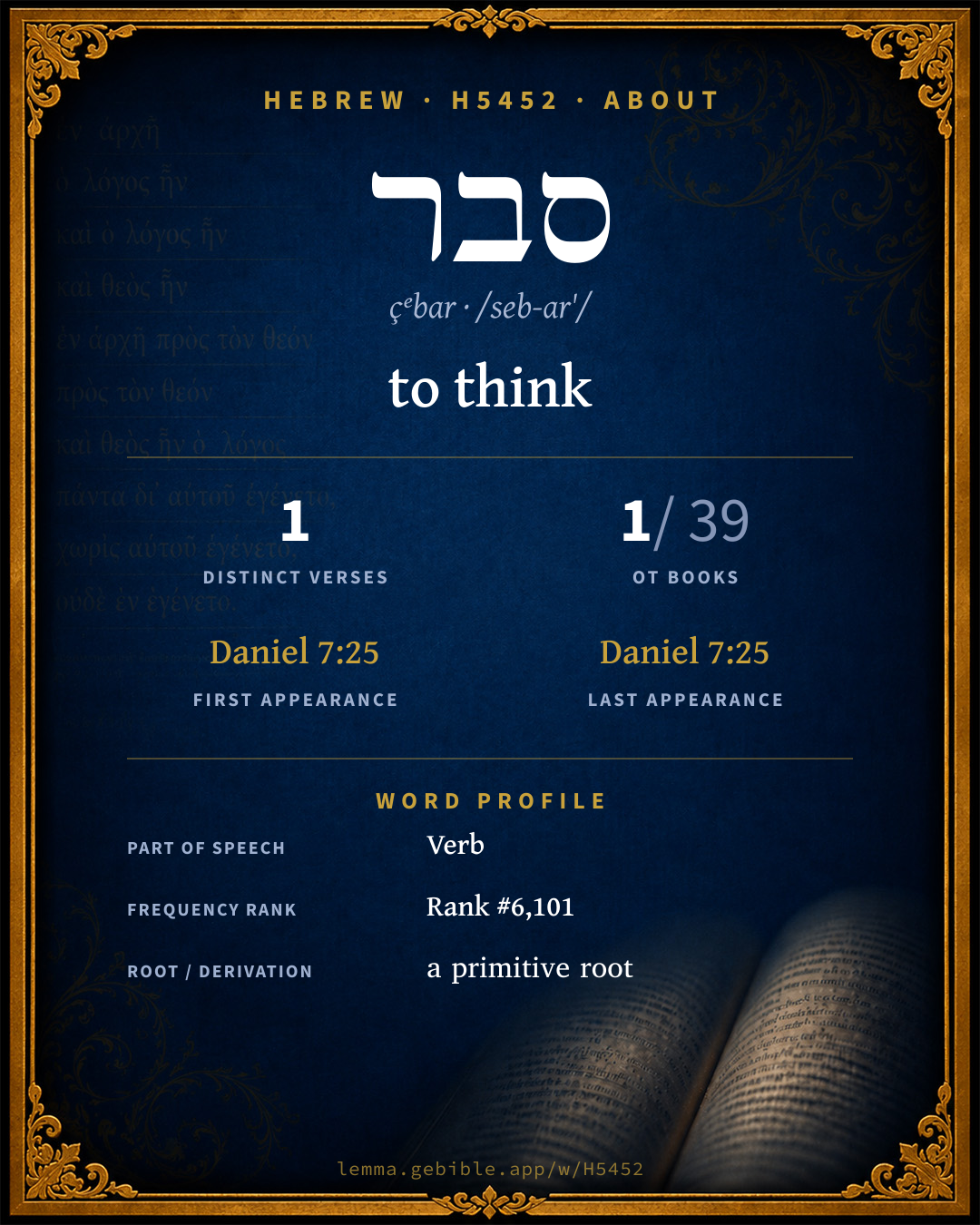
סְבַר
to think
Full lexicon entry — Brown-Driver-Briggs (BDB)
From Brown-Driver-Briggs (BDB)
Where this word appears
Grammar key — what these labels mean
Stem
- Qal
- The basic, simple active stem — the plain form of the verb (“he wrote”).
Form
- Imperfect
- An incomplete, ongoing, or future action (“he will / would write”).
Person
- 3rd Person
- The one spoken about (“he / she / it / they”).
Gender
- Masculine
- Grammatically masculine.
Number
- Singular
- One.
Every verse where H5452 appears — 1 distinct verse across 1 book. Click any verse to open its interlinear word-by-word view. Verse text shown in the World English Bible for context — . Each verse’s Hebrew form is shown with its reference; the English is not keyword-highlighted, since the data carries no word-level English alignment. Use “Compare translations” on any verse to read it across multiple English versions. This concordance covers the Hebrew Bible; Septuagint (Greek Old Testament) occurrences are not indexed here.
Daniel 1 verse
About this entry
At a glance — auto-summarized from this page’s data, not written by a person. Every figure links to its source below. This summary describes the numbers; it doesn’t interpret them.
At its core, סבר (çᵉbar) means “to think.” It is rare — just 1 verse in the entire Hebrew Bible. Its uses cluster heavily in Daniel (100% of all occurrences). Found nowhere else but Daniel 7:25. From the same root come סברים. Dig into 1-verse concordance and the renderings breakdown below.
Gloss history
Strong's 1890 vs modern scholarship
About this word
Strong's H5452 catalogs a Hebrew word from the Hebrew Old Testament.
These counts are not copied from any lexicon or concordance. They are computed here, from the morphology-tagged Hebrew Old Testament. What Lemma adds →
- 1
- distinct verses
- The word appears in 1 distinct verse.
- 1 / 39
- OT books
- The word appears in 1 of 39 Old Testament books.
- #6,101
- by frequency
- Rank #6,101 (rank 6,101 of 8,640 Hebrew words by occurrence).
View all 1 occurrence in the concordance →
Most concentrated in
- Daniel 1 verse 100%
By section of the Old Testament
By traditional corpus
Conventional, traditional groupings — biblical authorship is debated, so this is a traditional corpus grouping, not an authorship claim. Each share is this word’s portion of its verses in that division of the Hebrew canon. Each figure is a share of the word’s 1 distinct verse.
- Writings (Ketuvim) 1 verse · 100%
How translations render this word
Counts come from each version’s own published word-to-Strong’s tagging or interlinear alignment — an approximate guide to how each version renders this word, not a word-level alignment the data otherwise carries. Because each total is that version’s own tagged count, the per-version totals vary from one another and need not match the appearance or distinct-verse counts above. These counts may also differ from a printed concordance because Lemma counts each distinctly tagged rendering and does not collapse phrase taggings into a single head-word total. This is a fixed set of word-tagged versions (KJV, ASV, BSB, ULT) and does not change with the reading translation you choose elsewhere. Each version’s license is shown beside its name below (and on Sources).
- King James Version: Think 1×
- American Standard Version: He shall think 1×
- Berean Standard Bible: Intending 1×
- unfoldingWord Literal Text: He will intend 1×
King James Version Public Domain
Renders H5452 across 1 tagged occurrence — most commonly:
American Standard Version Public Domain
Renders H5452 across 1 tagged occurrence — most commonly:
Berean Standard Bible Public Domain
Renders H5452 across 1 tagged occurrence — most commonly:
unfoldingWord Literal Text CC BY-SA 4.0
Renders H5452 across 1 tagged occurrence — most commonly:
Senses in BDB
The 1 sense BDB distinguishes for this word, in lexicon order (not ranked by frequency or importance). The full entry — with sub-senses — is in the Lexicon Entry tab.
- (Peal) to think, intend
Word origin
[ סְבַר ] vb. think, intend;— Pe. Dn 7:25
— Brown-Driver-Briggs (Oxford 1906, public domain), digitized via Sefaria, supplemented by the OpenScriptures HebrewLexicon (CC BY 4.0). See Sources.
Origin: a primitive root
Jastrow Dictionary
A second Hebrew/Aramaic lexicon for comparison, covering Aramaic and post-biblical (Talmudic, Targumic, Midrashic) usage that the biblical-Hebrew BDB does not. Matched by lemma rather than by Strong’s number, so a lemma may carry more than one Jastrow headword (shown separately below), and the entries cover usage well beyond the Bible.
סְבַר
- 1. (with אַפִּין) to show a bright face, be pleasant; to favor (with ב or ל). Targ. Y. Gen. IV, 4, sq. Targ. Job XXXII, 22 יִסְבַּר Ms. (ed. יְסוֹבַר Poël; some ed. יְסַבַּר Pa.).—Part. pass. סָבִיר; סְבִיר אפין looked up to with favor, honored, popular. Ib. XXII, 8.
- 2. to be bright, intelligent. Targ. O. Lev. XIX, 32 סָבַר (Y. ib. סְבִירִין).
- 3. to look out for, hope; to speculate, plan; to imagine, believe. Targ. Hos. XII, 7. Targ. Ps. XXVII, 14. Targ. Y. Ex. X, 11 סַבְרִין. Targ. Prov. XIV, 12; a. fr.—Part. pass. סָבִיר, סְבִיר looking for, planning, thinking, believing. Targ. O. Ex. X, 10. Targ. O. Gen. XXXVII, 8; a. fr.—Y. Ber. III, 6ᶜ top תמן סְבִירְתֵּיה there I thought about it, v. סְבָר.
- 4. to conclude, argue, understand; to have an idea. Targ. II Sam. XII, 19; a. e.—B. Bath. 65ᵃ, a. fr. סָבוּר מינה וכ׳ they concluded from this that …, but it is not so. Gitt. 56ᵃ סבור רבנן לקרוביה the scholars proposed to offer it up on the altar. Keth. 87ᵇ, a. fr. ס׳ … למימר וכ׳ R … had an idea to say &c. (but was refuted). Ber. 3ᵃ, a. fr. מאי קס׳ וכ׳ what is R. E.’s opinion? אי קס׳ שלש וכ׳ if he holds that the night contains three watches &c. Ib. 4ᵇ ר׳ יוחנן ס׳ וכ׳ R. J. argues (thus) &c. Ib. 27ᵃ מי סַבְרַת דהאי וכ׳ do you think that &c.?—Yeb. 72ᵇ תנייה … וסַבְרָהּ וכ׳ he learned it by heart in three days, and reasoned it out (drew the logical conclusions from it) in three months. Sabb. 63ᵃ לִיסְבַּר, v. גְּמַר II. Keth. 77ᵃ דקסַבְרָא וקבילא for she understood well (her husband’s physical condition) and accepted it; ib. הא סְבִירָא וקבילא did she not understand and accept? B. Mets. 65ᵃ סַבְרַת וקבילת thou didst understand and accept; a. fr.—ס׳ כ to think like, to agree with, adopt the opinion of. Succ. 33ᵇ ס׳ לה כותיה בחדא ופליג וכ׳ he agrees with him in one point, and differs in another point; a. fr.—סְבִירָא ל is of the opinion, shares the opinion. Ib. 33ᵃ אי ס׳ לן וכ׳ if we accept the opinion that &c. Ḥull. 48ᵃ וליה לא ס׳ ליה (abbr. ל"ס) but he himself does not entertain that opinion; a. fr.—Tanḥ.P’kudé 2 סַבְרֵי מרנן have the gentlemen formed an opinion?, i.e. how do you vote?—Ib. (introducing the benediction over wine) סברי מרנן have you agreed (to allow me to say the prayer)?, i.e. with your permission!—B. Kam. 32ᵃ ותִסְבְּרָא how can you understand that?, i.e. is this not a contradiction?—Gen. R. s. 34; s. 38 הוה מַסְבַּר ליה ולא ס׳ he explained to him, but he could not comprehend; מאי טעמא לית את סבר why is it that you do not comprehend?
- 1. to look for, hope, trust. Targ. O. Gen. XLIX, 18 סַבָּרִית (ed. Berl. סָבַרִית).
- 2. with אַפִּין) to favor. Targ. Job XXXII, 22, v. supra.
- 1. to trust. Targ. Prov. XI, 28 מַסְבִּיר Ed. Lag. (oth. ed. מְסַבַּר Pa.); a. e.
- 2. to make confident. Targ. Ps. XXII, 10.
- 3. (with אַפִּין) to be kind to, cheer up. Targ. Y. Num. VI, 26 יַסְבַּר סְבַר אפוי. Targ. I Chr. II, 55.
- 4. to illustrate, explain. Ḥull. 48ᵃ רבין … אַסְבְּרָהּ לי Rabin … made it clear to me. B. Mets. 33ᵃ דאַסְבְּרָן זוהמא וכ׳ who explained to us what zomalistron meant. Erub. 21ᵇ ואַסְבְּרָהּ במאי דדמי ליה and illustrated it by a simile. Y. ib. X, beg. 26ᵃ אַסְבְּרִי רב וכ׳ R. H. enlightened me (saying) &c. Gen. R. l. c., v. supra; a. fr.
- 1. to look for, hope; to plan, intend. Targ. Ps. CVI, 13.—Targ. Y. II, Gen. XLIX, 17.
- 2. to be understood, be intelligible, evident; to be rational, logical. R. Hash. 31ᵇ sq. אמר מלתא וא׳ טעמיה וכ׳ he said something, and his argument appeared reasonable, and his teacher instituted the usage in his (R. Joḥanan’s) name. Y. Ab. Zar. I, 40ᵃ לא מִסְתַּבְּרָא כאהין סוברה וכ׳ it is not reasonable to follow this opinion that it is not forbidden. Ber. 36ᵃ כותך מסתברא it is reasonable to follow thy opinion, i.e. thou art obviously right. Sabb. 76ᵃ אדרבא כדמעיקרא מס׳ on the contrary, that which he first said stands to reason; a. fr.
- , v. supra.
- (cmp. צָפַן) provide one’s self; to store up for one’s self. Targ. Ez. XXXIX, 9. v. טִסְבְּרָא, תִּסְבְּרָא.
סָבַר
- Pi.; Saf. of ברר) [to be bright,] to look for, be hopeful; to think, imagine. Part. pass. סָבוּר; f. סְבוּרָה; pl. סְבוּרִים, סְבוּרִין; סְבוּרוֹת hoping; thinking. Ruth R. to I, 1 היו … ס׳ עליו the citizens were relying on him; (Yalk. ib. 598 בטוחין).—Keth. VII, 10 ס׳ הייתי וכ׳ I was in hopes that I might be able to bear it. Gitt. 56ᵇ וכס׳ הרג וכ׳ and he was like thinking (he imagined) that &c., v. הָרַג; a. fr.—Tanḥ. P’kudé 3 היו סוֹבְרִים וכ׳ (perh. to be read: סבורים) they thought that he (Adam) was their creator; Pirké d’R. El. ch. XI כסבורין.
- to brighten, illustrate, make clear. Koh. R. to X, 10 (ref. to Koh. l. c.) אם נקהה … והוא אינו בא לידך להַסְבִּירוֹ בפניך וכ׳ if thy study has been dull to thee like iron (difficult), and he … does not come to thy side to make it clear before thee, denounce him with all thy might.—Esp. ה׳ פנים to show a bright face; to be friendly; to encourage. Ib. ואין הרב מַסְבִּיר פ׳ לתלמיד and the teacher does not show the pupil a kind face (will not relent); ib. ואין הרב מסביר לתלמיד (sub. פנים). Ib. ואין הקב"ה מסביר פ׳ לדור and the Lord does not look favorably at the generation. Y. Yoma VI, beg. 43ᵇ שלא יהא הדיין מסביר פ׳ … ומעיז וכ׳ that the judge must not be friendly towards the one and severe towards the other (of the litigants). Midr. Till. to Ps. CXXXVII אלהיהן … וכיון שמַסְבִּירִין לו פ׳ וכ׳ their God is merciful, and as soon as they show him a kind face, he takes pity &c.; Pesik. R. s. 28. Ber. 63ᵇ אני ואתה נַסְבִּיר פ׳ בהלכה let us cheer each other up in the halakhah (by discussion). Ib. כשם שאני הִסְבַּרְתִּי … הַסְבֵּר פ׳ וכ׳ as I have been kind to thee, so be thou kind (forgiving) to &c.; a. fr.
סְבַר II
- , Poël סוֹבַר (cmp. סבל) [to encompass,] to carry; to bear, endure; to sustain. Targ. Y. Gen. XXI, 15. Targ. Deut. I, 31.—Targ. Prov. XXX, 21 לסוֹבָרָא Ms. (ed. למִסְבְּרָא, למְסַבְרָא). Targ. Ps. XCVI, 8 אובילו וסוֹבְרוּ ed. Wil. (ed. Lag. תוברו ושׂוֹבְרוּ, corr. acc.). Targ. I Kings IV, 7 (h. text כלכל); a. fr.—Y. B. Bath. II, beg. 13ᵇ ולא הוה יכיל מְסוֹבָר and could not carry it (and dropped it).
סְבַר III
- , Poël סוֹבַר (Saf. of ברי; cmp. Arab. sabar exploravit vulnus &c., misbâr specillum vulnerarium) to perforate, cut, (only used in the sense of) to let blood. Part. pass. מְסוֹבַר. Pes. 112ᵃ top דמס׳ ולא משי וכ׳ Ms. M. (ed. מְסוֹכַר, v. סְכַר II) he who has been bled and has not washed his hands. Yeb. 72ᵃ לא מְסוֹבְרִינָן ביה Ar. (ed. מסוכ׳) and on it (that day) we must not be bled. Meïl. 20ᵇ דמס׳ ואכל וכ׳ (ed. דמסוכ׳; Ar. דסַבַּר, prob. clerical error, v. Koh. Ar. Compl. s. v.) he who eats fowl after blood-letting. Ab. Zar. 28ᵇ דכאיב ליה עינא ודמ׳ Ag. Hatt. (v. Rabb. D. S. a. l. note 7) one having pain of the eye and one who has been bled.—V. סִיבּוּרָא II.
סַבַּר
- (סְבַר I) reasoner, fine scholar. Targ. O. Lev. XIX, 32 Ms. a. some ed., (ed. Berl. סָבַר, v. סְבַר I).—Pl. סַבָּרִין. Targ. Y. II, Gen. XLIX, 10 (ed. Vien. סכ׳, corr. acc.; Y. I ספרין).
סֵבֶר
- 1. hope. Gen. R. s. 91 (ref. to Gen. XLII, 1) אל תהי קורא יש שבר אלא יש ס׳ … שסִבְרוֹ וכ׳ read not yesh sheber (there is corn) but yesh seber (there is hope) &c., v. אִסְפַּקְלַרְיָא. Sifra Aḥăré, Par. 9, ch. XIII ושמא תאמר אבד סִבְרִי ואבד סכויי … אני סִבְרְךָ וכ׳ lest thou say, my hope is gone, my outlook is frustrated, therefore it reads, ‘I am the Lord’, I am thy hope &c. Yoma 72ᵃ אבד סִבְרָן ובטל סכויין their prospect of restoration is gone &c. Erub. 21ᵇ אבד סִבְרָם וכ׳ they are beyond hope (of return to God) &c. B. Mets. 33ᵇ פסק סברם ובטל סכוים there is no hope for them &c.; Yalk. Is. 371 … שכרן … שיכויין (read שִׂבְרָן). e.g. Genesis 42:1
- 2. with פָּנִים, brightness, friendly expression; in gen. countenance. Ab. I, 15 הוי מקבל … בס׳ פ׳ יפות receive every man with a countenance of friendliness. Cant. R. to II, 5; a. fr.
- 3. understanding, plain sense. Yalk. Sam. 158 כך הוא סִבְרוֹ של דבר this is the plain sense of the thing (the common opinion), opp. to עיקרו של דבר the root, the deeper cause; v. סְבָרָא.
סְבַר IV
- 1. hope. Targ. Prov. XI, 7. Targ. Job V, 16. Targ. Prov. XIII, 12 סַבְרָא ed. Wil.—Targ. Ps. IX, 19 סוֹבָ׳ (Bxt. סבו׳); a. fr.—Gen. R. s. 68 סִבְרִי, v. בָּרְיָיא. Gen. R. s. 53 את לא אובדית סִיבְרָךְ וכ׳ (some ed. סוֹכְרָךְ) as thou didst not give up thy hope, so will I not suffer thy hope to be frustrated. Midr. Sam. ch. V; Yalk. ib. 86 (ref. to אפסי, I Sam. II, 10) אילין … דסוֹבְרֵיהוֹן פסיק מן ברייהון that means the nations whose hope is cut off from their Creator (who have no faith); a. e. e.g. 1 Samuel 2:10
- 2. with אפִּין, countenance. Targ. Gen. XXXI, 2; a. fr.—Gen. R. s. 35, v. אַפָּא. Lev. R. s. 5 מאן יכיל למיחמי ס׳ אפוי וכ׳ who can ever see the face of Abba Judan?; a. fr.
- 3. opinion. Y. Ab. Zar. I, 40ᵃ סִיבְרָה (ed. Krot. סוּ׳), v. סְבַר I, Ithpa
סְבָר
- (preced.)
- 1. brightness of mind, ingenuity. Targ. Cant. V, 10.
- 2. speculation, logical argument. Meg. 18ᵇ, a. e. (expl. מתנמנם, v. נִים) דקרו … ולא ידע לאהדורי ס׳ you call him, and he answers but cannot recall an argument. Y. Ber. III, 6ᶜ top כל סבר קשי דהוה לי תמן סבירתיה any hard thinking I had to do, there I did it. Ib. כל ההוא סברא קשיא וכ׳ all that difficult subject of T’bul Yom I studied there.—Esp. logical deduction, conclusion by reasoning, opp. to גמרא verbal tradition. Yoma 33ᵃ bot. גמרא גמירנא ס׳ לא ידענא I know the final decision as a tradition, the argument I do not know. Gitt. 6ᵇ בשלמא מילתא דתליא בס׳ לחיי וכ׳ if it were a thing which depends on reason, you might be right, but this is a tradition. B. Bath. 77ᵃ גמרא או ס׳ is this a tradition or a logical inference? Ab. Zar. 34ᵇ איבעית אימא ס׳ ואב"א קרא I may say, it is founded on reason, or I may say, it is intimated in the Scriptures; a. v. fr.
- 3. common sense, ordinary conception, opp. עיקר. Y. Ber. IX, 13ᶜ bot.; Midr. Till. to Ps. XVIII, 8 כך הוא ס׳ דמילתא, v. סֵבֶר 3.
A Dictionary of the Targumim, the Talmud Babli and Yerushalmi, and the Midrashic Literature (Marcus Jastrow; London, Luzac, 1903) — Public Domain. Digitized via Sefaria. Digitized via Sefaria. Full attribution on Sources.
Same root — word family
Other BDB entries built from the same root as H5452, grouped by Strong’s listed origin. These share a root / origin per the lexicon — not necessarily a shared meaning. Each links to that word’s own entry.
Proper names from this root
People and places named from this root — a name, not an additional meaning of the word.
Compare all same-root words → 1 of the same-root words is a proper name (a person or place). They share a root, not necessarily a meaning.
Septuagint verse parallels
This word appears in 1 verse that also exists in the Greek Old Testament (Septuagint), out of the 1 Hebrew verse it occurs in. You can read those verses in Greek by switching the Old Testament edition to the Septuagint.
Read these verses in the Septuagint
This is a verse-level parallel only — the same verses exist in both the Hebrew and Greek Old Testaments. No word-level Hebrew↔Greek correspondence is claimed: the data carries no such alignment, so no Greek word is shown as this Hebrew word’s translation. Coverage is not total — the Septuagint omits the deuterocanon and renumbers the Psalms, so some Hebrew verses have no direct Greek parallel.